Best Hotels In Oaxaca: Courtyard Stays By Budget
Oaxaca City sleeps well: an inland highland capital of courtyard houses, and the practical choice of where to stay comes down to neighbourhood, season and how you plan to move around.
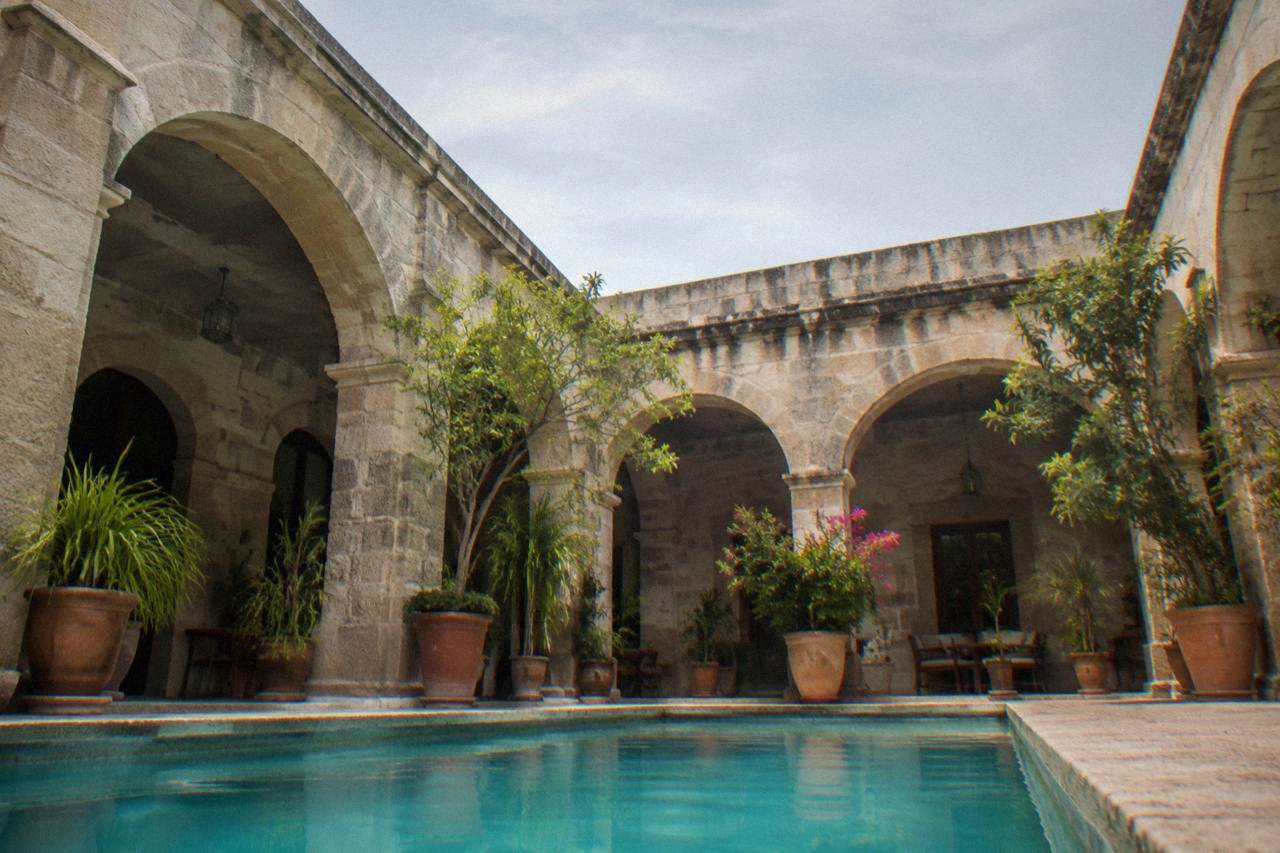
Oaxaca City's accommodation clusters in and around the Centro Histórico, with Jalatlaco, Xochimilco and Reforma close behind; pick by neighbourhood first, then by season, because dry-season festivals and rainy-season patterns shift availability more than any published rate does.
Oaxaca City (Oaxaca de Juárez) is the capital of the state of Oaxaca, an inland highland city in the Valles Centrales at about 1,550 m, and its hotel stock is built around the converted courtyard houses of the historic centre. The city recorded 1,324,332 tourist arrivals in 2025, hotel occupancy of 51.73 percent and an average stay of 2.00 nights, per the state tourism indicators, which tells you two things: rooms turn over fast, and the historic-centre core where nearly everything sits is compact enough that the neighbourhood choice matters more than the exact street. This guide lays out how to choose, using only what primary sources actually publish, and it never quotes a nightly rate, because no official source for hotel prices exists. For the wider neighbourhood picture, start with the site's where to stay in Oaxaca guide.
Which Area Of Oaxaca City Should You Book A Hotel In?
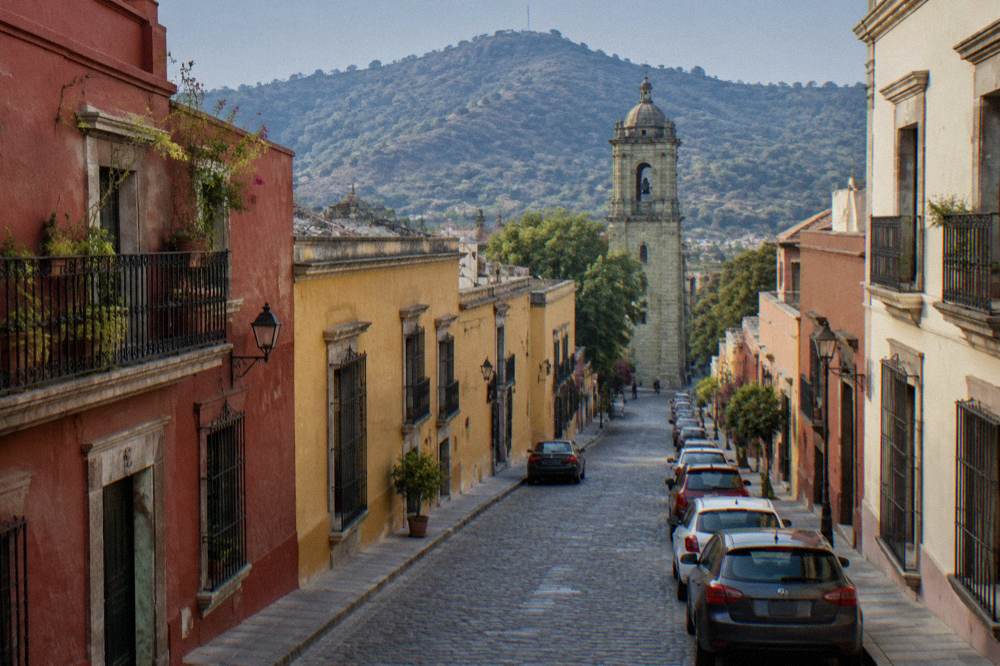
The practical answer is the Centro Histórico, with Jalatlaco and Xochimilco as walkable neighbours and Reforma as the quiet fallback, and the whole set sits within a compact grid around the Zócalo, the Plaza de la Constitución. Santo Domingo de Guzmán, the Andador Macedonio Alcalá, the markets and the Museo de las Culturas de Oaxaca are all reached on foot from a central base.
Santa Lucía del Camino, out towards Xoxocotlán, is the option if you want to be nearer the airport side of the valley.
The city centre is the UNESCO-listed property, the "Historic Centre of Oaxaca and Archaeological Site of Monte Albán" (property 415), and it concentrates the sights that pull visitors in: the Zócalo, the cathedral, the Basílica de la Soledad, Santo Domingo de Guzmán and the Jardín Etnobotánico, plus the Mercado 20 de Noviembre and Mercado Benito Juárez food halls. The site's Centro Histórico guide covers that core street by street.
Around it sit neighbourhoods with their own character guides: Jalatlaco, Xochimilco and Reforma are the three names that come up again and again in planning discussions, and the site also covers the barrios south of the centre and the mercados plus Santa Lucía del Camino and Xoxocotlán on the airport side. A full rundown of all of them is in Oaxaca neighbourhoods.
One honest framing: no official source publishes hotel prices, so a "budget versus luxury" table with nightly figures would be invented from top to bottom. What the sources do publish, and what genuinely changes a hotel decision, is what follows: the tax on your room, the weather you will sleep in, the transport realities of each side of the valley, and the festival calendar that compresses availability. Build the budget question from those, then compare actual rates on the day you book.
| Area | What sits there | Suits |
|---|---|---|
| Centro Histórico | Zócalo, Santo Domingo de Guzmán, Andador Macedonio Alcalá, Museo de las Culturas, both central markets | First visits, short stays of one to three nights |
| Jalatlaco and Xochimilco | Neighbourhoods flanking the centre, covered in their own guides | Longer stays, walkers who want quieter nights |
| Reforma | Residential band north-west of the centre | Quieter base, still walkable |
| Santa Lucía del Camino / Xoxocotlán | Airport side of the valley; the Feria del Mezcal venue is at the CCCO in Santa Lucía del Camino | Early flights, road-trippers heading south |
How Does The Lodging Tax Change Your Oaxaca Hotel Bill?
Oaxaca state charges a lodging tax, the Impuesto al Hospedaje, at 3 percent on hotel-type stays, and 5 percent when the stay is booked through an intermediary or platform, under decree 884 published 10 December 2025. That difference means the same room can carry a different final tax line depending on how you book it. The tax applies to hotel stays and similar lodging services and is collected by the provider, so it appears on your bill rather than being paid separately.
Three percent versus five percent is not a huge sum on any single night, but on a week-long stay it is a real line item, and it is the one published, verifiable cost that attaches to every hotel room in the state. Everything else about price, from seasonal swings to what a courtyard double should cost, has no official primary source, so treat any specific nightly figure you read anywhere, including in guidebooks, as something to check against a live listing on the day.
Budget travellers should also read the site's hostels and budget stays in Oaxaca guide, and anyone balancing the whole trip should work through Oaxaca travel costs and budget, which keeps the same rule: no invented figures.
When Is Hotel Availability In Oaxaca Tightest?
The pressure points are July, for the Guelaguetza, and late October into early November, for Día de Muertos, with December's Noche de Rábanos tradition on 23 December as a shorter spike. The Guelaguetza takes place on two Mondays in July, the Lunes del Cerro, at the Auditorio Guelaguetza on the Cerro del Fortín. The 2026 edition ran 20 and 27 July with shows at 10:00 and 17:00.
The 2026 Guelaguetza pricing is published and useful as a reference even though the event has passed and 2027 dates are not announced: Palco A seats were 1,632 MXN and Palco B 1,321 MXN plus fees, sold only through Superboletos with a limit of two tickets per account, while Palcos C and D were free. The paid sections sold out fast, and the same demand reaches hotel rooms across the city. The surrounding programme, billed as July, month of the Guelaguetza, carried more than 140 activities, and the Feria del Mezcal ran 17 to 28 July at the Centro Cultural y de Convenciones de Oaxaca in Santa Lucía del Camino, with entry of about 80 MXN.
Día de Muertos centres on the traditional dates of 31 October to 2 November. The often-quoted programme of more than 140 activities from 25 October to 4 November was the 2025 edition; a 2026 programme has not been announced, so plan around the traditional dates and check the state channels close to travel. The Zócalo decorations in 2026 were scheduled to be mounted 25 to 28 October and removed after 6 November, per the state tender documents. The site's Día de Muertos guide and Guelaguetza guide carry the full festival picture.
Noche de Rábanos keeps its traditional date of 23 December; the 128th edition ran in December 2025, and 2026 details had not been announced. Outside these windows, availability eases, and the climate table below explains why the shoulder months are comfortable.
What Weather Will You Sleep In, Month By Month?
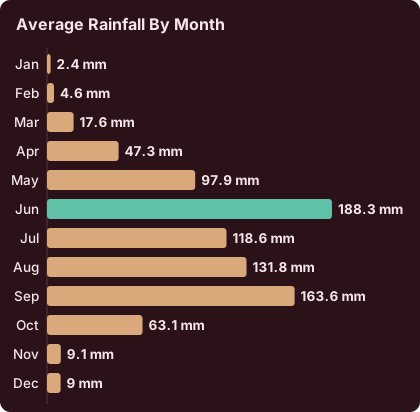
Oaxaca City's climate splits into a dry season from November to April and a rainy season from May to October, peaking June to September, per the SMN station 20079 normals for 1991 to 2020. April has the highest mean daily maximum at 34.9 C, and the lowest mean minimums fall in December at 11.0 C and January at 10.3 C. Annual rainfall totals 853.3 mm. Nights are cool enough year-round that air conditioning is not the deciding factor it is on the coast.
What this means for a hotel choice is concrete. In the rainy season, an inner courtyard room matters: afternoon and evening rain is the standing pattern, with 19 to 21 rain days per month from June to September. In the dry season, November through March sees under 20 mm per month and 1 to 4 rain days, so a rooftop or terrace is usable throughout those months. There is no winter snow and no heating season in any official description of the city's climate.
| Month | Mean max C | Mean min C | Rain mm | Rain days |
|---|---|---|---|---|
| Jan | 28.9 | 10.3 | 2.4 | 1.4 |
| Feb | 31.1 | 11.6 | 4.6 | 1.1 |
| Mar | 33.3 | 13.6 | 17.6 | 4.1 |
| Apr | 34.9 | 15.8 | 47.3 | 7.6 |
| May | 33.8 | 16.7 | 97.9 | 13.7 |
| Jun | 30.9 | 16.7 | 188.3 | 19.9 |
| Jul | 30.1 | 15.9 | 118.6 | 20.4 |
| Aug | 30.0 | 15.9 | 131.8 | 20.5 |
| Sep | 29.1 | 16.1 | 163.6 | 21.4 |
| Oct | 29.3 | 14.5 | 63.1 | 12.0 |
| Nov | 29.0 | 12.3 | 9.1 | 3.5 |
| Dec | 28.9 | 11.0 | 9.0 | 2.4 |
No official source ranks the "best months" to visit; the month-by-month detail, including what the rain actually feels like, is in Oaxaca weather by month and the rainy-season guide. For timing a whole trip around these patterns, see the best time to visit Oaxaca.
Is A Centro Histórico Base Worth It For Sightseeing?
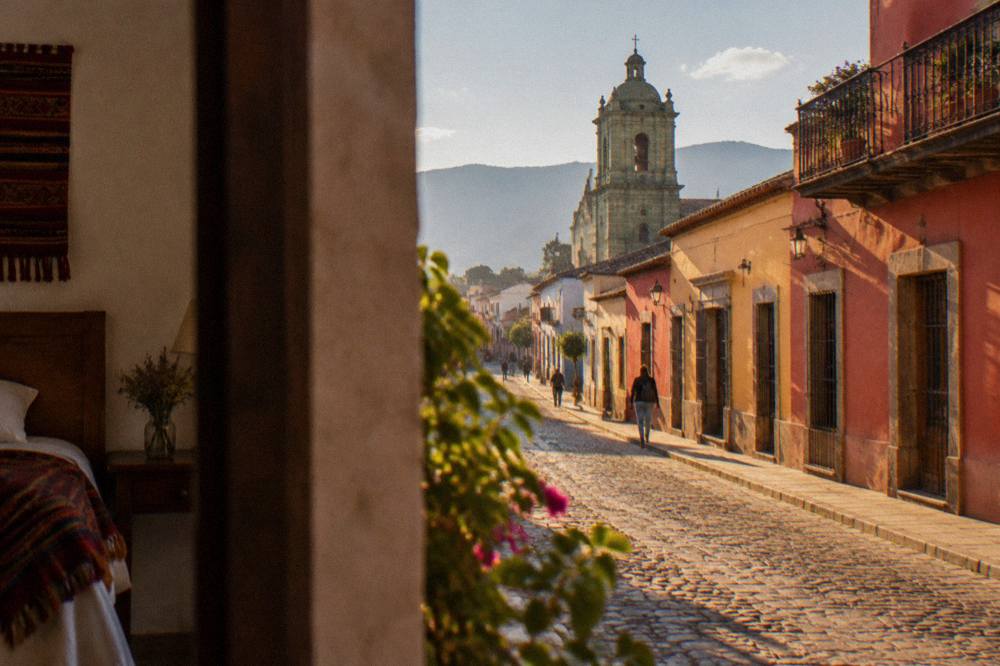
Yes, for stays of one to three nights, because the Centro Histórico holds the Zócalo, Santo Domingo de Guzmán, the Andador Macedonio Alcalá, the cathedral, the Basílica de la Soledad, the Museo de las Culturas de Oaxaca and both central markets within walking range of each other. The average visitor stay in 2025 was 2.00 nights, per the state indicators, which is exactly the length at which a central base saves the most time.
The anchor sights have published hours worth knowing when you plan days out from a central hotel. The Museo de las Culturas de Oaxaca, inside the Santo Domingo complex, is open Tuesday to Saturday only, 10:00 to 16:00, with entry of 105 MXN for nationals and 210 MXN for foreign visitors. The Jardín Etnobotánico next door runs free guided tours Monday to Friday at 10:30, 11:00, 11:30, 12:00 and 17:00, and Saturday from 10:30 to 12:00, with large and school groups booking two weeks ahead. A museum-hours gap on Monday, in other words, is a natural day-trip day, and a central hotel puts you at the museum door for a 10:00 Tuesday start. The wider set of guides lives on Oaxaca Travel Guide.
The rest of the centre's sights are covered across the site: Santo Domingo church, the Zócalo, the Andador Macedonio Alcalá, Mercado 20 de Noviembre and Mercado Benito Juárez.
Which Day Trips Are Easy From Each Side Of The City?
The big excursions split by direction: Monte Albán is about 15 minutes' drive west of the Zócalo, while Santa María del Tule about 11, Teotitlán del Valle about 26, Tlacolula about 25, Mitla about 37 and Hierve el Agua about 57, all derived free-flow times that real traffic and mountain roads lengthen. Zaachila, to the south-west, opens only Thursday to Sunday, 10:00 to 16:00.
A hotel anywhere in the central grid reaches all of these equally.
Those drive times come from route calculations on OSM roads, so treat them as floors, not promises. What they establish is that the east-side-versus-west-side hotel debate barely matters for day trips: everything valley-bound funnels through the same roads, and the Sierra Norte is far enough (Latuvi is about 142 minutes' drive) that its Pueblos Mancomunados trips are full-day outings from any base.
The INAH fee structure is the same at every site and is worth carrying in your head, because no tour ticket replaces the site admission. If you would rather not drive, the site's getting around Oaxaca and colectivos guide cover the shared-transport system, and driving in Oaxaca covers the alternative.
| Destination | Drive time from the Zócalo (free-flow, about) | INAH category and fee (nationals / foreigners, MXN) |
|---|---|---|
| Monte Albán | 15 minutes | Category I, 105 / 210 |
| Santa María del Tule | 11 minutes | church fee not published |
| Teotitlán del Valle | 26 minutes | craft village, no INAH zone listed |
| Tlacolula | 25 minutes | town and Sunday market tradition |
| Mitla | 37 minutes | Category I, 105 / 210 |
| Yagul | 38 minutes | Category I, 105 / 210 |
| Hierve el Agua | 57 minutes | community-run, fee not published |
| Zaachila | South-west of the city | Category III, 80 / 145, Thu to Sun 10:00 to 16:00 |
| Latuvi (Sierra Norte) | 142 minutes | not an INAH zone |
The smaller Category III sites, Dainzú and Lambityeco, charge 80 MXN for nationals and 145 for foreign visitors, and visits outside normal INAH hours can be arranged at 730 MXN per the listings on several site pages. The full site-by-site hours are in the dedicated guides to Monte Albán, Mitla, Hierve el Agua and Atzompa, which closes earlier than the rest, at 16:00 with last access at 15:00.
What Should Budget Travellers Know Before Booking?
The honest budget answer is that no official source publishes hotel, hostel or typical room prices for Oaxaca City, so every specific nightly figure in circulation is a private estimate. What is verifiable is the structure around the price: the 3 percent lodging tax, or 5 percent via platforms, the 2025 average stay of 2.00 nights, and the fact that the city's occupancy ran at 51.73 percent across 2025, which leaves real room outside the festival windows.
Practical budget planning therefore works backwards from the things that do have published numbers. Admission to the big INAH sites is 105 or 210 MXN depending on nationality, the smaller sites 80 or 145, the Jardín Etnobotánico tours are free, and the Guelaguetza's free Palcos C and D cost nothing but arrival time. A two-night stay built around free courtyard-city wandering, one paid archaeological site and the markets is a genuinely cheap trip before the room rate even enters the equation.
The site's budget coverage does the rest: hostels and budget stays in Oaxaca, free things to do in Oaxaca and the full travel costs and budget guide. For money mechanics, money, ATMs and cash in Oaxaca is the reference.
What Should Luxury And Boutique Travellers Look For?
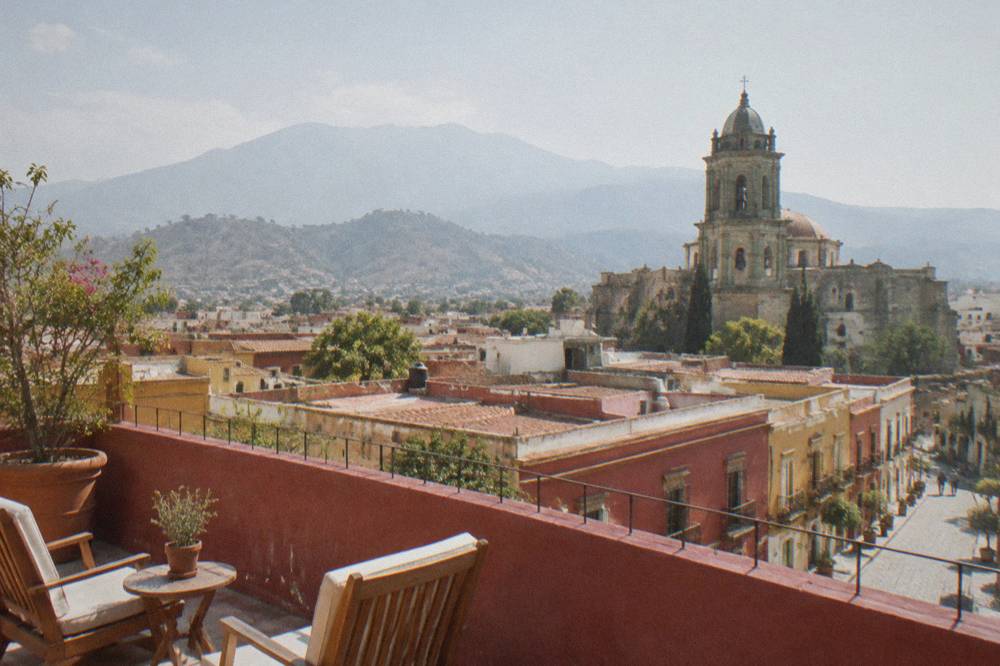
Look for the courtyard houses of the Centro Histórico and the small properties of Jalatlaco and Reforma rather than resort-style amenities, because Oaxaca City is an inland highland city with no sea, no beach and no promenade, and the boutique stock reflects that. The state's lodging tax is 3 percent on hotel-type stays. Beyond that, no official source rates or ranks the city's hotels, so the site's coverage works from neighbourhood and building type, not from unverifiable star claims.
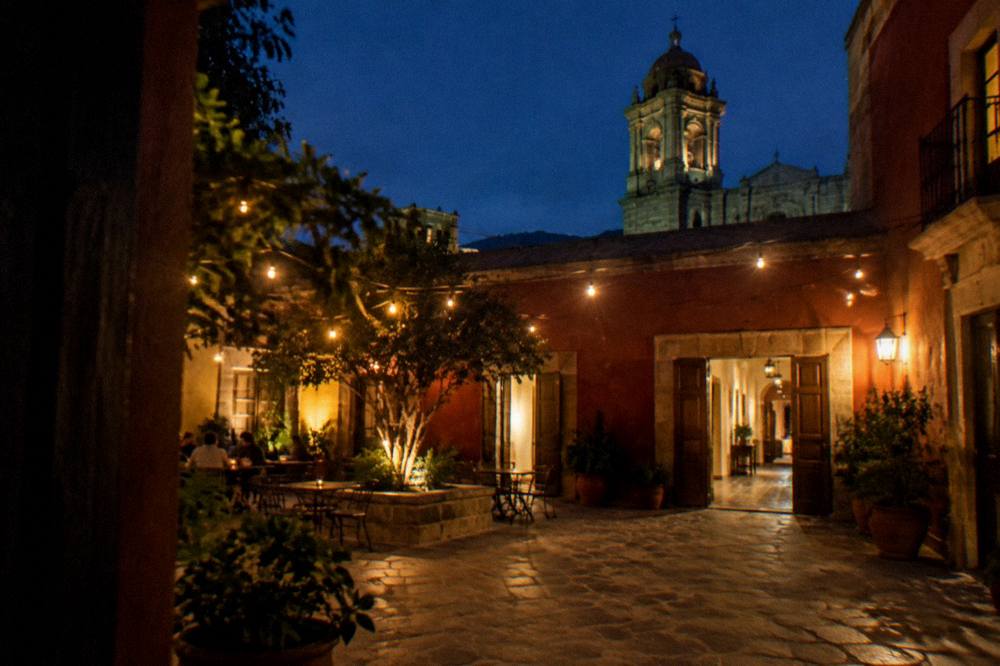
The boutique scene clusters where the historic building stock is: the blocks around Santo Domingo and the Alcalá pedestrian spine in the centre, and the neighbouring barrios. The site's boutique hotels in Oaxaca guide covers that segment in detail. What a highland city stay offers is climate-driven: mean daily maximums hold between 28.9 C and 34.9 C all year and nights drop to between 10.3 C and 16.7 C, so terraces, courtyards and thick-walled rooms are the amenities that actually get used, in the dry season and the rainy season respectively.
Luxury travellers with time should also weigh the coast question. The Pacific is a long extension, not a day trip: Puerto Escondido is about 165 minutes' drive on the new highway in free-flow terms, and real mountain driving is slower. The site covers that trade-off in Oaxaca City or the coast, plus the Puerto Escondido, Huatulco and San José del Pacífico routes.
How Do You Get From Your Hotel To The Airport And The Bus Terminals?
Xoxocotlán International Airport (OAX) is operated by ASUR with normal operating hours of 06:00 to 20:00, and the ADO bus system connects the city with Mexico City, Puebla, Puerto Escondido and Huatulco. The airport sits on the Xoxocotlán side of the valley, so a hotel in Santa Lucía del Camino or Xoxocotlán shortens the departure-morning run, while a Centro Histórico base keeps everything else close.
The site's transport guides carry the full detail: Oaxaca Airport, Mexico City to Oaxaca and the reverse Oaxaca to Mexico City route, the ADO bus guide, and city movement in taxis, Uber and DiDi in Oaxaca. One operational fact worth flagging: road blockades by teachers' unions are a standing, sporadic risk in Oaxaca that can disrupt road and airport access for hours at a time, so a departure morning with margin beats a tight connection on any flight day.
Is Oaxaca City Safe For A Hotel Stay?
The published advisories are calmer for Oaxaca than for much of Mexico: the UK FCDO advises against all but essential travel to parts of Mexico and does not name Oaxaca on its main page; Canada advises a high degree of caution in Mexico overall with regional advisories, and does not list Oaxaca as an avoid-travel area; and the US State Department lists Oaxaca state at Level 2, exercise increased caution, with restrictions only in the Isthmus region.
None of that is a promise, and the standing caveat is the one above: sporadic road blockades can disrupt movement, including airport access, without much notice. The practical hotel read is that the central neighbourhoods are the most walkable part of a walkable city, which the site covers in is Oaxaca safe, is Oaxaca a walkable city-style coverage in the walking guide, and, for evening planning, Oaxaca at night. For solo and family angles, see solo in Oaxaca and Oaxaca with kids.
What Do You Do From The Hotel Once You Are Settled?
The settled-in itinerary writes itself from a central base: one day for the Centro Histórico and its museums, one day east for Monte Albán or the Tlacolula Valley loop to Mitla and Hierve el Agua, and evenings for the markets and the food the city is known for, mole, tlayudas, quesillo and mezcal. The site's itinerary series runs from Oaxaca in one day through 2 days, 3 days, 4 days, 5 days up to a week.
Two pairings deserve a specific mention because they fit a courtyard-stay rhythm. A street-art walk led by a working artist is a low-commitment way to read Jalatlaco and the centre's walls on a first morning, and it pairs naturally with a neighbourhood base; the site's street art tour page has the details, and you can Check availability alongside it. A cooking class is the rainy-afternoon counterpart: it moves indoors exactly when the June-to-September pattern says it should.
For the food itself, the site's what to eat in Oaxaca, mole, tlayudas, mezcal and quesillo guides cover the plate, and Oaxaca cooking classes covers the workshops. If the whole picture is still open, first time in Oaxaca and the root things to do in Oaxaca page are the two starts this site recommends.
Common Questions About Hotels In Oaxaca
Where Should I Stay In Oaxaca City For A First Visit?
The Centro Histórico, close to the Zócalo and the Andador Macedonio Alcalá, puts the cathedral, Santo Domingo de Guzmán, both central markets and the Museo de las Culturas within walking range, and the 2025 average stay of 2.00 nights is short enough that walking distance saves real time.
Is There A Hotel Tax In Oaxaca?
Yes. The state lodging tax, the Impuesto al Hospedaje, is 3 percent on hotel-type stays and 5 percent when booking through an intermediary or platform, under decree 884 published 10 December 2025. It is collected by the provider and appears on your bill.
When Are Oaxaca Hotels Busiest?
July for the Guelaguetza, late October to early November for Día de Muertos (traditional dates 31 October to 2 November), and around 23 December for the Noche de Rábanos tradition. The 2026 Guelaguetza ran 20 and 27 July; 2027 dates are not announced.
Do Oaxaca Hotels Need Air Conditioning?
Usually not, by the numbers. Mean daily maximums run 28.9 C to 34.9 C and mean minimums 10.3 C to 16.7 C across the year at this altitude, so nights are cool; in the rainy season a covered courtyard matters more than cooling.
Is It Better To Stay In The Centre Or In Jalatlaco Or Xochimilco?
All three are walkable to the centre. The Centro Histórico minimises walking to the main sights; Jalatlaco and Xochimilco sit just outside it and suit longer stays. The site covers each in its own neighbourhood guide.
Can I Visit Monte Albán Easily From Any Hotel?
Yes. Monte Albán is about 15 minutes' drive from the Zócalo in free-flow terms, so any central or near-central base reaches it equally; real traffic and the mountain road are slower than the raw figure.
The final word on choosing: pick the neighbourhood first, book against the festival calendar second, and let the courtyard, the tax line and the season do the rest, because those are the parts of an Oaxaca City hotel stay that the published sources actually verify.