Oaxaca Neighbourhoods: Where Each Barrio Fits
Oaxaca de Juárez is a compact inland highland city at about 1,550 m, and its barrios sit close enough together that the whole historic core works as one walkable district. This page maps where each neighbourhood fits, what sits in it, and how far the valley villages are from the Zócalo.
Oaxaca City's core neighbourhoods are the Centro Histórico around the Zócalo and Santo Domingo de Guzmán, Jalatlaco and Xochimilco on either side of it, Reforma to the north, the market districts south of the centre, and Santa Lucía del Camino and Xoxocotlán toward the airport. The municipality counts 270,955 residents (Censo 2020), and the whole historic core is inscribed by UNESCO as part of property 415.
Oaxaca de Juárez, the capital of the state of Oaxaca in Mexico, is an inland highland city in the Valles Centrales at about 1,550 m, founded in 1529 as Antequera. UNESCO inscribes the whole ensemble as "Historic Centre of Oaxaca and Archaeological Site of Monte Albán", property 415, and that historic centre is what holds the barrios this page covers. The municipality counts 270,955 residents according to the Censo 2020, and in 2025 the city registered 1,324,332 tourist arrivals, of which 83.95 percent were national and 16.05 percent foreign, with an average stay of 2.00 nights. Those two figures, a small resident base and a short average stay, explain the city's shape as a destination: everything a visitor came for in 2025 sat within a handful of adjacent barrios and a ring of valley villages.
The barrios divide naturally by what sits in them. The Centro Histórico carries the Zócalo, the Andador Macedonio Alcalá, Santo Domingo de Guzmán and the state's principal museums. Jalatlaco and Xochimilco flank it as residential barrios with their own parish churches and their own dedicated coverage on this site, at Jalatlaco, Street Art and Calles and Xochimilco and the Aqueduct. Reforma stretches north of the centre, and the area south of the centre holds the big markets. Farther out, Santa Lucía del Camino and Xoxocotlán sit on the airport side of the city, and the valley villages, Teotitlán del Valle, Tlacolula, Ocotlán and the rest, ring the whole thing at under an hour's drive.
What Are The Main Neighbourhoods Of Oaxaca City?
The main neighbourhoods are the Centro Histórico around the Zócalo and the Andador Macedonio Alcalá, Jalatlaco to the east, Xochimilco to the north of the centre, Reforma stretching north toward the Cerro del Fortín, the market district south of the centre around Mercado 20 de Noviembre and Mercado Benito Juárez, and, farther out, Santa Lucía del Camino and Xoxocotlán on the airport side. Each of these has its own page in the Oaxaca area guides, and each fits a different kind of visit. The Centro Histórico is where the museums and the two biggest markets sit. Jalatlaco and Xochimilco are quieter residential barrios a short walk out. Reforma and the south of centre split the city between its green spaces and its commerce.
One framing fact from the 2025 Sectur indicators: with an average stay of 2.00 nights and hotel occupancy at 51.73 percent across the year, the city's demand is concentrated in a small footprint. The visitor economy does not stretch across a sprawl; it stretches across the core barrios and the day-trip ring beyond them. The same PDF counts 416,675 visitors at Monte Albán in 2025, against 104,428 at Mitla, 10,185 at Yagul, 5,545 at Lambityeco and 4,229 at Zaachila, which shows how heavily the valley's sightseeing tilts toward the site closest to the city.
| Neighbourhood | What sits in it | Dedicated page on this site |
|---|---|---|
| Centro Histórico | Zócalo, Andador Macedonio Alcalá, Santo Domingo de Guzmán, principal museums | Centro Histórico guide |
| Jalatlaco | Residential barrio east of the centre, parish church, street art | Jalatlaco guide |
| Xochimilco | Residential barrio north of the centre, aqueduct | Xochimilco guide |
| Reforma | District stretching north, Paseo Juárez el Llano, Cerro del Fortín | Reforma guide |
| South of centre | Mercado 20 de Noviembre, Mercado Benito Juárez, Abastos area | South of centre guide |
| Santa Lucía del Camino and Xoxocotlán | Airport-side districts, Xoxocotlán cemetery traditions | Santa Lucía del Camino and Xoxocotlán guide |
The table above is the page in miniature. A first-time visitor sleeping inside the historic core can reach every row of it without a vehicle, except the last, and can reach the valley villages from it by tour or colectivo.
Where Should First-Time Visitors Base Themselves In Oaxaca City?
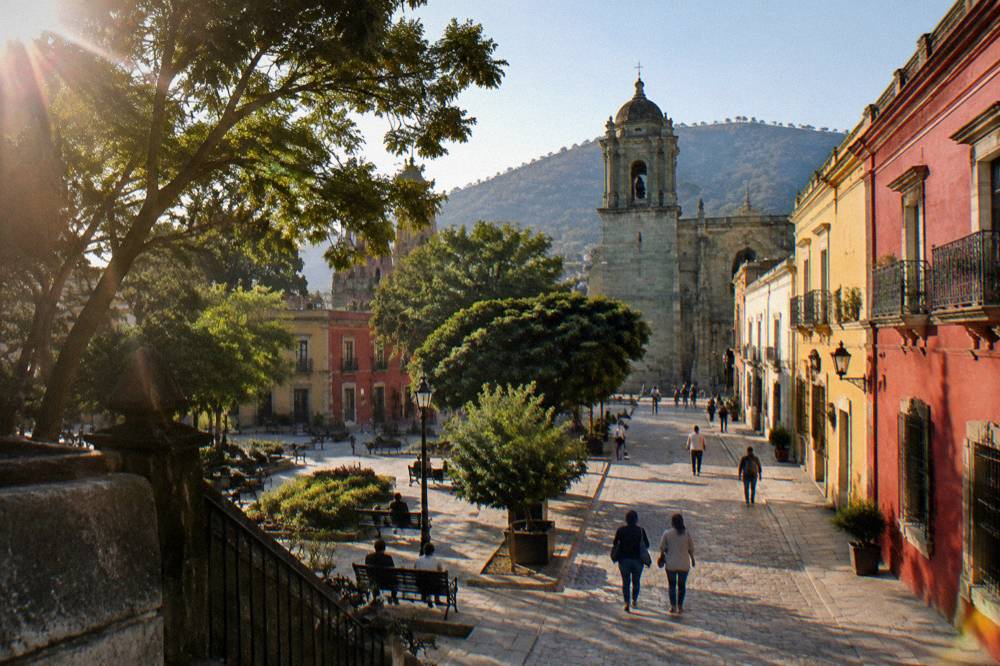
First-time visitors do best inside or immediately around the Centro Histórico, because the Zócalo, the Andador Macedonio Alcalá, Santo Domingo de Guzmán, the Museo de las Culturas de Oaxaca, the Jardín Etnobotánico and both big markets all sit within it, and every major day trip to Monte Albán, Mitla or Hierve el Agua departs from it. The trade-off is simple. The centre holds the sights and the noise. Jalatlaco and Xochimilco add a short walk to each outing but sit inside the same walkable core. Reforma suits longer stays and anyone prioritizing the Cerro del Fortín open space.
The lodging tax applies wherever you sleep: the state lodging tax is 3 percent on hotel-type stays, and 5 percent where an intermediary or platform collects it, under decree 884 published 10 December 2025.
For orientation on the ground, a guided walk is the efficient opener, and the culture and traditions walk covers exactly this footprint. Check availability. The same operator listing is one of this site's standing picks for the city.
A chocolate tasting makes a compact second anchor if the group wants something seated between walks, and the small-group cacao experience runs in the centre itself.
Is The Centro Histórico Enough On Its Own For A Short Visit?
Yes, for a stay of two nights, which matches the city's 2025 average stay of 2.00 nights, the Centro Histórico alone can fill the time: the Zócalo, the cathedral, the Basílica de la Soledad, the Andador Macedonio Alcalá, Santo Domingo de Guzmán, the Museo de las Culturas de Oaxaca and the Jardín Etnobotánico are all inside it, and two markets sit at its southern edge. The catch is scheduling, because the two headline interior sights do not run seven days.
| Sight in or beside the Centro Histórico | Open days and hours | Fee in MXN |
|---|---|---|
| Museo de las Culturas de Oaxaca (Santo Domingo) | Tuesday to Saturday, 10:00 to 16:00 | 105 nationals, 210 foreigners |
| Jardín Etnobotánico guided tours | Monday to Friday 10:30, 11:00, 11:30, 12:00, 17:00; Saturday 10:30 to 12:00 | Free |
| Zócalo and Andador Macedonio Alcalá | Public space | No fee |
The Jardín Etnobotánico figures deserve emphasis because they are precise: free guided tours run Monday to Friday at 10:30, 11:00, 11:30, 12:00 and 17:00, and Saturdays from 10:30 to 12:00, with large and school groups booking two weeks ahead. A Tuesday-to-Saturday visitor can pair the museum and the garden on the same day. A Sunday or Monday visitor cannot, and should shift those hours to the markets and the open plazas instead. The full sight-by-sight breakdown, including the churches and the street-art scene, sits in the Centro Histórico guide.
The picks above share one thing: all three run inside the historic core, so none of them costs a barrio decision. A food-focused alternative is covered in the Oaxaca food tour overview.
What Defines Jalatlaco And Xochimilco?
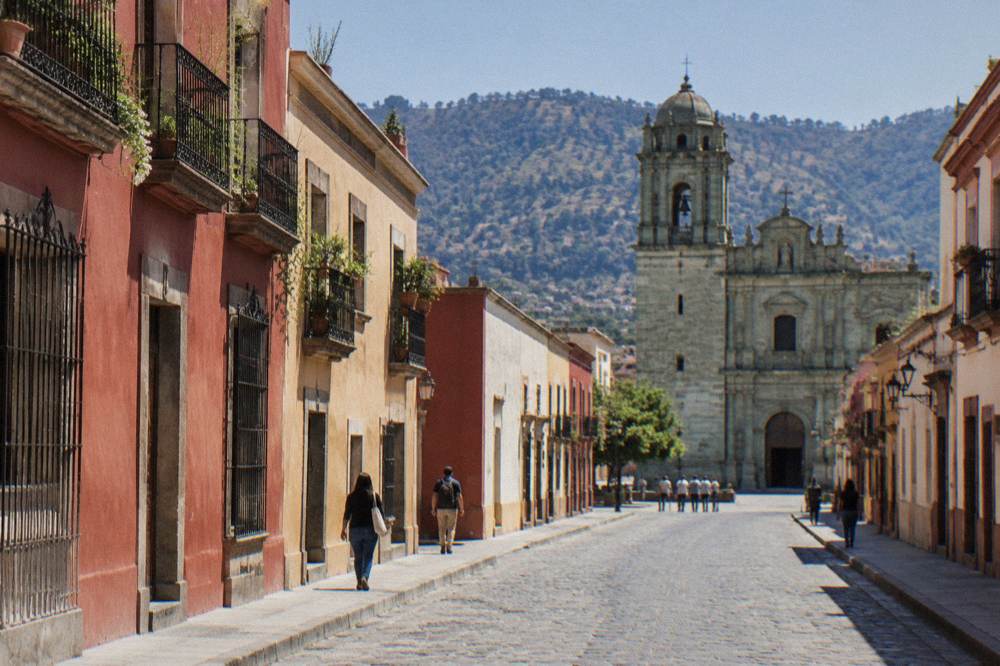
Jalatlaco and Xochimilco are the two residential barrios flanking the historic core, and both sit within walking distance of the Zócalo while keeping their own parish churches, their own street life and their own coverage on this site; neither carries an entry fee or a gate, because both are lived-in neighbourhoods rather than attractions. Jalatlaco sits east of the centre and Xochimilco sits to the north of it. Choosing either over the Centro Histórico is a choice about sleeping one notch further from the museums and the markets, not a choice about a different city.
The free walking-tour list on this site includes several walks routed through exactly these barrios, including a Xochimilco walk themed on the aqueduct and Oaxacan chocolate; those tours are free and tip-based. The site's standing coverage is at Jalatlaco, Street Art and Calles and Xochimilco and the Aqueduct. A printmaking workshop with a local artist gives a seated half-day between the two barrios and the centre.
How Does Reforma Fit Into A Oaxaca City Stay?
Reforma is the district stretching north from the centre toward the Cerro del Fortín, and it fits a stay as the green-and-open-space quarter: Paseo Juárez el Llano sits at its edge, the Cerro del Fortín rises above it, and the Auditorio Guelaguetza, the venue for the two July Lunes del Cerro performances, stands on that hill. In 2026 those performances ran on 20 and 27 July at 10:00 and 17:00, with Palco A at 1,632 MXN, Palco B at 1,321 MXN plus fees, and Palcos C and D free, sold through the official ticketing channel with a two-ticket limit per account. The 2027 dates are not announced, so treat July and the Auditorio as the standing pattern.
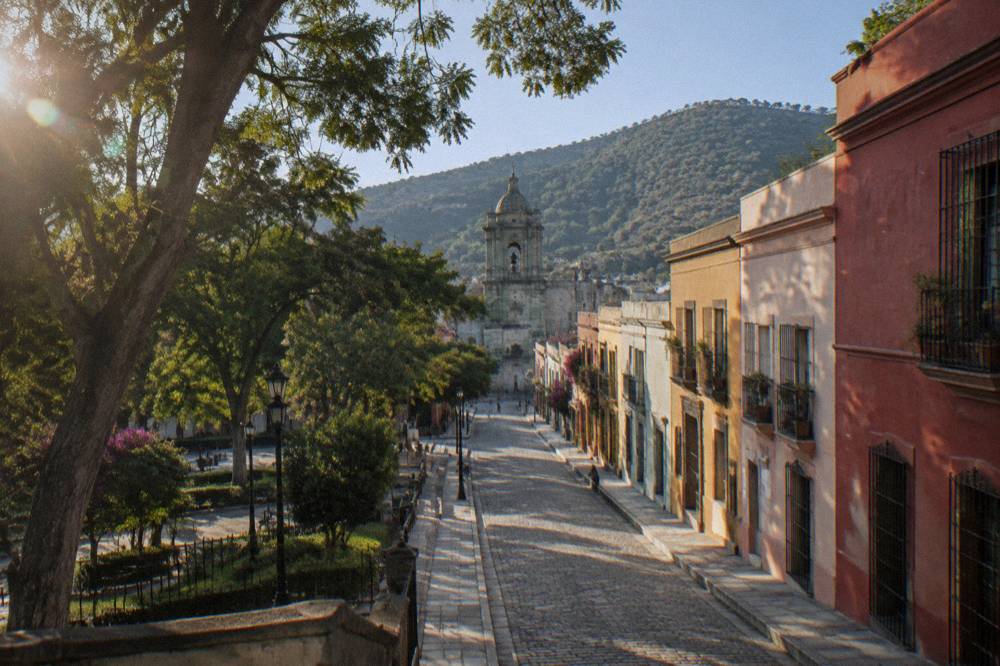
The Cerro del Fortín itself is a protected natural area; the state government reforested 1.5 hectares of it with native species in 2025. No closure, construction or access restriction was reported for it in 2026, and none for the Zócalo or the Andador Macedonio Alcalá either. The one scheduled disruption in the core is decorative: Day of the Dead installations mounted around the Zócalo between 25 and 28 October 2026 and dismantled after 6 November, per the state tender documents. The fuller picture of the district is in the Reforma guide.
What Sits South Of The Centro In Oaxaca City?
South of the Centro Histórico sits the city's market district: Mercado 20 de Noviembre, founded in 1893, and Mercado Benito Juárez, inaugurated in 1894, sit side by side near the Zócalo, and the much larger wholesale Mercado de Abastos, serving the capital and nearby towns since 1978, spreads beyond them. This is the barrio where the eating happens, and the site's food coverage is anchored at Oaxaca markets and shopping, with sight pages for Mercado 20 de Noviembre and Mercado Benito Juárez.
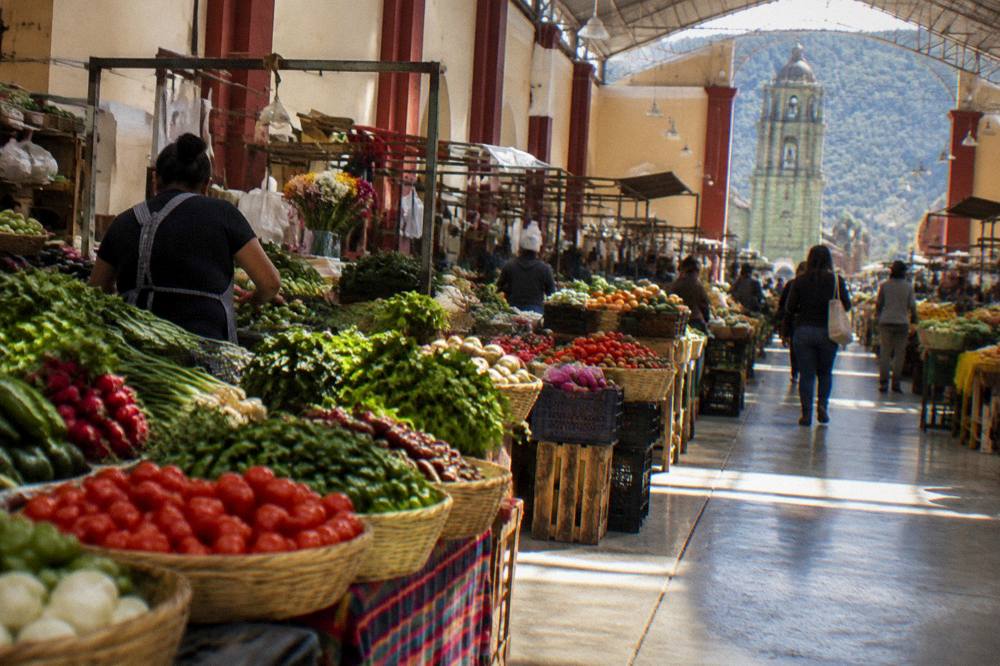
No market closure was announced alongside it. Opening hours for the markets are not published on official pages, so plan mornings and check on arrival. A guided market walk, covered in the food tour overview, handles the ordering problem for you.
How Far Are Santa Lucía Del Camino And Xoxocotlán From The Centre?
Santa Lucía del Camino and Xoxocotlán are the airport-side districts: Xoxocotlán International Airport, operated by ASUR with normal operating hours of 06:00 to 20:00, sits in this direction, and the Xoxocotlán cemetery is the one whose Day of the Dead night openings anchor the festival's cemetery traditions on 1 and 2 November. The Centro Cultural y de Convenciones de Oaxaca, venue of the Feria del Mezcal, which in 2026 ran 17 to 28 July with entry around 80 MXN, is in Santa Lucía del Camino. The pair is covered at Santa Lucía del Camino and Xoxocotlán.
The Day of the Dead programme follows a standing pattern: the festival centres on 31 October to 2 November, and the widely cited 140-activity programme dates from the 2025 edition, with the 2026 programme not announced in official sources. The state's 5th artisan contest for 2026 did run, with entries from 24 September to 9 October. Everything else covered here is indexed on Oaxaca Travel Guide.
How Far Are The Valley Villages From Each Oaxaca City Barrio?
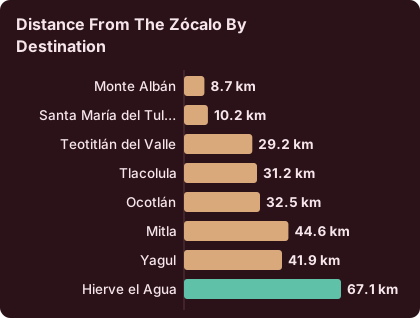
Every major valley destination sits under an hour's free-flow drive from the Zócalo: Monte Albán about 15 minutes, Santa María del Tule about 11, Teotitlán del Valle about 26, Tlacolula about 25, Ocotlán about 37, Yagul about 38, Mitla about 37 and Hierve el Agua about 57, with the Sierra Norte community of Latuvi about 142 minutes and Puerto Escondido about 165 on the new highway. These are derived free-flow times on OSM roads; real traffic and mountain roads are slower, so round up when planning.
| Destination | Distance from the Zócalo | Free-flow drive time |
|---|---|---|
| Monte Albán | 8.7 km | about 15 minutes |
| Santa María del Tule | 10.2 km | about 11 minutes |
| Teotitlán del Valle | 29.2 km | about 26 minutes |
| Tlacolula | 31.2 km | about 25 minutes |
| Ocotlán | 32.5 km | about 37 minutes |
| Mitla | 44.6 km | about 37 minutes |
| Yagul | 41.9 km | about 38 minutes |
| Hierve el Agua | 67.1 km | about 57 minutes |
The barrio consequence of this table is that no village in it requires a base change. A visitor sleeping in Jalatlaco, the Centro Histórico or Reforma is equally positioned for all of them, because all of them start from the same core. Tours to the far end of the list are covered at the Hierve el Agua tour overview and the Monte Albán tour overview, and the archaeological sites themselves have their own pages at Monte Albán, Mitla and Hierve el Agua.
The INAH fee structure matters here because the near sites and the far sites do not cost the same. Category I sites, Monte Albán, Mitla and Yagul, charge 105 MXN for nationals and 210 MXN for foreign visitors. Category III sites, Dainzú, Lambityeco and Zaachila, charge 80 and 145. Zaachila opens Thursday to Sunday 10:00 to 16:00 only, which rules it out for a Monday-to-Wednesday valley loop, and Atzompa, the closest site to the city after Monte Albán, closes at 16:00 with last access at 15:00, an hour earlier than its neighbours.
| INAH site | Open hours | Last access | Fee MXN, national / foreign |
|---|---|---|---|
| Monte Albán | Monday to Sunday 08:00 to 17:00 | 16:00 | 105 / 210 |
| Mitla | Monday to Sunday 08:00 to 17:00 | 16:30 | 105 / 210 |
| Yagul | Monday to Sunday 08:00 to 17:00 | 16:00 | 105 / 210 |
| Dainzú | Monday to Sunday 08:00 to 17:00 | 16:30 | 80 / 145 |
| Lambityeco | Monday to Sunday 08:00 to 17:00 | 16:30 | 80 / 145 |
| Zaachila | Thursday to Sunday 10:00 to 16:00 | not stated | 80 / 145 |
| Atzompa | Monday to Sunday 08:00 to 16:00 | 15:00 | fee not on the INAH page |
Does Weather Change Which Oaxaca Barrio Or Village To Plan?
Weather in Oaxaca City changes what you schedule more than where you sleep: the dry season runs November to April with November at 9.1 mm of rain and January at 2.4 mm, and the rainy season runs May to October with June at 188.3 mm, September at 163.6 mm and August at 131.8 mm, all figures from the SMN station normals for 1991 to 2020. April carries a mean daily high of 34.9 C and January a mean nightly low of 10.3 C. Because every barrio in this guide is compact and the drive times above are short, a rain-heavy afternoon can be swapped for a museum or market morning without changing where you are based.
| Month | Mean daily high C | Mean nightly low C | Rain mm |
|---|---|---|---|
| January | 28.9 | 10.3 | 2.4 |
| April | 34.9 | 15.8 | 47.3 |
| June | 30.9 | 16.7 | 188.3 |
| September | 29.1 | 16.1 | 163.6 |
| November | 29.0 | 12.3 | 9.1 |
The rainy-season counterpart of this page is the month-by-month table in the weather-by-month guide on this site. One standing risk applies to every barrio equally: road blockades by teachers' unions are a recurring form of protest in Oaxaca that can disrupt road and airport access for hours at a time. On advisories, the UK FCDO advises against all but essential travel to parts of Mexico and does not name Oaxaca on its main page, Canada advises a high degree of caution in Mexico overall, and the US State Department lists Oaxaca state at Level 2, exercise increased caution, with no restrictions on US government staff for Oaxaca City, Monte Albán, Puerto Escondido or Huatulco.
Which Tours Work From Any Oaxaca Neighbourhood?
Every tour in this site's tour list departs from the walkable core, so the barrio choice never blocks a booking: valley day trips to Hierve el Agua, Mitla and Tule leave from central pickup points, Monte Albán half-days run mornings from the centre, and the city walks, tastings and workshops all take place inside the Centro Histórico, Jalatlaco or Xochimilco. The practical sequence for a two-night stay, again the 2025 average, is one guided walk of the core, one valley day trip, and the gaps filled with the markets and whichever museum day the Tuesday-to-Saturday schedule allows.
All three sit inside the barrios this page has mapped.
For the valley end, the standing picks are the Monte Albán tour overview and the Hierve el Agua tour overview, and the full index of the city's options starts at things to do in Oaxaca.
Common Questions About Oaxaca Neighbourhoods
What Are The Main Neighbourhoods Of Oaxaca City?
The Centro Histórico, Jalatlaco, Xochimilco, Reforma, the market district south of the centre, and Santa Lucía del Camino and Xoxocotlán on the airport side. All are covered in dedicated area pages on this site.
Which Oaxaca Neighbourhood Is Best For First-Time Visitors?
The Centro Histórico, because the Zócalo, the Andador Macedonio Alcalá, Santo Domingo de Guzmán, the Museo de las Culturas de Oaxaca, the Jardín Etnobotánico and both major markets sit inside or beside it. Jalatlaco and Xochimilco add only a short walk.
Is Oaxaca City Walkable Between Its Barrios?
The historic core barrios are: the Centro Histórico, Jalatlaco, Xochimilco and the market district connect on foot. The airport-side districts and the valley villages are not walking distance and need a tour, colectivo or car.
What Days Are The Central Museums Open In Oaxaca City?
The Museo de las Culturas de Oaxaca is open Tuesday to Saturday, 10:00 to 16:00. Jardín Etnobotánico guided tours run Monday to Friday at 10:30, 11:00, 11:30, 12:00 and 17:00, and Saturday 10:30 to 12:00.
How Far Is Monte Albán From The Center Of Oaxaca City?
About 15 minutes of free-flow driving, 8.7 km from the Zócalo. Mitla is about 37 minutes and Hierve el Agua about 57 minutes; real traffic and mountain roads make these longer.
Does It Matter Which Barrio I Stay In For Day Trips?
No. All valley day trips and Monte Albán tours depart from the central core, so a bed in Jalatlaco, the Centro Histórico or Reforma positions you identically for every destination in the day-trip ring.
The barrios of Oaxaca City fit together as one compact system: a museum-and-market core, two residential flanks, a green northern quarter, and an airport-side pair, with the whole valley ring under an hour out.