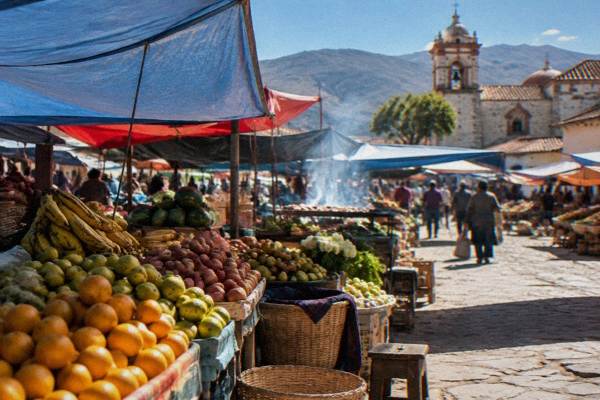
Mercado Benito Juárez: The Central Market Beside The Zócalo
Mercado Benito Juárez sits one block from the Zócalo in Oaxaca City, the inland highland capital of the state of Oaxaca in Mexico. This guide covers what the market sells, how it differs from Mercado 20 de Noviembre next door, and how to fit it into a day in the Centro Histórico.
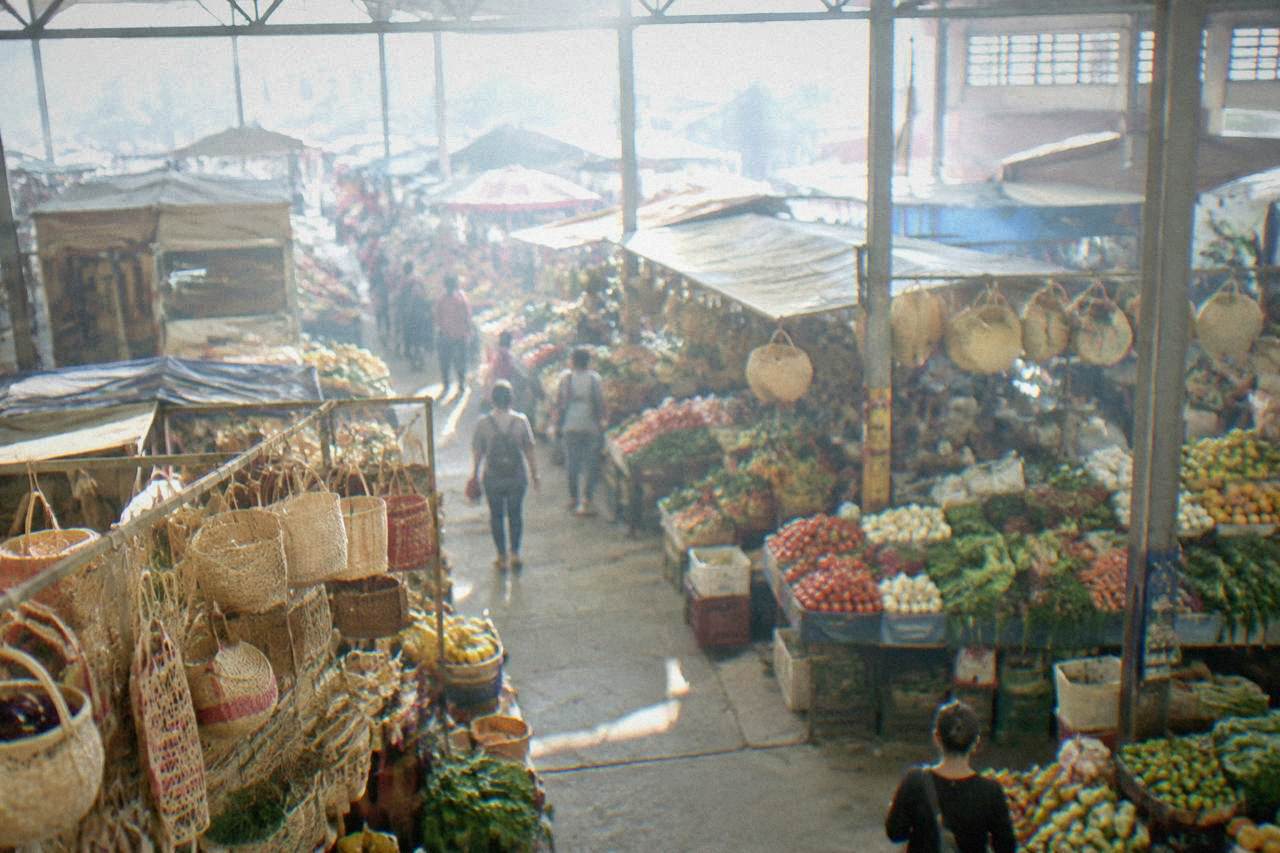
Mercado Benito Juárez is the historic central market of Oaxaca City, one block south of the Zócalo. Reported sources date it to 1894 and its earlier name, Mercado Porfirio Díaz. It is a general market for produce, bread, chocolate, spices, crafts and household goods, with the food stalls concentrated in neighbouring Mercado 20 de Noviembre.
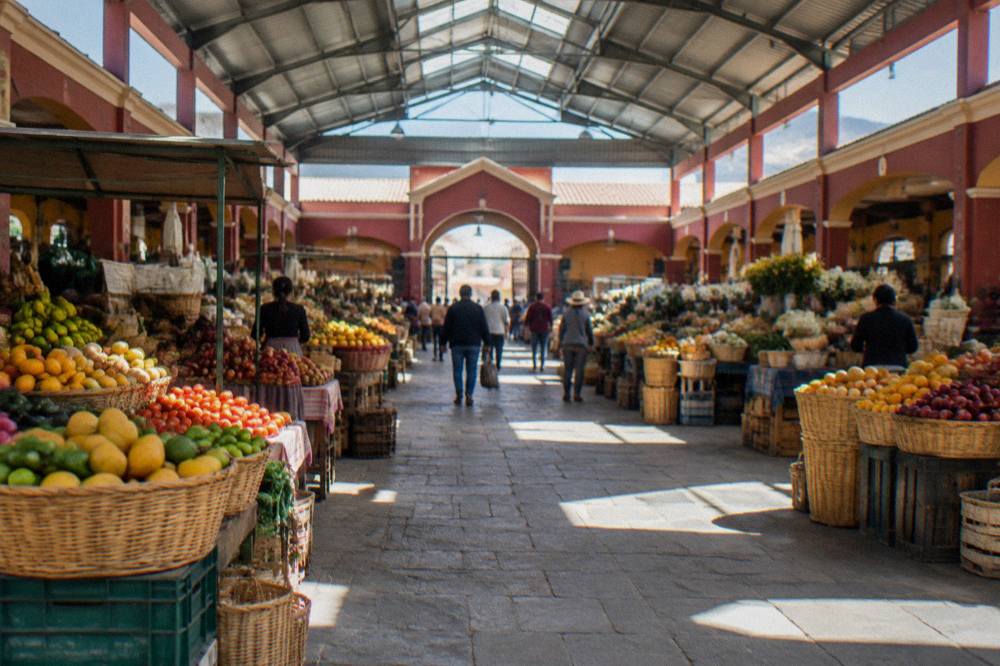
Oaxaca City, the capital of the state of Oaxaca in Mexico, keeps its commercial heart one block from the main square. Mercado Benito Juárez occupies the block bounded by the streets that run south of the Zócalo, in the part of the Centro Histórico where the city's markets cluster together. The building is a general market rather than a food court: aisles of produce, chocolate, spices, bread, baskets, leather and household goods, with the hot food and the famous smoke of the griddles concentrated in Mercado 20 de Noviembre immediately behind it.
What Is Mercado Benito Juárez In Oaxaca?
Mercado Benito Juárez is the historic central market of Oaxaca City, standing one block south of the Zócalo in the Centro Histórico, the UNESCO-listed core of the city. Reported sources describe it as a central market inaugurated in 1894 under the earlier name Mercado Porfirio Díaz, near the Zócalo. It is a general market, selling produce, bread, chocolate, spices and household goods rather than operating mainly as a food hall.
The name change is the one piece of history the reported sources attach to the building. What the market is today matters more to a visitor: it is the place where the city's cooks buy chillies by the kilo, where chocolate is ground to order, and where the aisles are hung with woven palm baskets from the valley villages. The fresh-food side of the block belongs to Mercado 20 de Noviembre, which a state government page describes as a key food market founded in 1893, with tianguis, that is street-stall, elements on Saturdays.
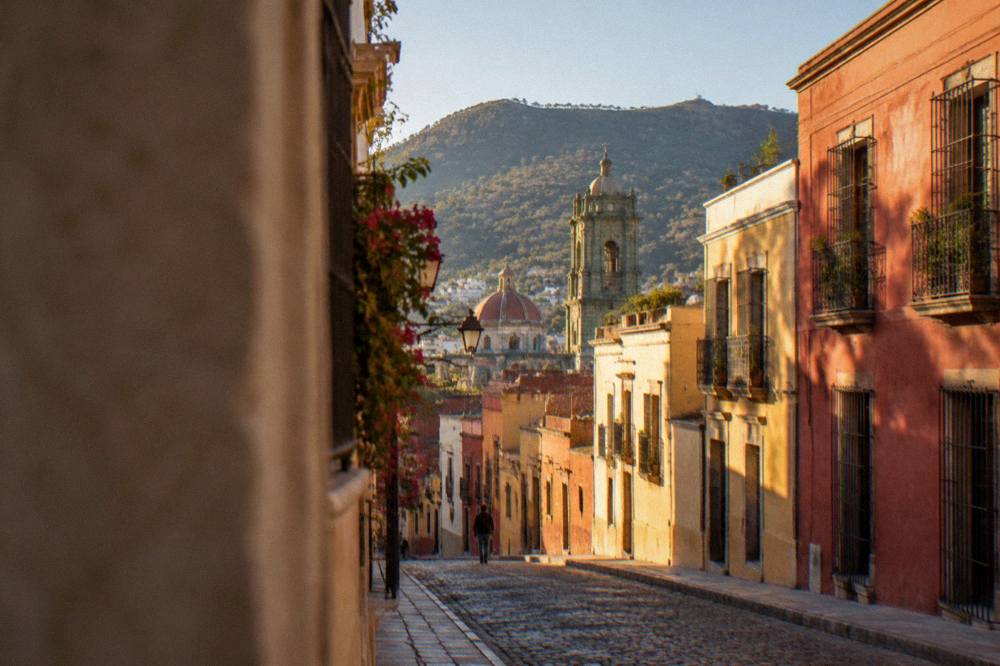
The whole quarter is walkable. The Andador Macedonio Alcalá, the pedestrian street that links the Zócalo to Santo Domingo de Guzmán, begins at the square's north-west corner, and the market block sits at the opposite, southern edge. A visitor can walk from the door of the Oaxaca Cathedral to the market entrances in a few minutes at a normal pace, because the Centro Histórico is compact.
Where Is Mercado Benito Juárez And What Sits Around It?
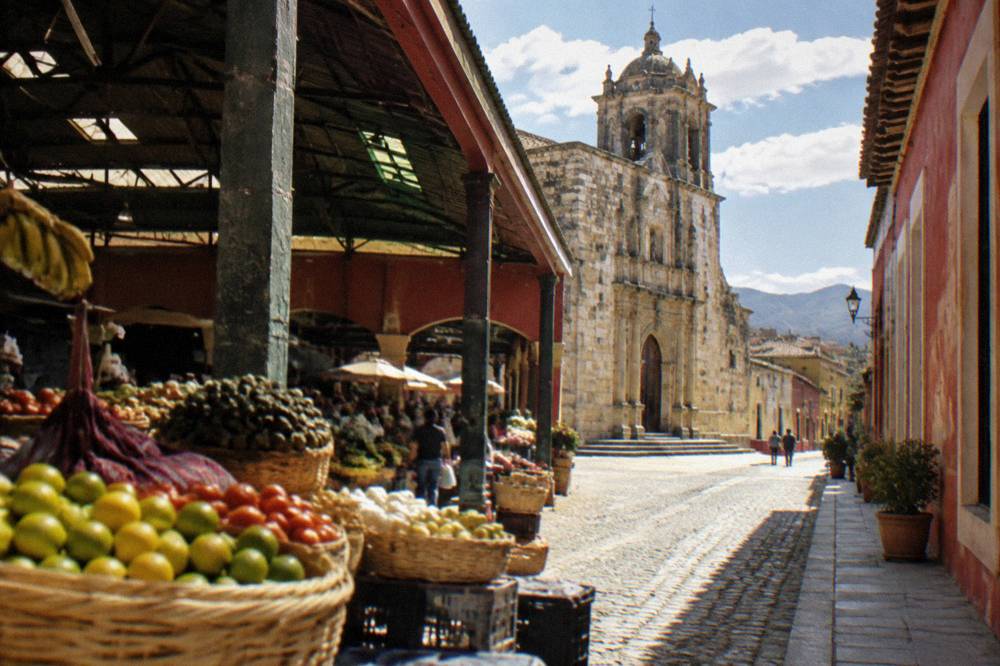
Mercado Benito Juárez occupies the block immediately south-east of the Zócalo in Oaxaca City, in the market quarter of the Centro Histórico that also holds Mercado 20 de Noviembre. The nearest major landmark is the Zócalo itself, the Plaza de la Constitución, one block away on foot. The Oaxaca Cathedral stands on the square's north side, a short walk from the market doors.
The surrounding quarter is described in detail on the site's guide to the markets and streets south of the centre. For planning, the useful facts are these. The market block sits inside the area inscribed by UNESCO as part of the Historic Centre of Oaxaca and Archaeological Site of Monte Albán, property 415, a listing that covers the city core laid out after Oaxaca de Juárez was founded in 1529 as Antequera. The Oaxaca Cathedral faces the square one block north, and the whole circuit from cathedral door to market aisle is a few minutes on foot.
Several of the city's sights sit within a short radius of the market. The state's own schedule for the Jardín Etnobotánico lists free guided tours Monday to Friday at 10:30, 11:00, 11:30, 12:00 and 17:00, and Saturday from 10:30 to 12:00, with large and school groups asked to book two weeks ahead. The INAH page for the Museo de las Culturas de Oaxaca, inside the Santo Domingo complex, lists Tuesday to Saturday opening, 10:00 to 16:00, with entry at 105 MXN for Mexican nationals and 210 MXN for foreign visitors.
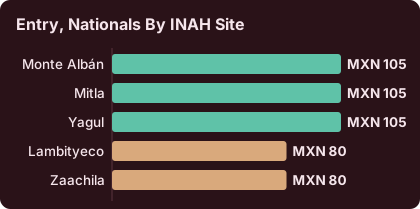
For a sense of scale, the INAH sites of the valley and their 2025 visitor counts, from the same state tourism report, are set out below. Monte Albán received 416,675 visitors, more than the city's museums and smaller ruins combined, which is why the ruins and the markets pair naturally in a single day.
| INAH site (from the Zócalo) | 2025 visitors | Drive time | Entry, nationals | Entry, foreigners |
|---|---|---|---|---|
| Monte Albán | 416,675 | About 15 minutes | 105 MXN | 210 MXN |
| Mitla | 104,428 | About 37 minutes | 105 MXN | 210 MXN |
| Yagul | 10,185 | About 38 minutes | 105 MXN | 210 MXN |
| Lambityeco | 5,545 | not measured | 80 MXN | 145 MXN |
| Zaachila | 4,229 | not measured | 80 MXN | 145 MXN |
Drive times are derived from free-flow routing on OSM roads and are rounded up; real traffic and mountain roads are slower.
A market morning is a natural pairing with a guided walk of the centre, and several city products cover both.
What Can You Buy At Mercado Benito Juárez?
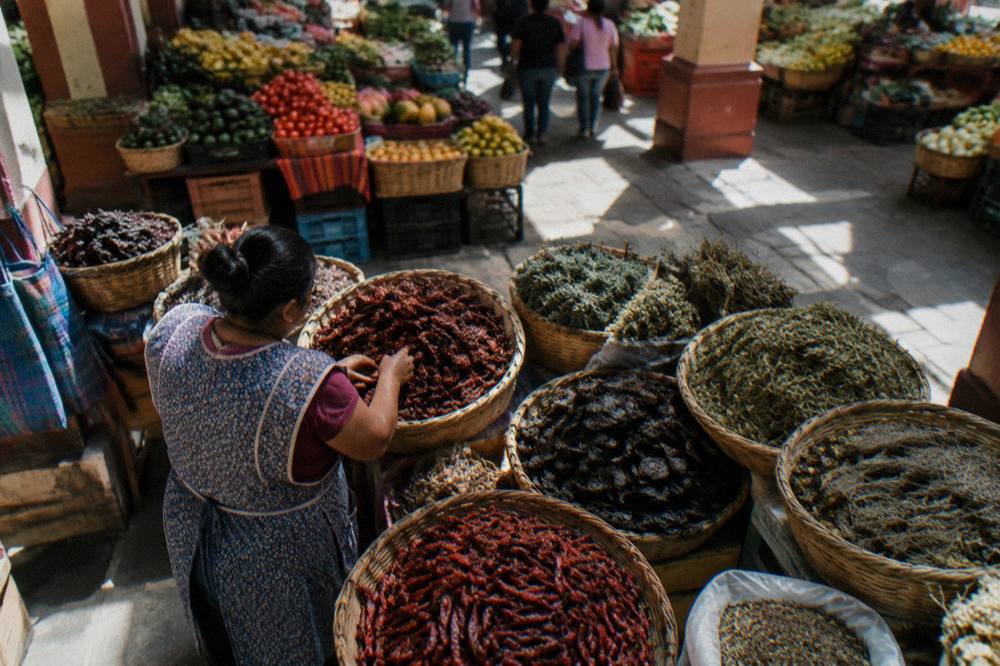
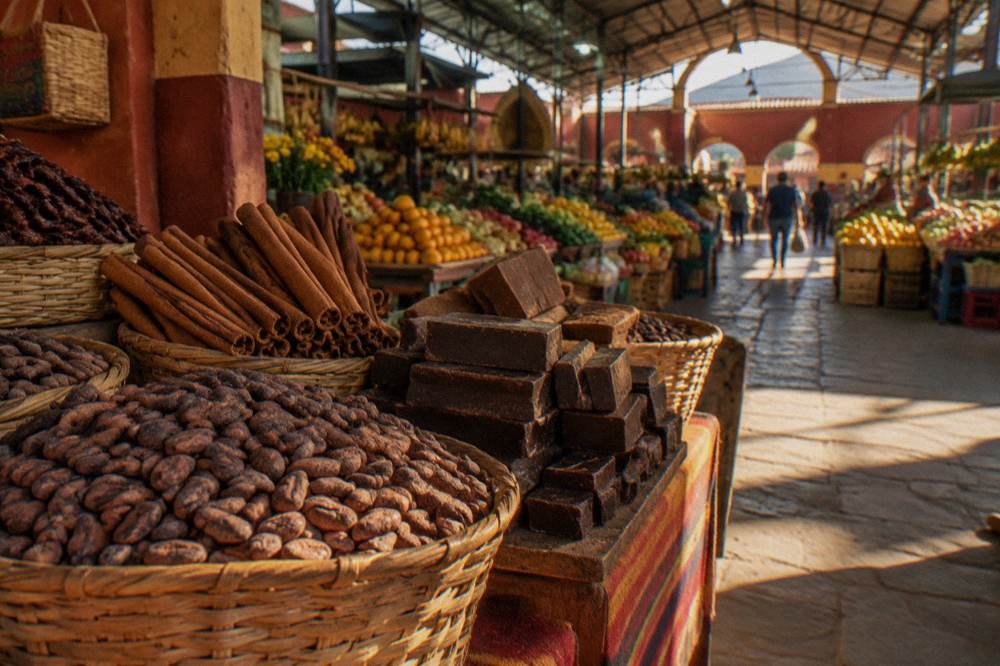
Mercado Benito Juárez is a general market: aisles of fresh produce, dried and fresh chillies, bread, coffee, chocolate and cacao, spices, quesillo, meat and household goods, alongside craft stalls selling woven palm baskets, leather, textiles and alebrijes. It is where the city shops, so the stock is weighted toward ingredients rather than souvenirs, though craft stalls line the outer aisles.
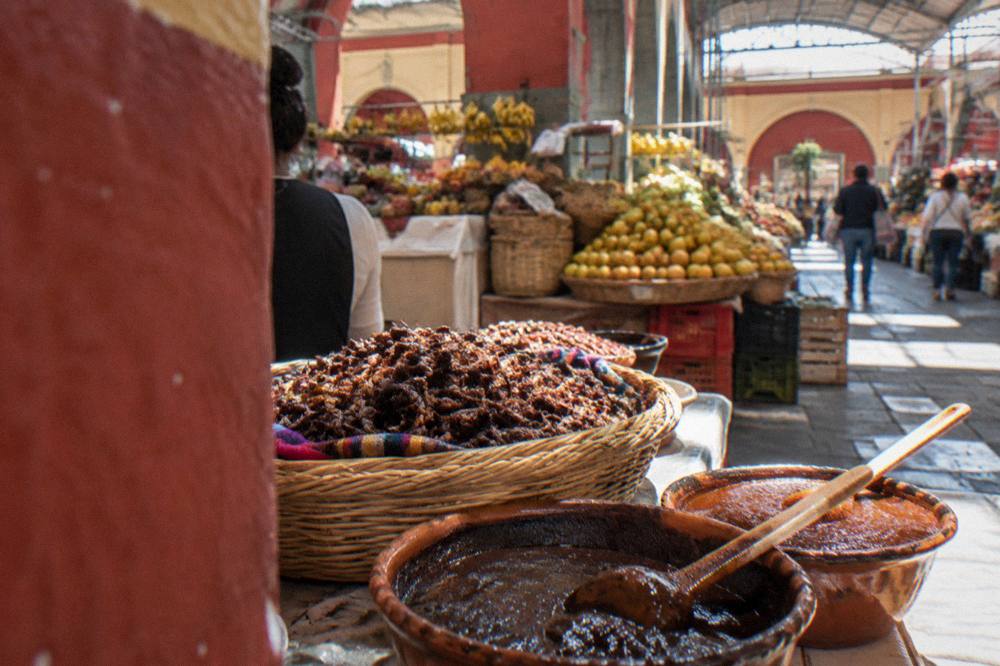
The ingredient stalls are the reason cooks come here. Oaxacan cooking is built on a short list of base ingredients that all appear in this market: dried chillies for mole, cacao beans and cinnamon for chocolate, and maize in several forms. Dishes to know by name include tlayuda, the large crisp tortilla; mole, the sauce family that ranges from dark and sweet to fresh green; tejate, a cold maize and cacao drink; chapulines, toasted grasshoppers; and quesillo, the string cheese of the region. The site carries deeper guides to what to eat in Oaxaca and to the cooking classes that often begin with a guided shop through these aisles.
Craft stalls cluster toward the market's edges and toward the connecting streets. The state's craft villages each specialise: Teotitlán del Valle in woven wool rugs, San Bartolo Coyotepec in barro negro black pottery, and San Martín Tilcajete in carved and painted alebrijes. The market's craft aisles carry work from these and other valley towns, and the drive times from the Zócalo below show how close the source villages are if a purchase deserves a visit to the workshop itself.
| Craft village | Known for | Drive time from the Zócalo |
|---|---|---|
| Teotitlán del Valle | Woven wool textiles | About 26 minutes |
| Tlacolula de Matamoros | Sunday market and bread | About 25 minutes |
| Ocotlán de Morelos | Friday market and crafts | About 37 minutes |
| San Martín Tilcajete | Painted alebrijes | not measured |
| Santa María del Tule | The Tule tree | About 11 minutes |
Reported visitor guidance for Teotitlán del Valle notes that many weaving workshops and cooperatives there operate Tuesday to Sunday with many closed Mondays, and that mornings are recommended for natural-light demonstrations, with the etiquette of asking before photographs and preferring cash. Cash is the working assumption at the market stalls too.
Mercado Benito Juárez Or Mercado 20 De Noviembre?
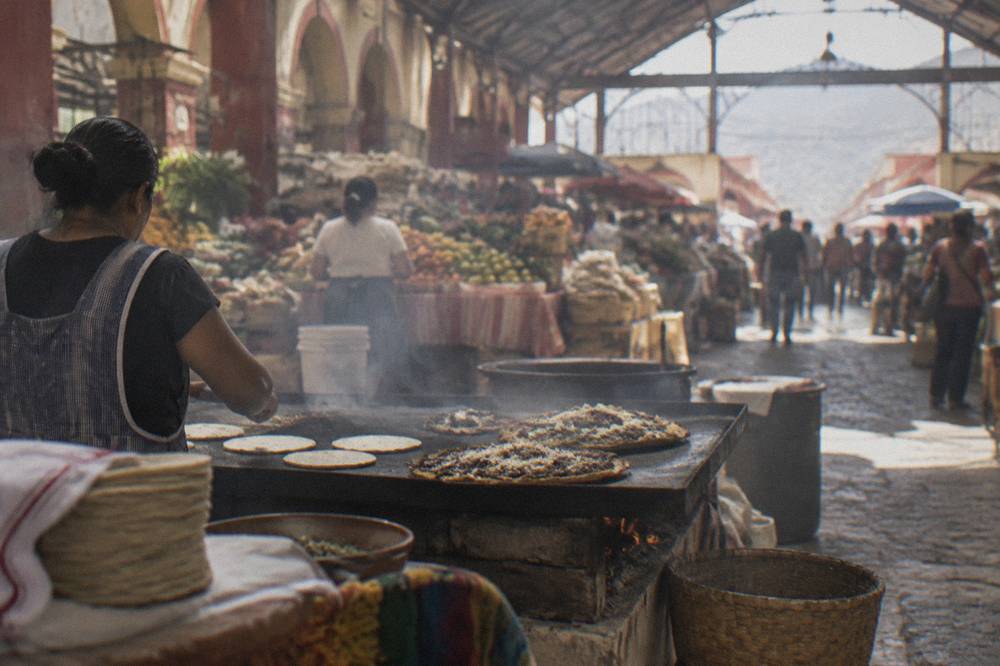
Benito Juárez and 20 de Noviembre are two different markets on adjoining blocks, and the split is clean: Benito Juárez, reported as inaugurated in 1894, is the general market for produce, chocolate, spices and crafts, while 20 de Noviembre, which a state page dates to 1893, is the food market where the hot-food stalls and griddles are concentrated. A visitor wanting ingredients, baskets and chocolate goes to Benito Juárez; a visitor wanting a cooked meal goes next door.
The pairing works as a single circuit. Enter Benito Juárez from the Zócalo side, work the produce and craft aisles, then cross into 20 de Noviembre for food. The state government describes 20 de Noviembre as a key food market with tianguis elements on Saturdays, which is the one day-specific detail the official pages carry.
Both markets belong to a wider family. The city's wholesale weight sits in Mercado de Abastos, described by the state as a large market serving the capital and nearby towns since 1978, while the valleys run a circuit of weekly tianguis markets in the towns. Those weekly markets are covered in the site's day-trip guides to the Tlacolula Sunday market, Ocotlán and its Friday market, and Zaachila and its Thursday market, where Zaachila's INAH archaeological zone opens Thursday to Sunday, 10:00 to 16:00, so a Thursday visit pairs the market with the ruins.
The distinction between the city markets and the weekly valley markets is the one worth holding onto: Benito Juárez trades every day the city trades, while the valley tianguis are one-day events that take over a whole town. Both reward arriving in the morning, when the produce aisles are at their fullest.
The immersion tour above is the one product built exactly around this block: it walks the city's markets with all the gastronomy included, so tastings are part of the ticket rather than an extra. If a market morning plus tastings sounds right, Check availability on the operator's booking page.
What Food Should You Try Around The Mercado Benito Juárez Block?
The dishes to look for in the market quarter are tlayuda, the large crisp tortilla topped with beans, quesillo and meat; mole in its several forms; tejate, the cold maize and cacao drink; chapulines, toasted grasshoppers sold by the scoop; and hot chocolate ground from cacao sold in the same aisles. None of these carries a price on any official page, so treat the stall price as the price.
The chocolate connection is the deepest. Cacao, cinnamon and almonds sit in open sacks in Benito Juárez, and the market's mills grind them into chocolate to the buyer's preferred sweetness, the same chocolate that is whisked into frothy drinks across the city. The site's guides to Oaxacan chocolate and to quesillo trace both foods in detail. More of these guides are collected on Oaxaca Travel Guide.
For eating rather than shopping, the food stalls of 20 de Noviembre sit one block away, and the streets between the two markets carry their own stands. The site's restaurant guide covers where to eat beyond the market, and a cooking class is the alternative route into the same ingredients: several classes begin with a guided shop through these aisles before cooking.
How Does Oaxaca's Climate Shape A Market Day?
Oaxaca City sits at about 1,550 m in the Valles Centrales, with a dry season from November to April and a rainy season from May to October, peaking June to September. The SMN station normals for the city show April with a mean daily high of 34.9 C and June with 188.3 mm of rain, while January averages just 2.4 mm. For a market day, the practical read is warm afternoons, cool mornings, and a rain plan between May and October.
The full monthly picture from the station normals, 1991 to 2020, is below. The figures are averages, not a forecast for any given day.
| Month | Mean high C | Mean low C | Rain mm | Days with rain |
|---|---|---|---|---|
| Jan | 28.9 | 10.3 | 2.4 | 1.4 |
| Feb | 31.1 | 11.6 | 4.6 | 1.1 |
| Mar | 33.3 | 13.6 | 17.6 | 4.1 |
| Apr | 34.9 | 15.8 | 47.3 | 7.6 |
| May | 33.8 | 16.7 | 97.9 | 13.7 |
| Jun | 30.9 | 16.7 | 188.3 | 19.9 |
| Jul | 30.1 | 15.9 | 118.6 | 20.4 |
| Aug | 30.0 | 15.9 | 131.8 | 20.5 |
| Sep | 29.1 | 16.1 | 163.6 | 21.4 |
| Oct | 29.3 | 14.5 | 63.1 | 12.0 |
| Nov | 29.0 | 12.3 | 9.1 | 3.5 |
| Dec | 28.9 | 11.0 | 9.0 | 2.4 |
Rain in the rainy season falls mostly in the afternoon and evening, which is why the market quarter is busiest before midday year-round. The covered halls make both markets workable in any weather, and the site carries a full guide to Oaxaca in the rain for the wet months.
One more climate fact matters for the evening: Oaxaca runs on UTC-6 all year, because Mexico abolished daylight saving time in a law published on 28 October 2022. Sunset does not shift around the calendar the way visitors from farther north expect, so a late market afternoon goes dark at the same hour in July as in December.
How Does Mercado Benito Juárez Fit Into One Day In Oaxaca?
A workable single day pairs the market morning with the Centro Histórico and one valley site: the Zócalo and the market block first, the Andador Macedonio Alcalá and Santo Domingo, including the Museo de las Culturas on its Tuesday-to-Saturday schedule, second, and Monte Albán, about 15 minutes away by road, in the afternoon under its 08:00-to-17:00 opening with last access at 16:00.
The site's one-day itinerary sequences exactly this, and the museum-and-sight timings are worth repeating here because they are the fixed points of any plan. The Jardín Etnobotánico's free guided tours run at fixed hours rather than continuously. The Museo de las Culturas closes at 16:00 and does not open on Sunday or Monday. Monte Albán's last access is 16:00.
| Sight near the market | Open | Last access or notes | Cost |
|---|---|---|---|
| Museo de las Culturas de Oaxaca | Tue to Sat 10:00-16:00 | Closed Sunday and Monday | 105 MXN national, 210 MXN foreign |
| Jardín Etnobotánico guided tours | Mon-Fri 10:30, 11:00, 11:30, 12:00, 17:00; Sat 10:30-12:00 | Groups book two weeks ahead | Free |
| Monte Albán | Mon to Sun 08:00-17:00 | Last access 16:00 | 105 MXN national, 210 MXN foreign |
| Mitla | Mon to Sun 08:00-17:00 | Last access 16:30 | 105 MXN national, 210 MXN foreign |
| Zaachila archaeological zone | Thu to Sun 10:00-16:00 | Closed Monday to Wednesday | 80 MXN national, 145 MXN foreign |
For visitors with more days, the hidden-gems itinerary pulls in the quieter corners of the centre, and the valley day trips to Hierve el Agua, Mitla and the Tule tree all leave from and return to this quarter, so the market makes a natural first or last stop on any of them.
Is Mercado Benito Juárez Worth Visiting?
For most trips to Oaxaca City the answer is yes, because the market block is the shortest route into the city's food culture: the ingredients, the chocolate mills and the basket aisles sit one block from the Zócalo, and the food stalls of 20 de Noviembre adjoin it. It costs nothing to enter, it is central enough to pass through anyway, and it carries the ingredients that every Oaxacan kitchen, home kitchen and restaurant alike, is built on.
The market rewards a slow pass rather than a checklist. Buy the chocolate where it is ground, take the basket aisle seriously, and eat next door. Then cross back to the Zócalo, which is where the day in this city tends to end anyway.
Common Questions About Mercado Benito Juárez
Where Is Mercado Benito Juárez?
One block south-east of the Zócalo, the Plaza de la Constitución, in the Centro Histórico of Oaxaca City, the state capital. The adjoining Mercado 20 de Noviembre sits on the connecting block behind it.
What Is The Difference Between Mercado Benito Juárez And Mercado 20 De Noviembre?
Benito Juárez is the general market for produce, chocolate, spices and crafts; 20 de Noviembre is the food market where the cooked-food stalls and griddles are concentrated. The two blocks adjoin and are walked as one circuit.
How Old Is Mercado Benito Juárez?
Reported sources describe the market as inaugurated in 1894 under the earlier name Mercado Porfirio Díaz, near the Zócalo. The adjoining 20 de Noviembre is described by the state government as founded in 1893.
What Should I Buy At Mercado Benito Juárez?
Chocolate and cacao ground to your preferred sweetness, dried chillies and mole pastes, quesillo, chapulines, tejate, coffee, woven palm baskets, leather goods and crafts from the valley villages.
Can You Eat At Mercado Benito Juárez?
The cooked food is concentrated in neighbouring Mercado 20 de Noviembre, which the state describes as a key food market. Benito Juárez holds the ingredient and craft stalls, with some prepared foods such as tejate and bread among them.
How Do I Visit The Market With A Guide?
Several city tours include the market quarter. The market immersion tour walks the city's markets with all gastronomy included, and the food and markets tour runs tastings in the same streets; both are listed above with live availability.