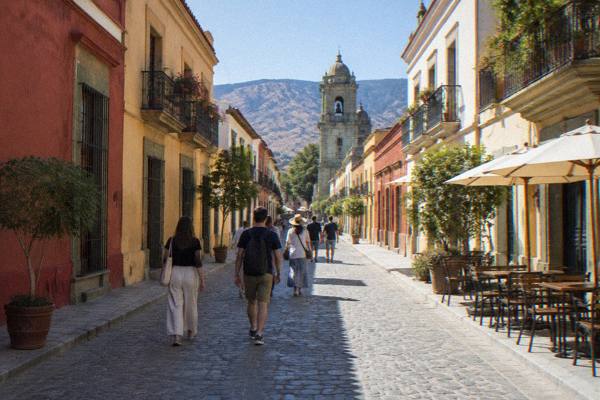
Catedral De Oaxaca: The Baroque Cathedral On The Zócalo
The Catedral de Oaxaca faces the Zócalo, the main square of Oaxaca City, an inland highland capital in the Valles Centrales of Mexico at about 1,550 m. This guide reports what the primary sources say about the square, the sites within a short walk, and how to plan a visit around them.
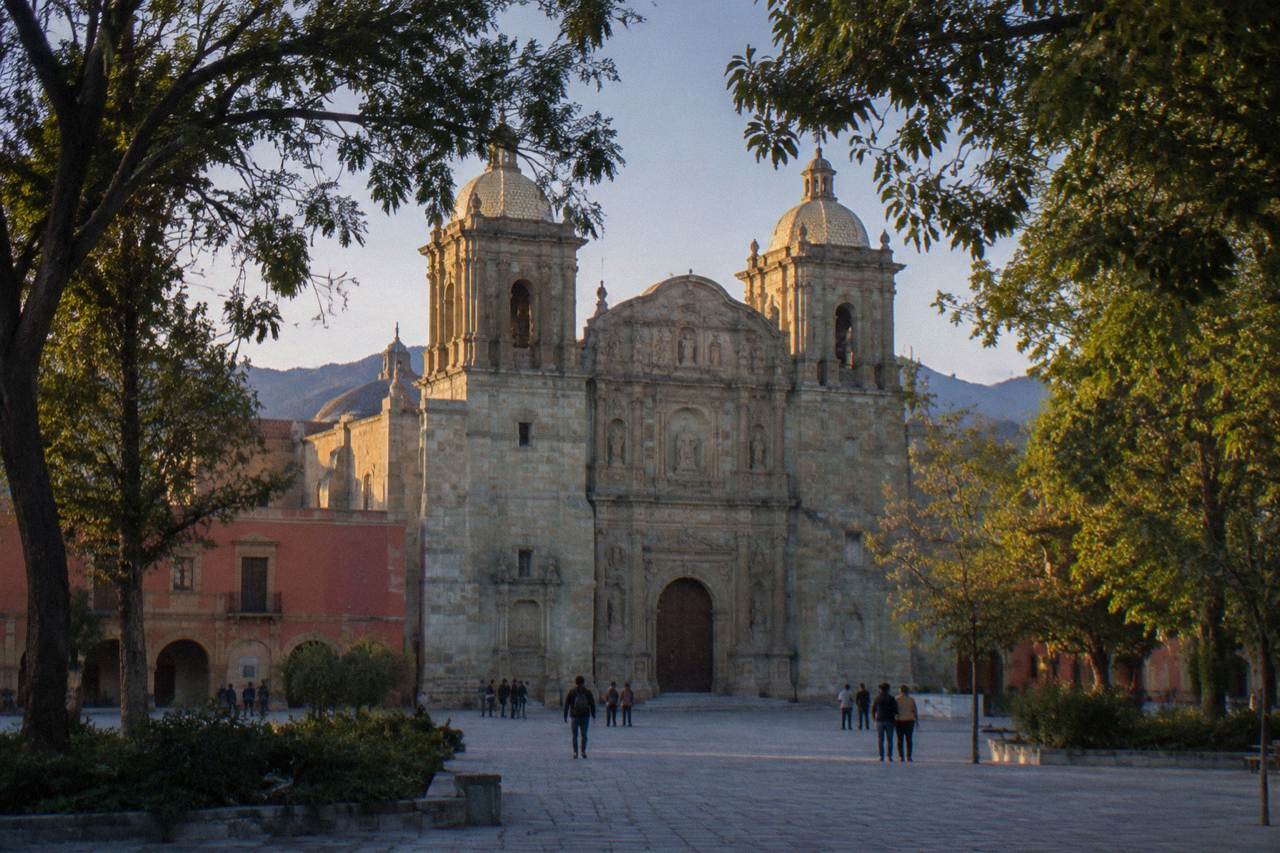
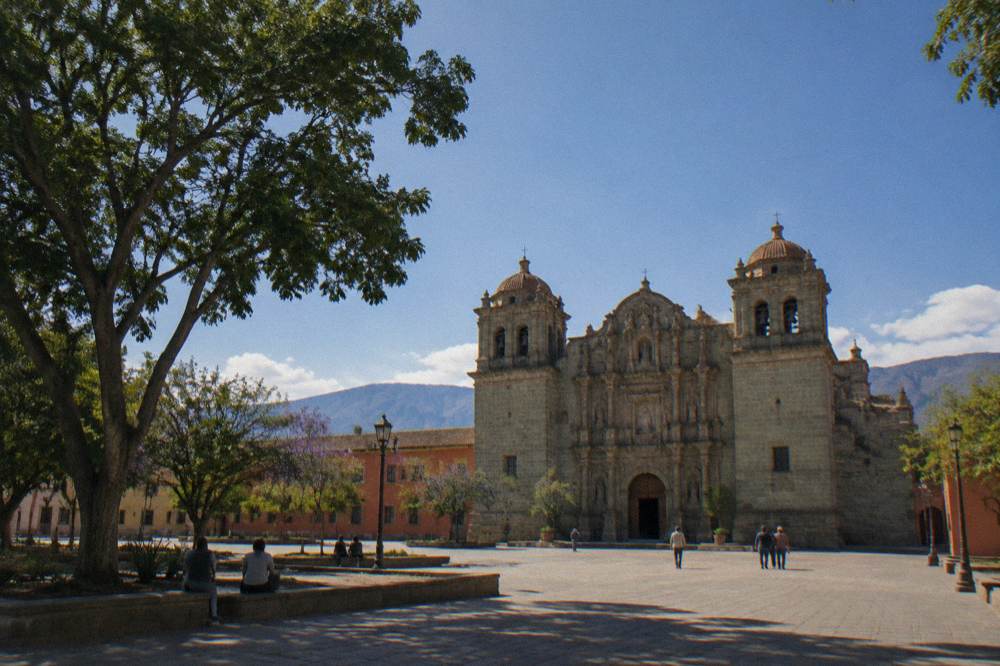
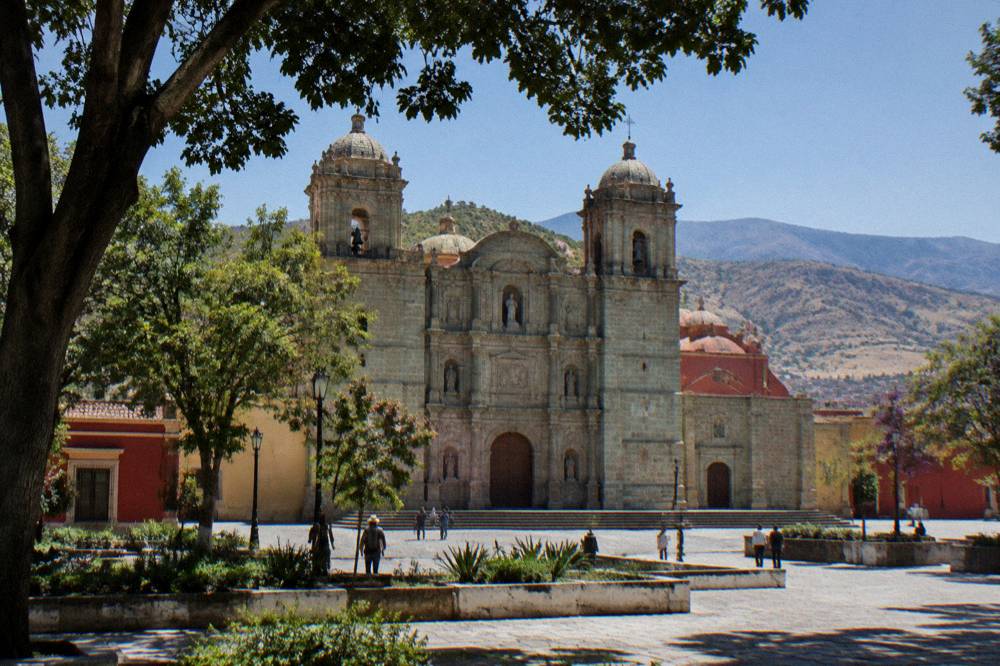
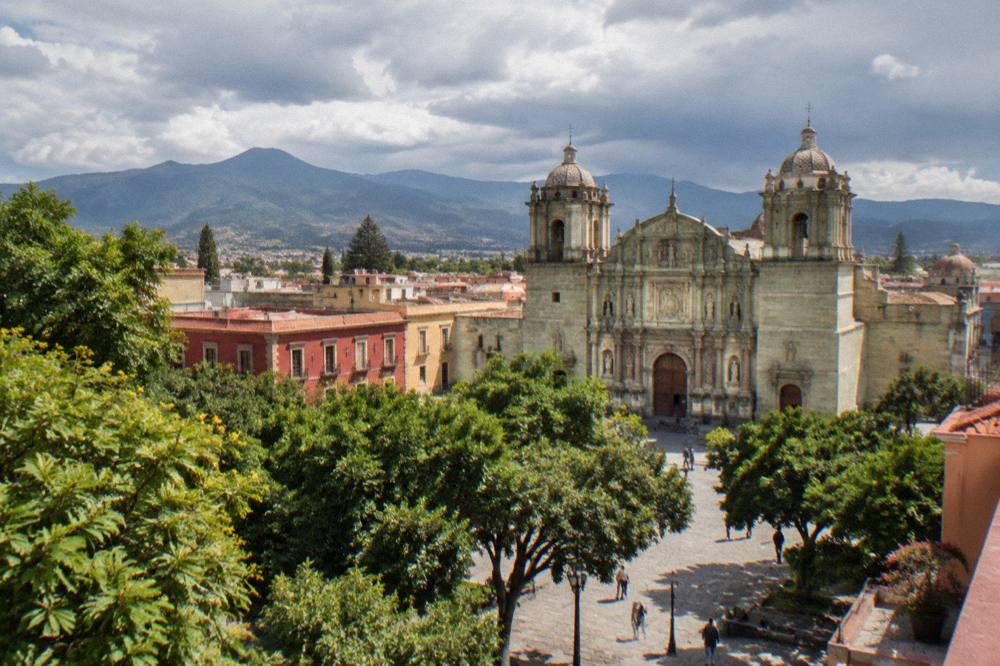
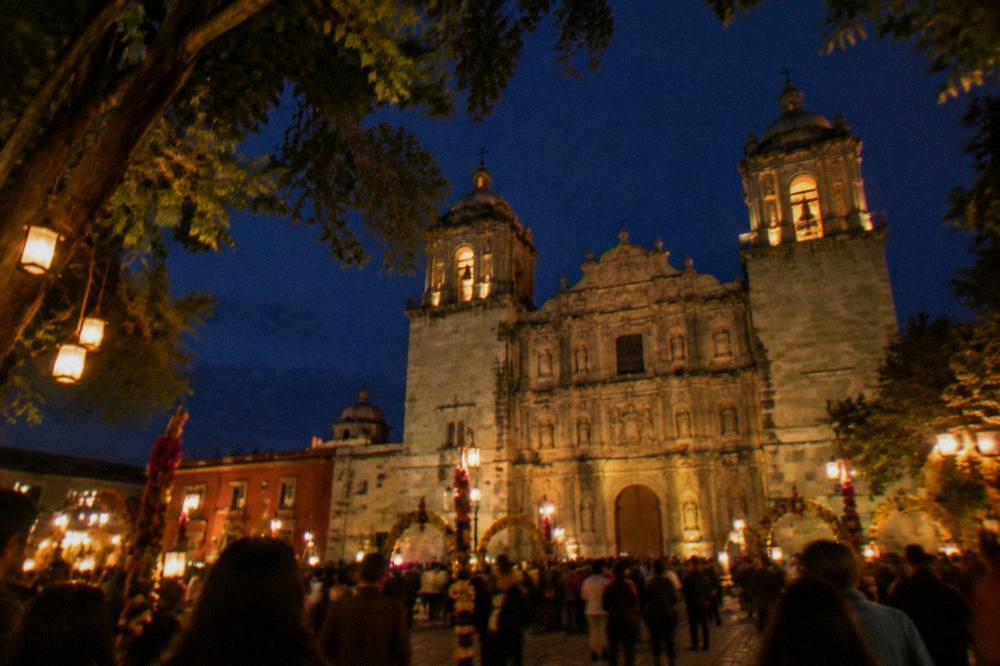
The Catedral de Oaxaca stands on the north side of the Zócalo, the Plaza de la Constitución, in the centre of Oaxaca City. It is the starting point for a walk that takes in the Andador Macedonio Alcalá, Santo Domingo de Guzmán and the city's markets, all within the Historic Centre of Oaxaca and Archaeological Site of Monte Albán, inscribed by UNESCO as property 415.
The Catedral de Oaxaca faces the Zócalo, the Plaza de la Constitución, in the heart of Oaxaca City, the capital of the state of Oaxaca and an inland highland city in the Valles Centrales at about 1,550 m. There is no sea, no port and no river frontage here; the Pacific coast lies far to the south and belongs to a different kind of trip. What sits around the cathedral instead is one of the densest historic cores in Mexico, inscribed by UNESCO as the "Historic Centre of Oaxaca and Archaeological Site of Monte Albán", property 415. The municipality counted 270,955 residents at the 2020 census, and the city logged 1,324,332 tourist arrivals across 2025, of which 212,533 were foreign visitors, per the state tourism indicators.
Oaxaca City site hours and admission come from INAH pages, festival dates from state releases, and climate figures from SMN station normals.
What Is The Catedral De Oaxaca?
The Catedral de Oaxaca is the cathedral church of Oaxaca City, standing on the Zócalo, the Plaza de la Constitución, in the centre of the state capital. The city around it, Oaxaca de Juárez, was founded in 1529 as Antequera and sits inland in the Valles Centrales at about 1,550 m. The historic centre that surrounds the square is part of UNESCO property 415, "Historic Centre of Oaxaca and Archaeological Site of Monte Albán".
The approved title of this page calls it the Baroque cathedral on the Zócalo, and the two anchors of that title, the church and the square, are the fixed points of any first visit. The Zócalo is the plaza at the centre of the grid, and the cathedral faces it. From that corner everything else in the centre unfolds on foot. The Zócalo and its surroundings are the natural first stop of a trip, and the overview of things to do in Oaxaca places the square at the top of the list.
The depth here is everything operational around the cathedral: which nearby sites open on which days, what they charge, how far the valley destinations sit, and what the climate does month by month. That is what the rest of this page delivers.
Where Is The Cathedral In Oaxaca And How Do You Reach It?
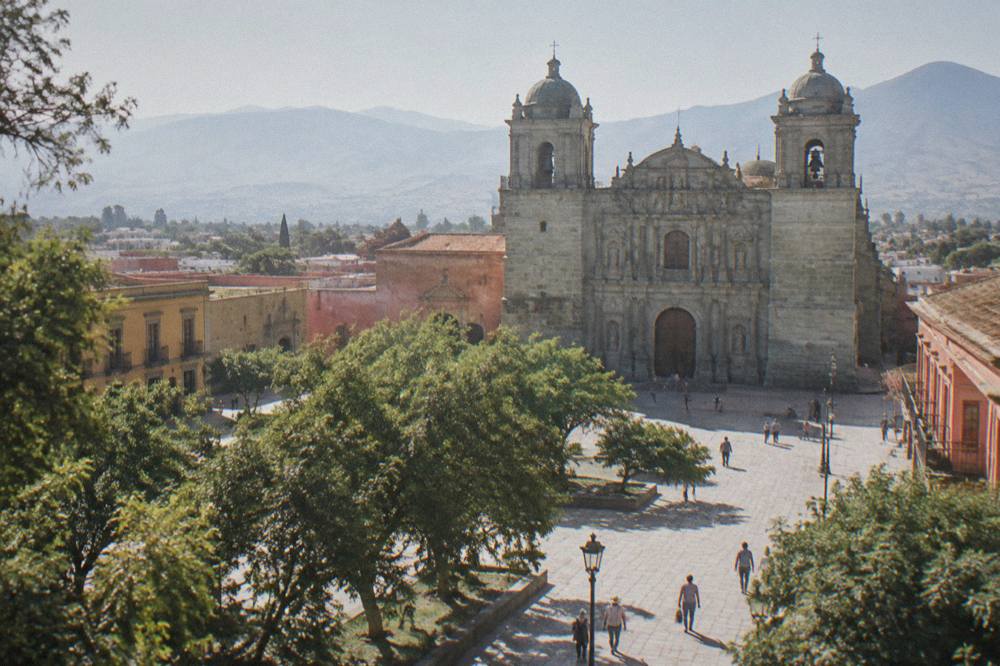
The cathedral sits at the Zócalo, whose centre point is at coordinates 17.0605953, -96.7253435, in the Centro Histórico of Oaxaca City. The square is flat, compact and walkable, and the sites commonly paired with it, the Andador Macedonio Alcalá, the Basílica de la Soledad and the markets, all lie within the same historic grid. Oaxaca's timezone is UTC-6 all year, with no daylight saving since 2022.
The centre of Oaxaca is a walking district. The pedestrian Andador Macedonio Alcalá runs north from the cathedral block toward Santo Domingo de Guzmán, and the Jardín Etnobotánico sits behind that church, with free guided tours Monday to Friday at 10:30, 11:00, 11:30, 12:00 and 17:00 and Saturday from 10:30 to 12:00; large and school groups book two weeks ahead. The Basílica de la Soledad lies a few blocks west of the square.
For arrival logistics, this guide points to the dedicated transport pages on this site, including the airport and bus guides listed under the site's transport section. The rule is simple: a number that is not sourced is a number that is not printed.
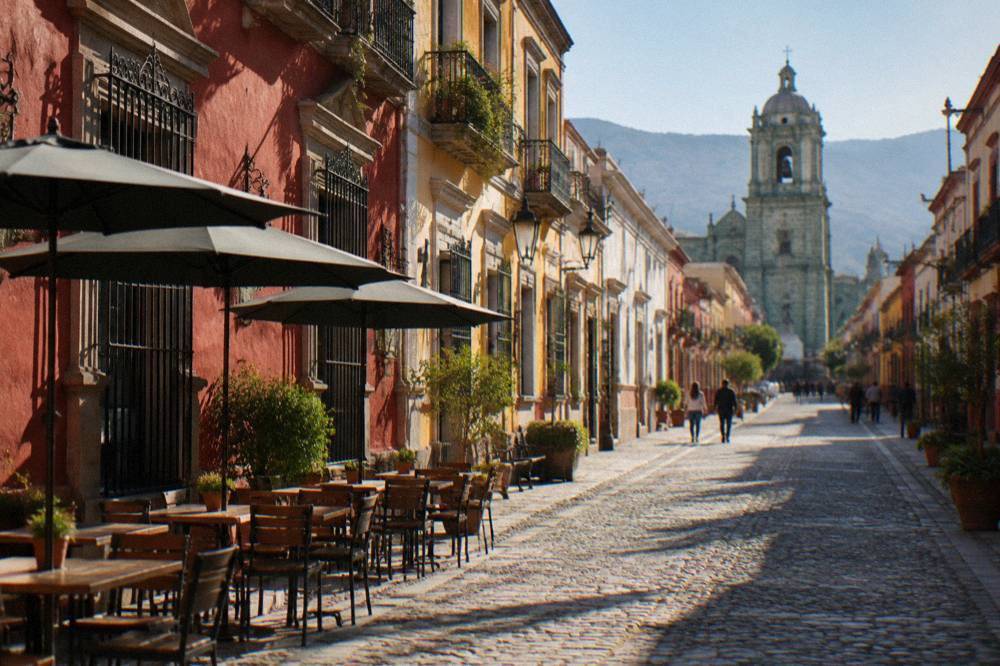
What Can You See Around The Oaxaca Cathedral On Foot?
Within a short walk of the cathedral the highlights are the Zócalo itself, the Andador Macedonio Alcalá, Santo Domingo de Guzmán, the Museo de las Culturas de Oaxaca, the Jardín Etnobotánico, the Museo Textil de Oaxaca and the markets Benito Juárez and 20 de Noviembre. The Museo de las Culturas is open Tuesday to Saturday only, 10:00 to 16:00, and charges 105 MXN for nationals and 210 MXN for foreign visitors, per its INAH page.
The cluster is tight. The Museo de las Culturas de Oaxaca shares the Santo Domingo complex at the top of the Andador; its Tuesday-to-Saturday schedule means Sunday and Monday visitors miss it, a planning fact that shapes which day of the week deserves the historic-centre walk. The Andador Macedonio Alcalá connects the two poles, cathedral and Santo Domingo, in one straight line.
The markets sit south and west of the square: Mercado 20 de Noviembre and Mercado Benito Juárez are the two classic central food and goods markets. Go midday and treat the stalls as the schedule. For a wider framing of the neighbourhoods, the Oaxaca Centro Histórico guide lays out the barrios around the core.
A guided walk is the efficient way to absorb this cluster, and the tour list carries one that covers the historic centre with a professional local guide. See the historic centre walking tour page for what it includes, or Check availability on the operator's booking page.
Which Sites Near The Oaxaca Cathedral Charge Admission And When Are They Open?
The INAH sites of the Valles Centrales charge by category: Category I sites, Monte Albán, Mitla and Yagul, cost 105 MXN for nationals and 210 MXN for foreign visitors; Category III sites, Dainzú, Lambityeco and Zaachila, cost 80 and 145 MXN. Zaachila opens Thursday to Sunday only, 10:00 to 16:00, and Atzompa closes at 16:00 with last access at 15:00, not 17:00.
These figures come from the individual INAH pages exactly as listed. The practical reading for a cathedral-centred trip: every INAH archaeological zone in the valley is a day trip or half-day trip out of the centre, so the table below doubles as a planning sheet for the days you give to the valley.
| Site (INAH) | Days and hours | Last access | Nationals MXN | Foreign visitors MXN |
|---|---|---|---|---|
| Monte Albán | Monday to Sunday, 08:00 to 17:00 | 16:00 | 105 | 210 |
| Mitla | Monday to Sunday, 08:00 to 17:00 | 16:30 | 105 | 210 |
| Yagul | Monday to Sunday, 08:00 to 17:00 | 16:00 | 105 | 210 |
| Dainzú | Monday to Sunday, 08:00 to 17:00 | 16:30 | 80 | 145 |
| Lambityeco | Monday to Sunday, 08:00 to 17:00 | 16:30 | 80 | 145 |
| Zaachila | Thursday to Sunday, 10:00 to 16:00 | 16:00 | 80 | 145 |
| Atzompa | Monday to Sunday, 08:00 to 16:00 | 15:00 | not on the page | not on the page |
| Museo de las Culturas de Oaxaca | Tuesday to Saturday, 10:00 to 16:00 | 16:00 | 105 | 210 |
One further INAH figure applies across several pages: visits outside normal hours at Yagul, Lambityeco, Atzompa and the Museo de las Culturas are listed at 730 MXN. This guide prints no camera fee, parking fee or "Sundays free" claim, because none appears on the pages. The dedicated Monte Albán and Mitla pages carry the fuller treatment of the two biggest zones.
How Far Are The Day Trips From The Oaxaca Cathedral?
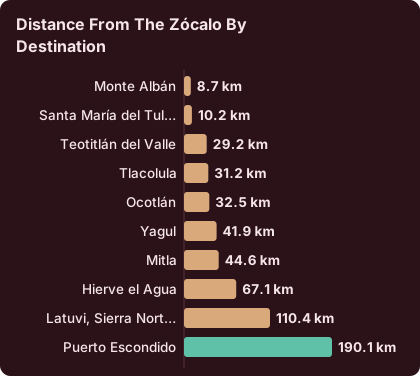
Drive times from the Zócalo, computed on OSM roads at free flow and rounded up, run about 15 minutes to Monte Albán, about 11 minutes to Santa María del Tule, about 26 minutes to Teotitlán del Valle, about 25 minutes to Tlacolula, about 37 minutes to Mitla and about 57 minutes to Hierve el Agua. Latuvi in the Sierra Norte is about 142 minutes, and Puerto Escondido on the coast about 165 minutes on the new highway.
Real traffic and mountain roads make these floors, not promises. Hierve el Agua sits at the end of a climb, and the Sierra Norte villages sit beyond that again; neither is a quick dart out of the centre. The coast is a different category of trip entirely and is never a day excursion from the cathedral square. The rest of the planning pages sit on Oaxaca Travel Guide.
| Destination | Distance from the Zócalo | Free-flow drive time |
|---|---|---|
| Monte Albán | 8.7 km | about 15 min |
| Santa María del Tule | 10.2 km | about 11 min |
| Teotitlán del Valle | 29.2 km | about 26 min |
| Tlacolula | 31.2 km | about 25 min |
| Ocotlán | 32.5 km | about 37 min |
| Yagul | 41.9 km | about 38 min |
| Mitla | 44.6 km | about 37 min |
| Hierve el Agua | 67.1 km | about 57 min |
| Latuvi, Sierra Norte | 110.4 km | about 142 min |
| Puerto Escondido | 190.1 km | about 165 min |
The valley chain invites a single big loop: Hierve el Agua, Mitla and the Tule tree in one outing, which is exactly what the strongest valley tours on the tour list cover. Closer to town, Teotitlán del Valle and the Friday market town of Ocotlán work as shorter outings, and the Cuilapan de Guerrero stop sits on the west side of the valley.
What Is The Weather Like Around The Oaxaca Cathedral By Month?
Oaxaca City has a dry season from November to April and a rainy season from May to October, with rain peaking June to September. At the SMN station in the city, June averages 188.3 mm of rain and January 2.4 mm, April has an average daily high of 34.9 C, and December and January have the coolest average nights at 11.0 and 10.3 C. The annual rain total averages 853.3 mm.
The square itself is an outdoor room: whatever the month, the visit happens in the open air between the cathedral and the portales, so the table below is the planning sheet for what to expect standing on it.
| Month | Average high C | Average low C | Average rain mm | Days with rain |
|---|---|---|---|---|
| January | 28.9 | 10.3 | 2.4 | 1.4 |
| February | 31.1 | 11.6 | 4.6 | 1.1 |
| March | 33.3 | 13.6 | 17.6 | 4.1 |
| April | 34.9 | 15.8 | 47.3 | 7.6 |
| May | 33.8 | 16.7 | 97.9 | 13.7 |
| June | 30.9 | 16.7 | 188.3 | 19.9 |
| July | 30.1 | 15.9 | 118.6 | 20.4 |
| August | 30.0 | 15.9 | 131.8 | 20.5 |
| September | 29.1 | 16.1 | 163.6 | 21.4 |
| October | 29.3 | 14.5 | 63.1 | 12.0 |
| November | 29.0 | 12.3 | 9.1 | 3.5 |
| December | 28.9 | 11.0 | 9.0 | 2.4 |
Two practical readings. Afternoon rain dominates the rainy season, with roughly 20 wet days a month from June to September, so mornings are the reliable window for valley trips and the square keeps its evening role regardless. Nights from November to February drop to around 10 or 11 C on average, which surprises visitors packing for "hot Mexico"; a layer for the evening is standard advice for a highland city at about 1,550 m. The weather by month and best time to visit guides carry the longer treatment.
When Do Festivals Fill The Zócalo Outside The Oaxaca Cathedral?
The Zócalo anchors the city's two big festivals: Guelaguetza, which runs on two Mondays in July at the Auditorio Guelaguetza on the Cerro del Fortín, and Día de Muertos, which centres on the traditional dates of 31 October to 2 November with comparsas and cemeteries open at night. The 2026 Guelaguetza performances fell on 20 and 27 July at 10:00 and 17:00, with Palco A at 1,632 MXN and Palco B at 1,321 MXN, and Palcos C and D free.
Those Guelaguetza prices belong to the 2026 edition, already past; 2027 dates are not announced. Tickets for the 2026 edition sold only through the official Superboletos channel, with a two-ticket limit per account, and the paid sections sold out quickly, per the state releases. The standing pattern to plan around is two Mondays in July plus the surrounding parades: the Calendas de las Culturas and the Convites that fill the streets of the centre in the days before.
| Festival | Standing pattern | Recent edition detail | 2026 or 2027 status |
|---|---|---|---|
| Guelaguetza | Two Mondays in July, Auditorio Guelaguetza | 20 and 27 July 2026, 10:00 and 17:00 | Past; 2027 not announced |
| Feria del Mezcal | Runs alongside Guelaguetza month | 17 to 28 July 2026, CCCO Santa Lucía del Camino, entry about 80 MXN | Reported; confirm on the official page |
| Día de Muertos | Centres on 31 October to 2 November | 2025 programme ran 25 October to 4 November with 140+ activities | 2026 programme not announced |
| Noche de Rábanos | 23 December tradition | 128th edition held December 2025 | 2026 not announced |
For Día de Muertos, this guide states only the standing pattern and the 2025 programme; the 2026 programme is not announced, so no 2026 dates appear on this page. The full treatment lives in the Día de Muertos in Oaxaca guide, and the December radish tradition has its own pages in the Noche de Rábanos guide and the answer on its dates.
Which Tours Work Well With A Visit To The Oaxaca Cathedral?
The tours that pair naturally with a cathedral visit are the historic centre walking tour, which covers the square and the streets running off it; the craft and food experiences based in the centre, from printmaking workshops to cooking classes; and the valley day trips to Hierve el Agua, Mitla and Monte Albán that depart from the centre each morning.
This guide's framing is simple. Day one belongs to the centre: the square, the Andador, Santo Domingo and the markets, with a guided walk or a food tour binding it together. Day two belongs to the valley, and the drive-time table above shows why one well-built loop beats self-driving the same roads. Beyond those two frames, the tour list's workshops, mezcal tastings and Sierra Norte hikes fill whatever the trip has left.
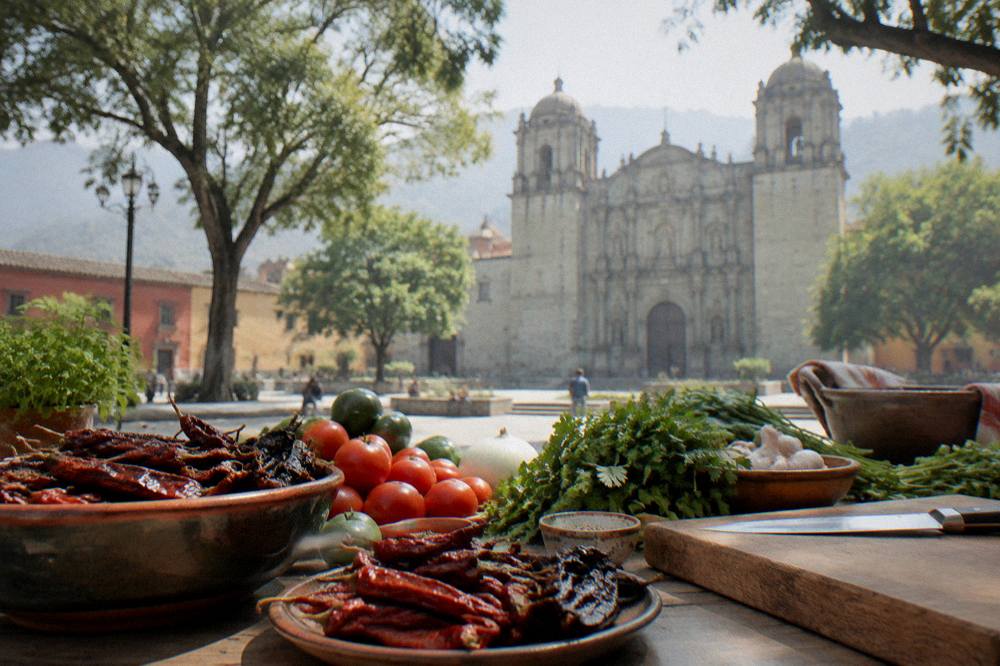
For travellers weighing Oaxaca against other colonial cities, the comparison with San Miguel de Allende covers the differences, and the hidden-gems itinerary pieces on the site compress the centre for short stays. A cooking class is the deepest single experience in the food capital frame; the class below pairs a market visit with the kitchen.
What Should You Know Before Planning A Trip Around The Oaxaca Cathedral?
Oaxaca City logged 1,324,332 tourist arrivals in 2025, with average hotel occupancy of 51.73 percent and an average stay of 2.00 nights, per the state tourism indicators. The state lodging tax is 3 percent on hotel-type stays, 5 percent for intermediaries. The city sits at about 1,550 m, keeps UTC-6 all year, and is inland, with no beach or port anywhere in the municipality.
The short average stay is the most useful number on that list: two nights is the norm, which means most itineraries compress the centre into one walking day and the valley into one loop. A third and fourth day unlock the Sierra Norte, the craft villages and the markets further out. The how many days in Oaxaca guide works through the arithmetic.
Safety wording on this page stops at what the advisories say: the UK FCDO advises against all but essential travel to parts of Mexico and does not name Oaxaca on its main page; Canada advises a high degree of caution for Mexico overall; and the US State Department lists Oaxaca state at Level 2, exercise increased caution. Road blockades by teachers' unions are a standing risk that can disrupt road and airport access for hours at a time; check current conditions before travel days. The Oaxaca safety guide carries the full advisory picture.
Common Questions About The Catedral De Oaxaca
What Is The Catedral De Oaxaca?
It is the cathedral church of Oaxaca City, standing on the Zócalo, the Plaza de la Constitución, in the centre of the state capital. The historic centre around it is part of UNESCO property 415, the "Historic Centre of Oaxaca and Archaeological Site of Monte Albán".
Where Is The Catedral De Oaxaca Located?
It faces the Zócalo in the Centro Histórico of Oaxaca City, an inland highland city in the Valles Centrales at about 1,550 m. The centre point of the Zócalo sits at coordinates 17.0605953, -96.7253435.
Is The Catedral De Oaxaca Near Santo Domingo?
Yes. The Andador Macedonio Alcalá, a pedestrian street, runs from the cathedral block north toward Santo Domingo de Guzmán, and the Museo de las Culturas de Oaxaca and the Jardín Etnobotánico sit in and beside that same complex.
What Can You See Within Walking Distance Of The Oaxaca Cathedral?
The Zócalo, the Andador Macedonio Alcalá, Santo Domingo de Guzmán, the Museo de las Culturas de Oaxaca, which opens Tuesday to Saturday 10:00 to 16:00, the Jardín Etnobotánico with its free guided tours, the Museo Textil de Oaxaca and the markets Benito Juárez and 20 de Noviembre.
How Far Is Monte Albán From The Oaxaca Cathedral?
About 8.7 km from the Zócalo, a free-flow drive of about 15 minutes on the OSM road network. Real traffic and the mountain access road make it slower, and the INAH site is open Monday to Sunday, 08:00 to 17:00, with last access at 16:00.
When Is The Best Time To See The Zócalo Outside The Cathedral?
The dry season, November to April, averages under 20 mm of rain a month at the city's SMN station, with January at 2.4 mm. Festival periods add another reason: Guelaguetza fills the city on two Mondays in July, and Día de Muertos centres on 31 October to 2 November, though the 2026 programme is not announced.
The cathedral and its square are the fixed centre of a visit to Oaxaca City, and every sourced hour, fee, drive time and climate figure on this page is there to make the days around that square add up.