Things To Do In Oaxaca
Oaxaca City is the capital of the state of Oaxaca in Mexico, an inland highland city in the Valles Centrales at about 1,550 m. Here is what to do there, with the hours, admission prices and drive times that primary sources actually publish.
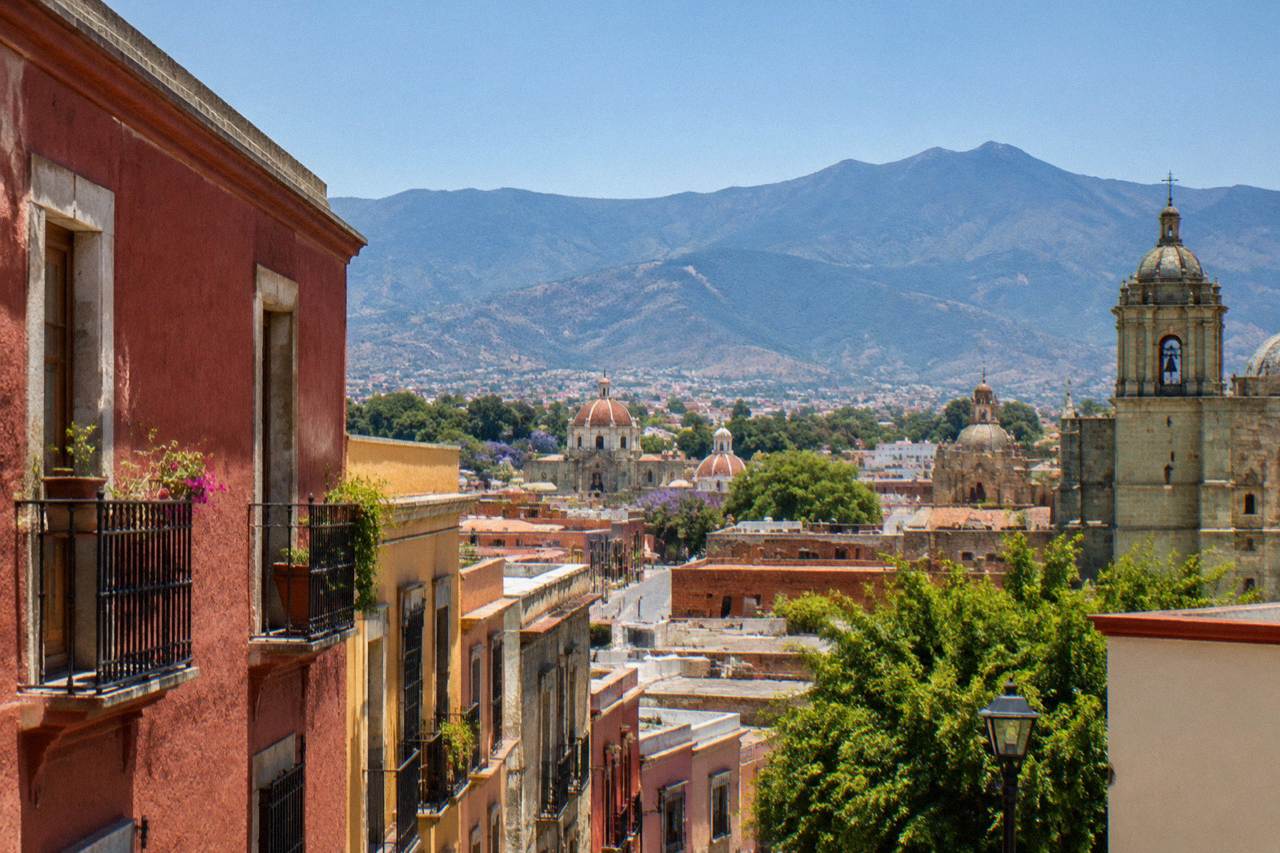
The core things to do in Oaxaca City are the Zócalo and Santo Domingo de Guzmán in the Centro Histórico, the INAH archaeological zones led by Monte Albán, the markets and food, mezcal tasting, and valley day trips to Mitla, Hierve el Agua and the craft villages.
Oaxaca de Juárez is the capital of the state of Oaxaca in Mexico, an inland highland city in the Valles Centrales at about 1,550 m, and the historic centre together with Monte Albán is inscribed by UNESCO as property 415, "Historic Centre of Oaxaca and Archaeological Site of Monte Albán". There is no sea here and no beach: the Pacific coast is a long extension by road or a short flight. What the city has instead is unusually concentrated, a walkable Centro Histórico, the markets and food of the Valles Centrales, mezcal, and a ring of archaeological zones and craft villages within an hour's drive. The things to do in Oaxaca come with the hours, admission prices and drive times that primary sources publish.
A few anchors before the detail. The INAH archaeological zones publish their hours and peso admissions on their own pages, and they differ: Zaachila opens Thursday to Sunday only, Atzompa closes at 16:00, and the Museo de las Culturas de Oaxaca is open Tuesday to Saturday. Dry season runs November to April and rainy season May to October, per the SMN station normals. The state lodging tax is 3 percent on hotel-type stays, 5 percent for intermediaries, under decree 884 published 10 December 2025. The timezone is UTC-6 all year, since Mexico abolished seasonal clock changes under a law published 28 October 2022.
Things To Do In Oaxaca On Your First Day
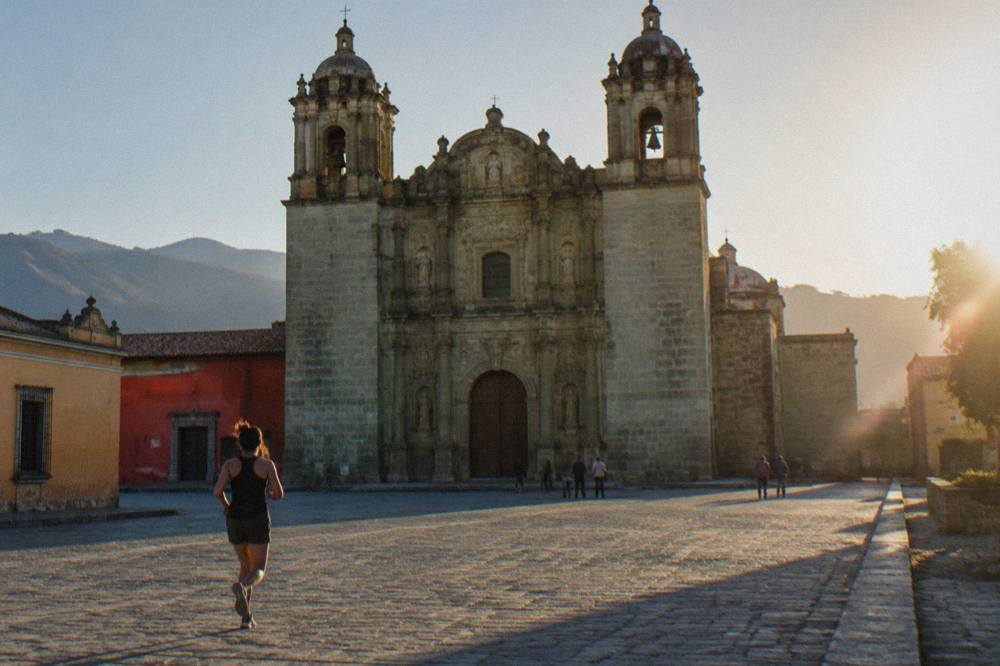
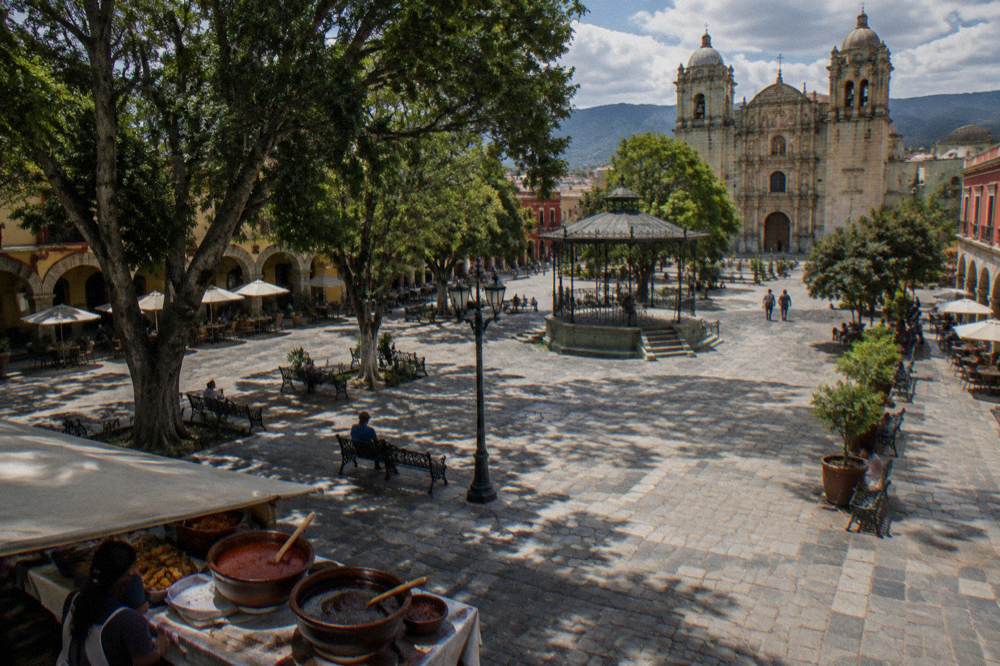
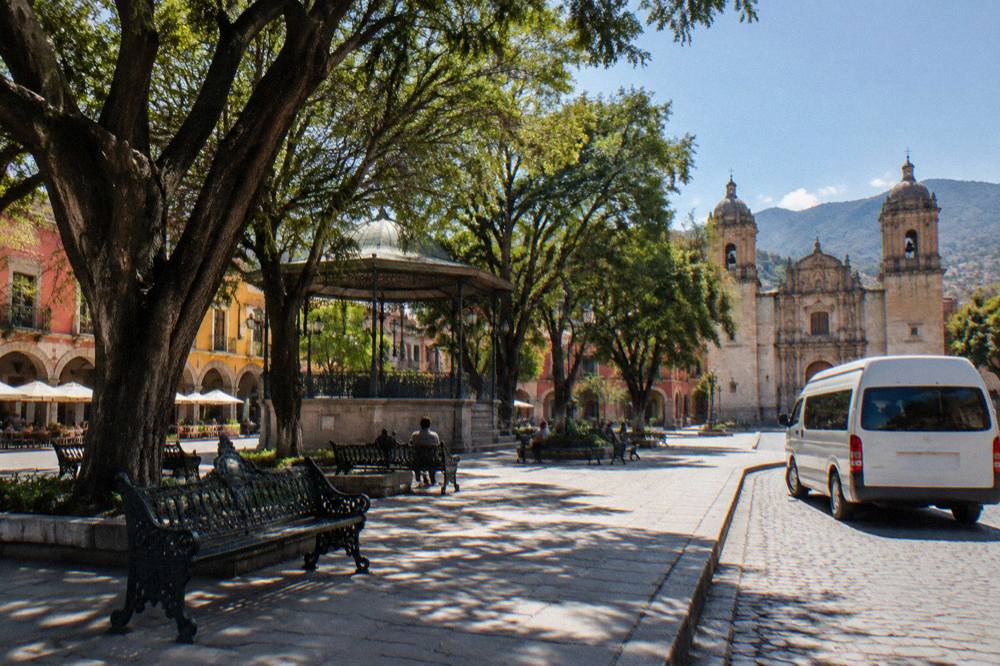
A first day in Oaxaca City divides naturally into the Centro Histórico's core walk and one headline sight: the Zócalo (Plaza de la Constitución), the Andador Macedonio Alcalá, Santo Domingo de Guzmán, the Museo de las Culturas de Oaxaca inside it, and the Jardín Etnobotánico beside it, all within a few blocks of each other and all reachable on foot.
The walk is short. The Andador Macedonio Alcalá runs from the Zócalo toward Santo Domingo de Guzmán. The Museo de las Culturas de Oaxaca is inside the former convent complex: per the INAH page it opens Tuesday to Saturday, 10:00 to 16:00, and charges 105 MXN for nationals and 210 MXN for foreign visitors, the same Category I rate as Monte Albán. Do not plan it for a Sunday or Monday.
The Jardín Etnobotánico next door runs free guided tours, and the state schedule is specific: Monday to Friday at 10:30, 11:00, 11:30, 12:00 and 17:00, and Saturday from 10:30 to 12:00, with large and school groups booking two weeks ahead. The tour times bracket the museum's opening hours neatly, so a first-day plan can pair them in either order and still fit lunch in the middle. The Jardín Etnobotánico guide page has the full detail.
For orientation without spending anything, a guided walk is the efficient opener. A paid walk covers the centre's streets, food and culture, and there is also a free, tip-based GuruWalk option listed further down this page. The Oaxaca walking tour guide compares the routes.
After the centre, food is the second half of a first day. Mercado 20 de Noviembre sits south of the Zócalo and is the city's key food market, founded in 1893 per the state government's own market history, with tianguis stalls on Saturdays. The what to eat in Oaxaca guide covers mole, tlayudas, quesillo, tejate and chapulines dish by dish.
| First-day stop | Hours (source page) | Admission (MXN) |
|---|---|---|
| Zócalo / Andador Macedonio Alcalá | Public space | Free |
| Museo de las Culturas de Oaxaca | Tue to Sat 10:00 to 16:00 | 105 nationals / 210 foreigners |
| Jardín Etnobotánico guided tour | Mon to Fri 10:30, 11:00, 11:30, 12:00, 17:00; Sat 10:30 to 12:00 | Free |
| Mercado 20 de Noviembre | Market; state page gives no hours | Food at market prices |
What Do Oaxaca Tours And Tickets Cost?
Two cost layers apply in Oaxaca: INAH admissions published in pesos, from 80 MXN at Category III zones to 210 MXN for foreign visitors at Category I sites like Monte Albán and Mitla, and bookable tours whose prices, ratings and durations are printed by the live listings themselves, so check the operator's booking page for the current figure rather than trusting a number copied from an old article.
The INAH layer is fixed and cheap. Category I, which covers Monte Albán, Mitla and Yagul, is 105 MXN for Mexican nationals and 210 MXN for foreign visitors. Category III, covering Dainzú, Lambityeco and Zaachila, is 80 and 145. A visit outside normal INAH hours can be arranged at 730 MXN, a figure the INAH pages for Yagul, Lambityeco, Atzompa and the Museo de las Culturas all list. Those are per-person admissions to public sites, not tour prices.
| INAH site | Category | Open | Last access | Nationals | Foreigners |
|---|---|---|---|---|---|
| Monte Albán | I | Daily 08:00 to 17:00 | 16:00 | 105 | 210 |
| Mitla | I | Daily 08:00 to 17:00 | 16:30 | 105 | 210 |
| Yagul | I | Daily 08:00 to 17:00 | 16:00 | 105 | 210 |
| Dainzú | III | Daily 08:00 to 17:00 | 16:30 | 80 | 145 |
| Lambityeco | III | Daily 08:00 to 17:00 | 16:30 | 80 | 145 |
| Zaachila | III | Thu to Sun 10:00 to 16:00 | closes 16:00 | 80 | 145 |
The tour layer is where the listing does the talking. Food tours, cooking classes, mezcal tastings, craft workshops and valley day trips all sell through live listings whose prices move, so this site prints them from the listing data rather than typing figures. What can be said in prose is what each product covers: a market walk with tastings, a cooking class with a market visit, a distillery visit with behind-the-scenes access, a valley loop with transport included. The Oaxaca travel costs and budget guide works through the daily arithmetic on top of these two layers.
Free Things To Do In Oaxaca
The genuinely free, sourced things to do in Oaxaca City are the Jardín Etnobotánico's guided tours (free, at fixed times Monday to Saturday), the Guelaguetza's Palcos C and D seating (free by arrival order during the July festival), the city's public squares and streets, and the free GuruWalk walking tours that run on a pay-what-you-want basis.
The distinction matters because plenty of "free things" lists invent free days. The INAH pages do not publish a free-Sunday policy, so this site does not claim one. What is documented is narrower and still generous: the Jardín Etnobotánico schedule above, the festival seating, and the free walks. The free things to do in Oaxaca guide expands on all of them.
The free walks deserve their own paragraph. Oaxaca has nine GuruWalk walks on this site, and they are free in the specific sense that you pay what you want at the end. One of them, a locals-led walk of the historic centre, appears in the picks below. It is not a paid tour and should not be compared on price; it belongs in a budget plan the way the botanical garden does, as a zero-fixed-cost hour or two with an optional payment at the end. The Jalatlaco guide covers the barrio's free murals walk.
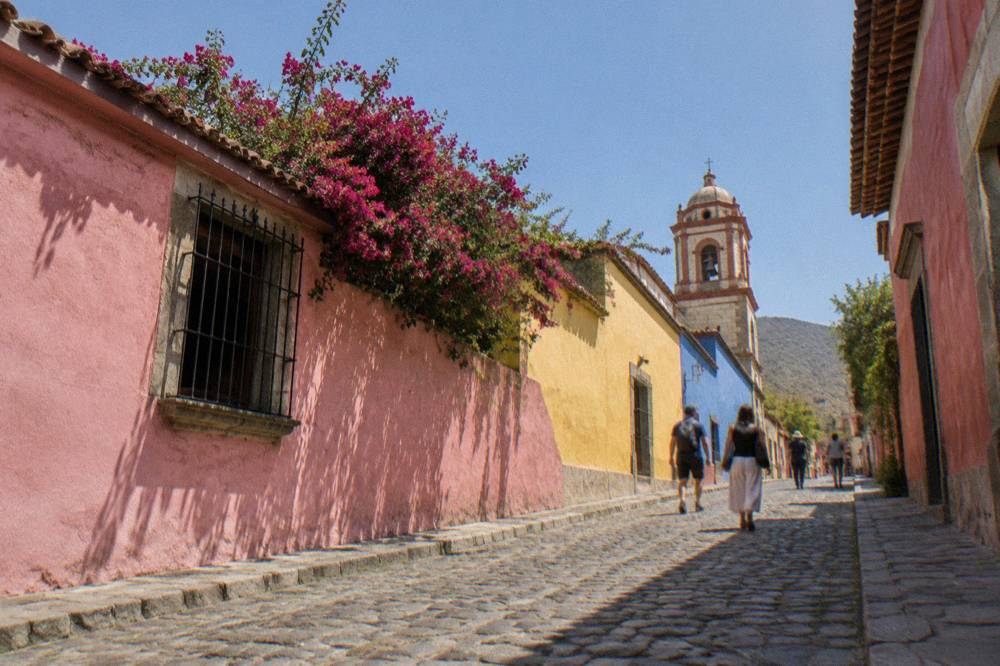
Beyond those, free means public space. The Zócalo, the Andador Macedonio Alcalá, the Paseo Juárez el Llano, the Cerro del Fortín protected area above the city, and the Sunday-to-Friday rhythm of the regional markets cost nothing to walk through. Xoxocotlán's cemetery is central to Día de Muertos, whose traditional dates are 31 October to 2 November; the 2026 programme has not been announced, so plan around the traditional dates rather than a published schedule.
Things To Do In Oaxaca When It Rains
Rain in Oaxaca falls between May and October, peaking June to September with monthly normals of 188.3 mm in June and 163.6 mm in September, so a rainy-day plan needs roofed hours: the Museo de las Culturas de Oaxaca, the Museo Textil de Oaxaca, the Rufino Tamayo museum, cooking classes, mezcal tastings and the covered markets.
The rain is real but it is measured, not constant. The SMN station normals give September 21.4 days with rain on average and January 1.4, which is why the Oaxaca in the rain guide and the rainy season guide both treat the season as a rhythm of afternoon showers rather than a washout. Days stay warm: September's mean daily high is 29.1 C.
| Month | Mean high C | Mean low C | Rain mm | Rain days |
|---|---|---|---|---|
| June | 30.9 | 16.7 | 188.3 | 19.9 |
| July | 30.1 | 15.9 | 118.6 | 20.4 |
| August | 30.0 | 15.9 | 131.8 | 20.5 |
| September | 29.1 | 16.1 | 163.6 | 21.4 |
| October | 29.3 | 14.5 | 63.1 | 12.0 |
Indoors, the museum layer carries a rainy afternoon. The Museo de las Culturas de Oaxaca (Tuesday to Saturday, 10:00 to 16:00, 105/210 MXN) is the anchor. The Rufino Tamayo museum of pre-Hispanic art reopened in August 2025 after more than three years closed for state restoration work, per the state cultures secretariat. The Museo Textil and MACO round it out; their hours and fees are not in the primary sources this site uses, so check them on arrival.
A cooking class converts a wet afternoon into dinner. The city's classes pair a market visit with a kitchen session, some built around vegetarian menus, one on Grandma's recipes, one focused on a single Oaxacan mole. Mezcal tastings and pairings run indoors too, from short sommelier-led pairings to distillery visits.
Things To Do In Oaxaca With Children
With children, Oaxaca works best around its markets, the Tule tree, alebrije painting workshops, the bike ride to the tree, and the shallow pools and trails at Hierve el Agua, with the caveat that Hierve el Agua sits about 57 minutes from the Zócalo by car, so the day's shape matters more than any single stop.
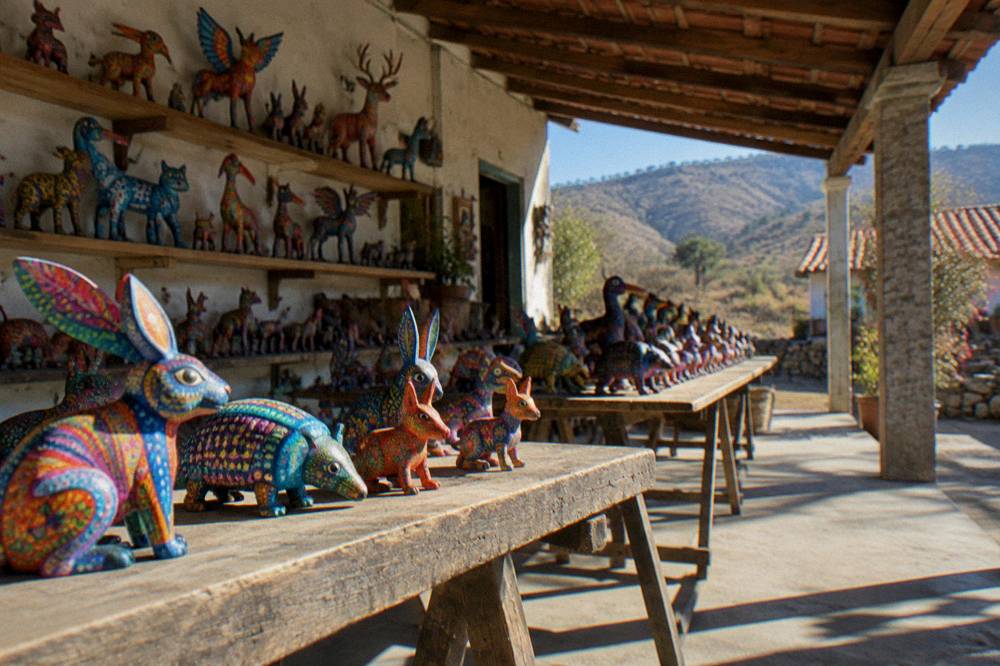
The craft workshops are the city's most kid-legible activity. Several products put you at a table with a brush: an alebrije painting session with a San Martín Tilcajete family, a printmaking workshop with a local artist, a papermaking and quesillo route at San Agustín Etla. None of these requires Spanish fluency to enjoy, and each ends with something to carry home. The Oaxaca with kids guide sequences them.
Out of town, Santa María del Tule is the short one, about 10 km from the Zócalo, and a guided bike ride to the tree is itself a bookable product that turns the drive into the activity. Hierve el Agua is the long one at about 67 km and 57 minutes free-flow, slower in real traffic on mountain roads. Monte Albán, about 8.7 km and 15 minutes out, combines an open site kids can walk with a drive short enough for a morning. Admission for children at INAH sites follows INAH's own discount policies; the published figures this site carries are the adult 105/210 and 80/145 rates. More of these guides are collected on Oaxaca Travel Guide.
Things To Do In Oaxaca At Night
Night in Oaxaca City centres on food and mezcal rather than clubs: the evening street food tours, mezcal and mole pairings led by certified sommeliers, rooftop bars over the Centro Histórico, and, on the traditional 31 October to 2 November dates, the comparsas and open cemeteries of Día de Muertos, with Xoxocotlán's cemetery the focal point.
The evening food walk is the structured option: a guided route through the centre's evening stalls with tastings included. The pairing format is the quieter one, mezcal matched to Oaxacan mole in a seated session. Both are city products, indoors or under cover, and both print their prices from the live listing. The Oaxaca at night guide and the rooftop bars guide map the rest.
Late October changes the city. Día de Muertos traditions here include comparsas, neighbourhood displays in Jalatlaco and Atzompa, and cemeteries open at night, above all on 1 and 2 November. The 25 October to 4 November programme with more than 140 activities was the 2025 edition, published in an 8 October 2025 state release; the 2026 programme has not been announced, so treat the traditional dates as the anchor and check the state's channels closer to the time. The Día de Muertos guide goes deeper.
Day Trips From Oaxaca To Monte Albán, Mitla And Hierve El Agua
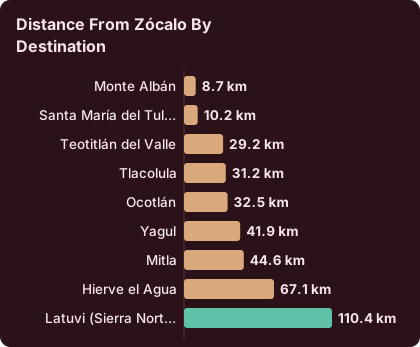
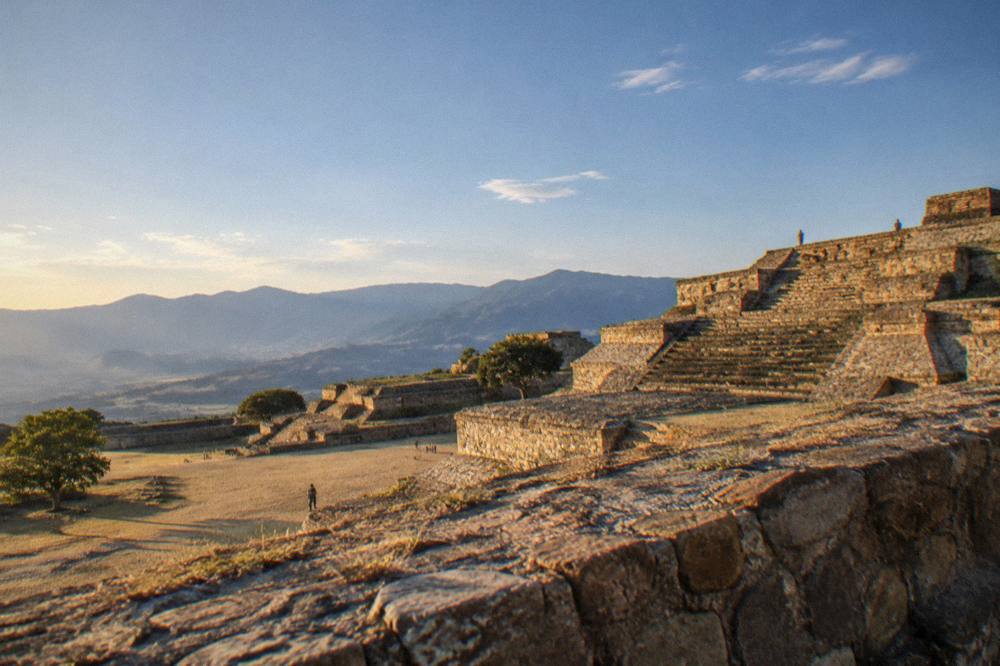
The three headline day trips from Oaxaca City are Monte Albán (about 8.7 km and 15 minutes from the Zócalo), Mitla (about 44.6 km and 37 minutes) and Hierve el Agua (about 67.1 km and 57 minutes free-flow, longer in real traffic), and because all three sit in different directions, it makes sense to visit one per day rather than chaining them together.
Monte Albán is the near one and the biggest draw by attendance: Sectur counted 416,675 visitors in 2025, against 104,428 at Mitla, 10,185 at Yagul, 5,545 at Lambityeco and 4,229 at Zaachila. It opens daily 08:00 to 17:00 with last access at 16:00, Category I admission. A half-day guided tour handles transport and timing; the Monte Albán guide covers independent visits.
Mitla's hours are daily 08:00 to 17:00, last access 16:30. Hierve el Agua is community-run rather than INAH-run, and no fee or hours figure for it appears in the primary sources this site uses, so a guided trip or a local check is the way to plan it. The Hierve el Agua guide and the day trip guide hold the route detail.
A half-day Hierve el Agua trip with a small group is the featured pick on this page: it covers the petrified waterfalls and pools with transport from the city, and the live listing has the current price, rating and duration. Check availability before locking the rest of a valley day around it.
| Destination | Distance from Zócalo | Drive time (free-flow) | Managed by |
|---|---|---|---|
| Monte Albán | 8.7 km | about 15 min | INAH |
| Santa María del Tule | 10.2 km | about 11 min | community |
| Teotitlán del Valle | 29.2 km | about 26 min | community |
| Tlacolula | 31.2 km | about 25 min | town |
| Ocotlán | 32.5 km | about 37 min | town |
| Yagul | 41.9 km | about 38 min | INAH |
| Mitla | 44.6 km | about 37 min | INAH |
| Hierve el Agua | 67.1 km | about 57 min | community |
| Latuvi (Sierra Norte) | 110.4 km | about 142 min | Pueblos Mancomunados |
Two cautions from the sources. First, the Pacific coast is not a day trip: Puerto Escondido is about 190 km and 165 minutes free-flow on the new highway, and prior guides put the real drive at 2.5 to 3.5 hours, so treat the coast as an extension with its own planning, as the Oaxaca to Puerto Escondido guide does. Second, road blockades by teachers' unions are a standing risk in Oaxaca that can disrupt road and airport access for hours at a time; they are sporadic and resolved, but they argue for buffer time on transfer days. On advisories, the UK FCDO advises against all but essential travel to parts of Mexico and does not name Oaxaca on its main page; Canada says exercise a high degree of caution with regional advisories; and the US State Department lists Oaxaca state at Level 2, Exercise Increased Caution.
Getting Between Things To Do On Foot
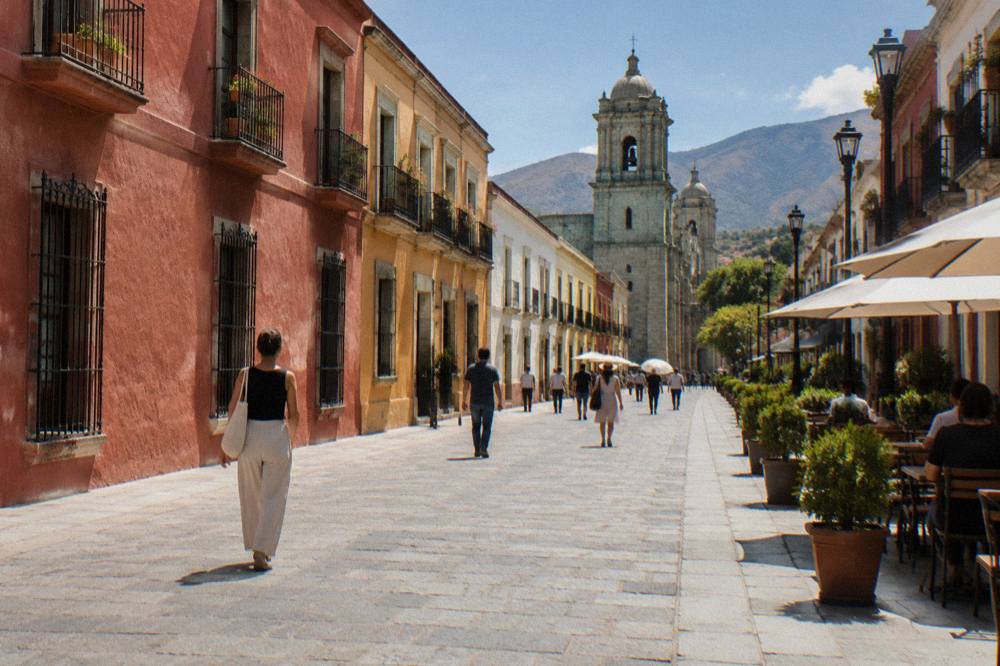
Oaxaca City is walkable where it counts: the Zócalo, the Andador Macedonio Alcalá, Santo Domingo de Guzmán, the Jardín Etnobotánico, Mercado 20 de Noviembre, Mercado Benito Juárez, Jalatlaco and Xochimilco all sit within roughly 20 minutes' walk of the Zócalo, which is why this site's answer on walkability is yes for the centre and no for the archaeological zones and the valley.
The Centro Histórico is compact and flat by highland standards. Walking from the Zócalo to Santo Domingo de Guzmán takes minutes along the Andador; Jalatlaco and Xochimilco sit just beyond the ring of the centre; the two central markets lie immediately south. The Oaxaca walkability guide sets out walking times street by street, and the Oaxaca neighbourhoods guide explains what each quarter holds.
Where feet stop being the answer is altitude and distance. The city sits at about 1,550 m, and Monte Albán's site is higher again; the 8.7 km there is a drive, not a stroll, and Hierve el Agua's 67.1 km certainly is. Sun matters too, and the altitude and sun guide has the practical side. There is no bike-share scheme in Oaxaca, so cycling means a guided ride or a rental, not a dock.
How To Get Around Oaxaca By Colectivo, Taxi And Bus
Around Oaxaca, the practical mix is feet inside the Centro Histórico, taxis with fares agreed upfront because cabs have no meters, colectivos for the valley towns, and ADO buses for Mexico City and the coast, with one firm airport rule: Xoxocotlán airport is served only by authorised taxis and colectivo shuttles, not app ride-hailing.
Taxis first: they run without meters and the fare is agreed before getting in, a practice every local transport guide repeats. App-based ride-hailing exists in the city but not at the airport, per the secondary transport sources; the primary airport pages publish no fare table, so the booth inside arrivals is where the number comes from. The taxis, Uber and DiDi guide and getting around Oaxaca guide cover the detail, and the Oaxaca airport guide handles arrivals.
Colectivos are shared vans that leave when full and serve the valley: Teotitlán del Valle, Tlacolula, Mitla and the other towns on the eastern corridor. Fares are set locally and no official figure is published, so pay on boarding. For longer hops, ADO runs first-class services from Oaxaca to Mexico City and to Puerto Escondido and Huatulco; fares and times are set by the operator and change, so the listing or terminal is the source, as the ADO bus guide explains.
Common Questions About Things To Do In Oaxaca
What Are The Top Things To Do In Oaxaca?
The core list is the Centro Histórico around the Zócalo and Santo Domingo de Guzmán, the Museo de las Culturas de Oaxaca and Jardín Etnobotánico, the markets and food, mezcal tasting, Monte Albán, and valley day trips to Mitla, Hierve el Agua, Teotitlán del Valle and Santa María del Tule.
How Many Days Do You Need For Oaxaca?
Two days cover the centre, one market and Monte Albán; four to five days add the Tlacolula Valley, Hierve el Agua and craft villages, plus a cooking class or mezcal tasting. The how many days in Oaxaca guide on this site breaks down each length.
Is Monte Albán Worth It?
By attendance it is the state's dominant site, 416,675 visitors in 2025 against 104,428 at Mitla, 10,185 at Yagul and 5,545 at Lambityeco. It is 8.7 km from the Zócalo, about 15 minutes by road, open daily 08:00 to 17:00 with last access at 16:00, and costs 105 MXN for nationals or 210 MXN for foreign visitors.
What Is There To Do In Oaxaca For Free?
Free, sourced options are the Jardín Etnobotánico guided tours at their published times, the Guelaguetza Palcos C and D in July, the city's squares and market streets, and the GuruWalk free walking tours where you pay what you want at the end.
Can You Visit Hierve El Agua Without A Tour?
Yes, by road it is about 67 km and 57 minutes free-flow from the Zócalo, but the site is community-run and no official fee or hours figure is published, so a guided trip or a same-day local check is the reliable way to plan an independent visit.
What Is The Best Time Of Year To Visit Oaxaca?
Dry season runs November to April and rainy season May to October, with June's normal rainfall at 188.3 mm and December's at 9.0 mm. April has the highest mean daily high at 34.9 C and December to January the lowest mean overnight lows at 11.0 and 10.3 C, per the SMN station normals, and this site gives no month ranking beyond the figures.
Whatever the season, the planning constants are the ones this page has repeated: INAH hours differ site by site, the valley is a set of drives measured in tens of kilometres, the coast is an extension rather than a day trip, and the festival calendar turns on traditional dates until the state announces a programme. Build the days around those anchors and the rest of Oaxaca fills in around them.