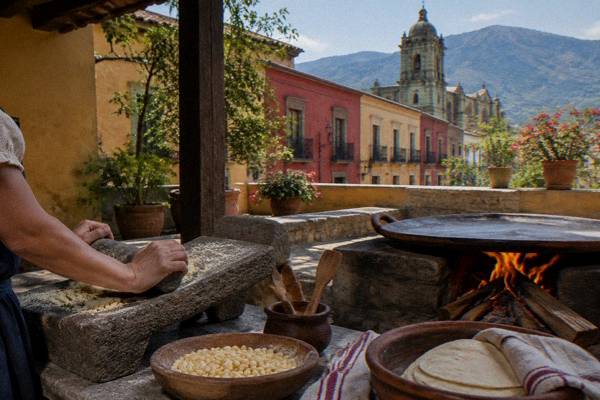
Oaxaca In The Rain: Museums, Cafés And Cooking Classes
Rain in Oaxaca City falls hard and briefly in the rainy season, and the city answers with museums, markets, cooking classes and covered workshops. Here is how to plan the wet days.
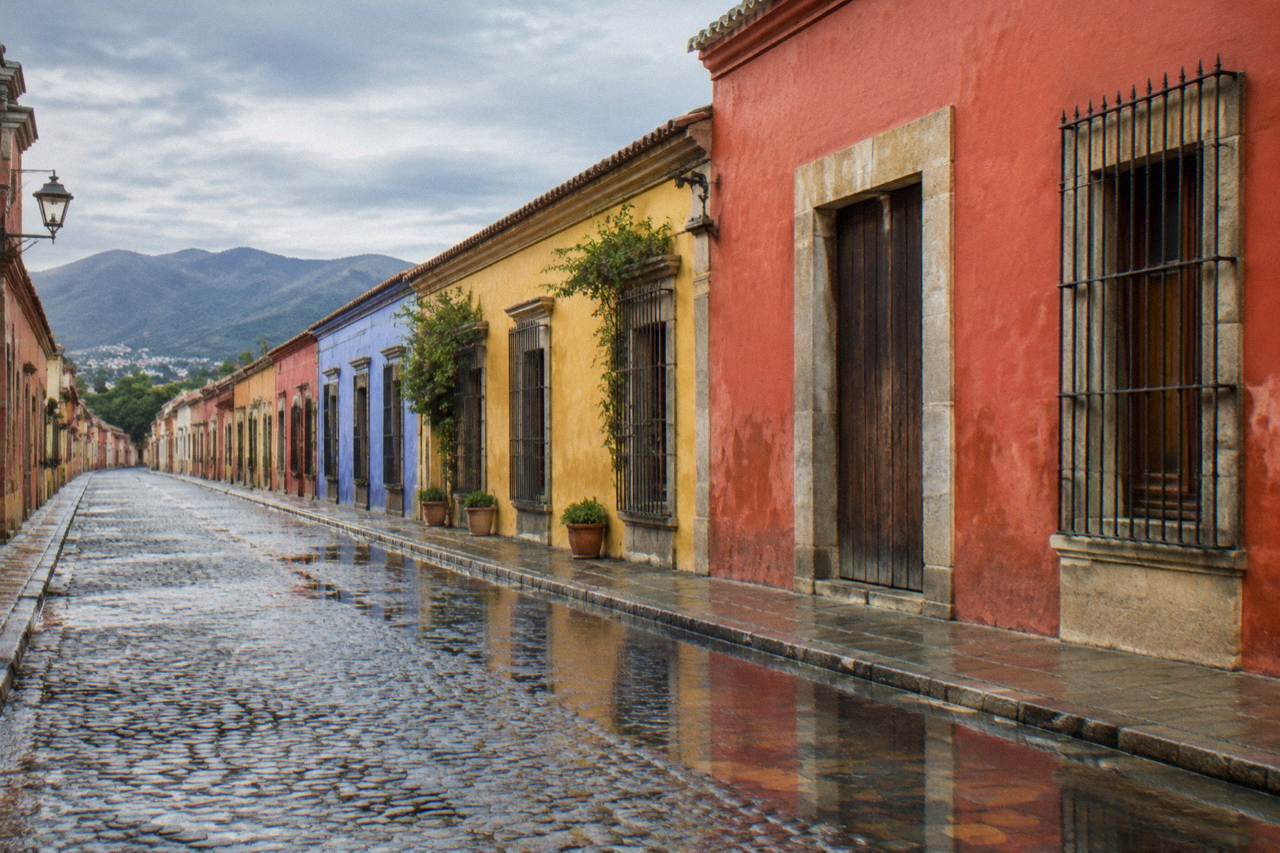
Oaxaca's rainy season runs May to October and peaks June to September, when rain falls on roughly 20 days a month. The city's indoor answers are the Museo de las Culturas de Oaxaca, the Jardín Etnobotánico guided tours, cooking classes, craft workshops and the market halls.
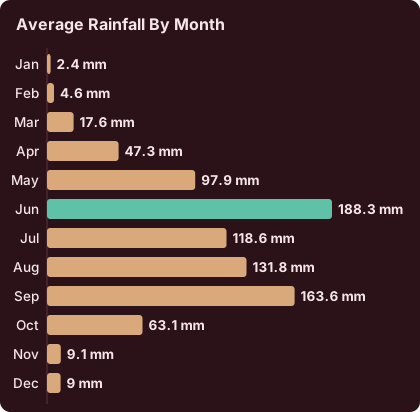
Rain in Oaxaca City is a schedule, not a spoiler. The city sits inland in the Valles Centrales of Mexico at about 1,550 m, and its rainy season runs May to October with a sharp peak from June to September, when the SMN station normals show rain on about 20 days a month. That rain has a shape: the normals average 188.3 mm across June, and the dry season from November to April drops to single-digit millimetres in five of those six months. A wet day here is usually a few hours, not a washout, and Oaxaca has an unusually deep bench of indoor answers, from an INAH museum inside a former convent to cooking classes, print workshops and market halls where the roof does the work.
What Is Rain In Oaxaca Actually Like?
Rain in Oaxaca City is a May-to-October phenomenon that peaks June to September, when each of those four months averages between 118.6 and 188.3 mm and rain falls on roughly 20 days, per the SMN station normals for 1991 to 2020. From November to April the tap nearly closes: November averages 9.1 mm and January 2.4 mm. Temperatures stay mild, with June highs near 30.9 C and January lows near 10.3 C, and there is no snow at this altitude.
The monthly picture matters for planning because the rain is not spread evenly. June carries 188.3 mm over 19.9 days with rain, September 163.6 mm over 21.4 days, August 131.8 mm and July 118.6 mm. October drops to 63.1 mm, May carries 97.9 mm, and the months either side of the dry season, March at 17.6 mm and October aside, are transitional. The annual total is 853.3 mm, and almost all of it falls in six months.
| Month | Mean high C | Mean low C | Rain mm | Days with rain |
|---|---|---|---|---|
| Jan | 28.9 | 10.3 | 2.4 | 1.4 |
| Feb | 31.1 | 11.6 | 4.6 | 1.1 |
| Mar | 33.3 | 13.6 | 17.6 | 4.1 |
| Apr | 34.9 | 15.8 | 47.3 | 7.6 |
| May | 33.8 | 16.7 | 97.9 | 13.7 |
| Jun | 30.9 | 16.7 | 188.3 | 19.9 |
| Jul | 30.1 | 15.9 | 118.6 | 20.4 |
| Aug | 30.0 | 15.9 | 131.8 | 20.5 |
| Sep | 29.1 | 16.1 | 163.6 | 21.4 |
| Oct | 29.3 | 14.5 | 63.1 | 12.0 |
| Nov | 29.0 | 12.3 | 9.1 | 3.5 |
| Dec | 28.9 | 11.0 | 9.0 | 2.4 |
For a month-by-month breakdown of the whole year, the companion guide to Oaxaca weather by month carries the same normals in more depth. The short version for this page: a June or September trip will meet rain, a January or February trip almost certainly will not, and the in-between months are a coin worth planning for either way.
Which Oaxaca Museums Are Open On A Rainy Day?
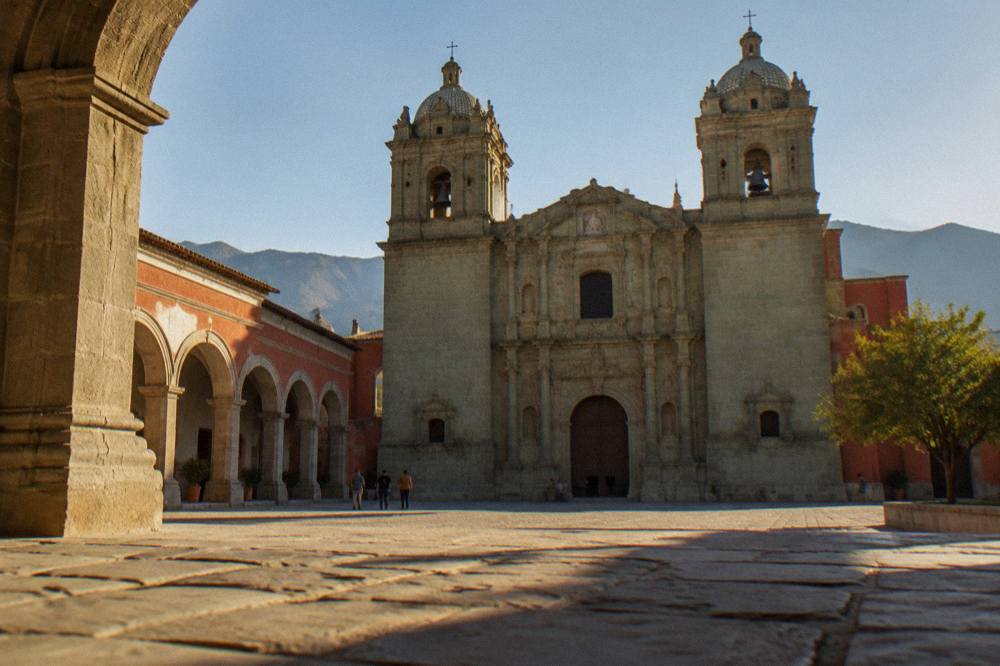
The Museo de las Culturas de Oaxaca, inside the Santo Domingo complex, is open Tuesday to Saturday 10:00 to 16:00 and charges 105 MXN for Mexican nationals and 210 MXN for foreign visitors, per the INAH listing. It is closed Sunday and Monday, so a weekend rain day needs a different plan. The Jardín Etnobotánico next door runs free guided tours on weekdays at 10:30, 11:00, 11:30, 12:00 and 17:00, and Saturdays from 10:30 to 12:00.
Those two openings anchor the wet-day centre. The museum's Tuesday-to-Saturday week is the single most useful fact on this page: a rainy Sunday or Monday in the Centro Histórico sends you to the garden if it is a weekday tour time, to the markets, or to a class. The INAH fee categories are consistent across the state's sites, which helps when the rain pushes you out to the valleys on a drier morning.
| Site | Days open | Hours | Fee nationals MXN | Fee foreigners MXN |
|---|---|---|---|---|
| Museo de las Culturas de Oaxaca | Tue to Sat | 10:00 to 16:00 | 105 | 210 |
| Monte Albán | Mon to Sun | 08:00 to 17:00, last access 16:00 | 105 | 210 |
| Mitla | Mon to Sun | 08:00 to 17:00, last access 16:30 | 105 | 210 |
| Yagul | Mon to Sun | 08:00 to 17:00, last access 16:00 | 105 | 210 |
| Dainzú | Mon to Sun | 08:00 to 17:00, last access 16:30 | 80 | 145 |
| Lambityeco | Mon to Sun | 08:00 to 17:00, last access 16:30 | 80 | 145 |
| Zaachila | Thu to Sun | 10:00 to 16:00 | 80 | 145 |
Zaachila's Thursday-to-Sunday week is the other trap in that table: a rainy Tuesday plan that banks on Zaachila fails. Atzompa keeps shorter days than the rest, 08:00 to 16:00 with last access at 15:00, so it belongs to the morning half of any valley loop. The museums guide covers the permanent collections in detail, and visits outside normal INAH hours are possible at several sites at a flat 730 MXN, a figure the INAH pages list for Yagul, Lambityeco, Atzompa and the Museo de las Culturas.
A reasonable rainy-day sequencing, built only from the hours above: a 10:30 Jardín Etnobotánico tour, the museum from its 10:00 opening on any day but Sunday and Monday, and a late-afternoon window after 16:00 for cafés and an early dinner. The garden asks large and school groups to book two weeks ahead, per the state release of 18 August 2025.
Where Do You Eat And Drink In Oaxaca When It Rains?
Oaxaca's eating answers to rain are the market halls, the Centro Histórico's café streets and the covered comedores, with Mercado 20 de Noviembre and Mercado Benito Juárez sitting a short walk from the Zócalo. Treat the halls as daytime places and confirm on the day. Named dishes to hunt under a roof: tlayuda, mole, tejate, chapulines and quesillo.
The two central markets do the heaviest lifting because they are indoors and central. The state's own pages describe Mercado 20 de Noviembre as a food market founded in 1893 with tianguis elements on Saturdays, and Benito Juárez as a historic central market inaugurated in 1894 near the Zócalo. Practically, the rainy-season move is to eat the main meal at midday, when the halls are at their fullest, and to keep the evening light.
| Market | Type | Known for | Notes |
|---|---|---|---|
| Mercado 20 de Noviembre | Central food hall | Tlayuda, mole | Founded 1893, tianguis elements Saturdays |
| Mercado Benito Juárez | Historic central market | Quesillo, tejate | Inaugurated 1894, near the Zócalo |
| Centro cafés | Covered café interiors | Oaxacan chocolate, coffee | See the cafés guide |
| Comedores in the halls | Stall seating | Chapulines, mole | Under the market roof |
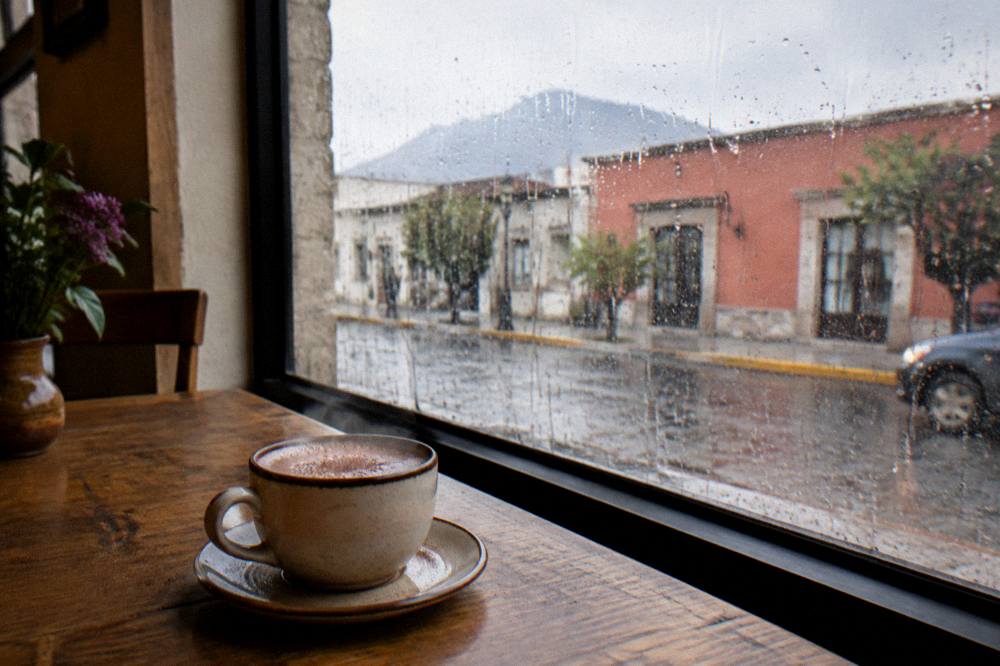
The café layer deserves its own afternoon. The city's coffee and chocolate culture is deep enough that a rain stop can be the whole plan, and the coffee and cafés guide maps it. When the rain runs into the evening, the Oaxaca at night itinerary picks up where this one hands over.
Why Does A Cooking Class Work So Well On A Wet Oaxaca Afternoon?
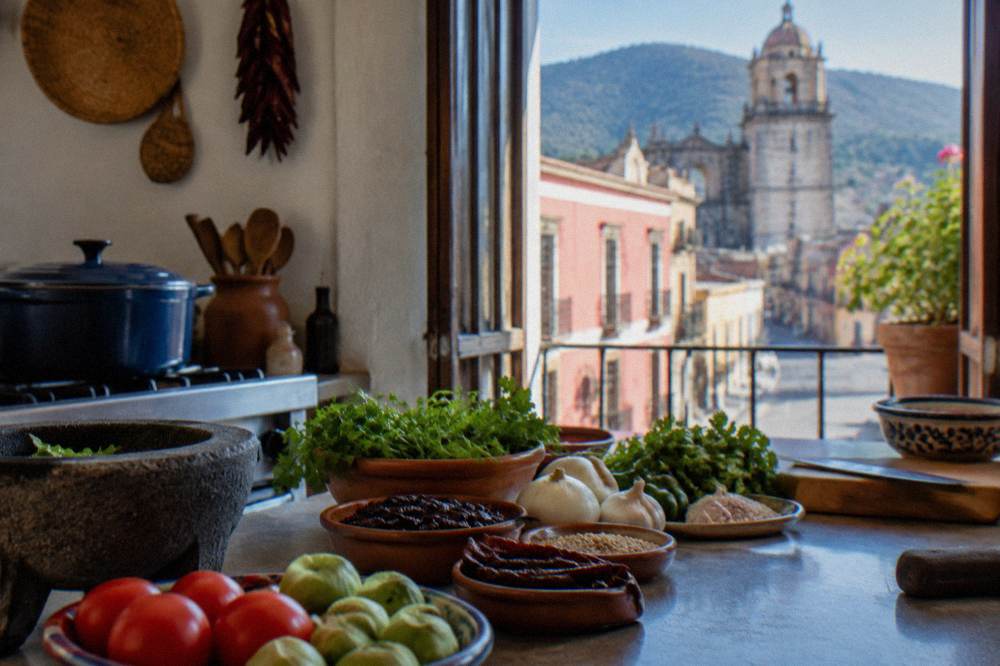
A cooking class is the most rain-proof plan in Oaxaca because it converts three to five indoor hours into the centrepiece of the day rather than a filler, and the city's tour list covers traditional Oaxacan cooking, vegetarian menus and market-to-kitchen formats. Classes run rain or shine, the market-visit portion is short, and the kitchen itself is under cover. The featured pick on this page is a traditional class built on a family recipe book.
This guide's featured pick is the Traditional Oaxaqueña Cooking with Grandma's Recipes class, which the listing describes as a traditional Oaxacan cooking class built around grandmother recipes. It earns its place here for a structural reason: the class begins with a market walk and then moves into the kitchen, which means the exposed portion comes first and can flex around a shower, and the cooking hours that follow are entirely indoors. Check availability on the operator's booking page for the days you are in town.
Formats vary enough to match the rain. A vegetarian class with a local market tour covers plant-forward Oaxacan cooking; a longer traditional class digs into mole territory; some classes centre on a single dish. The cooking classes guide compares the formats in full, and it is the natural next click if the rain has you planning two kitchen days instead of one.
| Class format | Indoor share | Rain fit | Market component |
|---|---|---|---|
| Traditional Oaxacan class | High | Strong, kitchen dominates | Short walk at the start |
| Vegetarian class with market tour | High | Strong | Market visit, then kitchen |
| Mole-focused class | High | Strong, single-dish depth | Ingredients pre-staged |
One practical note: large groups at the Jardín Etnobotánico book two weeks ahead, and the same logic applies to popular classes in peak rainy-season months, when a class is everyone's plan B. Booking the class before the trip, rather than the morning of, is this guide's standing advice for June through September.
Which Craft Workshops In Oaxaca Keep You Dry?
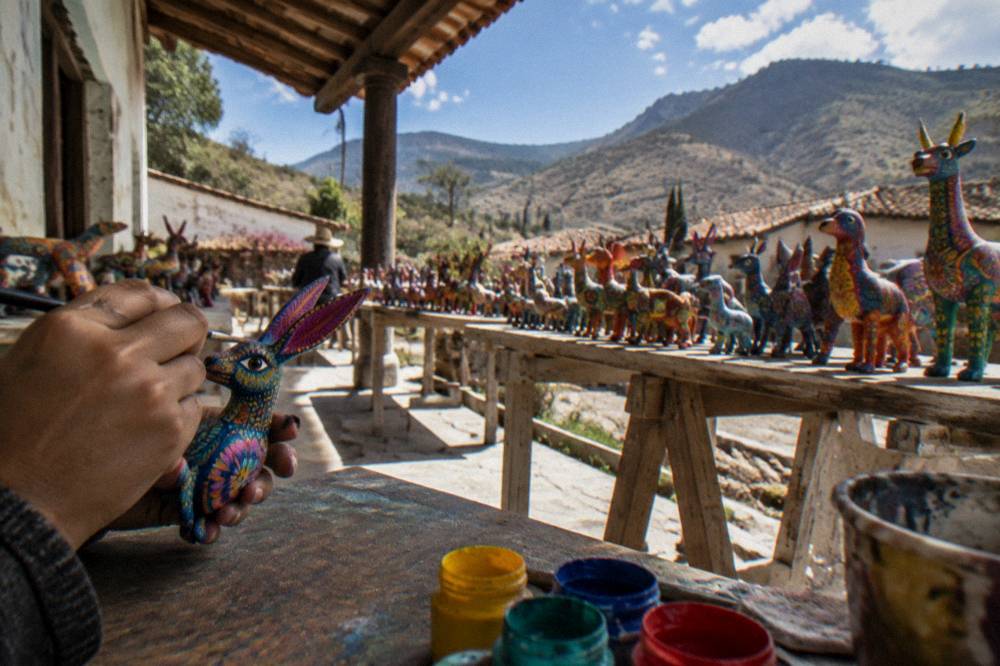
Oaxaca's workshop tour list runs alebrije painting, printmaking with local artists, and workshop visits in the craft villages, all of them indoors and several of them bookable as half-day sessions from the city. The strongest pure rainy-day pick is a printmaking workshop with a local artist, which runs entirely inside a studio and leaves you with a finished piece to take home. Alebrije painting is the family-friendly equivalent.
The print workshop on this page's tour list is described by its listing as an art printing workshop with a local artist, and its decision name says what it delivers: a studio printmaking session under a roof. Alebrije painting, in the city or in San Martín Tilcajete with pickup, puts a brush in your hand over a blank carved figure, hours of focused indoor time. These two formats are this guide's default recommendation when the forecast kills a valley day trip. The wider set of guides lives on Oaxaca Travel Guide.
Beyond the sit-down workshops, the crafts-route tours through San Martín Tilcajete, Jalieza and Ocotlán, and the Teotitlán textiles-and-chocolate stops, mix studio time with road time. In rain they are a judgement call: the workshops themselves are covered, the walks between them are not. On a day of showers rather than steady rain, a craft route with a vehicle is workable, and the alebrijes guide covers the village itself.
Can You Still See Monte Albán And The Valleys In The Rain?
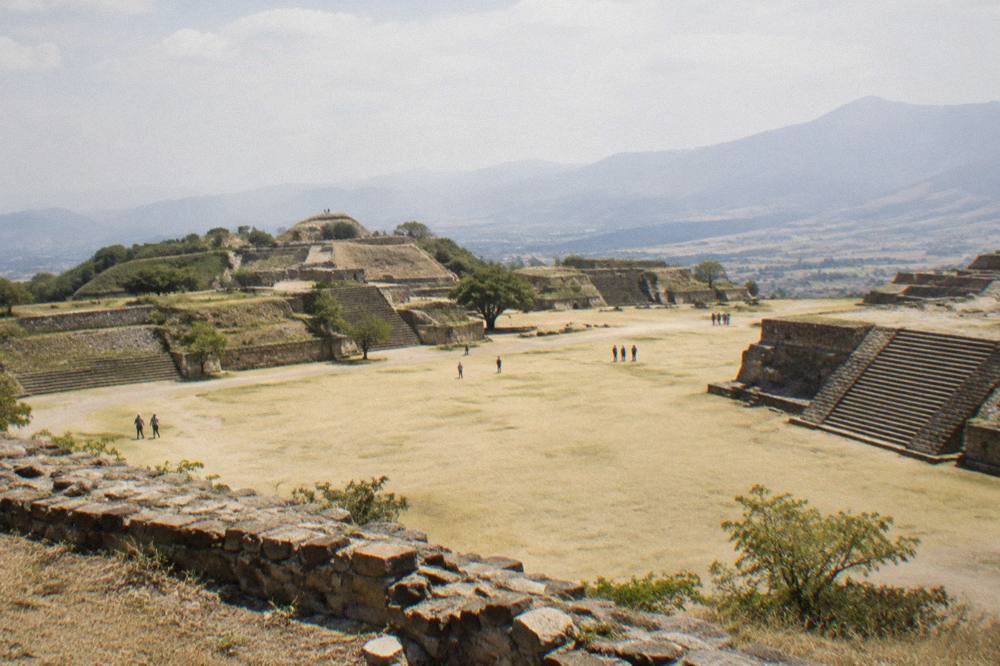
You can, with caveats: Monte Albán, Mitla and Yagul all open Monday to Sunday 08:00 to 17:00 and rain does not close them, but the sites are unroofed and the drive out is mountain road. Drive times from the Zócalo, computed on free-flow roads, run about 15 minutes to Monte Albán, about 37 to Mitla and about 38 to Yagul, and real traffic and rain make them slower. The dry-morning window is the move in rainy season.
The derived times are free-flow figures and this guide rounds them up on purpose. Monte Albán at about 15 minutes is the one valley site close enough to gamble on between showers, and its INAH page shows 416,675 visitors in 2025, the busiest of the state's archaeological sites by a wide margin over Mitla at 104,428. Zaachila's 4,229 and Lambityeco's 5,545 from the same Sectur count tell you the smaller sites are the quiet-weather plays.
| Site | Drive from Zócalo | Hours | Last access |
|---|---|---|---|
| Monte Albán | About 15 min | 08:00 to 17:00 | 16:00 |
| Santa María del Tule | About 11 min | n/a | n/a |
| Teotitlán del Valle | About 26 min | n/a | n/a |
| Tlacolula | About 25 min | n/a | n/a |
| Yagul | About 38 min | 08:00 to 17:00 | 16:00 |
| Mitla | About 37 min | 08:00 to 17:00 | 16:30 |
| Hierve el Agua | About 57 min | n/a | n/a |
If rain settles in for the day, the swap is the all-in valley-and-crafts day tour, which keeps you under a vehicle roof between stops.
How Do You Structure Two Full Rain Days In Oaxaca?
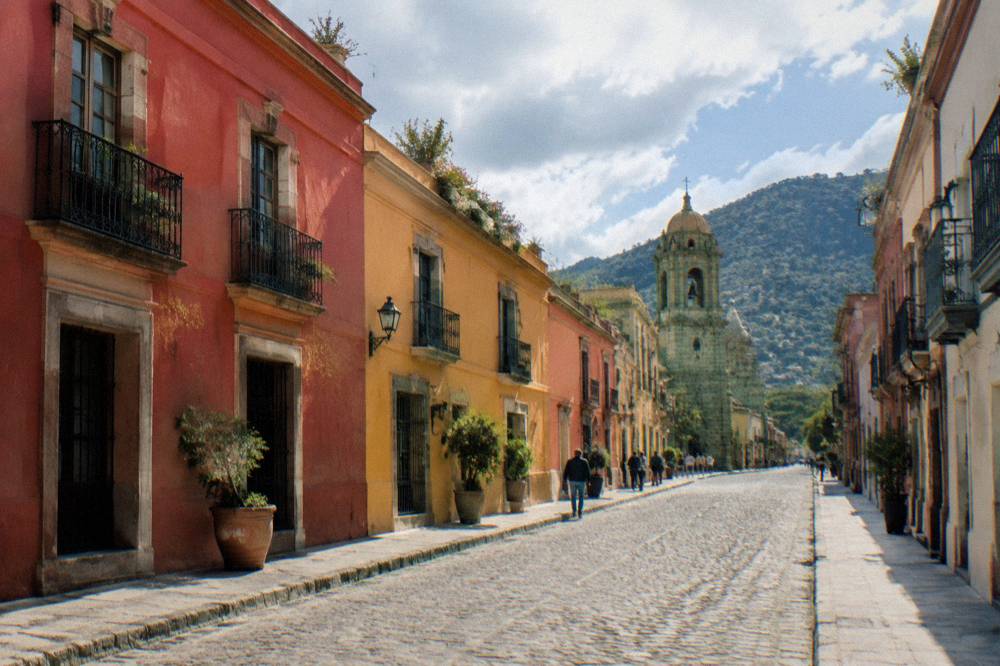
A two-day rainy plan pairs one anchored day around Santo Domingo, the Jardín Etnobotánico and the museum's Tuesday-to-Saturday week with one booked day inside a kitchen or studio, and it puts the open-air stops, the Zócalo, the Andador Macedonio Alcalá and Jalatlaco, into the gaps between showers. Everything in the plan sits within walking distance of the centre except the valley sites, which move to a drier window.
Day one runs the culture spine. The Jardín Etnobotánico tour times, weekdays at 10:30, 11:00, 11:30, 12:00 and 17:00 and Saturday 10:30 to 12:00, give you a morning or late-afternoon slot; the Museo de las Culturas fills 10:00 to 16:00 on Tuesday to Saturday; the markets cover lunch; and the print workshop or a café carries the afternoon. Day two is the class day: market walk at the start, kitchen through the middle, and the evening handed to the rooftop-and-nightlife options in the centre. The one-day and two-day itineraries compress or expand the same skeleton.
| Time block | Rain day 1 (Tue to Sat) | Rain day 2 |
|---|---|---|
| 10:00 to 12:00 | Museo de las Culturas, 105/210 MXN | Market walk with a class |
| 12:00 to 14:00 | Mercado 20 de Noviembre lunch | Cooking, kitchen phase |
| 14:00 to 17:00 | Jardín Etnobotánico 17:00 tour, or print workshop | Cooking, eating phase |
| 17:00 onward | Cafés, dinner in the centre | Free evening |
If the museum day lands on a Sunday or Monday, flip the days: the class, the workshops and the markets do not depend on the museum's week, and the garden's Saturday-morning window only helps once. Travellers with children should fold in the indoor-heavy options from the Oaxaca with kids itinerary, and the no-spend alternatives live in the free things to do in Oaxaca guide.
What Should You Pack For Oaxaca's Rainy Season?
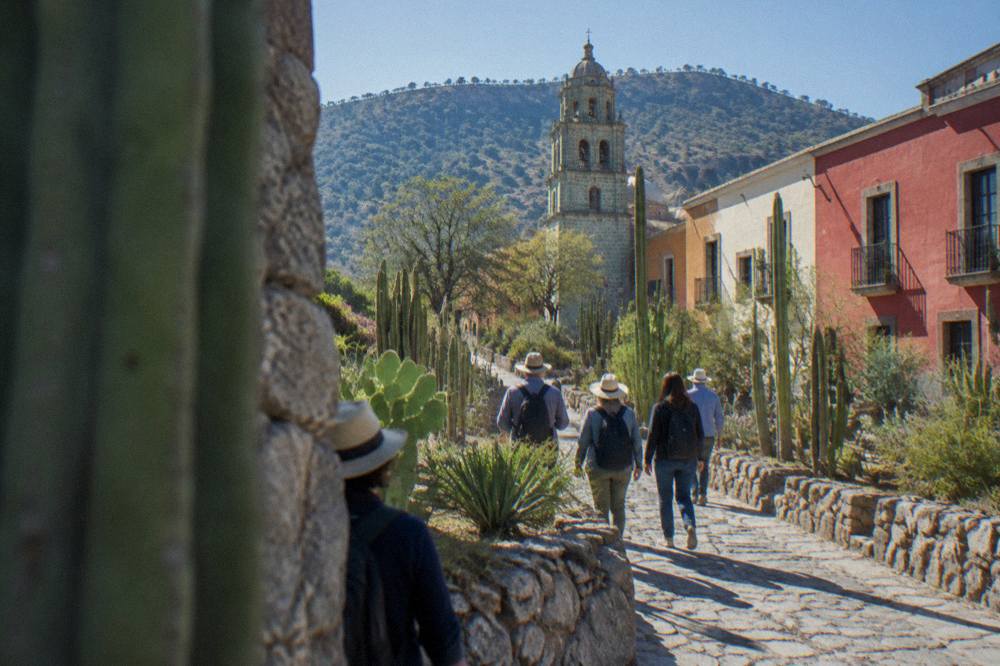
Pack for warm rain: daytime highs in the rainy months run from about 29.1 C in September to 30.9 C in June, nights sit near 16 C, and the rain arrives in the months averaging 97.9 to 188.3 mm, so the kit is a compact umbrella or rain shell, quick-dry layers, and shoes that survive wet cobblestone. Nothing in the normals suggests cold-weather gear; January's 10.3 C nights belong to the dry season.
The temperature spread across the rainy season is narrow, roughly 29 C to 31 C for highs and 15.9 C to 16.7 C for lows, which simplifies the suitcase. This guide's packing logic follows the rain table: June through September justify real rain gear, May and October a light shell, and November through April very little. The showers are the planning variable, the temperature is not.
The city is inland, about 1,550 m up, and the rain that reaches it is valley rain, not storm surge. The first time in Oaxaca guide carries the rest of the baseline kit list.
Common Questions About Oaxaca In The Rain
What Is The Rainiest Month In Oaxaca?
June, at 188.3 mm across 19.9 days with rain, per the SMN station normals for 1991 to 2020. September follows at 163.6 mm and 21.4 days, and August carries 131.8 mm.
Does It Rain All Day In Oaxaca In The Rainy Season?
Rain falls on about 20 days a month in June through September; how long each event lasts varies. Plan indoor anchors, not hour-by-hour forecasts.
Is The Museo De Las Culturas De Oaxaca Open On Sundays?
No. The INAH listing shows Tuesday to Saturday, 10:00 to 16:00, closed Sunday and Monday. Admission is 105 MXN for nationals and 210 MXN for foreign visitors.
Can You Visit Monte Albán When It Rains?
Yes, the site opens Monday to Sunday 08:00 to 17:00 with last access at 16:00, and rain does not close it. The drive from the Zócalo is about 15 minutes on free-flow roads, slower in traffic and wet weather, and the site itself is unroofed.
Are Cooking Classes In Oaxaca Indoors?
The class formats on this page's tour list are kitchen-based, and the classes that include a market visit keep that portion short before moving under cover.
What Is Free To Do In Oaxaca On A Rainy Day?
The Jardín Etnobotánico's guided tours are free, running Monday to Friday at 10:30, 11:00, 11:30, 12:00 and 17:00 and Saturday 10:30 to 12:00, with large groups booking two weeks ahead. The free-things-to-do guide lists the rest.
Rain rearranges a Oaxaca day, it does not cancel it: the museum and garden hours above, a booked kitchen or studio, and the market halls under the centre carry the wet afternoons, and the valley sites wait for the dry window.