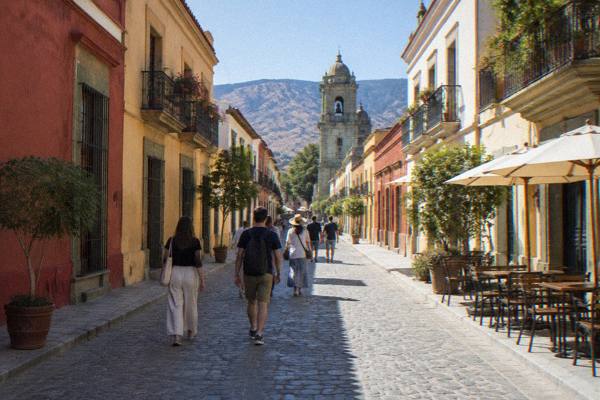
Oaxaca Weather By Month: Temperatures And Rain
Oaxaca City sits inland in the Valles Centrales at about 1,550 m, and its weather follows a simple pattern: a dry season from November to April and a rainy season from May to October. The SMN station normals for 1991 to 2020 give the numbers for every month.
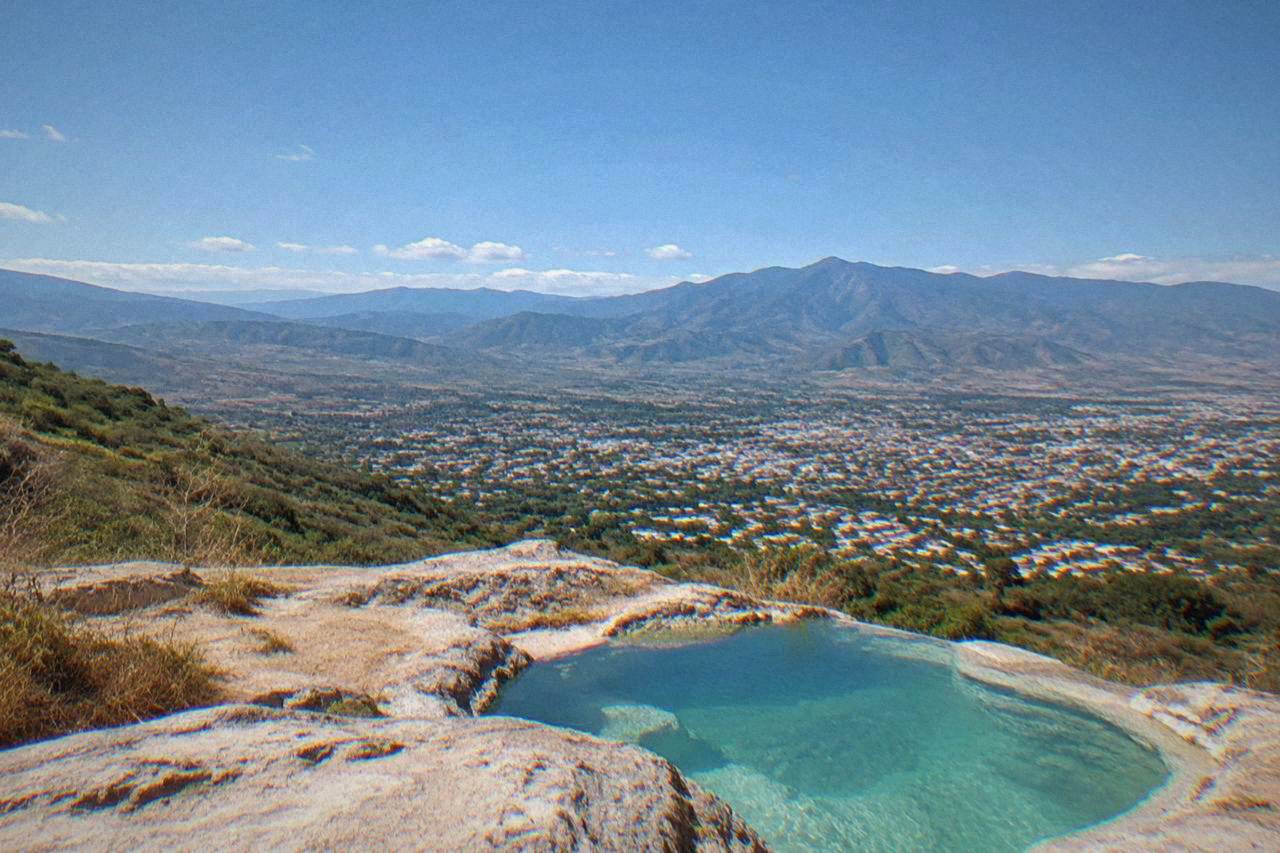
Oaxaca City is dry from November to April and rainy from May to October, with rain heaviest from June to September. Mean daily highs run from 28.9 C in December and January to 34.9 C in April, and nights fall to between 10.3 C and 16.7 C depending on the month.
Oaxaca City, the capital of the state of Oaxaca in Mexico, is an inland highland city in the Valles Centrales at about 1,550 m, and its climate is defined by two seasons rather than four. The Servicio Meteorológico Nacional station in the city, station 20079, recorded the 1991 to 2020 climate normals: a dry season from November to April, when monthly rain totals stay below 50 mm, and a rainy season from May to October, when monthly totals climb above 97 mm and June alone averages 188.3 mm. There is no snow, no sea and no winter freeze; there are warm afternoons, cool nights and an afternoon rain pattern in the middle of the year. The Oaxaca Travel Guide covers what the numbers mean for planning, month by month, and pairs them with pages like the best time to visit Oaxaca when the decision gets close.
What Is The Weather Like In Oaxaca?
Oaxaca City has a highland climate with two seasons: a dry season from November to April and a rainy season from May to October, per the SMN station normals for 1991 to 2020. Mean daily highs range from 28.9 C in January and December to 34.9 C in April, while mean nightly lows sit between 10.3 C in January and 16.7 C in June. The city receives 853.3 mm of rain across the year, and almost all of it falls between May and October.
The two numbers that matter most for a traveller are the daytime high and the overnight low, because the gap between them is large. In January, for example, the mean daily high is 28.9 C and the mean nightly low is 10.3 C. That gap exists in every month of the year and it is the reason a warm jacket belongs in a suitcase even when the forecast shows afternoon temperatures near 30 C. Layers work better in Oaxaca City than a single heavy coat.
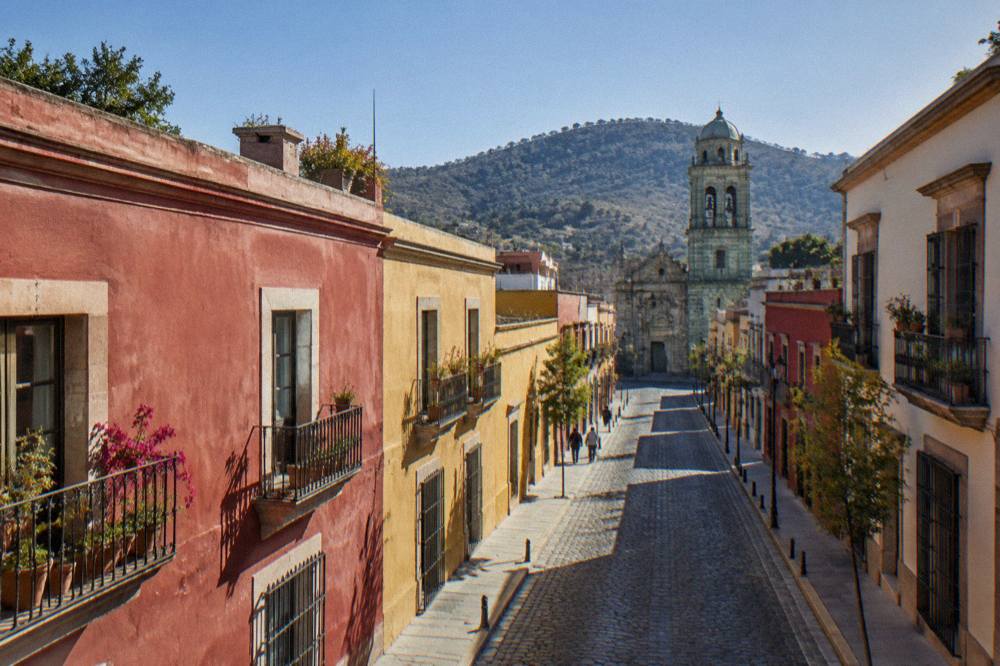
Altitude explains the pattern. At about 1,550 m in the Valles Centrales, the thin air heats quickly under the sun and loses heat quickly after dark. The city is far from the Pacific, so coastal humidity plays no part in the numbers, and the region has no hurricane-season effect on the city itself beyond the rain totals already counted in the normals. For anyone weighing the city against the coast, the city or coast comparison pages cover the trade-offs, and the Oaxaca travel costs and budget guide carries the money side of the same decision.
Oaxaca Weather By Month: Temperatures And Rain
The full SMN month table for Oaxaca City shows mean daily highs rising from 28.9 C in January to 34.9 C in April, while rain runs from 2.4 mm in January to 188.3 mm in June and back down to 9.0 mm in December. The annual total is 853.3 mm. Every figure below is a 1991 to 2020 normal, an average of thirty years, not a forecast for any single year.
| Month | Mean High C | Mean Low C | Rain mm |
|---|---|---|---|
| January | 28.9 | 10.3 | 2.4 |
| February | 31.1 | 11.6 | 4.6 |
| April | 34.9 | 15.8 | 47.3 |
| June | 30.9 | 16.7 | 188.3 |
| July | 30.1 | 15.9 | 118.6 |
| August | 30.0 | 15.9 | 131.8 |
| September | 29.1 | 16.1 | 163.6 |
| November | 29.0 | 12.3 | 9.1 |
| December | 28.9 | 11.0 | 9.0 |
Read the table in two halves. November through April is the dry half: rain never exceeds 47.3 mm in any of those months, and in November, December, January and February the monthly totals sit at or below 9.1 mm.
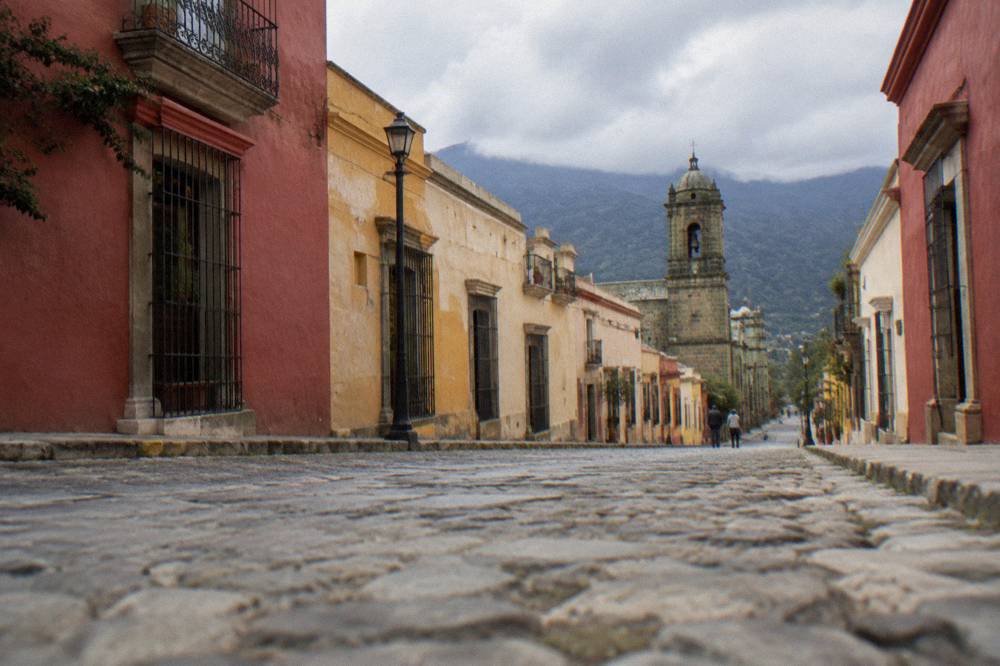
The temperature column tells a different story from the rain column. The mean high climbs steadily through the dry season and reaches 34.9 C in April, then falls during the rainy months even as rain increases, because cloud and afternoon rain cut the afternoon heat. A June afternoon averages 30.9 C, well below an April afternoon. Travellers who dislike heat sometimes prefer the rainy season precisely for that.
Planning around these numbers is straightforward once the season is fixed. In the dry half of the year, sun protection and water matter every day; in the wet half, a rain layer matters more than an extra warm shirt in the afternoon, while nights stay mild. The what to do in Oaxaca root page sorts the city's options by interest, and the how many days in Oaxaca guide sets a sensible length of stay for either season.
When Is The Rainy Season In Oaxaca?
The rainy season in Oaxaca City runs from May to October, with the heaviest rain from June to September, per the SMN normals. June averages 188.3 mm, September 163.6 mm, August 131.8 mm and July 118.6 mm, while May opens the season at 97.9 mm and October closes it at 63.1 mm. The season contributes the overwhelming majority of the city's 853.3 mm annual total.
Rain in these months does not usually mean all-day rain. The normals also count days with rain, and the pattern they show is concentrated rather than constant: 19.9 days with rain in June, 20.4 in July, 20.5 in August and 21.4 in September, against 1.4 days in January and 1.1 in February. In other words, rain falls on about 20 days per month at the height of the season, but the monthly totals spread across those days in bursts rather than continuous downpours.
| Month | Rain mm | Days With Rain |
|---|---|---|
| January | 2.4 | 1.4 |
| February | 4.6 | 1.1 |
| March | 17.6 | 4.1 |
| April | 47.3 | 7.6 |
| May | 97.9 | 13.7 |
| June | 188.3 | 19.9 |
| July | 118.6 | 20.4 |
| August | 131.8 | 20.5 |
| September | 163.6 | 21.4 |
| November | 9.1 | 3.5 |
| December | 9.0 | 2.4 |
Two details in that table reward attention. July receives 118.6 mm over 20.4 rain days while June receives 188.3 mm over 19.9 days: nearly the same number of rain days, but June's rain is heavier per event. The exact question of which single month carries the highest total belongs to the dedicated answer page on monthly rainfall in Oaxaca.
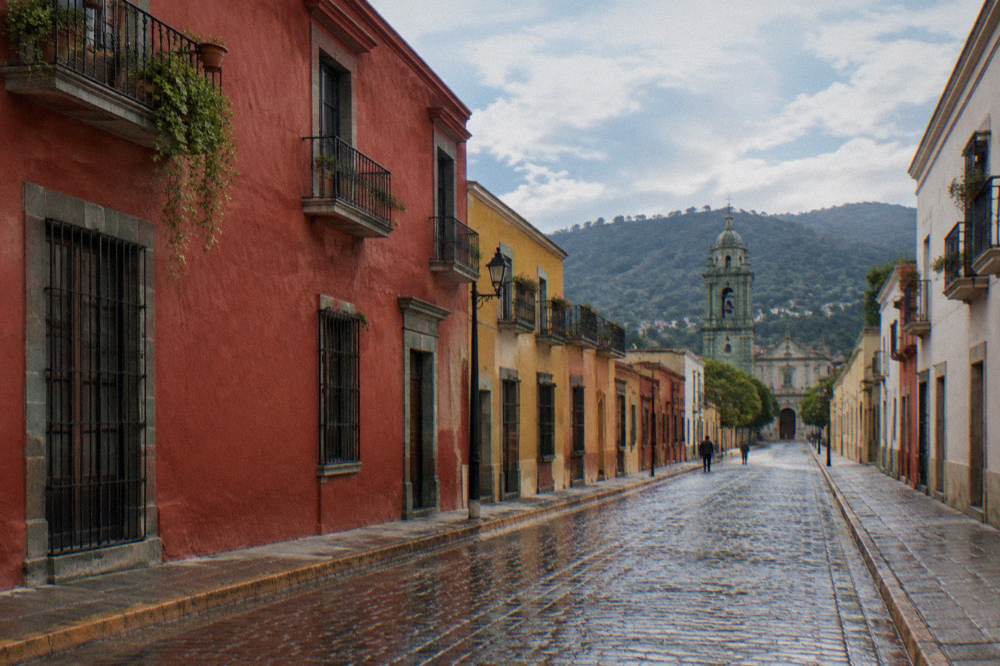
The rainy season also has an up side that the numbers make plain: mean highs drop to between 29.1 C and 30.9 C from June to September, the nightly lows hold near 16 C, and the landscape around the Valles Centrales turns green. The Oaxaca in the rain itinerary was built for exactly these months.
How Hot Does Oaxaca Get In April And May?
April is the month with the highest mean daily high in the SMN table, 34.9 C, and May follows at 33.8 C, making the end of the dry season the warmest stretch of the Oaxaca City year. March, at 33.3 C, sits just behind. Nights in these months stay mild, averaging 15.8 C in April and 16.7 C in May, so the heat is an afternoon phenomenon rather than a round-the-clock one.
The timing matters for planning. The warmest afternoons of the year arrive before the rains, not during them: April's 47.3 mm of rain is not yet enough to cloud the sky, so the sun bears down on dry ground through the middle of the day. Once the rainy season begins in May and the rain total nearly doubles to 97.9 mm, mean highs fall by a degree and keep falling into June. Anyone scheduling outdoor activities in March, April or early May should aim for mornings.
Heat at this altitude also behaves differently from heat at sea level. The mean daily high in April is 34.9 C, but the mean nightly low the same month is 15.8 C, so a day that begins cool enough for a jacket ends in full sun. Sun protection matters more in these months than in any other part of the year, because the dry-season sky pairs high sun with almost no cloud. Water, a hat and sunscreen are the practical response, and the indoor options in the Oaxaca museums orbit, from the Santo Domingo complex to the textile and print collections, give the midday hours somewhere to go.
For a feel of the season's other edge, autumn cools quickly: October's mean high of 29.3 C is close to January's 28.9 C. The what is the weather like in Oaxaca in November answer covers the month when the transition completes.
Are Oaxaca Nights Cold?
Yes, by tropical standards: mean nightly lows in Oaxaca City run from 10.3 C in January and 11.0 C in December to 16.7 C in June and May, per the SMN normals, so every month of the year has nights that call for a layer. December and January bring the lowest overnight averages, and the drop from afternoon high to overnight low is large in every month of the year.
| Month | Mean High C | Mean Low C | Rain mm |
|---|---|---|---|
| January | 28.9 | 10.3 | 2.4 |
| April | 34.9 | 15.8 | 47.3 |
| July | 30.1 | 15.9 | 118.6 |
| December | 28.9 | 11.0 | 9.0 |
The gap between the afternoon high and the overnight low is the practical takeaway. It is at its widest in the dry season, when highs reach the low 30s and above while lows sit in the 11 to 16 C range, and it narrows, though it stays large, in the rainy months. A traveller packing only for the daytime figure will be underdressed after sundown; one packing only for the overnight figure will overheat by noon.
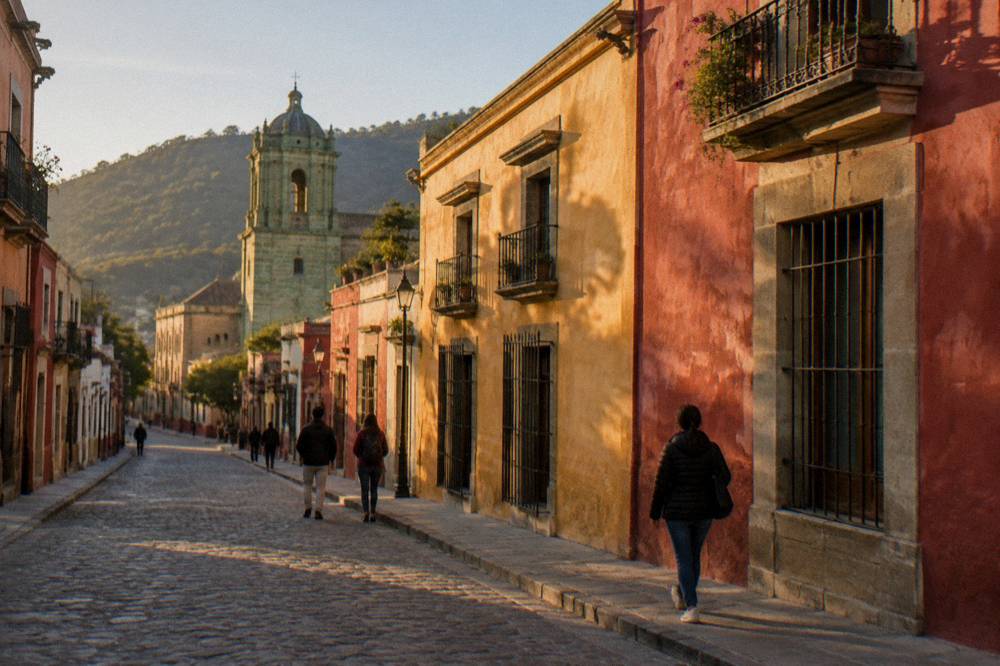
Evening plans need the same arithmetic. A dinner at an outdoor table in January, when the overnight average is 10.3 C, is a different experience from the same dinner in June at 16.7 C, and the seasonal festival calendar in the Oaxaca events and festivals guide spans both. Indoor dining, rooftops and evening walks all sit somewhere on that 10 to 17 degree scale depending on the month.
What Is The Weather Like In Oaxaca In November And December?
November and December sit at the dry end of the Oaxaca City table: November averages 29.0 C daytime highs, 12.3 C nightly lows and 9.1 mm of rain over 3.5 rain days, and December averages 28.9 C, 11.0 C and 9.0 mm over 2.4 rain days. Both months combine dry days, mild afternoons and the year's chillier nights, since the coolest nights fall in December and January.
This stretch is when the rainy season has just ended and the air has dried out. Afternoons stay in the high 20s, but the long dry evenings cool fast. Layers, a warm layer for evenings included, are the packing answer.
The calendar gives these months weight beyond the numbers. The traditional dates of Día de Muertos centre on 31 October to 2 November, and Noche de Rábanos falls on 23 December; both draw visitors to the city, and both are outdoor, evening-weighted events where the overnight lows above matter directly. Anyone planning around the late-year festivals should also read the best month to go to Oaxaca answer, which weighs the same normals against crowd and event factors.

For travellers connecting through the region, the practical pages carry the rest of the trip: the Oaxaca airport and flights to Oaxaca guides cover arrival, and getting around Oaxaca covers movement once the suitcase is packed for the swing.
What To Do In Oaxaca When It Rains
The rainy months from June to September still average daytime highs of 29.1 to 30.9 C in Oaxaca City, and rain falls on roughly 20 days per month, so the practical plan is a morning outdoors, an indoor midday and a flexible evening. Cooking classes, market halls, museums and mezcal tastings all sit indoors, while valley day trips and the city's walking routes shift to the drier morning hours.
The rhythm works because the rain concentrates in parts of the day rather than across all of it, and because the indoor options are strong. A market walk through the covered halls pairs weather-proofing with the food the city is known for, and the what to eat in Oaxaca guide maps the stalls and dishes worth the trip. The Oaxacan mole page goes deeper on the sauce that anchors most of those menus.
Guided products handle rain better than independent plans in one respect: an operator adjusts timing and route on the day, while a self-planned itinerary does not. A street art walk led by a working artist covers murals around the city centre, and the listing runs year round; it is the featured pick on this page, with the street art tour with an artist page giving the full description and Check availability for live dates. For the valley, a Hierve el Agua day trip with a hike and mezcal stop moves the whole outing under an operator's judgement, and the Hierve el Agua tour guide covers what the route involves.
The Oaxaca in the rain itinerary sequences a full wet-season day, indoors and out.
How Should You Pack For Oaxaca Weather?
Pack for a swing, not a season: in every month of the year Oaxaca City pairs a daytime high between 28.9 C and 34.9 C with a nightly low between 10.3 C and 16.7 C, so the base kit is a warm-weather daytime wardrobe plus a genuine warm layer for evenings, with a rain jacket added from May to October and sun protection added for the whole year.
The math is the same in both seasons and only the emphasis moves. In the dry season, November to April, the rain layer stays home and the sun kit earns its place, with April's 34.9 C mean high the ceiling of the year; evenings from December to February, with overnight means of 10.3 to 11.6 C, need the warm layer most. In the rainy season the rain layer is non-negotiable on the wetter days of the month, and the warm layer matters less at night, when lows hold near 16 C, than it does in January.
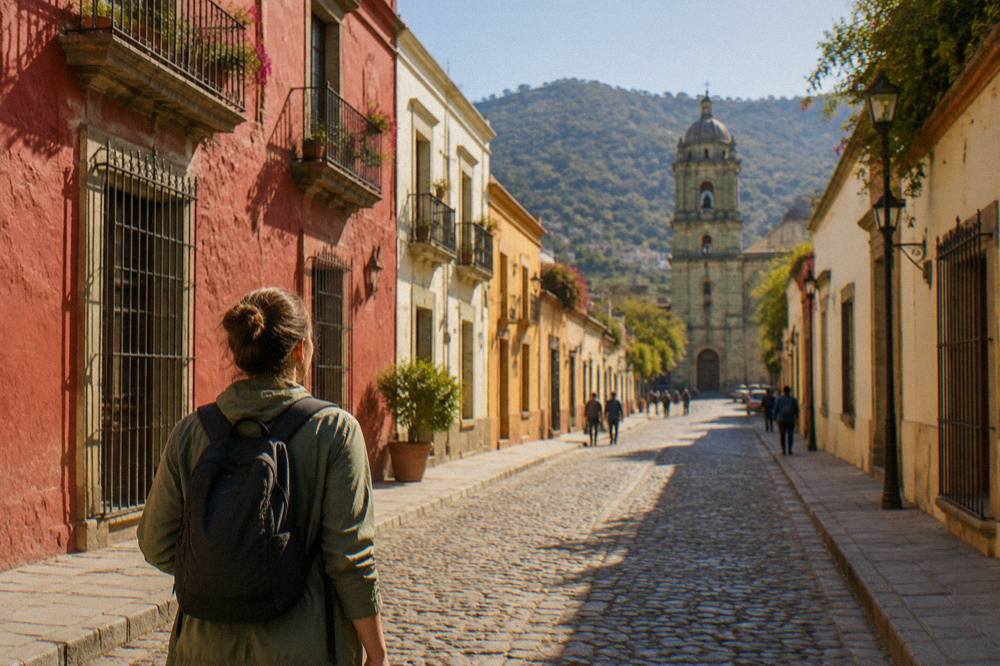
Footwear follows the same split. Dry-season streets are dusty and warm, and rainy-season afternoons put water on the pavements of the Centro Histórico, so a shoe that handles both wet stone and a full walking day serves either half of the year. The neighbourhood walks in the where to stay in Oaxaca guide are all on foot, whatever the month.
Two last practical notes complete the kit. First, hydration scales with the sun rather than the season: the altitude is about 1,550 m year round, and the drinking water in Oaxaca page covers the water question directly. Second, the evenings are part of the trip, from rooftops to festival nights, and the dry-season overnight lows in the 10 to 12 C range are the reason a jacket appears in nearly every suitcase photograph of this city.
Common Questions About Oaxaca Weather
What Is The Weather Like In Oaxaca By Month?
Mean daily highs run from 28.9 C in January and December to 34.9 C in April, and mean nightly lows run from 10.3 C in January to 16.7 C in June. Rain is 2.4 mm in January at the dry end and 188.3 mm in June at the wet end, with the annual total at 853.3 mm. All figures are SMN station normals for 1991 to 2020.
What Is The Rainiest Month In Oaxaca?
June, with 188.3 mm of rain over 19.9 days with rain in the SMN normals. September follows at 163.6 mm, and it has more rain days than June, 21.4 against 19.9.
When Is The Rainy Season In Oaxaca?
From May to October, per the SMN table.
What Is The Weather Like In Oaxaca In November?
November is dry and mild: a mean high of 29.0 C, a mean low of 12.3 C, and 9.1 mm of rain across 3.5 days with rain in the 1991 to 2020 normals.
Does It Get Cold In Oaxaca?
Nights get cool in every month, with mean lows between 10.3 C and 16.7 C, and December and January bring the coolest overnight averages. There is no snow and no freeze in the city; the daytime mean high never falls below 28.9 C in any month.
How Hot Does Oaxaca Get?
The highest mean daily high in the SMN table is 34.9 C, in April.
Oaxaca City rewards travellers who read the numbers rather than the season labels: a rainy-season afternoon at 30 C with a shower, a dry-season evening at 11 C under a clear sky, and an April morning that starts at 15.8 C before the sun does the rest. Pick the month that fits the plan, pack the layer, and let the table above do the forecasting.