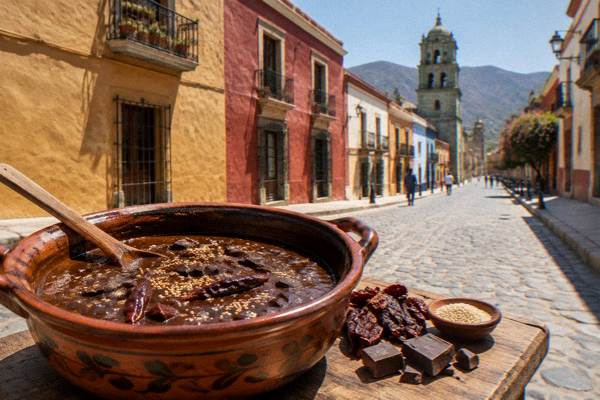
Oaxacan Mole: The Seven Moles And Where To Taste Them
Oaxaca is the Mexican state most closely associated with mole, and Oaxaca City is where all seven of its classic versions sit within walking or a short drive of one another, from market stalls to cooking classes.
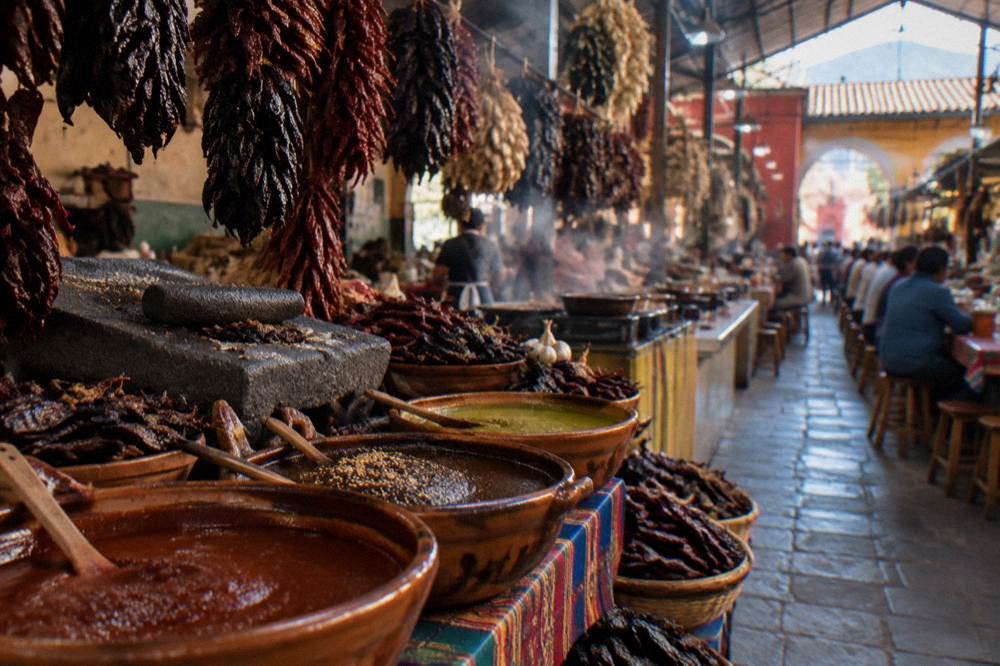
The seven moles of Oaxaca are mole negro, mole rojo, mole coloradito, mole verde, mole amarillo, mole chichilo and manchamanteles, and in Oaxaca City you can taste them at markets such as Mercado 20 de Noviembre, in cooking classes, and at mezcal-and-mole pairing evenings.
Oaxaca de Juárez, the capital of the state of Oaxaca in Mexico and an inland highland city at about 1,550 m, is the place in the country most closely tied to mole, the family of complex sauces that anchors Oaxacan cooking. The standard count is seven, and the count is not marketing: it is how the city's cooks, markets and menus themselves talk about the sauce. This page sets out what each of the seven is, where in Oaxaca City you can actually taste them, and how a plate of mole can become a market walk, a cooking class or a mezcal pairing.
For background on the wider table these sauces sit on, see what to eat in Oaxaca; for the drink poured alongside, the mezcal in Oaxaca guide covers the spirit the state is equally known for. The city itself is compact and walkable around its centre, which is part of why a food-focused trip here works so well: the markets, the class kitchens and the pairing venues sit inside the same few square kilometres, and the valley's bigger sights are a short drive out. You can structure an entire visit around eating well without ever needing more than a morning or an afternoon outside the historic core.
What Is Oaxacan Mole?
Mole is a category of slow-cooked Oaxacan sauce built from a long list of ingredients that can include chillies, spices, seeds, nuts, fruit and, in some versions, chocolate, served over meat or as the centrepiece of a meal rather than as a side. Oaxaca City, the state capital, is the place in Mexico where the term is used most systematically, with seven named versions treated as a set rather than a single dish.
The word covers a range, not one recipe. What the versions share is method: many ingredients prepared separately, ground and combined, then cooked down into a sauce that takes hours. What separates them is colour, heat and sweetness, from the near-black mole negro to the green, herb-led mole verde. Asking for "mole" in Oaxaca City without specifying which one is close to asking for "cheese" without naming a type, and any waiter or market cook will answer with the follow-up question: which one?
The practical consequence for a visitor is that "mole" on two different menus can mean two very different plates. A dark mole negro over turkey and a bowl of green mole verde with beans and pork share a name and a technique, and almost nothing else about the eating experience. This is why the numbered set exists in the first place: it gives cooks and diners a shared vocabulary that is precise enough to order from, and it gives a curious traveller a checklist that turns a week of meals into a small collecting project.
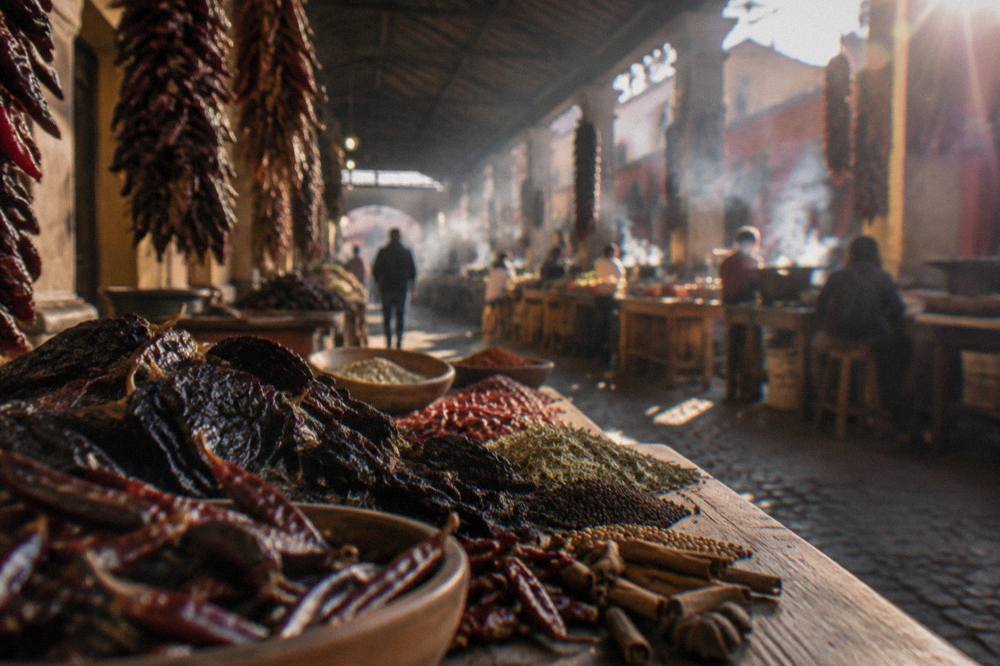
Because the sauce is labour-intensive, mole in Oaxaca City is celebratory food as much as daily food. It anchors weddings, saints' days and the big festival periods, and it is also simply lunch, ladled over chicken from a market stall. That double life, ceremonial and everyday at once, is the practical reason a visitor encounters it everywhere from the Zócalo's surrounding blocks to the valley towns.
The scale of the work is worth spelling out, because it explains both the price of a good plate and the point of taking a class. Each ingredient is handled on its own before anything comes together: chillies cleaned and toasted, seeds and spices toasted separately, everything ground and then combined and reduced. The grinding step is where the texture of a proper mole is decided, and it is the step visitors most consistently underestimate until they have done it themselves.
What Are The Seven Moles Of Oaxaca?
The seven moles of Oaxaca are mole negro, mole rojo, mole coloradito, mole verde, mole amarillo, mole chichilo and manchamanteles. They run from the darkest and richest to bright green and fruit-stewed, and the set is the standard frame cooks and menus in Oaxaca City use when they talk about mole as a whole.
Two of the seven dominate menus: mole negro, the dark, chocolate-deep version most strongly associated with the state, and mole rojo, its red counterpart. The others appear more selectively, which is exactly why a market or a family kitchen often beats a restaurant for finding them. The table below is the set at a glance.
| Mole | Character | Typically Served |
|---|---|---|
| Mole negro | Dark, deep, the version most associated with Oaxaca | Over chicken or turkey, festive occasions |
| Mole rojo | Red, full chilli body | Over chicken, with rice |
| Mole coloradito | A lighter brick-red cousin of mole rojo | Over chicken or pork |
| Mole verde | Green, fresh, herb and pumpkin-seed led | Over pork, with beans |
| Mole amarillo | Yellow, chilli-forward, no chocolate | With vegetables, chicken or beef |
| Mole chichilo | Dark, smoky, the rarest on menus | Festive meals |
| Manchamanteles | Fruit-stewed, sweet and fruity | With chicken or pork |
A practical note on hunting them: mole negro and mole rojo are easy. Mole chichilo is the hard one, rarely on standard menus, and manchamanteles depends heavily on which fruit is in the kitchen that day. If a specific version matters to you, a cooking class or a market cook who makes mole daily is the more reliable route than hoping a restaurant happens to be serving it.
The middle of the list rewards attention too. Mole coloradito sits close to mole rojo in family and colour but lighter on the plate, and it is often the version that wins over diners who find mole negro too heavy. Mole amarillo, built without chocolate, shows how far the technique stretches: same patient method, completely different result, and a useful data point for anyone who assumed all Oaxacan moles are dark and sweet.
Chocolate is part of that story too, and it runs both ways: chocolate thickens and darkens some moles, and Oaxacan drinking chocolate is a separate institution covered in the Oaxacan chocolate guide. The cacao-and-chocolate small-group experiences in the city are a good companion to a mole class if you want the sweet side of the same ingredient chain. Doing both in one trip gives you the full arc, from cacao as a drink of the region to cacao as one component buried inside a savoury sauce, and each half of the story makes the other easier to understand.
Where To Taste Mole In Oaxaca City?
The three dependable places to taste mole in Oaxaca City are the central food markets, above all Mercado 20 de Noviembre, the city's cooking classes, where you make a full mole from raw ingredients, and mezcal-and-mole pairing evenings, which serve multiple moles in tasting format rather than as one plate at lunch.
Mercado 20 de Noviembre is the city's key central food market, founded in 1893 per the state government's own description of it, and its cooked-food stalls are where mole is a working lunch, not a demonstration. Benito Juárez market, a historic central market inaugurated in 1894, sits nearby. Neither market's opening hours are published in an official source, so plan a midday visit and treat evening access as unconfirmed rather than assumed.
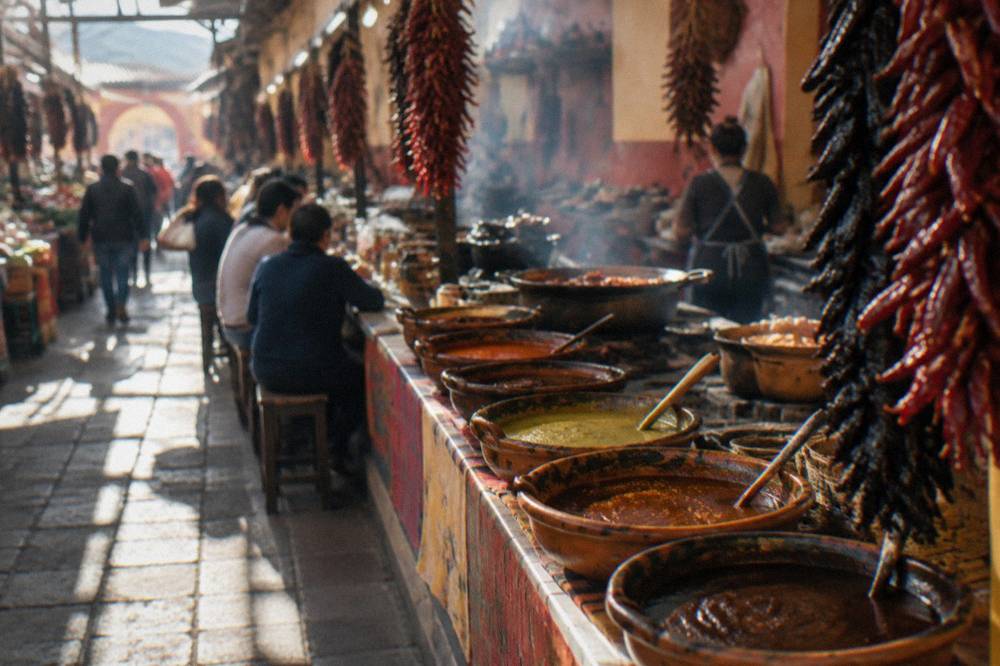
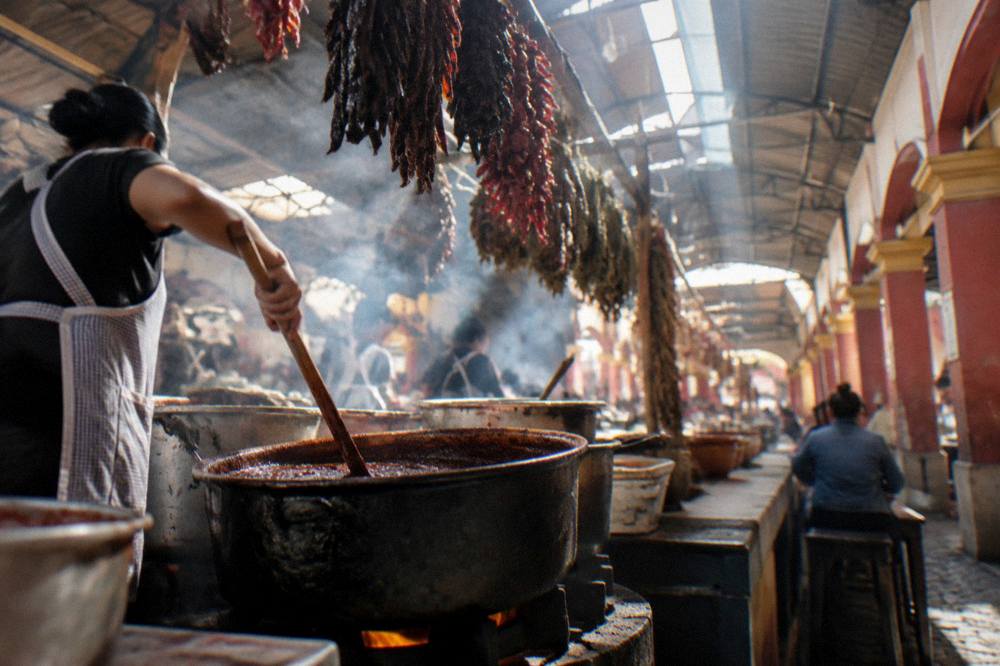
The market route also teaches something a restaurant cannot: volume. At a busy stall you see mole held in large pots, ladled to order, served with rice and tortillas at a pace set by local appetites rather than by a tasting menu. Watching which stall the city's own lunch crowd chooses is a legitimate strategy, and it costs nothing but the plate you were buying anyway.
The second route reverses the meal: instead of choosing a mole from a stall, you build one. Oaxaca City has one of the densest selections of cooking classes in Mexico, and mole is the most common headline dish among them, with options covering traditional classes, vegetarian classes and family-recipe formats. The class listings are collected in the Oaxaca cooking classes guide.
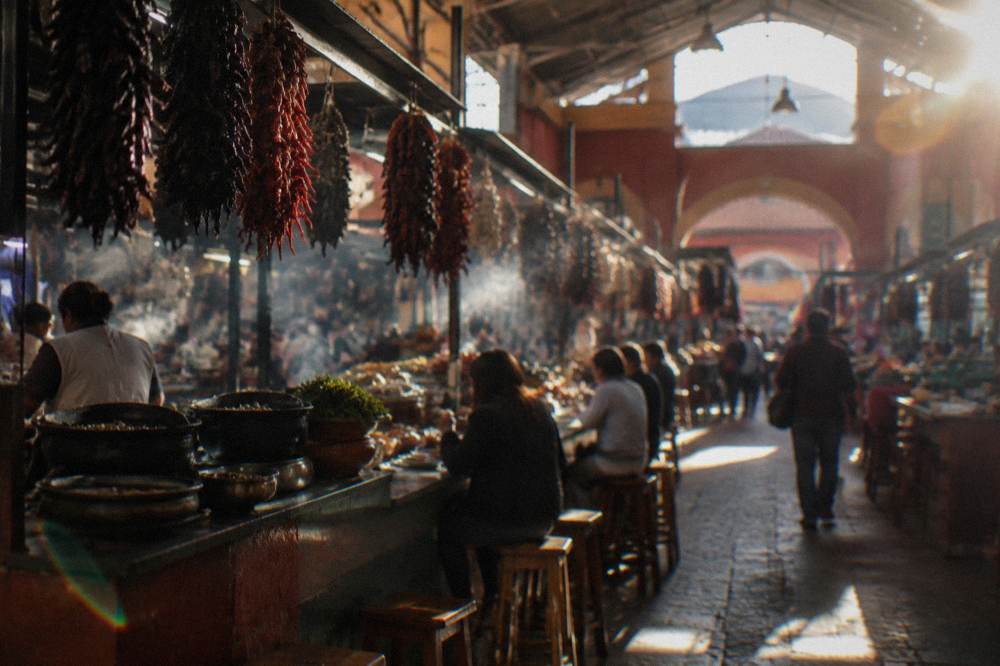
The third route is the pairing evening, a shorter, seated format in which a certified sommelier walks a small group through several mezcal-and-mole combinations. It suits a visitor who wants breadth in one sitting, several moles in an evening, rather than depth across a week of lunches. A full account of the attractions around Mercado 20 de Noviembre covers the building itself.
A fourth, looser option is to let mole find you on the way to something else. Several of the valley day trips out of the city include a meal stop, and the food-and-market tours that walk the central markets include tastings as they go, so mole arrives as part of a wider plate rather than as the destination. For travellers who prefer not to plan meals at all, that incidental route is often enough: a week in Oaxaca City without once specifically seeking mole out is close to impossible.
| Setting | What You Get | Best For |
|---|---|---|
| Mercado 20 de Noviembre stalls | One or two moles served over chicken as a plate lunch | Eating mole the way the city eats it |
| Cooking class | A full mole made from raw ingredients, then eaten | Understanding the work behind the sauce |
| Mezcal-and-mole pairing | Several moles in tasting portions, paired by a sommelier | Comparing versions in one evening |
| Valley day trips with meals | Regional cooking outside the city | Combining mole with Monte Albán or Mitla |
Can You Learn To Cook Mole In Oaxaca?
Yes, and Oaxaca City is one of the easiest places in Mexico to do it: the cooking-class list includes a class specifically built around making an Oaxacan mole from scratch, plus traditional, vegetarian and family-recipe formats, most of which pair a market shopping stop with the cooking itself.
The class built directly around the dish is the private mole cooking class, in which the mole itself is the curriculum rather than one course among several. What the classes share, across formats, is the market-first structure: ingredients are bought at a market, then carried to the kitchen. That sequence is the point. Mole begins as a shopping problem, chillies, seeds, spices, chosen one at a time, and the class reproduces it from the start. More of these guides are collected on Oaxaca Travel Guide.
The market stop also does quiet work as an orientation. By the time you are back at the stove you can recognise the chillies by sight, you have seen where the chocolate and the spices come from, and the long ingredient list of a mole has stopped being abstract. Every later meal in Oaxaca benefits from that vocabulary, which is a decent return on one afternoon.
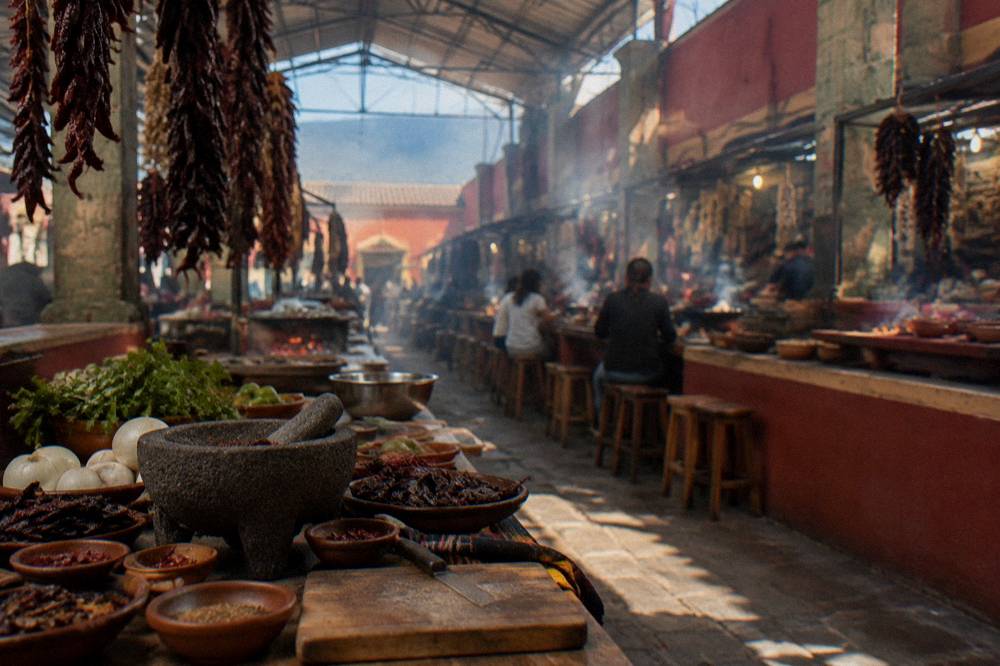
Vegetarian visitors are not excluded: a dedicated vegetarian cooking class with a market tour runs in the city, and the traditional classes cover the classic repertoire. If the choice is between tasting and cooking, the honest trade-off is time versus understanding: a market lunch takes an hour and answers what mole is; a class takes an afternoon and answers how it is made, which changes how every later plate tastes.
A cooking day slots easily into a longer stay. Most classes run in the city centre or depart from it, so a morning class leaves the afternoon free for the historic centre, and the how many days in Oaxaca guide helps size the trip around it. Check availability for the mole-focused class directly with the operator's booking page.
| Class Format On The Tour List | Headline Focus | Group Style |
|---|---|---|
| Private mole cooking class | Making an Oaxacan mole | Private |
| Traditional Oaxacan cooking class | Full traditional menu | Small group |
| Vegetarian cooking class with market tour | Vegetarian Oaxacan dishes | Small group |
| Grandma's recipes class | Family-recipe home cooking | Small group |
Do Mezcal And Mole Pair Well In Oaxaca?
They do, and pairing them deliberately is an established format in Oaxaca City: dedicated mezcal-and-mole experiences, led by a certified sommelier, serve multiple pairings in one seated session, and the city's mezcal tours increasingly include food alongside the spirit rather than tastings alone.
The logic is contrast. Mezcal in Oaxaca ranges broadly in character, and a structured pairing uses that range against the seven-mole spectrum, the same reasoning that stands a smoky spirit against a sweet manchamanteles or a brighter one against a chilli-forward mole amarillo. A sommelier-led format does the matching for you and explains each decision, which is the advantage over improvising at dinner.
That explanation is more than half the value. Anyone can pour two glasses and hope; a certified sommelier names why a given pairing works, which turns the evening from a tasting into a short course. It is also the fastest way to compare several moles side by side in controlled portions, something a week of restaurant plates delivers only incidentally.
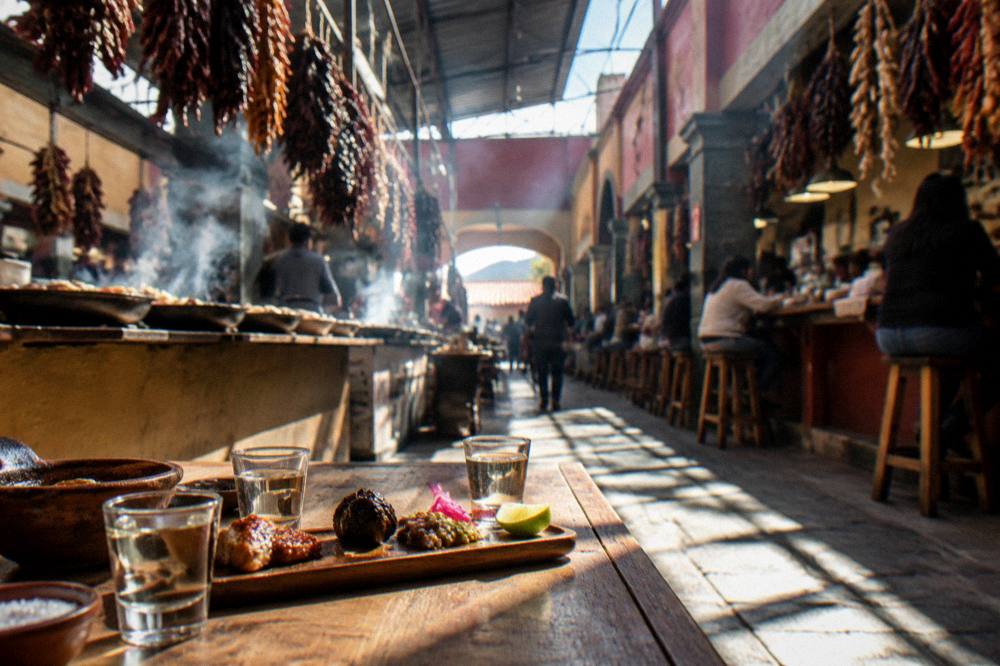
The pairing evenings are short, seated city-centre sessions, which makes them a good fit for a first evening or a rest day between valley trips. For the spirit on its own, the distillery-visit options around the city, including behind-the-scenes palenque access, are covered alongside it. Whatever the format, the mezcal served is the state's own; Oaxaca is the heart of the spirit's production region.
When Is A Good Season For Mole In Oaxaca?
Any season works for eating mole in Oaxaca, because the sauce is served year-round, but the practical planning facts are these: the dry season runs November to April, the rainy season May to October with its heaviest rain from June to September, and June averages 188.3 mm of rain against January's 2.4 mm, which affects valley day trips more than lunch indoors.
Festival periods add their own pull. The Guelaguetza each July fills the city, with the 2026 edition's Lunes del Cerro on 20 and 27 July, and the accompanying Feria del Mezcal, reported at 17 to 28 July at the CCCO in Santa Lucía del Camino with entry around 80 MXN, put mezcal and regional food side by side. The late-October Día de Muertos period is the other peak; the 2026 programme has not been announced, and the festival's traditional dates centre on 31 October to 2 November.
The rain question matters mainly for how you split your days. In the rainy months an afternoon downpour is a normal event rather than an exception, so the standard local pattern, sights and valley trips in the morning, long lunches and indoor sessions in the afternoon, fits the weather as much as the appetite. A mole lunch or a pairing evening is exactly the kind of booking that profits from a rainy two o'clock.
| Month | Average Rain (mm) | Average High (C) |
|---|---|---|
| January | 2.4 | 28.9 |
| April | 47.3 | 34.9 |
| June | 188.3 | 30.9 |
| September | 163.6 | 29.1 |
| November | 9.1 | 29.0 |
Figures are SMN station normals for Oaxaca, 1991 to 2020. April's 34.9 C average high is the year's highest monthly figure by the same table, and December to January bring the lowest average overnight lows at about 11.0 and 10.3 C, so a winter visit packs differently from an April one. The month-by-month detail, including every month's figures, is in the Oaxaca weather by month guide, and broader planning sits in the best time to visit Oaxaca.
How Does Mole Fit Into An Oaxaca Itinerary?
A mole-focused itinerary in Oaxaca City works as a triangle: one market lunch at Mercado 20 de Noviembre, one cooking class that includes the market shopping, and one mezcal-and-mole pairing evening, leaving the rest of the stay for the archaeological sites and valley towns that sit within an hour of the centre.
The city makes this easy because the food and the sights do not compete for the same hours. Monte Albán is about 15 minutes away by road, Mitla about 37 minutes and Hierve el Agua about 57 minutes on free-flow roads, real traffic and mountain roads are slower, so valley days and city food days alternate naturally. A market-first morning, a class, then a ruins day, then a pairing evening, is a workable four-day rhythm; the things to do in Oaxaca overview collects the full set of options.
Base yourself centrally and the triangle collapses to walking distance. The historic centre holds the markets, most class kitchens and the pairing venues, so the only transport decisions in a food-focused stay are the ones that take you out of the city, and those are the trips you would be doing anyway. Where to sleep is covered in where to stay in Oaxaca.
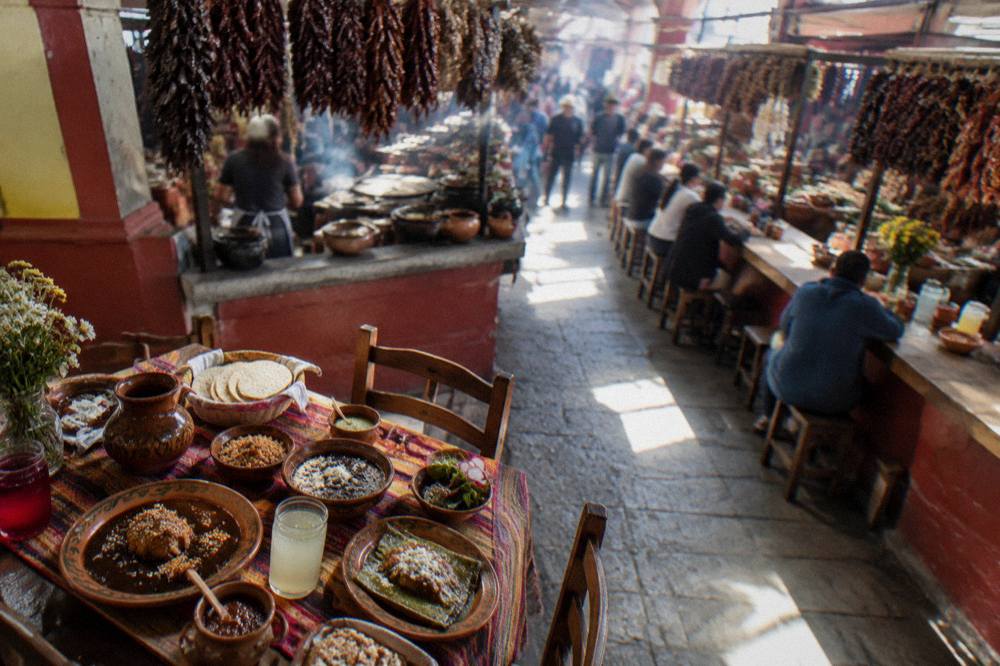
For a shorter stay, the honest minimum is one good market plate plus one structured experience, either the class or the pairing. The Oaxaca food tour options cover guided market walks with tastings, and the restaurant landscape is covered separately in the best restaurants in Oaxaca. Visitors building a longer trip around food can add the valley's own cooking traditions in Tlacolula and the craft villages, where the mezcal route through Santiago Matatlán also sits.
Order matters less than spacing. Two food events in one day tends to flatten both, so the workable rule is one anchor per day and ordinary meals around it. A class morning followed by a modest dinner, or a pairing evening preceded by a light market breakfast, keeps each experience at full volume, and the city's ordinary eating, tlayudas, quesillo, chapulines for the adventurous, fills the gaps without effort.
Common Questions About Oaxacan Mole
What Are The Seven Moles Of Oaxaca?
The seven are mole negro, mole rojo, mole coloradito, mole verde, mole amarillo, mole chichilo and manchamanteles. Mole negro and mole rojo are the most commonly served; mole chichilo is the hardest to find on ordinary menus.
Where Can I Taste Mole In Oaxaca City?
At the cooked-food stalls of Mercado 20 de Noviembre and the neighbouring central markets, in a cooking class where you make it yourself, and at mezcal-and-mole pairing evenings that serve several versions in one sitting.
Does Oaxacan Mole Always Contain Chocolate?
No. Chocolate appears in the darker moles, above all mole negro, but several of the seven, including mole verde and mole amarillo, are made without it.
Can I Take A Cooking Class Focused On Mole In Oaxaca?
Yes. The city's class list includes a class specifically built around making an Oaxacan mole, alongside traditional, vegetarian and family-recipe formats, most starting with a market shopping stop.
Is Mole In Oaxaca Expensive?
As a market plate, mole is everyday food, priced in pesos like any other stall lunch. Structured experiences such as classes and pairing evenings carry the operator's listed price on their live listings. General trip budgeting is covered in the Oaxaca travel costs guide.
What Drink Goes With Oaxacan Mole?
Mezcal, the state's signature spirit, is the local pairing, and sommelier-led mezcal-and-mole evenings in Oaxaca City exist precisely to match the two across several courses.
Every one of the seven moles is reachable within a single stay in Oaxaca City, and the combination of a market stall, a class and a pairing evening covers the set better than any restaurant crawl could.