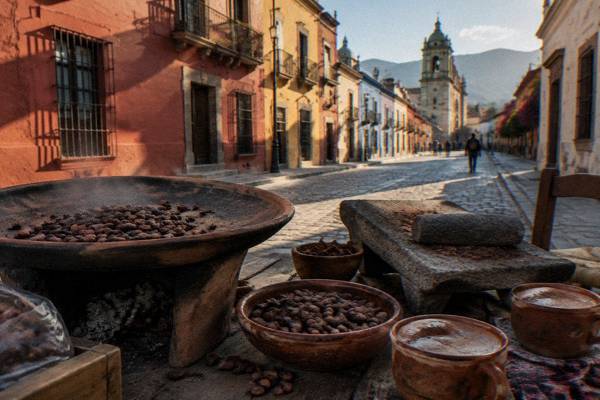
Oaxacan Chocolate: Mills, Mole Paste And Hot Chocolate
Oaxacan chocolate is a working food in Oaxaca City: cacao beans milled to order at market shops, paste blended into mole, and hot chocolate drunk through the day. This guide covers where the mills are, how the pieces connect, and how to build a chocolate day in the city.
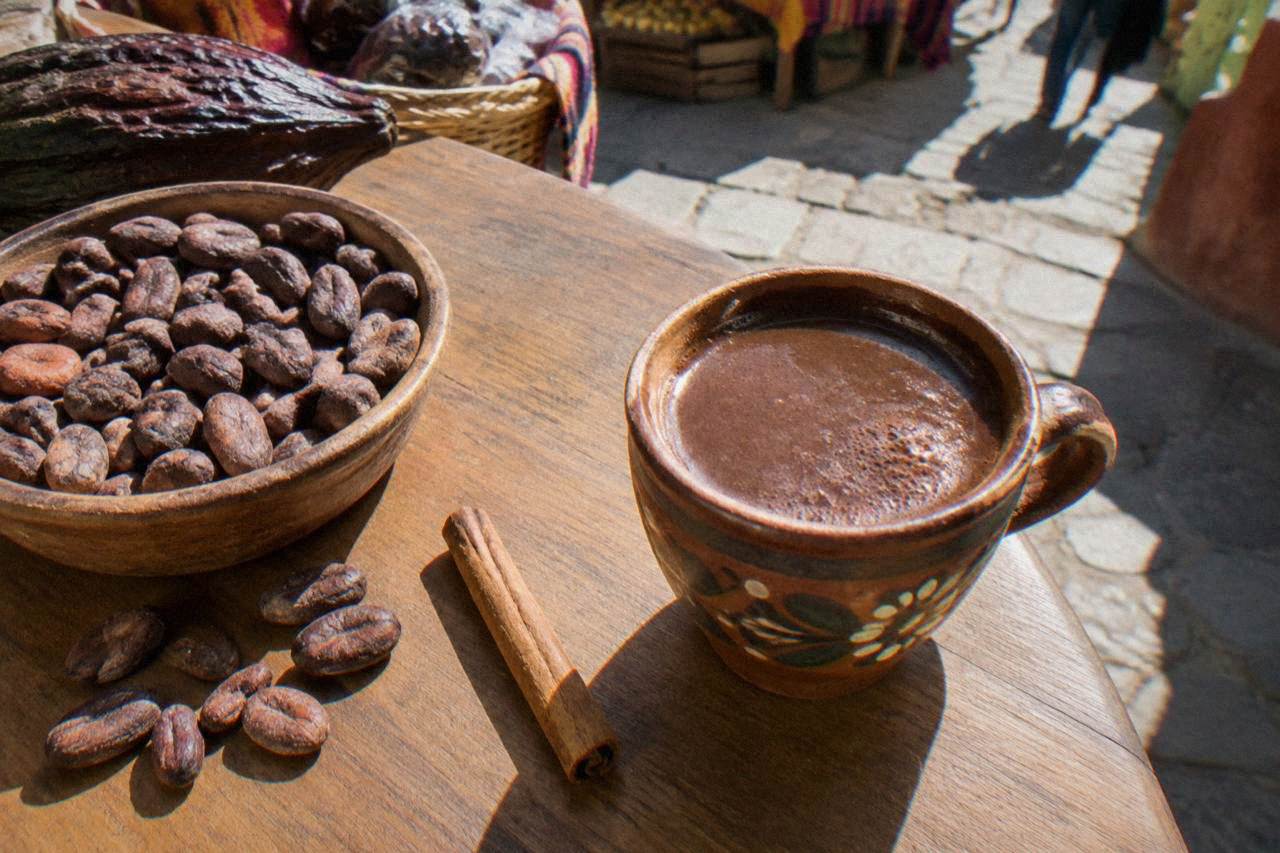
Oaxacan chocolate in Oaxaca City means cacao milled to order at market shops, chocolate paste stirred into mole, and hot chocolate served as an everyday drink. Buy beans at Mercado 20 de Noviembre or Mercado Benito Juárez, have them milled with sugar, almond and cinnamon at a mill counter, and taste your way through the city with a small-group cacao experience.
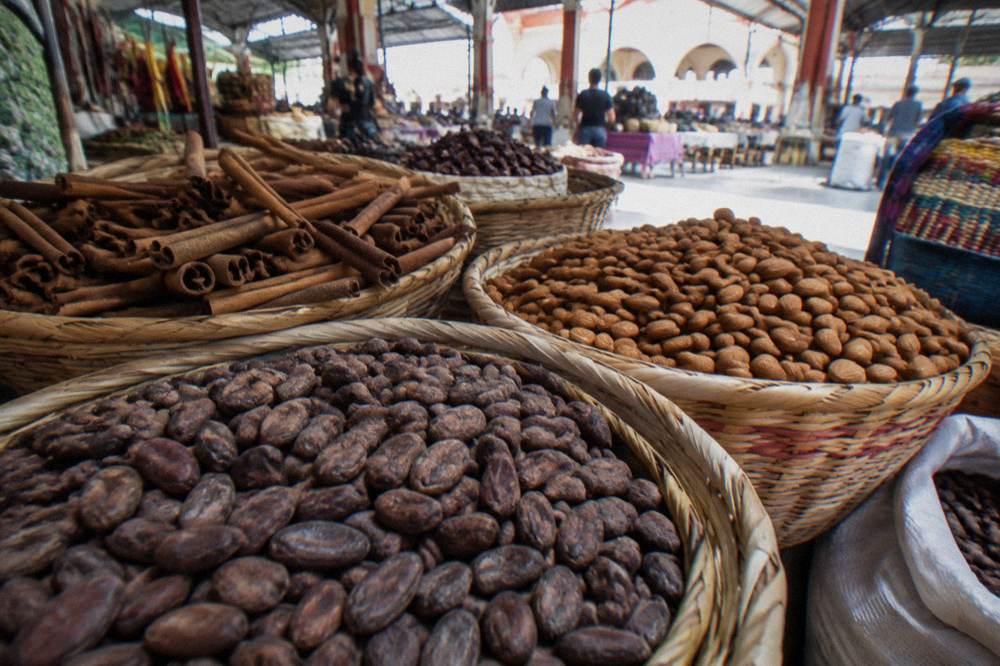
Cacao reaches Oaxaca City from growing regions outside the valley, and in the city's markets it is still treated as a raw ingredient rather than a finished product: shoppers buy beans, almonds, sugar and cinnamon, then carry the mix to a mill counter where it is ground to order into chocolate paste for drinking or for cooking. That loop, beans to mill to cup, is what separates Oaxacan chocolate from packaged chocolate elsewhere in Mexico, and it runs through the everyday food of the Valles Centrales, an inland highland region where the city sits at about 1,550 m with no sea anywhere near it. The chocolate story also runs straight into the kitchen, because the same paste is one of the ingredients that carries into mole, the sauce complex the region is known for, and into breakfast mugs across the centro histórico. The Oaxaca Travel Guide desk lays out below where the mills are, how the paste is used, what a tasting costs through a booked session, and how to plan a chocolate-themed day in the city.
What Is Oaxacan Chocolate And Where Does It Fit In Oaxaca City?
Oaxacan chocolate is a paste of milled cacao, usually with sugar, almond and cinnamon added at the mill, and in Oaxaca City it is bought as a raw or semi-finished product at market stalls rather than as wrapped bars. The same paste is drunk hot, whipped into froth, and cooked into mole sauces, which is why chocolate in this city sits inside the food supply, not beside it as a candy.
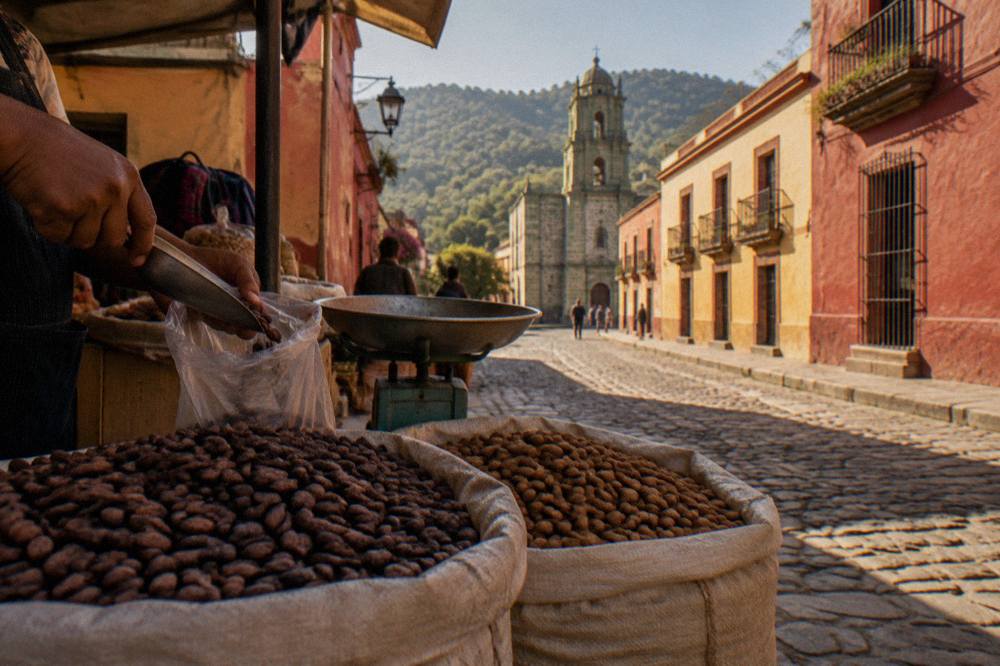
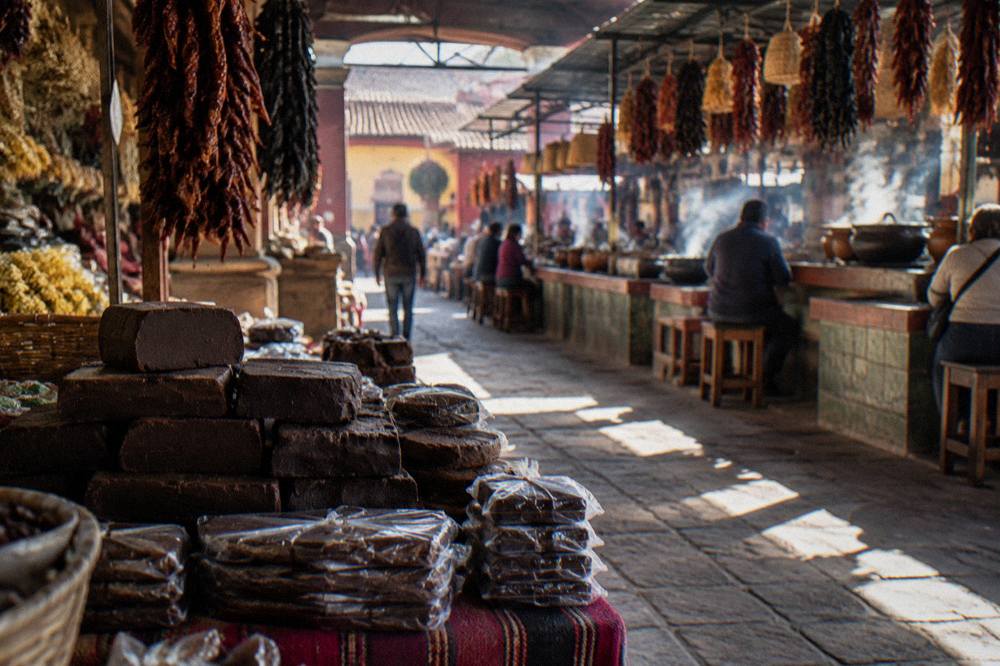
The distinction matters for planning. A visitor asking after chocolate in Oaxaca City is usually pointed toward the market halls of the centro, above all Mercado 20 de Noviembre, where vendors sell cacao beans by weight alongside the other dry goods, and where mill counters grind a shopper's own mix on the spot. The finished product comes home as a block or a bag of paste, not as a moulded bar, and the drink made from it is a daily one rather than a dessert.
The city's food identity gives chocolate its second role. Oaxaca is known for mezcal, mole and tlayuda, and mole is where the cacao enters the kitchen: chocolate paste is one of the ingredients cooked down into the sauce. The deeper background on that connection sits on the Oaxacan mole guide, which follows the paste from the market bag into the pot. The is Oaxaca known for chocolate answer page covers the headline question in short form.
One practical note shapes any chocolate day: everything in this circuit happens on foot in the centro histórico or a short ride away; the city core is compact, and the walk between the main market halls is a few minutes.
Where Can You Watch Cacao Milled In Oaxaca City?
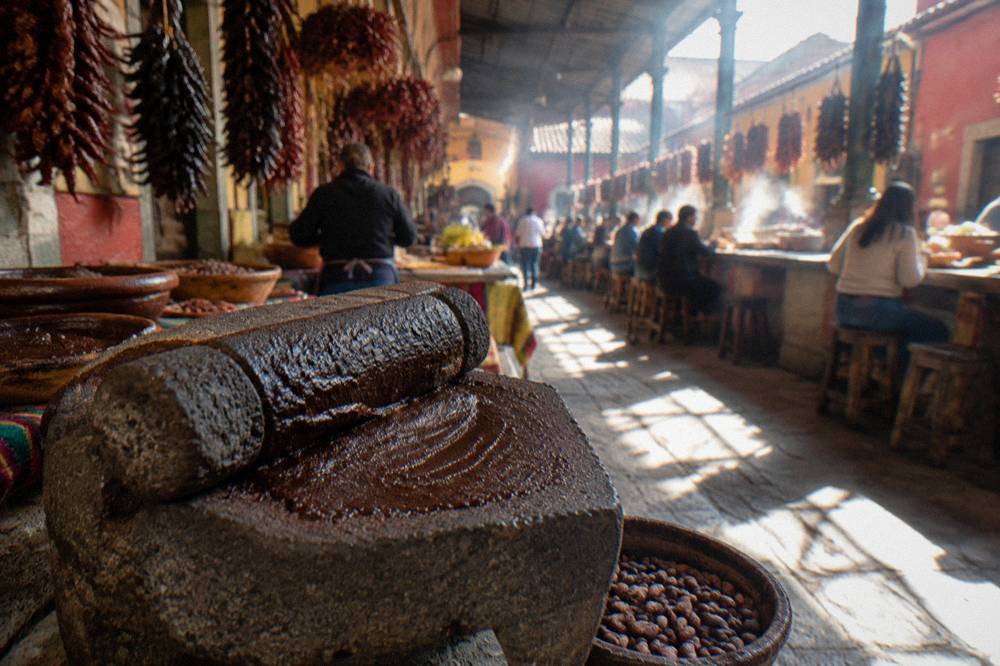
The milling happens at chocolate and dry-goods counters inside the city's market halls, above all Mercado 20 de Noviembre and Mercado Benito Juárez near the Zócalo, where you buy the beans, sugar, almond and cinnamon at one stall and have the mix ground to order at a mill. There is no factory floor and no ticketed show: the mill is a working machine on a working market lane, and you see it by being a customer.
The routine, as market vendors run it, is simple. Beans are chosen and weighed, the additions are decided, and the mix goes through the mill once or twice until it leaves as a dark, warm paste. The paste is then portioned for drinking, with more sugar for a sweeter cup, or set aside for cooking. A shopper who wants to watch the process can simply build their own batch; the mill operators are used to explaining the steps as they work, and Spanish goes a long way, though a few words and pointing carry the transaction.
For travellers who want the same arc explained end to end, a guided session does it in one sitting. The small-group Cacao, Chocolate Experience in Oaxaca for Small Groups walks participants through the beans and the process in a structured format, and the tour list carries its price, rating and duration on its own listing page. If a booked session suits your pace, Check availability on the operator's booking page.
The markets themselves deserve more than a transactional visit. The blocks around the Zócalo hold several halls within a short walk of one another, and each has its own character; the things to do in Oaxaca page collects the wider circuit. Come hungry rather than on a schedule, because the halls sell tlayudas, tejate, quesillo and chapulines alongside the cacao, and a chocolate run turns easily into a full market lunch.
How Does Chocolate Run Into Mole Paste?
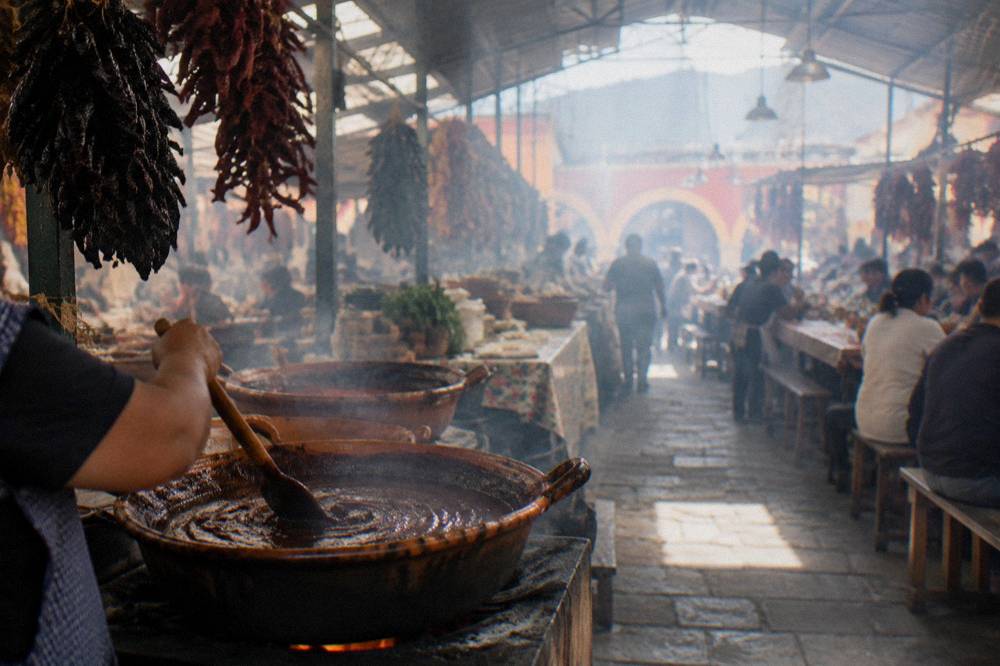
Mole in Oaxaca is a cooked sauce whose ingredient list includes chocolate or cacao paste among many others, and the chocolate is added as an ingredient to the sauce base rather than served alongside it. The connection is the reason a market chocolate purchase in Oaxaca City has two destinations: the mug for drinking and the pot for mole.
The kitchen logic is straightforward. The same dark paste that melts into hot chocolate also melts into a mole as it cooks down, contributing depth and body to the sauce. Cooks in the city buy or mill their paste with the dish in mind, and cooking classes in Oaxaca routinely make the mole-and-chocolate link a centrepiece of the session; the Oaxaca cooking classes guide lists the formats, from short market-and-cook sessions to longer full-recipe classes where a mole is built from raw ingredients.
A tasting that pairs the two sides exists on the tour list. Mezcal and mole pairing sessions, led by a certified sommelier, put the sauce and the spirit together in a seated format, and one such product covers the pairing in a compact evening slot. For cooks, the practical takeaway is that a bag of market-milled paste travels well and keeps its use in both the drink and the sauce, which makes it one of the more useful food purchases to carry home from a trip.
Which Tastings And Tours Cover Chocolate In Oaxaca?
The tour list covers chocolate in three formats: a dedicated small-group cacao and chocolate experience, food and market walks that pass through the market halls where cacao is sold and milled, and pairing sessions that sit mezcal and mole together with a certified sommelier. A historic-centre walking tour adds the street context between the stops.
The dedicated option is the deepest fit. The small-group cacao session is built around the bean and the process, and it suits travellers who want the chocolate story as the main event rather than one stop on a broader food walk. Food and market tours, by contrast, fold the cacao counters into a route that also covers tlayudas, tejate and the rest of the market table; the Oaxaca food tour round-up collects those walks and what each one covers.
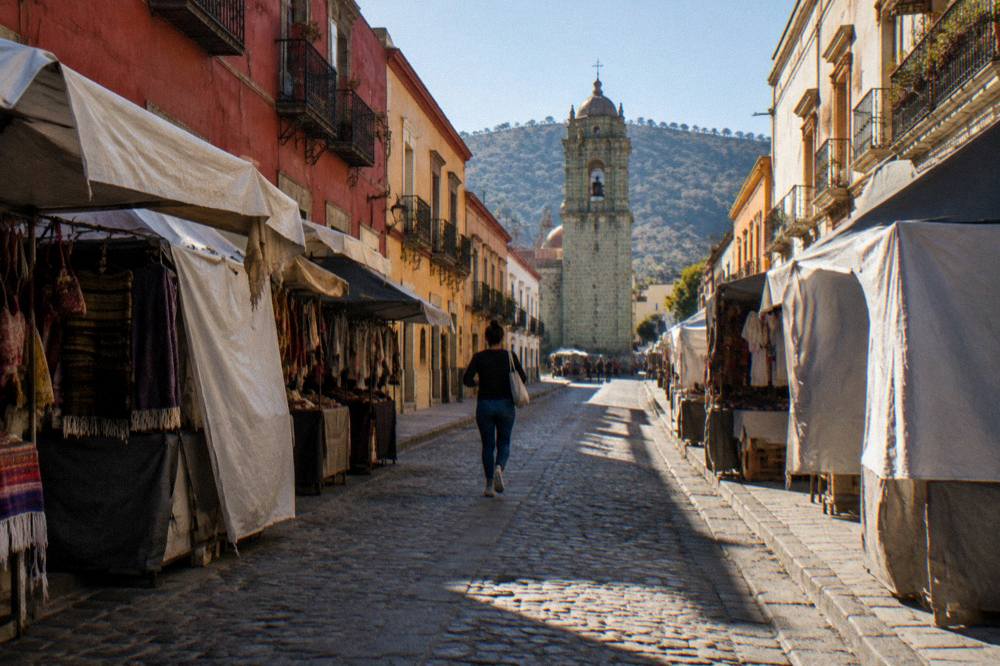
The pairing format works for evening planners. A sommelier-led mezcal and mole session runs in a short seated format and pairs the sauce, which carries the chocolate, against a flight of spirits; the tour list carries one such product. Between the two sits the historic-centre walking tour with a professional local guide, which covers the streets, the churches and the squares around the market halls and gives the chocolate circuit its geographic frame.
The table below compares the three formats on this page's trio, with all commercial figures left to the operator listings.
| Format | What it covers | Best for |
|---|---|---|
| Cacao and chocolate experience | Beans, milling process and guided tasting in a small group | Travellers making chocolate the main event |
| Historic centre walking tour | Streets, squares and landmarks of the centro with a professional local guide | First-time visitors building context before the markets |
| Mezcal and mole pairing with a sommelier | Seated pairing of mole, which carries chocolate, with mezcal | Evenings and food-first planners |
What Do The Markets Add To A Chocolate Day In Oaxaca?
The market halls supply the full chocolate chain in one walk: beans and dry goods at the stalls, milling at the counter, hot chocolate at the food stands, and the ingredients for mole beside them. Mercado 20 de Noviembre and Mercado Benito Juárez sit a few minutes apart near the Zócalo, so a chocolate morning in Oaxaca City needs no vehicle at all.
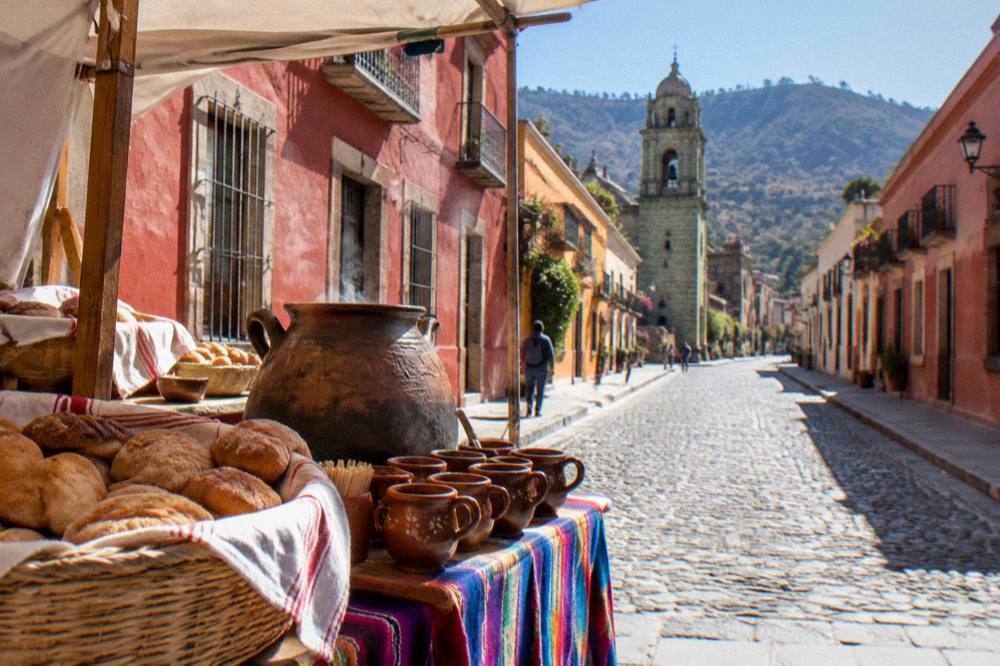
Building the morning is a matter of order. Start at the dry-goods stalls to choose beans and additions, take the mix to the mill, and finish with a cup at a food stand or in a nearby café, where hot chocolate is served in the local style and often alongside bread for dunking. The same halls sell tejate, a maize-and-cacao drink that belongs to the same ingredient family and appears across the city's markets as a daytime refresher, and the stalls around them carry mole paste in ready-cooked form for travellers who want the sauce without the kitchen.
A useful habit is to split the purchase in two: keep one portion of the milled paste for drinking back home, exactly as the market bag intends, and keep a second portion for a first attempt at a mole. The halls also sell the supporting dry goods, from dried chillies to sesame and almonds, so a traveller cooking later can assemble the whole ingredient list in a single pass rather than piecing it together across shops.
Beyond the two central halls, the city's wider market network extends into the valleys, and several valley towns can be folded into a single driving day. Distances below are measured from the Zócalo as free-flow drive times on mapped roads; real traffic and mountain roads are slower.
| Destination from the Zócalo | Drive time (about) | Link to the chocolate day |
|---|---|---|
| Mercado 20 de Noviembre, centro | Walking distance | Cacao stalls, mill counters, food stands |
| Santa María del Tule | 11 minutes | Valley stop on craft and tree routes |
| Teotitlán del Valle | 26 minutes | Weaving village on valley market routes |
| Tlacolula | 25 minutes | Valley town on the Mitla road |
| Mitla | 37 minutes | Archaeological site pairing with a valley day |
| Ocotlán | 37 minutes | Friday valley town with a craft route |
For families, the market-and-chocolate circuit is one of the easier food days to run with children, since the halls are enclosed, the stops are short and the mill counter is genuinely entertaining to watch; the Oaxaca with kids itinerary places the markets within a family plan.
What Should You Buy And Carry Home?
The practical chocolate purchases in Oaxaca City are milled paste in blocks or bags, whole or roasted cacao beans, and ready-made mole paste, all bought in pesos at the market stalls, with the paste milled to your own recipe if you buy the ingredients separately. The paste keeps for travel and serves both the drinking mug and the mole pot at home.
Two rules keep the purchase honest. First, weight and sweetness are decided at the counter, so a shopper who wants a less sweet paste says so before the milling, not after. Second, local ingredient prices are set at the stall and are not published anywhere in advance, so the figure to trust is the one on the scale in front of you. The wider shopping picture, including craft purchases beyond food, is covered on the things to do in Oaxaca page.
For travellers flying in or arriving overland, the practical pages carry the logistics: the Oaxaca airport guide, flights to Oaxaca, the Mexico City to Oaxaca route and the ADO bus guide cover arrival, while getting around Oaxaca and taxis, Uber and DiDi in Oaxaca cover movement inside the city once the shopping bags get heavy.
When Is The Weather Right For A Chocolate Circuit In Oaxaca?
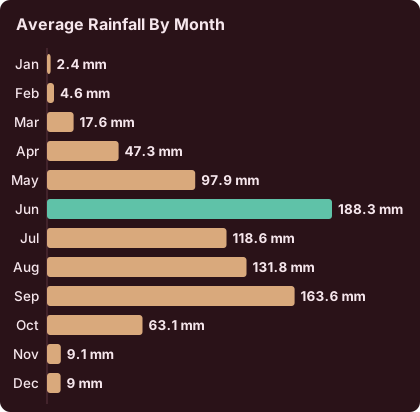
Oaxaca City has a dry season from November to April and a rainy season from May to October, with rain peaking between June and September, so market mornings and walking circuits run most reliably in the dry months, while rainy-season days still work with the halls as cover and showers typically arriving later in the day. Chocolate itself is a year-round food in the city and has no season.
The climate table below is drawn from the SMN station 20079 normals for 1991 to 2020, with the station sitting at 1,594 m in the city. The figures are averages: they describe the long-run pattern, not a forecast for any given week. April carries a mean daily high of 34.9 C and June averages 188.3 mm of rain, while January averages just 2.4 mm; no month brings snow to this altitude, and the city has no sea and no winter cold that would close an outdoor circuit.
| Month | Mean high C | Mean low C | Rain mm |
|---|---|---|---|
| Jan | 28.9 | 10.3 | 2.4 |
| Feb | 31.1 | 11.6 | 4.6 |
| Mar | 33.3 | 13.6 | 17.6 |
| Apr | 34.9 | 15.8 | 47.3 |
| May | 33.8 | 16.7 | 97.9 |
| Jun | 30.9 | 16.7 | 188.3 |
| Jul | 30.1 | 15.9 | 118.6 |
| Aug | 30.0 | 15.9 | 131.8 |
| Sep | 29.1 | 16.1 | 163.6 |
| Oct | 29.3 | 14.5 | 63.1 |
| Nov | 29.0 | 12.3 | 9.1 |
| Dec | 28.9 | 11.0 | 9.0 |
A hot-chocolate morning fits any month on that table, but the planning pattern follows the rain: dry months favour long walking days that string the markets, the centro and a valley stop together, while rainy months favour the halls themselves, where the mill counters and food stands sit under cover. Month-by-month detail, including the crowd patterns around the city's festivals, sits on the Oaxaca weather by month and best time to visit Oaxaca pages, and the how hot is it in Oaxaca answer covers the temperature question in short form.
Fitting a chocolate day into a longer stay is a solved problem on this site: the how many days in Oaxaca page sizes the trip, the Oaxaca travel costs and budget guide carries the money planning, and where to stay in Oaxaca with the best hotels in Oaxaca pages place the bed. Travellers with safety questions can read is Oaxaca safe, and practical matters around water and money sit on the drinking water in Oaxaca and money, ATMs and cash in Oaxaca pages.
Common Questions About Oaxacan Chocolate
What Is Oaxacan Chocolate?
It is a paste of milled cacao, usually with sugar, almond and cinnamon added at the mill, produced to order at market counters in Oaxaca City rather than bought as wrapped bars. The same paste is drunk hot and cooked into mole.
Where Can I Buy Cacao Beans In Oaxaca City?
At the dry-goods stalls of the central market halls, above all Mercado 20 de Noviembre and Mercado Benito Juárez near the Zócalo, where vendors sell beans by weight and mill counters grind a shopper's own mix on the spot.
Is Chocolate Used In Oaxacan Mole?
Yes. Cacao or chocolate paste is one of the ingredients cooked into mole sauce in Oaxacan cooking, which is why market-milled paste has two uses in a Oaxaca kitchen: the drinking mug and the sauce pot.
Is Oaxaca Known For Chocolate?
Chocolate is one of the city's signature foods, alongside mezcal, mole and tlayuda, and the mill-to-order market trade is a distinctive part of the food culture. The short-form answer sits on the chocolate answer page.
Can I Watch Chocolate Being Made In Oaxaca?
Yes, either by being a customer at a market mill counter, where your own bean mix is ground in front of you, or through a booked small-group cacao and chocolate experience that walks through the process with a guide.
Does Oaxacan Chocolate Have A Season?
No. Chocolate is a year-round food in Oaxaca City, sold and milled in every month; the seasons that shape a visit are the dry season from November to April and the rainy season from May to October, which affect the walking and market circuit rather than the chocolate itself.