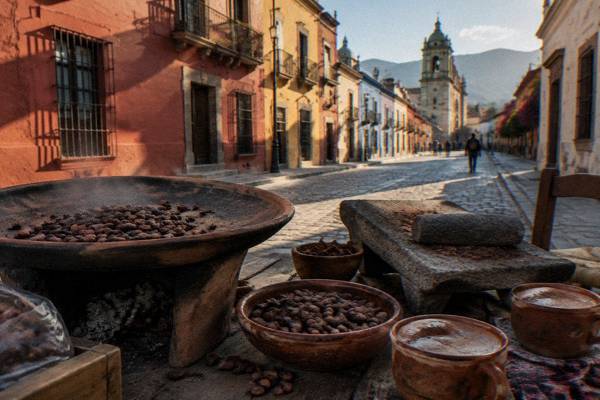
Is Oaxaca Known For Chocolate?
Yes, Oaxaca City is known for chocolate: how cacao, tejate and Oaxacan chocolate drinks fit into the city's food culture, and where to taste them.
Chocolate is one of the foods Oaxaca City is genuinely known for. This is Oaxaca de Juárez, the inland highland capital of the state of Oaxaca in Mexico, sitting in the Valles Centrales at about 1,550 m, and its food reputation rests on a short list of names: mole, tlayuda, mezcal, tejate and chocolate. Cacao and chocolate are not a footnote to that list, they are woven through the city's markets and its drinking culture, and the question of how deeply deserves a proper answer, which this page gives.
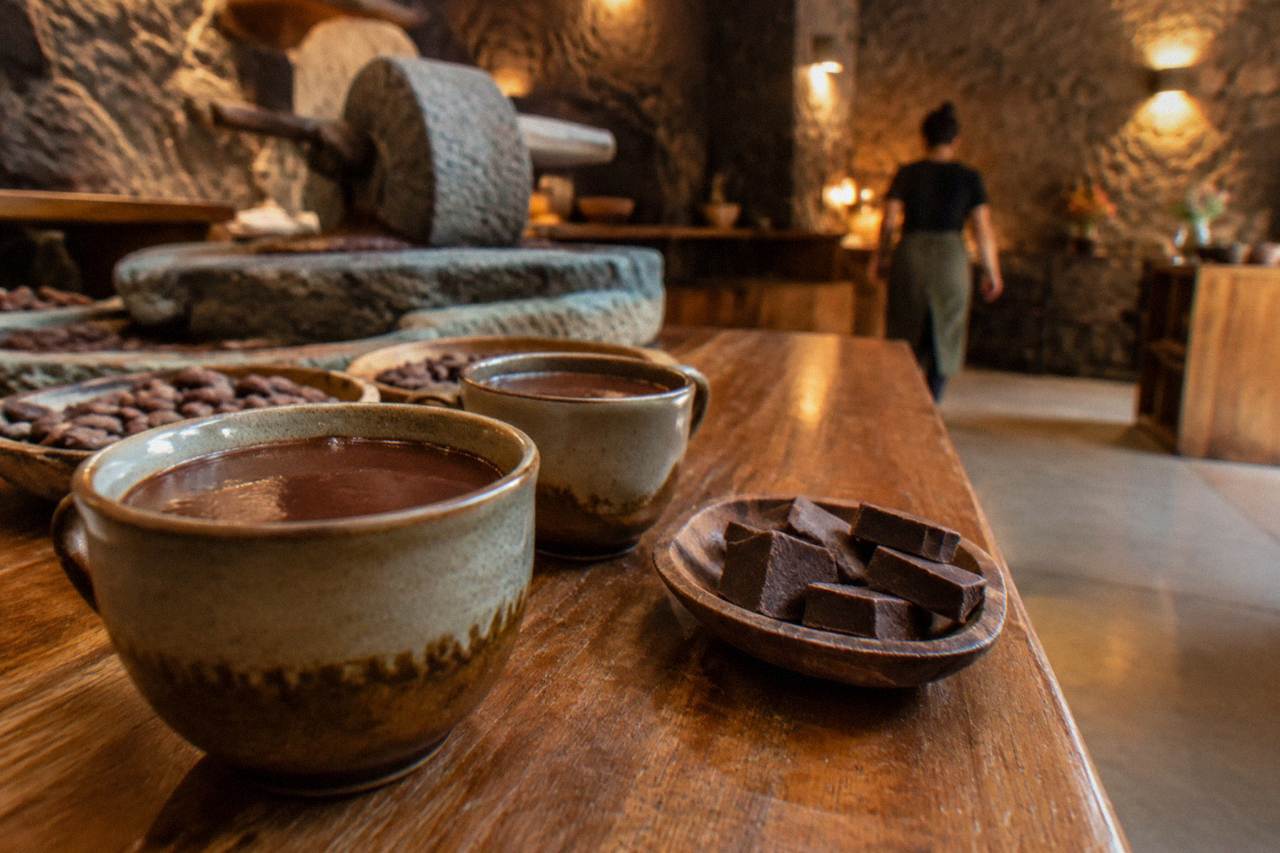
Yes. Chocolate is one of the foods Oaxaca City is known for, sitting beside mole, tlayuda, quesillo and mezcal in the city's food identity. It appears as a prepared drink in the city's markets, as an ingredient in Oaxacan cooking, and as the anchor of dedicated cacao experiences sold to visitors, which is why the question is answered with a plain yes rather than a hedge.
The city's food fame is broad, and chocolate holds its own corner of it. The site's own food coverage separates the subject cleanly: a full guide to Oaxacan chocolate sits next to guides on mole, tlayudas and quesillo, which is a fair map of how the food culture is usually divided. A companion answer on what food Oaxaca is famous for places chocolate in that longer list.
What makes the answer interesting is the form chocolate takes. In Oaxaca City the default is a drink, prepared to order, rather than a wrapped bar, and it shares shelf space and grinders with tejate, the maize and cacao drink that is named in the same breath. The two are distinct products with a shared ingredient family, and both show up in the markets rather than in dedicated chocolate shops alone.
The visitor economy reflects it too. Chocolate is not a niche interest here, it is part of the standard itinerary.
Where Chocolate Fits In Oaxaca City Food
Chocolate in Oaxaca City is a market food and a drink first. It is sold where the city sells its other food names, in the central markets and the surrounding streets, it is prepared on the spot, and it sits in the same basket as mole pastes, quesillo, chapulines and tejate rather than in a separate confectionery world of its own.
The useful mental model is that Oaxaca City treats chocolate as a kitchen staple, not a sweet. Mole, the sauce family the city is known for, is one of the places cacao enters savoury cooking, and the markets that sell mole paste by weight are the same markets that sell cacao and chocolate for drinking. The Mercado 20 de Noviembre is not the only place food is sold in the city, but the pattern holds across the central markets: ingredients, prepared drinks and cooked food under one roof.
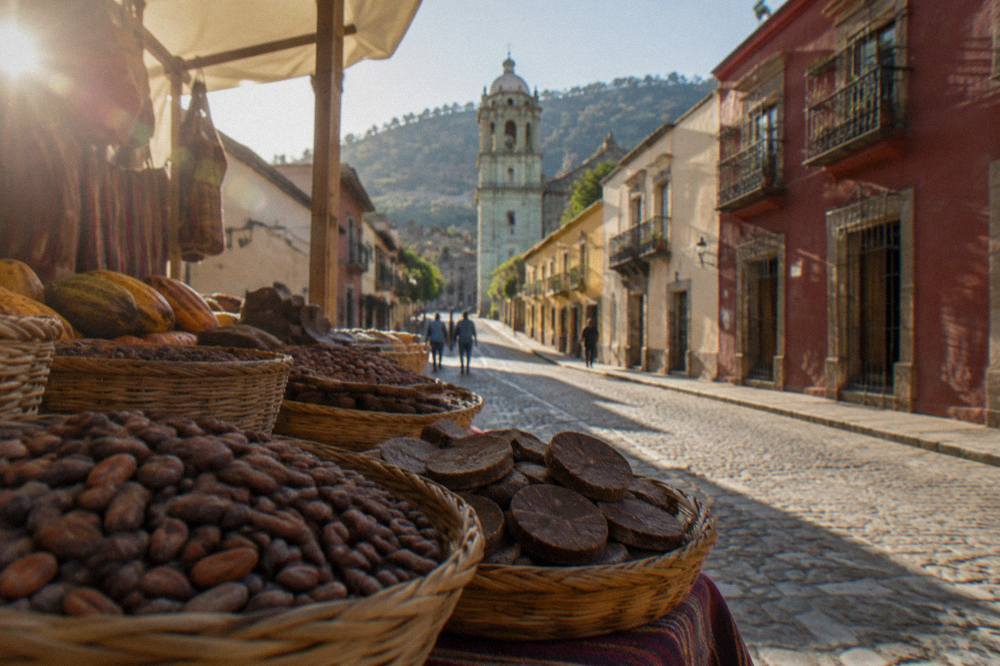
Tejate belongs in the same conversation because it shares cacao as an ingredient and because it is served cold where chocolate is served hot. Both are street and market drinks, both are prepared by vendors who sell little else, and both are written about in lowercase in this city's food vocabulary: tejate, mole, tlayuda, quesillo, chapulines. That vocabulary is the honest inventory of what Oaxaca is known for, and chocolate is inside it.
For travellers, the practical entry point is a guided tasting. The small-group cacao and chocolate experience listed on this site covers the preparation and serving of the drink in the city, and it can be checked through Check availability. Its own tour page carries the price, rating and review figures, which this page deliberately does not retype.
How To Taste Chocolate In Oaxaca Without A Guide
The self-guided route is to buy chocolate where it is sold in the city's central markets, drink it there or at a nearby food stall, and pair it with a walk through the Centro Histórico. The city is compact and walkable, the markets sit within an easy walk of the Zócalo, and chocolate requires no ticket, no reservation and no minimum spend, which makes it one of the simplest food experiences in the city.
Nothing in this route needs a booking. The barriers that complicate other parts of an Oaxaca itinerary, entry fees at INAH sites and limited days at museums, do not apply to a market drink.
The walk itself can be folded into a day in the centre. This site's coverage of the Centro Histórico treats the core as a walking district, and the markets sit inside it. A morning that covers a chocolate drink, a look at the mole and quesillo stalls, and the walk back past the Andador Macedonio Alcalá is a full chocolate-themed circuit without a single reservation.
For visitors who want the drink explained rather than just served, the tasting tours fill that gap, and the cacao experience above is the one this site features. For everyone else, the market counter is the answer.
Is Chocolate A Reason To Visit Oaxaca On Its Own?
Chocolate alone is probably not a reason to cross an ocean, but it is a reliable thread through a visit that already has stronger pulls. Monte Albán, the food markets, mezcal and the valley craft towns carry the itinerary, and chocolate runs through the food side of it as a drink, an ingredient and a market stop that costs almost nothing to try.
The honest ranking of Oaxaca's draws puts archaeology and the full food culture first, with chocolate as one item inside that food culture. The site's answer on what not to miss in Oaxaca makes the same split: the big sights are the headline, the food is the daily texture, and chocolate is part of the texture. A visitor who arrives for Monte Albán and leaves talking about a market drink has had the standard Oaxaca trip.
The table below shows how the three featured experiences on this page divide the ground between them, using each product's own listing data.
| Experience | What It Covers | Area | Booking |
|---|---|---|---|
| Cacao and Chocolate Experience for Small Groups | Cacao, chocolate preparation and tasting | Oaxaca City | Operator's live listing |
| Street Art Tour With An Artist | Murals and art walk with a working artist | Oaxaca City | Operator's live listing |
| Mezcal Tour Experience | Mezcal distilling and tasting | Oaxaca City | Operator's live listing |
The split is the point: the city's tasting economy covers chocolate, mezcal and art in parallel, and a multi-day stay can take one of each.
What Chocolate In Oaxaca Is Not
Chocolate in Oaxaca is not a chocolate-shop scene in the European sense, not a dessert culture, and not a factory-visit attraction in the way some cities offer. It is a working ingredient and a market drink, sold alongside mole paste and tejate by vendors who prepare it, and visitors expecting boutiques, pastry counters or industrial tours will find the reality smaller, older in form and closer to the kitchen than the shop counter.
That difference is the reason the question is worth asking precisely. A traveller who knows Oaxaca only by reputation may picture a cafe culture built around drinking chocolate, and the city does have places to sit with a cup, but the centre of gravity is the market stall and the ingredient itself. This is also why the guided experiences matter more here than in cities with a shop-front chocolate trade: the preparation is the show, and a small-group session that walks through how the drink is made is the closest thing the city offers to a chocolate attraction.
It is also not separate from the rest of the food. Cacao shows up in the mole family, in tejate and in the drinking chocolate sold by weight, so a chocolate interest in Oaxaca quietly becomes an interest in the whole market food culture. The Oaxaca Travel Guide homepage carries the full range of what the city offers beyond it, from the archaeological sites to the valley craft towns, for readers whose chocolate question is the first of many.
Common Questions About Chocolate In Oaxaca
Is Oaxaca Known For Chocolate?
Yes. Chocolate is one of the foods Oaxaca City is known for, alongside mole, tlayuda, quesillo, tejate and mezcal. In the city it is primarily a drink and a market ingredient rather than a packaged product, and it is sold in the central markets and covered by dedicated cacao experiences in the visitor economy.
Is Oaxacan Chocolate A Drink Or A Bar?
In Oaxaca City the default form is a drink, prepared to order, though chocolate is also sold by weight in markets for home preparation. The culture sits closer to the kitchen and the market grinder than to the wrapped-bar trade of European chocolate cities.
How Is Tejate Related To Chocolate?
Tejate is a cold maize and cacao drink sold by specialist vendors in Oaxaca's markets, and it shares cacao as an ingredient with drinking chocolate. It is a separate product with its own preparation and its own vendors, and both are part of the city's market drink culture.
Can You Try Chocolate In Oaxaca Without A Tour?
Yes. Chocolate is sold in the city's central markets, which sit within walking distance of the Zócalo, and no ticket or reservation is needed.
Is Chocolate The Main Reason To Visit Oaxaca?
No, but it is a dependable thread. The headline draws are Monte Albán, the food markets, mezcal and the valley craft towns, and chocolate runs through the food side of that itinerary as a drink, an ingredient and an easy market stop.
The short version stands: Oaxaca City is known for chocolate, in the market-and-drink form this city has made its own, and any visit that touches the food markets will meet it whether it planned to or not.