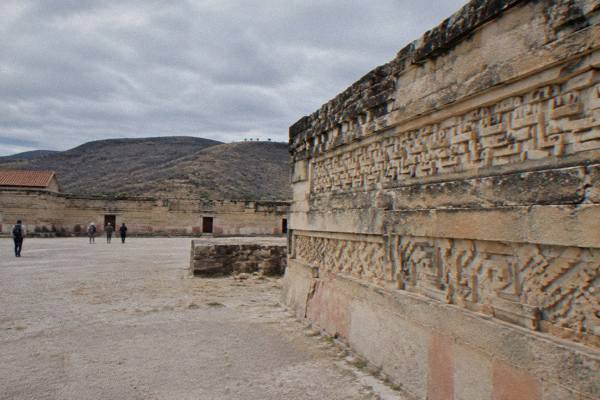
What Is Tlacolula Market Known For?
Tlacolula, a valley town about 25 minutes from Oaxaca City, holds one of the region's great markets. Here is what it is known for, what to eat and how to plan a visit.
Tlacolula de Matamoros is a town in the Tlacolula Valley, about 25 minutes by road east of Oaxaca City, and its market is one of the biggest regular trading events in the Valles Centrales. State government pages describe the markets of Oaxaca as guardians of identity and tradition, and they place Tlacolula among the communities of the Valles Centrales where tianguis markets and trueque, the exchange of goods, remain part of regional life. That is the honest one-line answer: Tlacolula is known as a working valley market, a food market above all, rather than a craft shop aimed at visitors.
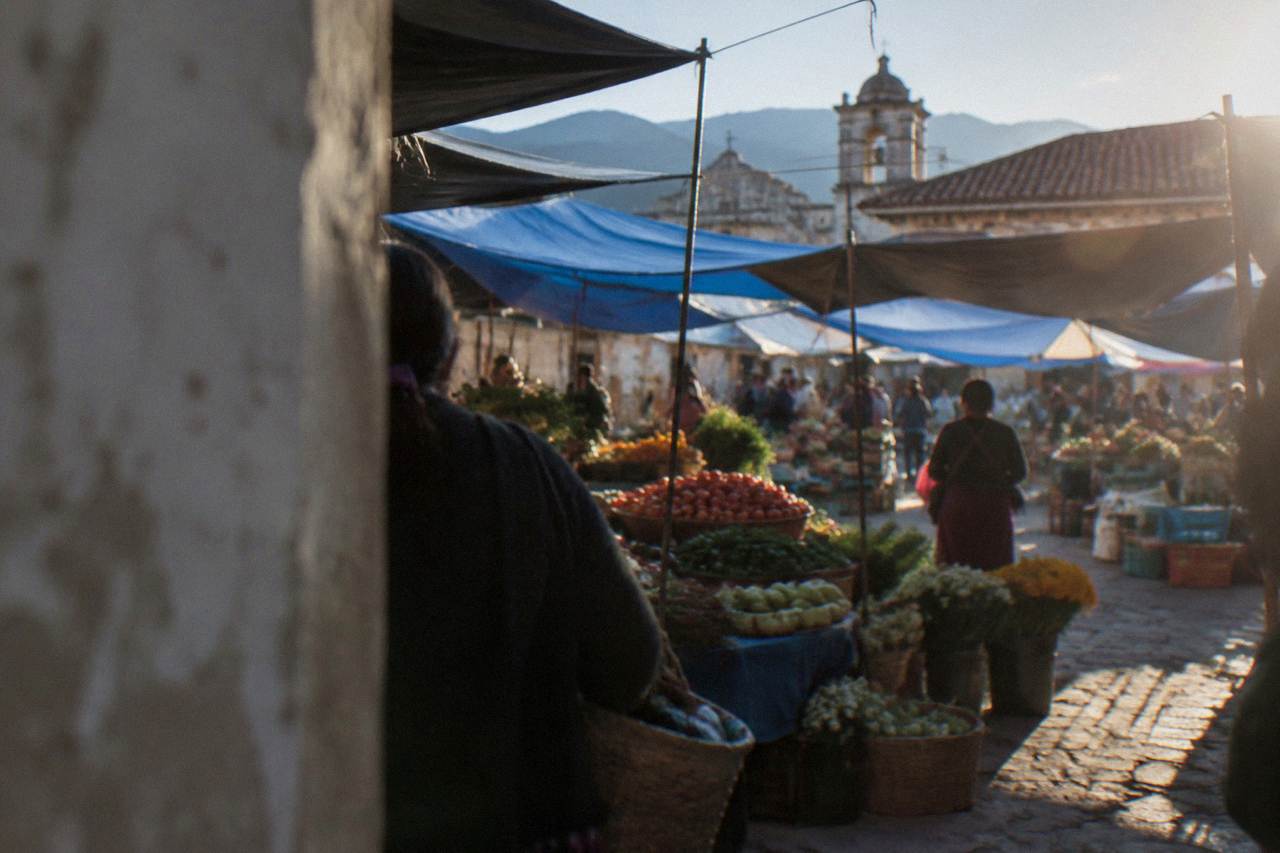
The market is known for certain goods, particular foods are eaten there, the town fits into a day trip that can also take in Mitla and Hierve el Agua, and a guided market walk in the city can serve as preparation. The detail comes from a short report built on official sources, so where something is a matter of local rhythm rather than a published figure, it says so plainly instead of guessing. The Tlacolula market day trip guide on this site carries the fuller practical planning version.
Tlacolula Market is known first as a food market: tlayudas grilled to order, bars of quesillo, loaves and hot chocolate, mole pastes, chapulines and tejate, all sold in a dense town-centre tianguis that draws sellers and buyers from across the Tlacolula Valley. State sources describe the region's markets as places where identity and tradition are kept alive, and they single out the tianguis and trueque trade of communities such as Tlacolula as living practice rather than staged show. It is a market where valley residents do their own shopping, which is why the food stalls outnumber the craft stalls.
The market spreads through the streets around the town centre, spilling beyond any single building. That street-filling shape is what the word tianguis refers to in the Valles Centrales: a periodic market that takes over public space. The state's own market pages present Tlacolula in exactly that frame, as part of a network of regional market days that includes the towns of the wider valley.
What a visitor comes away with is usually food eaten on the spot. Grilled meats, tlayudas, tejate served in a gourd cup, and pan dulce are the standard anchors of a market meal here, and the street food in Oaxaca tradition and the Tlacolula stalls share that same vocabulary. None of this carries a fixed published price; dishes are named, not priced.
| What you find | What it is |
|---|---|
| Tlayuda | A large crisp tortilla spread with asiento, beans, quesillo and meat, grilled to order |
| Quesillo | The stringy Oaxacan cheese, sold in skeins or by weight |
| Tejate | A cold maize and cacao drink, a Valles Centrales classic |
| Chapulines | Toasted grasshoppers seasoned with chilli and lime |
| Mole paste | Concentrated sauce pastes, portioned and sold by weight |
| Chocolate de agua | Oaxacan chocolate whisked in water, served hot |
Where Is Tlacolula And How Far From Oaxaca City?
Tlacolula de Matamoros lies about 31 km east of the Zócalo in Oaxaca City, roughly a 25-minute drive on the valley road, with Mitla about 37 minutes and Hierve el Agua about 57 minutes beyond it, which is why the town anchors so many eastern-valley day trips. These drive times are computed from road-network routing in free-flow conditions, so real traffic, market-day congestion and mountain sections all make them longer; treat every figure as "about" and round up when planning.
The town sits on the corridor that strings the eastern valley together: Santa María del Tule with its great tree is about 11 minutes out of the city, Teotitlán del Valle about 26 minutes, Tlacolula about 25, Yagul about 38 and Mitla about 37. A visitor with a car or a driver can chain several of these in one day without long backtracking, and the Mitla and Tlacolula day trip guide covers that loop in detail.
Independent travel out of the city is normal practice for this valley, and local shared transport runs from city departure points toward the valley towns, though this guide holds no fare or schedule figures for it. A guided tour handles the same corridor with transport included, which matters most on market day, when the town centre is at its fullest and parking is tight.
| Destination from the Zócalo | Distance | Free-flow drive time |
|---|---|---|
| Santa María del Tule | 10.2 km | about 11 minutes |
| Tlacolula de Matamoros | 31.2 km | about 25 minutes |
| Teotitlán del Valle | 29.2 km | about 26 minutes |
| Ocotlán de Morelos | 32.5 km | about 37 minutes |
| Yagul | 41.9 km | about 38 minutes |
| Mitla | 44.6 km | about 37 minutes |
| Hierve el Agua | 67.1 km | about 57 minutes |
What Foods Define The Tlacolula Market In Oaxaca?
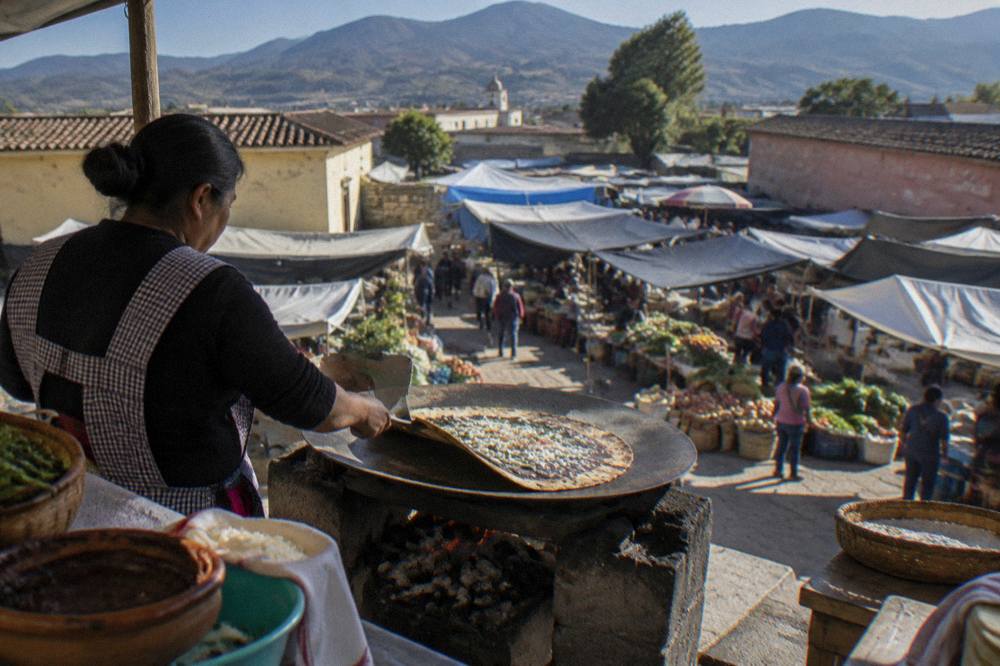
The market's food identity is grilled and made to order: the tlayuda stands are the single thing the market is named for most often, supported by quesillo sellers, chocolate and bread stalls, mole paste vendors and tejate served cold in painted gourds. These are the same staples that carry Oaxacan cooking generally, which is why the town market reads like an open-air index of the regional kitchen, and why a visitor who has eaten in the city's markets will recognise almost every stall.
Eating at the market is a standing-up, paper-plate affair, and it rewards hunger. A tlayuda here is assembled in front of the buyer: the tortilla, the bean spread, the cheese, the salsa, the choice of meat. Tejate is poured from a clay jug. Chapulines are scooped from baskets. Nothing about that ritual is staged for travellers; it is how the valley eats on market day, and the state's market pages frame these foods as part of what the markets of Oaxaca resguardan, keep and guard, as identity and tradition. The full index of guides sits on Oaxaca Travel Guide.
For readers who want to go deeper than eating, a cooking class in Oaxaca that starts with a market visit teaches the same ingredient list in reverse: buy the quesillo, the chillies and the maize products first, then cook with them. The distance between a market stall in Tlacolula and a mole paste in the city is short, and the what food is Oaxaca famous for page maps the whole pantry.
How Does Tlacolula Compare With The Other Valley Markets?
Tlacolula is the eastern valley's hub market and the biggest name among the region's rotating town markets, while Ocotlán de Morelos, about 37 minutes south of the city, and Zaachila, whose INAH archaeological zone opens Thursday to Sunday 10:00 to 16:00, anchor market life to the south and west. Each town market in the Valles Centrales has its own weekly rhythm, but this guide's sources publish no schedules for any of them, so this page names the towns and their draws and leaves the day-planning to the linked guides.
Ocotlán pairs its market tradition with a crafts and furniture scene, and the Ocotlán and Friday market guide covers that pairing. Zaachila adds an INAH archaeological zone on top of its market town character, with Category III admission at 80 MXN for nationals and 145 MXN for foreign visitors, and it opens Thursday to Sunday only, a scheduling detail that matters more than any other fact on that route.
In the city itself the fixed daily markets play a different role: Mercado Benito Juárez and Mercado 20 de Noviembre sit within walking distance of the Zócalo and run all week as permanent buildings, while the valley tianguis swell and shrink on their own town rhythms. A reasonable pattern for a first visit is one city market plus one valley market, ideally Tlacolula combined with Mitla or Hierve el Agua on the same eastern run, as the Oaxaca in one day outline suggests for compressed trips.
Can You Do Tlacolula Market Without A Car Or A Tour?
Yes, in the sense that shared local transport runs from Oaxaca City toward the valley towns and visitors use it routinely, but no fare, departure point or frequency figure exists in official sources, so independent travellers should budget time for figuring out the departure spot on arrival or lean on a guided tour that includes transport. That is not a discouragement, just an honest account of what is and is not published: the valley road is straightforward, and the town is a regular destination for local transport.
Guided valley tours solve two problems at once for a market day: arrival timing, since the market is the point rather than the ruins alone, and the onward link to Mitla, Yagul or Hierve el Agua, where entry and access details differ site by site. Mitla, for instance, is a Category I INAH zone at 105 MXN for nationals and 210 MXN for foreign visitors, open 08:00 to 17:00 with last access at 16:30, and the Monte Albán tour style of half-day archaeology trip shows how the guided format handles tickets and timing elsewhere in the region.
For the market experience itself, the city-based Check availability link points to an immersion tour of the Oaxaca markets with all tastings included, which pairs well either before or after a Tlacolula trip: one teaches the ingredient vocabulary in the city, the other shows the same foods at full volume in the valley.
What Else Is There To Do In Tlacolula And Around?
Tlacolula sits at the centre of the eastern valley's densest sight cluster: Mitla's Category I INAH zone is about 37 minutes further out, Hierve el Agua about 57, Yagul about 38, and the mezcal town of Santiago Matatlán, billed as a mezcal capital in state communications, lies on the same corridor. A full day can move from the market stalls in the morning to ruins and a distillery in the afternoon, which is exactly the shape most valley tours take.
Yagul is the quiet option on that list: a Category I site at 105 MXN for nationals and 210 MXN for foreign visitors, open 08:00 to 17:00 with last access at 16:00, and it recorded just 10,185 visitors across 2025, a fraction of Mitla's total, per the state figures. Dainzú and Lambityeco, both Category III at 80 and 145 MXN, sit along the same road for readers who want the small sites too.
For mezcal, the mezcal route through Santiago Matatlán guide covers the corridor's distilleries, and the what drink is Oaxaca known for page explains why the answer is mezcal rather than anything else. The essential planning point is sequencing: market first, while the food stalls are at their best, then the longer drives while the day is still open.
Common Questions About The Tlacolula Market Near Oaxaca
What Is Tlacolula Market Known For?
It is known as a large working food market in the Tlacolula Valley: tlayudas grilled to order, quesillo, tejate, chapulines, mole pastes and chocolate, sold in a town-centre tianguis where valley residents shop and trade. State sources describe it as part of the region's living tianguis and trueque tradition.
How Far Is Tlacolula From Oaxaca City?
About 31 km from the Zócalo, roughly a 25-minute drive in free-flow conditions by road-network routing. Market-day traffic and congestion in the town centre make the real journey longer, so plan on more than the bare figure.
Can You Combine Tlacolula Market With Mitla Or Hierve El Agua?
Yes, and that is the usual shape of an eastern-valley day. Mitla is about 37 minutes beyond Tlacolula and Hierve el Agua about 57, so the market, the ruins and the springs fit one long day with a car, a driver or a guided tour.
What Should You Eat At Tlacolula Market?
A tlayuda grilled to order is the signature plate, with quesillo, tejate, chapulines and Oaxacan chocolate as the supporting cast. No official dish prices are listed anywhere, so bring cash and expect to pay per stall.
Is Tlacolula Market The Same As The City Markets In Oaxaca?
No. The city's permanent markets, such as Mercado Benito Juárez and Mercado 20 de Noviembre, run all week in fixed buildings near the Zócalo. Tlacolula is a valley tianguis that fills the streets of the town, and its rhythm follows the town's own market calendar rather than a daily one.
The short version: Tlacolula is the Valles Centrales' great valley market, a food event first and a shopping trip second, and the easiest way to understand it is to arrive hungry, eat at the griddles, and let the rest of the eastern valley, from Mitla's walls to Hierve el Agua's springs, fill the afternoon.