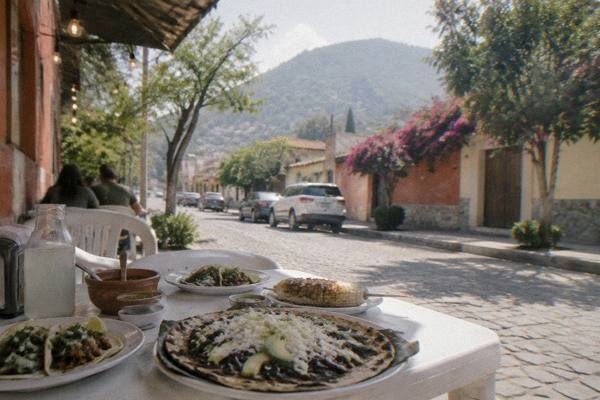
What Is The Best Street Food In Oaxaca?
The dishes that define street eating in Oaxaca City, where to find them, and how a guided evening walk fits in.
Oaxaca City, the inland highland capital of the state of Oaxaca in Mexico, eats as much on the street as it does indoors. The dishes that carry the city's reputation, the tlayuda, the mole, the tejate, the chapulines, the quesillo, all exist in market halls and fixed restaurants, but the street stall is where they are closest together and cheapest to sample. The Mercado 20 de Noviembre, the streets around the Zócalo and the Andador Macedonio Alcalá, and the evening grill stands that set up as the sun drops all serve versions of the same repertoire. Answering which of them is the best is a matter of matching a dish to a moment: the tlayuda is the flagship, the morning markets carry the drinks and snacks, and a guided walk ties the whole thing into one evening. The city sits at about 1,550 m in the Valles Centrales, far from the sea, and its street food is entirely a highland valley cuisine built on maize, cacao, chillies and cheese rather than on anything coastal.
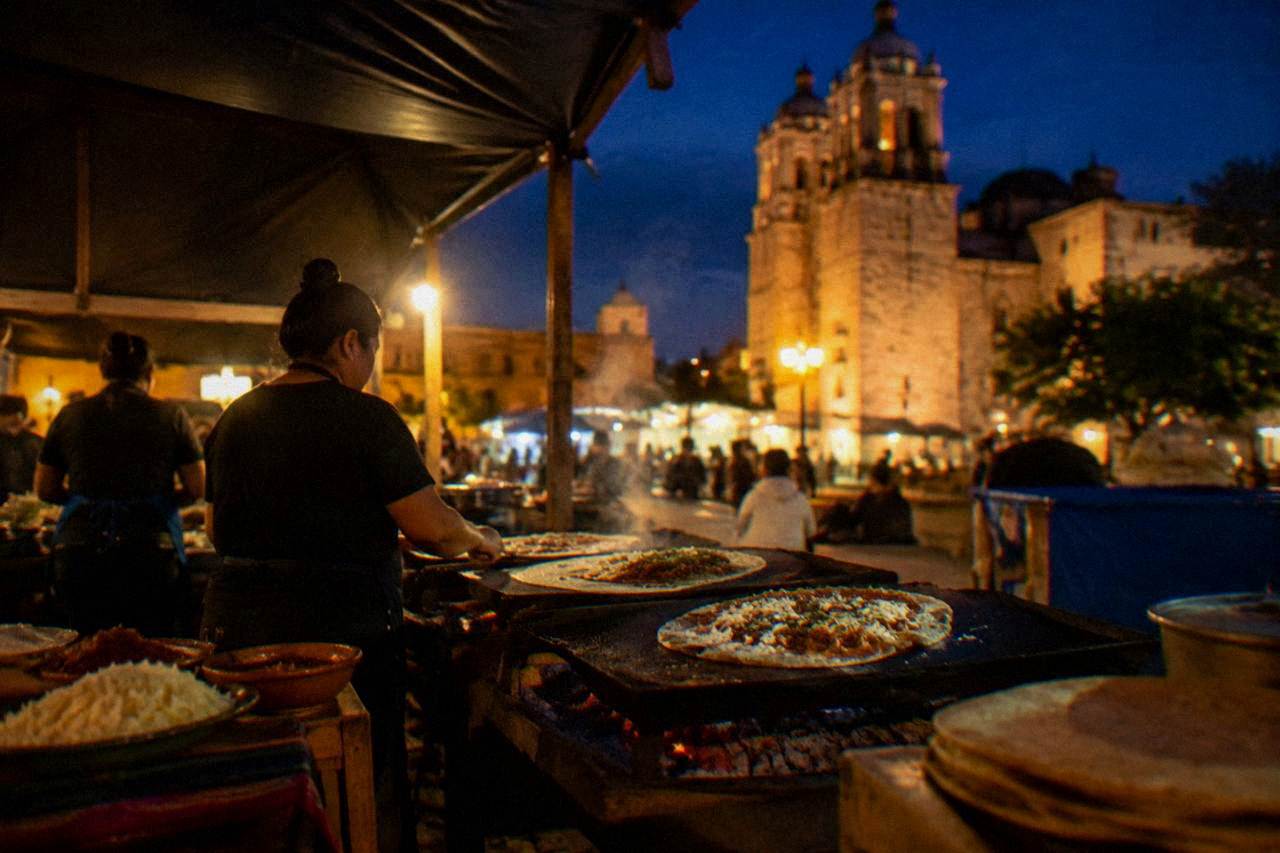
The single dish that most represents street eating in Oaxaca City is the tlayuda: a large crisp tortilla spread with asiento, beans, quesillo and shredded cabbage or meat, grilled to order at evening stalls. Around it sit tejate, a cold maize and cacao drink, chapulines, toasted grasshoppers sold by the scoop, and fresh quesillo, the stringy Oaxacan cheese, all of them sold from the city's markets and street stands.
The tlayuda leads because it is the one dish built around the street format: a wide tortilla laid flat on a grill, assembled in front of the buyer, folded or served open, and eaten standing or on a stool. Tejate and the other drinks belong to the daytime market. Chapulines, sal de gusano in hand, are a snack sold by weight. The full repertoire and its context sit on the street food in Oaxaca guide, and the broader food culture is mapped in what to eat in Oaxaca.
| Dish or drink | What it is | Where it is typically sold |
|---|---|---|
| Tlayuda | Large crisp tortilla with beans, quesillo, cabbage and often meat, grilled to order | Evening grill stalls and market food halls |
| Tejate | Cold maize and cacao drink, served from bowls by the cup | Daytime market stalls |
| Chapulines | Toasted grasshoppers seasoned with chilli and lime, sold by weight | Market stands and snack stalls |
| Quesillo | Stringy rolled Oaxacan cheese, eaten fresh or melted into dishes | Markets and food stalls |
| Mole | Complex sauce served over chicken or enchiladas, several regional types | Market kitchens and food halls |
| Oaxacan chocolate | Cacao-based chocolate drunk hot, often with bread | Market stalls and chocolate mills |
Where To Find Street Food In Oaxaca City?
The main street food settings in Oaxaca City are the Mercado 20 de Noviembre, a food market a short walk from the Zócalo, the Mercado Benito Juárez beside it, the stalls along the Andador Macedonio Alcalá and the Zócalo, and the evening grill stands that set up in the streets around the centre. Each setting has its own hours and rhythm, and no official opening hours are published for any of them, so the standing advice is to go at the mealtime itself.
The two central markets sit at the heart of the eating map. The Mercado 20 de Noviembre is the food hall: smoke, grills, comedores and the dishes listed above, all in one building. The Mercado Benito Juárez next door carries the ingredients, snacks and drinks. Around both, the pedestrian spine of the city, described in the Andador Macedonio Alcalá attraction guide, fills with stands aimed at walkers. The evening is when the tlayuda grills appear in force, which is exactly the window a guided evening walk is built around. Everything sits within walking distance: the historic centre of Oaxaca City is compact, and a visitor staying anywhere near the Zócalo can reach every setting on this list on foot, a point expanded in the is Oaxaca a walkable city answer. The Oaxaca evening street food tour with 14 tastings moves through this landscape with a local guide, and Check availability at the operator's booking page.
Tlayudas, The Night Classic Of Oaxaca?
The tlayuda is Oaxaca City's flagship street dish and the one most tied to night stalls: a tortilla far larger than a standard one, spread with asiento and bean paste, layered with quesillo and shredded cabbage, optionally topped with tasajo or other meats, and finished on a charcoal grill until the base crisps. It is eaten folded or open, at the stall, and it is the dish the evening streets are organised around.
The construction matters to the order. Beans first, cheese second, cabbage for the crunch, meat last if wanted, and the grill doing the work of holding it together. Ordering one without meat is ordinary, not an exception, and the vegetarian angle of Oaxacan eating generally is covered in the vegetarian and vegan food in Oaxaca guide. Stall prices move, so expect the price to be quoted at the stall and to pay in pesos. The tlayuda is also the dish that scales: one is a meal, half is a snack, and a stall grilling a dozen at once is doing steady trade. For visitors sorting a longer stay around meals, the how many days in Oaxaca is enough answer covers how the food evenings fit into an itinerary that also reaches Monte Albán and the valley villages.
Tejate And Chocolate, The Street Drinks Of Oaxaca?
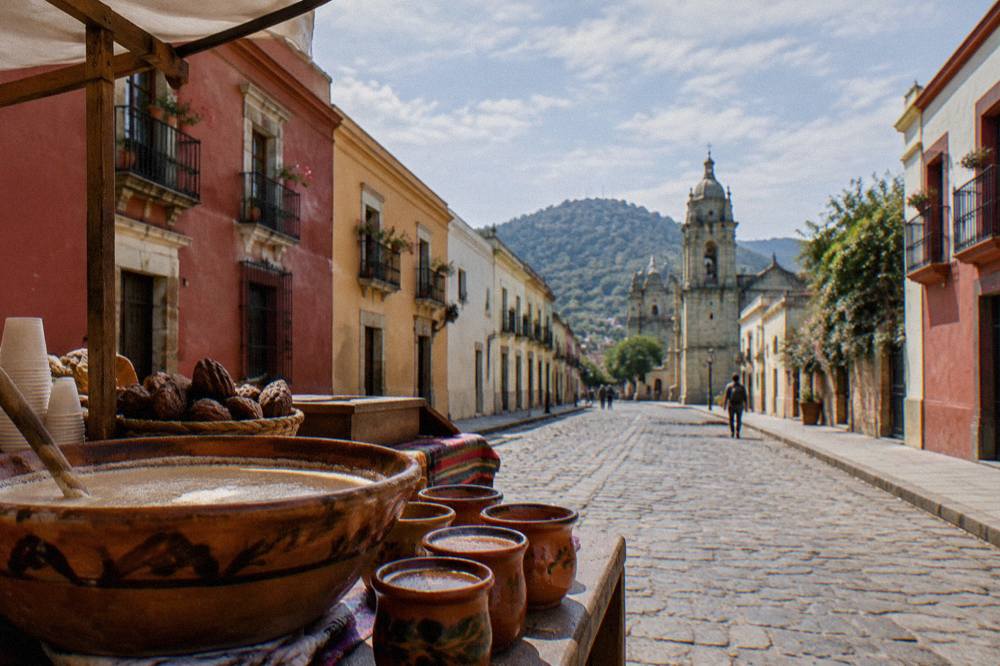
The two street drinks that define Oaxaca City are tejate, a cold, foamy drink of maize and cacao served from market stalls by the cup, and hot Oaxacan chocolate, made from cacao and drunk with bread at breakfast and mid morning. Both predate the tourist economy and both are sold in the same daytime markets that carry chapulines and quesillo.
Tejate is a drink of the market morning. It is ladled from a large bowl, the foam held on top, and it is drunk on the spot. Chocolate is the counterpart: mills in the centre roast and grind cacao to order, and stalls serve it hot. The chocolate tradition of the city is the same one that fills the what food is Oaxaca famous for answer. More of these guides are collected on Oaxaca Travel Guide.
| Street food setting in Oaxaca City | What it carries | Best time of day to go |
|---|---|---|
| Mercado 20 de Noviembre | Grilled meats, tlayudas, moles, comedores | Midday and evening meal times |
| Mercado Benito Juárez | Tejate, chapulines, quesillo, chocolate, ingredients | Daytime |
| Andador Macedonio Alcalá and Zócalo stands | Snacks, sweets, drinks for walkers | Afternoon and evening |
| Evening grill stalls in the centre | Tlayudas and grilled meats | Evening into night |
Chapulines, Quesillo And Market Snacks In Oaxaca?
Chapulines are toasted grasshoppers seasoned with chilli and lime, sold by weight from market stands and eaten as a snack or scattered over other dishes, and quesillo is the fresh stringy cheese rolled into skeins and sold in the same markets. Together with tejate they form the snack layer of Oaxaca City street eating, the part that needs no grill and no stool.
Neither needs much ceremony. Chapulines go into a bag or a taco, or over a tlayuda. Quesillo appears melted inside quesadillas sold on the same streets. The snack stalls cluster in the daytime markets and around the pedestrian streets, and they are where a first-time visitor can try several things in an hour without sitting down. The first-timer's overview of the city, including how the food fits with Monte Albán and the other sights, is in the first time in Oaxaca guide.
Is A Guided Street Food Walk In Oaxaca Worth It?
A guided street food walk is worth it for visitors who want the stalls interpreted rather than discovered: the operator's booking page describes an evening route through Oaxaca City with more than a dozen tastings included, led by a guide who orders, translates and paces the stops. For travellers with Spanish, time and a sense of adventure, the same stalls can be walked alone, and the two approaches are not mutually exclusive.
What a walk adds is sequencing, the guide's own list of stops, and the answer to the question every stall raises, which is what the thing in front of you actually is. That is most valuable on a first evening, before the map of the city's food has formed. After that, the markets and grill stands are open territory. Water safety is a separate question, answered in can you drink the water in Oaxaca, and it is one worth settling before a street eating evening. Beyond the food, the same streets carry the murals and studios described in the IFAB and Oaxaca street art guide, which makes an evening walk double as an art walk.
Common Questions About Street Food In Oaxaca
What Is The Best Street Food In Oaxaca?
The tlayuda is the dish most tied to street eating in Oaxaca City: a large crisp tortilla with beans, quesillo and cabbage, grilled at evening stalls. Tejate, chapulines and quesillo carry the daytime market side of the repertoire.
Is Street Food In Oaxaca City Safe To Eat?
Street food in Oaxaca City is a normal part of daily eating and the stalls that stay busy are the usual recommendation. Water from the tap is a separate question from cooked food, and hot, freshly grilled dishes are the safest category on any stall.
Where Do Locals Eat Tlayudas In Oaxaca?
No official stall list or ranking exists, so the working method is to follow the smoke and the queue at dinnertime.
Are There Vegetarian Street Food Options In Oaxaca City?
Yes.
Can You Try Oaxaca Street Food On A Tour?
Yes. The evening street food tour listed on this site runs a guided route through the city with more than a dozen tastings included, and the details and price are on the operator's booking page.
Oaxaca City rewards the eater who treats the street as the menu: a tlayuda at a grill at night, tejate from a market bowl in the morning, chapulines by the scoop in between, and a guided evening walk to hold it all together on the first night.