What To Eat In Oaxaca: The Seven Moles, Tlayudas And Street Food
Oaxaca City's food reputation rests on its moles, its tlayudas and a street-snack culture that runs from mid-morning to late at night. This guide sets out the dishes, the drinks and where to eat them.
Order mole negro, a tlayuda, quesillo in a market, chapulines, tejate and mezcal; eat at the central markets at midday and at street stalls in the evening; a guided food walk or cooking class is the fastest way in.
Oaxaca City, the inland highland capital of the state of Oaxaca in Mexico, is one of the country's strongest arguments for travelling to eat. The kitchen of the Valles Centrales runs on moles, maize cooked into tlayudas and fresh quesillo, market stalls rather than dining rooms, and a drinking culture split between mezcal and pre-Hispanic maize and cacao drinks. What to eat in Oaxaca City, dish by dish, then where to find it, what to drink alongside it, and how a tour or a cooking class can shortcut the learning curve. For the wider picture of the city itself, the Oaxaca Travel Guide covers neighbourhoods, ruins and day trips.
What Are The Signature Dishes Of Oaxaca City?
The core dishes of Oaxacan cooking are the moles (above all mole negro), the tlayuda, quesillo string cheese, chapulines toasted grasshoppers, memelas, empanadas de amarillo, and maize drinks such as tejate alongside hot chocolate made from local cacao, and every one of them belongs first to home kitchens, market comedores and street stalls rather than to restaurants. None of these is a recent invention or a menu engineered for visitors. A first-time eater can cover almost the whole list in two days of market lunches and evening street grazing, because the dishes overlap in ingredients, above all maize, chiles, chocolate and cheese, while staying sharply different on the plate.
The logic of the cuisine is easiest to see at a single market lunch. The same stall that grinds chocolate in the morning sells the pan de yema you dip into it; the same comedor that ladles mole negro over chicken at midday will fold fresh quesillo into a quesadilla on request. Ingredients repeat, preparations diverge. That is why ordering widely matters more here than finding one perfect restaurant.
The place to start reading before you order is the mole family, because it is the backbone of celebration cooking in the state. The dedicated page on Oaxacan mole and its varieties goes deeper than this guide can, and it is worth reading before you sit down, because the difference between mole negro and mole coloradito is the difference between two entirely different meals.
| Dish | What it is | Where you usually find it |
|---|---|---|
| Mole negro | The darkest, most complex of the seven moles, served over chicken or turkey | Market comedores, family restaurants |
| Tlayuda | A large crisp tortilla spread with asiento, beans, quesillo, meat and salsa | Street grills, evening stalls |
| Quesillo | String cheese made in the Valles Centrales | Markets, folded into tlayudas |
| Chapulines | Toasted grasshoppers seasoned with chile and lime | Market baskets, as a taco filling |
| Memela | A thick oval masa cake topped with beans, cheese and salsa | Street stalls, morning to night |
| Empanada de amarillo | A folded masa turnover filled with mole amarillo | Market comedores, festive stalls |
| Tejate | A cold maize and cacao drink, unfermented | Market drink stalls |
What Are The Seven Moles Of Oaxaca?
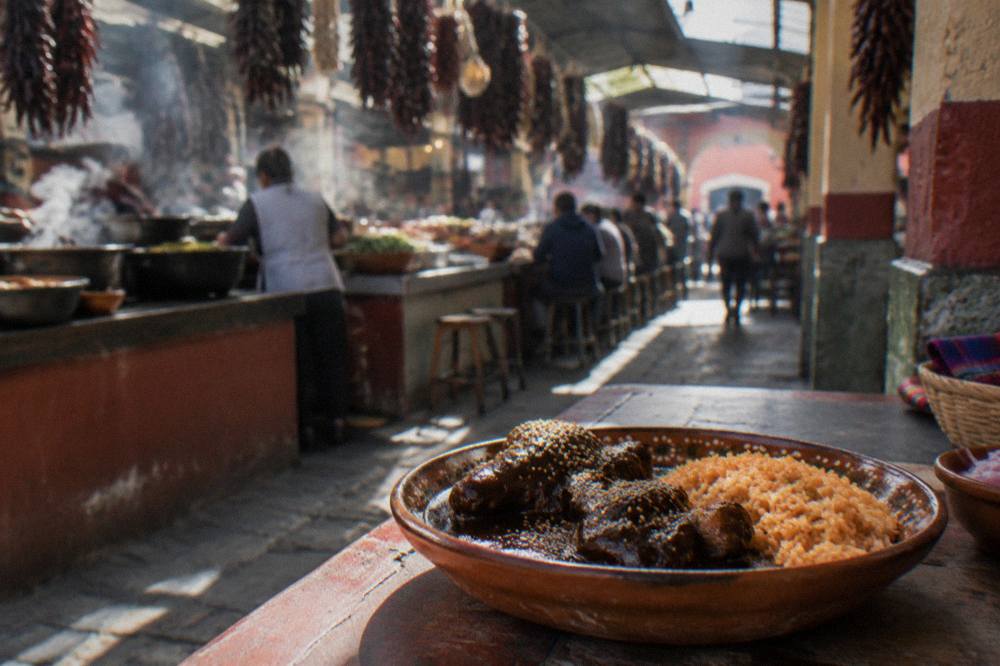
The seven classic Oaxacan moles are mole negro, mole rojo, mole coloradito, mole amarillo, mole verde, mole chichilo and manchamanteles, and each is a distinct sauce with its own chiles, thickener and colour rather than a variation of one recipe. Mole negro is the one the state is known for abroad, dark with chocolate and dried chiles. Mole amarillo is thinner and served with vegetables, mole verde is fresh, herbal and quick, mole chichilo is rare and smoky, and manchamanteles, "tablecloth stainer", is a fruit-forward bridge between savory and sweet. Ordering across the seven is the single most efficient way to understand the cuisine.
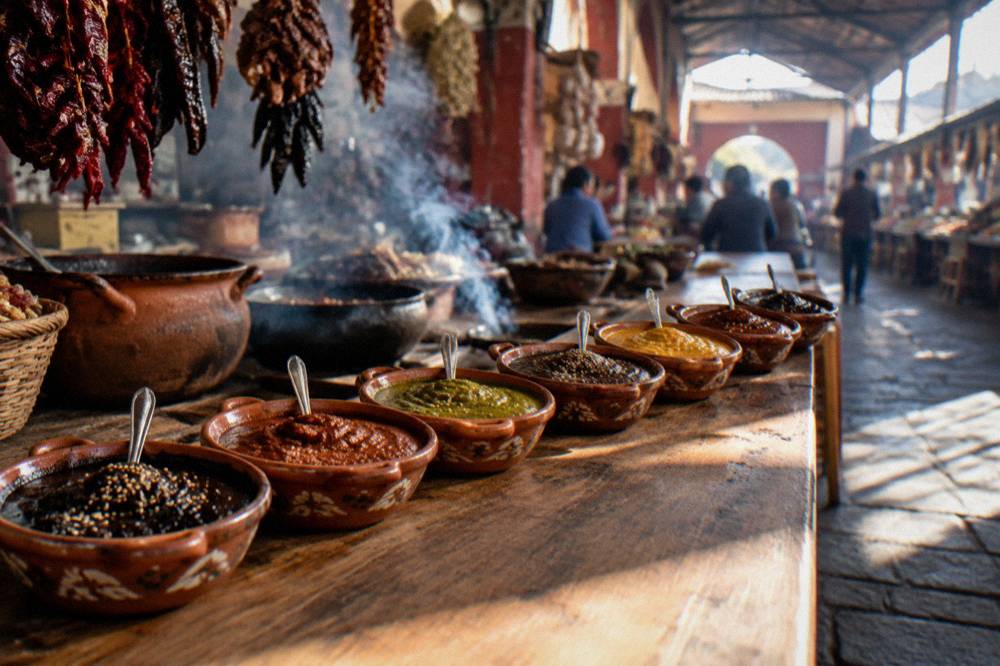
Market comedores usually offer two or three moles on any given day, served over chicken with rice and tortillas, and the daily rotation is part of the appeal: no single visit shows you the whole family. A cooking class takes the other route. You toast the chiles, grind the spices and blend the sauce yourself, which is the only way to grasp how long the ingredient list runs and why each mole takes the shape it does.
The full breakdown of each sauce, and how they are paired with meats and vegetables, is on the guide to Oaxacan mole, and the practical question of what food Oaxaca is famous for is answered dish by dish on its own page as well.
What Is A Tlayuda And Why Is It Everywhere?
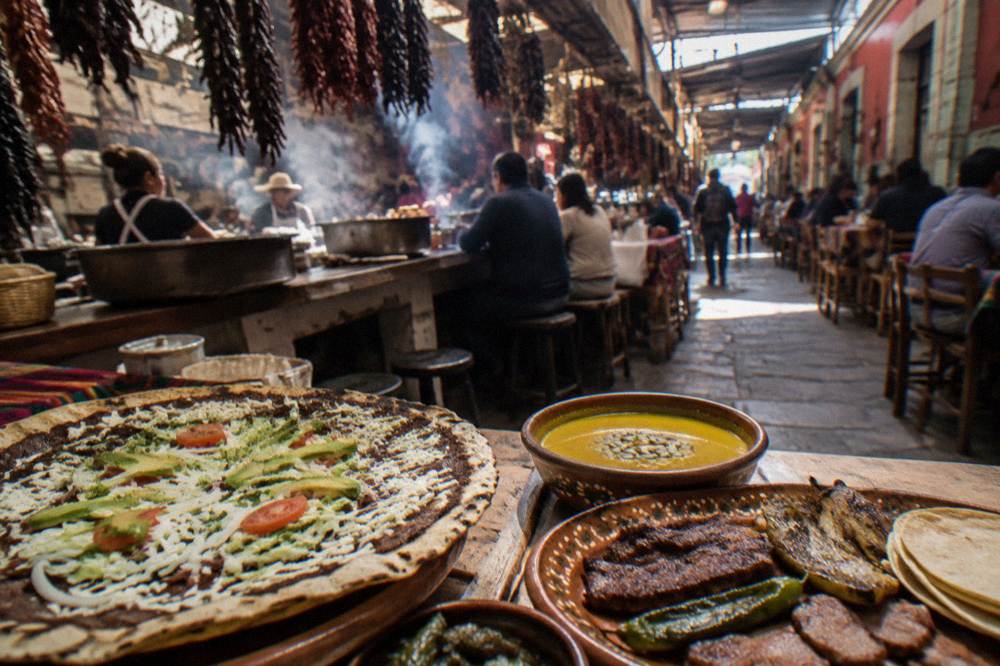
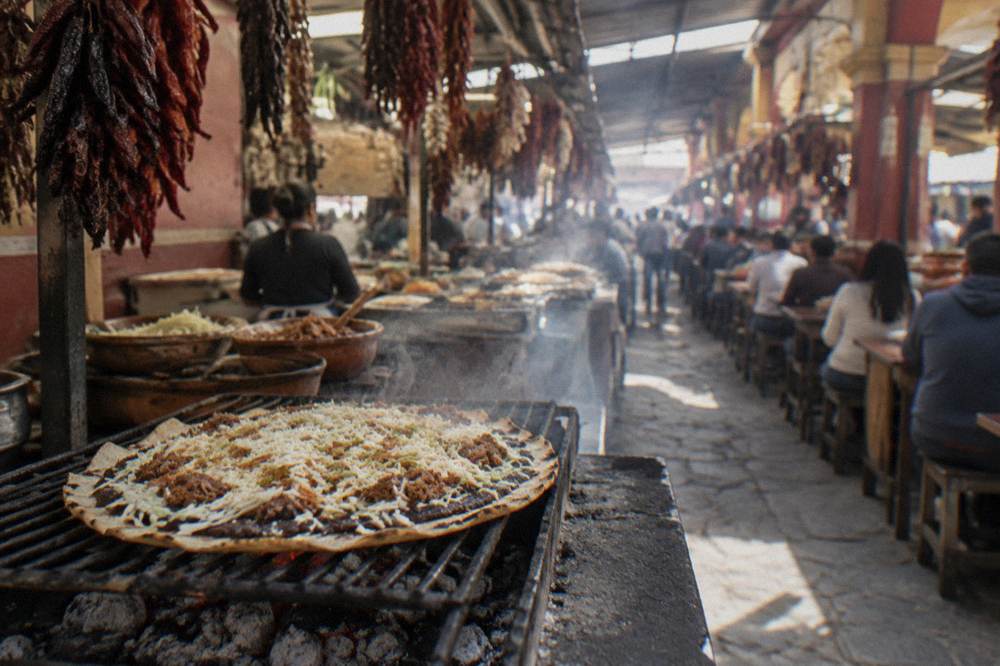
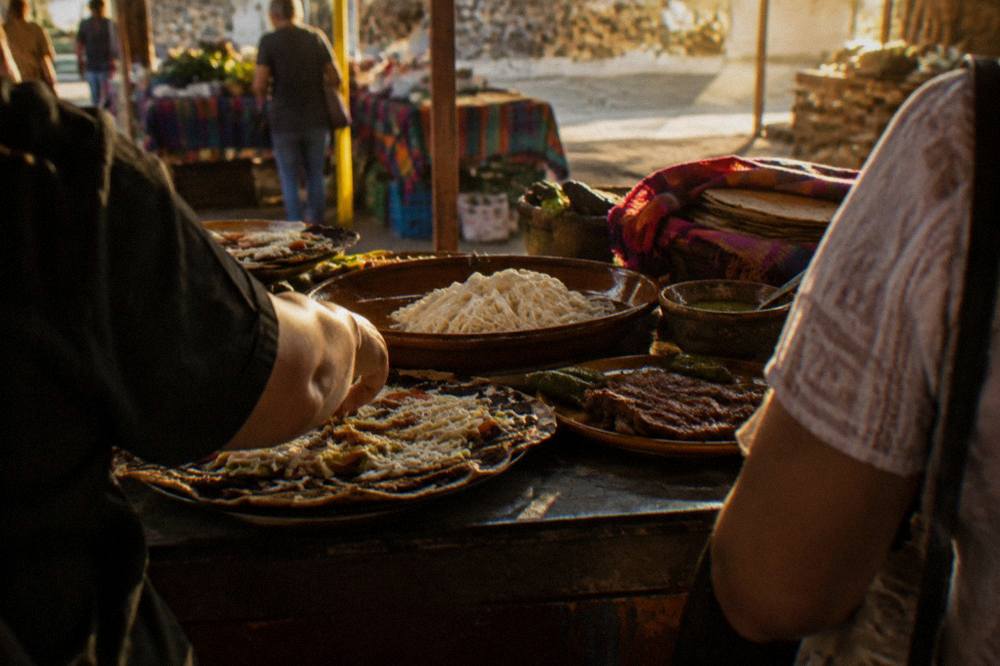
A tlayuda is a very large tortilla, crisp from the grill, spread with asiento (pork lard), black bean paste, quesillo, shredded cabbage or lettuce, salsa and usually tasajo, cecina or chorizo, and in Oaxaca City it is eaten as street food at night as much as in restaurants. The size and the crispness separate it from an ordinary taco or quesadilla: a tlayuda is a full plate-sized meal folded or served flat, assembled in minutes over charcoal. The stalls that grill them concentrate in the evening, and the smell of the tortilla on the comal is how you find them.
The bean paste and the asiento do the heavy lifting, so a tlayuda without meat is a normal and satisfying order, not a compromise. Vegetarians should ask for it without asiento too, since the lard is the traditional base layer. Salsa choice is yours at most stalls, and the two bowls, one red and one green, are usually on the counter.
If you want the dish unpacked further, the site carries a dedicated page on tlayudas in Oaxaca, including how the toppings differ from stall to stall and how the meats are cut and grilled.
What Street Food Should You Try In Oaxaca City?
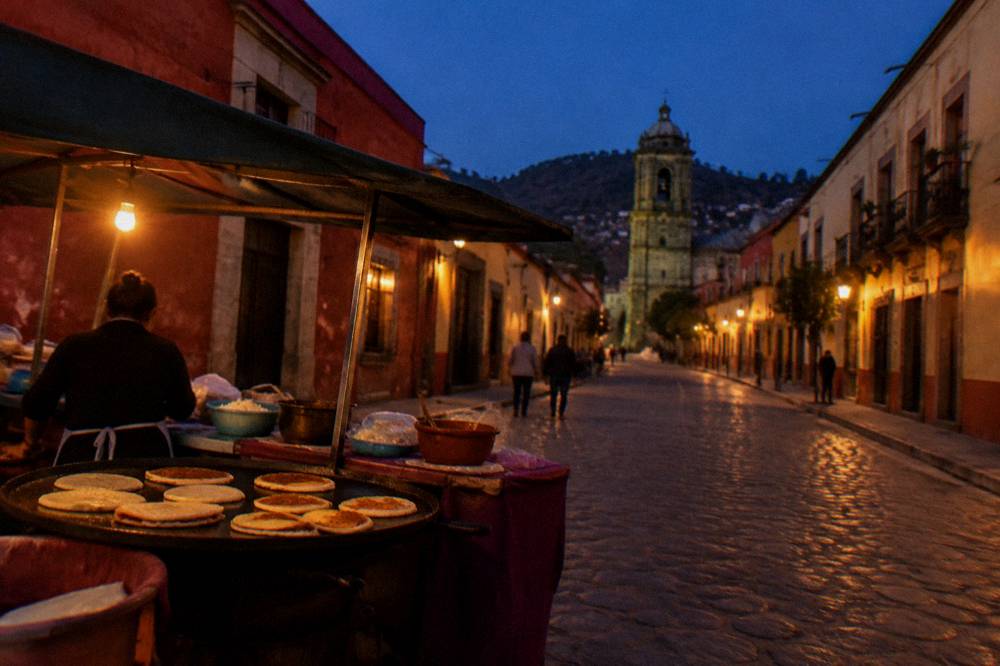
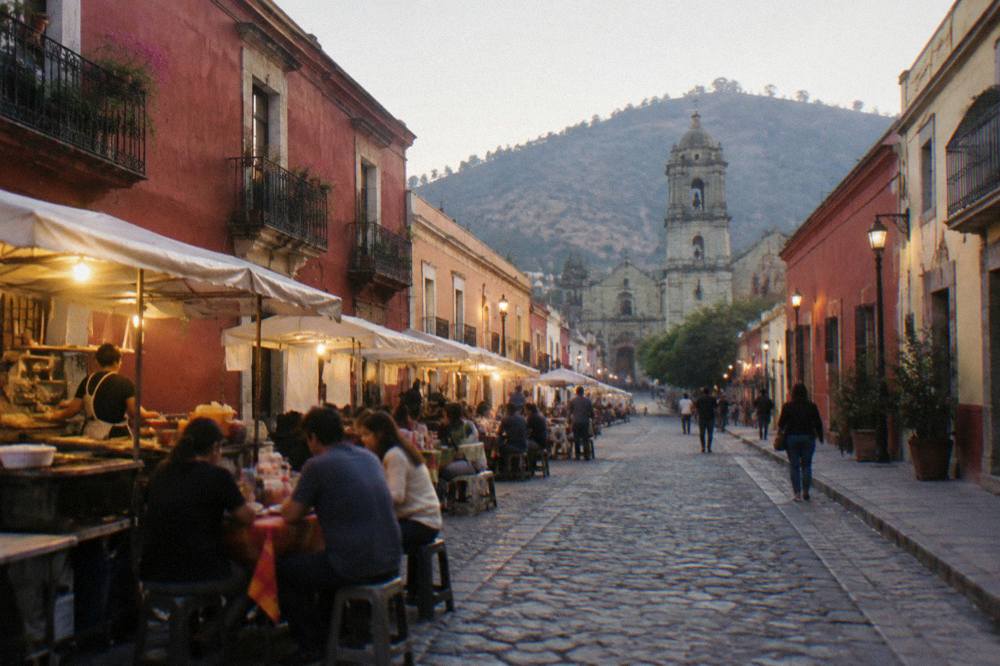
The street-food shortlist for Oaxaca City is tlayudas, memelas, empanadas de amarillo, quesadillas filled with squash blossom or quesillo, tacos de chapulines, elote and esquite, and hot chocolate with pan de yema, eaten across morning stalls, market corners and the evening grill scene. Street food here is not a budget substitute for restaurants. Several of the dishes above barely exist in sit-down form at all, and the stall is where they are made properly. Mornings belong to memelas and hot chocolate; evenings belong to the grill.
The rhythm of the day matters. Mid-morning stalls serve the masa snacks and the drinks; the market comedores peak at lunch; the tlayuda grills light up after dark. Eating on the street three times a day is normal practice in the city, and it is the fastest way to taste the full range without booking anything.
An evening walk led by a guide solves the two real problems of street eating, which stalls to pick and what to order at each, and the evening street-food tour with fourteen tastings is the site's featured pick for exactly that reason. You can also Check availability for your dates. The broader rundown, including further snacks, sits in the street food in Oaxaca guide, and the head-to-head question of the best street food in Oaxaca has its own answer page.
Where Should You Eat, Markets Or Restaurants?
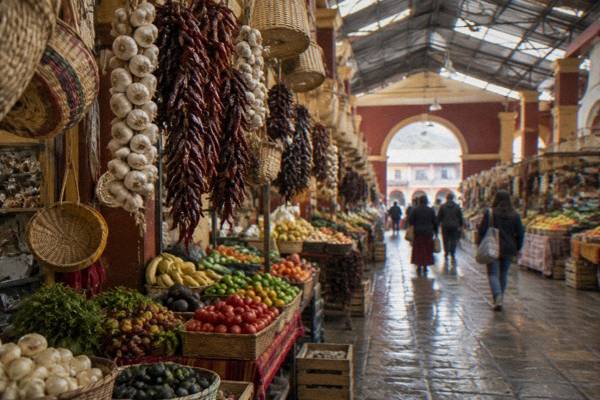
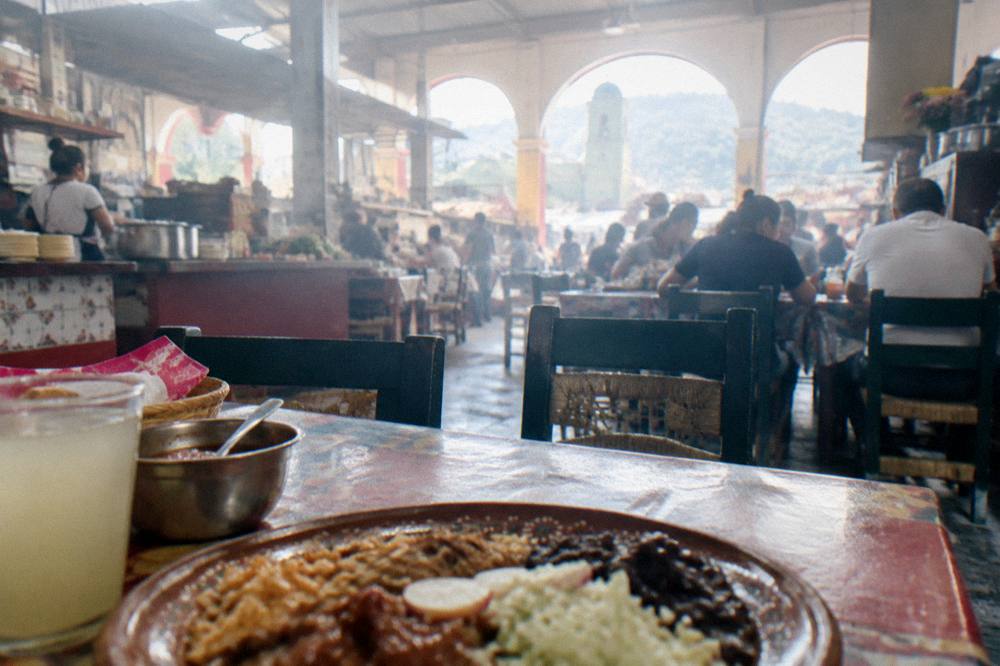
The central markets, above all Mercado 20 de Noviembre and Mercado Benito Juárez a few blocks from the Zócalo, are where Oaxaca City eats at midday, with comedores serving moles and grilled meats and stalls selling quesillo, chapulines, bread and chocolate, while restaurants matter more in the evening. The market block is compact, walkable and dense: you can buy the ingredients in one aisle and eat the finished dish in the next. Mercado 20 de Noviembre's food hall is the classic lunch stop, and the state government notes the market's history back to 1893.
Eating in a market comedor is straightforward: take a seat, order from the board or from what the cooks show you, and eat what arrives. Moles, grilled meats, soups and salsas rotate through the day. The stalls around the comedores sell everything you would want to carry home, from stacks of quesillo to bags of chapulines by weight to disks of chocolate for whisking at home.
Two dedicated pages cover the pair in detail: Mercado 20 de Noviembre and Mercado Benito Juárez. Beyond the centre, the valleys run a weekly market circuit through the towns, and the Tlacolula Sunday market page covers the biggest of them, a short drive from the city. The Friday market at Ocotlán and the Thursday market at Zaachila extend the same circuit further.
What Should You Drink In Oaxaca City?
The drinks to order in Oaxaca City are mezcal (sipped, with orange and sal de gusano), tejate (a cold maize-and-cacao drink), hot chocolate whisked from local cacao, and fresh waters flavoured with fruits such as jamaica and horchata, plus local coffee from the state's mountain regions. Mezcal is the one with the international name, but tejate and chocolate are the older pair, both built on maize and cacao and both sold from market stalls rather than bars. The state's mezcal country, Santiago Matatlán, is reached on a day trip from the city.
Drinking mezcal in Oaxaca is its own subject: the site's mezcal in Oaxaca page covers tasting, the mezcal route around Santiago Matatlán and what distinguishes the spirit from tequila. For the non-alcoholic side, Oaxacan chocolate and Oaxacan coffee and cafes have their own guides, and the question what drink Oaxaca is known for is answered directly on its own page.
Tejate deserves its own sentence. It is a cold, unfermented blend of maize and cacao with a foam on top, served from market drink stalls in painted jicara gourds, and it is the drink most closely tied to the valleys' market culture. Order it where the stalls are busiest, next to the comedores.
| Drink | Base | Typical setting |
|---|---|---|
| Mezcal | Agave, distilled | Mezcalerías, tastings, distillery visits |
| Tejate | Maize and cacao | Market drink stalls, served cold |
| Hot chocolate | Local cacao, whisked | Chocolate mills, cafes, with pan de yema |
| Agua de jamaica | Hibiscus, sweetened | Market comedores, street stalls |
| Oaxacan coffee | Sierra-grown beans | Cafes in the centro |
Can Vegetarians Eat Well In Oaxaca?
Yes, and easily: a vegetarian eater in Oaxaca City can build full meals from memelas and quesadillas with quesillo, squash blossoms, mushrooms, mole amarillo with vegetables, bean-forward tlayudas without meat, fresh quesillo from the markets, and the maize-and-fruit drink culture, all of it standard rather than improvised. Quesillo is the workhorse protein, and the markets sell it fresh daily. The main watch-item is asiento, the pork lard spread on traditional tlayudas, so vegetarians should ask for a tlayuda made without it.
The same caution applies to beans, which are traditionally seasoned with pork. Asking whether the beans on a memela are cooked without meat is a normal question at any stall, and the answer is usually quick and honest. Everything else in the vegetarian repertoire, from squash blossoms to mushrooms to the herbal mole verde, needs no negotiation at all.
The site treats this properly on a dedicated page, vegetarian and vegan food in Oaxaca, and the question is Oaxaca good for vegetarians has its own answer. A vegetarian cooking class with a market visit also features among the site's tour picks, which handles the diet question at the source rather than at the table.
Should You Take A Food Tour Or A Cooking Class In Oaxaca City?
A food tour suits a short stay or a first visit, because a guided walk through the markets and evening stalls covers more dishes in one sitting than you would find alone in two days, while a cooking class suits a longer stay or a repeat visit, because it teaches the moles and salsas well enough to cook them at home. The two are complements, not rivals: the walk shows you the city's street grammar, the class shows you the method behind it. Both usually include market shopping as part of the session.
There is a third option worth naming: simply eating well alone. The markets reward a confident order, the stalls reward curiosity, and the pages linked above give you the vocabulary. What a tour adds is selection and context, and what a class adds is technique, and neither replaces the meal you will still eat on your own at midnight from a grill on the pavement.
The featured pick on this page is the evening street-food walk, which moves the eating to the hours when the grill stalls are lit. The full comparison of walks, tastings and classes, with what each covers, is in the Oaxaca food tour guide.
When Is The Best Time Of Year To Eat In Oaxaca?
There is no bad eating season in Oaxaca City, but the calendar still matters: the dry season from November to April brings the festival cooking around Día de Muertos at the end of October and into November, July brings the Guelaguetza and the Feria del Mezcal, and the rainy season from May to October means afternoon rain, averaging 188.3 mm across June, with the markets and kitchens running as usual. Food-wise the difference is atmosphere more than menu: moles, tlayudas and tejate appear year-round, so the choice of month is really a choice of crowds, weather and festivals.
The climate is one reason eating here is comfortable. The SMN station normals show monthly average highs between about 28.9 and 34.9 degrees Celsius, and June through September are the months with the heaviest rain, while December and January nights average about 11.0 and 10.3 degrees, cool enough to make hot chocolate the obvious order. The full breakdown by month is in Oaxaca weather by month, and the wider planning question is covered under the best time to visit Oaxaca.
| Month | Average high C | Average low C | Average rain mm |
|---|---|---|---|
| January | 28.9 | 10.3 | 2.4 |
| April | 34.9 | 15.8 | 47.3 |
| June | 30.9 | 16.7 | 188.3 |
| September | 29.1 | 16.1 | 163.6 |
| November | 29.0 | 12.3 | 9.1 |
How Do You Plan Eating Days Around The Rest Of A Trip?
Eating well in Oaxaca City costs almost no planning time, but a little structure pays off. Put the market lunch on the day you walk the centro, since the markets sit inside it; put the evening street-food walk on a day with nothing scheduled after dark; and save the cooking class for a morning you do not mind giving over to shopping and the stove. Day trips to Mitla, Hierve el Agua and the craft villages all return to the city by evening, which leaves the grill stalls intact as the default dinner.
If the trip is short, the one day in Oaxaca and how many days in Oaxaca pages show where the meals fit around the ruins and the museums. And if the whole trip is being built around food rather than fitted with it, start from what to eat's parent, things to do in Oaxaca, and schedule backwards.
Common Questions About Eating In Oaxaca
What Food Is Oaxaca Famous For?
Oaxaca is famous for its seven moles (above all mole negro), tlayudas, quesillo, chapulines, memelas, tejate, hot chocolate and mezcal. The direct answer, dish by dish, is on the page what food Oaxaca is famous for.
What Is The Best Street Food In Oaxaca City?
The shortlist is tlayudas, memelas, empanadas de amarillo, quesadillas with squash blossom, tacos de chapulines and esquite. The dedicated comparison lives on the page covering the best street food in Oaxaca.
What Is A Tlayuda?
A tlayuda is a very large, crisp grilled tortilla spread with asiento and black beans and topped with quesillo, cabbage, salsa and usually tasajo, cecina or chorizo. Ask for it without meat and without asiento for a vegetarian version.
Where Did Anthony Bourdain Eat In Oaxaca?
The stops from his televised visit are listed, with what to order at each, on the page where Anthony Bourdain ate in Oaxaca.
Is Oaxaca Good For Vegetarians?
Yes. Quesillo, memelas, squash-blossom quesadillas, vegetable mole amarillo and meat-free tlayudas are all standard orders. The details are in the guide to vegetarian and vegan food in Oaxaca.
Should You Take A Food Tour Or A Cooking Class In Oaxaca City?
Take a food tour on a first, short visit to cover many dishes fast, and a cooking class on a longer or repeat stay to learn the moles and salsas. Many classes include the market shopping trip.