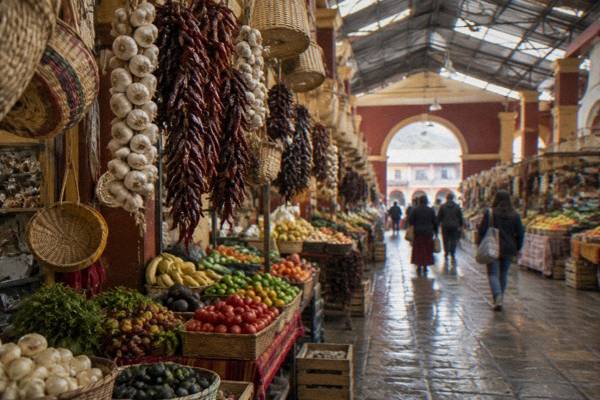
Tlayudas In Oaxaca: What They Are And Where To Eat One
The tlayuda is Oaxaca City's signature large toasted tortilla dish, sold at market stalls and street grills across the Centro Histórico and the surrounding barrios, and this guide covers what it is, what goes on it and where the city's eating zones serve it.
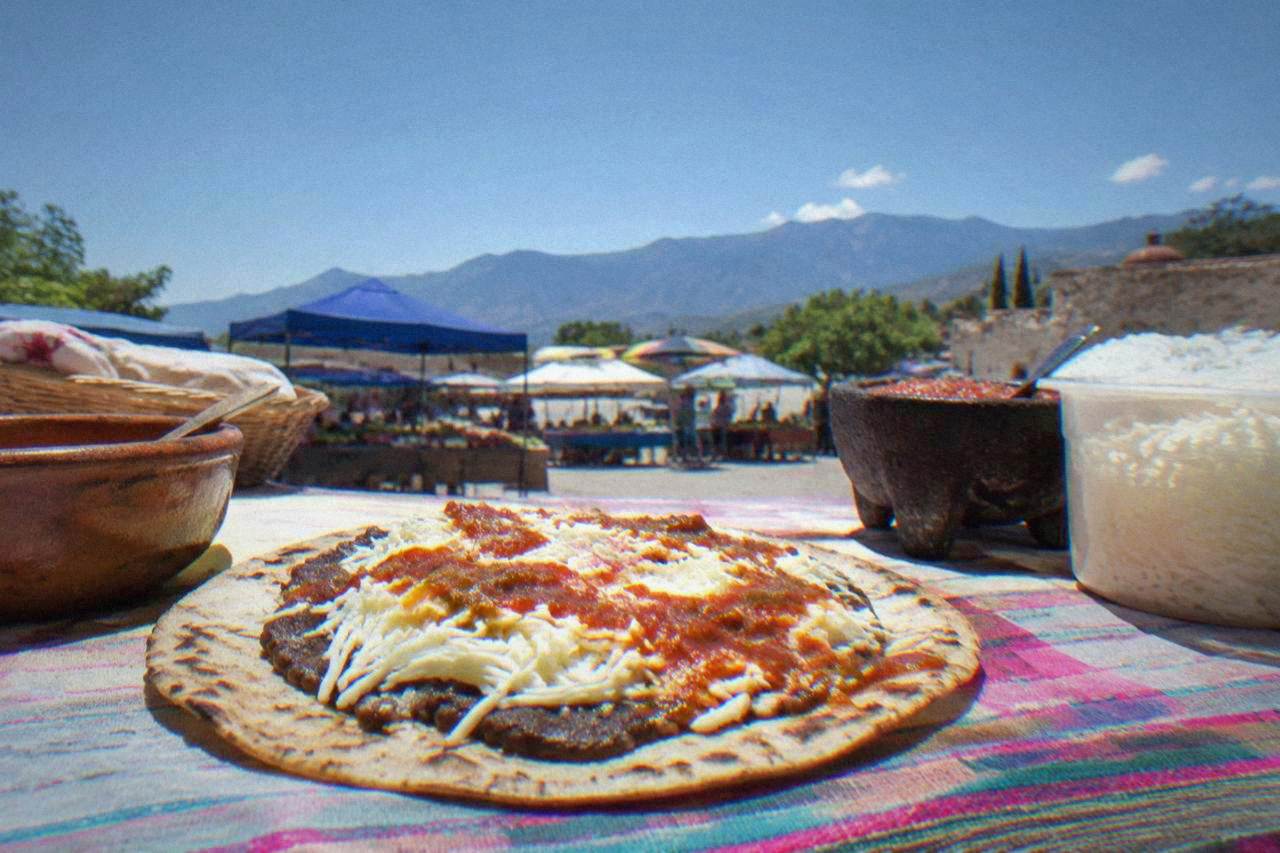
A tlayuda is a large, thin, partially toasted corn tortilla spread with asiento and black bean paste and topped with quesillo, cabbage or lettuce, salsa and, at most stalls, tasajo, cecina or chorizo. In Oaxaca City the places to eat one cluster around the Mercado 20 de Noviembre, the streets south of the Zócalo, and the evening grills of Jalatlaco and Xochimilco.
The tlayuda is the dish Oaxaca City is most asked about after mole and mezcal, and it is a street food first: a very large corn tortilla, toasted on a comal until it stiffens, then spread with bean paste and layered with quesillo, cabbage, salsa and grilled meat. It is eaten standing at market stalls, sitting at comedores, and late at night from grills that set up in the barrios around the Centro Histórico. This page covers what a tlayuda actually is, what goes on one, how it differs from the other dishes on Oaxaca's stalls, and which parts of the city to walk for one, with no invented prices and no restaurant rankings, only what the sources and the site's own coverage support.
For the wider picture of the city's food, from mole to chocolate, start with what to eat in Oaxaca, and for how the eating districts sit on the map, the Oaxaca city map lays out the Centro Histórico and the neighbourhoods around it.
What Is A Tlayuda In Oaxaca?
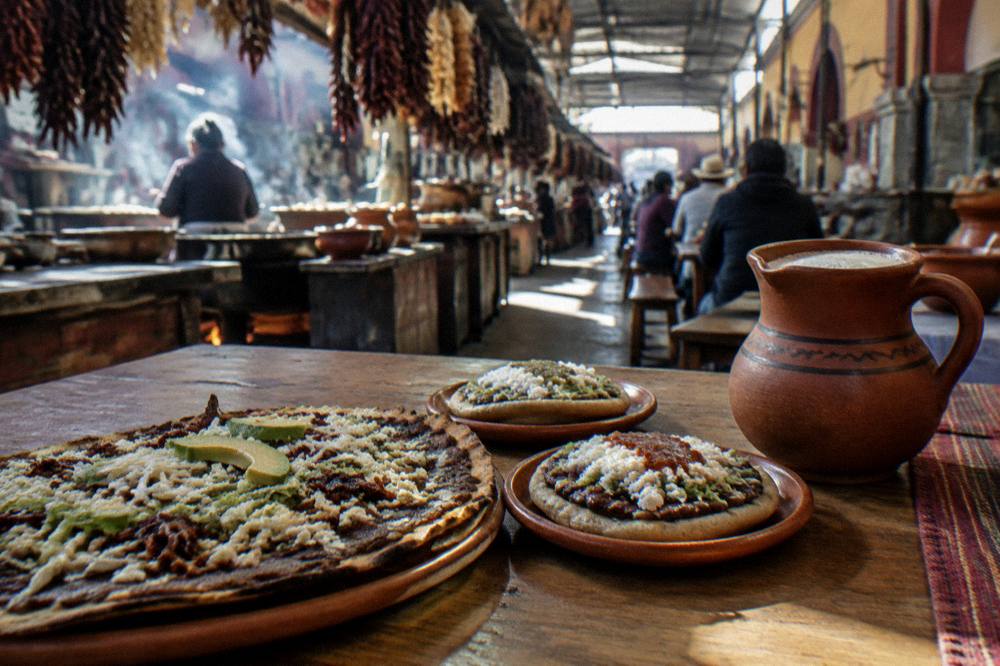
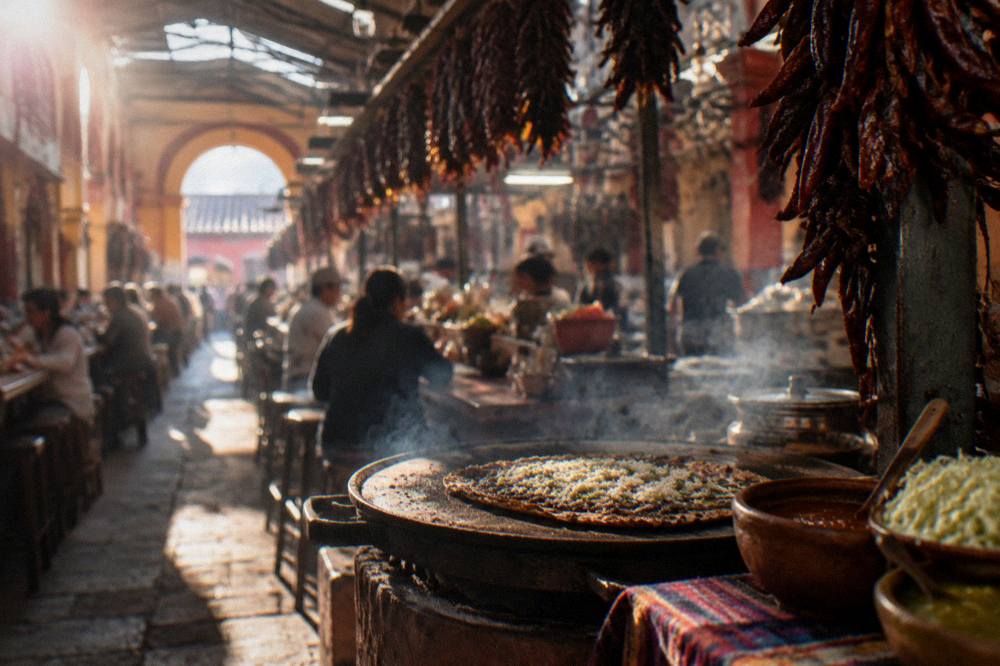
A tlayuda is a very large, thin corn tortilla, larger than a dinner plate, that is toasted on a comal until it is semi-rigid, then used as the base for a open-faced dish of black bean paste, asiento, quesillo, shredded cabbage or lettuce, salsa and usually a grilled meat such as tasajo, cecina or chorizo. It is a dish of the Valles Centrales, and Oaxaca City is its centre, from the markets of the historic core to the evening street grills of the surrounding barrios.
The name describes the base, not the toppings. The word refers to the tortilla itself, and the same large toasted tortilla can arrive at a stall with meat, without meat, or folded in half and finished on the grill so the quesillo melts. The tortilla's size is what separates it from a taco: a tlayuda is not wrapped around its filling, it carries it, and it is cut or torn rather than rolled.
The bean layer is the constant. Stalls spread a paste of black beans across the toasted tortilla first, traditionally with asiento, the pork lending fat that keeps the base from drying out under the grill. From there the toppings stack: quesillo, the stringy Oaxacan cheese that pulls in threads; a handful of shredded cabbage or lettuce for crunch; a salsa roja or salsa verde; and, where meat is ordered, tasajo (thin salted beef), cecina (thin pork) or chorizo, all grilled over the coals and laid on top.
Nothing about the dish requires a restaurant. The tlayuda is a market and street-corner food in Oaxaca City, and the places that serve it range from fixed stalls inside the city's markets to charcoal grills that operate outdoors in the evenings. That street-first character is why the dish pairs naturally with a walking day through the Centro Histórico, and the site's one day in Oaxaca itinerary routes a day of eating through exactly these streets.
What Goes On A Tlayuda, Layer By Layer?
Every tlayuda in Oaxaca City starts with the same architecture: the large toasted corn tortilla as the base, a spread of black bean paste with asiento, then quesillo, then shredded cabbage or lettuce, then salsa, with tasajo, cecina or chorizo added on top where meat is ordered. Slices of avocado and a side of radish or lime appear at many stalls. The order of the layers matters because the bean paste shields the tortilla from the grill and the salsa goes on last.
The components, and what each one does:
| Layer | What It Is | Role On The Tlayuda |
|---|---|---|
| Tortilla | Large, thin corn tortilla, toasted on a comal | The base; toasting makes it hold its shape |
| Asiento | Rendered pork fat | Spread under the beans, keeps the base supple |
| Black bean paste | Frijoles negros, mashed | The moisture layer and the dish's constant |
| Quesillo | Stringy Oaxacan cheese | Melts and binds under the grill |
| Cabbage or lettuce | Shredded, raw | Crunch and freshness |
| Salsa | Roja or verde, stall's own | Heat, added last or on the side |
| Tasajo, cecina, chorizo | Grilled beef, pork, sausage | The protein, optional at many stalls |
The meats are ordered by the piece at most stalls, which is why a tlayuda can be assembled as a meat dish or as a cheese-and-bean dish at the same counter. Tasajo is thin, salt-cured beef; cecina is thin pork, sometimes marinated in chilli; chorizo is the sausage. A stall's salsa choice is its own, and heat varies from counter to counter, so the practical habit at any grill is to ask before the salsa lands.
The vegetarian version is not an adaptation invented for visitors. Bean-and-quesillo tlayudas without meat are a standard order at the city's stalls, and the site's coverage of vegetarian and vegan food in Oaxaca treats the meatless tlayuda as a native option rather than a substitution. The one question worth asking at the counter is whether the bean paste was made with asiento, since the pork fat is the traditional base; a stall can often build the same tlayuda on beans alone.
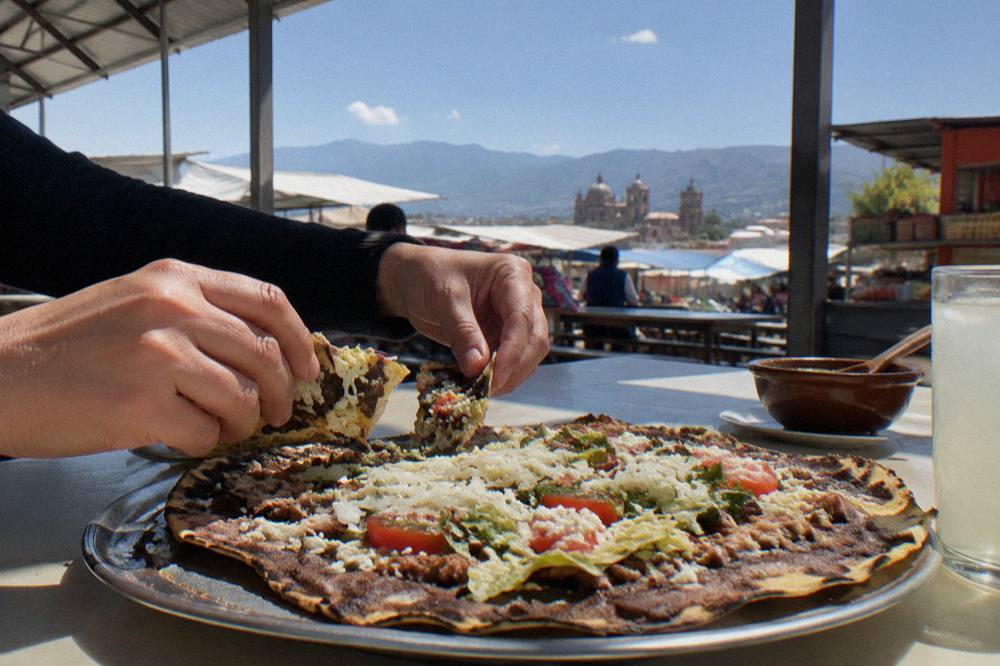
The food theme runs through the city's tours as well as its stalls. A guided Oaxaca food tour walks the markets with a local guide and builds a day of tastings around dishes like this one.
Where To Eat A Tlayuda In Oaxaca City?
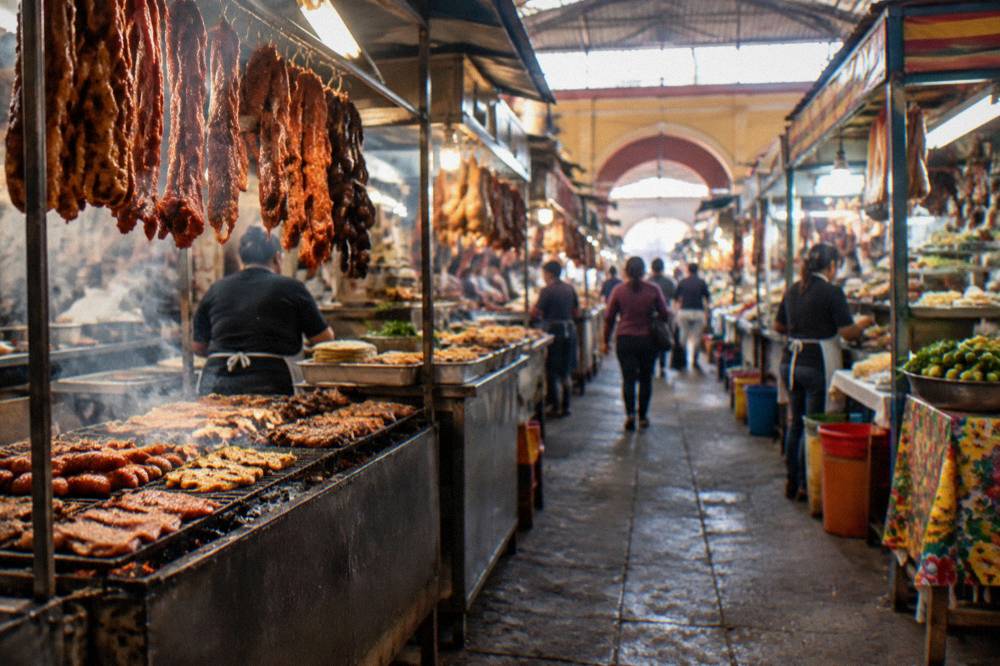
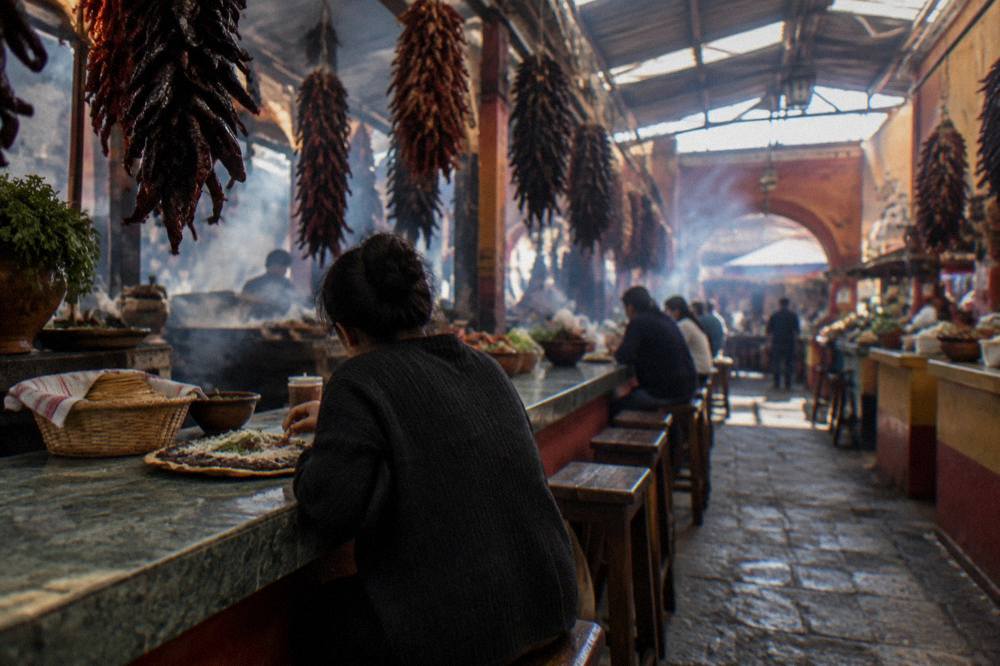
The tlayuda zones of Oaxaca City are the market corridors immediately south of the Zócalo, above all the Mercado 20 de Noviembre with its food stalls and smoke-filled grill hall, the surrounding streets of the Centro Histórico, and the evening street grills of the barrios east and north of the centre, Jalatlaco and Xochimilco, where charcoal tlayuda stands operate after dark. The 20 de Noviembre, founded in 1893, is the city's most famous place to eat one.
The Mercado 20 de Noviembre is the anchor. The state government's own material on the city's markets records the 20 de Noviembre as founded in 1893 and describes it as a key food market with additional tianguis stalls on Saturdays, and its indoor grill area is where the tlayuda is most visible to visitors: rows of stalls, charcoal grills, meats displayed at the counter, ordered by the piece and cooked to order. It sits a few blocks south of the Zócalo, which makes it the most central option and the one most itineraries pass anyway.
The streets around it carry the same food. The area south of the Centro Histórico holds the Mercado Benito Juárez, inaugurated in 1894, and the streets between the two markets are the city's densest strip of food stalls, chocolate mills and comedores. The site's guide to Oaxaca south of Centro and the mercados walks the whole corridor.
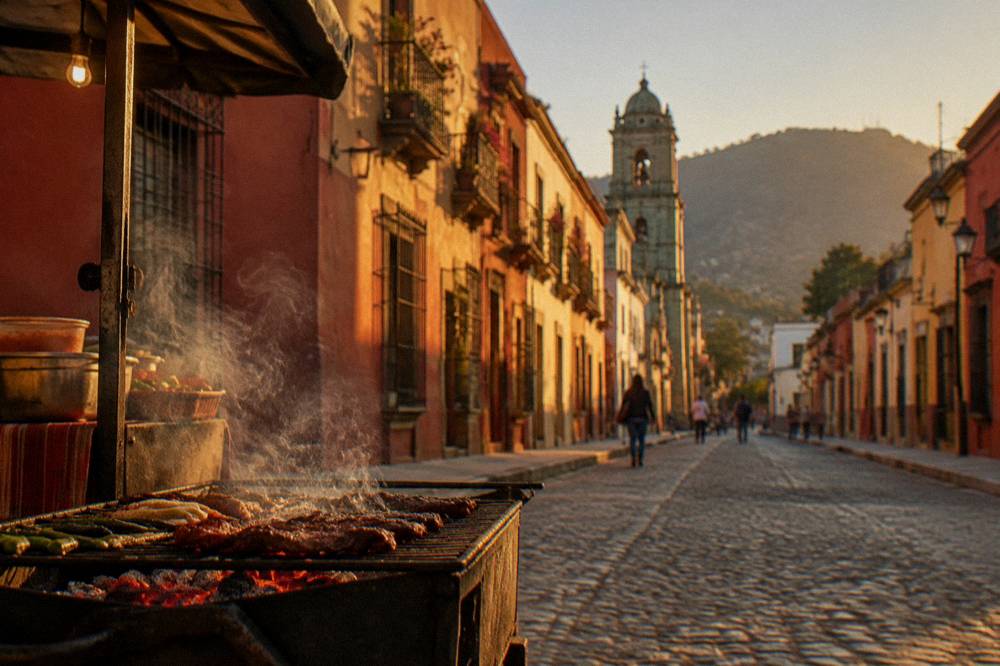
The barrios are the evening answer. Jalatlaco to the east of the centre and Xochimilco to the north, are where Oaxacans eat tlayudas late, from grills set up on the street, and the Jalatlaco guide covers the neighbourhood's street food alongside its murals. A tlayuda eaten at a night grill in Jalatlaco is the same dish as the one at the 20 de Noviembre, cooked over the same kind of coals, in a different setting.
How Does A Tlayuda Compare With Other Oaxacan Street Food?
A tlayuda differs from a taco in base, size and method: it is a large toasted tortilla eaten open-faced or folded once, not a small soft tortilla rolled around a filling, and it is finished over coals so the cheese melts. Compared with memelas, empanadas de amarillo and quesadillas, the tlayuda is the largest format, the one most often shared, and the one built around the bean-and-quesillo layer rather than a single stew or filling.
The city's stall foods sit on a spectrum from small to large, and the tlayuda is the large end of it:
| Dish | Format | Base | Typical Fillings Or Toppings |
|---|---|---|---|
| Taco | Rolled, small | Soft corn tortilla | Any stew or grilled meat |
| Memela | Open-faced, small-medium | Thick tortilla, bean paste | Quesillo, salsa, cabbage |
| Empanada de amarillo | Folded, half-moon | Masa, sealed | Amarillo mole with chicken |
| Quesadilla | Folded or open | Corn or wheat tortilla | Quesillo plus optional fillings |
| Tlayuda | Open-faced or folded once, large | Thin toasted tortilla, asiento, beans | Quesillo, cabbage, salsa, tasajo, cecina, chorizo |
The memela is the tlayuda's closest relative and the clearest contrast. Both start with bean paste on a tortilla; the memela uses a smaller, thicker tortilla cooked fresh on the comal, while the tlayuda uses the large thin tortilla toasted until it stiffens. A stall that serves one usually serves the other, which makes a market counter the place to try both formats side by side. More of these guides are collected on Oaxaca Travel Guide.
The empanada de amarillo is a different category again: a sealed half-moon of masa filled with the yellow mole that is one of Oaxaca's seven moles, closer to a folded pie than a street tortilla dish. The site's guide to Oaxacan mole covers the moles themselves, and the street food in Oaxaca guide places the tlayuda in the full line-up of stall dishes.
Do Any Guided Tours Include A Tlayuda Stop In Oaxaca?
Yes: Oaxaca City's food and market tours walk the corridors where tlayudas are made, and market-focused tastings typically include a stop at the stalls of the 20 de Noviembre or the streets around it, while evening street food tours reach the night grills of the barrios. A walking tour of the historic centre passes the markets but does not stop to cook; a food-and-market tour does, and a guided tasting is the way to try several dishes in one walk.
The distinction matters when choosing. A general city walk covers the Zócalo, the Andador Macedonio Alcalá and the sights, with food as scenery. A food tour makes the stalls the itinerary. For a first visit built around eating, the practical pattern is a food or market tour for the tastings and a separate walk for the history; the site's first time in Oaxaca guide sequences both.
The site's Oaxacan chocolate guide covers the drink and the mills in depth.
An evening street food tour reaches the tlayuda grills at the hour they matter. Oaxaca's night eating concentrates in the barrios and on the streets off the Andador, and a guided evening walk is the format that reaches the most stalls in the fewest hours. For pairing the food with mezcal rather than just eating it, the site's mezcal in Oaxaca guide covers the spirit, and a countryside mezcal tasting such as Check availability is listed for small groups.
Which Oaxaca Neighbourhoods Are Best For Late-Night Tlayudas?
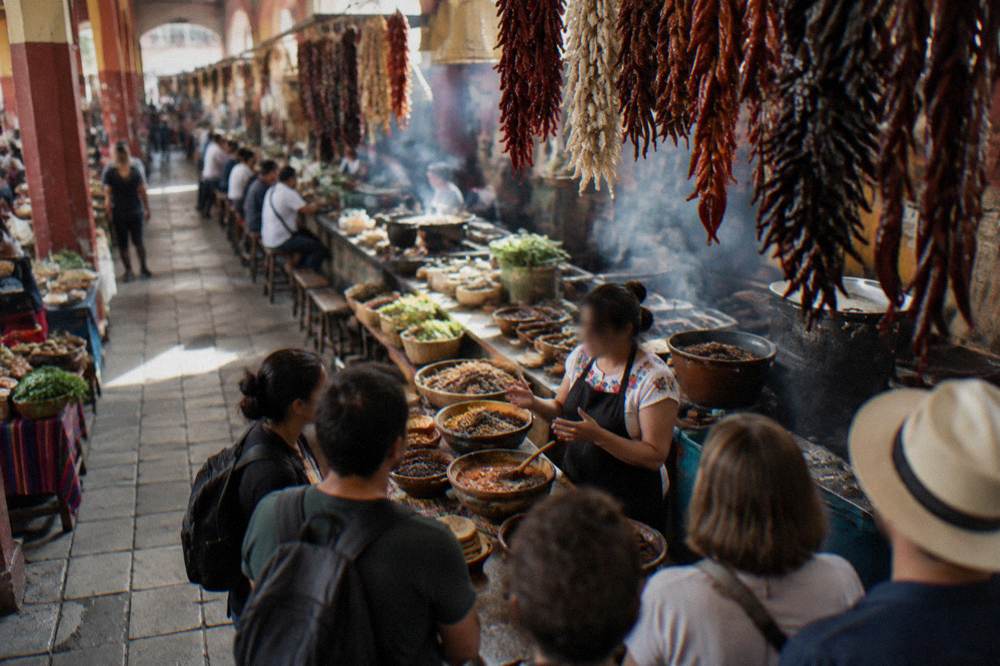
The late-night tlayuda grills of Oaxaca City sit mainly in Jalatlaco and Xochimilco, the two barrios east and north of the Centro Histórico, and on the streets radiating south from the Zócalo toward the market corridor, where charcoal stands operate in the evening. The Centro Histórico itself keeps its market stalls and comedores during the day, so the practical pattern is markets by day, barrios by night.
Jalatlaco is the first stop. The neighbourhood's painted streets sit a short walk east of the Alcalá, its grill corners run in the evening, and its food stalls share the lanes with the murals the barrio is known for. The site's Oaxaca at night guide routes an evening from the Centro Histórico into Jalatlaco, with the street grills as one of the anchors.
Xochimilco is quieter and further out, the old neighbourhood around the aqueduct remains of the city's colonial water system, and its evening food is local rather than visitor-facing. The Xochimilco guide covers the barrio and what sits in it.
The distance between the eating zones is small. Everything in this section is inside the walkable core the site covers in is Oaxaca walkable, and the whole Centro Histórico plus both barrios fits inside a day of walking. For a longer stay that adds valleys and markets outside the city, the Oaxaca in a week itinerary spreads the food days across the week.
| Eating Zone | Part Of The City | When It Serves | What To Order There |
|---|---|---|---|
| Mercado 20 de Noviembre | South of the Zócalo | Day, market hours | Tlayuda with tasajo, memelas, pan de yema |
| Streets around Benito Juárez | South of the Zócalo | Day | Tlayudas, chocolate by the bag, tejate |
| Jalatlaco | East of the Centro | Evening and night | Charcoal tlayudas, bar snacks |
| Xochimilco | North of the Centro | Evening and night | Neighbourhood grills, tlayudas |
| Andador Macedonio Alcalá | Centro Histórico | Day and evening | Street snacks between the sights |
How Does Weather Shape Eating Tlayudas In Oaxaca?
Oaxaca City's climate barely interrupts tlayuda eating: the dry season runs November to April with under 20 mm of rain a month from November to March, and the rainy season May to October concentrates its rain from June to September, when June averages 188.3 mm and September 163.6 mm, mostly in afternoon showers. Evening grills run year-round; the practical effect of the rains is that market corridors, which are under cover, are the reliable daytime choice from June to September.
The SMN station normals for the city tell the story month by month:
| Month | Mean High (C) | Mean Low (C) | Rain (mm) |
|---|---|---|---|
| Jan | 28.9 | 10.3 | 2.4 |
| Feb | 31.1 | 11.6 | 4.6 |
| Mar | 33.3 | 13.6 | 17.6 |
| Apr | 34.9 | 15.8 | 47.3 |
| May | 33.8 | 16.7 | 97.9 |
| Jun | 30.9 | 16.7 | 188.3 |
| Jul | 30.1 | 15.9 | 118.6 |
| Aug | 30.0 | 15.9 | 131.8 |
| Sep | 29.1 | 16.1 | 163.6 |
| Oct | 29.3 | 14.5 | 63.1 |
| Nov | 29.0 | 12.3 | 9.1 |
| Dec | 28.9 | 11.0 | 9.0 |
A hot April day at 34.9 C on average argues for the indoor grill hall over an open street; a December evening at an average low of 11.0 C argues for standing at the coals. The site's Oaxaca weather by month guide and best time to visit Oaxaca guide unpack the seasons for the whole trip, and the rainy season guide covers what still works when the showers come.
How Does A Tlayuda Day Fit Into A Bigger Oaxaca Trip?
A tlayuda day in Oaxaca City works as a walking loop of under two kilometres: the Zócalo south through the Benito Juárez corridor to the 20 de Noviembre for a midday tlayuda, back through the Centro Histórico for chocolate and pan de yema in the afternoon, and east into Jalatlaco for an evening grill. Everything on that loop is inside the walkable core, and the valley craft towns, ruins and mezcal route sit a short drive outside the city for the days around it.
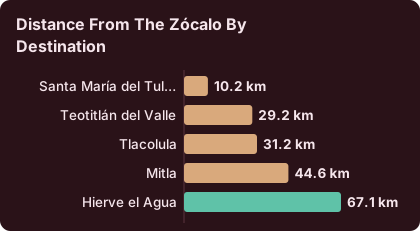
The city sits at about 1,550 m in the Valles Centrales, an inland highland setting, and the eating day above needs no transport beyond feet. The drive times from the Zócalo to the valley destinations that bracket a food-focused trip, computed on OSM roads and rounded up:
| Destination | Distance From The Zócalo | Drive Time (Free-Flow) |
|---|---|---|
| Santa María del Tule | 10.2 km | About 11 minutes |
| Teotitlán del Valle | 29.2 km | About 26 minutes |
| Tlacolula | 31.2 km | About 25 minutes |
| Mitla | 44.6 km | About 37 minutes |
| Hierve el Agua | 67.1 km | About 57 minutes |
Real traffic and mountain roads make these slower than the free-flow figure, and the driving in Oaxaca guide covers the roads. For planning the whole stay around the food, the how many days in Oaxaca guide sizes the trip, the Oaxaca travel costs and budget guide prices the frame, and the Oaxaca itinerary planning guide assembles it. The root things to do in Oaxaca page carries the full range.
What Do People Ask About Tlayudas In Oaxaca?
The questions that come up about tlayudas in Oaxaca City are consistent: whether the dish is vegetarian, whether it is the same as a quesadilla, where to find one at night, what tasajo and cecina are, whether the water in the salsas is safe, and how the dish fits a short visit. Each has a direct answer, and none of them requires a price, a ranking or a reservation to answer.
The vegetarian question turns on the asiento. The bean-and-quesillo tlayuda without meat is a standard order, and the question to ask is whether the beans were made with pork fat; the drinking water in Oaxaca guide covers the water question for salsas and ice generally, and the Oaxaca safety guide covers the safety frame around walking the eating streets at night.
For a first visit that wants the dish and the city in the same day, the one day itinerary already sequences the market corridor; a solo traveller has the same walk, and the solo in Oaxaca guide covers the practicalities of eating alone at market stalls, where counter seating is the norm rather than the exception.
Common Questions About Tlayudas In Oaxaca
What Is A Tlayuda In Oaxaca?
A very large, thin corn tortilla toasted on a comal until semi-rigid, spread with black bean paste and asiento, and topped with quesillo, shredded cabbage or lettuce, salsa and, where ordered, grilled tasajo, cecina or chorizo. It is a market and street food of Oaxaca City and the Valles Centrales.
Where Is The Best Place To Eat A Tlayuda In Oaxaca City?
The Mercado 20 de Noviembre, founded in 1893, is the city's best-known tlayuda venue, with a grill hall where meats are ordered by the piece. The streets around the neighbouring Benito Juárez market serve them by day, and the barrios of Jalatlaco and Xochimilco run charcoal grills in the evening.
Is A Tlayuda Just A Big Quesadilla?
No. A quesadilla is a folded tortilla built around cheese; a tlayuda is a large toasted tortilla eaten open-faced or folded once, always with the bean paste layer, and typically carrying cabbage, salsa and grilled meat on top of the quesillo rather than cheese alone inside.
Can Vegetarians Eat Tlayudas In Oaxaca?
Yes, bean-and-quesillo tlayudas without meat are a standard order at the city's stalls. The question worth asking is whether the bean paste was made with asiento, the pork fat used in the traditional base, since a stall can often build the tlayuda on beans alone.
What Are Tasajo, Cecina And Chorizo On A Tlayuda?
Tasajo is thin salt-cured beef, cecina is thin pork, sometimes marinated in chilli, and chorizo is sausage. All three are grilled over coals and laid on top of the tlayuda, usually ordered by the piece at the stall's counter.
Do You Eat A Tlayuda With Your Hands?
Typically yes. The toasted base holds its shape, and the tlayuda is torn or cut and eaten by hand or with the fork and knife provided at a comedor; a folded, grilled tlayuda is handled like a folded flatbread rather than rolled like a taco.
The tlayuda is the dish that best sums up eating in Oaxaca City: made from corn, beans, cheese and coals, sold within walking distance of the Zócalo at stalls that have served the same corridors for well over a century, and equally at home at a midday market counter or a night grill in Jalatlaco. Walk south from the Zócalo, order the meat by the piece or skip it, and let the stall do the rest.