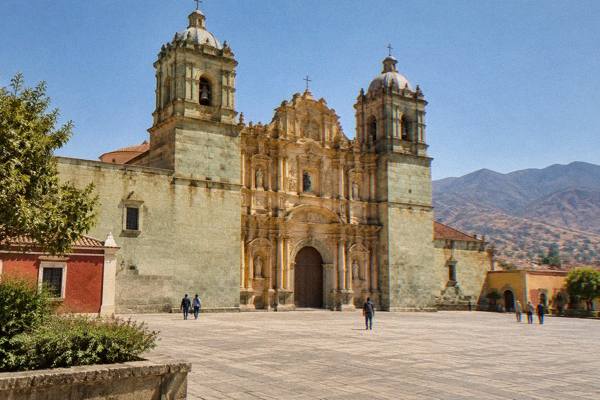
First Time In Oaxaca: A Plan That Gets The Order Right
Oaxaca City rewards visitors who do things in the right order: the historic centre first, Monte Albán early, then the valleys. This plan sequences a first trip using hours, fees and drive times.
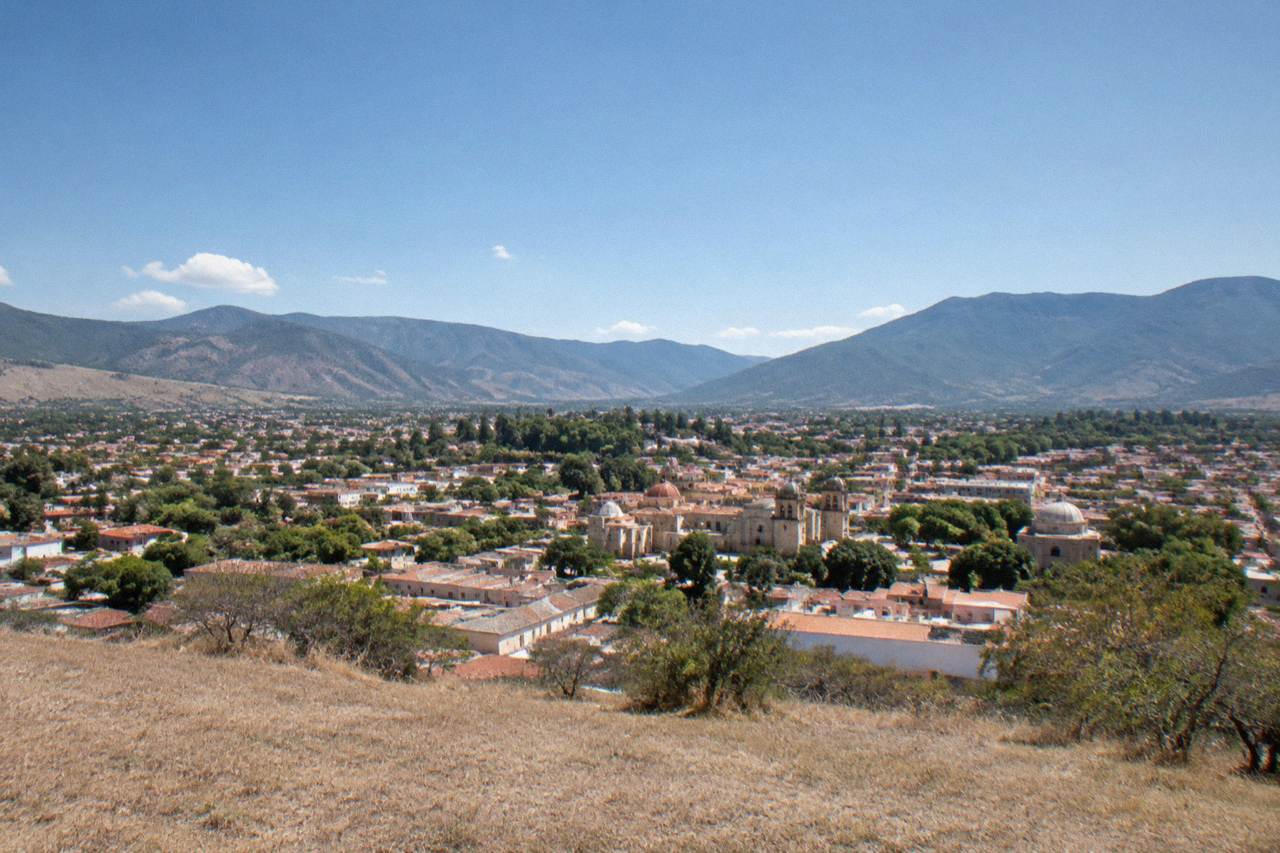
Spend your first day and evening in the historic centre, give Monte Albán its own morning, then dedicate one full day to the Tlacolula Valley (Tule, Mitla, Hierve el Agua) and another to the craft villages south of the city. Museo de las Culturas opens Tuesday to Saturday only, so slot it mid-week.
Oaxaca City, the capital of the state of Oaxaca in Mexico, is an inland highland city in the Valles Centrales at about 1,550 m, and a first visit goes better when the pieces are done in the right order. The city received 1,324,332 tourist arrivals across 2025, and the bulk of what those visitors come for splits into three rings: the historic centre, the archaeological zone of Monte Albán above it, and the valley towns beyond. For a wider list of options, the Oaxaca Travel Guide homepage collects the destination page by page.
What Should Your First Day In Oaxaca Look Like?
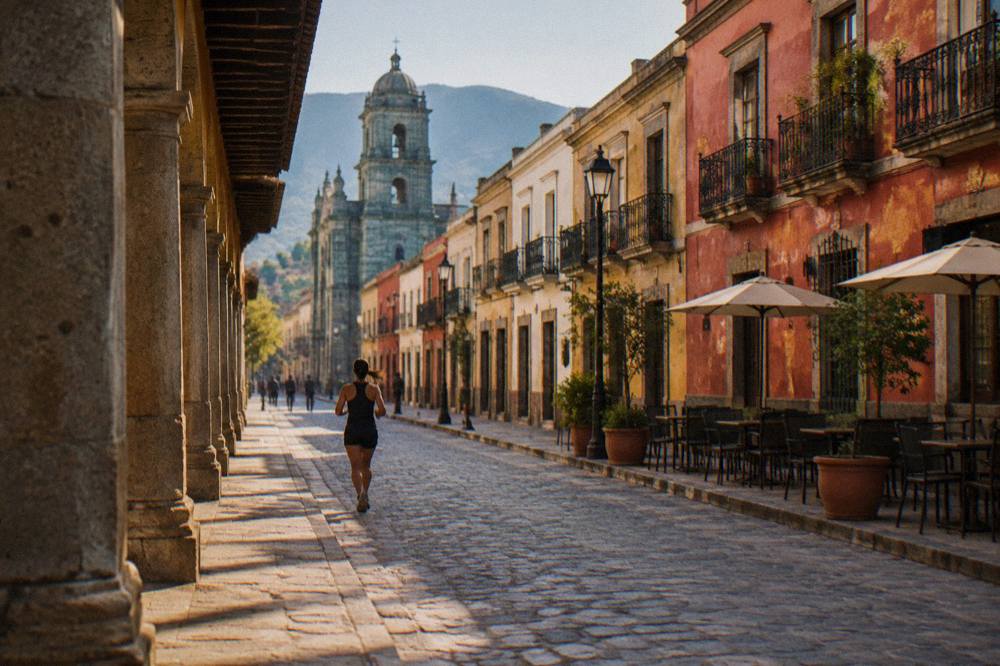
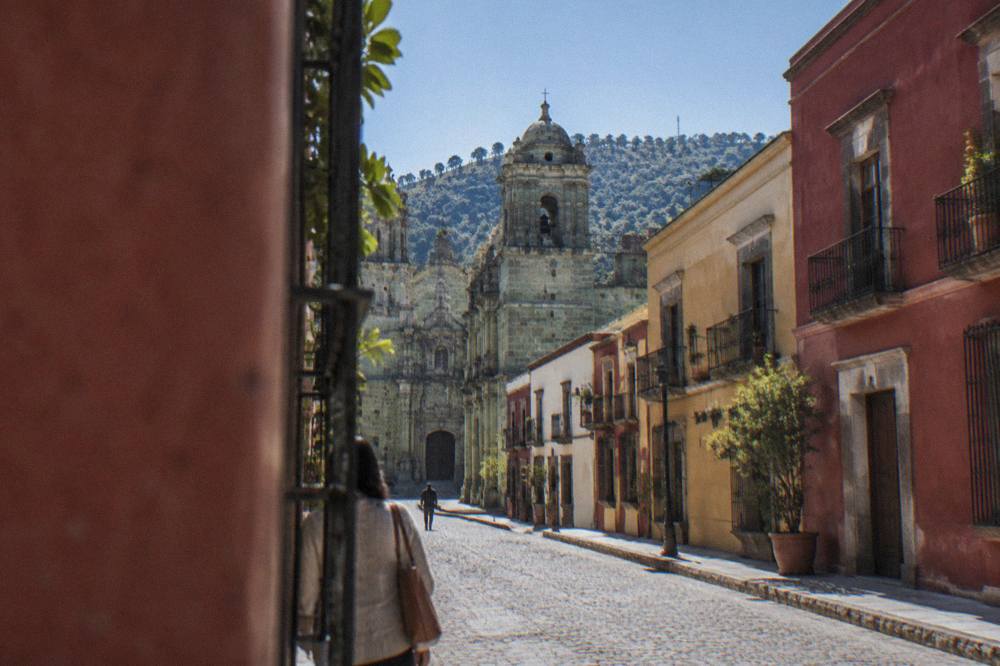
Give the first day entirely to the historic centre: the Zócalo, the Andador Macedonio Alcalá, Santo Domingo de Guzmán and the Jardín Etnobotánico, with no car and no excursion booked. The centre is compact and walkable, and the two fixed-time items, the Jardín Etnobotánico's free guided tours and the Museo de las Culturas de Oaxaca, both sit within a few blocks of each other. The museum opens Tuesday to Saturday only, so an arrival weekend needs a weekday slot for it.
Start at the Zócalo, the Plaza de la Constitución, and walk the Andador Macedonio Alcalá north to Santo Domingo de Guzmán. The Jardín Etnobotánico runs free guided visits Monday to Friday at 10:30, 11:00, 11:30, 12:00 and 17:00, and Saturday between 10:30 and 12:00; large and school groups book two weeks ahead. The Museo de las Culturas de Oaxaca, inside the former convent at Santo Domingo, opens Tuesday to Saturday 10:00 to 16:00 and charges 105 MXN for Mexican nationals and 210 MXN for foreign visitors. The UNESCO listing that covers the city, "Historic Centre of Oaxaca and Archaeological Site of Monte Albán" (property 415), is a good reminder that the centre itself is the headline sight, not just a base. If the evening still has energy, the Oaxaca at night itinerary picks up where the walking day ends.
| First-day item | Hours | Cost (MXN) |
|---|---|---|
| Zócalo and Andador Macedonio Alcalá | Public space, any time | Free |
| Jardín Etnobotánico guided visit | Mon to Fri 10:30, 11:00, 11:30, 12:00, 17:00; Sat 10:30 to 12:00 | Free |
| Museo de las Culturas de Oaxaca | Tue to Sat 10:00 to 16:00 | 105 national / 210 foreign |
| Santo Domingo de Guzmán church | Church open to visitors | No published fee |
How Many Days Do You Need In Oaxaca For A First Visit?
Four days is the practical minimum for a first visit that includes the centre, Monte Albán, one full valley day to Hierve el Agua and Mitla, and one craft-village day; five lets you add the Sierra Norte or a market town. With fewer than four, something real gets cut: drop the craft villages before you drop Monte Albán, and drop Monte Albán last. The average stay recorded for the city in 2025 was 2.00 nights, which is exactly why the order matters, most arrivals have less time than the full list needs.
The site carries full versions at Oaxaca in one day, Oaxaca in 2 days and Oaxaca in 3 days; the five-day and week-long plans add the coast extensions, which are long drives, Puerto Escondido is about 165 minutes each way on the new highway and belongs to a Oaxaca in 5 days plan or longer, never as a half-day outing. A first trip does not need a car in the city itself; the walking Oaxaca neighbourhoods overview explains how Jalatlaco, Xochimilco and the centro fit together on foot.
| Trip length | What fits | What gets cut |
|---|---|---|
| 2 days | Centre, Monte Albán, one market | Valleys, craft villages, Sierra Norte |
| 3 days | Above plus one full valley day | Craft villages, Sierra Norte |
| 4 days | Above plus craft villages or Teotitlán del Valle | Sierra Norte, coast |
| 5 days or more | Above plus Sierra Norte or a coast extension | Nothing essential |
Which Sights Belong On Day One And Which Can Wait?
Everything inside the historic centre belongs to day one; Monte Albán belongs to a dedicated morning on day two; the Tlacolula Valley sights (Tule, Mitla, Hierve el Agua) belong to day three as a single loop; and the craft villages south and west of the city come last. The logic is drive time and opening hours: Monte Albán is about 15 minutes from the Zócalo, but the valley loop reaches Hierve el Agua at about 57 minutes each way, and fragmenting it wastes half a day in the car.
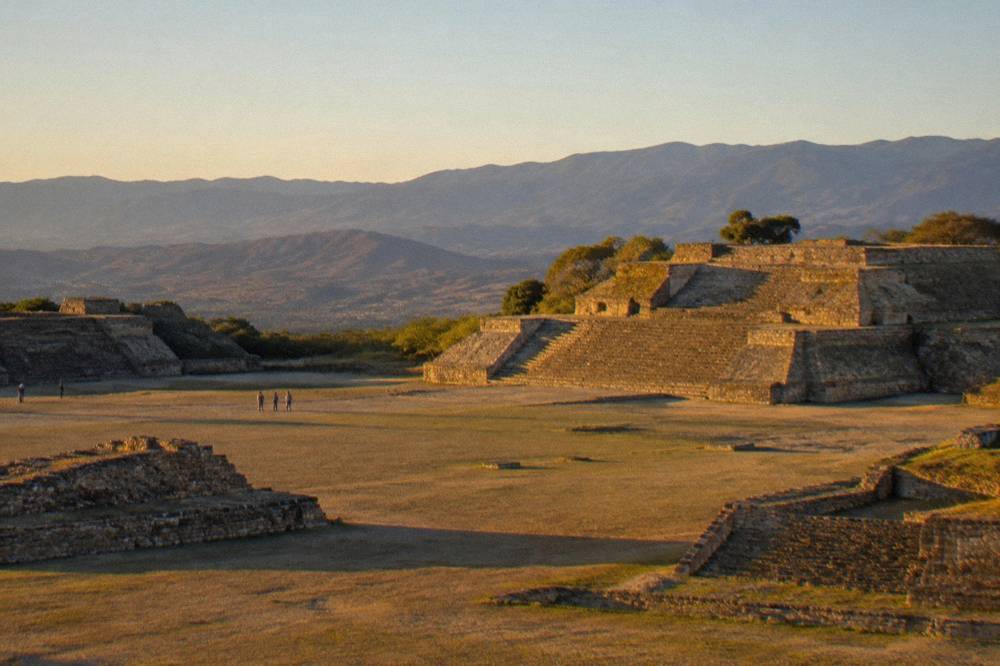
Monte Albán opens Monday to Sunday 08:00 to 17:00 with last access at 16:00, and the INAH page lists 105 MXN for nationals and 210 MXN for foreign visitors (Category I). Going early matters for a different reason than crowding: the zone sits above the city, and the published 2025 visitor count for Monte Albán was 416,675, far ahead of Mitla's 104,428, so the access road and entrance absorb a real flow through the middle of the day. The Monte Albán guide covers the zone in depth, and the Monte Albán tour page rounds up the bookable options. If a guided half day appeals, Check availability on the operator's booking page.
How Do You Order The Valleys: Tule, Mitla And Hierve El Agua?
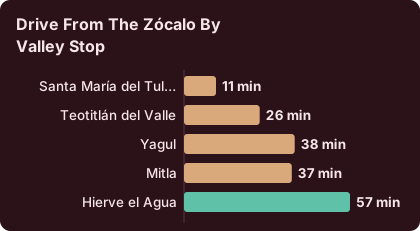
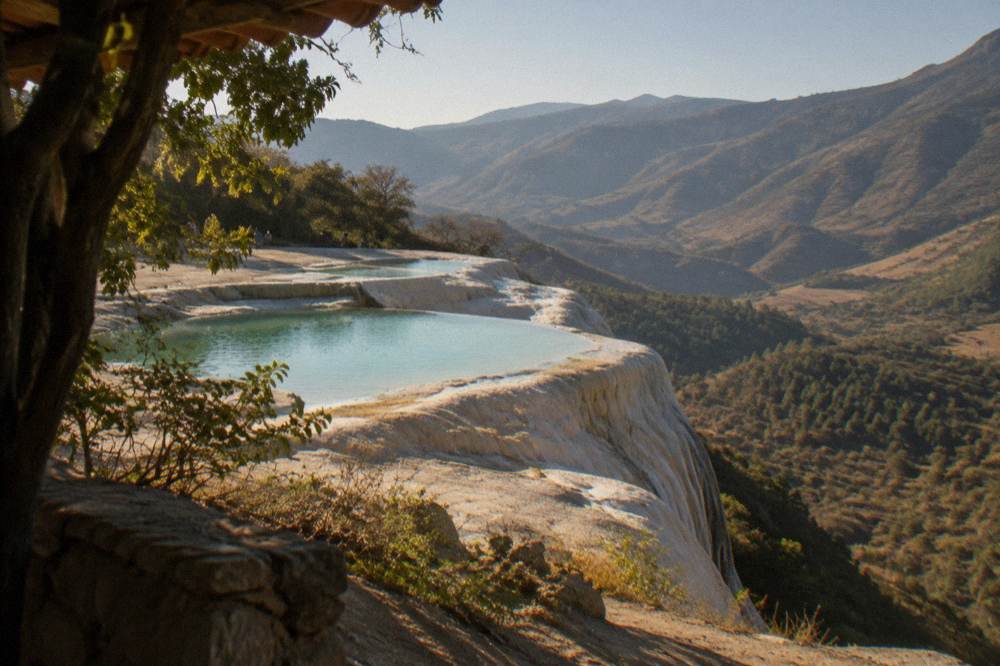
Run the Tlacolula Valley as one loop out of the city: Santa María del Tule first (about 11 minutes out), then Mitla (about 37 minutes), then Hierve el Agua (about 57 minutes), with Teotitlán del Valle or Yagul slotted between Tule and Mitla depending on the day. That order follows the road east, and it puts the longest drive at the far end rather than doubling back through it twice.
The INAH hours decide the timing. Mitla opens Monday to Sunday 08:00 to 17:00, last access 16:30, and charges the Category I rates, 105 MXN nationals and 210 MXN foreign. Yagul, about 38 minutes out, keeps the same Category I rates and closes at 17:00 with last access 16:00. Hierve el Agua is not an INAH zone and no official fee or hours figure is published for it, so plan it through whatever tour or transport operator you use. The Hierve el Agua day trip and Mitla and Tlacolula day trip guides carry the full detail. Booking the whole loop as one product is the way many first-timers do it; the listing for the valley loop that covers Tule, Mitla, Hierve el Agua, a weaving stop and a mezcal distillery is the one this site features, and the Hierve el Agua tour page compares the alternatives.
| Valley stop | Drive from the Zócalo | INAH hours | Entry (MXN) |
|---|---|---|---|
| Santa María del Tule | about 11 min | Church site, no published figure | No official figure |
| Teotitlán del Valle | about 26 min | Village, workshops | No official figure |
| Yagul | about 38 min | Mon to Sun 08:00 to 17:00, last access 16:00 | 105 / 210 |
| Mitla | about 37 min | Mon to Sun 08:00 to 17:00, last access 16:30 | 105 / 210 |
| Hierve el Agua | about 57 min | Community-run, no official hours | No official figure |
Drive times here are free-flow estimates; real traffic and mountain roads are slower.
Which Craft Villages Should A First Visit Include?
A first visit needs one craft-village half day, not all of them: Teotitlán del Valle for weaving (about 26 minutes out), San Bartolo Coyotepec for black pottery, or San Martín Tilcajete for alebrijes, with Ocotlán (about 37 minutes) as the market anchor if the day is a Friday. Trying to string all four into one day turns the valleys into a bus schedule. Each village has its own guide on this site: Teotitlán del Valle, San Bartolo Coyotepec, San Martín Tilcajete and Ocotlán.
The valley towns also carry the smaller INAH zones, and their hours and fees differ from Monte Albán's in ways that catch visitors out. Dainzú and Lambityeco are Category III sites at 80 MXN nationals and 145 MXN foreign, both open daily 08:00 to 17:00. Zaachila opens Thursday to Sunday only, 10:00 to 16:00, at the same Category III rates. Atzompa, the closest zone to the city on the western side, closes earlier than the rest, 08:00 to 16:00 with last access at 15:00. The Zaachila and Thursday market pairing works only on a Thursday; on other days Zaachila's archaeological zone is shut.
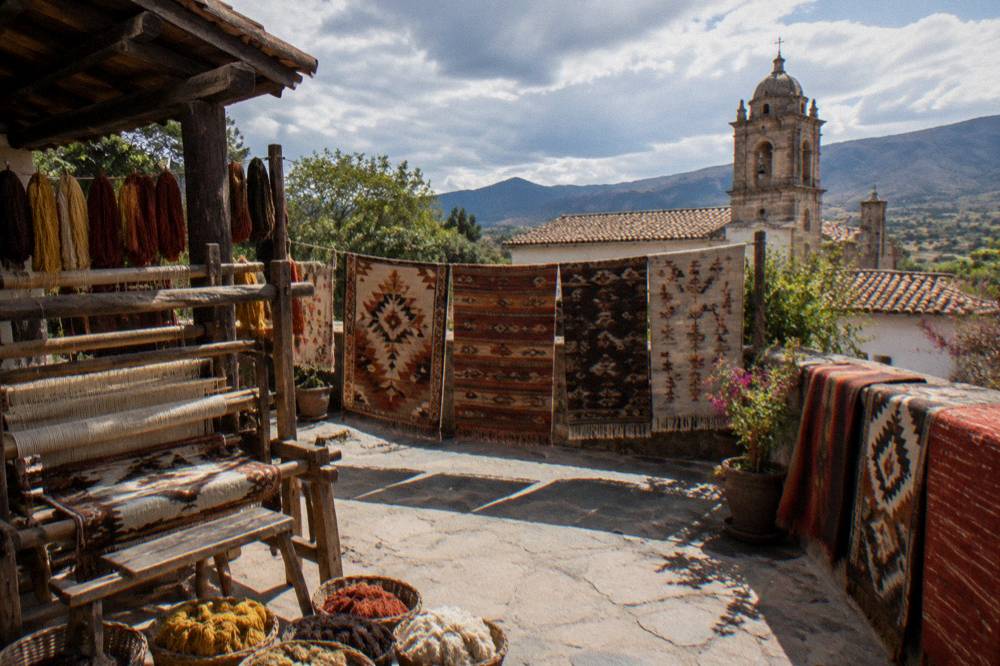
For travellers who want the workshops themselves rather than a bus-and-shop sprint, a private driver day with artisan visits is the alternative. Check availability if that shape of day fits the budget.
What Should First-Time Visitors Eat In Oaxaca?
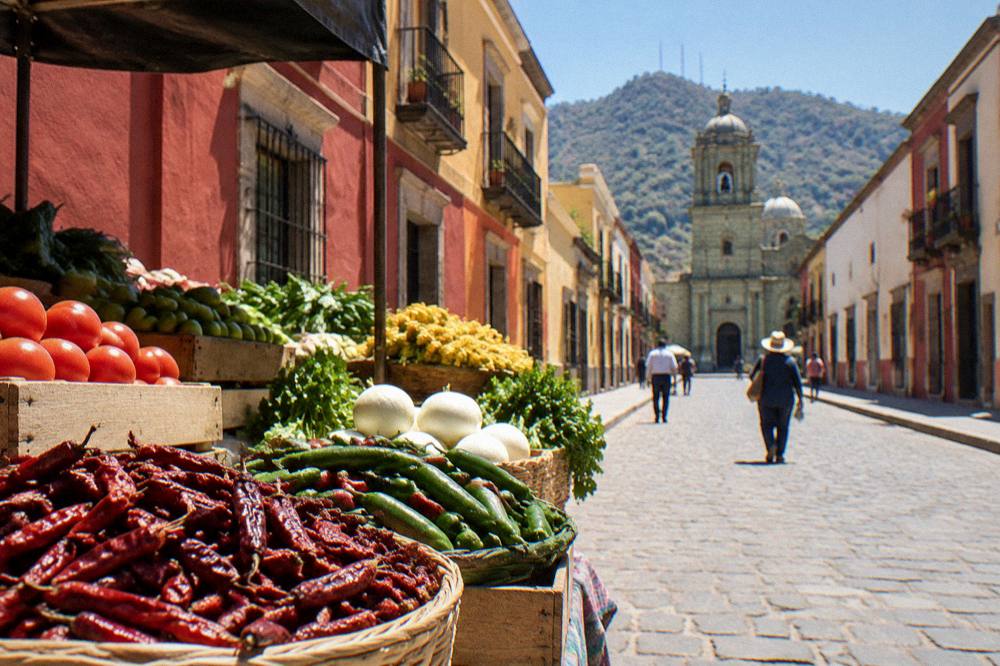
Build the eating around the markets and the moles: a market morning at Mercado 20 de Noviembre or Benito Juárez, one proper restaurant mole, tlayudas in the evening, and a mezcal tasting that is not squeezed into a sightseeing day. The city's food reputation is the reason many visitors come, and the What to eat in Oaxaca guide plus the Oaxacan mole and tlayuda pages carry the detail.
A food or market walk early in the trip does double duty: it feeds you and it teaches the market geography you will use for the rest of the stay. The Oaxaca food tour page lists the bookable options. A cooking class is the deeper version and eats half a day; the Oaxacan cooking classes guide compares them. For drinks, the Mezcal in Oaxaca primer explains what a tasting actually covers, and the Mezcal tour page lists the distillery visits, including routes out to Santiago Matatlán, which the state's own communications call the world capital of mezcal.
How Does The Weather Shape A First-Time Plan?
The dry season runs November to April and the rainy season May to October with its peak from June to September, so the plan should put Monte Albán and Hierve el Agua in dry-season mornings and, in the rainy season, keep a city fallback for afternoons. June averages 188.3 mm of rain and September 163.6 mm, against January's 2.4 mm and December's 9.0 mm, all figures from the SMN station normals for 1991 to 2020. April has the highest average daily high at 34.9 C; January the lowest average daily low at 10.3 C.
There is no snow and no sea here; the city sits inland at about 1,550 m, and evenings are cool even after warm afternoons. The full month-by-month breakdown, including what each month means for itinerary choices, is in Best time to visit Oaxaca, and rainy-season tactics have their own page at Oaxaca in the rain.
| Month | Avg high C | Avg low C | Avg rain mm |
|---|---|---|---|
| Jan | 28.9 | 10.3 | 2.4 |
| Feb | 31.1 | 11.6 | 4.6 |
| Mar | 33.3 | 13.6 | 17.6 |
| Apr | 34.9 | 15.8 | 47.3 |
| May | 33.8 | 16.7 | 97.9 |
| Jun | 30.9 | 16.7 | 188.3 |
| Jul | 30.1 | 15.9 | 118.6 |
| Aug | 30.0 | 15.9 | 131.8 |
| Sep | 29.1 | 16.1 | 163.6 |
| Oct | 29.3 | 14.5 | 63.1 |
| Nov | 29.0 | 12.3 | 9.1 |
| Dec | 28.9 | 11.0 | 9.0 |
What Does A First Trip To Oaxaca Cost To Plan?
Count on INAH admission, a lodging tax and booked excursions as the three fixed line items: the big INAH zones cost 210 MXN per foreign adult per site, the state lodging tax is 3 percent on hotel-type stays (5 percent when booked through an intermediary platform). The INAH line is knowable in advance because every Category I zone charges the same published rate.
The Oaxaca travel costs and budget guide works through the rest. Two items are fixed by law or fact rather than by price: Mexico abolished daylight saving, so Oaxaca sits at UTC-6 all year, and the municipality's population is 270,955 in the 2020 census, the state's 4,132,148, useful context for a city that hosts well over a million annual arrivals.
| Item | Figure | Note |
|---|---|---|
| Monte Albán, Mitla or Yagul entry | 210 MXN foreign / 105 MXN national | Category I, per adult |
| Dainzú, Lambityeco or Zaachila entry | 145 MXN foreign / 80 MXN national | Category III, per adult |
| Museo de las Culturas de Oaxaca | 210 MXN foreign / 105 MXN national | Tue to Sat only |
| Visit outside normal INAH hours | 730 MXN | Listed on the INAH zone pages |
| State lodging tax | 3 percent | 5 percent via intermediary platforms |
Is Oaxaca Safe Enough For A First Visit?
Advisories for Oaxaca state are moderate rather than severe: the US State Department lists the state at Level 2, exercise increased caution, the UK FCDO's Mexico page does not name Oaxaca among the areas it advises against, and Canada advises a high degree of caution for Mexico overall without naming Oaxaca as an avoid area. None of the three singles out Oaxaca City. The US advisory's employee restrictions, apply to the Isthmus region, not to the city, Monte Albán or the valleys a first visit covers.
One standing local risk is road blockades by teachers' unions, which can disrupt highway and airport access for hours at a time; they are a known pattern rather than a dated event, and the practical response is buffer time on travel days. The full breakdown, including the night-walking question, sits in Is Oaxaca safe for Americans right now.
What Mistakes Do First-Time Visitors Make In Oaxaca?
The recurring first-visit mistakes are sequencing ones: treating the Pacific coast as a day trip, arriving on a weekend and missing the Tuesday-to-Saturday museums, splitting the Tlacolula Valley across two half-days, and booking nothing for Día de Muertos weeks in advance. The coast is roughly 165 minutes each way to Puerto Escondido even on the new highway, so it is an extension with its own nights, covered in Oaxaca to Puerto Escondido, not an outing.
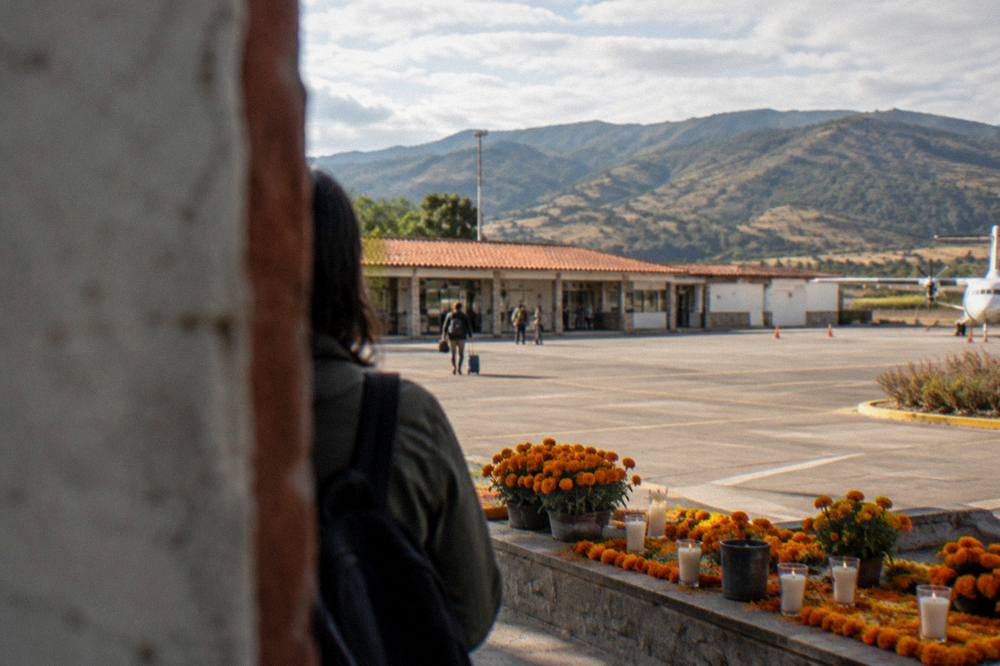
The festival point matters most. Día de Muertos centres on the traditional dates of 31 October to 2 November, and the 2026 city programme has not been announced, so the practical guidance is in What is the best time to see Day of the Dead in Oaxaca. Guelaguetza follows a standing pattern of two Mondays in July at the Auditorio Guelaguetza on the Cerro del Fortín; the 2026 edition's paid seats ran 1,321 to 1,632 MXN with free sections as well, and 2027 dates are not announced. The Guelaguetza guide holds the detail. Two smaller traps: the Museo de las Culturas is closed Sundays and Mondays, and Atzompa's last access is 15:00, an hour earlier than Monte Albán's.
| Mistake | The fix |
|---|---|
| Coast as a day trip | Give it two nights; it is about 165 min each way |
| Weekend-only stay, museum missed | Museo de las Culturas runs Tue to Sat only |
| Valley split across half-days | One loop: Tule, Mitla, Hierve el Agua |
| Atzompa planned for late afternoon | Last access is 15:00 |
| Día de Muertos booked late | Fix rooms and transport well before 31 Oct to 2 Nov |
Which First-Time Plan Matches Your Trip?
Match the plan to the length: two days for the centre plus Monte Albán, three to add the full Tlacolula Valley loop, four to add the craft villages, and five or more for the Sierra Norte or the Pacific coast as its own extension with its own nights. The longer builds are already written up on this site, so pick the length first and let the page sequence the days. The core order never changes: centre, Monte Albán, then the valleys.
The longer builds are at Oaxaca in 4 days and Oaxaca in a week, and travellers with specific shapes can use Solo in Oaxaca, Oaxaca with kids, Oaxaca for couples or the Free things to do in Oaxaca list.
For context and comparisons, Oaxaca vs Mexico City answers the either-or question, and the Oaxaca museums guide covers the indoor days. The city was founded in 1529 as Antequera, and the UNESCO listing ties the centre and Monte Albán together as one property; a first visit that gets the order right sees both halves of that inscription, the valley loop beyond it, and still has an evening left for tlayudas.
Common Questions About A First Trip To Oaxaca
Is Oaxaca City A Beach Destination?
No. Oaxaca City is an inland highland city in the Valles Centrales at about 1,550 m. The Pacific coast at Puerto Escondido or Huatulco is a separate trip of about 165 minutes' driving each way on the new highway.
How Many Days Do First-Time Visitors Need In Oaxaca?
Four days covers the centre, Monte Albán, one full Tlacolula Valley day and one craft-village day. The recorded average stay in 2025 was 2.00 nights, which forces hard choices; cut the craft villages before Monte Albán.
Do You Need A Car In Oaxaca City For A First Visit?
No. The centre is walkable, Monte Albán is about 15 minutes away by tour or transport, and the valley loop works best as a single booked day or a private driver rather than a self-drive split.
What Is Open On Mondays In Oaxaca?
The INAH archaeological zones open Monday to Sunday. The Museo de las Culturas de Oaxaca does not: it opens Tuesday to Saturday only, so a Monday arrival needs a mid-week museum slot.
When Is Día De Muertos In Oaxaca?
The traditional dates centre on 31 October to 2 November. The 2026 city programme has not been announced, so plan around the standing dates and book rooms and transport early.
Is One Day Enough For Monte Albán And Hierve El Agua Together?
It is tight and not the recommended order. Monte Albán is about 15 minutes from the centre while Hierve el Agua is about 57 minutes in the opposite direction; a first visit does better giving Monte Albán its own morning and the valley its own full day.