Oaxaca In 3 Days: City, Ruins And A Valley Day
Three days is the working minimum for Oaxaca City: one day for the historic centre, one for Monte Albán, and one for the Tlacolula Valley.
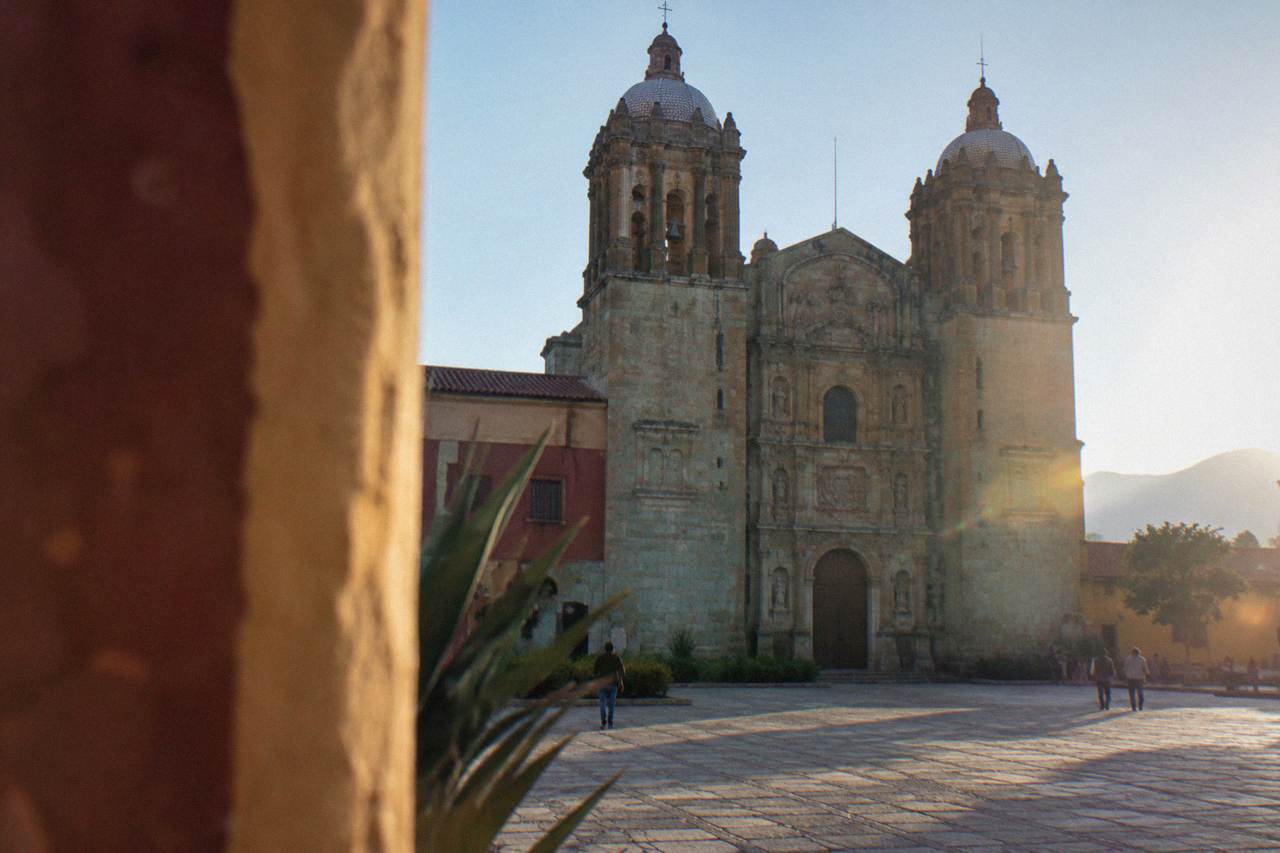
Spend day 1 in Oaxaca City's historic centre, day 2 at Monte Albán, and day 3 in the Tlacolula Valley at Hierve el Agua, Mitla and the Tule tree.
Oaxaca City, the inland highland capital of the state of Oaxaca in Mexico, splits cleanly into three days: the historic centre, the hilltop ruins of Monte Albán, and one long loop out through the Tlacolula Valley. The city sits at about 1,550 m in the Valles Centrales, with no sea anywhere near it, so the third day goes inland and upward rather than to a coast. The Historic Centre of Oaxaca and the Archaeological Site of Monte Albán together form UNESCO World Heritage property 415, and the city recorded 1,324,332 tourist arrivals across 2025, so the framework below is built around opening hours, entry fees and drive times that the official pages actually publish. This Oaxaca Travel Guide itinerary keeps each day geographically tight, because the valley stops are far apart and the INAH sites close in the late afternoon.
How Do You Split Oaxaca In 3 Days?
The split that works is one day entirely in the historic centre, one morning at Monte Albán with the afternoon back in the city, and one full day looping the Tlacolula Valley to the Tule tree, Mitla and Hierve el Agua. Monte Albán closes its gates at 16:00, Mitla at 16:30 and Atzompa at 15:00, so every archaeological stop on this plan is a morning or midday stop. The valley loop covers about 67.1 km of road each way to Hierve el Agua, which makes it the only day that genuinely needs a full block of hours.
Day 1 stays on foot inside the grid of the Centro Histórico. Day 2 climbs about 15 minutes by road from the Zócalo to Monte Albán, and returns in time for museums that shut at 16:00. Day 3 is the long one: the Tule tree about 11 minutes out, then Teotitlán del Valle or Yagul, then Mitla about 37 minutes from the centre, then the final mountain stretch to Hierve el Agua, about 57 minutes of free-flow driving in total each way.
| Day | Base | Core stops | Closing constraint |
|---|---|---|---|
| 1 | Centro Histórico | Zócalo, Santo Domingo, Museo de las Culturas, Jardín Etnobotánico, markets | Museo de las Culturas open Tue to Sat only |
| 2 | Monte Albán, then city | Monte Albán 08:00 to 17:00, afternoon Atzompa or San Martín Tilcajete | Monte Albán last access 16:00 |
| 3 | Tlacolula Valley | Tule, Mitla, Hierve el Agua, optional Teotitlán del Valle | Mitla last access 16:30 |
If the trip falls on fewer days or more, the sibling plans cover the same ground at other paces: Oaxaca in one day compresses day 1 and 2, Oaxaca in 2 days drops the valley, and Oaxaca in 4 days adds the craft villages. The long-form answer to how much time the city rewards is in how many days in Oaxaca.
What Do You Do On Day 1 In Oaxaca City?
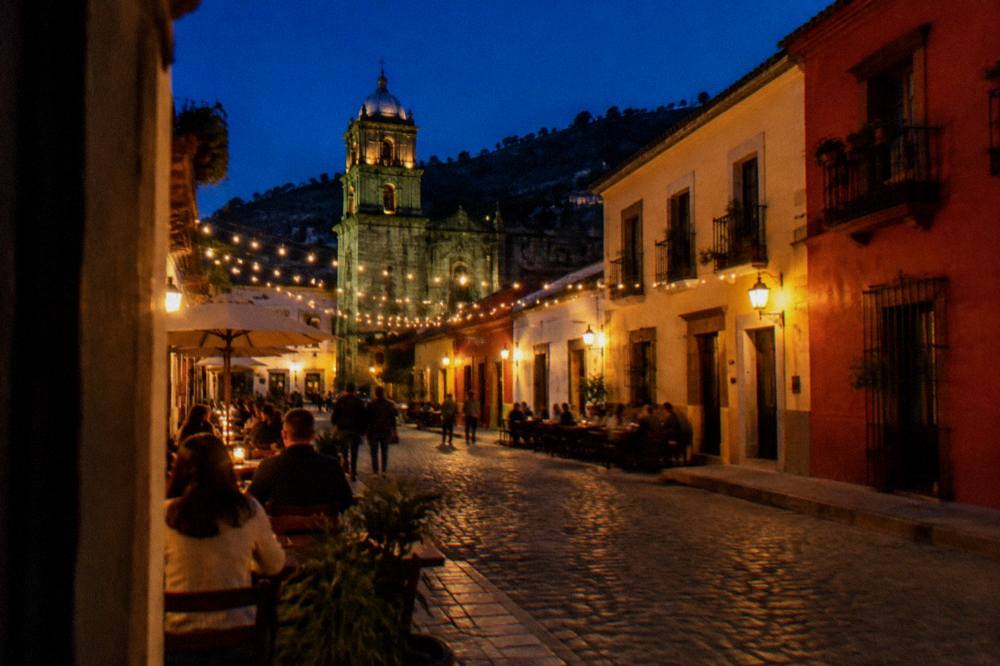
Day 1 belongs to the historic centre: start at the Zócalo, walk the Andador Macedonio Alcalá to Santo Domingo de Guzmán, take the Museo de las Culturas de Oaxaca between Tuesday and Saturday before its 16:00 close, and finish with a free guided tour of the Jardín Etnobotánico, which runs Monday to Friday at 10:30, 11:00, 11:30, 12:00 and 17:00 and Saturdays 10:30 to 12:00. The museum's INAH page lists entry at 105 MXN for nationals and 210 MXN for foreign visitors. The ethnobotanical garden's guided visits are free, and large or school groups book two weeks ahead.
The whole of day 1 fits inside a walkable core. The Zócalo, the Andador Macedonio Alcalá and the church of Santo Domingo sit on one axis, and the Mercado 20 de Noviembre and Mercado Benito Juárez sit a few blocks south of it. The Museo de las Culturas is the one stop with a hard day rule: Tuesday to Saturday, 10:00 to 16:00, so a Monday or Sunday arrival pushes it to day 2's afternoon. The Jardín Etnobotánico, next to Santo Domingo, schedules its free guided visits at fixed hours rather than open entry, so the day gets built around those two clock faces.
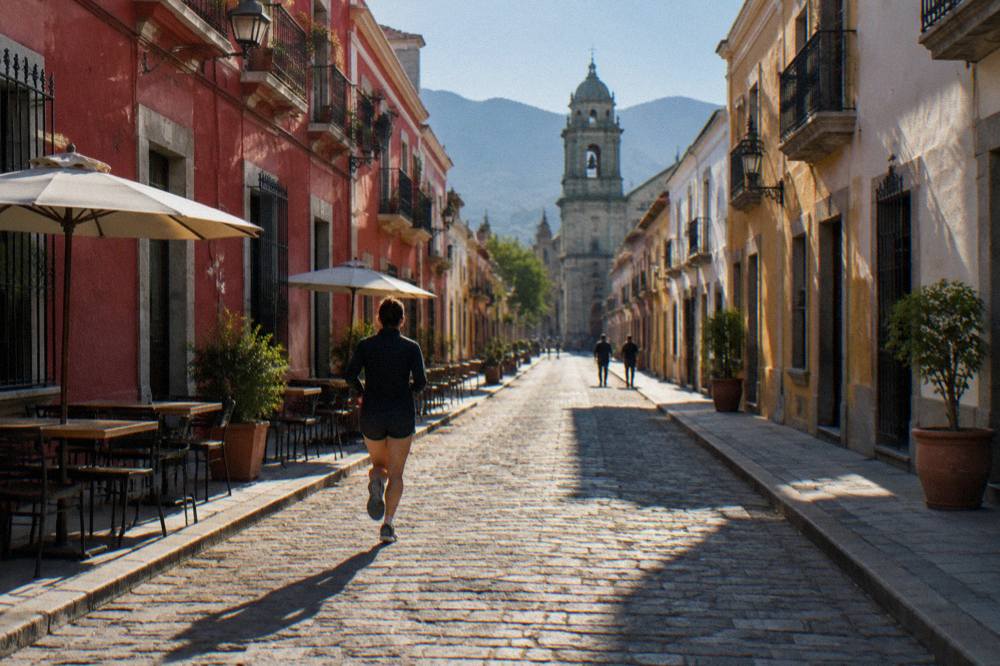
Afternoon options depend on the weekday. Beyond the museum, the neighbourhood walks fill the gaps: Jalatlaco and Xochimilco sit just outside the centre grid, and the evening belongs to the food corridors around the markets. For a fuller map of the barrios, see Oaxaca neighbourhoods, and for the free end of the spectrum, free things to do in Oaxaca.
| Day 1 stop | Hours (per the official pages) | Entry |
|---|---|---|
| Museo de las Culturas de Oaxaca | Tue to Sat, 10:00 to 16:00 | 105 MXN nationals / 210 MXN foreigners |
| Jardín Etnobotánico guided visits | Mon to Fri 10:30, 11:00, 11:30, 12:00, 17:00; Sat 10:30 to 12:00 | Free |
| Monte Albán (day 2 preview) | Daily 08:00 to 17:00, last access 16:00 | 105 / 210 MXN |
| Atzompa (day 2 preview) | Daily 08:00 to 16:00, last access 15:00 | Fee not stated on the INAH page |
A guided introduction on the first evening also works: the historic centre walking products in the band below cover the Zócalo, the Andador and Santo Domingo ground in a single outing, leaving the rest of day 1 free for the museum clock.
The food side of day 1 deserves its own block of hours. The markets and the moles are the reason the cooking classes exist, and a market walk is the fastest orientation a first visit gets. The pairing of a market tour with a class is covered in depth on the site's food pages, including what to eat in Oaxaca and the wider things to do in Oaxaca index.
Is Monte Albán Worth Day 2 Of Oaxaca In 3 Days?
Monte Albán is the fixed point of day 2: the INAH page lists it open daily 08:00 to 17:00 with last access at 16:00, entry at 105 MXN for Mexican nationals and 210 MXN for foreign visitors, and the site drew 416,675 visitors in 2025, more than Mitla, Yagul, Lambityeco, Zaachila and Dainzú combined. The road up from the Zócalo is about 8.7 km, roughly 15 minutes of free-flow driving, with real traffic slower on the climb.
Going early is the structural answer, not a style preference. Last access at 16:00 means a late arrival buys an hour or less inside, and the site pairs naturally with an afternoon back down in the valley: Atzompa, on the same western flank, closes even earlier, at 16:00 with last access at 15:00, and its INAH page lists no entry fee, so nothing is quoted here. The pair makes a coherent day because both sit on the same side of the city and both punish lateness.
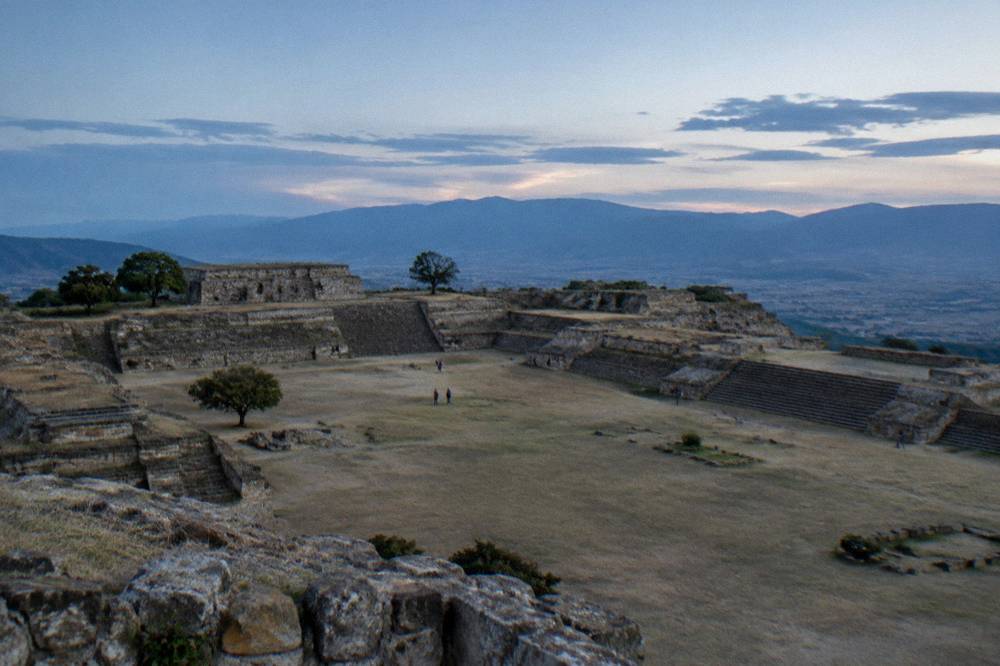
The guided half-day product the site features covers transport and a guide at the ruins, which matters because the colectivo and taxi logistics up the hill are their own puzzle, covered in colectivos and mototaxis in Oaxaca. Its page is at Monte Albán guided half day tour, with Check availability on the operator's booking page.
A note on what Monte Albán is not: it is not a Maya site. The question comes up often enough that the site carries a dedicated answer at does Oaxaca have Mayan ruins. For the site itself, hours, fees and the UNESCO inscription are on the Monte Albán page, and for a full ruins-focused plan, Monte Albán tour expands the options.
The afternoon of day 2 has two clean shapes. One is the museum route: the Museo de las Culturas, if day 1 fell on a Sunday or Monday, is open Tuesday to Saturday until 16:00. The other is the craft-village route: San Martín Tilcajete and San Bartolo Coyotepec sit south of the city and close nothing at INAH hours, so they absorb a late start better than any archaeological zone. The villages have their own pages: San Martín Tilcajete alebrijes and San Bartolo Coyotepec black pottery.
What Do You Do On Day 3 From Oaxaca City?
Day 3 is the Tlacolula Valley loop: the Tule tree about 11 minutes from the Zócalo, then Teotitlán del Valle about 26 minutes out, then Mitla about 37 minutes, entry 105 MXN nationals and 210 MXN foreigners with last access at 16:30, and finally Hierve el Agua about 57 minutes of free-flow driving from the centre, the farthest and highest stop of the three days. The order runs nearest-to-farthest so the closing times bite at the end rather than the middle.
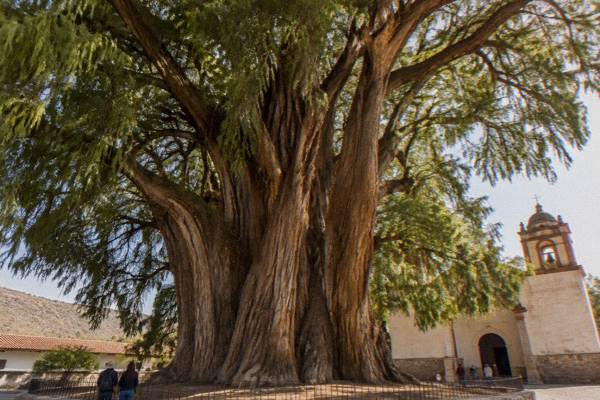
The Tule tree, the Santa María del Tule churchyard tree, is the shortest detour and works as a first stop before the valley opens out. Teotitlán del Valle, the weaving village, sits between Tule and Tlacolula and breaks the drive. Mitla is the valley's INAH Category I site, open daily 08:00 to 17:00 with last access at 16:30, and it logged 104,428 visitors in 2025. Yagul, about 38 minutes out on a parallel road, is the quieter alternative: 10,185 visitors in the same year, the same Category I fee, and the same 17:00 close.
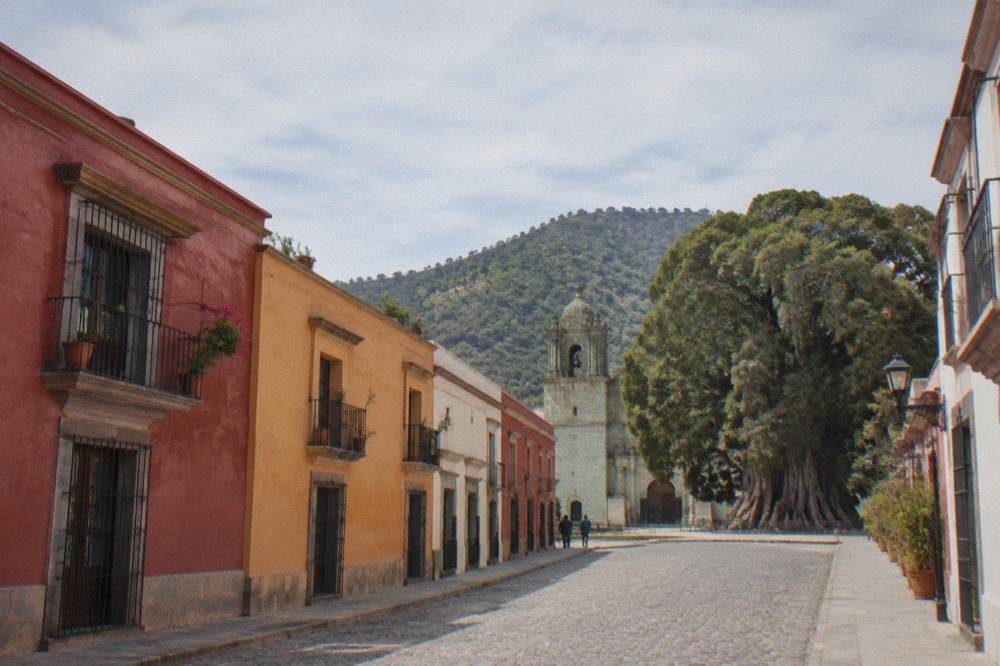
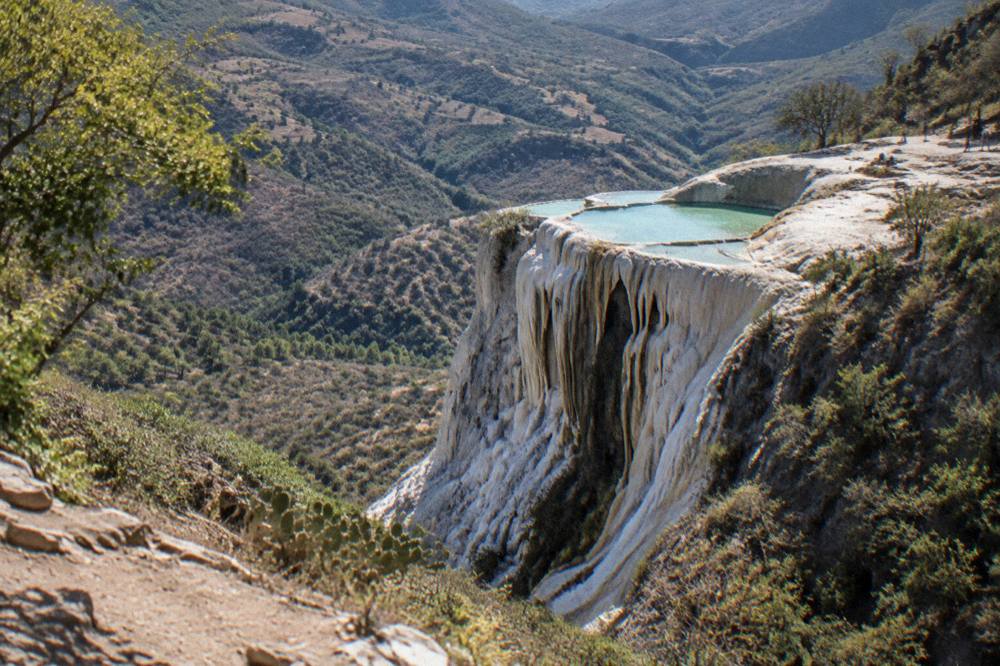
Hierve el Agua is the stop with the least official paper around it: it is run by local communities rather than INAH, and this page quotes no entry fee or hours for it. What the road data does give is the distance, about 67.1 km and about 57 minutes of free-flow driving from the Zócalo, on mountain roads that run slower in practice. The dedicated Hierve el Agua day trip page carries the fuller treatment, and the question of whether the detour earns its hours is answered at is Hierve el Agua worth it.
| Valley stop | About, from the Zócalo | Hours and fee per the official pages |
|---|---|---|
| Santa María del Tule | 10.2 km / 11 min | Tree site fee not published here |
| Teotitlán del Valle | 29.2 km / 26 min | Workshops generally Tue to Sun, many closed Mondays |
| Tlacolula | 31.2 km / 25 min | Sunday market day |
| Mitla | 44.6 km / 37 min | Daily 08:00 to 17:00, last access 16:30; 105 / 210 MXN |
| Yagul | 41.9 km / 38 min | Daily 08:00 to 17:00, last access 16:00; 105 / 210 MXN |
| Hierve el Agua | 67.1 km / 57 min | Fee and hours not published on official pages |
Two links deepen the day: the combined ruins-and-market plan at Mitla and Tlacolula day trip and the market itself at Tlacolula Sunday market. If day 3 of the trip is a Sunday, flipping the order to put Tlacolula first is the standard move.
Which Valley Tour Should You Book For Day 3 In Oaxaca?
For a three-day trip, the deciding factor is time at Hierve el Agua versus stops along the way: the full-day loops bundle the Tule tree, Mitla, a weaving stop and a mezcal distillery into one road day, while the hike-focused version spends the day on the trail at Hierve el Agua and adds the mezcal visit at the end. The site's featured pick for the fullest version is the Ultimate Hierve el Agua hike with mezcal, whose listing carries its price, rating and duration in the block below.
The trade-off is simple arithmetic. The valley's fixed assets, the tree, Mitla's 16:30 last access and the drive up to Hierve el Agua, do not compress. A bundled loop buys breadth: four or five stops in one ticket. The hike product buys depth at the single stop that has no INAH page, no published hours and a road that eats most of an hour each way. On a three-day trip, day 3 is the only day that can absorb either version whole.
The lighter alternatives are on the site's tour list pages: Hierve el Agua tour compares the valley products, and the half-day Hierve options trade the loop for an earlier return. Whichever shape wins, the booking detail lives on the operator's booking page, and the anchor text on this site is always Check availability.
How Much Does Oaxaca In 3 Days Cost In Entry Fees?
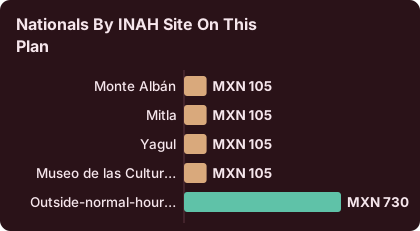
The fixed, published costs of this exact plan are 210 MXN per foreign visitor at Monte Albán and 210 MXN at Mitla, both INAH Category I sites, plus 105 MXN each for Mexican nationals, while the Museo de las Culturas adds another 105 or 210 MXN on a Tuesday-to-Saturday visit, and the Jardín Etnobotánico guided tours are free. Three paid stops at the foreign rate therefore multiply out to three separate 210 MXN tickets before any tour, meal or lodging enters the budget.
Hotel rates, taxi fares, colectivo fares and bus fares are not published on official primary pages, so none is quoted. What is published is the fee ladder itself, and it rewards planning: Category I and Category III sites price differently, Zaachila opens only Thursday to Sunday, and visits outside normal INAH hours cost 730 MXN, a figure the INAH pages list for Yagul, Lambityeco, Atzompa and the Museo de las Culturas.
| INAH site on this plan | Category | Nationals | Foreigners | Last access |
|---|---|---|---|---|
| Monte Albán | I | 105 MXN | 210 MXN | 16:00 |
| Mitla | I | 105 MXN | 210 MXN | 16:30 |
| Yagul | I | 105 MXN | 210 MXN | 16:00 |
| Museo de las Culturas de Oaxaca | Museum rate | 105 MXN | 210 MXN | 16:00, Tue to Sat |
| Outside-normal-hours visit | Listed rate | 730 MXN | 730 MXN | By arrangement |
One more published figure belongs in any budget conversation: the state lodging tax, the Impuesto al Hospedaje, runs at 3 percent on hotel-type stays, or 5 percent when booked through intermediaries, per the state fiscal law updated in December 2025.
What Weather Should You Plan For In Oaxaca In 3 Days?
The SMN station normals for Oaxaca show a dry season from November to April with January at just 2.4 mm of rain, and a rainy season from May to October with June at 188.3 mm, September at 163.6 mm and August at 131.8 mm, so a three-day visit in the green months should budget for afternoon rain without rewriting the plan. Daily highs run from about 28.9 C in January to 34.9 C in April, and nights fall to about 10.3 C in January.
The pattern matters for the itinerary's shape more than its content. Monte Albán and Hierve el Agua are exposed, walk-all-day sites, and the rainy-season normals put the heaviest totals in June through September. The dry months, November to April, carry almost none: November averages 9.1 mm and December 9.0 mm. None of this closes anything, since the INAH hours run daily year-round, but it argues for morning stops in the wet half of the year, which the closing times already enforce.
| Month | Mean high C | Mean low C | Rain mm |
|---|---|---|---|
| Jan | 28.9 | 10.3 | 2.4 |
| Feb | 31.1 | 11.6 | 4.6 |
| Mar | 33.3 | 13.6 | 17.6 |
| Apr | 34.9 | 15.8 | 47.3 |
| May | 33.8 | 16.7 | 97.9 |
| Jun | 30.9 | 16.7 | 188.3 |
| Jul | 30.1 | 15.9 | 118.6 |
| Aug | 30.0 | 15.9 | 131.8 |
| Sep | 29.1 | 16.1 | 163.6 |
| Oct | 29.3 | 14.5 | 63.1 |
| Nov | 29.0 | 12.3 | 9.1 |
| Dec | 28.9 | 11.0 | 9.0 |
The full monthly breakdown with sourcing is on Oaxaca weather by month, the season logic on best time to visit Oaxaca, and the rainy-season playbook on Oaxaca in the rain.
Do You Need A Car For 3 Days In Oaxaca?
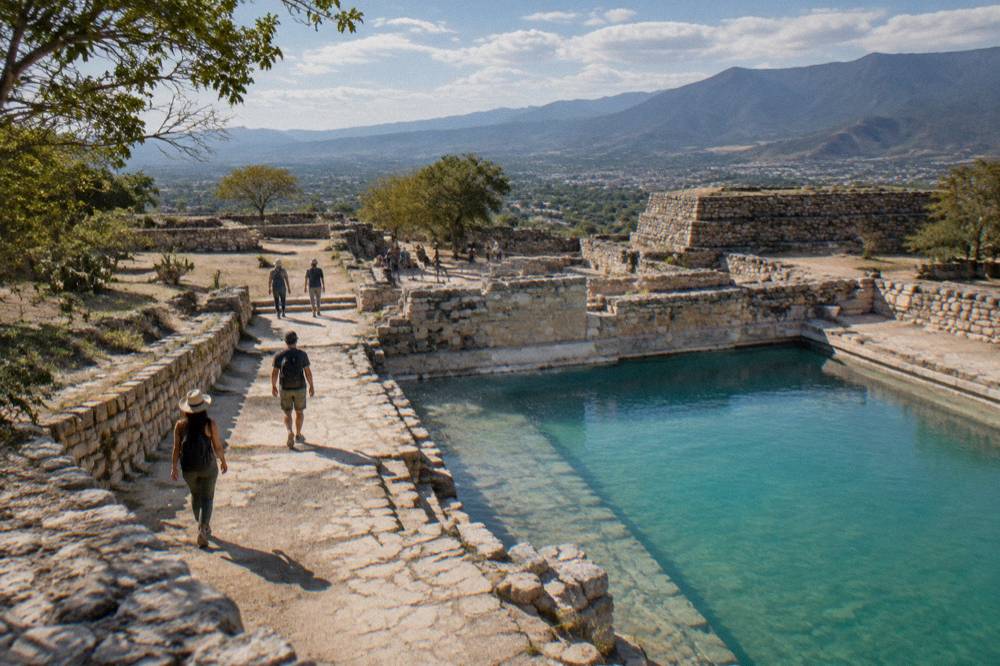
You do not need a car for day 1, which is entirely walkable, and the guided products cover days 2 and 3 with transport included; independent travellers can reach Monte Albán by taxi or tour in about 15 minutes of driving and the valley stops by colectivo, but a hire car is the only way to control the day-3 order and timings yourself. The drive-time figures below are free-flow estimates, not official numbers, and mountain roads run slower.
The three-day plan is deliberately shaped so that only one day has a logistics burden. Day 1 never leaves the centre grid. Day 2 is a single 8.7 km climb that tours, taxis and colectivos all serve. Day 3 is where the choice bites: the loop strings together five stops across about 67.1 km of road, and the closing times, Mitla's 16:30 last access above all, are the real constraint. A tour outsources that arithmetic; a car keeps it; colectivos work but fix the order and the pace.
| Route from the Zócalo | About (free-flow) | Used on |
|---|---|---|
| Monte Albán | 8.7 km / 15 min | Day 2 |
| Atzompa (via Monte Albán flank) | Same road as Monte Albán | Day 2 option |
| Santa María del Tule | 10.2 km / 11 min | Day 3 |
| Teotitlán del Valle | 29.2 km / 26 min | Day 3 |
| Mitla | 44.6 km / 37 min | Day 3 |
| Hierve el Agua | 67.1 km / 57 min | Day 3 |
The no-car version of the whole plan is laid out on getting around Oaxaca, with the colectivo specifics on the dedicated page linked above. The Sierra Norte and the coast are not day trips on this plan: Latuvi is about 142 minutes of driving and Puerto Escondido about 165 on the new highway, both covered as extensions on Oaxaca to Puerto Escondido and Sierra Norte and Pueblos Mancomunados.
What Should You Eat Across 3 Days In Oaxaca?
The three-day eating frame is one market morning, one market meal built on tlayudas and mole, and one cooking class that turns a market visit into the meal itself; the classes on the site's tour list pair a guided market walk with hands-on cooking, and the featured traditional class prints its price, rating and duration in the block below. The class slot fits day 1 or day 2 afternoon, whenever the museum is shut.
The city's food identity is why the cooking-class category is as large as it is. Mole, tlayudas, quesillo, chocolate and mezcal all have their own pages on this site, and a three-day trip can realistically hit the market version of each on day 1, the restaurant version on day 2 evening, and the cooked-by-your-own-hands version once. The classes solve the Sunday-and-Monday museum problem too, because they run when the INAH clock does not help.
The deep dives are on the food pages: Oaxacan mole, tlayudas in Oaxaca, street food in Oaxaca and the index of cooking classes. The mezcal side of the evening is covered under mezcal in Oaxaca and the distillery-route plan at mezcal route Santiago Matatlán, which can be folded into day 3's loop since Matatlán sits beyond Mitla.
What If Your 3 Days Fall On A Festival?
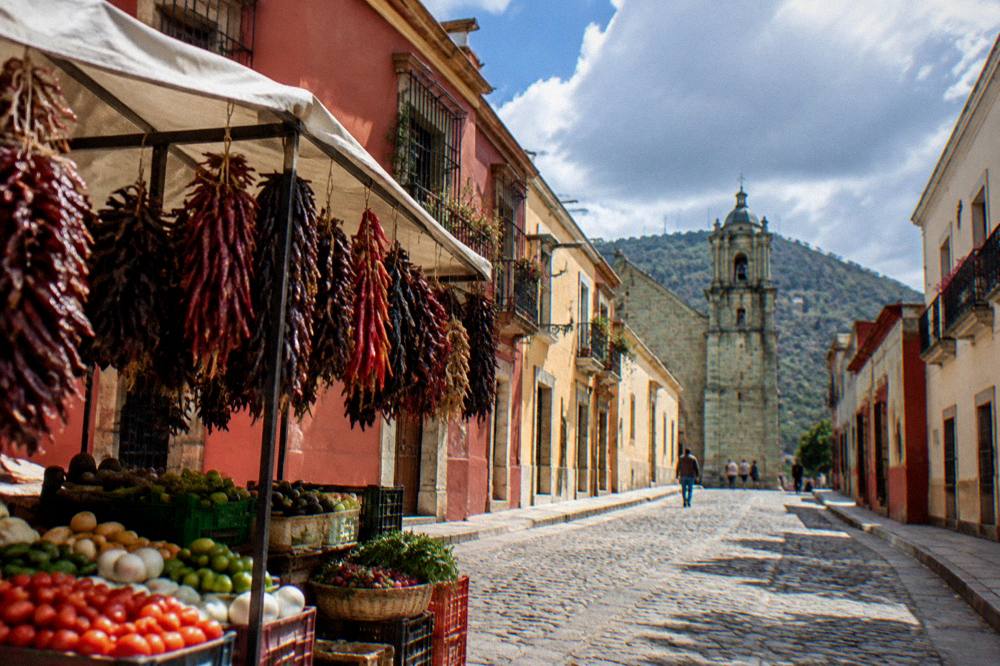
If the three days land on the late October and early November Día de Muertos window, the traditional core dates are 31 October to 2 November, with comparsas and cemetery nights across the city and Xoxocotlán; if they land in late July, the Guelaguetza's two Mondays on the Cerro del Fortín anchor the calendar, with the 2026 edition on 20 and 27 July and Palco A tickets at 1,632 MXN and Palco B at 1,321 MXN, with Palcos C and D free. Those 2026 figures are a past edition's reference prices, and later editions are not announced here.
Festival days do not break the three-day split, they overload it. The INAH hours do not change for a festival, so Monte Albán still closes its gate at 16:00 and Mitla at 16:30. What changes is the evening: the cemetery nights, the parades and the Zócalo installations own the hours after the sites close, which is exactly the slack this itinerary leaves. The Day of the Dead timing question has its own answer page at best time to see Day of the Dead in Oaxaca, the full festival treatment on Día de Muertos in Oaxaca and Guelaguetza, and the whole calendar on Oaxaca events and festivals.
Is 3 Days In Oaxaca Enough?
Three days is enough to see the historic centre, Monte Albán and one valley loop, the three pillars every longer itinerary is built from, but it leaves the Sierra Norte, the coast and the southern craft villages off the table; the 2025 figures show visitors averaged a 2.00-night stay in the city, so a three-day plan already runs longer than the typical visit. Hotel occupancy across 2025 averaged 51.73 percent, and 1,324,332 arrivals came through the city in the year.
The honest sizing answer is that three days covers the UNESCO core without slack for weather, blockades or a slow market morning. Road blockades by teachers' unions are a standing, sporadic risk on Oaxaca's roads and airport access, resolved within hours or days when they happen, so a tight plan benefits from a buffer day if the dates allow. Travellers weighing the trade-off should read how many days in Oaxaca is enough, and those extending should start from Oaxaca in 5 days or Oaxaca in a week.
Common Questions About Oaxaca In 3 Days
Can You Do Monte Albán And Hierve El Agua On The Same Day?
You can, but it is the whole day: Monte Albán is about 15 minutes from the Zócalo and Hierve el Agua about 57 minutes of free-flow driving, so most plans put Monte Albán on day 2 and Hierve el Agua on the valley day, day 3.
Is Oaxaca In 3 Days Enough?
Three days covers the historic centre, Monte Albán and one valley loop. City visitors averaged a 2.00-night stay in 2025, so three days is already above the typical length, but the Sierra Norte and the coast need extra days.
What Is The Best Day 3 Route From Oaxaca City?
Nearest to farthest: the Tule tree about 11 minutes out, Teotitlán del Valle about 26, Mitla about 37, then Hierve el Agua about 57 minutes, so Mitla's 16:30 last access arrives at the end rather than the middle.
How Much Are Entry Fees For Oaxaca In 3 Days?
Published INAH fees on this plan are 105 MXN for nationals and 210 MXN for foreign visitors at Monte Albán, the same at Mitla, and the same again at the Museo de las Culturas, open Tuesday to Saturday, so a foreign visitor doing all three pays the 210 MXN rate three times over.
Do You Need A Car For 3 Days In Oaxaca?
Not for day 1, which is walkable, and guided tours cover transport on days 2 and 3. A car only matters if you want to control the valley day's order and timing yourself.
When Does Monte Albán Close?
The INAH page lists Monte Albán daily 08:00 to 17:00 with last access at 16:00, and Atzompa, on the same flank, closes earlier at 16:00 with last access at 15:00.