Oaxaca In 4 Days: Two Valley Loops And A Cooking Class
Four days is enough for Oaxaca City itself plus two loops into the Valles Centrales: Monte Albán to the west and the Tlacolula valley to the east, with a market-based cooking class anchoring one morning.
Spend day 1 in the centro histórico, day 2 at Monte Albán and Cuilapan de Guerrero, day 3 on a cooking class plus Santa María del Tule and Mitla, and day 4 on Jalatlaco, street art and a flexible afternoon. Two valley loops plus the city core is the shape of the trip.
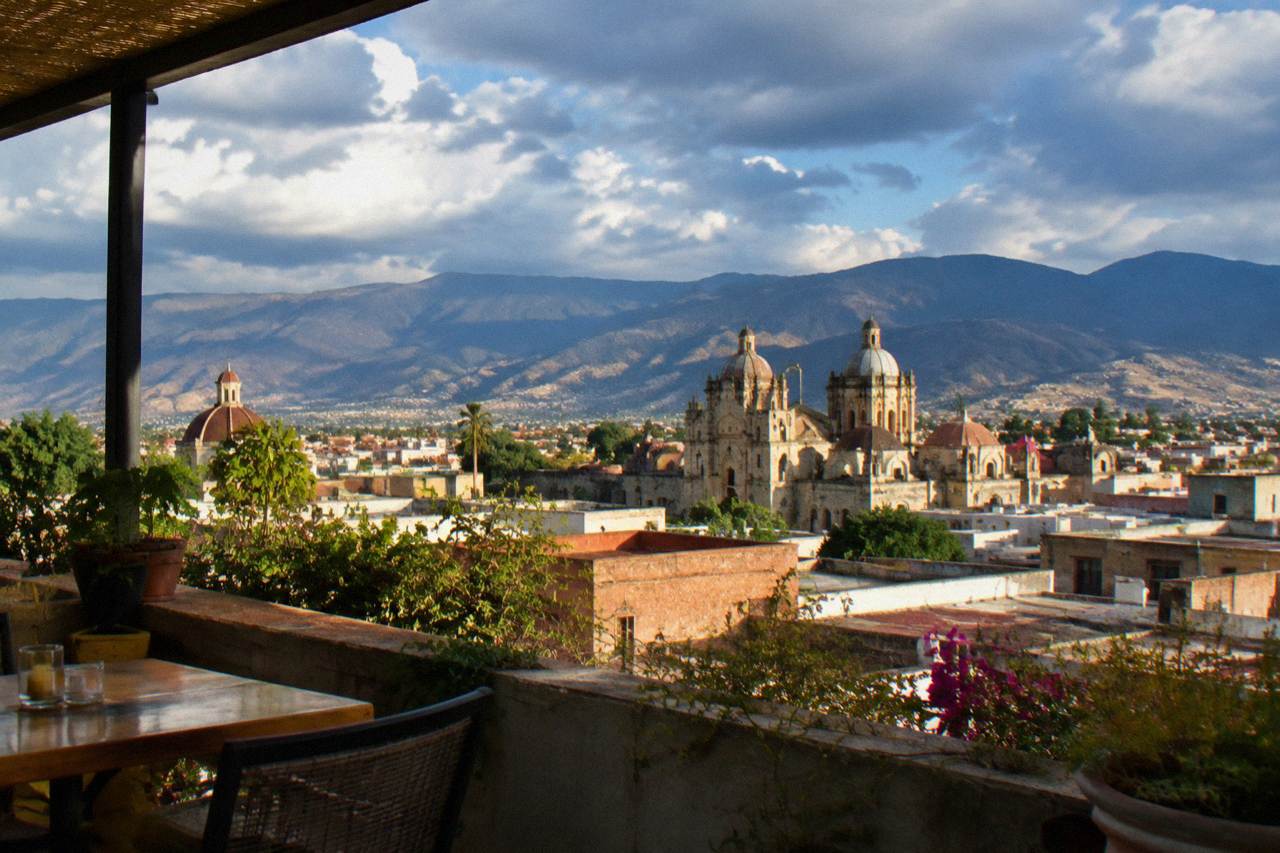
Four days in Oaxaca City (Oaxaca de Juárez), the inland capital of the state of Oaxaca in Mexico, splits cleanly into two halves: the city itself and the valleys around it. At about 1,550 m in the Valles Centrales, with Monte Albán about 15 minutes west by road and Mitla about 37 minutes east, the geometry favours one day of centro histórico, one western loop, one eastern loop with a cooking class, and one loose day for neighbourhoods and street art. The UN Educational, Scientific and Cultural Organization inscribes the whole ensemble as "Historic Centre of Oaxaca and Archaeological Site of Monte Albán", property 415, which is the shape this itinerary follows. For a shorter or longer version, see how many days Oaxaca needs or the three-day Oaxaca itinerary.
Is 4 Days In Oaxaca Enough, Or Too Much?
Four days is a strong fit for Oaxaca City: long enough for the centro histórico, Monte Albán, a cooking class and one eastern valley loop without rushing, and short enough that nothing depends on the coast, which sits about 165 road minutes away at Puerto Escondido and is an extension, not a day trip. The city logged 1,324,332 tourist arrivals across 2025 with an average stay of 2.00 nights, so a four-night plan already doubles the typical visit.
The average stay figure comes from the state tourism indicators for 2025, which also put hotel occupancy at 51.73 percent for the year. Four days lets you book two fixed-date items, the ruins and a cooking class, and still keep two afternoons unbooked. That balance matters in the rainy season, May to October, when June averages 188.3 mm of rain and afternoons can be wet. If your dates stretch, the five-day Oaxaca itinerary adds the Friday or Sunday market circuit; if they shrink, the two-day plan keeps Monte Albán and the centro only.
| Day | Base | Anchor | Distance from Zócalo |
|---|---|---|---|
| 1 | Centro histórico | Santo Domingo, Zócalo, Andador Macedonio Alcalá | On foot |
| 2 | Western valley | Monte Albán, Cuilapan de Guerrero | Monte Albán about 8.7 km, 15 minutes |
| 3 | Eastern valley | Cooking class, Santa María del Tule, Mitla | Mitla about 44.6 km, 37 minutes |
| 4 | City neighbourhoods | Jalatlaco, Xochimilco, street art | On foot |
What Should Day 1 In Oaxaca City Look Like?
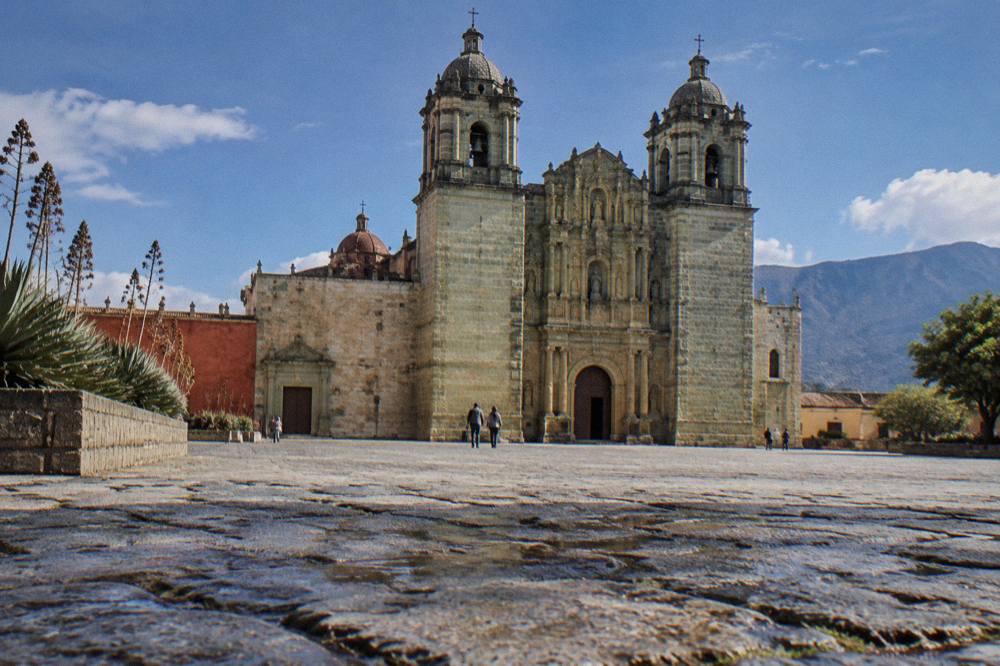
Day 1 stays on foot inside the centro histórico: the Santo Domingo de Guzmán church complex and its Museo de las Culturas de Oaxaca, the Jardín Etnobotánico next door, the Andador Macedonio Alcalá down to the Zócalo, and an evening meal near the Mercado 20 de Noviembre. Everything in this list sits within a walkable core, and the two museums have fixed, different schedules you plan around rather than chase.
Start at Santo Domingo. The Museo de las Culturas de Oaxaca is open Tuesday to Saturday only, 10:00 to 16:00, and charges the Category I INAH rate of 105 MXN for Mexican nationals and 210 MXN for foreign visitors. On Monday, when it is closed, the church itself and the street remain the draw. The Jardín Etnobotánico runs free guided tours Monday to Friday at 10:30, 11:00, 11:30, 12:00 and 17:00, and Saturday from 10:30 to 12:00; large and school groups book two weeks ahead. Walk the Andador Macedonio Alcalá south to the Zócalo, the Plaza de la Constitución, and loop through the Basílica de la Soledad if the afternoon holds. For depth on each stop, the centro histórico guide covers the full walking circuit. In the evening, the Oaxaca at night page lists what stays open late.
How Do You Structure Day 2 Around Monte Albán?
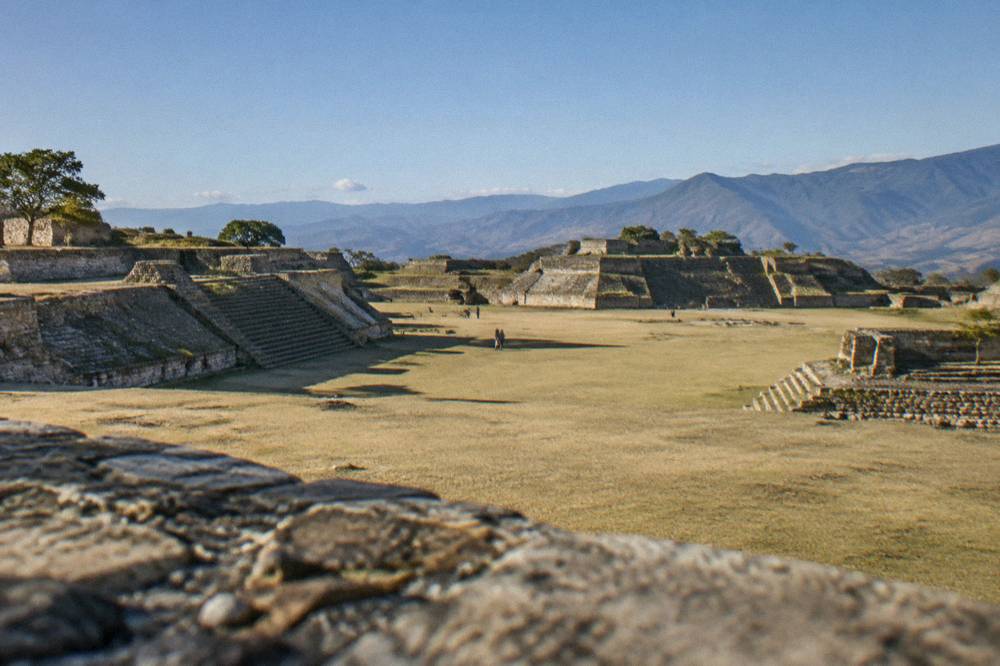
Day 2 is the western loop: Monte Albán in the morning while the light is low, then Cuilapan de Guerrero on the way back, with the afternoon free for the Museo Textil or MACO in the city. Monte Albán opens daily 08:00 to 17:00 with last access at 16:00, and entry is 105 MXN for nationals and 210 MXN for foreigners, per the INAH site page. The road from the Zócalo is about 8.7 km, roughly 15 minutes free-flow.
A guided half-day at the ruins is the fixed anchor of this day; independent travellers reach the site by taxi or tour, and the Monte Albán guide details the zone itself. Two INAH rules shape the schedule: last access at 16:00, so a morning start beats the strongest sun at about 1,550 m, and the same Category I ticket price applies at Mitla and Yagul, which matters if you also do day 3 independently. Keep the afternoon unhurried; four days only works if two afternoons stay loose.
| INAH site | Hours | Last access | Nationals MXN | Foreigners MXN |
|---|---|---|---|---|
| Monte Albán | Mon to Sun 08:00 to 17:00 | 16:00 | 105 | 210 |
| Mitla | Mon to Sun 08:00 to 17:00 | 16:30 | 105 | 210 |
| Yagul | Mon to Sun 08:00 to 17:00 | 16:00 | 105 | 210 |
| Atzompa | Mon to Sun 08:00 to 16:00 | 15:00 | Not on the page | Not on the page |
| Zaachila | Thu to Sun 10:00 to 16:00 | n/a | 80 | 145 |
| Dainzú | Mon to Sun 08:00 to 17:00 | 16:30 | 80 | 145 |
| Lambityeco | Mon to Sun 08:00 to 17:00 | 16:30 | 80 | 145 |
| Museo de las Culturas de Oaxaca | Tue to Sat 10:00 to 16:00 | n/a | 105 | 210 |
Why Put The Cooking Class On Day 3?
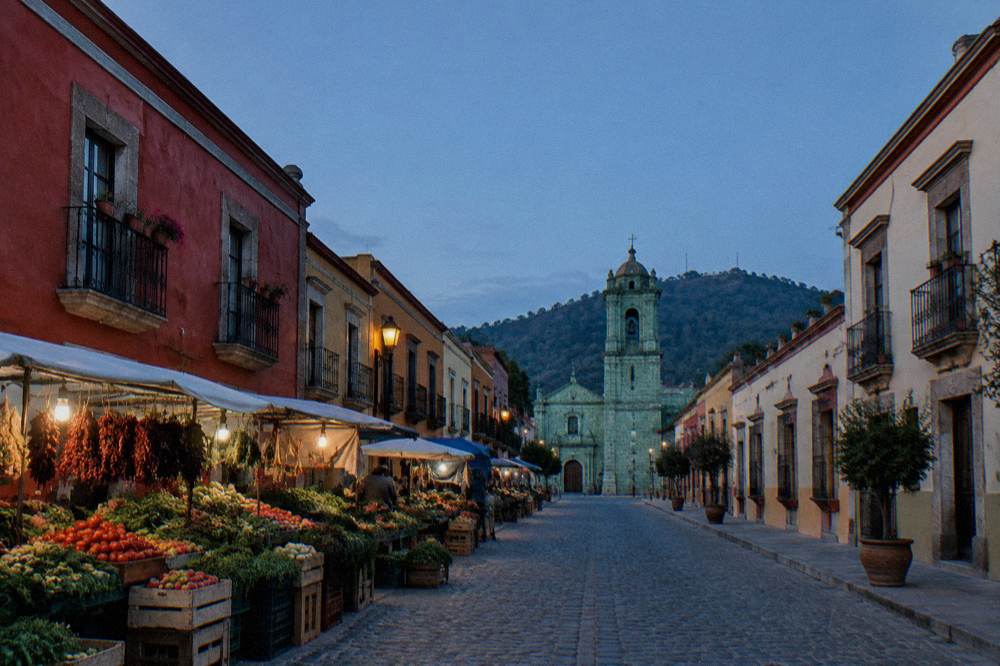
Day 3 pairs a market-based cooking class in the morning with the eastern valley in the afternoon, because the class starts from a city market and finishes by midday, leaving just enough daylight for Santa María del Tule and Mitla, about 11 and 37 minutes from the Zócalo by road respectively. The vegetarian class with market visit is the anchor pick; it turns one market morning into both a lesson and a lunch, and its free cancellation up to 24 hours before keeps the day plannable.
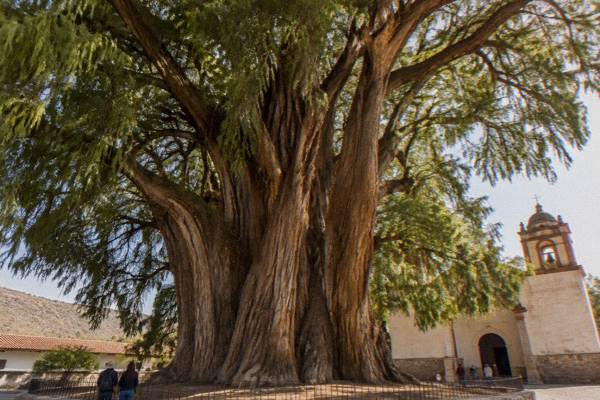
The logic is sequential: the class teaches the dishes, then the valley shows you the ingredients in the wild, from the Tule tree beside its church to the Mitla zone at the far end of the Tlacolula valley. The Oaxaca cooking classes guide compares the options, including the traditional mole class, and the Mitla and Tlacolula day trip page covers the eastern loop in full. If your day 3 falls on a Sunday, the Tlacolula Sunday market adds a market stop in its own right. The class below holds the featured slot on this itinerary; Check availability for your date before locking the rest of the day.
What Does The Eastern Valley Loop Cover On Day 3 Afternoon?
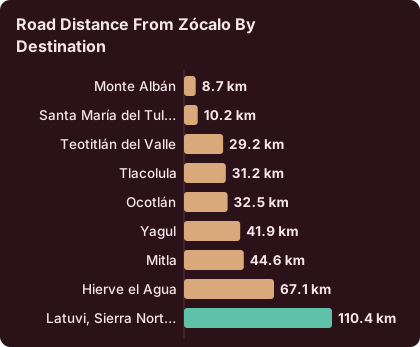
The eastern loop runs Zócalo to Santa María del Tule, about 10.2 km and 11 minutes, then Teotitlán del Valle at about 29.2 km and 26 minutes, then Mitla at about 44.6 km and 37 minutes, returning the same road.
Hierve el Agua pushes the loop to about 67.1 km and 57 minutes each way and is realistic only if you skip the weaving village or leave the cooking class early; all figures are free-flow estimates, and mountain roads run slower in traffic.
Three of these stops are INAH or craft destinations with fixed facts. Mitla is Category I, 105/210 MXN, last access 16:30, so it is the natural final stop before the drive back. Teotitlán del Valle is the weaving village; its workshops generally run Tuesday to Sunday and many close Monday, and mornings are recommended for natural-light demonstrations. Getting between them without a car is covered in the colectivos and mototaxis guide. If Hierve el Agua is the priority over the cooking class, swap it onto day 3 and move the class to day 4; the Hierve el Agua day trip page maps that variant. The full index of guides sits on Oaxaca Travel Guide.
| Destination | Road distance from Zócalo | Free-flow time | Straight line |
|---|---|---|---|
| Monte Albán | 8.7 km | about 15 minutes | n/a |
| Santa María del Tule | 10.2 km | about 11 minutes | n/a |
| Teotitlán del Valle | 29.2 km | about 26 minutes | n/a |
| Tlacolula | 31.2 km | about 25 minutes | n/a |
| Ocotlán | 32.5 km | about 37 minutes | n/a |
| Yagul | 41.9 km | about 38 minutes | about 42 km to Mitla region |
| Mitla | 44.6 km | about 37 minutes | about 42 km |
| Hierve el Agua | 67.1 km | about 57 minutes | about 52 km |
| Latuvi, Sierra Norte | 110.4 km | about 142 minutes | n/a |
What Should Day 4 In Oaxaca City Be?
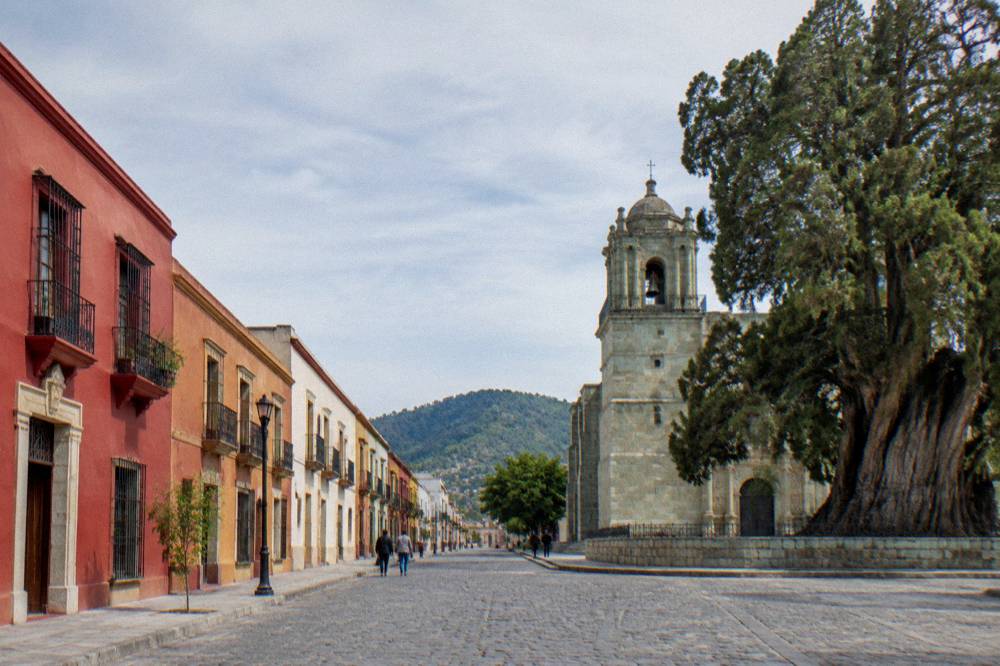
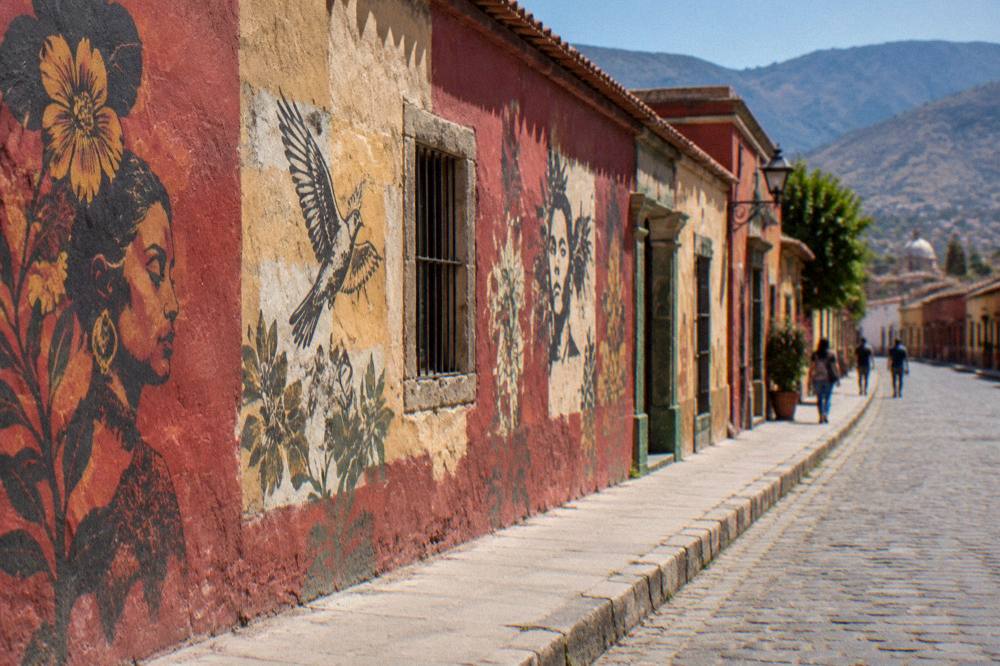
Day 4 is the neighbourhood day: Jalatlaco and Xochimilco in the morning, a street art ride or walk before lunch, and a final afternoon at anything day 1 missed, with the Basílica de la Soledad and the Paseo Juárez el Llano as easy fill-ins. It is deliberately the lightest day, because four days in Oaxaca lands better when the last one has no fixed start time and can absorb a rained-out afternoon from earlier in the trip.
Jalatlaco and Xochimilco sit within walking distance of the centro and both have their own site pages. The street art bike ride is the featured way to cover the murals between neighbourhoods; Oaxaca has no bike-share scheme, so this is a guided ride with its own bikes, and the tour list listing carries the price, rating and duration. A walking alternative is the free things to do in Oaxaca circuit. If the trip falls in July, check the Guelaguetza standing pattern, two Mondays (Lunes del Cerro) at the Auditorio Guelaguetza on the Cerro del Fortín, because the 2026 edition priced Palco A at 1,632 MXN and Palco B at 1,321 MXN with Palcos C and D free, and a festival Monday will consume a whole day. Rainy season planning is on the Oaxaca in the rain page.
What Will 4 Days In Oaxaca Cost In Tickets And Timing?
Budget the fixed INAH costs in pesos: Monte Albán and Mitla at 210 MXN each for foreign visitors (105 MXN for nationals), the Museo de las Culturas at the same Category I rate, and the smaller Category III zones at 145 MXN for foreigners if you add them. Everything else, hotels, meals and transport, has no price band and is planned from live listings, not typed here.
Weather shapes what you get for the money: the SMN station normals for Oaxaca show dry season from November to April, with January at 2.4 mm of rain, and rainy season May to October, with June at 188.3 mm, July 118.6 mm, August 131.8 mm and September 163.6 mm. April's normal daily high is 34.9 C and January's normal nightly low is 10.3 C, which argues for the two-loops-plus-free-afternoon structure on any date. The Oaxaca travel costs and budget page handles the money side in full.
| Month | Mean daily high C | Mean nightly low C | Rain mm | Days with rain |
|---|---|---|---|---|
| Jan | 28.9 | 10.3 | 2.4 | 1.4 |
| Feb | 31.1 | 11.6 | 4.6 | 1.1 |
| Mar | 33.3 | 13.6 | 17.6 | 4.1 |
| Apr | 34.9 | 15.8 | 47.3 | 7.6 |
| May | 33.8 | 16.7 | 97.9 | 13.7 |
| Jun | 30.9 | 16.7 | 188.3 | 19.9 |
| Jul | 30.1 | 15.9 | 118.6 | 20.4 |
| Aug | 30.0 | 15.9 | 131.8 | 20.5 |
| Sep | 29.1 | 16.1 | 163.6 | 21.4 |
| Oct | 29.3 | 14.5 | 63.1 | 12.0 |
| Nov | 29.0 | 12.3 | 9.1 | 3.5 |
| Dec | 28.9 | 11.0 | 9.0 | 2.4 |
| Fixed cost or fact | Figure | Source basis |
|---|---|---|
| Monte Albán, foreign visitor | 210 MXN | INAH page, Category I |
| Monte Albán, Mexican national | 105 MXN | INAH page, Category I |
| Mitla, foreign visitor | 210 MXN | INAH page, Category I |
| Museo de las Culturas, foreign visitor | 210 MXN | INAH page, Category I |
| Zaachila, foreign visitor | 145 MXN | INAH page, Category III |
| Jardín Etnobotánico guided tour | Free, scheduled slots | State government release |
| Visits outside normal INAH hours | 730 MXN | Listed on Yagul, Lambityeco, Atzompa and Museo pages |
| State lodging tax | 3 percent of the stay | State tax law, decree 884 |
What Could You Swap In And Out Of This 4-Day Oaxaca Plan?
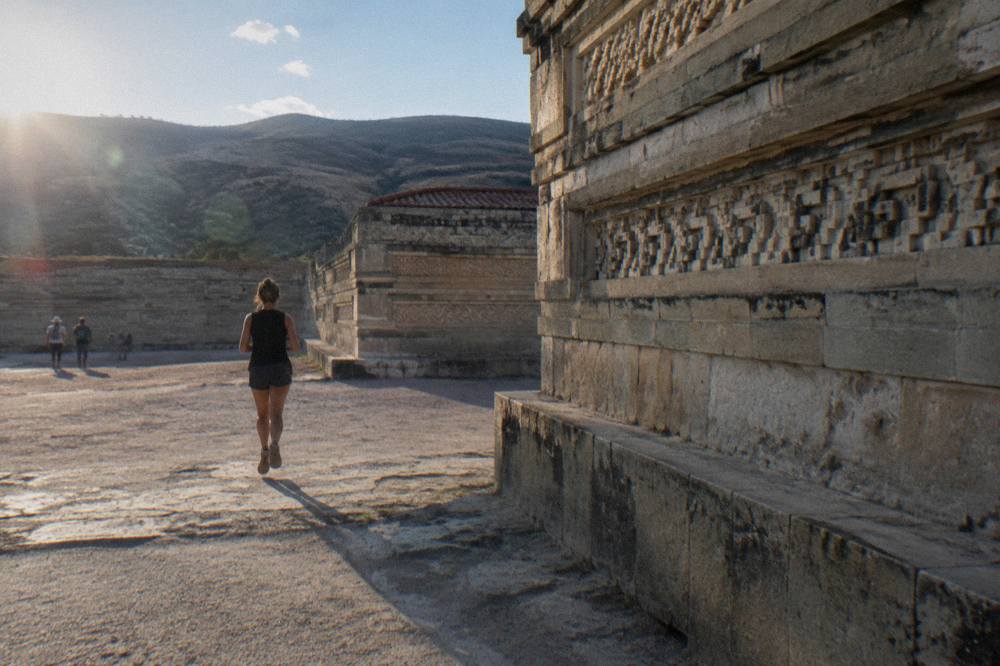
The three clean swaps are: trade day 2's Cuilapan stop for Atzompa, remembering Atzompa closes at 16:00 with last access at 15:00; trade day 4's street art ride for a Sierra Norte hike, with Latuvi about 142 minutes away by road; or fold Hierve el Agua into day 3 by dropping the cooking class, which about 57 minutes of driving each way makes tight but possible. Each swap keeps the two-loop-plus-city structure intact.
Atzompa is the closest swap: it sits above Monte Albán's side of the valley and its hours differ, 08:00 to 16:00 with last access 15:00, one hour earlier than Monte Albán's own. Zaachila only opens Thursday to Sunday, 10:00 to 16:00, so it fits a day 4 that falls on those days and not otherwise. The Sierra Norte swap is the biggest change of scale; the Sierra Norte and Pueblos Mancomunados guide covers it, and it consumes a full day the way a valley loop does not. Families should cross-check the Oaxaca with kids page, which reorders these same four days around children. Whatever the swap, keep one booked morning per day at most: the 2025 arrivals data shows the average visitor stays 2.00 nights, and the whole point of the fourth day is slack.
Common Questions About Four Days In Oaxaca
Is 4 Days In Oaxaca Enough?
Yes. Four days covers the centro histórico, Monte Albán, a cooking class and one valley loop, against an average visitor stay of 2.00 nights recorded for 2025. The coast is not part of it; Puerto Escondido is about 165 road minutes away on the new highway.
Do You Need A Car For 4 Days In Oaxaca?
No. Day 1 and day 4 are on foot in the city, and days 2 and 3 work by tour, taxi or colectivo. The drive-time table above gives free-flow estimates for every stop if you do drive.
Can You Visit Monte Albán And Mitla On The Same Day?
It is possible but crowded: Monte Albán is about 15 minutes west of the Zócalo and Mitla about 37 minutes east, in opposite directions. This itinerary separates them across days 2 and 3 for that reason.
What Is Closed On Mondays In Oaxaca?
The Museo de las Culturas de Oaxaca is open Tuesday to Saturday only. The INAH archaeological zones, including Monte Albán and Mitla, open Monday to Sunday, and Jardín Etnobotánico tours run Monday to Friday and Saturday morning.
When Is The Best Time Of Year For This Itinerary?
The SMN normals show dry season November to April, with January at 2.4 mm of rain, and rainy season May to October, peaking June at 188.3 mm. The itinerary's loose afternoons are built to absorb rainy-season weather whenever you go.
Four days, two valley loops and a cooking class is the version of Oaxaca City that fits the map: the west for the ruins, the east for the valley towns, and the city itself holding both ends together.