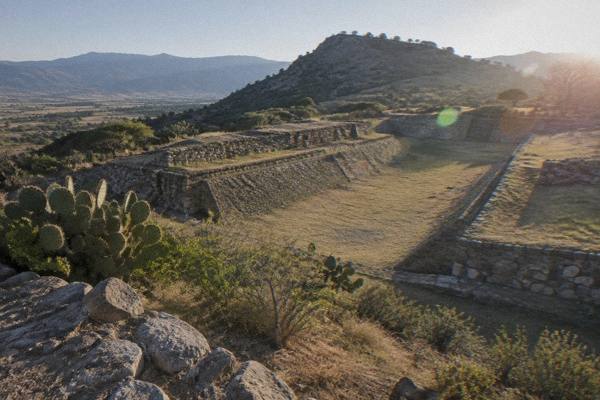
Monte Albán: The Zapotec Capital On A Leveled Mountaintop
Monte Albán is the great archaeological zone of the Valles Centrales, about 15 minutes by road from the centre of Oaxaca City. Here is what the INAH pages list: hours, fees in pesos, how to get there, and how to plan a visit around the climate table.
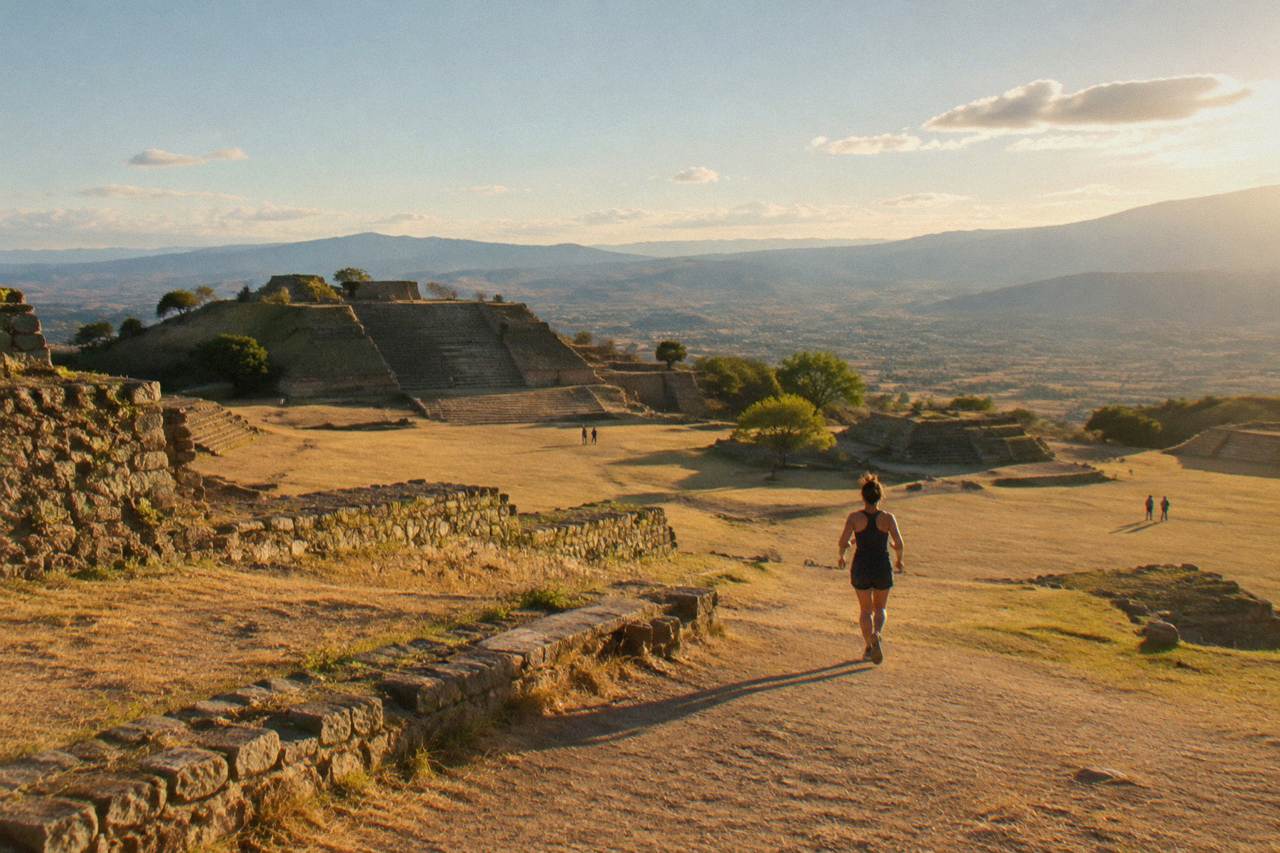
Monte Albán is open daily 08:00 to 17:00 with last access at 16:00. Entry is 105 MXN for Mexican nationals and 210 MXN for foreign visitors, Category I per the INAH site page. The zone sits about 15 minutes by road above Oaxaca City.
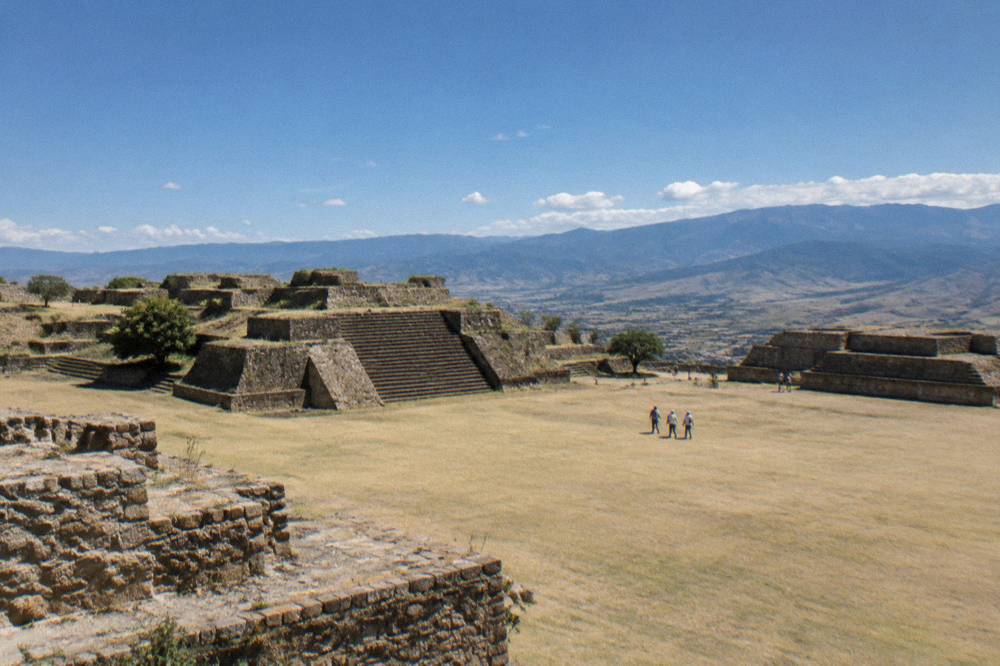
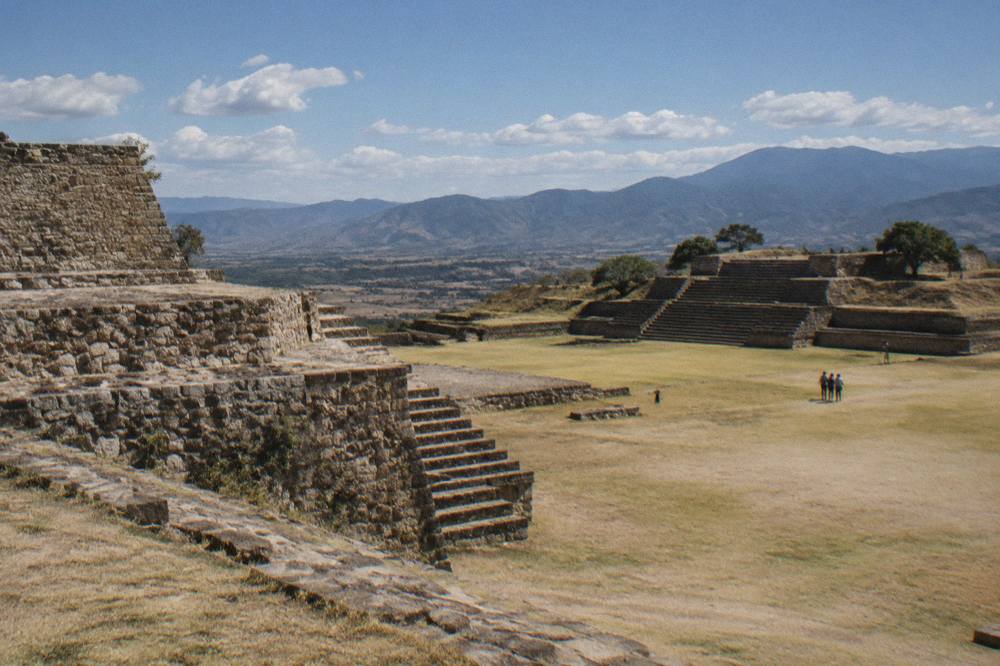
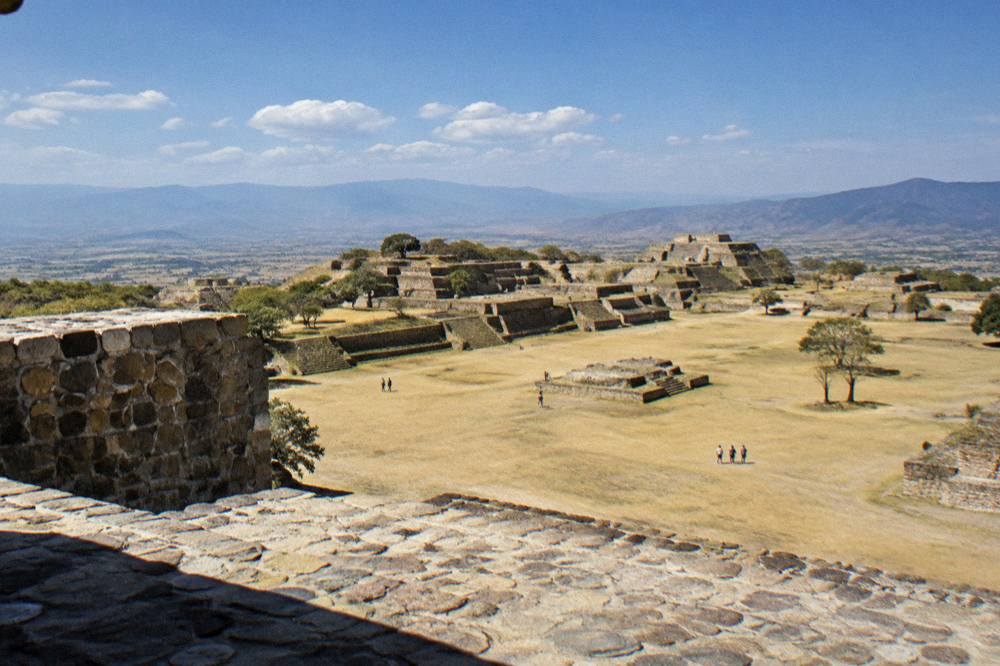
Monte Albán rises on a leveled mountaintop above Oaxaca City, the inland highland capital of the state of Oaxaca at about 1,550 m in the Valles Centrales. Together with the historic centre below, it forms one UNESCO World Heritage property, "Historic Centre of Oaxaca and Archaeological Site of Monte Albán", property 415 on the World Heritage list. The city at its foot, Oaxaca de Juárez, was founded in 1529 as Antequera and today counts 270,955 inhabitants in the municipality per the Censo 2020. This page gathers what the primary sources say about the zone itself: the hours and fees the INAH site page lists, the derived drive times, the 2025 visitor counts from the state tourism indicators, and how a visit fits with the rest of the valley.
The zone matters to any Oaxaca itinerary for a simple, measurable reason: the Sectur indicators for 2025 record 416,675 visitors to Monte Albán, of whom 342,962 were national and 73,713 foreign. That is more than Mitla, Yagul, Lambityeco and Zaachila combined for the same year, and it is the single most visited INAH zone in the Valles Centrales. Planning around the hours, the sun and the drive is therefore not cosmetic advice, it is the difference between a calm morning and a rushed afternoon.
What Is Monte Albán And Where Exactly Is It?
Monte Albán is an INAH archaeological zone on a leveled mountaintop about 15 minutes by road from the centre of Oaxaca City, the state capital of Oaxaca in the Valles Centrales of Mexico. It shares its UNESCO inscription, property 415, with the Historic Centre of Oaxaca. The zone is administered by INAH and is the most visited archaeological site in the region, with 416,675 visitors recorded in 2025.
The zone sits above the city rather than inside it. The derived free-flow drive from the Zócalo, Oaxaca City's main square, is about 8.7 km and about 15 minutes, computed on OSM roads; real traffic and the climb make it slower, so treat the figure as a floor. The access road, the Camino Antiguo via San Pedro Ixtlahuaca, was repaved and delivered in November 2024 per the state government, and no road works or closures were announced for it in 2026.
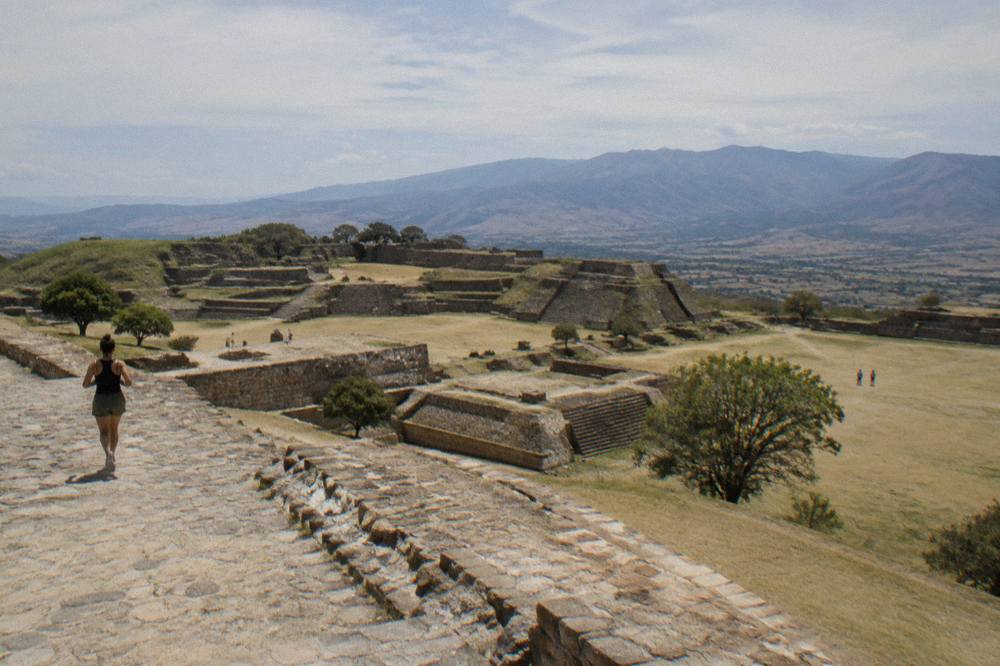
Oaxaca City itself is an inland highland city: no sea, no port, no beach. The Pacific coast at Puerto Escondido is about 165 minutes away by the new highway, a far extension and never a local hop. Everything on this page is valley-scale. For the broader picture of the city's sights, from the Zócalo to Santo Domingo de Guzmán, the site's overview of things to do in Oaxaca collects them in one place, and the history of Oaxaca guide carries the city's longer story.
How Much Does Monte Albán Entry Cost And What Are The Opening Hours?
Monte Albán is open Monday to Sunday from 08:00 to 17:00, with last access at 16:00, per the INAH site page. Entry is Category I: 105 MXN for Mexican nationals and 210 MXN for foreign visitors. Visits outside normal INAH hours are priced at 730 MXN.
The Category I rate is shared by the two other great valley zones, Mitla and Yagul, while the smaller Category III sites charge less. The fee is charged in pesos at the zone; do not expect to pay in any other currency. The INAH page lists no camera fee, no drone fee and no parking fee, so this page prints none of those either.
| Item | Figure | Source basis |
|---|---|---|
| Opening hours | Monday to Sunday, 08:00 to 17:00 | INAH site page |
| Last access | 16:00 | INAH site page |
| Entry, Mexican nationals | 105 MXN | INAH, Category I |
| Entry, foreign visitors | 210 MXN | INAH, Category I |
| Visit outside normal hours | 730 MXN | INAH listing |
| Distance from the Zócalo | about 8.7 km, about 15 minutes | Derived, free-flow |
Arriving before the last-access time matters more than the closing time: 16:00 is the gate, not 17:00. A morning arrival also fits the climate table, which this page gives further down. For the fee question as readers search it, the site's answer page on how much is the entrance to Monte Albán covers the ticket in detail.
How Do You Get To Monte Albán From Oaxaca City?
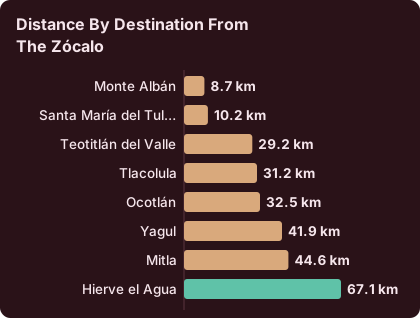
The derived drive from the Zócalo in central Oaxaca City is about 15 minutes over about 8.7 km, on the access road toward San Pedro Ixtlahuaca. The road was repaved and delivered in November 2024. Real traffic and the mountain climb make the trip slower than the free-flow figure, so allow more time.
Independent travel and guided travel both work here. The guided option bundles transport from the city with a professional guide at the zone; the Monte Albán tour page compares the bookable options, and the featured guided half day can be checked at the operator's booking page: Check availability. This guide does not print transport fares for colectivos or taxis, because no official primary source carries them; the derived drive times below are the figures this site stands behind.
| Destination from the Zócalo | Distance | Derived drive time |
|---|---|---|
| Monte Albán | 8.7 km | about 15 minutes |
| Santa María del Tule | 10.2 km | about 11 minutes |
| Teotitlán del Valle | 29.2 km | about 26 minutes |
| Tlacolula | 31.2 km | about 25 minutes |
| Ocotlán | 32.5 km | about 37 minutes |
| Yagul | 41.9 km | about 38 minutes |
| Mitla | 44.6 km | about 37 minutes |
| Hierve el Agua | 67.1 km | about 57 minutes |
The table makes the geography plain: Monte Albán is the closest major sight to the city by a wide margin, which is why it anchors so many first-day plans such as the site's two days in Oaxaca itinerary. Every other figure above is a valley day trip measured from the same square.
When Is The Best Time Of Day To Visit Monte Albán?
Morning is the practical window: the zone opens at 08:00 and last access is 16:00, and the SMN station normals show April averaging a 34.9 C daily high while June through September each average more than 118 mm of rain. Arriving at opening keeps the visit inside the cooler hours and clear part of the day.
The climate figures come from SMN station 20079 in the city, normals for 1991 to 2020. The dry season runs November to April, with every month from November to March under 20 mm of rain. The rainy season runs May to October, with the peak from June to September; June averages 188.3 mm and September 163.6 mm. Cool nights cluster in December and January, with mean minimums of 11.0 C and 10.3 C. The wider set of guides lives on Oaxaca Travel Guide.
| Month | Mean daily high C | Mean nightly low C | Average rain mm |
|---|---|---|---|
| Jan | 28.9 | 10.3 | 2.4 |
| Feb | 31.1 | 11.6 | 4.6 |
| Mar | 33.3 | 13.6 | 17.6 |
| Apr | 34.9 | 15.8 | 47.3 |
| May | 33.8 | 16.7 | 97.9 |
| Jun | 30.9 | 16.7 | 188.3 |
| Jul | 30.1 | 15.9 | 118.6 |
| Aug | 30.0 | 15.9 | 131.8 |
| Sep | 29.1 | 16.1 | 163.6 |
| Oct | 29.3 | 14.5 | 63.1 |
| Nov | 29.0 | 12.3 | 9.1 |
| Dec | 28.9 | 11.0 | 9.0 |
The mountaintop setting means sun exposure, and the city sits at about 1,550 m. The zone is highland Mexico: there is no winter snow anywhere in the Valles Centrales, and the sun at altitude is the main comfort variable a visitor controls through timing. The site's page on Oaxaca altitude and sun gathers the seasonal planning detail, and this guide's answer to is Monte Albán worth it weighs the visit itself.
How Does Monte Albán Compare With Mitla, Yagul And The Other Valley Sites?
Monte Albán, Mitla and Yagul all charge Category I entry, 105 MXN for nationals and 210 MXN for foreign visitors, while Dainzú, Lambityeco and Zaachila charge Category III at 80 and 145 MXN. Monte Albán recorded 416,675 visitors in 2025 against Mitla's 104,428, Yagul's 10,185, Lambityeco's 5,545 and Zaachila's 4,229 the same year.
The seven zones below are the INAH set of the Valles Centrales, and the differences that matter to a planner are hours, last access and the two-day quirk at Zaachila, which opens Thursday to Sunday 10:00 to 16:00 only. Zaachila pairs naturally with its Thursday market day, covered on the site's Zaachila and Thursday market page.
| INAH zone | Days open | Hours | Last access | Fee nationals / foreigners |
|---|---|---|---|---|
| Monte Albán | daily | 08:00 to 17:00 | 16:00 | 105 / 210 MXN |
| Mitla | daily | 08:00 to 17:00 | 16:30 | 105 / 210 MXN |
| Yagul | daily | 08:00 to 17:00 | 16:00 | 105 / 210 MXN |
| Dainzú | daily | 08:00 to 17:00 | 16:30 | 80 / 145 MXN |
| Lambityeco | daily | 08:00 to 17:00 | 16:30 | 80 / 145 MXN |
| Zaachila | Thu to Sun only | 10:00 to 16:00 | not listed on page | 80 / 145 MXN |
| Atzompa | daily | 08:00 to 16:00 | 15:00 | not listed on page |
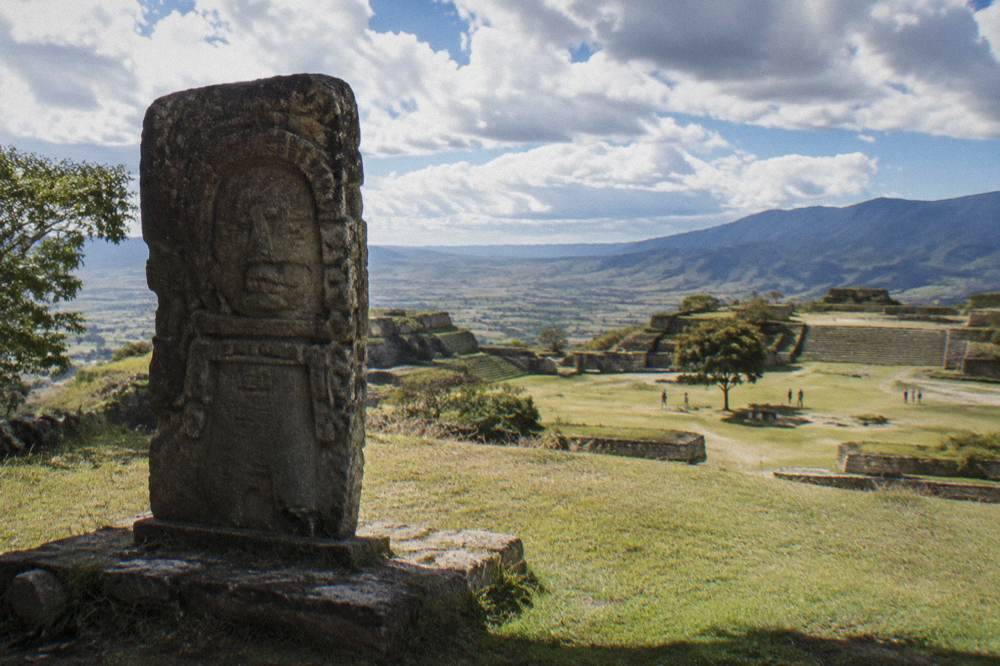
Mitla and Yagul sit down the Tlacolula arm of the valley, about 37 and 38 minutes out respectively, and they combine with Hierve el Agua and the Tule tree on the same day loop. This guide's pages on Mitla and on Yagul and Dainzú carry each zone's own detail. Monte Albán, by contrast, is the close-in site on the city's western flank, which is why it can be a half-day and the others realistically cannot.
Should You Visit Monte Albán On A Guided Tour Or On Your Own?
A guided tour is the practical choice for a first visit: the featured guided half day includes transport from Oaxaca City and a professional local guide, and the INAH fee structure is the same either way. Independent visitors trade that convenience for control of timing, arriving at 08:00 with the fee in pesos in hand.
The tour list carries several Monte Albán products beyond the featured pick. Some bundle the zone with craft villages, others with Cuilapan de Guerrero; what they share is city pickup and the zone itself.
A second pattern pairs the ruins with the city on consecutive mornings.
What Should You Combine With Monte Albán In One Or Two Days?
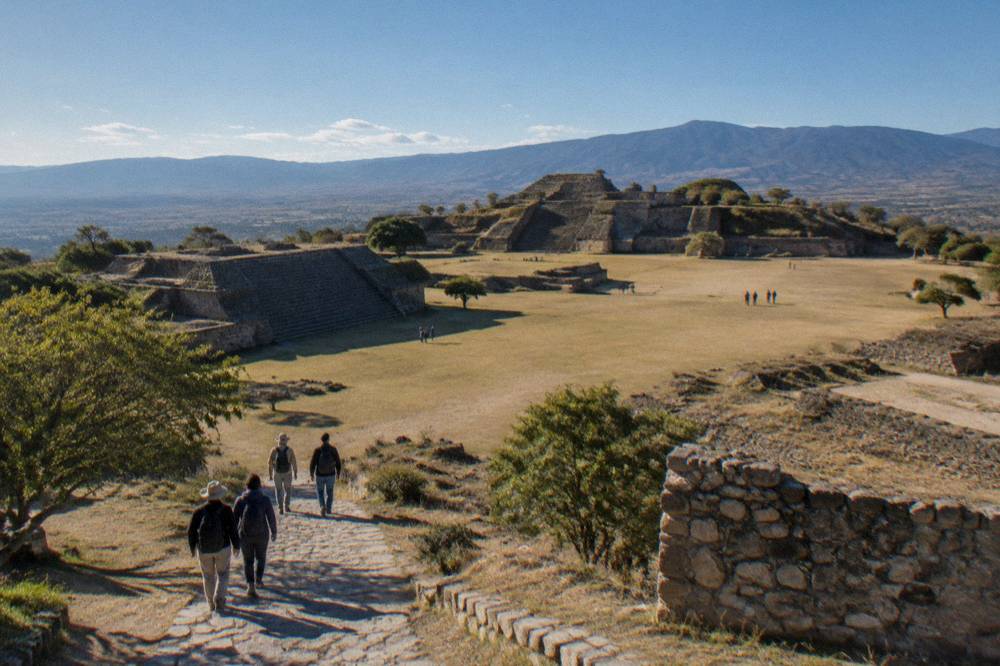
The natural pairing is Monte Albán in the morning and the historic centre of Oaxaca City in the afternoon: the zone closes to new entries at 16:00, and the drive back to the centre is about 15 minutes. On a second day, the Tlacolula arm carries Tule, Mitla, Yagul and Hierve el Agua on one loop of about 57 minutes at its farthest point.
Inside the centre, the UNESCO property pairs Monte Albán with the Santo Domingo church and the Museo de las Culturas de Oaxaca, which is open Tuesday to Saturday only, 10:00 to 16:00, at 105 and 210 MXN. That closed Monday matters when sequencing days. The Jardín Etnobotánico next door runs free guided tours Monday to Friday at 10:30, 11:00, 11:30, 12:00 and 17:00, and Saturday from 10:30 to 12:00, with large groups booking two weeks ahead.
| Day block | Components | Time cost from the Zócalo |
|---|---|---|
| Monte Albán morning | the zone, gates at 08:00, last access 16:00 | about 15 minutes each way |
| Centre afternoon | Santo Domingo, Museo de las Culturas (Tue to Sat), Andador Macedonio Alcalá | walkable |
| Valley loop day | Tule, Teotitlán del Valle, Mitla, Hierve el Agua | about 11 to 57 minutes per leg |
| Market morning | Mercado 20 de Noviembre, Mercado Benito Juárez | walkable |
The craft villages extend the pattern: Teotitlán del Valle at about 26 minutes is the classic add-on, with weaving workshops generally operating Tuesday to Sunday and many closed Mondays, per current visitor guidance. Markets are covered in depth on the Mercado 20 de Noviembre and Mercado Benito Juárez pages; no market opening hours are given here, because no official primary source lists them.
What Does The 2025 Visitor Data Say About Monte Albán?
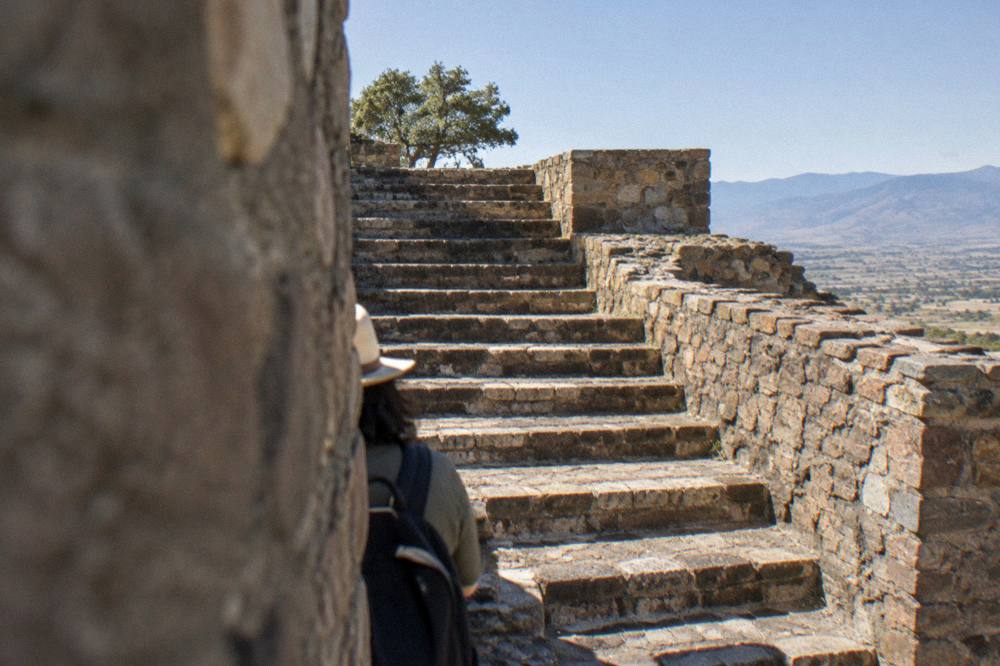
Monte Albán recorded 416,675 visitors in 2025, of whom 342,962 were national and 73,713 foreign, per the state Sectur activity indicators. That total is far above Mitla's 104,428 for the same year, and above Yagul's 10,185, Lambityeco's 5,545 and Zaachila's 4,229.
The same indicators carry city-level context: Oaxaca City registered 1,324,332 tourist arrivals across 2025, 1,111,799 national and 212,533 foreign, with hotel occupancy of 51.73 percent and an average stay of 2.00 nights. Two nights is the measured norm, which is why this page keeps pushing the same sequencing advice: the close-in zone first, the valley loop second.
| INAH zone | 2025 visitors |
|---|---|
| Monte Albán | 416,675 |
| Mitla | 104,428 |
| Yagul | 10,185 |
| Lambityeco | 5,545 |
| Zaachila | 4,229 |
The national and foreign split is published in full only for Monte Albán in the 2025 visitor counts; the other zones carry totals. The imbalance between the zones is stable across years and is the strongest planning signal in the dataset: Monte Albán absorbs the great majority of archaeological visitation in the Valles Centrales, while Yagul, Lambityeco and Zaachila run on a different scale entirely.
How Do You Plan Around Altitude, Time Zone And Practicalities?
Oaxaca City sits at about 1,550 m in the Valles Centrales, on UTC-6 all year, because Mexico abolished daylight saving in 2022. Monte Albán's own elevation adds to that base, so sun protection and pacing are the practical variables, and the state lodging tax is 3 percent on hotel-type stays.
The time zone detail saves a missed alarm: Oaxaca keeps UTC-6 through July and December alike, so a booking time printed in local time never shifts. The lodging tax, set by the state fiscal code, applies to hotel-type stays at 3 percent, or 5 percent where an intermediary platform collects it, per the decree published in December 2025. None of this is exotic; it is the small print that keeps a trip smooth.
On safety wording, this guide stays with the advisories as published. The UK FCDO advises against all but essential travel to parts of Mexico and does not name Oaxaca on its main page. Canada advises a high degree of caution in Mexico overall, with regional advisories. The US State Department lists Oaxaca state at Level 2, Exercise Increased Caution, with restrictions applying in the Isthmus region rather than the Valles Centrales. Road blockades by teachers' unions are a standing risk that can disrupt road and airport access for hours at a time; this guide does not date them, and a traveller simply builds a buffer into any same-day departure plan.
Which Monte Albán Product Fits Which Traveller?
The guided half day fits a first visit with limited time, the craft-loop products fit travellers who want alebrijes and black clay on the same day as the ruins, and the city food and cooking products fit a second or third day built around the centre.
They sequence cleanly across two or three mornings, and each links to its own page for the full detail.
This guide's rule stands regardless: book what covers what you actually want to see, and let the coverage, not the headline figure, make the choice. For the wider field of options beyond these three, the Monte Albán tour comparison is the site's dedicated page.
Common Questions About Monte Albán
How Much Does Monte Albán Entry Cost?
Entry is Category I per the INAH page: 105 MXN for Mexican nationals and 210 MXN for foreign visitors. Visits outside normal hours are priced at 730 MXN.
What Are Monte Albán's Opening Hours?
The zone is open Monday to Sunday from 08:00 to 17:00, with last access at 16:00, per the INAH site page.
How Far Is Monte Albán From Oaxaca City?
The derived drive from the Zócalo is about 8.7 km and about 15 minutes. Real traffic and the mountain climb make it slower, so allow more time than the free-flow figure.
Is Monte Albán A UNESCO World Heritage Site?
Yes. It shares the inscription "Historic Centre of Oaxaca and Archaeological Site of Monte Albán", property 415, with the city below it.
Can You Visit Monte Albán And Mitla On The Same Day?
Many travellers do, but they are separate legs: Monte Albán is about 15 minutes west of the centre, while Mitla is about 37 minutes east, and Mitla's last access is 16:30. A guided valley-loop product is the usual way to cover both plus Hierve el Agua in one day.
When Is The Best Time Of Day To Visit Monte Albán?
At opening, 08:00. The SMN normals show April averaging a 34.9 C daily high and June through September each averaging more than 118 mm of rain, so the early hours are the calmest window on both counts.
Monte Albán rewards the traveller who treats it as what the data says it is: the most visited archaeological zone in the Valles Centrales, 15 minutes and a mountain road from the centre of Oaxaca City, with published hours, published fees in pesos, and a climate table that tells you when the light will be kind. Arrive early, carry pesos, and give the leveled mountaintop the morning it deserves.