Oaxaca In 2 Days: Centro Plus Monte Albán
Two days is enough for the historic centre of Oaxaca City and Monte Albán if the days are planned in blocks: day one for the Centro Histórico on foot, day two for the archaeological zone and the valley.
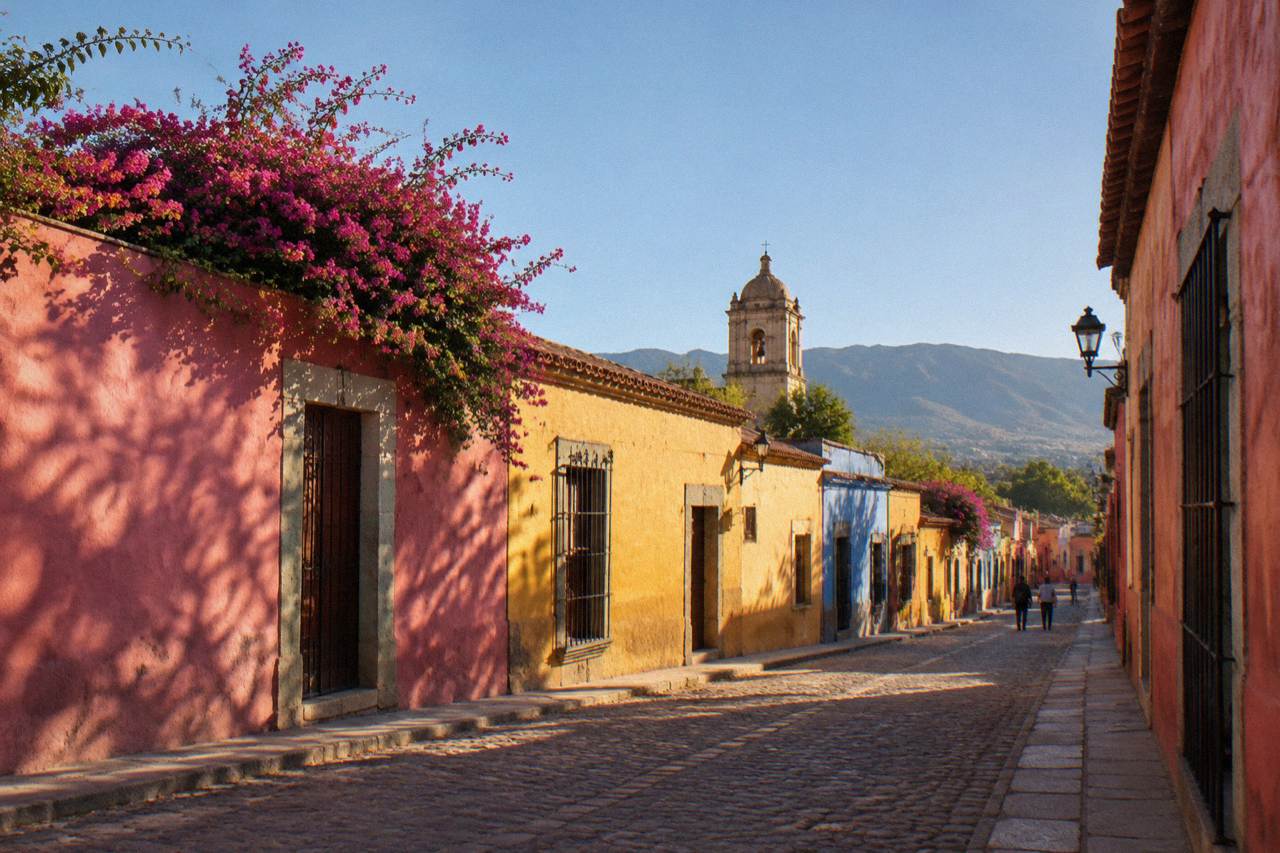
Yes. Two days in Oaxaca City cover the Centro Histórico, Santo Domingo de Guzmán, the Zócalo, the markets and a half-day at Monte Albán, which sits about 15 minutes by road from the centre. Anything deeper in the Valles Centrales, such as Hierve el Agua or Mitla, strains a two-day plan and belongs to a longer stay.
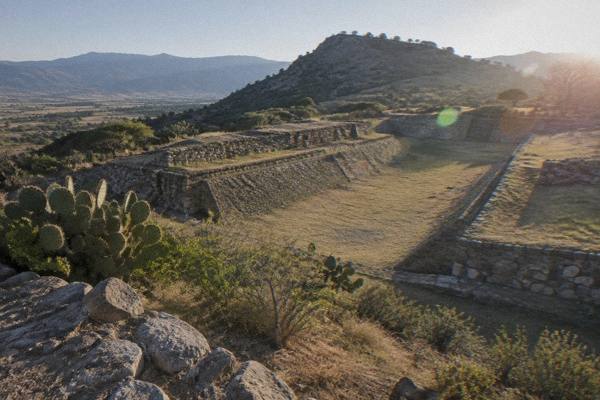
Two days in Oaxaca City, the inland highland capital of the state of Oaxaca in Mexico, is a workable frame for the historic centre and Monte Albán. The city sits in the Valles Centrales at about 1,550 m, and its core sights cluster tightly: the Zócalo, Santo Domingo de Guzmán, the Andador Macedonio Alcalá and the markets are all within walking distance of one another. Monte Albán, the Category I INAH archaeological zone, lies about 15 minutes by road from the centre, which is what makes the "Centro plus Monte Albán" pairing realistic in 48 hours.
Is 2 Days Enough For Oaxaca City?
Two days is enough for Oaxaca City's Centro Histórico, its markets, one museum morning and a half-day at Monte Albán, because the centre is compact and the archaeological zone is only about 15 minutes away by road. Two days is not enough for Hierve el Agua, Mitla, the craft villages or the Sierra Norte; those call for the longer itineraries this site also covers. Treat the two-day plan as the city's core loop plus its headline ruin, nothing more. The Sectur indicator report counted 1,324,332 tourist arrivals in the city across 2025 with an average stay of 2.00 nights, so a two-night visit matches how the city is actually used, not a compromise invented for a listicle.
The logic of the split is simple. Day one stays inside the Centro Histórico, the UNESCO-listed historic core inscribed together with Monte Albán as property 415, "Historic Centre of Oaxaca and Archaeological Site of Monte Albán". Day two leaves the valley floor once, for Monte Albán in the morning, and returns by early afternoon so the second evening is still a city evening. For readers weighing the trade-off, the how many days in Oaxaca guide breaks the decision down at every length, and the Oaxaca in one day page is the compressed version of this same plan.
| Itinerary length | What fits comfortably | What gets cut |
|---|---|---|
| 1 day | Centro Histórico loop, one market, Monte Albán by tour | Museums, craft villages, evening pace |
| 2 days | This plan: full centre plus Monte Albán morning | Hierve el Agua, Mitla, Sierra Norte |
| 3 days | Adds a Tlacolula Valley day trip | Coast, Pueblos Mancomunados |
| 5 days | Adds craft villages and a second valley loop | Only the Pacific coast extensions |
How Should You Spend Day One In Oaxaca?
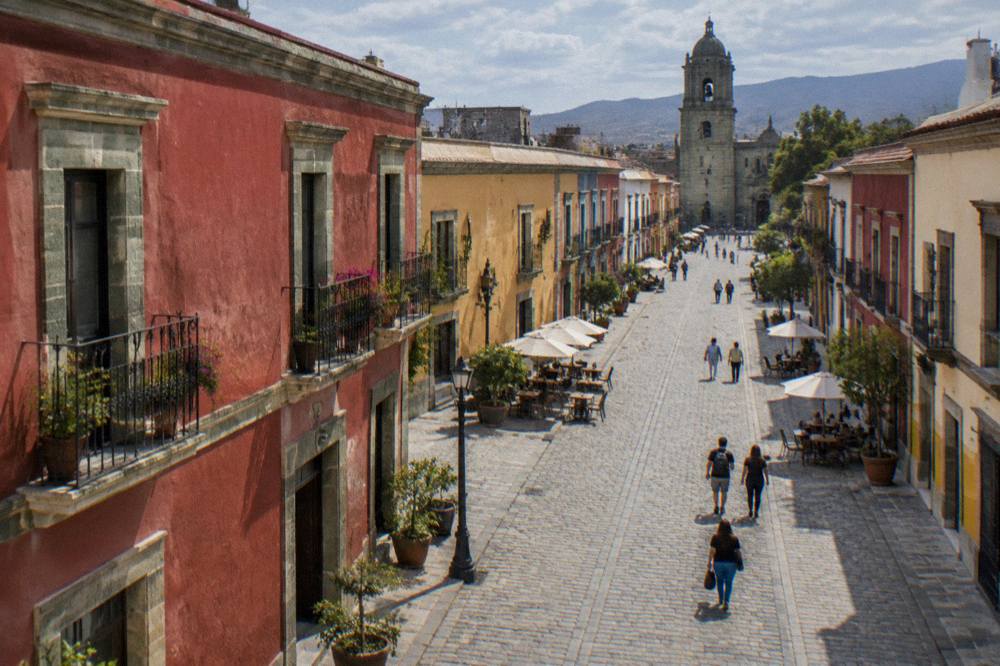
Day one belongs entirely to the Centro Histórico of Oaxaca City: start at the Zócalo and the Cathedral, walk the Andador Macedonio Alcalá north to Santo Domingo de Guzmán, spend the middle of the day in the markets around 20 de Noviembre and Benito Juárez, and end with the Jalatlaco or Xochimilco neighbourhoods before dinner. Every one of these stops is walkable from any central hotel, and none of them needs a vehicle. The block structure matters more than the order: keep the morning for the Santo Domingo end, the midday for food, and the late afternoon for a neighbourhood away from the Andador, because the centre's own guide pages each carry more depth than a single day can absorb.
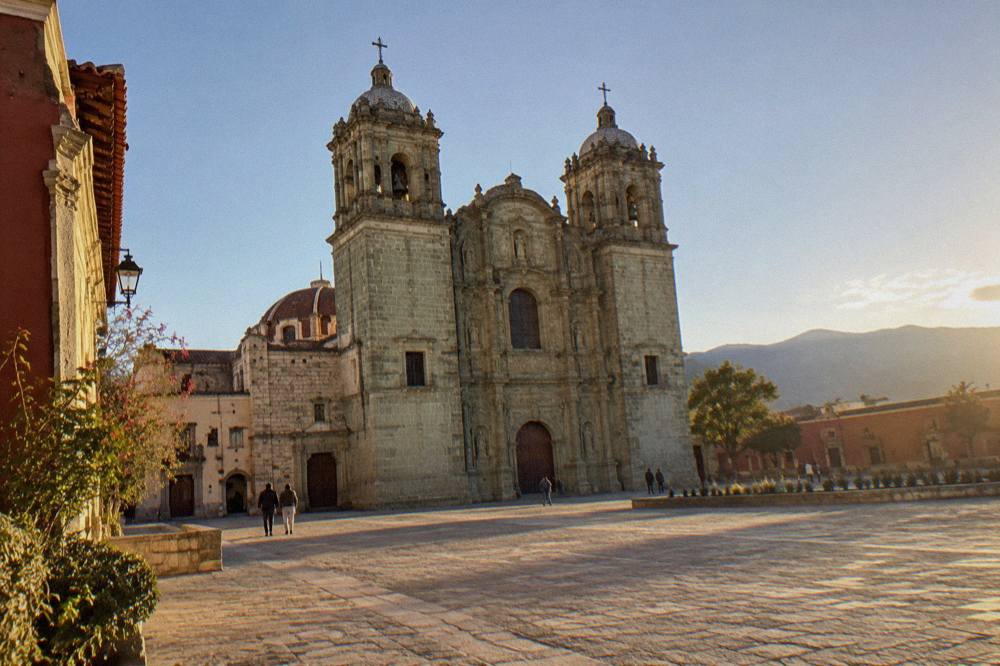
Open at the Zócalo, the Plaza de la Constitución, and work north. The Andador Macedonio Alcalá is the pedestrian spine that connects the Zócalo to the Santo Domingo complex, and the walk passes the Museo Textil and, a block over, the Basílica de la Soledad. Santo Domingo de Guzmán anchors the north end. Two scheduling facts shape the morning: the Museo de las Culturas de Oaxaca, inside the Santo Domingo complex, is open Tuesday to Saturday only, 10:00 to 16:00, at 105 MXN for nationals and 210 MXN for foreigners, so a Monday or Sunday day one loses it; and the Jardín Etnobotánico next door runs free guided tours Monday to Friday at 10:30, 11:00, 11:30, 12:00 and 17:00, and Saturday from 10:30 to 12:00, with large and school groups booking two weeks ahead. Those two sets of hours, both from official pages, are the fixed points around which the rest of day one flexes.
Midday is the market block. The Mercado 20 de Noviembre and the Mercado Benito Juárez sit side by side south of the Zócalo, and the city's food identity, tlayudas, mole, quesillo, tejate, chapulines, is all present in them. The site's own pages on the Mercado 20 de Noviembre and on what to eat cover the detail; no official source publishes market opening hours, so plan loosely and let the stalls, not a timetable, set the rhythm. A guided option compresses the learning curve: the Oaxaca walking tour kind of product covers the centre's history on foot, and a food-and-markets walk does the same for the edible half of the city.
| Day one block | Time of day | What it holds | Fixed hours to respect |
|---|---|---|---|
| Zócalo and Cathedral | Early morning | Main square, cathedral facade | None published |
| Andador to Santo Domingo | Morning | Pedestrian street, Museo Textil nearby | Museo de las Culturas Tue to Sat, 10:00 to 16:00 |
| Santo Domingo and Jardín Etnobotánico | Late morning | Church, museum, botanical garden | Garden tours Mon to Fri 10:30 to 12:00 and 17:00, Sat 10:30 to 12:00 |
| Markets 20 de Noviembre and Benito Juárez | Midday | Food stalls, ingredients, crafts | No official hours |
| Jalatlaco or Xochimilco | Late afternoon | Neighbourhood walks, street corners | None published |
The evening belongs to the neighbourhoods. Jalatlaco and Xochimilco sit within a short walk of the centre, and both carry their own pages in this site's Oaxaca neighbourhoods coverage. For what happens after dark, the Oaxaca at night page extends the same evening into rooftop bars and mezcal, and readers with a third day on the table should read the Oaxaca in 3 days plan before locking anything.
How Should You Spend Day Two In Oaxaca?
Day two is Monte Albán in the morning and a short craft or valley stop in the early afternoon: the site opens daily 08:00 to 17:00 with last access at 16:00, entry is 105 MXN for nationals and 210 MXN for foreigners, and the drive from the Zócalo is about 15 minutes, so an 08:00 start puts you back in the centre by early afternoon with the whole second evening still free. Going early is not a style preference, it is arithmetic: the INAH page sets last access at 16:00, and a morning visit leaves the day's back half for Atzompa, the pottery village whose own INAH zone, 08:00 to 16:00 with last access at 15:00, sits on the same western side of the valley.
Monte Albán's page on this site carries the full site detail, and the question is Monte Albán worth it is answered squarely there. In a two-day frame the honest answer is that Monte Albán is the one excursion the plan should not drop: it is the Category I zone that shares the UNESCO inscription with the historic centre, it received 416,675 visitors in 2025 per the Sectur report, and it is closer than any other major site. The guided half-day product, Monte Albán Guided Half Day Tour, is the natural fit for a tight schedule, and the site's Monte Albán tour page compares the ways to book it: Check availability.
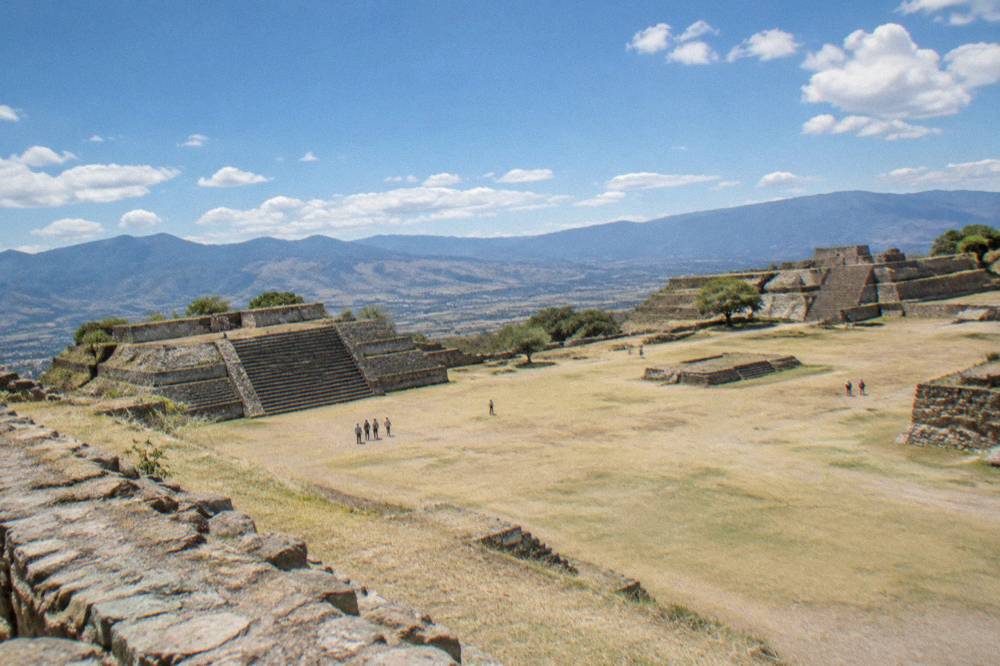
After Monte Albán, two realistic options fill the afternoon without breaking the two-day budget. The first is Atzompa, on the same western flank of the valley as Monte Albán, open 08:00 to 16:00 with last access at 15:00; the INAH page lists hours only, so carry pesos and expect nothing about fees. The second is to return to the centre and spend the afternoon on what day one missed: the Rufino Tamayo museum of pre-Hispanic art, which state releases note reopened in August 2025 after more than three years closed, or a deeper market pass. Do not try to fold Hierve el Agua into day two; the site is about 57 minutes from the centre by free-flowing road, it is not an INAH zone, and no official source publishes its fee or hours, so it deserves its own day, which the Hierve el Agua day trip page provides.
| Day two block | Time of day | What it holds | Fixed hours to respect |
|---|---|---|---|
| Monte Albán | 08:00 to about 11:30 | Category I archaeological zone | Daily 08:00 to 17:00, last access 16:00 |
| Atzompa option | Midday | Pottery village, INAH zone | Daily 08:00 to 16:00, last access 15:00 |
| Return to centre | Early afternoon | Rufino Tamayo museum or market pass | None published for markets |
| Second evening | Evening | Mezcal, rooftop, dinner | None |
What Does Monte Albán Cost And How Do You Get There From Oaxaca?
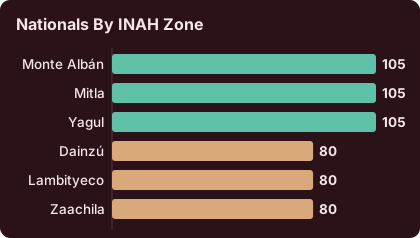
Monte Albán charges 105 MXN for Mexican nationals and 210 MXN for foreign visitors, per the INAH site page, and it is open every day 08:00 to 17:00 with last access at 16:00; the drive from the Zócalo is about 15 minutes, roughly 8.7 km on the access road, though real traffic and the mountain road make it slower. Those three figures, the fee pair, the hours and the drive time, are the whole decision surface for the excursion. The fee is the Category I rate that Mitla and Yagul also charge, while the smaller Category III zones, Dainzú, Lambityeco and Zaachila, charge less.
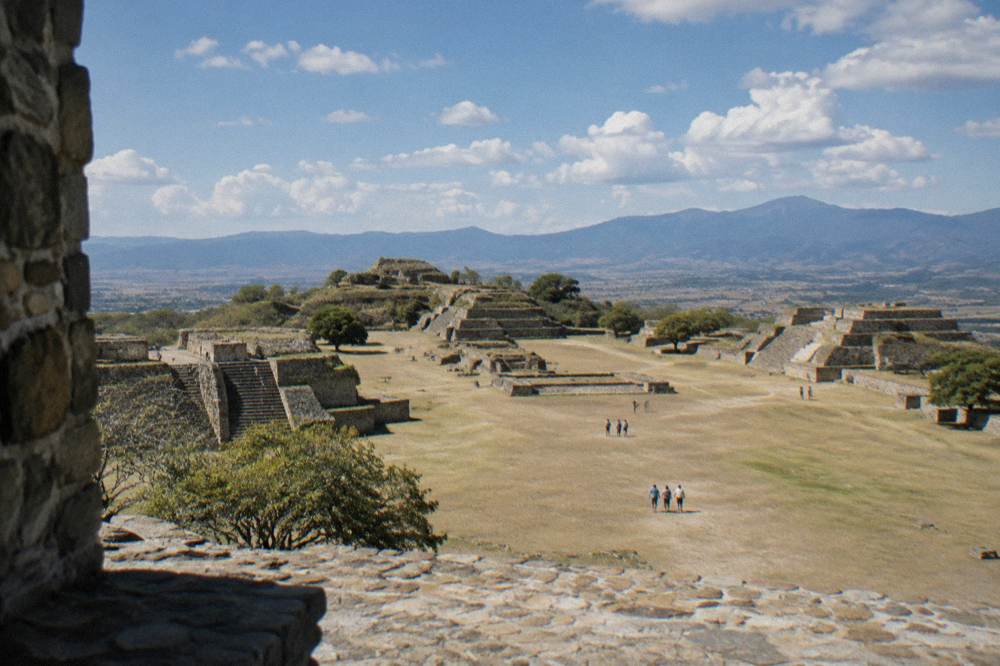
The INAH fee structure is worth a table on any itinerary page, because a two-day traveller who adds one smaller zone needs the comparison:
| INAH zone | Hours | Last access | Nationals MXN | Foreigners MXN | Drive from Zócalo |
|---|---|---|---|---|---|
| Monte Albán | Daily 08:00 to 17:00 | 16:00 | 105 | 210 | About 15 minutes |
| Mitla | Daily 08:00 to 17:00 | 16:30 | 105 | 210 | About 37 minutes |
| Yagul | Daily 08:00 to 17:00 | 16:00 | 105 | 210 | About 38 minutes |
| Dainzú | Daily 08:00 to 17:00 | 16:30 | 80 | 145 | On the Mitla road |
| Lambityeco | Daily 08:00 to 17:00 | 16:30 | 80 | 145 | On the Mitla road |
| Zaachila | Thu to Sun 10:00 to 16:00 | N/A | 80 | 145 | Southwest of the city |
The Zaachila line carries the trap: it opens Thursday to Sunday only, 10:00 to 16:00, so a Tuesday day two cannot include it. Visits outside normal INAH hours cost 730 MXN, a figure listed on the Yagul, Lambityeco, Atzompa and Museo de las Culturas pages. For the fee question in full, the site's Monte Albán entrance answer carries the breakdown.
Getting there is the other half of the question. The derived drive times from this site's research, computed on OSM roads and stated as "about" figures with real traffic slower, are: Monte Albán about 15 minutes, Santa María del Tule about 11, Teotitlán del Valle about 26, Tlacolula about 25, Mitla about 37 and Hierve el Agua about 57. No official source publishes taxi or colectivo fares, so this page prints none; a guided half-day tour bundles the transport question into the booking, which is precisely why it is this page's related product. The wider set of guides lives on Oaxaca Travel Guide.
Where Should You Eat Across Two Days In Oaxaca?
Across two days in Oaxaca City, eat from three layers: the markets, 20 de Noviembre and Benito Juárez, for tlayudas, mole and quesillo at midday; the street-food stands of the centre and Jalatlaco for the evening; and one sit-down restaurant meal for a mole or a dish the markets do not serve. The city's food fame is the reason many people come, and the what to eat in Oaxaca page maps the full menu, from tlayudas to the seven moles, tejate and Oaxacan chocolate. No official source publishes meal prices, so this itinerary sets no figures and lets the stalls speak.
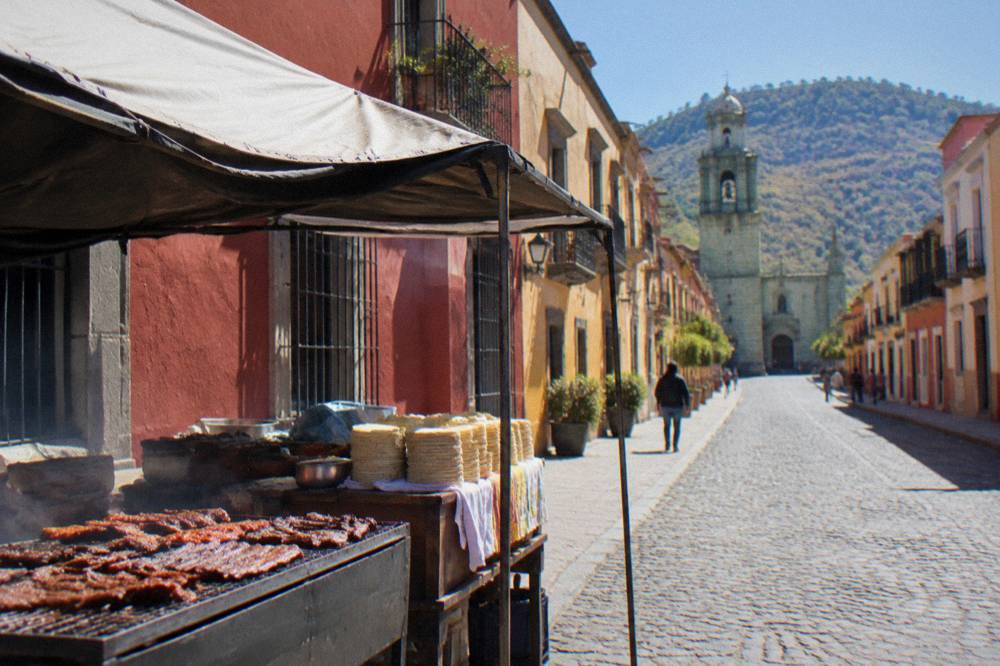
Two structure choices lift the food half of a two-day trip. The first is a guided market walk on day one, which turns the Benito Juárez and 20 de Noviembre stalls from a maze into a menu; the food and markets products in this site's tour list are built exactly for that. The second is a cooking class on day two afternoon if the Monte Albán return lands early enough, which converts the market run into a meal made by hand; the vegetarian class with a market visit is the tour list's fit for that slot, and the Oaxaca cooking classes page compares all of them.
| Meal slot | Day one | Day two |
|---|---|---|
| Breakfast | Centre cafe or market stand | Before the Monte Albán departure |
| Midday | Markets: tlayudas, mole, quesillo | Central restaurant, mole course |
| Afternoon | Tejate or chocolate stop | Cooking class output, or street snack |
| Evening | Jalatlaco street food or rooftop | Centro dinner, mezcal to close |
What If It Rains During Your 2 Days In Oaxaca?
Rain in Oaxaca City falls almost entirely between May and October, with June averaging 188.3 mm and September 163.6 mm against January's 2.4 mm, per the SMN station normals for 1991 to 2020, so a dry-season two-day trip in November to April barely needs a plan B and a rainy-season one does: museums and markets absorb the wet hours and Monte Albán absorbs the dry ones. The normals also give rain-day counts: about 19.9 days with rain in June and 21.4 in September, against 1.4 in January, which is the difference between a shower you wait out and a pattern you schedule around.
The swap rules are simple. The Museo de las Culturas, Tuesday to Saturday, the Jardín Etnobotánico tour slots and the markets are all roofed or near-sheltered; Monte Albán is not. So in the rainy season, put the ruin in the morning, when the SMN table's rainfall concentrates later in the day, and keep the museum block for the afternoon. The full month-by-month picture, including the high of 34.9 C the April normal carries, sits in the site's Oaxaca weather by month guide, and the Oaxaca in the rain page is the deep version of this plan B.
How Does A 2-Day Oaxaca Trip Compare With Longer Stays?
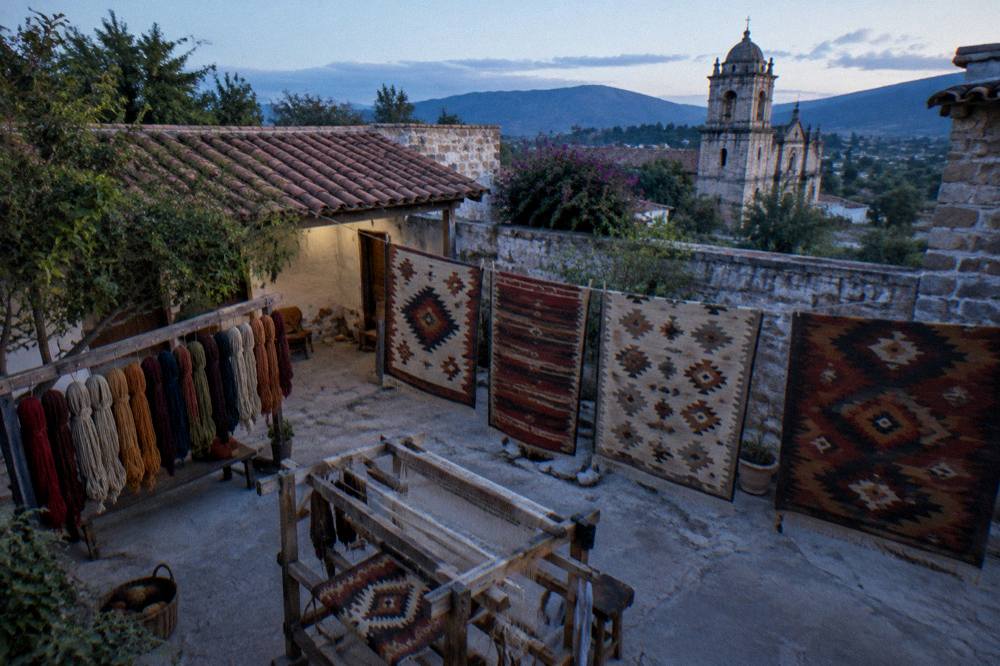
A 2-day Oaxaca trip buys the Centro Histórico, the markets and Monte Albán; a 3-day trip adds the Tlacolula Valley with Mitla and Hierve el Agua; a 5-day trip adds the craft villages, Teotitlán del Valle, San Bartolo Coyotepec and San Martín Tilcajete, plus a second valley loop; and a week opens the Sierra Norte and the Pacific coast extensions. The marginal day is worth more than it looks, because the valley's headline pair, Hierve el Agua at about 57 minutes and Mitla at about 37, each consume a half-day of transport alone.
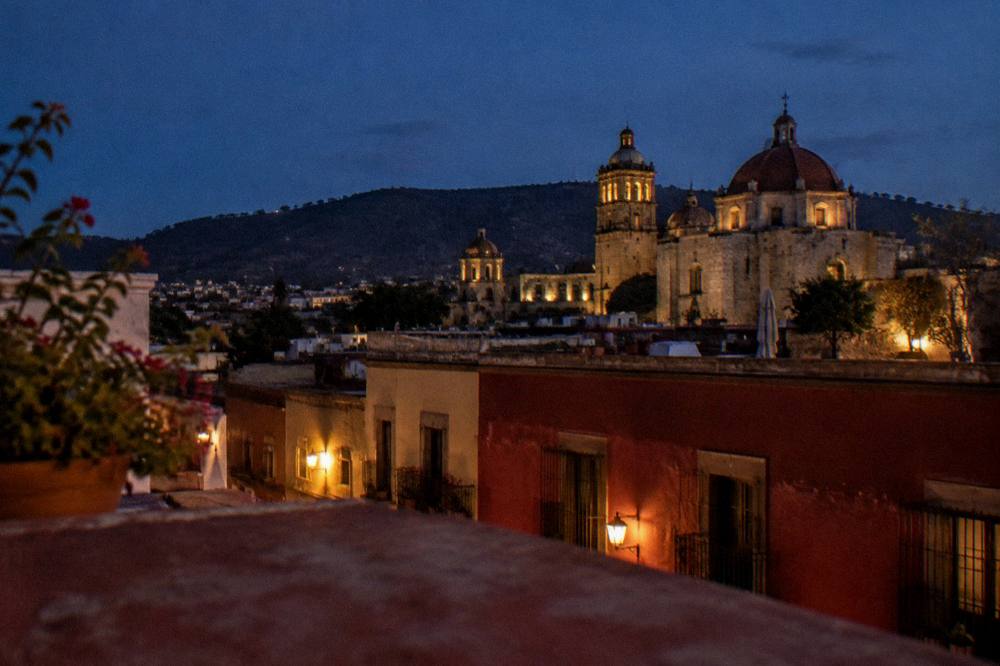
The sibling itineraries carry each length in full: Oaxaca in one day for the compressed loop, Oaxaca in 3 days for the valley add-on, Oaxaca in 4 days and Oaxaca in 5 days for the craft-village depth, and Oaxaca in a week for the coast and Sierra Norte. Travellers with children should read Oaxaca with kids before committing to this pace, and the first time in Oaxaca page sets the same core loop for a debut visit. The honest two-day rule: cut nothing from the centre, keep Monte Albán, and leave the valley for the next trip.
What Should You Not Try To Squeeze Into 2 Days In Oaxaca?
Do not squeeze Hierve el Agua, Mitla, the Tlacolula Sunday market, the Pueblos Mancomunados or any Pacific coast destination into a 2-day Oaxaca City trip: Hierve el Agua is about 57 minutes out, Mitla about 37, the Sierra Norte village of Latuvi about 142, and Puerto Escondido about 165 minutes on the new highway, each of which eats the half-day a two-day plan does not have. These are real trips with their own pages, not far suburbs, and stacking one onto day two collapses the Monte Albán morning that anchors the whole plan.
The pattern to resist is the everything-loop, a tour-bus day that touches Tule, Mitla, a mezcal distillery and Hierve el Agua in sequence. That works as a standalone third day, and the Mitla and Tlacolula day trip page shows how, but bolted onto two centre days it leaves the city's own depth unvisited. The centre deserves its full day: the museums, the two market buildings, the Jardín Etnobotánico slots and at least one outer neighbourhood. Readers hungry for the free layer can fold in stops from free things to do in Oaxaca, several of which sit inside this plan already.
Common Questions About 2 Days In Oaxaca
Is 2 Days Enough For Oaxaca?
Two days is enough for Oaxaca City's Centro Histórico, the markets, one museum morning and a Monte Albán half-day, since the archaeological zone is only about 15 minutes from the centre by road. It is not enough for Hierve el Agua, Mitla or the craft villages; those need a third day.
Can You Visit Monte Albán And The City Centre In One 2-Day Trip?
Yes. Monte Albán opens daily 08:00 to 17:00 with last access at 16:00, entry is 105 MXN for nationals and 210 MXN for foreigners, and the drive from the Zócalo is about 15 minutes, so a morning at the zone leaves the rest of day two for the city.
What Is The Best Day-Two Plan After Monte Albán?
The Atzompa archaeological zone, open 08:00 to 16:00 with last access at 15:00, sits on the same western side of the valley and is the natural short stop on the way back. Otherwise return to the centre for the Rufino Tamayo museum or a second market pass.
Which Day Should Be The Monte Albán Day?
Day two, in the morning. That keeps day one whole for the walkable Centro Histórico, and an 08:00 start at the site returns you to the city by early afternoon with the evening intact. In the rainy season the morning slot matters more, since rain concentrates later in the day.
Is The Museo De Las Culturas Open Every Day?
No. The Museo de las Culturas de Oaxaca, in the Santo Domingo complex, is open Tuesday to Saturday, 10:00 to 16:00, at 105 MXN for nationals and 210 MXN for foreigners. A Monday or Sunday day one misses it, so place it on a weekday.
Does Rain Ruin A 2-Day Oaxaca Trip?
Not between November and April, when monthly rainfall runs from 2.4 mm in January to 47.3 mm in April per the SMN normals. From June to September, with 188.3 mm in June and 163.6 mm in September, plan museums and markets for the wet hours and keep Monte Albán in the morning.
Two days in Oaxaca City, spent as one full day in the Centro Histórico and one morning at Monte Albán with a soft afternoon behind it, delivers the pairing the destination is inscribed for, and it leaves the valley, the Sierra Norte and the coast cleanly waiting for a longer return.