Oaxaca Walking Tour: Which Centro Walk To Book
Oaxaca City is a compact, walkable highland capital, and a guided walk through its historic centre is one of the easiest first activities to book. This page compares the walking tours that cover the Centro, Jalatlaco, the markets and the evening streets, and sets out what each route actually includes.
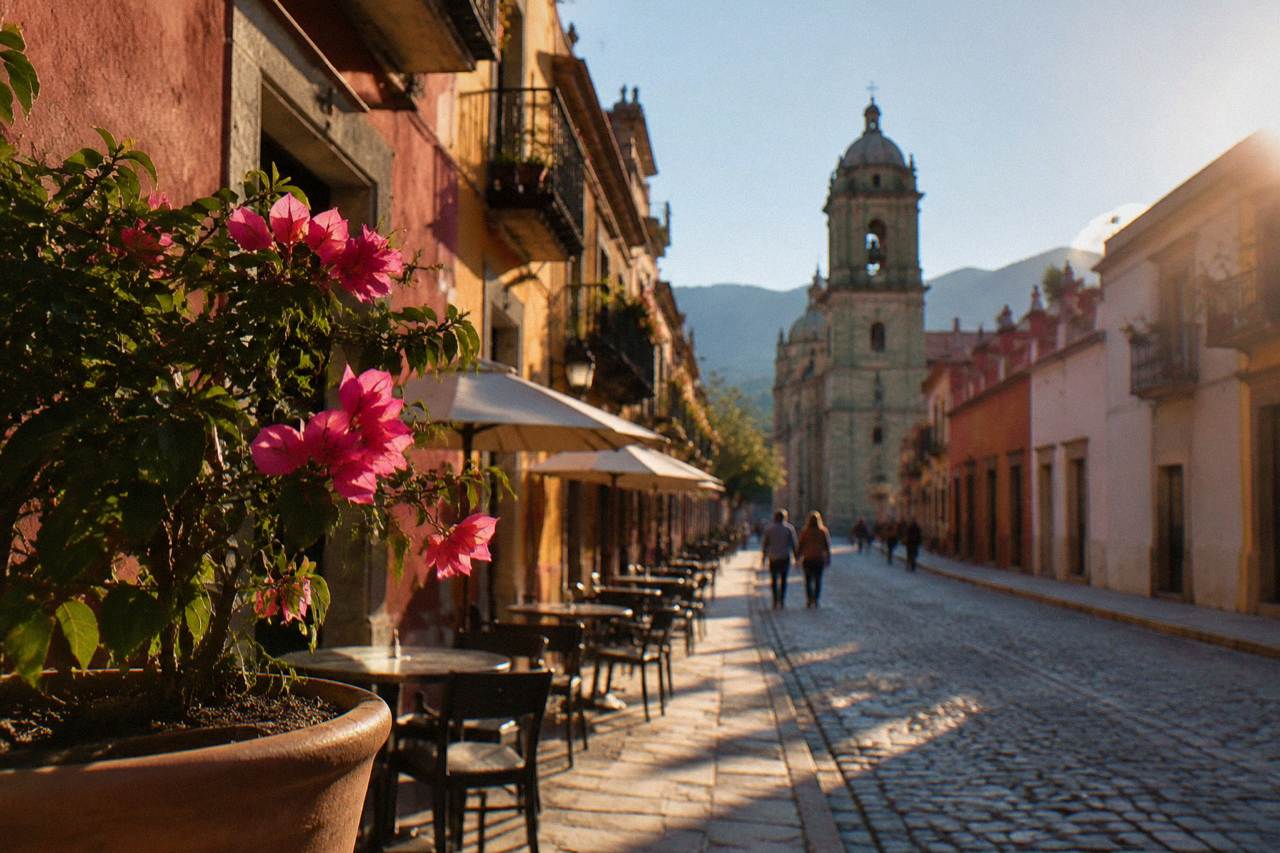
For a first visit to Oaxaca City, book a Centro histórico walking tour for the churches, the Zócalo and the Andador Macedonio Alcalá, then add the artist-led street art walk through Jalatlaco if murals are the draw. Evening and food walks cover the markets and street food after dark, and Day of the Dead walks run only in late October and early November.
Oaxaca City (Oaxaca de Juárez) is an inland highland capital in the Valles Centrales at about 1,550 m, and its historic centre is compact enough that a walking tour is the standard way to see it. The city recorded 1,324,332 tourist arrivals across 2025, according to the state tourism indicators, and the walks on this page cover the same ground those visitors come for: the Zócalo, Santo Domingo de Guzmán, the Andador Macedonio Alcalá, the markets and the mural-covered streets of Jalatlaco. This page compares the guided walks available from the city's operators and explains what each route covers, so the choice depends on interest rather than guesswork. For the broader sightseeing picture, the Oaxaca Travel Guide root page lists everything bookable in the destination.
Which Walking Tour Of Oaxaca Should You Book First?
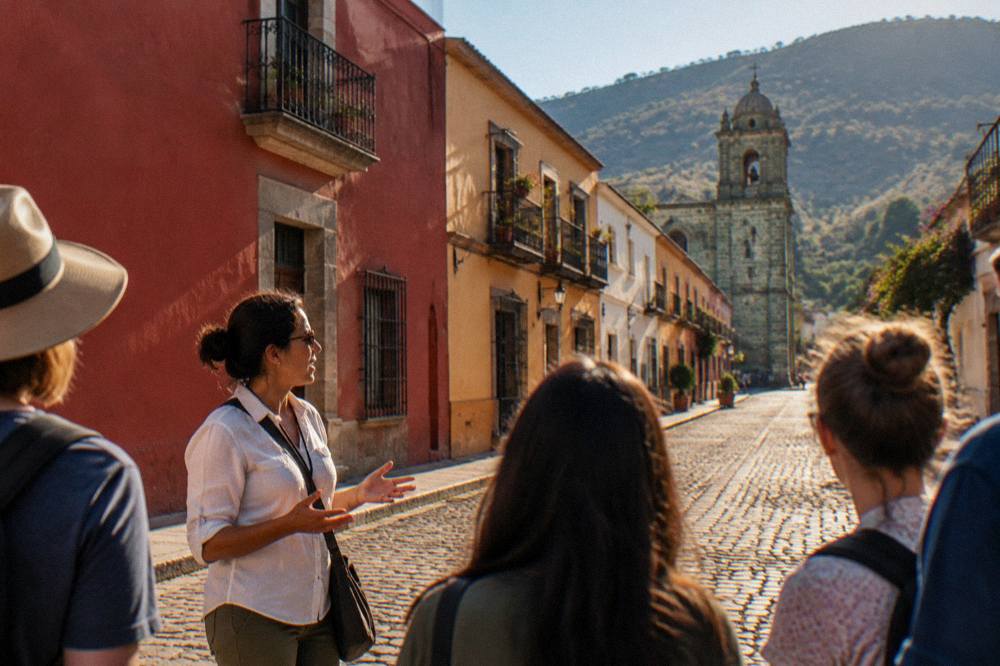
For a first visit, a historic centre walk is the default choice, because it covers the Zócalo, the cathedral, Santo Domingo de Guzmán and the Andador Macedonio Alcalá in one guided loop. If murals and neighbourhood character are the priority, a street art walk through Jalatlaco is the alternative. Food and market walks suit visitors whose main interest is eating, and they double as an introduction to the centre.
The historic centre of Oaxaca City is part of the UNESCO World Heritage property "Historic Centre of Oaxaca and Archaeological Site of Monte Albán", inscribed as property 415, and the walking routes cluster inside it. A centre walk typically moves between the Zócalo, the Andador Macedonio Alcalá and the Santo Domingo church complex, with stops at the Basilílica de la Soledad on some routes. The deciding factor is emphasis: history and architecture on one hand, murals and working artists on the other.
One distinction matters before booking. The street art walk led by a practising artist goes beyond photo stops and covers how the murals are made, while the general centre walks focus on the colonial core and its buildings. Both start from the Centro, so neither requires transport, and both sit inside the walkable area described in detail on the Centro Histórico area page.
What Does An Oaxaca Centro Walking Route Actually Cover?
A standard Centro route in Oaxaca City links the Zócalo, the cathedral, the Andador Macedonio Alcalá, Santo Domingo de Guzmán and, on most versions, the Mercado 20 de Noviembre or the Mercado Benito Juárez. The route stays inside the historic centre, is entirely on foot, and passes the Museo de las Culturas de Oaxaca at the Santo Domingo complex.
The spine of almost every centre walk is the Andador Macedonio Alcalá, the pedestrian street that runs from the cathedral toward Santo Domingo. From there, walks reach the Jardín Etnobotánico and the Museo de las Culturas de Oaxaca, which occupies part of the former convent at Santo Domingo. Two practical notes from the opening details: the Museo de las Culturas opens Tuesday to Saturday only, 10:00 to 16:00, with entry at 105 MXN for nationals and 210 MXN for foreign visitors, and the Jardín Etnobotánico runs free guided tours Monday to Friday at 10:30, 11:00, 11:30, 12:00 and 17:00, and Saturday from 10:30 to 12:00.
Market stops are the other half of a centre walk. The Mercado 20 de Noviembre is the food market and the Mercado Benito Juárez sits beside it, and a walking tour that includes tastings moves through both. Visitors who want the fuller food treatment can compare the options on the Oaxaca food tour page.
| Stop On A Centro Walk | What It Is | Practical Detail |
|---|---|---|
| Zócalo (Plaza de la Constitución) | Main square of the historic centre | Part of UNESCO property 415 |
| Andador Macedonio Alcalá | Pedestrian spine of the Centro | Links the cathedral area to Santo Domingo |
| Santo Domingo de Guzmán | Church and former convent complex | Museo de las Culturas on site, Tue to Sat 10:00 to 16:00 |
| Jardín Etnobotánico | Garden at the Santo Domingo complex | Free guided tours Mon to Fri 10:30 to 12:00 and 17:00, Sat 10:30 to 12:00 |
| Mercado 20 de Noviembre | Central food market | Reached on food and market walks |
| Mercado Benito Juárez | Central market beside 20 de Noviembre | Reached on food and market walks |
Which Oaxaca Walking Tours Cover Street Art And Jalatlaco?
The street art walks of Oaxaca City centre on Jalatlaco, the neighbourhood adjacent to the Centro whose walls carry a dense concentration of murals, and the strongest option is a walk led by a working artist who explains technique as well as location. These tours run entirely within the city, start from the central area, and pair naturally with a Centro history walk on a separate morning.
Jalatlaco is covered on its own area page, and its mural routes have become a reason to book a second walk after the classic centre loop. The difference between a general walk and an artist-led one is the content: an artist guide can break down materials, scale and process, which changes what a visitor sees on the wall. Among the bookable options, the Street Art Tour With An Artist stands out on this exact point, and live pricing and availability are on the operator's booking page: Check availability. An internal comparison of that walk sits on the street art guide for readers deciding between routes.
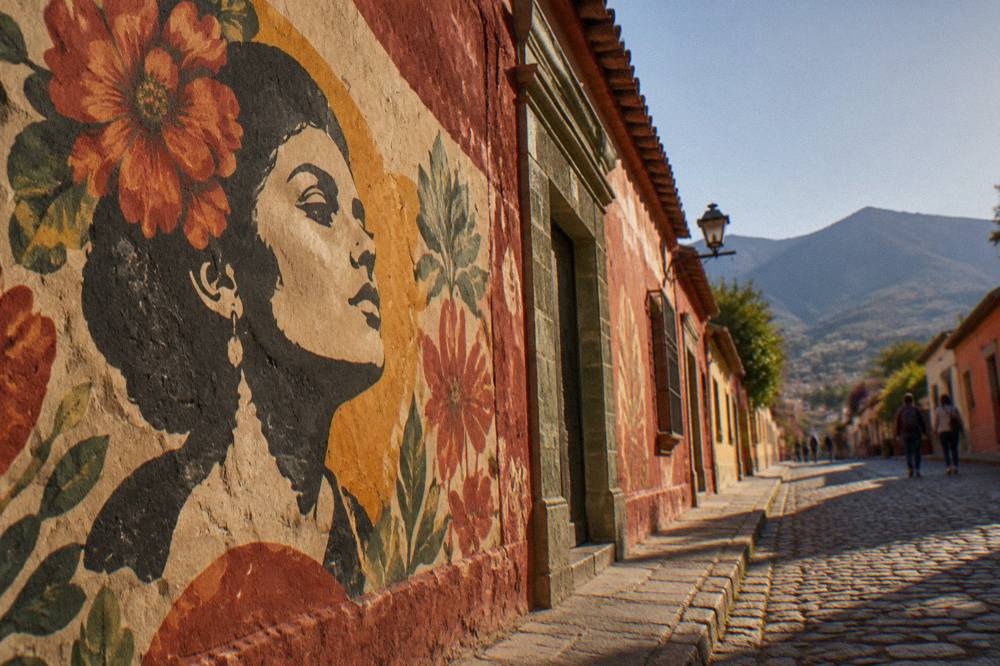
Jalatlaco sits within easy walking distance of the Centro, so a street art walk does not eat a whole day the way a valley excursion does. That makes it the natural afternoon or second-day activity after a morning centre walk, and it also works for visitors using the one-day and two-day itineraries on the one day in Oaxaca and two days in Oaxaca pages.
Deciding between an artist-led walk and a general centre loop comes down to whether the walls or the buildings are the draw. Either way, the bookings carry free cancellation on the standard terms, so the choice can be made before the trip and adjusted on the ground.
Can You Walk Oaxaca City Without A Guide At All?
Yes, Oaxaca City's historic centre is compact and walkable without a guide, and the main sights from the Zócalo to Santo Domingo sit within a short walking distance of each other. A guided walk adds context, access to explanation and, on artist-led routes, working knowledge, but the geography itself poses no obstacle to independent walking.
The honest trade-off is information. Walking independently costs nothing at street level, and the Jardín Etnobotánico's guided garden visits are themselves free at the stated times. What a paid walk adds is a guide's commentary on the buildings, the murals or the food, and on the food walks, the tastings themselves. Visitors splitting a trip between guided and independent days can anchor the free part with the free things to do in Oaxaca guide and keep a paid walk for the first morning, when orientation matters most.
Safety is a common question for independent walking, and the answer page on walking Oaxaca at night covers the evening side. On advisories: the UK FCDO advises against all but essential travel to parts of Mexico but does not name Oaxaca on its main page; Canada advises a high degree of caution for Mexico overall with regional advisories; the US State Department lists Oaxaca state at Level 2, exercise increased caution, with restrictions for its own staff in the Isthmus region rather than the city. Road blockades by teachers' unions are a standing risk that can disrupt road and airport access, and no date should be assumed for one.
| Walking Option In Oaxaca City | What It Covers | Guided Or Independent |
|---|---|---|
| Historic centre walk | Zócalo, cathedral, Andador, Santo Domingo, markets | Guided bookable tours, or independent |
| Street art walk | Jalatlaco murals and artist commentary | Guided; artist-led versions add technique |
| Food and market walk | Mercado 20 de Noviembre, Benito Juárez, tastings | Guided; tastings included on tours |
| Jardín Etnobotánico visit | The garden at Santo Domingo | Free guided visits at fixed hours |
| Evening walk | Centro streets after dark, food stops | Guided evening tours, or independent |
What Do The Evening And Day Of The Dead Walking Tours Include?
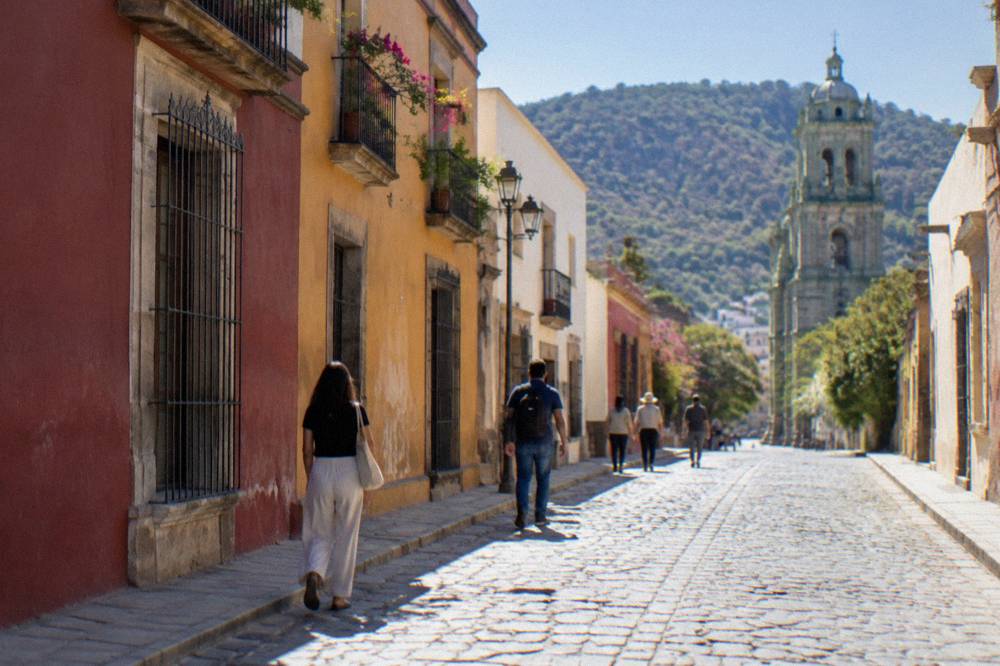
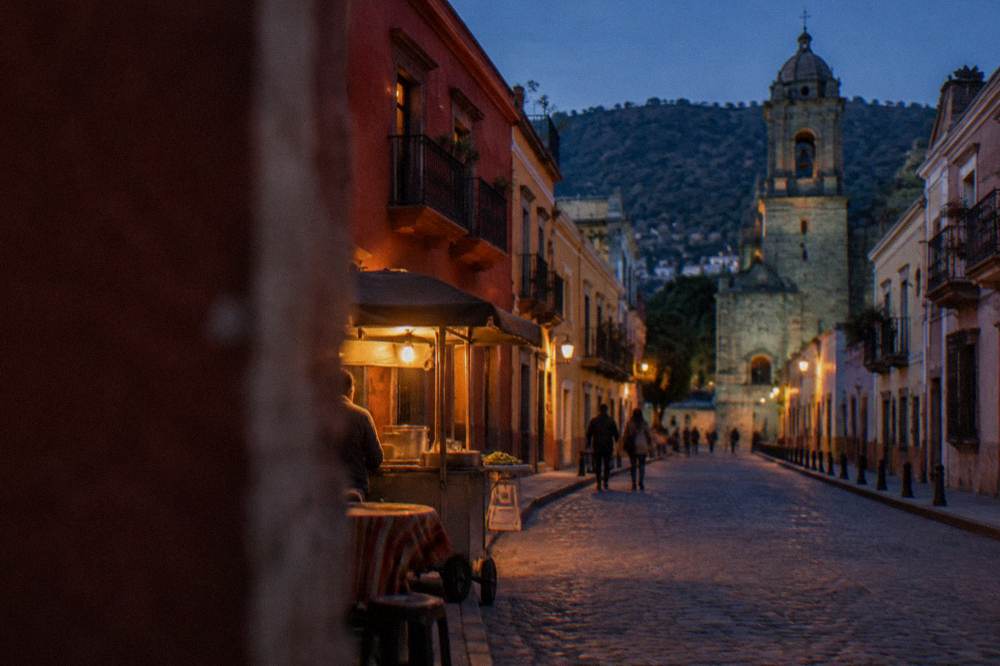
Evening walking tours in Oaxaca City centre on street food and the Centro after dark, with the Day of the Dead evening walks adding cemetery and comparsa elements that only exist in late October and early November. The Day of the Dead walks include dinner on the tour examined here, and they run only around the traditional dates of 31 October to 2 November.
The Day of the Dead period is the strongest reason to book an evening walk at a specific time of year. The festival's traditional core dates are 31 October to 2 November, and cemeteries including Xoxocotlán open at night around 1 and 2 November. The 2026 programme has not been announced, so no 2026 dates or activity counts should be assumed; the 25 October to 4 November programme with more than 140 activities was the 2025 edition.
Outside the festival window, evening food walks run year-round and cover the same streets in a different register: vendors out, tasting stops sequenced, the Centro lit rather than in full festival decoration. The Oaxaca at night page maps the independent version for comparison.
How Do Walking Tours Combine With Oaxaca Day Trips?
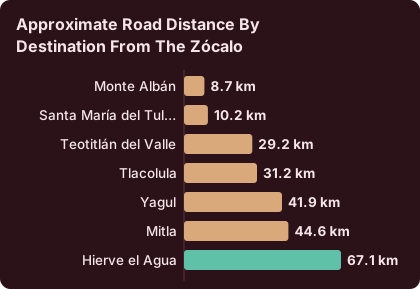
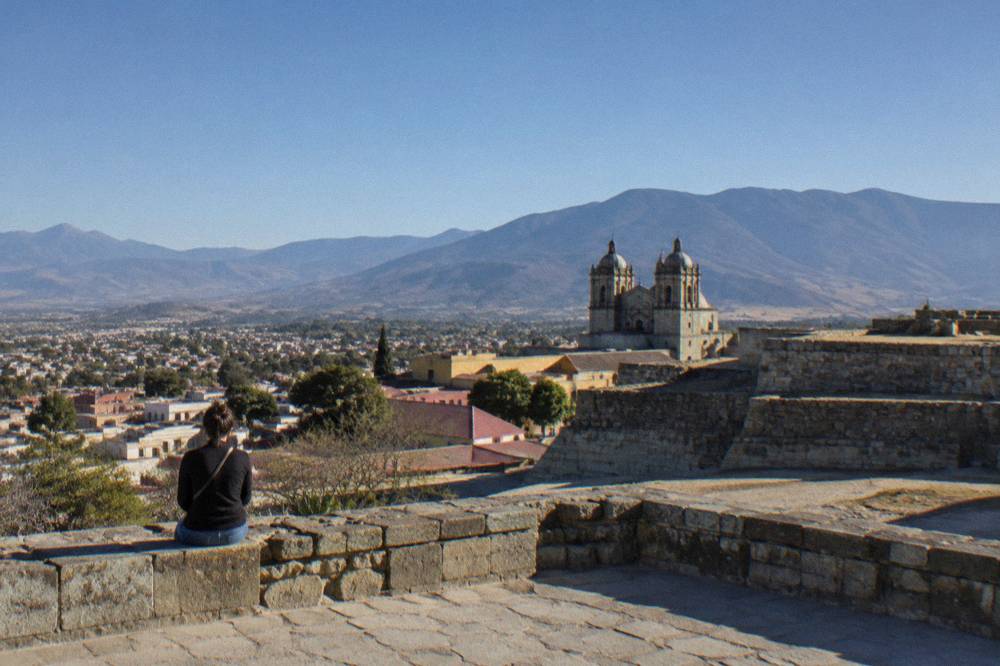
Walking tours stay inside Oaxaca City, while the valley's headline sights, Monte Albán, Mitla, Hierve el Agua and Santa María del Tule, lie outside it, from about 15 minutes to about 57 minutes away by road. A typical pattern is a walking tour on day one for orientation, then a valley day trip on day two, and the combined options are bookable as single products that bundle the ruins, the craft stops and Hierve el Agua.
The drive times below are derived estimates, so real traffic and mountain roads are slower, and each figure should be read as "about". Monte Albán is the closest headline site and the most common pairing with a city walk; Hierve el Agua is the farthest of the standard loop stops.
| Destination From The Zócalo | Approximate Road Distance | Approximate Drive Time |
|---|---|---|
| Monte Albán | 8.7 km | About 15 minutes |
| Santa María del Tule | 10.2 km | About 11 minutes |
| Teotitlán del Valle | 29.2 km | About 26 minutes |
| Tlacolula | 31.2 km | About 25 minutes |
| Yagul | 41.9 km | About 38 minutes |
| Mitla | 44.6 km | About 37 minutes |
| Hierve el Agua | 67.1 km | About 57 minutes |
Monte Albán is the natural first day trip: the INAH page lists Monday to Sunday opening, 08:00 to 17:00 with last access at 16:00, and entry of 105 MXN for nationals and 210 MXN for foreign visitors under Category I. Full details and tour options are on the Monte Albán and Monte Albán tour pages. The far side of the valley, covered on the Mitla and Hierve el Agua pages, combines into single-day loops that also stop at the Tule tree and Santiago Matatlán, whose palenques are described on the mezcal route page.
Among the bundled products, the valley loop that gives the longest stop at Hierve el Agua and folds in Mitla, Tule, rugs and mezcal is the one below, and it pairs with any city walking tour without schedule conflict.
What Do The INAH Sites On The Walking Radius Cost And When Are They Open?
The INAH sites in and around Oaxaca City charge by category: Monte Albán, Mitla and Yagul are Category I at 105 MXN for nationals and 210 MXN for foreign visitors, while Dainzú, Lambityeco and Zaachila are Category III at 80 and 145 MXN. Monte Albán, Mitla and Yagul open Monday to Sunday 08:00 to 17:00; Zaachila opens Thursday to Sunday 10:00 to 16:00 only, and Atzompa closes at 16:00 with last access at 15:00.
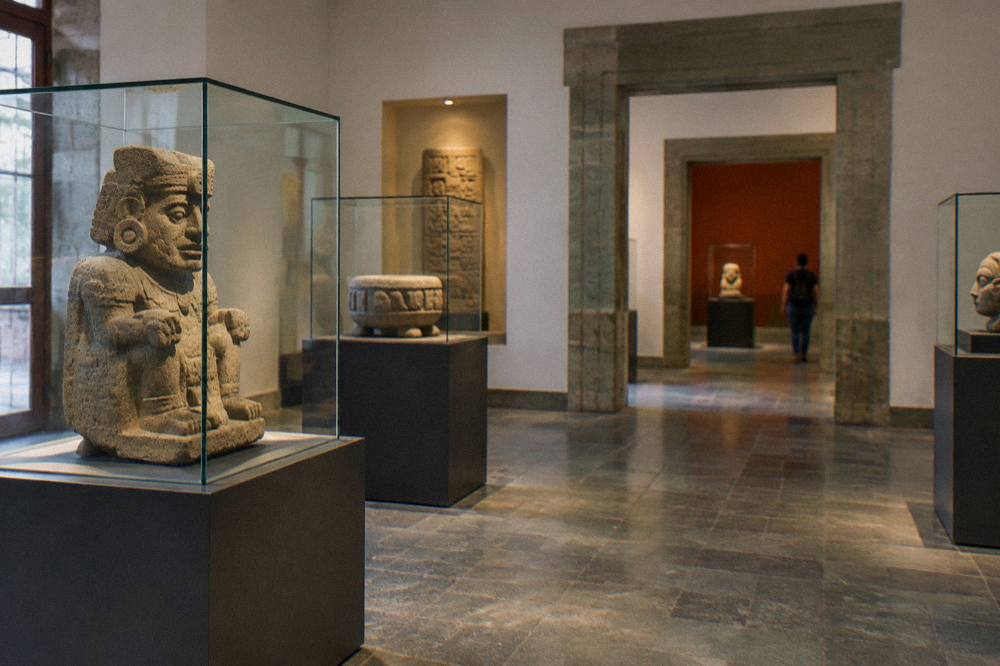
These hours and fees come from the INAH site pages, and they matter for anyone bolting an archaeology stop onto a walking-focused stay. The 2025 visitor counts from the state tourism indicators show the pull of each site: Monte Albán recorded 416,675 visitors, Mitla 104,428, Yagul 10,185, Lambityeco 5,545 and Zaachila 4,229. The Museo de las Culturas de Oaxaca, the INAH museum inside the city at Santo Domingo, charges the Category I rates and opens Tuesday to Saturday only.
| INAH Site | Hours | Last Access | Entry MXN Nationals | Entry MXN Foreigners |
|---|---|---|---|---|
| Monte Albán | Mon to Sun 08:00 to 17:00 | 16:00 | 105 | 210 |
| Mitla | Mon to Sun 08:00 to 17:00 | 16:30 | 105 | 210 |
| Yagul | Mon to Sun 08:00 to 17:00 | 16:00 | 105 | 210 |
| Dainzú | Mon to Sun 08:00 to 17:00 | 16:30 | 80 | 145 |
| Lambityeco | Mon to Sun 08:00 to 17:00 | 16:30 | 80 | 145 |
| Zaachila | Thu to Sun 10:00 to 16:00 | 16:00 | 80 | 145 |
| Atzompa | Mon to Sun 08:00 to 16:00 | 15:00 | Not stated on the page | Not stated on the page |
| Museo de las Culturas de Oaxaca | Tue to Sat 10:00 to 16:00 | 16:00 | 105 | 210 |
When Is The Best Weather For An Oaxaca Walking Tour?
Oaxaca City's dry season runs November to April and the rainy season May to October, with June averaging 188.3 mm of rain and January 2.4 mm, per the SMN station normals for 1991 to 2020. Daytime highs sit between about 29 and 35 degrees across the year, and the practical walking question is rain, not heat: June through September average well over 100 mm per month, while November through March average under 20 mm.
Walking tours run in both seasons, but the rain changes the experience: afternoon showers are the pattern in the wet months, and morning walks are the standard adjustment. The monthly normals below come from the SMN station in the city, and the weather by month and rainy season pages carry the full breakdown.
| Month | Mean High C | Mean Low C | Mean Rain Mm | Rainy Days |
|---|---|---|---|---|
| Jan | 28.9 | 10.3 | 2.4 | 1.4 |
| Feb | 31.1 | 11.6 | 4.6 | 1.1 |
| Mar | 33.3 | 13.6 | 17.6 | 4.1 |
| Apr | 34.9 | 15.8 | 47.3 | 7.6 |
| May | 33.8 | 16.7 | 97.9 | 13.7 |
| Jun | 30.9 | 16.7 | 188.3 | 19.9 |
| Jul | 30.1 | 15.9 | 118.6 | 20.4 |
| Aug | 30.0 | 15.9 | 131.8 | 20.5 |
| Sep | 29.1 | 16.1 | 163.6 | 21.4 |
| Oct | 29.3 | 14.5 | 63.1 | 12.0 |
| Nov | 29.0 | 12.3 | 9.1 | 3.5 |
| Dec | 28.9 | 11.0 | 9.0 | 2.4 |
Festival timing interacts with weather. Guelaguetza is an annual July event on two Mondays at the Auditorio Guelaguetza on the Cerro del Fortín; the 2026 edition ran 20 and 27 July with Palco A seats at 1,632 MXN and Palco B at 1,321 MXN plus fees, and Palcos C and D free, sold through Superboletos. July averages 118.6 mm of rain, so a July visit for Guelaguetza is a wet-season walk with a festival attached. The Guelaguetza page carries the detail.
How Many Days Should You Give Oaxaca Walking Tours?
Two walking days is the practical minimum for Oaxaca City: one for a historic centre walk plus the markets, and one for a street art or food walk, ideally with a valley day trip added on a third day. The city's average visitor stay in 2025 was 2.00 nights, per the state tourism indicators, so a two-to-three-day structure with one booked walk and one excursion matches how visits actually run.
A one-day visit can hold a single centre walk and an evening food stop, as laid out on the one day itinerary. Two days allow the Jalatlaco street art route plus Monte Albán, and the two days page sequences exactly that. Longer stays open the Sierra Norte, the Pueblos Mancomunados and the craft villages, and the how many days in Oaxaca guide gives the full ladder. Visitors base themselves using the where to stay guide, and almost every walk departs from within walking distance of the central hotels.
The full list of bookable activities, walks included, sits on the things to do in Oaxaca page, which is the right next stop for anyone matching a walking tour against cooking classes, mezcal tastings and craft workshops.
Common Questions About Oaxaca Walking Tours
Which Walking Tour Should I Book For A First Visit To Oaxaca City?
A historic centre walk is the default first booking, covering the Zócalo, the Andador Macedonio Alcalá and Santo Domingo de Guzmán. Add the artist-led street art walk if murals are the main interest.
Can You Walk Oaxaca City Without A Guide?
Yes. The historic centre is compact, and the main sights sit close together. The Jardín Etnobotánico even runs free guided garden visits at fixed weekday and Saturday hours.
What Is The Best Time Of Year For A Walking Tour In Oaxaca?
The dry season, November to April, has the least rain: January averages 2.4 mm against June's 188.3 mm, per the SMN normals. Walks run year-round, with mornings preferred in the rainy season.
Do Any Walking Tours Cover Day Of The Dead In Oaxaca?
Yes, evening walking tours run during the Day of the Dead period, whose traditional dates are 31 October to 2 November. One listed tour includes dinner; the 2026 festival programme has not been announced.
Is Jalatlaco Walkable From The Oaxaca Centro?
Yes, Jalatlaco sits adjacent to the historic centre, and street art walks reach it on foot from central meeting points.
Can A Monte Albán Visit Replace A Walking Tour?
It complements rather than replaces one. Monte Albán is about 15 minutes from the centre by road, so it fits as a half-day trip alongside a city walk.