Oaxaca Food Tours: Markets, Mole And Tlayudas
Oaxaca City, the inland highland capital of the state of Oaxaca in Mexico, is one of the country's defining food destinations, and a guided food tour is the fastest way into its markets, moles and tlayudas.
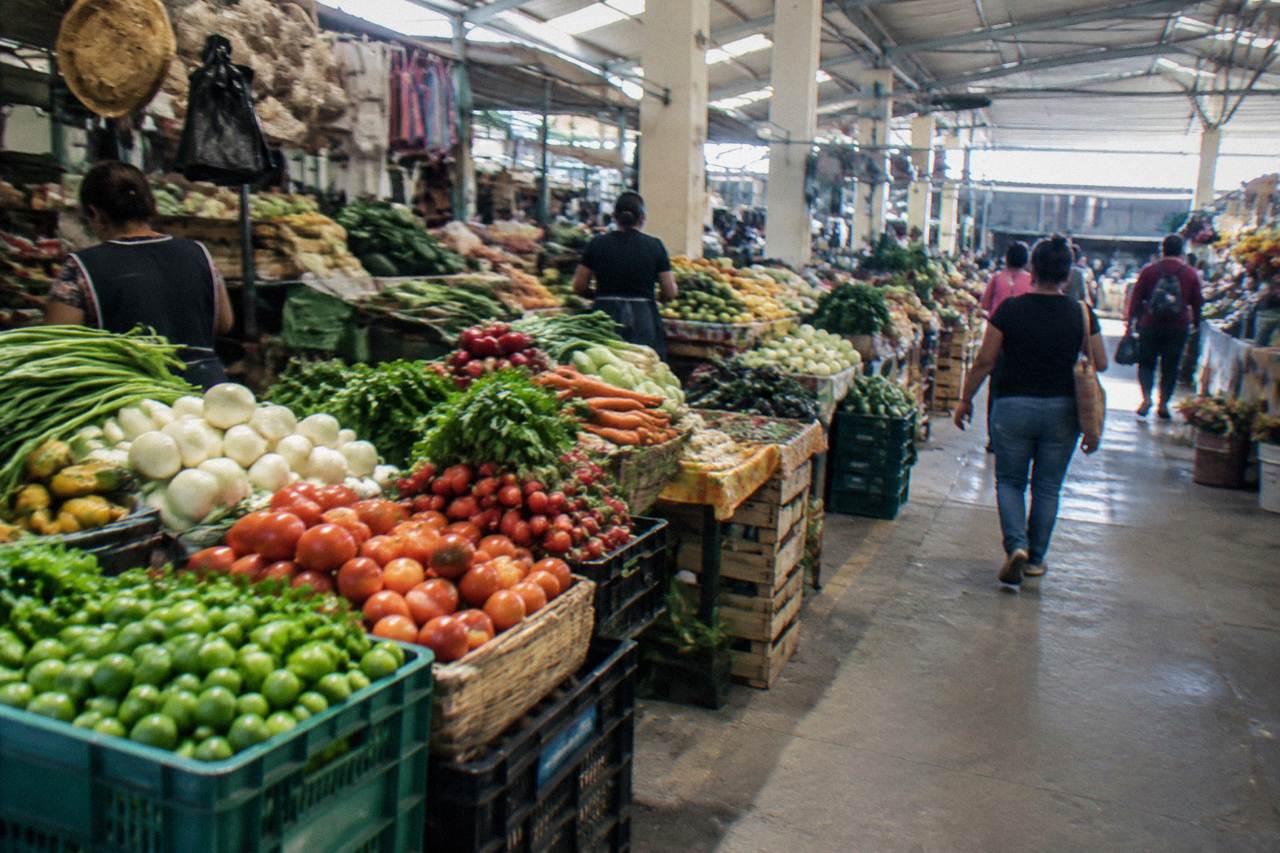
The strongest first food tour in Oaxaca City is a market walk with tastings included, covering Mercado 20 de Noviembre and surrounding Centro Histórico stalls; cooking classes and mezcal pairings then go deeper on single subjects.
Oaxaca City sits in the Valles Centrales at about 1,550 m, an inland highland capital with no sea and no beach, and its reputation rests heavily on what is cooked and sold in its markets. The dishes that carry that reputation, mole, tlayudas, tejate, chapulines and quesillo, are lowercase words in Spanish and everyday foods here, and the fastest way to understand them is to walk the markets with someone who can explain each stall. This page sets out what food tours in Oaxaca City actually cover, how the different formats compare, and how to pair a food day with the ruins and valley towns that surround the city.
Which Oaxaca Food Tour Should A First-Time Visitor Book?
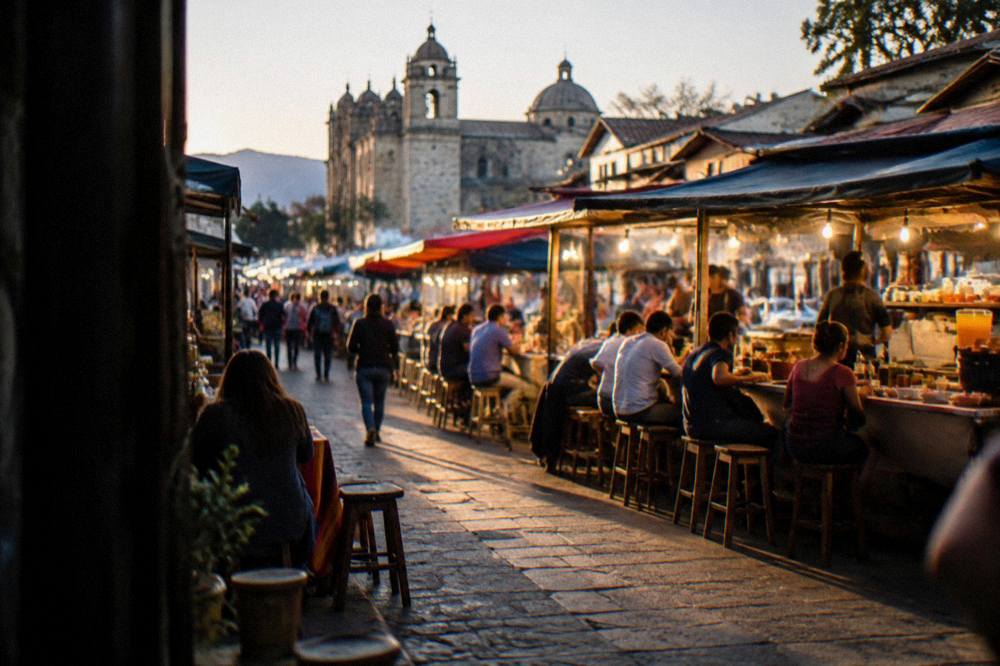
A market walk with tastings included is the natural first food tour in Oaxaca City, because it covers the Mercado 20 de Noviembre food hall, the stalls around the Centro Histórico and a string of classic dishes in a single guided loop. The immersion tour and markets walk on this page's tour list, with all gastronomy included, is built exactly on that pattern, and a shorter tasting walk or an evening street food route works for visitors with less time.
The logic is simple. Oaxaca's food is market food first and restaurant food second, and a market-based tour puts the raw ingredients, the cooks and the finished dishes in the same hour. The Oaxaca Travel Guide tour list includes several formats under the food-and-market-tours kind: a market walk with all gastronomy included, a shorter walk with traditional tastings, an evening street food route with more than a dozen tastings, and a small-group cacao and chocolate session.
What each format covers differs more than the price differences suggest. The all-gastronomy walks feed you as they go, so they replace a meal. The chocolate session is a seated experience rather than a walk. The evening street food route shifts the same city to a different hour and a different set of stalls. The detailed comparisons live on What To Eat In Oaxaca and Street Food In Oaxaca, which break down the dishes dish by dish.
Which Markets Does A Oaxaca Food Tour Actually Visit?
Most food tours in Oaxaca City centre on the Mercado 20 de Noviembre and the market district immediately south of the Zócalo, with the Benito Juárez market next door and the stalls of the Andador Macedonio Alcalá corridor within walking distance. The state's own releases describe 20 de Noviembre, founded in 1893, as a key food market of the historic centre, and Benito Juárez, inaugurated in 1894, as the historic central market near the Zócalo.
The two markets sit close together in the grid south of the main square, which is why a single walking tour can cover both. 20 de Noviembre is the food hall: the smoke hall and its comedores are the engine of the building. Benito Juárez is the broader market, produce and staples, chocolate and breads among them. A third name, Mercado de Abastos, appears on longer itineraries; the state describes it as a large wholesale market serving the capital and nearby towns since 1978. It is farther out and more often paired with a cooking class that shops for its own ingredients.
| Market | What the state's own pages say | Typical tour role |
|---|---|---|
| Mercado 20 de Noviembre | Key food market of the historic centre, founded 1893 | Core stop on nearly every food walk |
| Mercado Benito Juárez | Historic central market, inaugurated 1894 | Produce and staples, sits beside 20 de Noviembre |
| Mercado de Abastos | Large wholesale market serving the capital since 1978 | Shopping leg on cooking-class itineraries |
The weekly valley markets, Tlacolula, Ocotlán, Etla and Zaachila, are different beasts entirely and belong to day-trip itineraries rather than city food walks. No published hours for any of these markets appear in the facts this site works from, so timing is left to the guide or the operator's booking page.
What Do Oaxaca Food Tours Cost And What Is Included?
Prices for bookable food tours in Oaxaca City move with demand and season. What is stable is the structure: a market walk with tastings includes the food itself, a cooking class includes ingredients and the meal you cook, and a mezcal tasting includes the pours, so the honest comparison is coverage per format rather than peso per peso.
Read each listing's own page for the live price, rating and review count. What can be said plainly is what the formats include. The all-gastronomy market walk feeds you through the route, so it stands in for lunch. The traditional-tastings walk covers a defined set of dishes. Cooking classes run longer and end with a full meal. Mezcal experiences are tasting-led, and the pairing sessions match seven mezcal servings with mole courses, which makes them a dinner-and-tasting hybrid.
The one cost this page can state as a printed figure is not a tour at all: entry to the INAH archaeological sites, priced in pesos and fixed by category. If a food-plus-ruins day is the plan, these are the fees that apply at the gate.
| INAH site | Hours | Nationals | Foreigners |
|---|---|---|---|
| Monte Albán | Mon to Sun 08:00 to 17:00, last access 16:00 | 105 MXN | 210 MXN |
| Mitla | Mon to Sun 08:00 to 17:00, last access 16:30 | 105 MXN | 210 MXN |
| Yagul | Mon to Sun 08:00 to 17:00, last access 16:00 | 105 MXN | 210 MXN |
Visits outside normal INAH hours are listed on the INAH pages at 730 MXN, a figure aimed at special access rather than ordinary visitors. The full site-by-site detail, including Category III sites, sits on Monte Albán and Mitla.
Still deciding between a walk and a class? The market immersion tour can be held with a pay-later option and free cancellation, which makes it a low-commitment first booking while the rest of the itinerary settles. Check availability
What Dishes Will You Taste On A Oaxaca Food Tour?
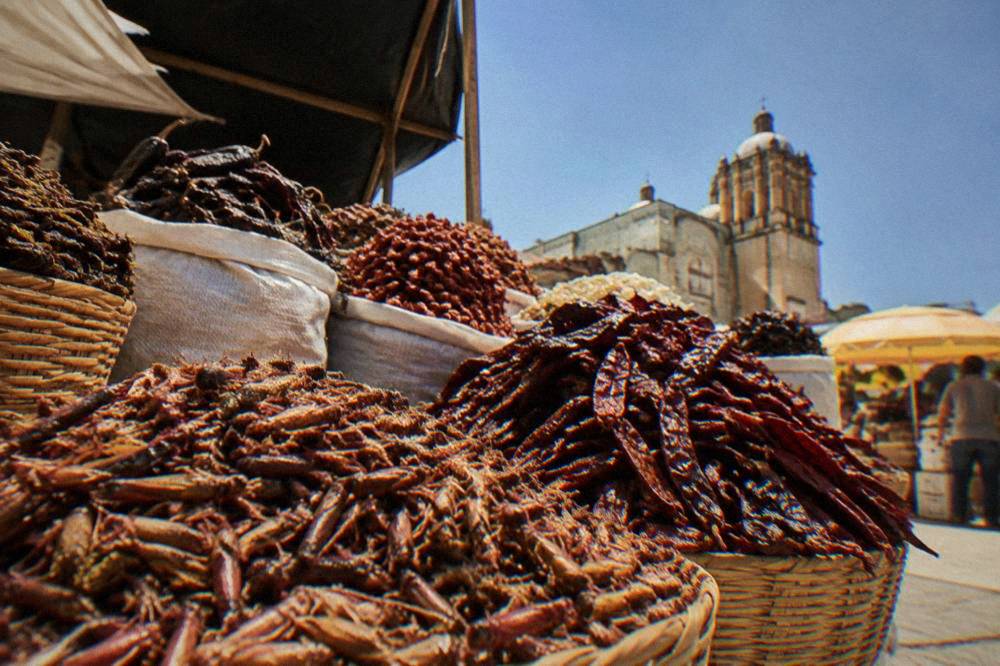
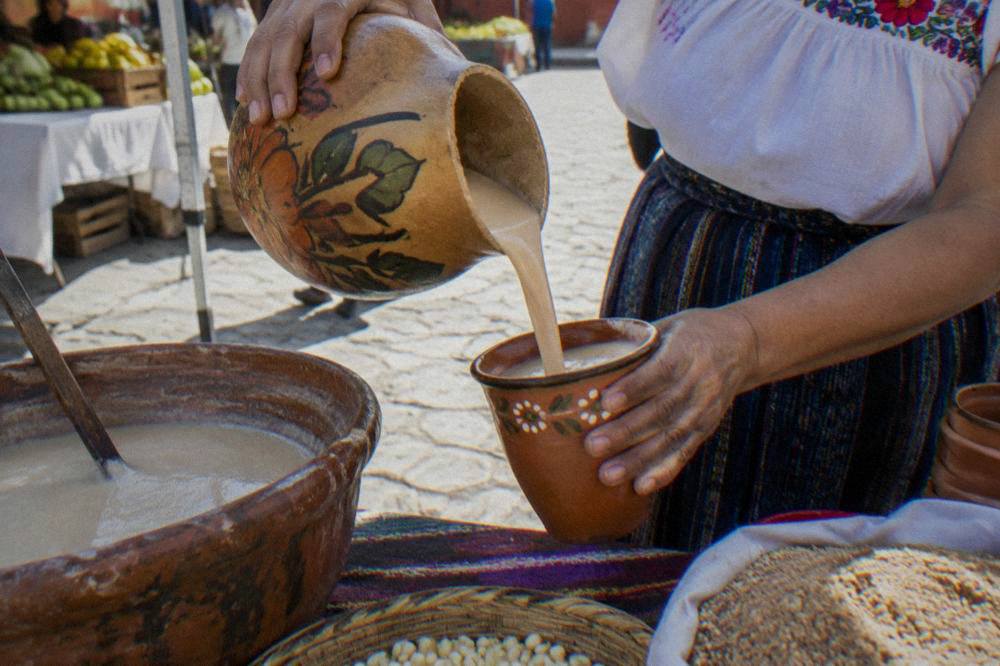
The core tasting list on a Oaxaca food tour is tlayuda, mole, tejate, chapulines and quesillo, with Oaxacan chocolate appearing on routes that stop at a grinder or a chocolate stall. A tlayuda is the large toasted tortilla with beans, quesillo and asiento or meat; mole is the sauce family the region is defined by; tejate is a cold maize and cacao drink; chapulines are toasted grasshoppers; quesillo is the string cheese of the valleys.
Each of these has a guide page of its own, because each one deserves more than a stall-side sentence. Oaxacan Mole covers the sauce family and its variants, and Oaxacan Chocolate covers the chocolate that shows up both as a drink and as an ingredient. Vegetarian visitors are better served here than in most of Mexico, and Vegetarian And Vegan Food In Oaxaca details how the same markets handle a meat-free route.
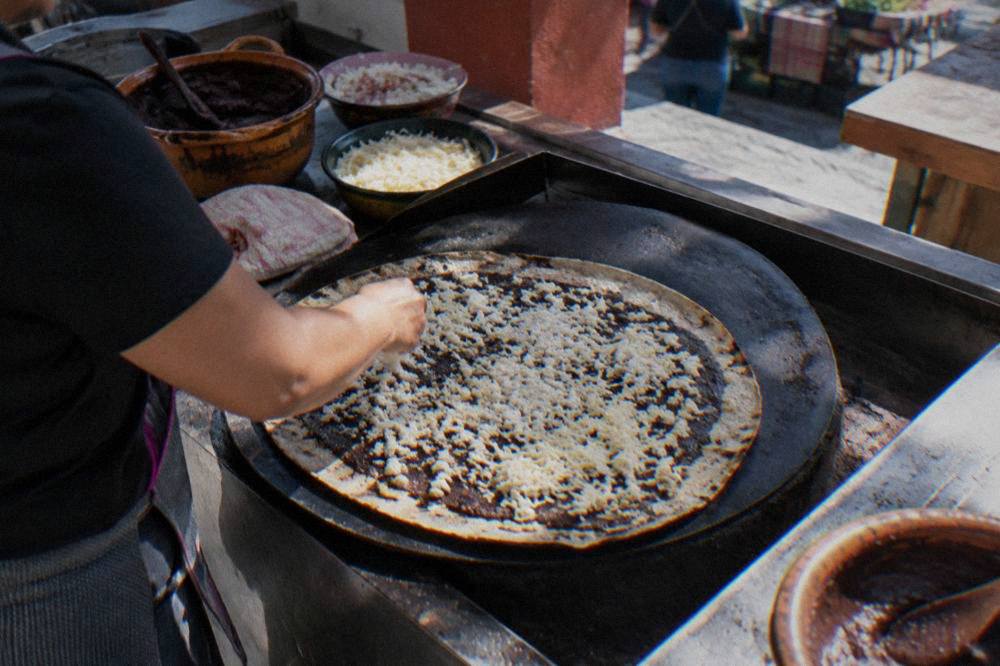
The dish set is small enough to learn in a day and deep enough to spend a week on. This is the honest reason food tours work so well in this city: a guide can hand you the vocabulary and the stalls in three hours, and every subsequent meal becomes self-guided.
| Dish or drink | What it is | Where a tour usually meets it |
|---|---|---|
| Tlayuda | Large toasted tortilla with beans, quesillo and toppings | Street stalls and the 20 de Noviembre smoke hall |
| Mole | Sauce family served over meat or vegetables | Comedor kitchens and cooking classes |
| Tejate | Cold maize and cacao drink | Market drink stalls |
| Chapulines | Toasted grasshoppers, seasoned | Market snack stalls |
| Quesillo | String cheese of the Valles Centrales | Market cheese stalls, tlayudas |
| Chocolate | Cacao drink and ingredient | Chocolate grinders near Benito Juárez |
Is A Cooking Class Better Than A Market Tour In Oaxaca?
A cooking class and a market tour answer different questions, and many visitors book one of each. The market tour shows you the city's food as it is sold and eaten today, across many stalls in one walk; the cooking class takes one meal apart, usually starting with a shopping leg in the market and ending with the dish you cooked, so the depth runs deeper and the coverage narrower.
The tour list carries both. Beyond the market walks already covered, there is a traditional Oaxacan cooking class, a vegetarian cooking class with its own market visit, a private mole-focused class built on grandmother's recipes, and a full traditional class format. The mole question in particular is better answered in a class than on a walk, because the sauce is a long process and a walk only shows the finished plate.
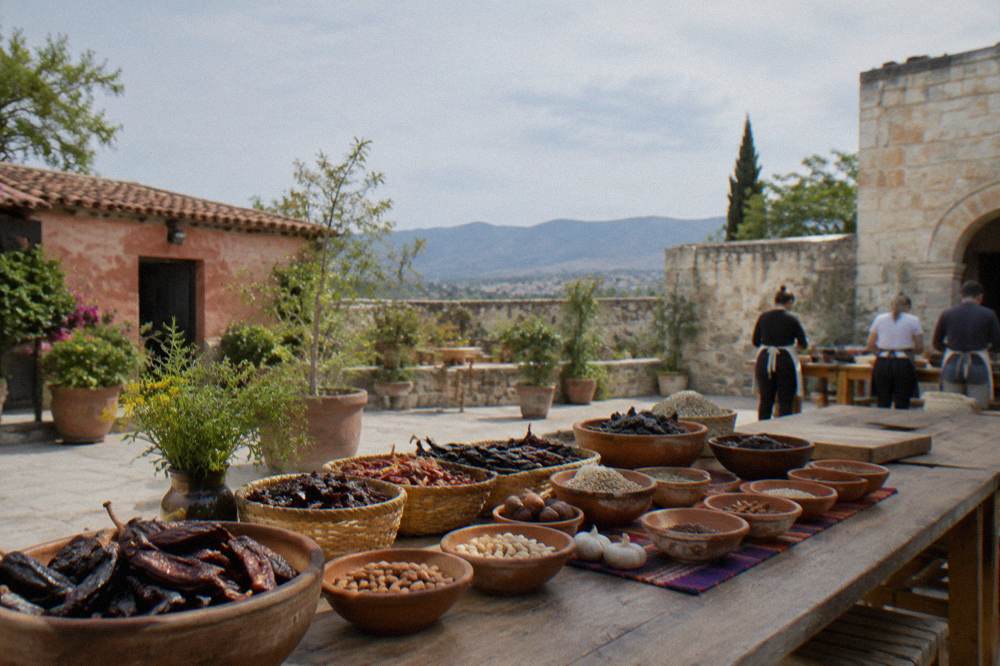
The practical differences are time and appetite. Classes run longer and end in a full meal, so they occupy half a day and replace lunch. Market walks are shorter and graze rather than sit. Families with children often do better with the walk plus a simple class later, a combination detailed on Oaxaca With Kids. The full class landscape, including format-by-format comparisons, is on Oaxaca Cooking Classes.
Can You Pair Mezcal Tasting With A Oaxaca Food Tour?
Yes, and two formats do it directly: a sommelier-led pairing session that matches seven mezcal servings with mole courses, and a mixology workshop built on organic mezcal. Beyond those, valley day trips that combine Hierve el Agua and Mitla with a distillery stop put mezcal in its production context, while city mezcal tours with behind-the-scenes distillery access run as stand-alone experiences.
The pairing session is the tightest fit for a food-focused trip, because it treats mezcal as a food-matching drink rather than a tour stop. The mixology workshop is a hands-on alternative. The Mezcal Tour Oaxaca page carries the full breakdown of the mezcal tour list, including the countryside agave-fields option and the family-distillery visits.
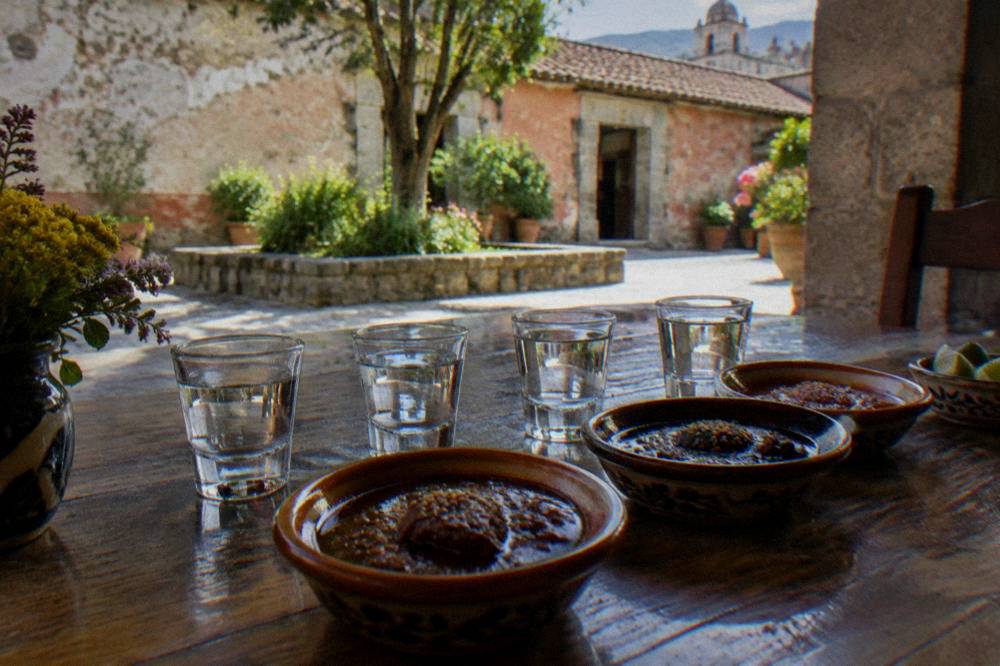
Santiago Matatlán, the town the state's own pages call the world capital of mezcal, is the anchor of the production-side tours.
How Do You Combine A Oaxaca Food Tour With Monte Albán And The Valley?
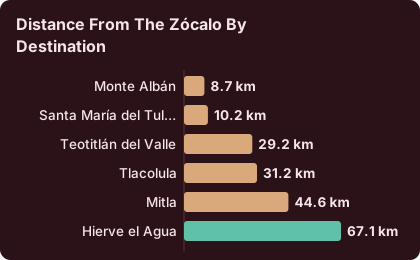
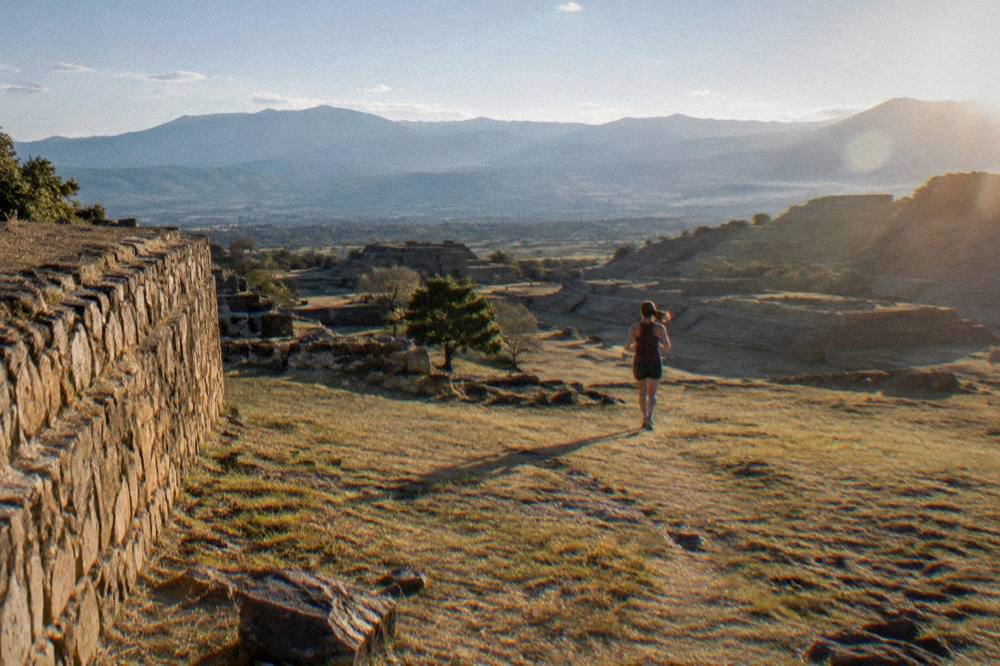
The clean pattern is a food walk on day one in the city, Monte Albán on the morning of day two, and a single valley day trip that chains Mitla, the Tule tree, Hierve el Agua and a mezcal distillery stop, because those four stops sit along one corridor east of the city. Monte Albán is about 15 minutes from the Zócalo by road, Mitla about 37 minutes and Hierve el Agua about 57 minutes, so the valley loop is one bus-and-van day, not several.
The drive times below are derived from mapped road routes in free-flow conditions; real traffic and mountain roads are slower, and every figure is rounded up and stated as about.
| Destination | Distance from the Zócalo | Free-flow drive time |
|---|---|---|
| Monte Albán | 8.7 km | about 15 min |
| Santa María del Tule | 10.2 km | about 11 min |
| Teotitlán del Valle | 29.2 km | about 26 min |
| Tlacolula | 31.2 km | about 25 min |
| Mitla | 44.6 km | about 37 min |
| Hierve el Agua | 67.1 km | about 57 min |
The valley day trip on this page's trio combines the Tule tree, Mitla, Hierve el Agua and a mezcal distillery in a single loop, which is the most efficient way to see the eastern valley without a rental car. Monte Albán is the separate half-day, and the guided half-day tour covers the site with transport from the city. The attraction pages at Hierve el Agua, Santa María Del Tule Tree and Santo Domingo Church round out the non-food half of the itinerary.
When Is The Best Weather For Food Tours In Oaxaca?
The dry season, November to April, is when market walks and open-air eating run with the least risk of rain: the SMN station normals show January with 2.4 mm of rain across about 1.4 rain days, against 188.3 mm across 19.9 days in June.
April carries the highest mean daily maximum at 34.9 C and December to January the lowest mean minimums at 11.0 and 10.3 C, so a food walk is warm work in spring and cool at the edges in winter.
The full monthly picture from the station normals:
| Month | Mean high C | Mean low C | Rain mm | Rain days |
|---|---|---|---|---|
| Jan | 28.9 | 10.3 | 2.4 | 1.4 |
| Feb | 31.1 | 11.6 | 4.6 | 1.1 |
| Mar | 33.3 | 13.6 | 17.6 | 4.1 |
| Apr | 34.9 | 15.8 | 47.3 | 7.6 |
| May | 33.8 | 16.7 | 97.9 | 13.7 |
| Jun | 30.9 | 16.7 | 188.3 | 19.9 |
| Jul | 30.1 | 15.9 | 118.6 | 20.4 |
| Aug | 30.0 | 15.9 | 131.8 | 20.5 |
| Sep | 29.1 | 16.1 | 163.6 | 21.4 |
| Oct | 29.3 | 14.5 | 63.1 | 12.0 |
| Nov | 29.0 | 12.3 | 9.1 | 3.5 |
| Dec | 28.9 | 11.0 | 9.0 | 2.4 |
In the rainy season, afternoon rain is the pattern rather than all-day rain, and morning food walks are the standard adjustment. The city's indoor market halls keep a food day workable in any month, a point expanded on the site's rainy-day guidance. July adds the Guelaguetza festival period to the calendar, when the city fills and the Feria del Mezcal runs alongside.
How Many Food Tours Fit Into A Short Oaxaca Trip?
Two food experiences fit comfortably in a two-night stay, which matches the city's recorded average stay of 2.00 nights: one market walk with tastings as the anchor, plus either a cooking class or a mezcal pairing as the second. A stay of four nights or more can add the valley day trip, which carries its own food stops at Tlacolula and Santiago Matatlán, and an evening street food route that turns the same city into a different map after dark.
The sequencing that works on paper: land, walk the Centro Histórico, take the market walk on the first full morning while appetite and energy are high, then slot the class or pairing into the opposite end of the day or the next morning. Monte Albán takes one morning, the valley loop takes one full day. Visitors comparing Oaxaca with Puebla, the other great food city within reach, can read the head-to-head on Oaxaca Vs Puebla.
Santiago Matatlán appears on the state's own pages as the world capital of mezcal, and the town anchors the production-side stops on the valley tours.
Common Questions About Oaxaca Food Tours
Are Food Tours In Oaxaca Worth It?
For a first visit, a guided market walk earns its place by turning the market halls into a readable map: which stall sells what, what each dish is called and how to order it on later visits alone.
What Food Is Oaxaca Famous For?
The short list is mole, tlayudas, quesillo, tejate, chapulines and Oaxacan chocolate, and a market walk touches most of them in a single route. The longer answer lives on the site's dedicated page answering what food Oaxaca is famous for.
Do Oaxaca Food Tours Include Meals Or Just Tastings?
It depends on the format. The all-gastronomy market walks include the food along the route and effectively replace a meal; tasting walks include a defined set of tastings; cooking classes include ingredients and the full meal you cook; pairing sessions include the mezcal servings and the matched courses. Each product page lists its inclusions.
Can Vegetarians Join Oaxaca Food Tours?
Yes. The tour list includes a vegetarian cooking class with its own market tour, and many market walks can be steered toward the meat-free staples, tlayudas hold, quesillo, tejate and vegetables among them. The site's vegetarian and vegan food guide lists the dishes that translate best.
Which Market Is Best For Food In Oaxaca City?
Mercado 20 de Noviembre, founded in 1893, is the food market of the historic centre and the core stop on nearly every food tour. Mercado Benito Juárez, inaugurated in 1894, sits beside it and covers produce, chocolate and staples, so the pair is usually walked together.
A food tour in Oaxaca City is less a splurge than a decoder: one guided morning in the markets and the rest of the trip orders itself, from the tlayuda stall to the mole kitchen to the mezcal poured after it.