Mezcal Tours In Oaxaca: Palenque Visits Compared
Mezcal tours in Oaxaca City split into three shapes: the drive out to a palenque near Santiago Matatlán, a tasting room session in the historic centre, and a guided pairing evening. This page compares them on what each covers, how far each one travels and when to slot one into a trip.
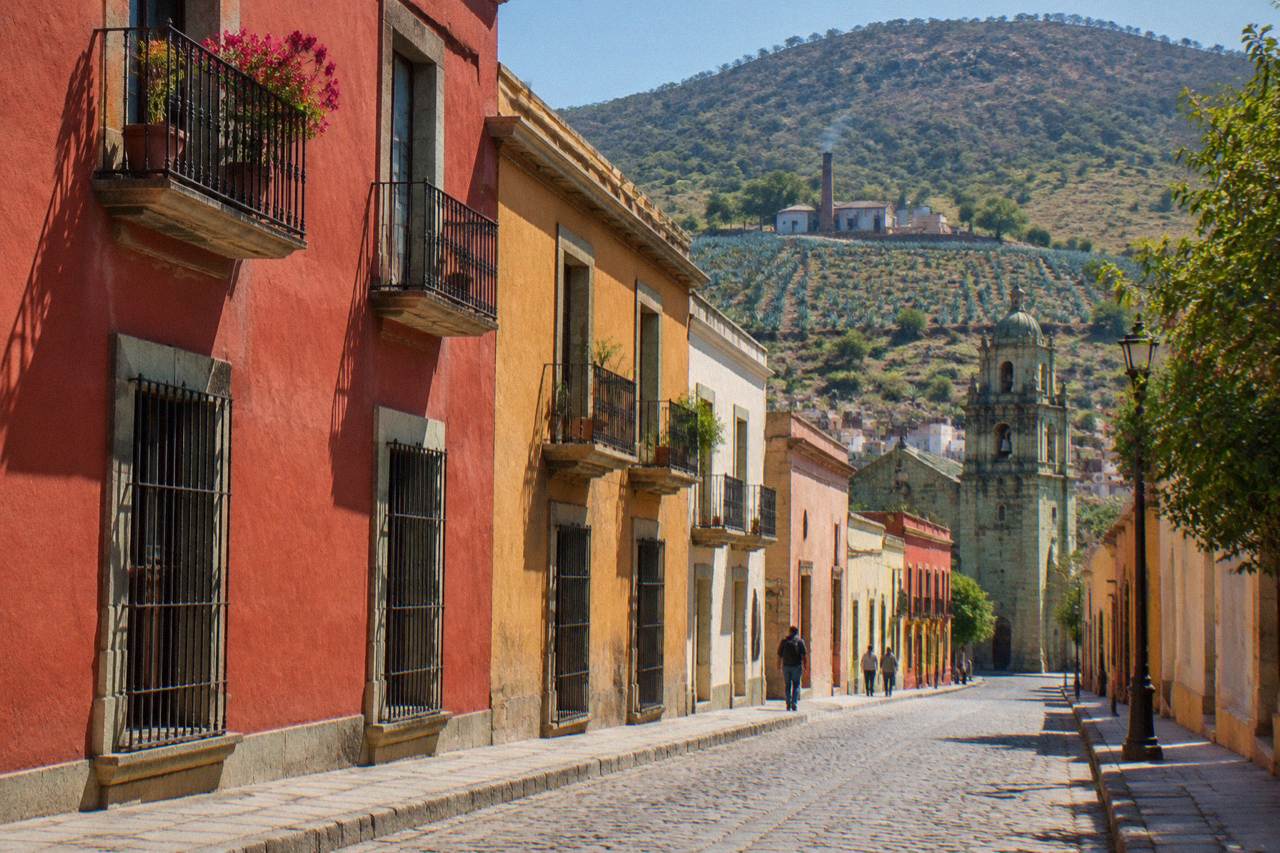
The widest choice of mezcal tours in Oaxaca City runs from countryside palenque visits with behind-the-scenes distillery access, to short sommelier-led pairing sessions in the historic centre, to full valley loops that pair Hierve el Agua and Mitla with a mezcal stop. The right pick depends on how much of the day you want to give it and whether you want to see production or just taste.
Mezcal is the drink Oaxaca City is known for, and the tour market around it has grown into three clearly different shapes. Santiago Matatlán, a town in the Tlacolula Valley, is repeatedly described on oaxaca.gob.mx pages as the "Capital Mundial del Mezcal", and that is where the palenque visits go. Closer to the Zócalo, tasting rooms and pairing sessions run on foot from the historic centre. This page compares what each format actually covers, how far each one travels from the centre, and how to slot one into a wider trip; for background on the spirit itself, see the Oaxaca mezcal guide, and for the wider valley route, the mezcal route through Santiago Matatlán.
Oaxaca de Juárez is an inland highland city in the Valles Centrales at about 1,550 m, the capital of the state of Oaxaca in Mexico. There is no sea and no port here; the Pacific coast is a far extension reached by a long drive or a flight. Every tour format in this comparison therefore starts from the city and works either outward into the valley corridor east of town or inward into the walkable grid of the Centro Histórico. That single geographic fact explains almost everything about how the market is structured, from the vehicle-based valley loops to the foot-based evening pairings, and it is the frame for every comparison that follows.
What Is A Mezcal Tour In Oaxaca?
A mezcal tour in Oaxaca is any guided visit built around the spirit: a drive out to a palenque in the Tlacolula Valley where distillation happens, a seated tasting in the city, or a pairing session that matches mezcal against local dishes such as mole. The city-format options run from the historic centre without a vehicle, while the palenque formats involve roughly 37 minutes of driving each way to the valley.
The distinction matters more here than in most destinations because the city and the production landscape sit apart. Oaxaca de Juárez is an inland highland city in the Valles Centrales at about 1,550 m; the palenques cluster in the valley towns beyond it. Santiago Matatlán lies past Tlacolula on the same corridor as Mitla, so a palenque day and an archaeology day often share a road.
The three formats also differ in what the guide is for. On a palenque visit the guide translates a working process; at a tasting the guide walks a flight of expressions; at a pairing the point is how the spirit interacts with food. Anyone weighing the spirit's reputation against tequila's may also want the answer on whether mezcal is tequila's poor relation.
A fourth, hybrid shape has appeared as the market has matured: the countryside tour that leaves the city but stops short of a full production visit, taking in agave fields and a distillery viewpoint rather than a full walk through the process. It suits the traveller who wants the landscape without committing a whole day, and several tour list products sit in exactly that space. Knowing which of the four shapes a listing belongs to, before booking, is the single most useful filter this page can offer, because everything else, price included, follows from that choice of shape.
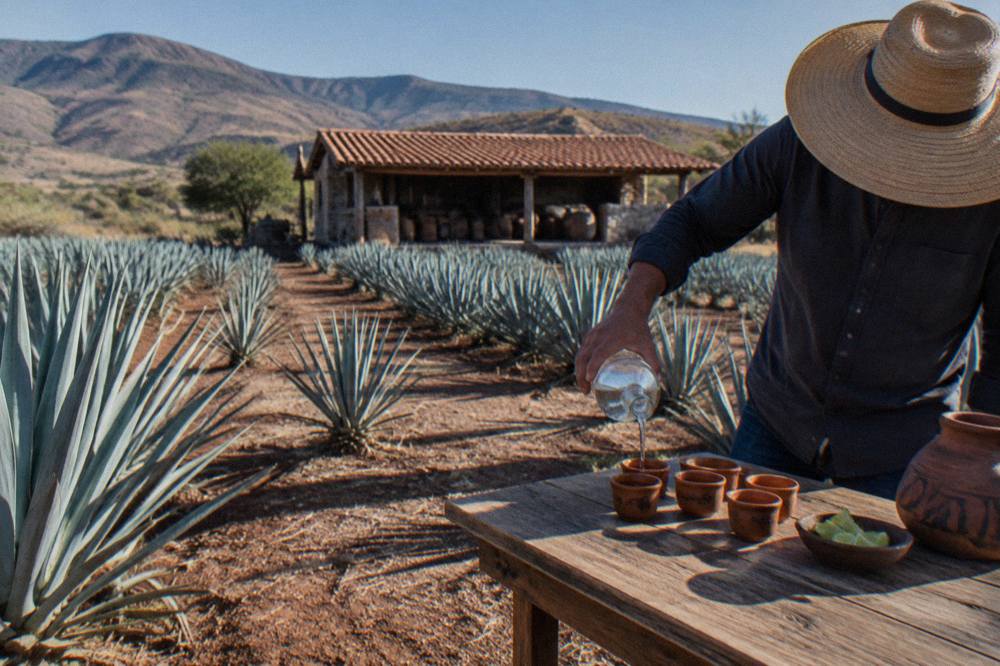
Palenque Visit Or City Tasting: Which Mezcal Tour Fits A Trip To Oaxaca?
Choose a palenque visit if you want to see how mezcal is made and can give most of a day to it; choose a city tasting or pairing session if you want to stay in the historic centre, have a free evening or a tight schedule, or are travelling with people who would rather eat than drive. The valley formats reach Santiago Matatlán and the countryside around it, while the city formats never leave the Centro Histórico.
The trade is simple: depth against convenience. A countryside visit buys the production story and the agave fields. A city session buys walkability and a shorter commitment, which matters on a packed itinerary; a five-day plan like Oaxaca in 5 days can absorb one valley day and one evening tasting without crowding out Monte Albán or the markets.
There is a third consideration that first-time visitors often miss: the evening question. Oaxaca City's centre is genuinely pleasant after dark, and a pairing session or a short tasting is one of the few tour formats that uses the evening hours rather than the daylight ones. A valley loop, by contrast, consumes the middle of the day, which is exactly when the archaeological zones and the markets are at their most useful. Splitting the two across different days of a trip is the standard solution, and it is why the tour list carries both shapes in depth rather than one or the other.
The table compares the three formats on what the tour list actually offers.
| Format | Typical area | What it covers | Vehicle needed |
|---|---|---|---|
| Palenque or distillery visit | Tlacolula Valley, Central Valleys | Distillery production, countryside agave fields | Yes, transport included |
| City tasting or pairing | Oaxaca City historic centre | Guided tastings, mezcal and mole pairings, mixology | No, walkable |
| Valley loop with mezcal stop | Tlacolula Valley | Hierve el Agua, Mitla, Tule plus a distillery stop | Yes, full day |
A fifth option is the market walk with tastings, which treats mezcal as one thread of Oaxacan food culture rather than the whole subject; the markets and shopping guide covers that landscape in detail. The mixology workshop format sits between categories too: it uses the city's walkability but adds a hands-on element closer to a class than a tasting, which makes it a fit for travellers who want to leave with a skill as well as a buzz.
The picks above span the range: a behind-the-scenes distillery tour, a market immersion with all tastings included, and an artist-led street art walk for the non-drinker in the group. Each block prints its own live price, rating and duration, so compare at the listing rather than from memory. The trio is deliberately mixed rather than all-mezcal, because a real booking decision on this subject usually happens inside a group with mixed interests, and the market immersion and the street art walk are the two products that most reliably absorb the companion who would rather not spend a day on the spirit.
How Far Is The Mezcal Route From Oaxaca City?
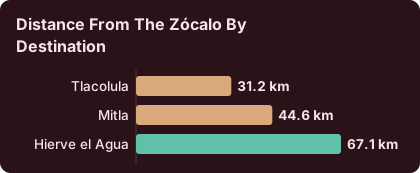
The mezcal route around Santiago Matatlán runs along the road from the Zócalo as far as Mitla at the far end of the corridor, with Tlacolula on the way out. These are free-flow drive times computed on mapped roads; real traffic and mountain driving are slower, and a tour bus stopping at several towns takes longer again.
The corridor runs east out of the city and stacks up neatly: the craft villages come first, then Tlacolula, then Mitla and Santiago Matatlán beyond it. That geography is why so many products bundle a mezcal stop with Mitla or Hierve el Agua; the stops share one road. Hierve el Agua is about 57 minutes from the centre on its own continuing road.
| Destination | Distance from the Zócalo | Free-flow drive time |
|---|---|---|
| Tlacolula | 31.2 km | about 25 min |
| Mitla | 44.6 km | about 37 min |
| Santiago Matatlán area | on the Mitla corridor | not measured |
| Hierve el Agua | 67.1 km | about 57 min |
The stacking has a planning consequence worth stating plainly. Because Teotitlán del Valle sits on the same corridor, a single eastbound day can plausibly take in a weaving village, Tlacolula, a distillery and Mitla without doubling back, and the tour list's valley loops are built on exactly that logic. Anyone weighing the two anchor attractions of the corridor can pair this with the Hierve el Agua tour page or the Monte Albán tour page for the other side of the valley.
What Happens On A Palenque Visit Near Santiago Matatlán?
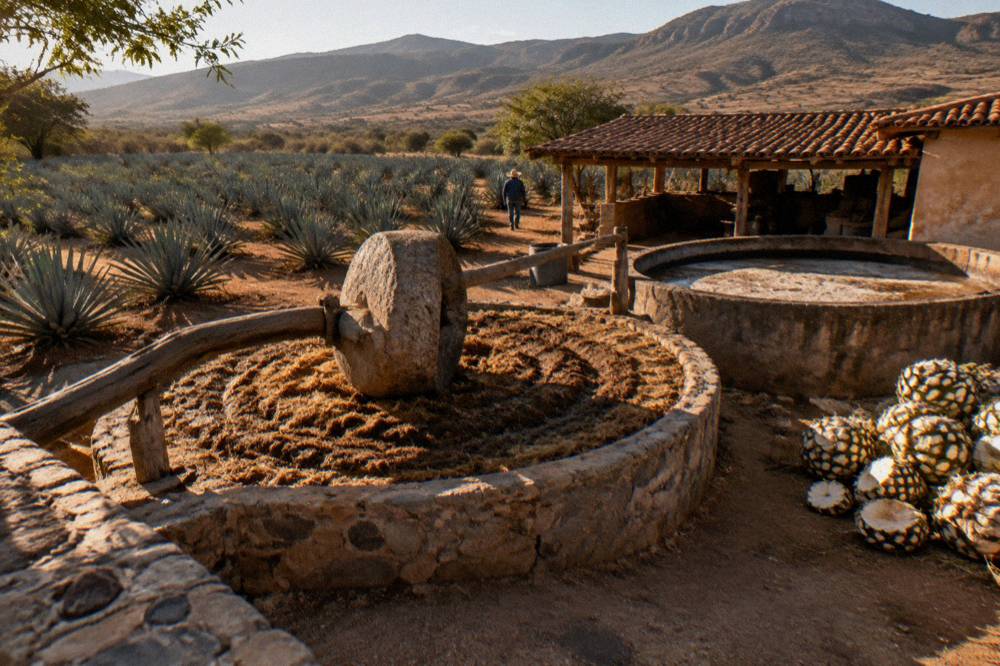
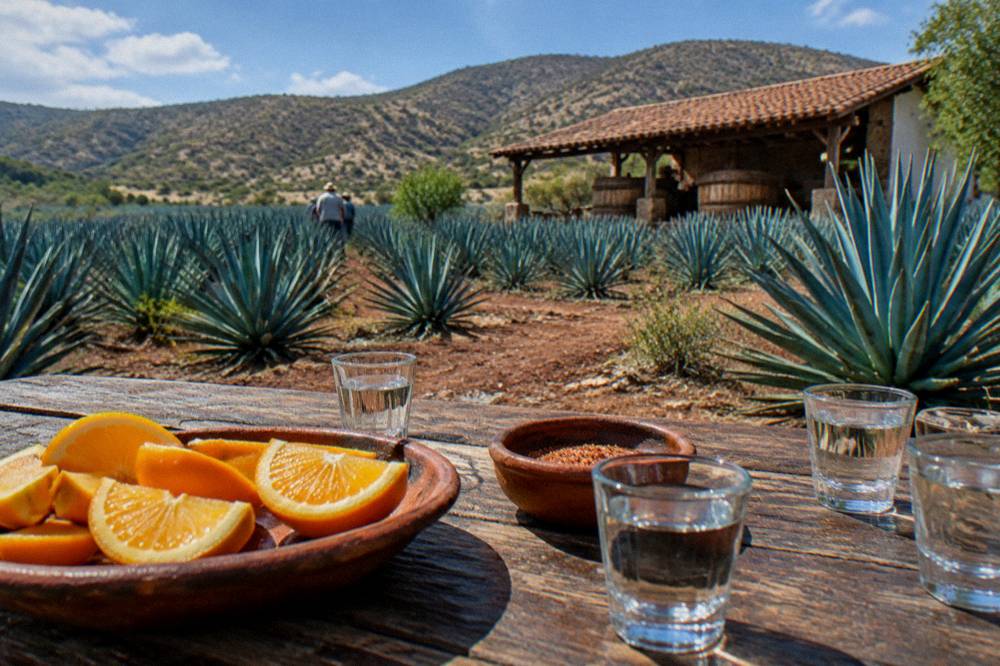
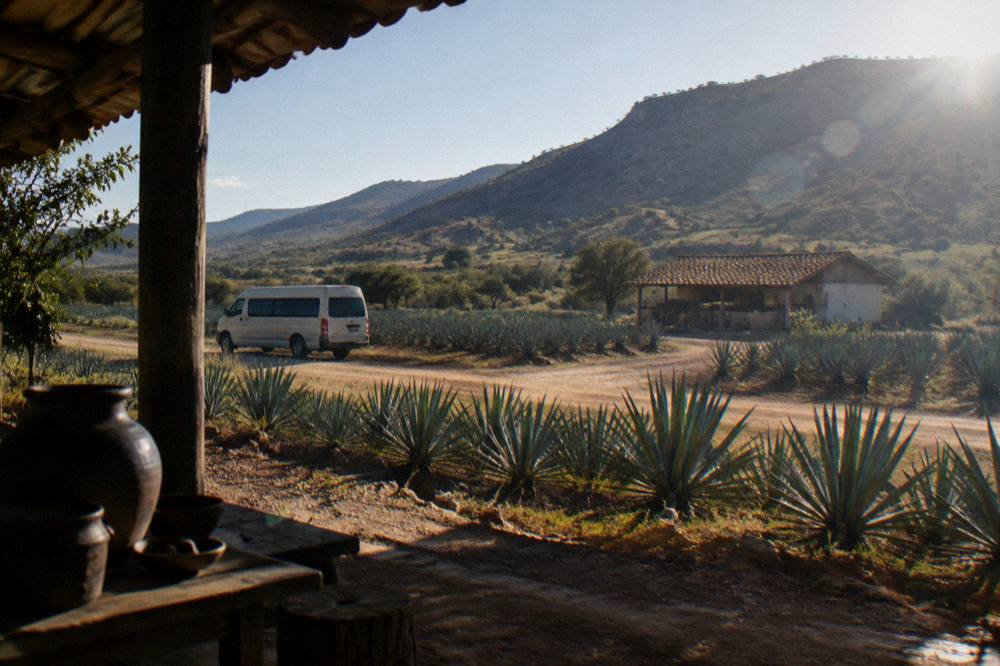
A palenque visit walks through the production site itself with a guide: the agave as it arrives, the cooking and fermentation areas, and the stills, followed by a tasting of the expressions made there. The tour list's countryside options include tours with behind-the-scenes distillery access and visits to family distilleries in the agave fields, all departing from Oaxaca City by vehicle.
What the state's own pages say about Santiago Matatlán is limited but consistent: oaxaca.gob.mx calls it the "Capital Mundial del Mezcal" and references its many palenques and its mezcal fiestas. What the official pages do not carry is a palenque-by-palenque list of visiting hours or tour prices, and no such figures exist to report.
The difference between a standard stop and the behind-the-scenes format is access. A standard tasting-room visit samples what a distillery already bottles; the deeper format moves through the working parts of the site, where the raw material is handled before it ever becomes a bottle. For a traveller whose interest in mezcal is more than casual, that difference is the whole purchase, and it is the reason the featured tour on this site is the distillery-access product rather than a generic tasting. The state's own tourism material treats the town's palenques as a destination in their own right, with fiesta programming around them, which is a signal of how central the working sites are to the region's identity.
The featured tour on this site, the mezcal tour with behind-the-scenes distillery access, goes further than a standard tasting-room stop: it is built around parts of a working distillery a casual visitor does not reach. Full details, live price and current availability are on its own listing: Check availability.
What Do City Mezcal Tastings And Pairings Cover?
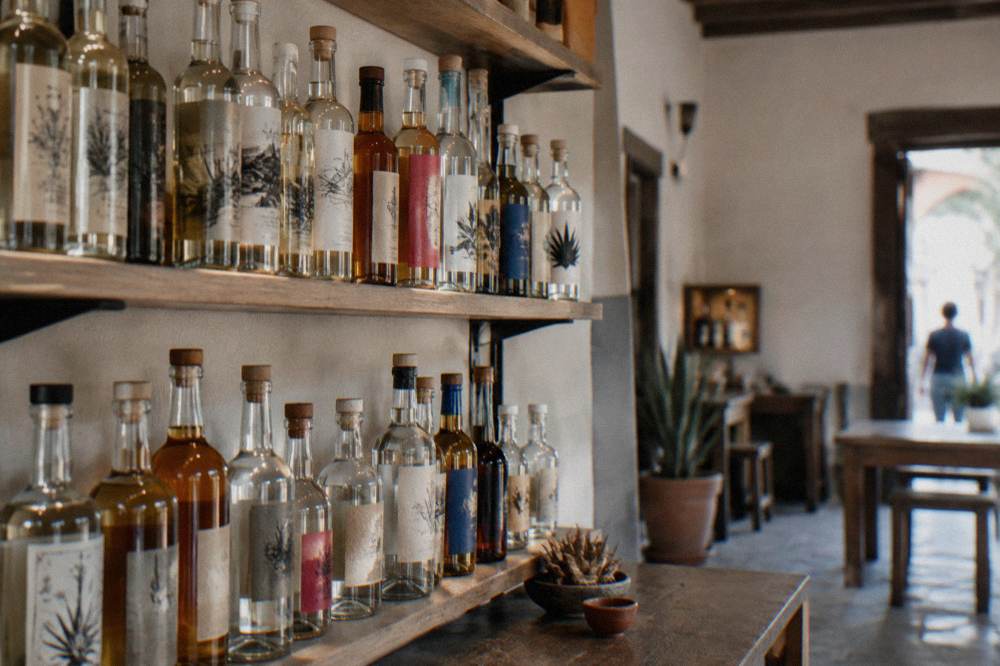
City formats stay walkable in the historic centre and compress the experience into an evening or an afternoon: guided tastings, mixology workshops with organic mezcal, and pairing sessions in which a certified sommelier matches the spirit against mole. The pairing format is the one to pick when food is the point, since the mezcal is served alongside dishes rather than on its own.
The pairing idea is genuinely Oaxacan in a way a generic tasting is not: mole and mezcal are both signature products of the state, and a sommelier-led session treats them as a single menu. For travellers building a food-first trip, a pairing evening stacks well with a daytime Oaxaca food tour or a market walk, and the city's food culture is mapped in the what to eat in Oaxaca coverage on the root guide.
Two solo picks below show the range within the city format: a countryside agave-fields tour that splits the difference between formats, and a short sommelier pairing.
The mixology workshop deserves a word of its own, because it is the format most often confused with a tasting. A tasting teaches recognition; a mixology workshop teaches construction, using organic mezcal as the base for drinks the participant builds and drinks. For a group that includes people who do not drink spirits neat, it is frequently the better buy, since the product is the process and the company rather than the flight. The certified-sommelier formats, by contrast, are built for people who want vocabulary: the tour list carries both a pairing session and a seven-pairing extended version, and the listing for each states exactly what is poured and served. Other pages covering the same trip are gathered on Oaxaca Travel Guide.
When Is The Best Time Of Year For Mezcal Tours In Oaxaca?
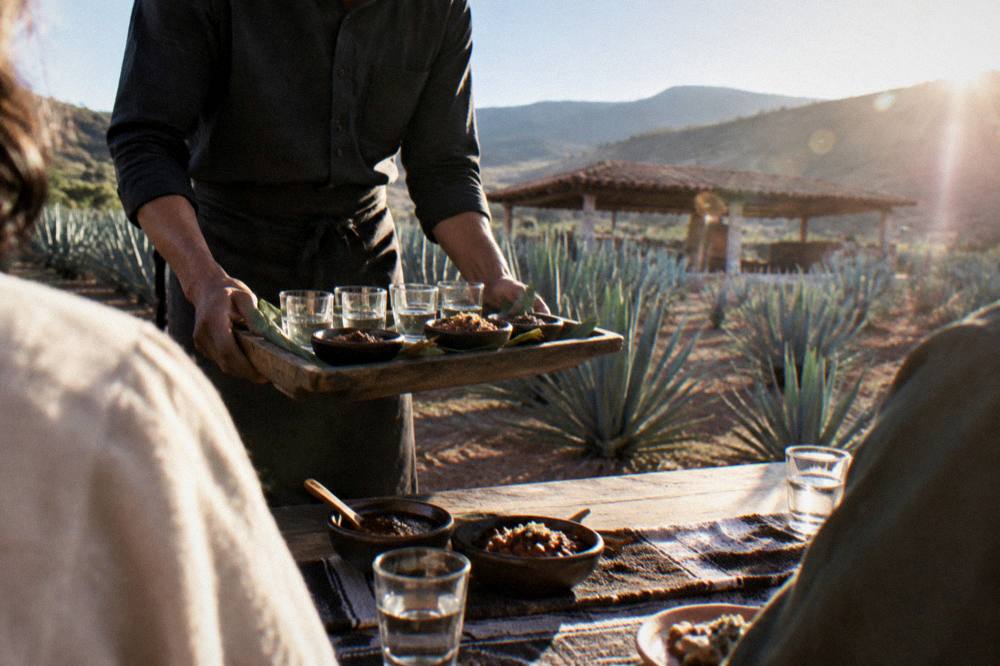
The dry season, November to April, is the comfortable window for a valley day: the SMN station normals show November at 9.1 mm of rain and December at 9.0 mm, against June at 188.3 mm in the rainy season. July brings the Feria del Mezcal alongside Guelaguetza, so the same month that is wet is also the most festival-dense, and the trade-off is between weather and programming.
The climate table for Oaxaca station makes the pattern plain. Rainy-season months from June to September all exceed 118 mm, while the November-to-March stretch sits under 20 mm. April is the month with the highest mean daily maximum at 34.9 C, and December and January have the lowest mean minimums at 11.0 and 10.3 C.
| Month | Mean daily high C | Mean daily low C | Rain mm |
|---|---|---|---|
| January | 28.9 | 10.3 | 2.4 |
| April | 34.9 | 15.8 | 47.3 |
| June | 30.9 | 16.7 | 188.3 |
| July | 30.1 | 15.9 | 118.6 |
| September | 29.1 | 16.1 | 163.6 |
| November | 29.0 | 12.3 | 9.1 |
For the valley formats specifically, the weather question is mostly a comfort question rather than a safety one: the drives are short, the roads are the region's main corridor, and a rainy afternoon shortens a Hierve el Agua stop more than it ruins a distillery visit, which is largely indoors at the production end. A rainy-season booking is therefore a reasonable choice if the itinerary anchors on the city, with the valley day placed on whichever forecast day looks most settled. The city formats are close to weatherproof, which is one more quiet argument for splitting the two formats across a stay.
A rainy-season trip is far from a write-off: the rain falls in defined afternoon stretches, and the city has plenty of indoor depth, as the Oaxaca weather by month guide sets out month by month.
How Do Mezcal Tours Fit Into A Wider Oaxaca Itinerary?
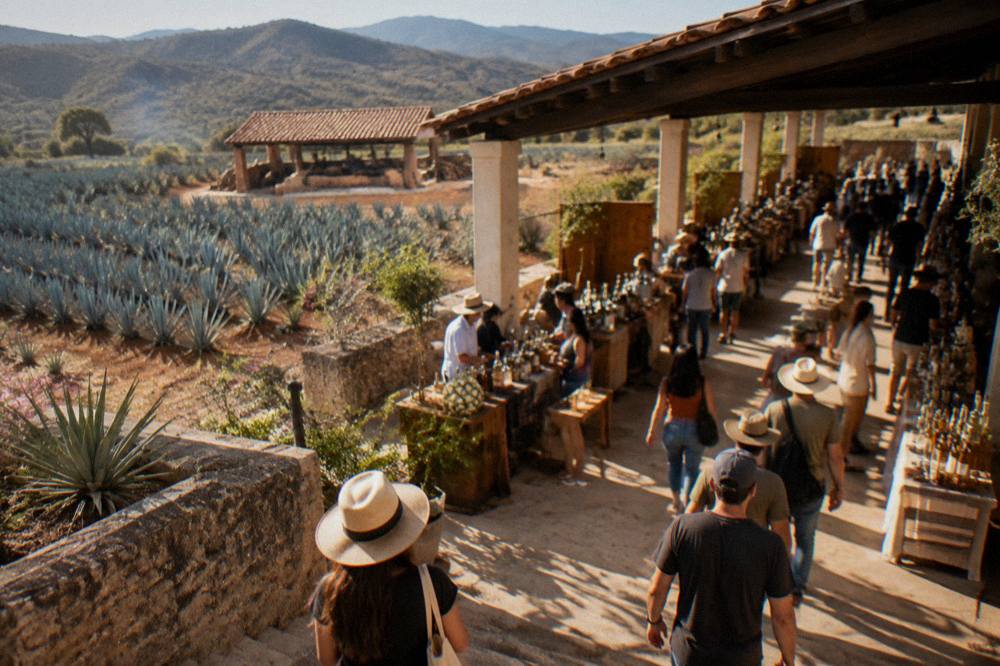
The cleanest fit is one valley day and one city evening: a palenque or loop tour through the Tlacolula corridor in daylight, then a short pairing session or tasting in the centre another evening, since the two formats do not compete for the same hours. With an average stay of 2.00 nights in 2025, many visitors get exactly one valley day, and a mezcal-plus-Mitla or mezcal-plus-Hierve loop is the efficient use of it.
The arithmetic comes from the Sectur indicator report: 1,324,332 arrivals in the city in 2025, staying 2.00 nights on average. Two nights means one full day plus fragments, so the bundled valley tours, which string Mitla, Tule, a weaving stop and a distillery into a single loop, are built for exactly that visitor. Anyone with four nights or more can split the corridor: an archaeology day and a dedicated mezcal day.
Pair the booking with the walks the city does well in the evenings; the Oaxaca walking tour page covers the historic-centre format, and the Oaxaca for couples itinerary is built around exactly this kind of one-day-one-evening split.
| If your stay is | Mezcal format that fits | Why |
|---|---|---|
| 2 nights | Valley loop with a distillery stop | One day covers Mitla or Hierve plus mezcal |
| 3 nights | Dedicated palenque day plus a city pairing evening | The corridor gets a full day, the spirit gets an evening |
| 4 or more nights | Palenque day, pairing evening, market food walk | Formats stop competing for hours |
Which Mezcal Tour Should You Book From Oaxaca City?
Book the behind-the-scenes distillery tour if production is the reason you are here, a sommelier pairing if food is, and a full valley loop if you want mezcal folded into a day that also touches Hierve el Agua, Mitla and the Tule tree. Budget fares and private options both exist in the tour list, and every block on this page prints its own price and rating from live data.
The comparison below restates the decision in one line per traveller type.
| You want | Pick | Format |
|---|---|---|
| To see how it is made | Behind-the-scenes distillery access | Countryside palenque day |
| Mezcal with dinner energy | Certified sommelier mezcal and mole pairing | City evening |
| Everything in one day | Hierve el Agua, Mitla, Tule and mezcal loop | Full valley loop |
| A food-first city walk | Market immersion with all gastronomy included | City walkable |
Whatever the pick, the practical rules are the same: the valley formats leave from the city by vehicle, the city formats are walkable, and the operator's booking page carries the current price and the cancellation terms. The final band below reprints the three headline picks for a last comparison.
Common Questions About Mezcal Tours In Oaxaca
How Far Is Santiago Matatlán From Oaxaca City?
It sits on the Mitla corridor, with Tlacolula about 25 minutes along the way. Real traffic and mountain roads are slower, and a tour van making several stops takes longer again.
Can You Do A Mezcal Tour Without Leaving Oaxaca City?
Yes. The tour list carries city-format options including guided tastings, mezcal and mole pairings led by a certified sommelier, and a mixology workshop with organic mezcal, all in the historic centre with no vehicle needed.
When Is The Feria Del Mezcal Held?
The 2026 edition ran 17 to 28 July at the Centro Cultural y de Convenciones in Santa Lucía del Camino with entry of about 80 MXN, reported from the official festival page. It sits inside Guelaguetza month, so July pairs festival programming with the rainy season's higher rainfall.
Do Mezcal Tours Include Hierve El Agua Or Mitla?
Many do. Because Hierve el Agua, Mitla and the distilleries share the Tlacolula corridor, the tour list carries several loops that combine them into one day, alongside dedicated mezcal-only tours.
Is A Mezcal Tour A Good Idea For A Short Stay?
With the city's average stay at 2.00 nights in 2025, the bundled valley tours are designed for exactly that visitor: one day on the road covers the corridor, and a short evening pairing in the centre adds the spirit without costing another day.
What Is The Difference Between A Tasting And A Pairing?
A tasting walks a flight of mezcal expressions on their own, guided by a host or sommelier. A pairing serves the mezcal alongside dishes, typically mole, so the session is about how the spirit and the food interact, and the tour list carries certified-sommelier versions of both formats.
The choice, in the end, is between seeing the process and tasting the result: the palenque day buys the fields, the stills and the road east, while the city session buys an evening within walking distance of the Zócalo, and a well-built trip can comfortably fit one of each.