Shopping In Oaxaca: Crafts, Mezcal, Textiles And What To Skip
Oaxaca City is an inland highland shopping city: markets and craft workshops within walking distance of the Zócalo, weaving and pottery villages under an hour away by road, and mezcal bottled in the valleys beyond. This guide sets out what to buy where, what each district sells, and what to leave on the shelf.
Shop the central markets for food and cheap crafts, buy textiles in Teotitlán del Valle, alebrijes in San Martín Tilcajete, black pottery in San Bartolo Coyotepec, and mezcal from a distillery you have actually walked through. Skip mass-produced screen-printed rugs, unlabelled mezcal in plastic bottles, and anything you cannot pack.
Oaxaca City, the capital of the state of Oaxaca in Mexico, sits inland in the Valles Centrales at about 1,550 m, and its shopping scene runs on two engines: the markets and workshops of the historic centre, and the craft villages strung along the valley roads east and south of the city. The Oaxaca Travel Guide desk has pulled together what the primary sources say about each: which market sits where, how far each craft village is by road, what the INAH sites charge if you fold archaeology into a shopping day, and where the shopping traps are.
Where Do You Shop In Oaxaca City?
The shopping geography of Oaxaca City splits into three rings: the central markets around the Zócalo for food, chocolate and everyday crafts; the barrios of Jalatlaco and Xochimilco for art, prints and street-level finds; and the valley villages for the serious purchases, textiles in Teotitlán del Valle, alebrijes in San Martín Tilcajete and black pottery in San Bartolo Coyotepec. Everything in the first ring is walkable. The second ring is a short taxi ride. The third is a half-day loop by car or tour bus.
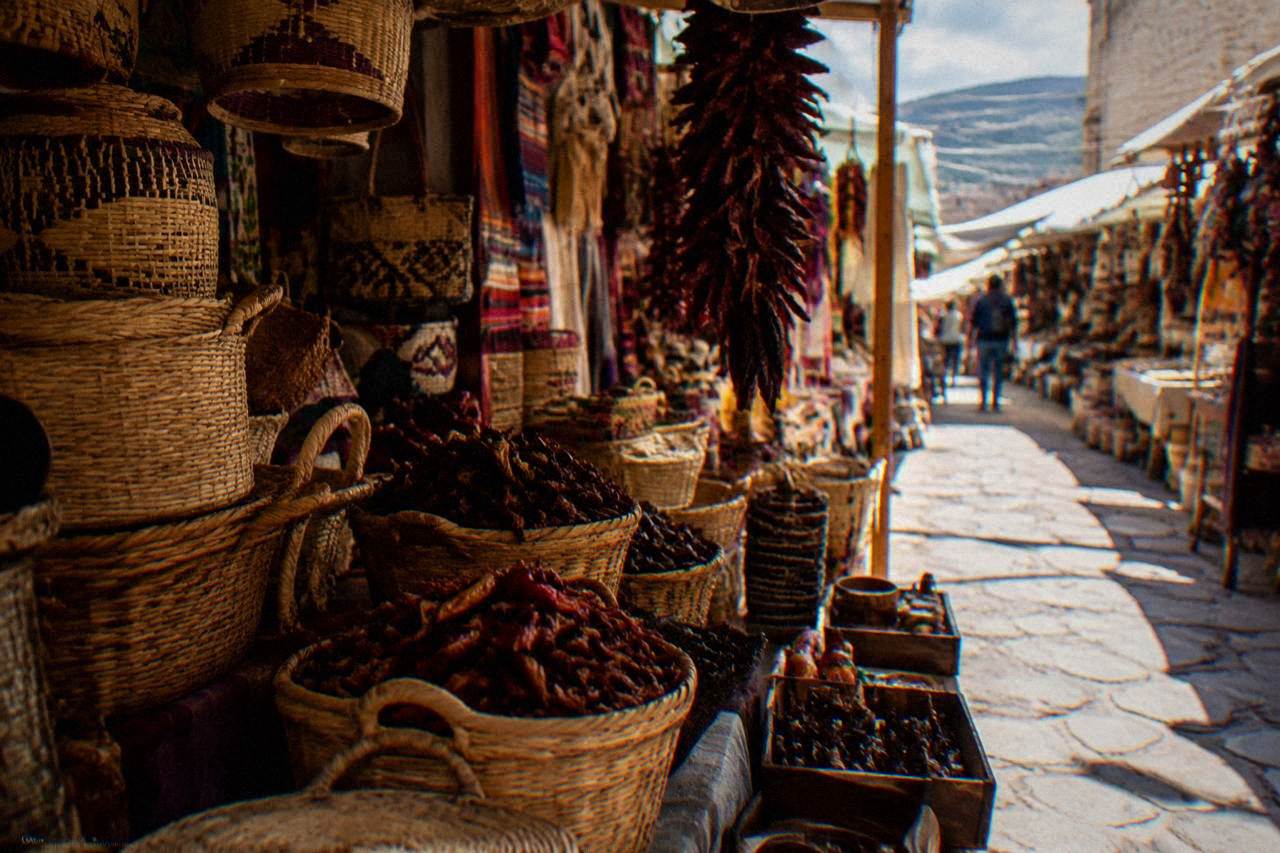
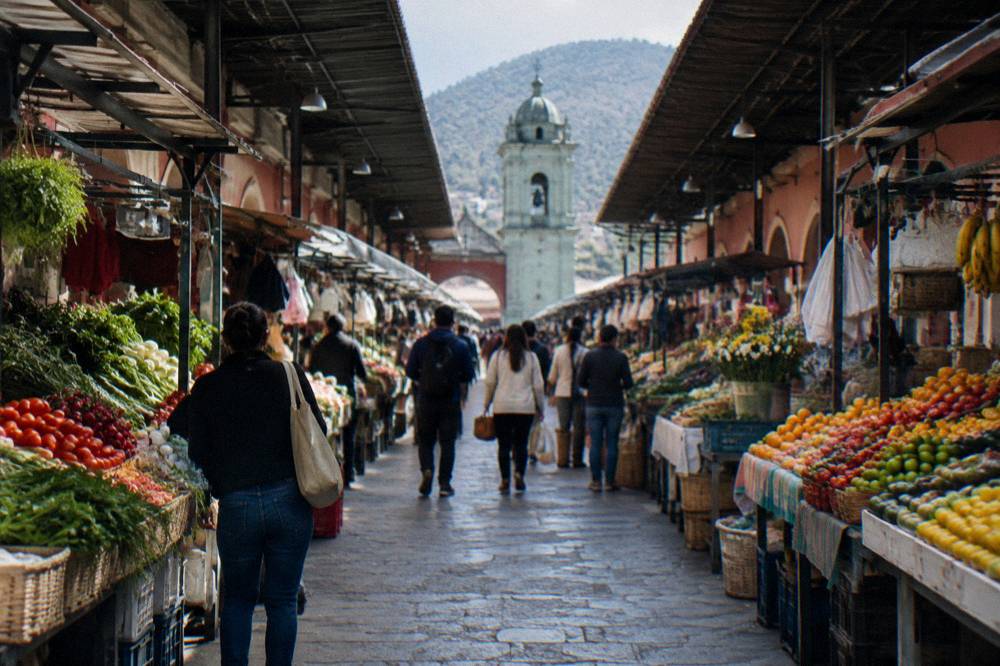
The historic centre holds the Mercado Benito Juárez and the Mercado 20 de Noviembre, two covered markets a few blocks from the Zócalo, plus the street vendors along the Andador Macedonio Alcalá, the pedestrian spine that runs from the Zócalo towards Santo Domingo de Guzmán. The state government describes the Mercado 20 de Noviembre as a key food market founded in 1893, and the Mercado Benito Juárez as a historic central market inaugurated in 1894. Neither market's opening hours are published on official pages, so plan a daytime visit and confirm locally.
The Mercado de Abastos, far larger, sits outside the centre and serves wholesale buyers as well as households; the state government notes it has operated since 1978. For a first visit, the centre is enough. If your time is short, the things to do in Oaxaca overview ranks where shopping sits against Monte Albán, Hierve el Agua and the food scene.
| Ring | Where | What it sells | How to reach it |
|---|---|---|---|
| Central | Mercado Benito Juárez | Food stalls, chocolate, spices, crafts | Walk from the Zócalo |
| Central | Mercado 20 de Noviembre | Cooked food, meats, mole ingredients | Walk from the Zócalo |
| Central | Andador Macedonio Alcalá | Street vendors, jewellery, textiles | Walk, pedestrian street |
| Barrio | Jalatlaco | Murals, art, small workshops | Short taxi ride from the centre |
| Barrio | Xochimilco | Quiet streets, local shops | Short taxi ride from the centre |
| Wholesale | Mercado de Abastos | Bulk goods, regional produce | Taxi, outside the centre |
What Should You Actually Buy In Oaxaca?
The four purchases Oaxaca is genuinely known for are woven wool textiles from Teotitlán del Valle, carved and painted alebrijes from San Martín Tilcajete, black clay pottery from San Bartolo Coyotepec, and mezcal distilled in the valleys, most of it around Santiago Matatlán. Add hand-rolled chocolate, dried chillies, Oaxacan cheese (quesillo) for the trip home, and printed art from city workshops, and the list is complete. Everything else on the souvenir shelves is either made elsewhere or available in any tourist city in Mexico.
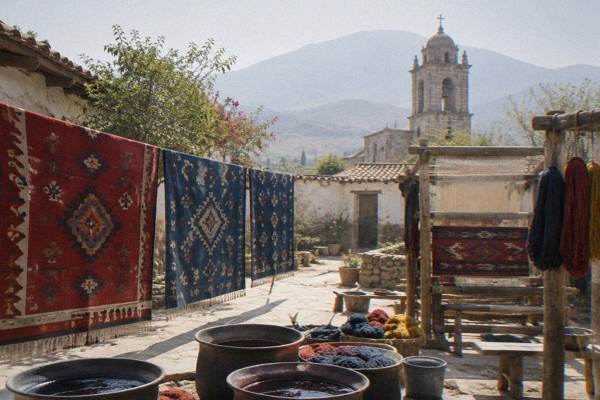
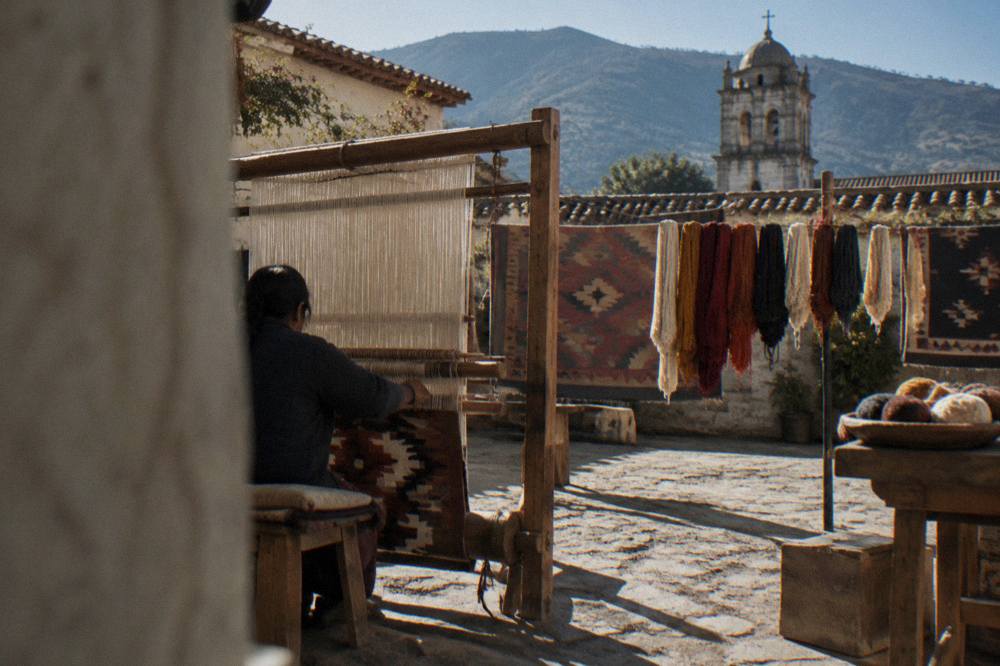
The reason to buy these four crafts at their source is not romantic, it is economic and practical. In the villages, the money reaches the maker, and you can watch the work happen: the weaving cooperatives of Teotitlán del Valle run demonstrations, and current guidance for the village notes workshops generally operate Tuesday to Sunday, with many closed Mondays, and mornings recommended for natural-light demonstrations. Etiquette for the village is simple: ask before photographing, and expect cash to be preferred.
Mezcal is the one purchase where a guided visit beats solo shopping, because a distillery visit teaches you what the bottle label should say. The site's featured pick for this is the Mezcal Tour with Behind-the-Scenes Access, which goes into a working distillery rather than a tasting room, and there is a deeper primer in Mezcal In Oaxaca: The Full Guide. If the question of mezcal's reputation is nagging at you, the piece on whether mezcal is the poor man's tequila settles it.
For food shopping, a guided walk is an efficient first pass. The Food and Markets Tour with Traditional Tastings, listed above, moves through the central markets with tastings built in, which converts the market from an intimidating hall into a labelled map you can revisit on your own. The dishes to look for by name, with no price attached here, are tlayuda, mole, tejate, chapulines and quesillo, all covered dish by dish elsewhere on this site.
Which Oaxaca Craft Village Sells What?
Teotitlán del Valle is the weaving village for wool rugs and textiles, San Martín Tilcajete is the alebrije village for carved and painted figures, San Bartolo Coyotepec is the black pottery village, and Ocotlán de Morelos holds a weekly craft and market scene along with knife and pottery workshops. Drive times from the Zócalo run about 26 minutes to Teotitlán del Valle and about 37 minutes to Ocotlán, and the villages chain naturally into one loop.
Those drive times are computed from the Zócalo's coordinates over the road network, so treat them as free-flow minimums: real traffic, market days and mountain roads make everything slower, and you should round up when planning. The full derived figures are in the table below.
| Craft village | Craft | Drive from the Zócalo | Notes for shoppers |
|---|---|---|---|
| Teotitlán del Valle | Wool rugs, textiles | about 26 minutes | Workshops generally Tue to Sun, many closed Mon; mornings for demonstrations |
| San Martín Tilcajete | Alebrijes, carved figures | on the Ocotlán road, south valley | Painting workshops take visitors |
| San Bartolo Coyotepec | Black pottery (barro negro) | south of the city | Workshops demonstrate the technique |
| Ocotlán de Morenos region | Friday regional market, crafts | about 37 minutes | Weekly market day is set locally; no official schedule is published |
| Tlacolula de Matamoros | Sunday regional market | about 25 minutes | Gateway to Mitla and Hierve el Agua |
A caution on that table: the weekly market days for Tlacolula, Ocotlán, Etla and Zaachila are widely repeated in travel copy but are not confirmed on official government pages, so confirm the day locally before committing a morning. What is confirmed is the road geography: Tlacolula sits about 25 minutes out, Yagul about 38, Mitla about 37 and Hierve el Agua about 57, which is why the eastern craft villages pair naturally with an archaeological stop. A five-day plan that already sequences all of this exists at Oaxaca In 5 Days, and the Mezcal Route Through Santiago Matatlán covers the distillery road east of Mitla.
Can You Combine Shopping With Sightseeing In One Day?
Yes, and the eastern valley is the natural combined route: Monte Albán or Atzompa on the western side in the morning, then the Tlacolula valley chain of Santa María del Tule, Teotitlán del Valle, Mitla and Santiago Matatlán in the afternoon, with Hierve el Agua as a longer add-on at about 57 minutes from the Zócalo. INAH entry at Category I sites costs foreign visitors 210 MXN each, so two sites doubles that before any shopping.
The INAH figures matter here because the craft villages sit beside paid sites, and shoppers who add Mitla or Yagul to a rug run should budget for them. The hours are uniform: Monte Albán, Mitla and Yagul all open 08:00 to 17:00 daily, with last access at 16:00 at Monte Albán and Yagul and 16:30 at Mitla. Atzompa, the pottery village with its own archaeological zone, closes earlier: 08:00 to 16:00, last access 15:00.
| INAH site | Hours | Last access | Fee, nationals | Fee, foreigners |
|---|---|---|---|---|
| Monte Albán | 08:00 to 17:00 daily | 16:00 | 105 MXN | 210 MXN |
| Mitla | 08:00 to 17:00 daily | 16:30 | 105 MXN | 210 MXN |
| Yagul | 08:00 to 17:00 daily | 16:00 | 105 MXN | 210 MXN |
| Atzompa | 08:00 to 16:00 daily | 15:00 | not published on the INAH page | not published on the INAH page |
The Museo de las Culturas de Oaxaca at Santo Domingo is the city-centre cultural stop on a shopping day, open Tuesday to Saturday 10:00 to 16:00 and closed Sunday and Monday, with the same 105/210 MXN INAH fee split. The Jardín Etnobotánico next door runs free guided tours Monday to Friday at 10:30, 11:00, 11:30, 12:00 and 17:00, and Saturday 10:30 to 12:00, with large and school groups booking two weeks ahead. A slow shopping day in the centre can absorb both.
How Do You Buy Mezcal Without Getting Fooled?
Buy mezcal where you can see or verify the distillery, buy bottles with proper labelling rather than unlabelled plastic containers, and taste before you commit, which is exactly what a behind-the-scenes distillery visit provides. The featured mezcal tour on this page goes into production areas most tasting rooms skip, and the operator's booking page carries the current price and departure details. A bottle bought at a palenque you have walked through is the one bottle you will not second-guess at home.
Santiago Matatlán is repeatedly described in state government material as the "Capital Mundial del Mezcal", with references to dozens of palenques historically operating in the municipality, but no official visitor hours, tasting schedules or price lists are published for individual palenques, so a guided visit or a direct enquiry is the reliable route. The Denominación de Origen exists, but its exact parameters are not stated on the official pages in the record, leaving them unstated here.
The one dated mezcal event is the Feria del Mezcal, held 17 to 28 July at the Centro Cultural y de Convenciones de Oaxaca in Santa Lucía del Camino, with entry of about 80 MXN and hundreds of stands; confirm dates for future editions. If your trip lands in late July, it is a concentration of the region's producers in one hall. The festival context sits inside Guelaguetza month, covered in detail at When Is The Guelaguetza-style coverage across the events guide.
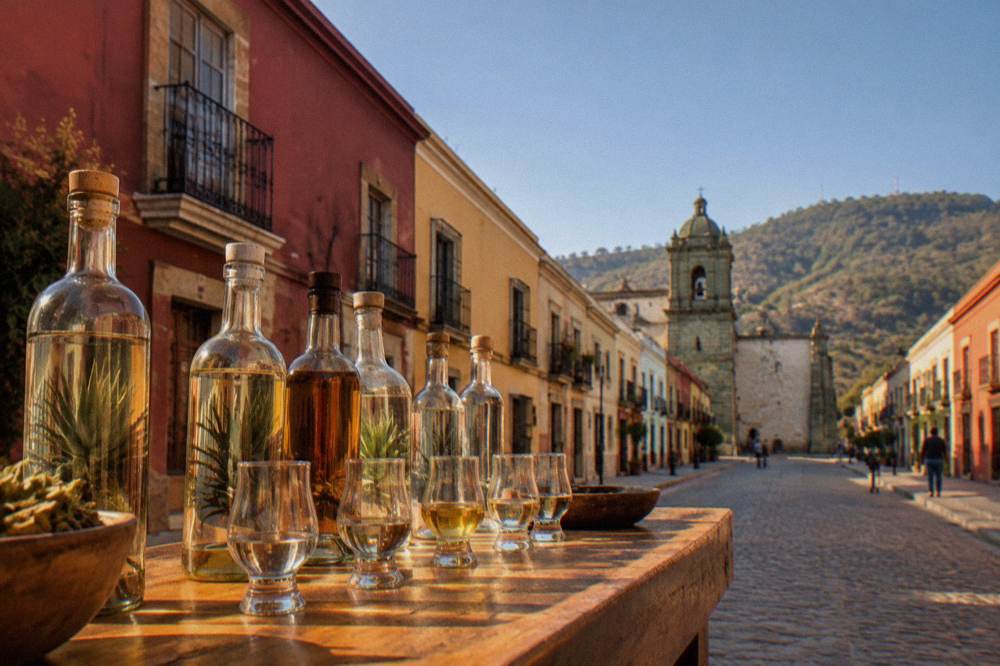
For shoppers who want the distillery experience, the tour is the site's featured pick, and the inline link goes straight to the operator's booking page: Check availability. Its selling point is access: production areas, not just the shop counter.
What Textiles Are Worth The Price In Teotitlán Del Valle?
The textiles worth paying for in Teotitlán del Valle are wool rugs woven on the village's looms from wool dyed with natural dyes, and the test is the difference between a hand-woven piece and a machine-made or screen-printed one, which you see directly when a weaver shows the reverse of the weave. Rugs woven with natural dyes and sold by the weaving family carry the price of the labour; identical-looking pieces at a fraction of the price are usually not from the village at all.
The village's weaving cooperatives host demonstrations, and current visitor guidance for Teotitlán del Valle notes that workshops generally operate Tuesday to Sunday with many closed Monday, that mornings give the best natural light for dye demonstrations, and that cash is preferred with photography by permission. None of that is marketing copy; it is the practical operating pattern for the village.
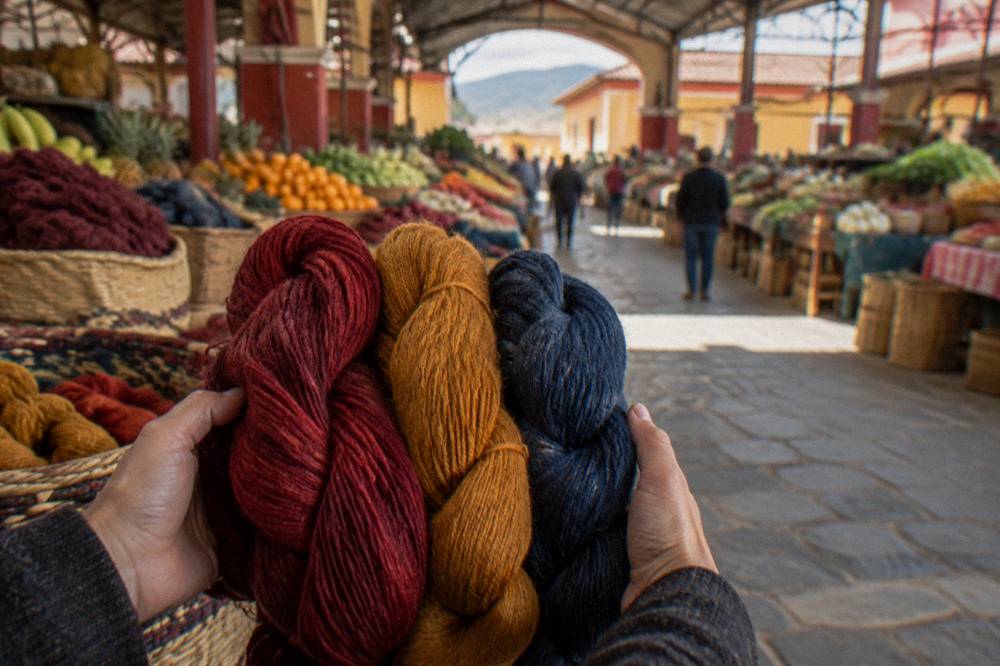
The buyer's checklist for any Oaxaca textile, rug or garment: look at the back of the weave, since a printed pattern has no back; ask which dyes were used and whether the workshop will show them; ask who wove it; and be sceptical when a "wool" rug is priced like a printed souvenir. A rug that folds into your luggage is the practical purchase; a full-size piece needs shipping, and the village workshops handle that, but agree the arrangement in writing before paying.
What Should You Skip When Shopping In Oaxaca?
Skip three categories outright: mass-produced screen-printed textiles sold as hand-woven, unlabelled mezcal in plastic bottles with no distillery name, and fragile black pottery bought without a packing plan, because barro negro breaks in luggage that survives everything else. Also skip any "silver" without a hallmark and any purchase whose whole pitch is a countdown discount. None of these are Oaxaca crafts; they are souvenirs of nowhere.
The screen-printed rug is the classic trap. Real Teotitlán del Valle weaving is slow, and the price reflects it. A seller who cannot tell you the fibre, the dye or the maker is selling you a print. The same logic applies to alebrijes: the genuine article is carved wood, hand-painted, from San Martín Tilcajete and a handful of other villages, and a plastic-moulded painted figure at a market stall is a different product wearing the same name.
Unlabelled mezcal is the second trap and the more serious one. A proper bottle carries the producer's details; a repurposed soda bottle does not, and nothing about its contents is verifiable. No complete list of palenque prices exists, but the rule costs nothing: if you cannot name the distillery, do not buy the bottle.
The third skip is buying barro negro without a plan for the flight. The pottery is fired thin and it does not forgive a suitcase. If you fall for a piece, ask the workshop about packing and shipping options on the spot, and keep any receipt for customs. The practical packing angle is covered from the traveller's side in What To Pack For Oaxaca.
When Is The Best Season For A Shopping Trip To Oaxaca?
The dry season, November to April, is the practical shopping window in Oaxaca City: rainfall normals run from 2.4 mm in January to 9.1 mm in November against 188.3 mm in June and 163.6 mm in September, which matters because the valley market days and village workshops involve outdoor walking, and wet-season afternoons in the Valles Centrales arrive hard. November also carries the Día de Muertos retail peak and December the Noche de Rábanos run-up, so book rooms early for both.
The full monthly picture from the SMN station normals for Oaxaca, 1991 to 2020:
| Month | Mean daily high | Mean daily low | Rainfall |
|---|---|---|---|
| January | 28.9 C | 10.3 C | 2.4 mm |
| February | 31.1 C | 11.6 C | 4.6 mm |
| March | 33.3 C | 13.6 C | 17.6 mm |
| April | 34.9 C | 15.8 C | 47.3 mm |
| May | 33.8 C | 16.7 C | 97.9 mm |
| June | 30.9 C | 16.7 C | 188.3 mm |
| July | 30.1 C | 15.9 C | 118.6 mm |
| August | 30.0 C | 15.9 C | 131.8 mm |
| September | 29.1 C | 16.1 C | 163.6 mm |
| October | 29.3 C | 14.5 C | 63.1 mm |
| November | 29.0 C | 12.3 C | 9.1 mm |
| December | 28.9 C | 11.0 C | 9.0 mm |
Two planning notes attach to that table. First, festival timing: Guelaguetza falls across two Mondays in July at the Auditorio Guelaguetza on the Cerro del Fortín, and the 2026 edition ran 20 and 27 July with paid seats at 1,632 MXN for Palco A and 1,321 MXN for Palco B, sections C and D free; treat those as the 2026 reference since the next edition's dates are not announced. Second, the rain: a wet-season shopping trip is entirely workable, and Oaxaca In The Rain makes the case, but a rug-hunting loop through three villages is drier and simpler between November and April. The best time to visit Oaxaca page weighs both.
How Much Should You Budget For A Shopping Day?
Budget in three layers: INAH archaeology tickets at 105 MXN per site for nationals and 210 MXN per site for foreign visitors if you fold sites into the loop; market purchases in pesos, with no price list to quote, so treat every posted price as negotiable context; and bookable tours and workshops, whose prices are on the live listings on this page. No official craft price list exists, so the budget is set by what a piece is worth after seeing the work.
What can be stated with a figure: the INAH fees above, the 80 MXN Feria del Mezcal entry, the Guelaguetza 2026 seat prices as a past-edition reference, and the drive times that determine how much a day can hold. What cannot: dish prices, rug prices, pottery prices, palenque bottle prices and taxi fares, none of which have a primary source on record, and all of which vary seller to seller. The Oaxaca Travel Costs And Budget guide builds the wider trip budget the same way, figure by figure.
One structural cost worth knowing: the state lodging tax is 3 percent on hotel-type stays, 5 percent where an intermediary platform collects it, per the state tax decree published in December 2025. It is small, but it explains why your hotel bill and a platform booking can differ slightly, money better spent on a second bottle.
Do You Need A Tour To Shop In Oaxaca?
No, the central markets and city shops are walkable and need no guide, but two kinds of shopping benefit from a booked experience: mezcal, where distillery access is the difference between buying a label and understanding one, and the valley craft loop, where a tour compresses Teotitlán del Valle, a craft village and a distillery into one driving day that would otherwise cost you a rental car and a route plan. Art shoppers get the third case: a working artist's street art walk reads neighbourhoods no shop map explains.
The value case is access, not transport.
For couples splitting a day between shopping and sightseeing, Oaxaca For Couples sequences both, and if the trip is a longer comparison between two colonial shopping cities, Oaxaca Vs Puebla puts the two markets head to head.
Common Questions About Shopping In Oaxaca
Is Shopping In Oaxaca City Cheap?
Food and everyday crafts in the central markets are inexpensive by international standards, but no price list exists for market goods, so this site prints no figures. Hand-woven textiles, alebrijes and quality mezcal are fairly priced for the labour they contain, which means they are not cheap. Budget guidance is at the travel costs guide.
Can You Bargain In Oaxaca Markets?
Bargaining is normal in the markets and village workshops for crafts, within courtesy, while food stalls and cooked-food counters are fixed price. Cash in pesos is the working currency everywhere, and Teotitlán del Valle guidance specifically notes cash is preferred in workshops.
What Is The Best Souvenir From Oaxaca?
The four signature purchases are a Teotitlán del Valle textile, an alebrije from San Martín Tilcajete, barro negro pottery from San Bartolo Coyotepec if you have a packing plan, and a labelled bottle of mezcal from a distillery you visited. Rolled chocolate and dried chillies from the Mercado Benito Juárez are the low-cost, low-risk additions.
Which Day Is The Big Market Day Near Oaxaca?
Regional market days at Tlacolula, Ocotlán, Etla and Zaachila are widely reported in travel copy, but no official schedule confirms them, so check locally. Zaachila's INAH archaeological zone, if you go, opens Thursday to Sunday 10:00 to 16:00 only, at 80 MXN for nationals and 145 MXN for foreigners.
Can You Bring Mezcal Back Home In Your Luggage?
A sealed, labelled bottle in checked luggage is the standard approach, and the bottle's label is what customs reads. This page offers no customs or duty advice beyond that; check your home country's rules before buying more than you can carry.
A shopping trip to Oaxaca City rewards preparation more than instinct: know which village makes which craft, know what a real weave and a real bottle look like, and give the valleys a full day. Buy the rug at the loom, the alebrije from the painter, and the mezcal from the palenque, and everything on the shelf back home will look like what it is, a souvenir of nowhere.