Oaxaca Mezcal Route: Santiago Matatlán And The Palenques
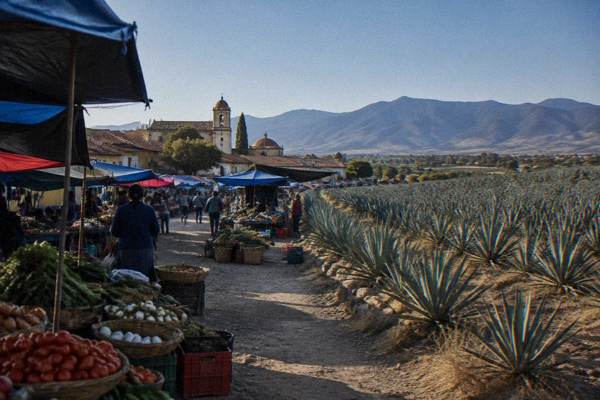
Santiago Matatlán is the anchor of the Oaxaca mezcal route, a day trip inland from Oaxaca City through the Tlacolula Valley where palenque tasting rooms sit among agave fields.
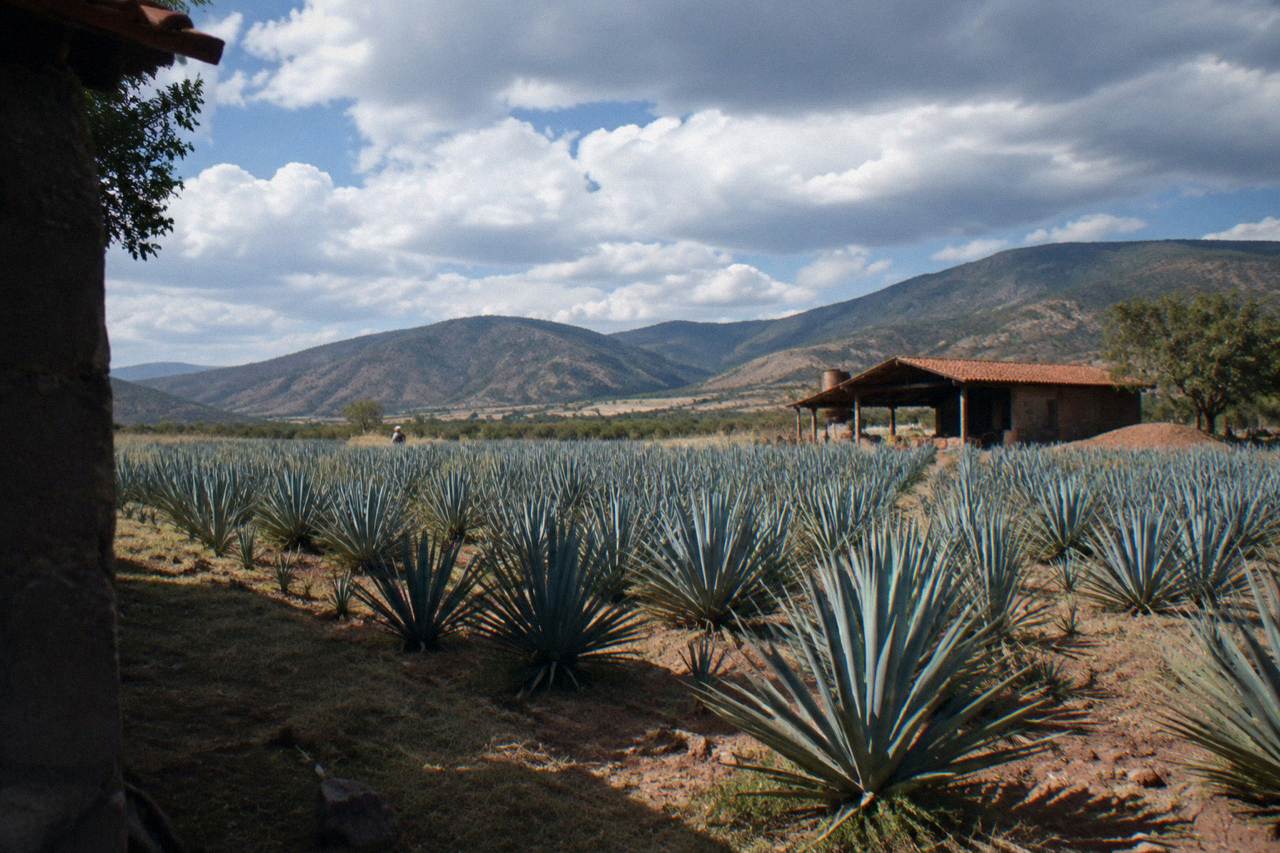
Santiago Matatlán, about an hour from Oaxaca City in the Tlacolula Valley, is a day trip built around palenque visits and mezcal tastings, reached by tour, taxi or colectivo.
The road out of Oaxaca City (Oaxaca de Juárez) toward the Tlacolula Valley passes agave fields long before it reaches Santiago Matatlán, the town that state government pages call the "Capital Mundial del Mezcal". This guide lays out how the mezcal route works as a day trip from the city: what Santiago Matatlán is, how the valley sits together with Mitla, Tlacolula and Teotitlán del Valle, what a tasting day costs in structure if not always in printed pesos, and which guided options cover the route. The site's broader primer on the spirit itself is the mezcal in Oaxaca guide, and the full set of options lives on the Oaxaca mezcal tours page.
What Is The Oaxaca Mezcal Route To Santiago Matatlán?
The Oaxaca mezcal route is a day trip east from Oaxaca City into the Tlacolula Valley, anchored by Santiago Matatlán, the town that oaxaca.gob.mx pages refer to as the Capital Mundial del Mezcal. The route strings together palenque distilleries and tasting rooms in and around the town, usually combined with valley stops such as Mitla, Santa María del Tule or Teotitlán del Valle on a single day loop from the city.
The state's own communications name Santiago Matatlán as the world capital of mezcal and describe a gran fiesta del mezcal held in the town, with free bus transport laid on for it in at least one recent edition. Those same government pages reference many palenques in and around the municipality. What they do not carry is a standard published price for a palenque visit, so a tasting fee is something to confirm on arrival or through whoever arranges the stop, not a figure to plan around in advance.
The route is not a single signed highway attraction. In practice it works as a set of villages along and just off the road from Oaxaca City to Mitla, with tasting rooms, family distilleries and agave fields between them. It is commonly structured one of three ways: a guided tour from the city, a private driver for the day, or a self-built colectivo and taxi itinerary. Each is covered below.
For context on how the spirit fits into Oaxacan food culture more widely, see what Oaxaca is famous for on the wider site, and for the pronunciation of the town and valley names, the Oaxaca pronunciation guide is the reference.
Where Is Santiago Matatlán And How Do You Get There From Oaxaca?
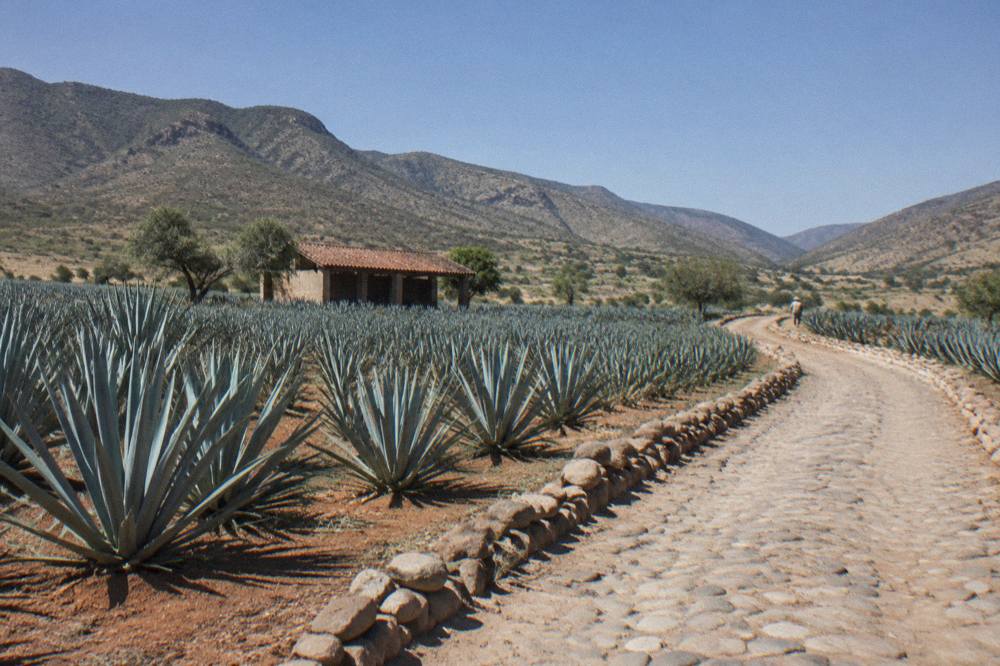
Santiago Matatlán sits in the Tlacolula Valley east of Oaxaca City, on the corridor that continues to Mitla, with Matatlán a short distance further along the same valley road. Options from the city are a guided tour with transport included, a private car and driver, or colectivo shared vans heading down the valley toward Tlacolula and Mitla.
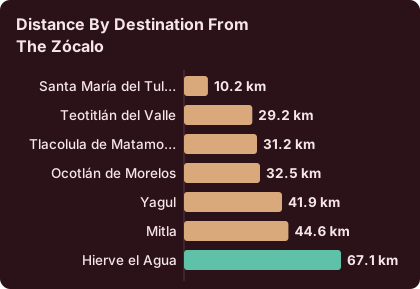
The drive-time figures this site uses are computed free-flow times, and real traffic, market days and mountain-road conditions make them longer, so treat them as floors rather than promises. The full corridor hangs together like this:
| Destination from the Zócalo | Distance | Free-flow drive time |
|---|---|---|
| Santa María del Tule | 10.2 km | about 11 minutes |
| Teotitlán del Valle | 29.2 km | about 26 minutes |
| Tlacolula de Matamoros | 31.2 km | about 25 minutes |
| Ocotlán de Morelos | 32.5 km | about 37 minutes |
| Yagul | 41.9 km | about 38 minutes |
| Mitla | 44.6 km | about 37 minutes |
| Hierve el Agua | 67.1 km | about 57 minutes |
Colectivos to the valley run from departure points in the city and fill up and leave rather than running to a printed timetable, but this site does not publish a fare for them: fares change and no official primary source carries one. Agree any taxi or private-driver price for the day before setting off. The getting around Oaxaca guide set on this site covers the valley corridor in more detail for the neighbouring stops.
The valley also carries an archaeological layer. Mitla, Yagul, Dainzú and Lambityeco are all INAH sites along or near this same corridor, and their fees and hours are published, which makes them easy fixed points to anchor a mezcal-route day:
| INAH site | Hours | Last access | Fee, nationals | Fee, foreign visitors |
|---|---|---|---|---|
| Mitla | Mon to Sun 08:00 to 17:00 | 16:30 | 105 MXN | 210 MXN |
| Yagul | Mon to Sun 08:00 to 17:00 | 16:00 | 105 MXN | 210 MXN |
| Dainzú | Mon to Sun 08:00 to 17:00 | 16:30 | 80 MXN | 145 MXN |
| Lambityeco | Mon to Sun 08:00 to 17:00 | 16:30 | 80 MXN | 145 MXN |
The Category I sites, Mitla and Yagul, charge 105 pesos for Mexican nationals and 210 for foreign visitors; the Category III sites, Dainzú and Lambityeco, charge 80 and 145. Those figures come from the INAH zone pages themselves. Visits outside normal INAH hours are listed at 730 MXN on several of those same pages, a figure aimed at special access rather than an ordinary day trip.
What Does A Mezcal Route Day Trip From Oaxaca City Look Like?
A typical mezcal route day from Oaxaca City leaves in the morning, stops at one or more palenques in or near Santiago Matatlán for a distillery walk and tasting, pairs that with a valley stop such as Santa María del Tule, Mitla or Teotitlán del Valle, and returns to the city by evening. Guided versions bundle the driving, the distillery access and often food into one booking, while independent versions trade that convenience for flexibility.
The structure of the day matters more than any single stop. The valley is compact enough that a loop can take in the Tule tree, a weaving town such as Teotitlán del Valle, an archaeological site and a palenque without more than about an hour of driving between the farthest points. A common shape is Tule first, Teotitlán or Mitla around midday, and the palenque visits on the return leg, when tasting rooms are the natural last stop of the day for anyone not driving.
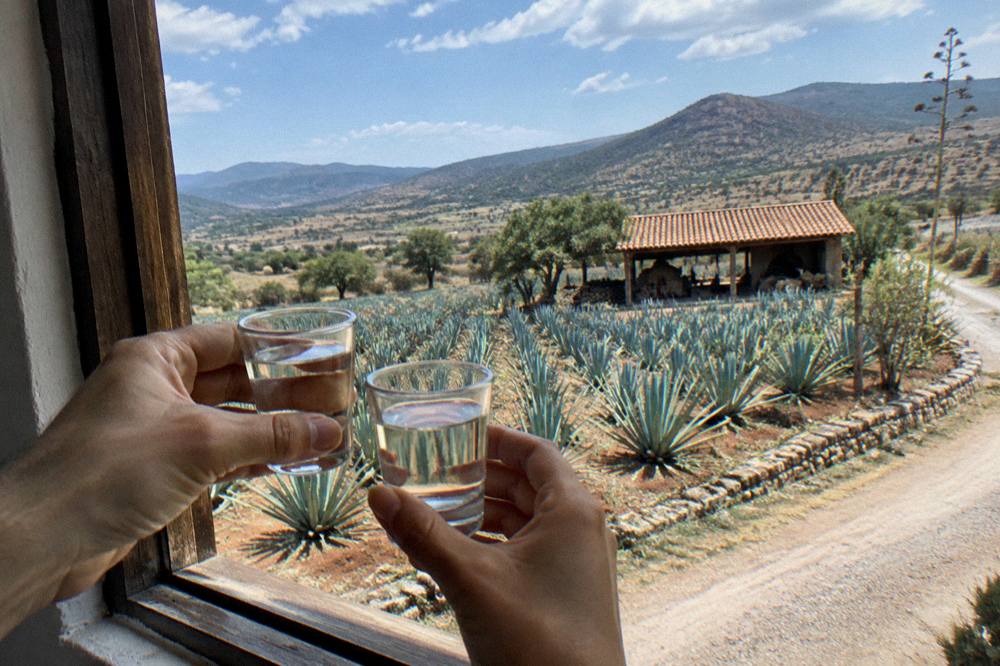
Guided mezcal products from the city vary in what they cover rather than in kind: some centre on behind-the-scenes distillery access, some on countryside agave fields, some on paired tastings in the city itself before any driving begins. The featured option on this page is the Experience the Mezcal Tour in Oaxaca, which the listing describes as a mezcal-focused day from the city, and it can be checked directly: Check availability. Its full card sits further down this page.
For anyone building the day around food as much as mezcal, the pairing logic is the same one the site covers in the Oaxacan mole guide and the wider markets coverage, and a market walk in the city the day before is a common warm-up. Couples planning a slower version of the valley can adapt the structure from the Oaxaca for couples itinerary.
Which Palenques And Mezcal Tastings Can You Visit From Oaxaca City?
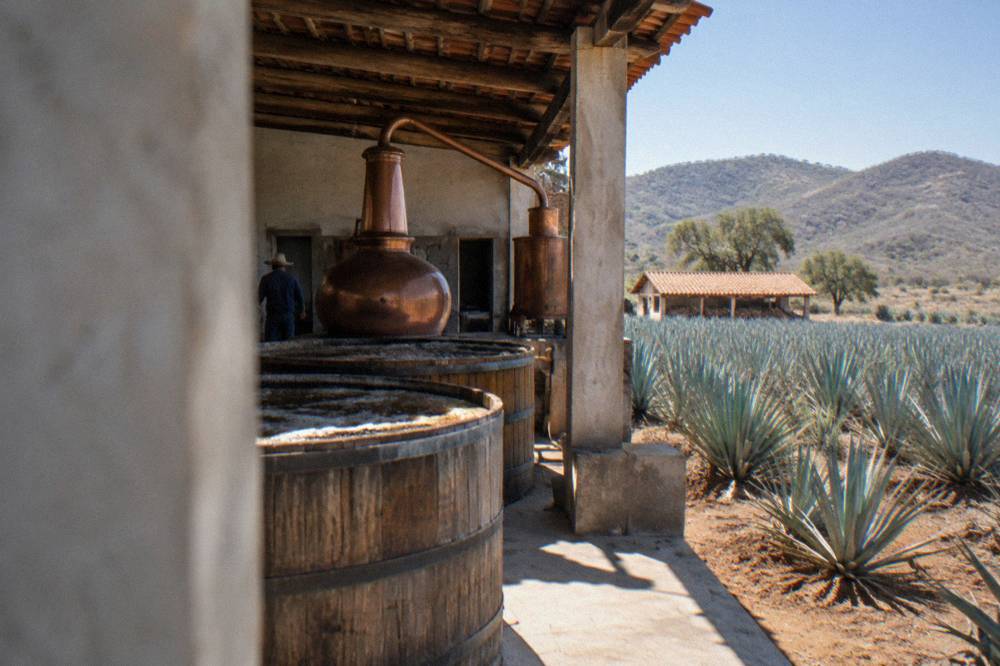
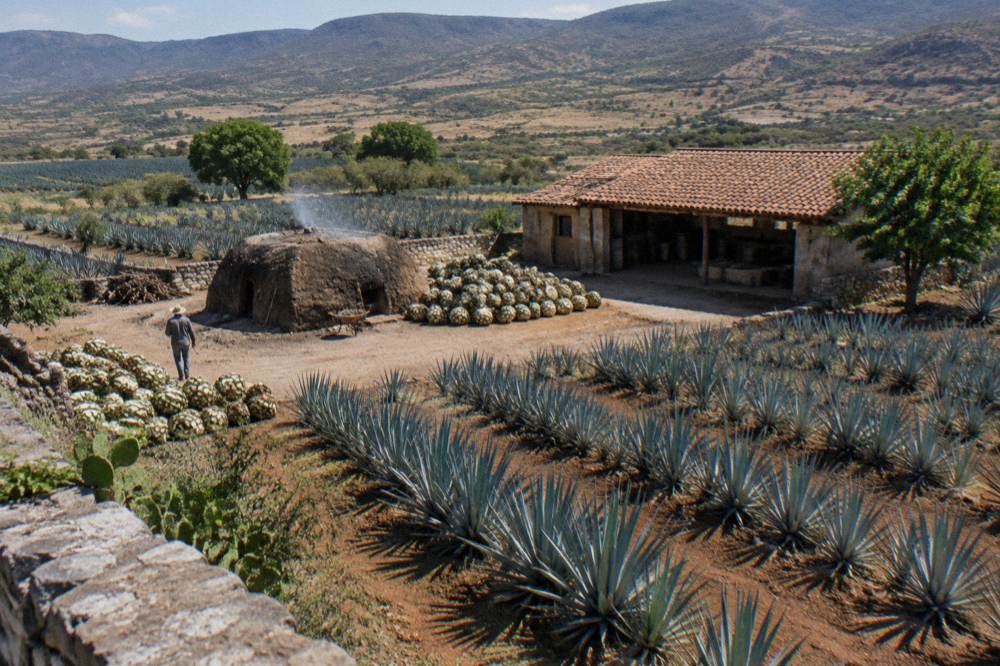
Palenque visits cluster in and around Santiago Matatlán, with more tasting rooms in the city of Oaxaca itself and out in the valley countryside, and the choice is between family distilleries down the valley road and city-based tastings, sommelier-led pairings and distillery tours that depart from the centre. State pages describe many palenques around Matatlán but publish no standard visiting price, so fees are confirmed on site or via the operator.
Three distinct formats are bookable from the city, and the tour list this site carries shows the spread. A behind-the-scenes distillery tour takes the whole day and goes down the valley. Agave-field countryside tours combine the fields with a tasting. And short city sessions, including a certified-sommelier pairing format that matches seven pours against mole courses, fit into an evening without any driving at all.
The city-based formats are the ones to choose when the day has no room for a valley loop. They also pair naturally with a walking or markets morning, which is why several of this site's mezcal picks sit alongside food and culture walks rather than other driving tours.
One recurring question, whether mezcal is simply a lesser substitute for tequila, has its own answer page: is mezcal the poor man's tequila. In short, the two are different protected categories with different geographies, and Oaxaca sits at the centre of mezcal's own story.
How Much Does A Mezcal Route Day Trip From Oaxaca Cost?
Product prices for guided mezcal days from Oaxaca City sit on each operator's booking page; the fixed local costs you can plan around are INAH site tickets at 105 or 210 MXN for Category I and 80 or 145 MXN for Category III, plus whatever tasting fee a palenque charges on arrival, confirmed before you commit.
The honest budget picture is therefore two-part. The known-quantity costs are the archaeological tickets, which are official INAH figures, and any market food you buy along the way, which is market-priced. The variable costs are the palenque tasting fee and the transport: a guided tour prices both into one booking, while an independent day prices them separately and needs each agreed in advance. A private driver for the day and a guided group tour are different products with different economics, and neither has a published official rate this site can quote. The full index of guides sits on Oaxaca Travel Guide.
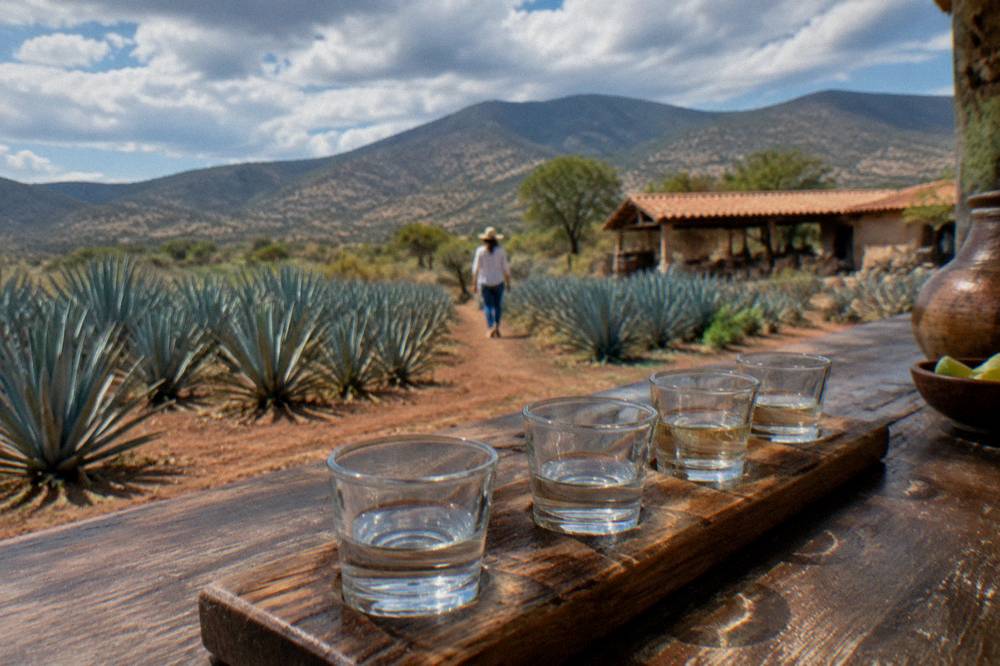
One dated fixed point does exist in the state's calendar: the Feria del Mezcal in July 2026 was reported at 17 to 28 July at the Centro Cultural y de Convenciones de Oaxaca in Santa Lucía del Camino, with entry of about 80 MXN, part of the Guelaguetza month programme that the state says carried more than 140 activities. For the wider budget frame, the site's five-day Oaxaca itinerary shows how a mezcal day slots into a fuller trip.
When Is The Best Time Of Year For The Oaxaca Mezcal Route?
The dry season, November to April, is when the Oaxaca valleys see the least rain, with January averaging 2.4 mm across the whole month against 188.3 mm in June, so a mezcal route day with agave fields and outdoor distillery yards is most reliably dry in that window; July is also popular because the Feria del Mezcal runs alongside the Guelaguetza, at the cost of summer rain.
The climate normals below are the SMN station figures for the city, and they set expectations better than any rule of thumb. The rainy season runs May to October with its peak from June to September, and rain in the valleys tends to fall in heavy afternoon spells rather than all day, but this site does not promise a daily pattern, only the monthly totals.
| Month | Mean daily high C | Mean nightly low C | Average rain mm |
|---|---|---|---|
| Jan | 28.9 | 10.3 | 2.4 |
| Feb | 31.1 | 11.6 | 4.6 |
| Mar | 33.3 | 13.6 | 17.6 |
| Apr | 34.9 | 15.8 | 47.3 |
| May | 33.8 | 16.7 | 97.9 |
| Jun | 30.9 | 16.7 | 188.3 |
| Jul | 30.1 | 15.9 | 118.6 |
| Aug | 30.0 | 15.9 | 131.8 |
| Sep | 29.1 | 16.1 | 163.6 |
| Oct | 29.3 | 14.5 | 63.1 |
| Nov | 29.0 | 12.3 | 9.1 |
| Dec | 28.9 | 11.0 | 9.0 |
April carries a mean daily high of 34.9 C and June 188.3 mm of rain; those two figures alone shape most people's month choice without any ranking language being needed. December and January bring the lowest mean nightly lows, 11.0 and 10.3 C, which matters for evenings on distillery patios. The city sits at about 1,550 m, so nights cool off sharply even after warm afternoons, and a layer for the drive home is standard advice for any highland day trip.
What Else Combines With Santiago Matatlán On One Day Trip?
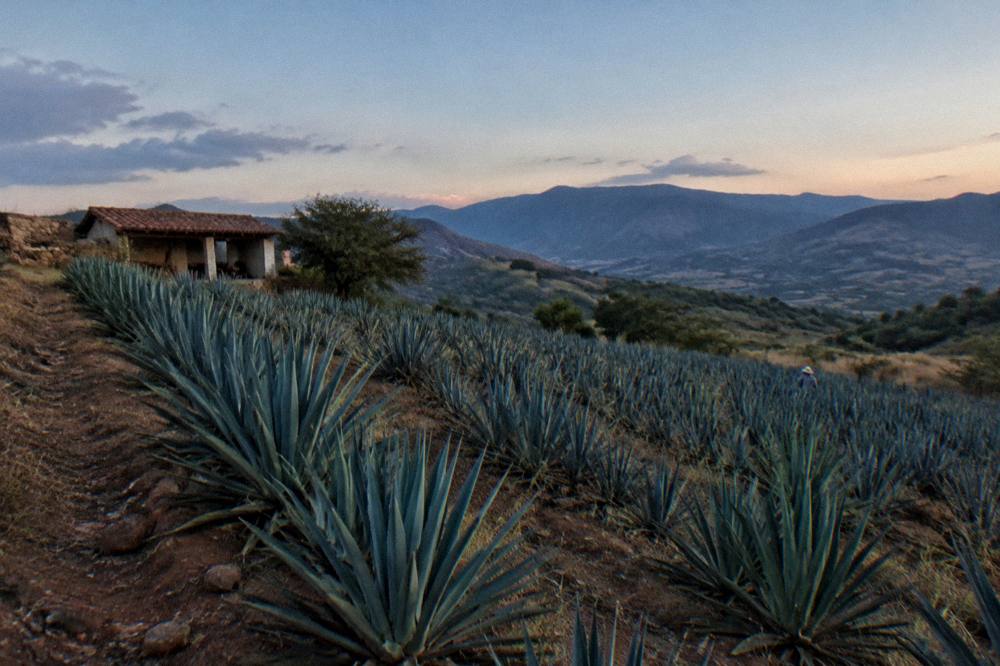
Santiago Matatlán combines naturally with Mitla, about 37 minutes from the Zócalo, with Tlacolula, about 25 minutes, with Teotitlán del Valle at about 26 minutes, with the Tule tree at about 11 minutes, and, with a longer day, with Hierve el Agua at about 57 minutes, so the whole corridor works as one loop from Oaxaca City with the palenques as the final or central stop.
The pairing that suits you depends on what the day is for. A first visit to the valley usually takes the archaeological pairing, Mitla plus a palenque, because the two are minutes apart down the same road. A craft-focused day swaps Mitla for Teotitlán del Valle's weaving village, covered in the site's Teotitlán del Valle guide. A market day aims at Tlacolula, whose Sunday market has its own page in the Tlacolula Sunday market guide.
| If your day trip prioritises | Pair Santiago Matatlán with | Site guide on this site |
|---|---|---|
| Archaeology | Mitla and Yagul | Mitla and Tlacolula day trip |
| Markets | Tlacolula on a Sunday | Tlacolula Sunday market |
| Crafts and textiles | Teotitlán del Valle | Teotitlán del Valle |
| Landscape and hikes | Hierve el Agua | Hierve el Agua day trip |
| Alebrijes and pottery | San Martín Tilcajete, San Bartolo Coyotepec | Craft village guides |
The two craft villages in the last row sit on the opposite, southern arm of the valleys, so they work better as their own loop than as an add-on to a Matatlán day; the San Martín Tilcajete alebrijes guide and the San Bartolo Coyotepec black pottery guide cover those. Trying to force both arms into one day means more driving than tasting, and the free-flow times above already understate real conditions.
Can You Do The Mezcal Route Without A Car?
Yes: the mezcal route can be done from Oaxaca City without a car, either on a guided tour that includes transport, which is the format most of the products on this page take, or independently using colectivo shared vans down the valley toward Tlacolula and Mitla with local taxis for the final hops, accepting that an independent version trades door-to-door distillery access for a cheaper, slower day.
The guided option removes the one real constraint of the route, which is that drinking and driving do not mix and the valley's distilleries are spread along a highway corridor. Every driving tour on this page departs from the city and returns there, which is the whole point of the format. The independent option is workable on the days when the colectivo corridor is running normally, but one standing risk belongs in any Oaxaca road-travel plan: teachers' union protests have repeatedly closed valley roads and airport access for short spells, a recurring pattern rather than a dated event, so a day with a booked return obligation should keep some slack in it. Official advisories frame the wider picture: the UK FCDO advises against all but essential travel to parts of Mexico without naming Oaxaca on its main page, Canada advises a high degree of caution in Mexico overall, and the US State Department lists Oaxaca state at Level 2, exercise increased caution, with restrictions for its own staff only in the Isthmus region.
For anyone weighing whether the coast belongs on the same trip, the Pacific is a separate journey, about 165 minutes of free-flow driving to Puerto Escondido on the new highway and slower in reality, covered in the Oaxaca to Puerto Escondido guide. The mezcal route is an inland, highland day trip and stays one.
This guide's planning notes in one place: the state calls Matatlán the world capital of mezcal; the valley corridor from Tule to Hierve el Agua is about an hour of driving end to end; INAH fees are fixed and printed above; tasting fees are confirmed on site; and the dry months, November to April, are the reliable window for outdoor distillery yards.
Common Questions About The Oaxaca Mezcal Route
Where Is Santiago Matatlán?
Santiago Matatlán is a town in the Tlacolula Valley east of Oaxaca City, on the corridor that continues to Mitla, down the valley road from the city. State government pages call it the Capital Mundial del Mezcal.
How Much Does A Palenque Visit In Santiago Matatlán Cost?
No official primary source publishes a standard palenque visiting fee, so confirm the tasting price on arrival or through whoever books the stop. Guided tours that include distillery visits price the whole day in one booking.
Can You Visit The Mezcal Route From Oaxaca City Without A Car?
Yes. Guided tours with transport included run from the city, and independent travellers use colectivo vans toward Tlacolula and Mitla plus local taxis, accepting a slower day without door-to-door distillery access.
When Is The Feria Del Mezcal Held?
The 2026 edition was reported at 17 to 28 July at the Centro Cultural y de Convenciones de Oaxaca in Santa Lucía del Camino, with entry of about 80 MXN, running alongside the Guelaguetza in July. Check the current year's official page before planning.
What Else Should You Combine With Santiago Matatlán?
Mitla, Tlacolula, Teotitlán del Valle and the Tule tree all sit on the same valley corridor, and Hierve el Agua extends the day further, at about 57 minutes of free-flow driving from the Zócalo.
When Is The Driest Time For The Mezcal Route?
The dry season runs November to April; January averages 2.4 mm of rain for the whole month, against 188.3 mm in June, per the SMN station normals for Oaxaca.