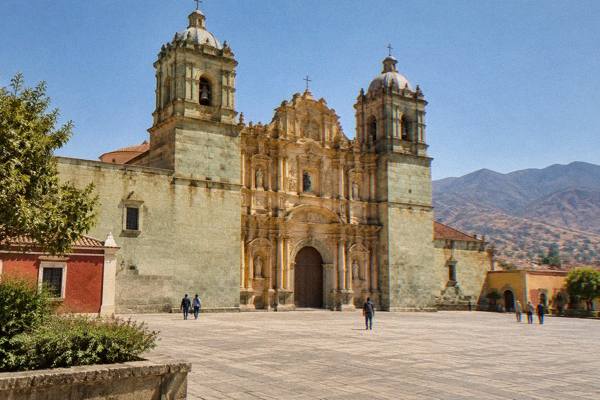
Guelaguetza: Dates, Tickets And Seats In July
The Guelaguetza is Oaxaca City's July dance festival, held on two Mondays at the Auditorio Guelaguetza on the Cerro del Fortín, with paid and free seating and a month of processions around it.
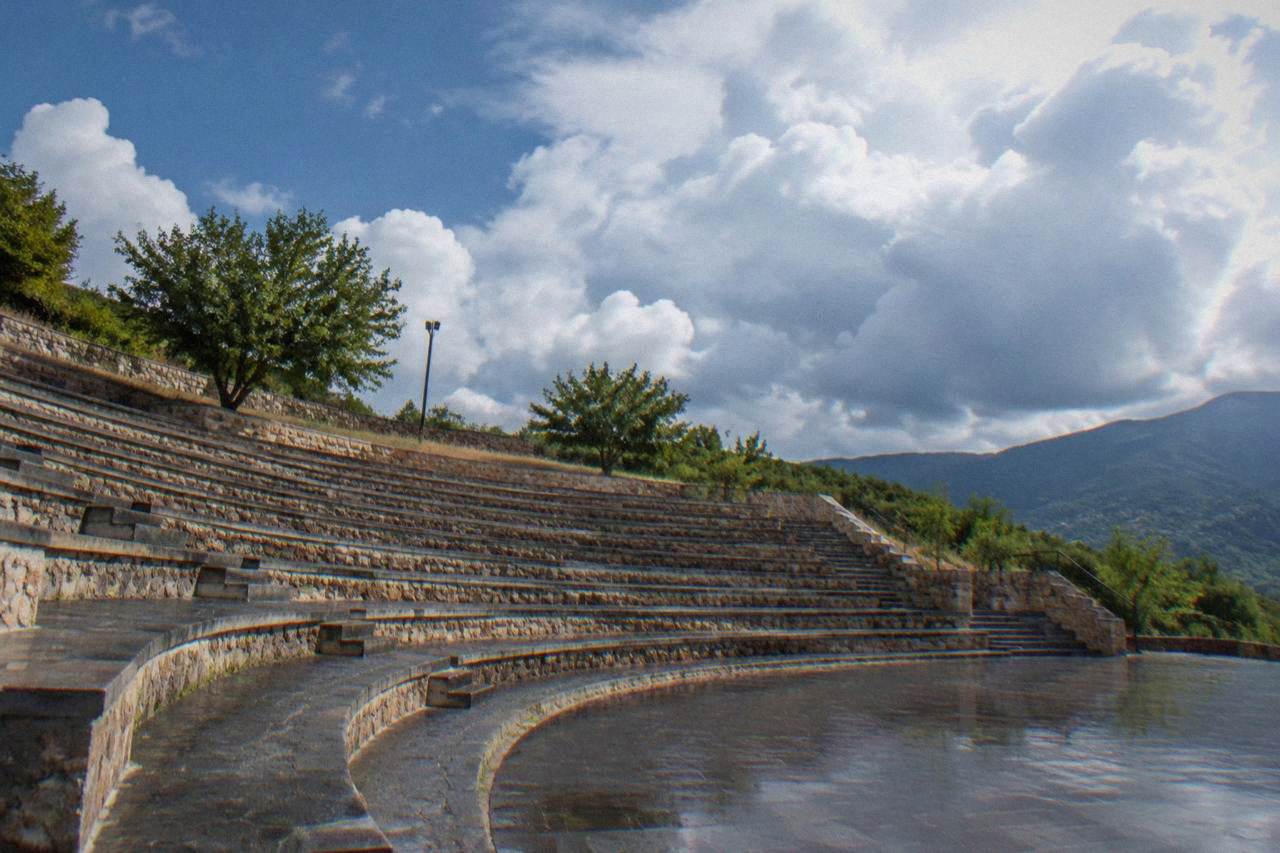
The Guelaguetza takes place on the last two Mondays of July in Oaxaca City, at the Auditorio Guelaguetza on the Cerro del Fortín. The 2026 performances ran 20 and 27 July at 10:00 and 17:00; paid tickets went through Superboletos at 1,632 MXN for Palco A and 1,321 MXN for Palco B, with Palcos C and D free.
The Guelaguetza is Oaxaca City's great July festival: two Mondays of dance performances at the Auditorio Guelaguetza on the Cerro del Fortín, wrapped in a month of processions, a mezcal fair and a city that doubles in size with visitors. Oaxaca City, the capital of the state of Oaxaca, sits inland in the Valles Centrales at about 1,550 m, and in July its hillsides fill with delegations from across the state. The festival works in a fixed way: there is a standing date pattern, tickets and seats are organised in a set manner, the surrounding programme adds its own layers, and a stay can be planned around it, all from what the state government and the ticketing records publish. The 2026 edition is past, and 2027 dates have not been announced, so everything here describes the format and the figures that were charged in 2026.
What Is The Guelaguetza In Oaxaca?
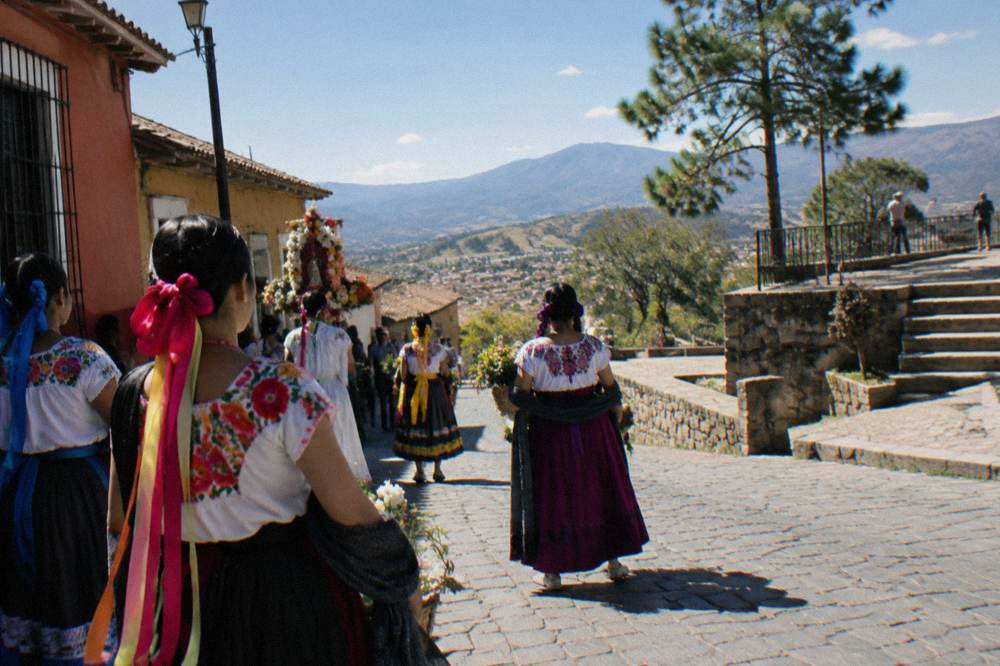
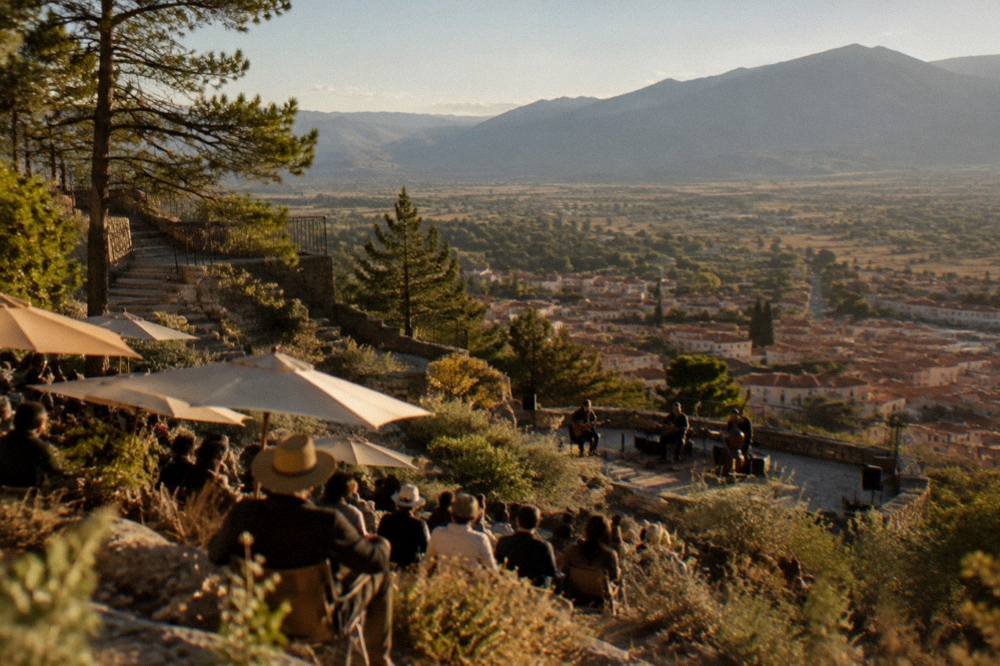
The Guelaguetza is an annual festival of regional dance held in Oaxaca City every July, with its main performances on two Mondays at the Auditorio Guelaguetza on the Cerro del Fortín, one of the hills that flanks the historic centre. The performances are known as Lunes del Cerro, and the second date is called the Octava. Delegations from across the state of Oaxaca perform in traditional dress.
The state government frames the whole month as "Julio, mes de la Guelaguetza", a programme that in 2026 carried more than 140 activities beyond the auditorium shows themselves. The name and the format belong to a long Oaxacan tradition of reciprocal giving, though this page sticks to what the official programme publishes rather than retelling the history beyond it. What matters for a visitor is the shape of the thing: two ticketed-and-free mornings and afternoons of staged dance on a hillside auditorium, plus processions through the centre, a mezcal fair at the Centro Cultural y de Convenciones de Oaxaca in Santa Lucía del Camino, and a city that runs special transport and extra events for the whole stretch of July.
The audience is genuinely mixed. The 2025 tourism indicators for Oaxaca City recorded 1,324,332 arrivals across the full year, and July is one of the months that pulls the hardest, with the state estimating a large economic boost for the capital during the festival. Hotel occupancy during Guelaguetza weeks regularly outpaces the annual average of 51.73 percent, though precise festival-week occupancy figures are not broken out in the published indicators.
For a first orientation to the city that hosts it, the Oaxaca Travel Guide homepage collects the main sights and day trips, and how many days to spend in Oaxaca matters more than usual in July, because the festival fixes your dates for you rather than the other way round.
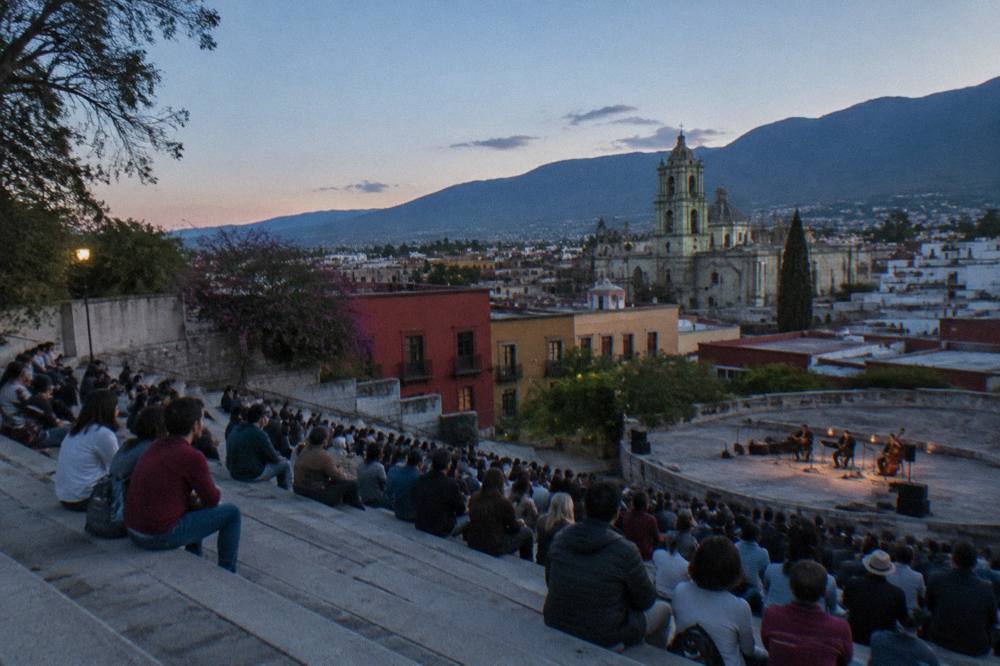
When Is The Guelaguetza Held In Oaxaca?
The Guelaguetza is held on two Mondays in July, called Lunes del Cerro, with the second Monday known as the Octava. In 2026 the dates were 20 and 27 July, with performances at 10:00 and 17:00 on each day. The 2026 edition has already taken place, and 2027 dates have not been announced, so plan against the standing pattern of the last two Mondays of July.
The two-Monday pattern is the fixed skeleton of the festival. Each day carries two performances, morning and late afternoon, at the Auditorio Guelaguetza on the Cerro del Fortín, whose address the state lists as Carretera Internacional s/n, Oaxaca de Juárez. Tickets for 2026 went on sale in two waves: a presale from 15 May 2026 and regular sales from 1 June 2026, with a limit of two tickets per account to deter resale. The paid Palco A and Palco B sections sold out quickly, which the state's own releases noted.
Around the auditorium dates, the July programme in 2026 included the Calendas de las Culturas on 18 and 25 July, typically setting off around 18:00 from the Fuente de las Ocho Regiones, and Convites on 1, 10 and 11 July, similarly around 18:00 from the Cruz de Piedra. The Feria del Mezcal ran 17 to 28 July 2026 at the Centro Cultural y de Convenciones de Oaxaca in Santa Lucía del Camino, at roughly 80 MXN entry with more than 400 stands, though those dates come from the state's festival coverage and should be confirmed against the official page each year.
If July does not suit, the best time to visit Oaxaca covers the trade-offs of the rest of the year, and the festival's fixed Mondays are the one set of dates you cannot move.
How Do Guelaguetza Tickets And Seats Work?
Tickets for the Guelaguetza are sold through Superboletos, the exclusive channel named by the state government. For the 2026 edition, Palco A cost 1,632 MXN and Palco B 1,321 MXN before service fees, and Palcos C and D were free, filled by order of arrival. Each performance day held two shows, at 10:00 and 17:00, and sales were limited to two tickets per account.
The section structure is the heart of the system. Palco A and Palco B are the numbered, paid sections closest to the stage; Palcos C and D cost nothing and are occupied on a first-come basis, which is why the hill fills hours before the free sections' gates effectively run out of room. Service fees applied on top of the printed Palco A and B prices. The resale cap of two tickets per account was introduced explicitly to fight touting, and the state's releases reported that Palco A and B inventory was exhausted rapidly in 2026.
| Section | 2026 price (MXN) | How it is filled |
|---|---|---|
| Palco A | 1,632 plus fees | Reserved seat, sold via Superboletos |
| Palco B | 1,321 plus fees | Reserved seat, sold via Superboletos |
| Palco C | Free | By order of arrival |
| Palco D | Free | By order of arrival |
Two practical warnings follow from the sources. First, the free sections are genuinely free but not guaranteed: arrival order decides. Second, the only legitimate sales channel named by the government is Superboletos, so a ticket offered anywhere else in July is a risk the state's own anti-resale measures were built against. Confirm the channel and the on-sale dates each year, because the presale and regular-sale windows (15 May and 1 June in 2026) are announced afresh every season.
Where Is The Auditorio Guelaguetza And How Do You Reach It?
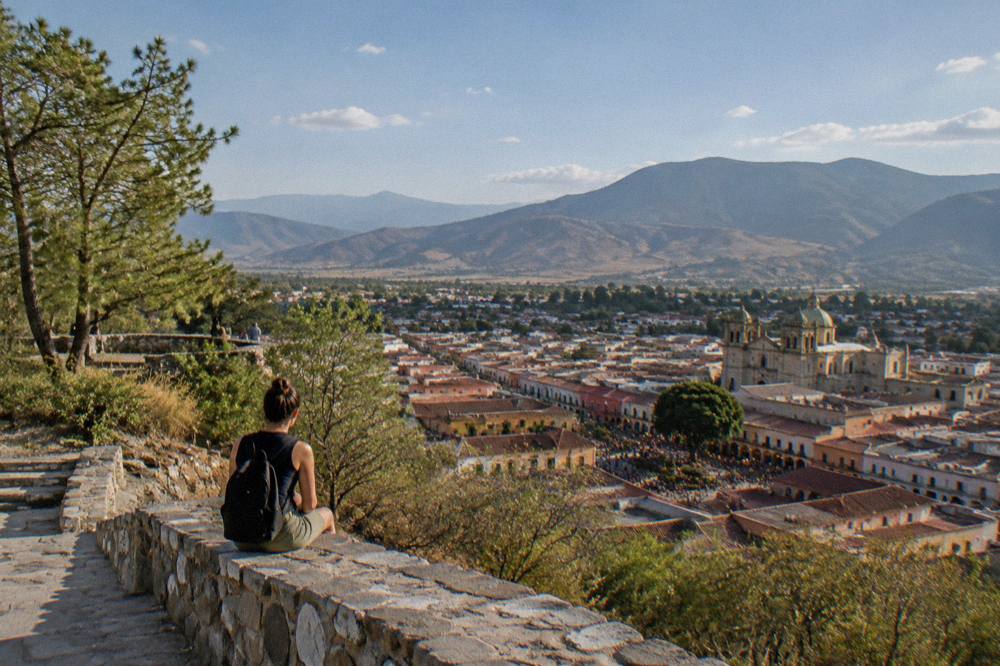
The Auditorio Guelaguetza stands on the Cerro del Fortín at Carretera Internacional s/n, on a hill above Oaxaca City's historic centre, an inland highland city with no sea and no port. The state lays on special festival transport for Guelaguetza days, and the climb from the centre to the auditorium is short in distance but steep in grade.
The Cerro del Fortín is one of the hills that frame the centre, and on performance days the access roads concentrate thousands of people moving in the same direction at the same time. The state's releases advertise dedicated transport for the festival period rather than leaving everyone to regular city services, and ride-hailing apps operate in the city, with surge pricing during events like the Guelaguetza, though that comes from local transport guides rather than an official fare table, so treat it as directional. Getting around in general is covered in the getting around Oaxaca guide, and taxis and apps in taxis, Uber and DiDi in Oaxaca.
One standing risk deserves a plain sentence: road blockades by teachers' unions are a recurring feature of Oaxacan public life and can disrupt road and airport access for hours at a time, including around festival dates. Nothing in the official record dates a future one, so the honest advice is simply to build a little slack into arrival and departure days and to check conditions on the day.
The auditorium is not the only stage in July. The calendas and convites run through the streets of the centre, the Feria del Mezcal fills the convention centre in Santa Lucía del Camino, and the neighbourhoods around the centre, from Jalatlaco to Xochimilco, host their own events. If the question is when the Guelaguetza is in a given year, the answer page carries the standing pattern and the latest announced edition.
What Else Happens In Oaxaca During The Guelaguetza Month?
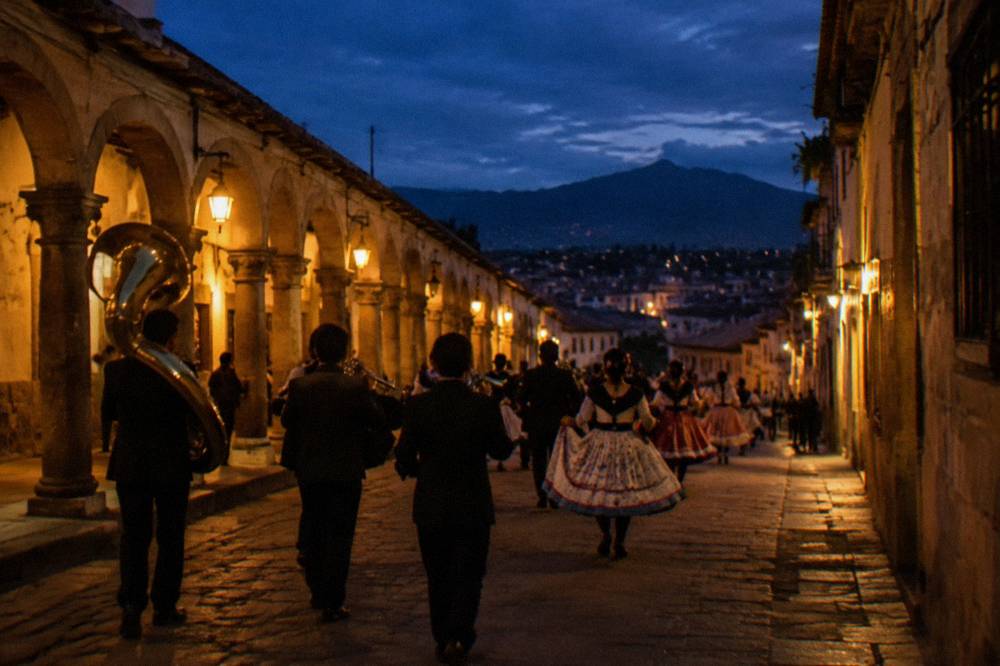
The Guelaguetza auditorium shows anchor a month-long programme that in 2026 carried more than 140 activities, including the Calendas de las Culturas on 18 and 25 July, convites on 1, 10 and 11 July, and the Feria del Mezcal from 17 to 28 July at the Centro Cultural y de Convenciones de Oaxaca in Santa Lucía del Camino, with around 400 stands and entry at roughly 80 MXN.
The calendas are the street half of the festival: processions that set out around 18:00, in 2026 from the Fuente de las Ocho Regiones, with delegations, brass bands and giant figures moving through the centre. The convites follow a similar pattern from the Cruz de Piedra earlier in the month. Neither needs a ticket. They turn the Andador Macedonio Alcalá and the streets around the Zócalo into the festival's second venue, and they are the part of July you get for free simply by being in the centre at the right hour.
| 2026 July event | Date | Typical start | Point of departure or venue |
|---|---|---|---|
| Convite | 1 July | about 18:00 | Cruz de Piedra |
| Convite | 10 July | about 18:00 | Cruz de Piedra |
| Convite | 11 July | about 18:00 | Cruz de Piedra |
| Feria del Mezcal | 17 to 28 July | 11:00 daily | CCCO, Santa Lucía del Camino |
| Calenda de las Culturas | 18 July | about 18:00 | Fuente de las Ocho Regiones |
| Lunes del Cerro | 20 July | 10:00 and 17:00 | Auditorio Guelaguetza |
| Calenda de las Culturas | 25 July | about 18:00 | Fuente de las Ocho Regiones |
| Octava | 27 July | 10:00 and 17:00 | Auditorio Guelaguetza |
The Feria del Mezcal deserves its own line in any July plan. Twelve days of mezcal, food and craft stands at the convention centre in Santa Lucía del Camino, a short ride from the centre, with entry around 80 MXN. Mezcal itself has a full guide at mezcal in Oaxaca, and the fair is the single easiest place to taste across producers in one visit.
Between performances, the rest of the city carries on. The things to do in Oaxaca page collects the standing attractions, and the July crowds make booking ahead for restaurants and workshops more of a necessity than in quieter months.
What Is The Weather Like In Oaxaca In July?
July in Oaxaca City averages a high of 30.1 C and a low of 15.9 C, with 118.6 mm of rain across about 20 days, according to the SMN station normals for 1991 to 2020. The city sits at about 1,550 m in the Valles Centrales, so July falls inside the May to October rainy season, with afternoons of rain rather than all-day rain.
The pattern matters for festival planning because the auditorium is open-air and the calendas run through the streets. The station normals show June at 188.3 mm and September at 163.6 mm against July's 118.6 mm, and July averages 20.4 days with rain, so a shower on a performance afternoon is a normal July event rather than bad luck. Temperatures are mild by lowland standards: mornings around 16 C, afternoons around 30 C, with the altitude doing the moderating.
| Month | Mean high C | Mean low C | Rain mm | Days with rain |
|---|---|---|---|---|
| June | 30.9 | 16.7 | 188.3 | 19.9 |
| July | 30.1 | 15.9 | 118.6 | 20.4 |
| August | 30.0 | 15.9 | 131.8 | 20.5 |
| September | 29.1 | 16.1 | 163.6 | 21.4 |
The full monthly breakdown, including the dry November to April half of the year, sits at Oaxaca weather by month, and packing advice for a rainy-season festival, rain layer and all, is in the same family of planning pages. There is no daylight saving in Mexico since 2022, so Oaxaca stays on UTC-6 all year and the 17:00 performance starts in daylight and ends near dusk.
How Far In Advance Should You Plan A Guelaguetza Trip?
Plan a Guelaguetza trip months ahead: the 2026 ticket presale opened 15 May and regular sales 1 June, the paid sections sold out quickly, and July hotel demand in Oaxaca City runs well above the annual average occupancy of 51.73 percent. Flights and accommodation should be settled before the ticket on-sale dates, not after.
The sequence that worked for the 2026 edition, and that the state's releases imply will repeat in structure, is: fix the two Mondays from the standing pattern, book flights and a room, then buy auditorium tickets the moment sales open, with only Superboletos as the channel. The two-ticket-per-account cap means a larger group needs several buyers acting at the same moment. If paid seats are gone, Palcos C and D remain free, but they demand an early place in line on the hill.
Flights arrive at Oaxaca's Xoxocotlán airport, operated by ASUR, which served routes including Dallas-Fort Worth, Los Angeles and Houston in 2026 alongside frequent domestic links; the planning pages at flights to Oaxaca and the Oaxaca airport cover arrivals, and overland options via the ADO bus from Mexico City suit travellers combining the capital with the festival. Where to base yourself is covered in where to stay in Oaxaca and the hotel guide at the best hotels in Oaxaca.
| Planning step | When (2026 pattern) |
|---|---|
| Confirm the two Mondays | Standing pattern: last two Mondays of July |
| Book flights and hotel | As early as possible; July demand outpaces the annual average |
| Ticket presale | From 15 May 2026 |
| Regular ticket sales | From 1 June 2026, two tickets per account |
| Free sections | Order of arrival on performance days |
What Can You Do In Oaxaca Between The Festival Days?
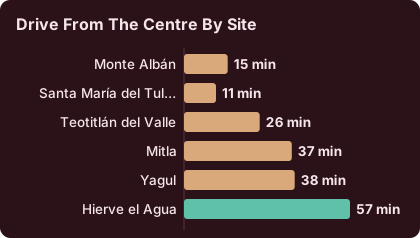
Between the two Mondays, Oaxaca City offers cooking classes, craft workshops, mezcal tastings and valley day trips to Monte Albán, Mitla and Hierve el Agua, and July's crowds make advance booking worthwhile for all of them. The city is the base for everything: the archaeological sites sit in the surrounding Valles Centrales, from Monte Albán about 15 minutes away to Hierve el Agua about 57 minutes by road.
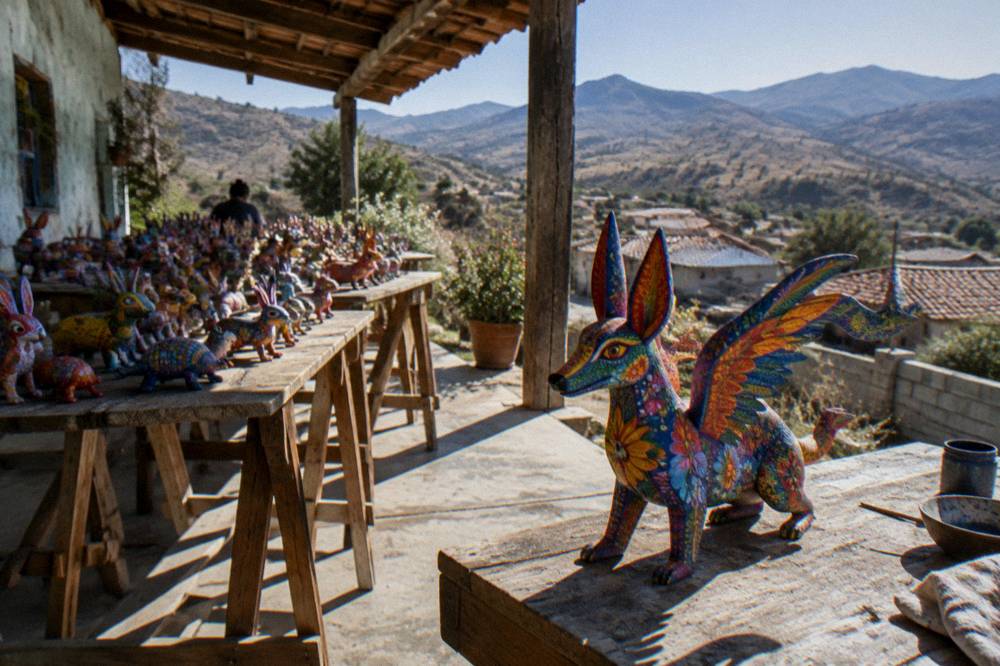
The festival fills two mornings and two late afternoons. The rest of the week is ordinary Oaxaca, at its busiest. Craft workshops slot naturally around the dance theme, since the delegations' dress and the artisan traditions behind it are the same world: an alebrije painting session with the Jiménez family in San Martín Tilcajete is a hands-on version of what the festival puts on stage, and the operator's booking page shows current availability, with Check availability the way to see dates and price without guessing.
Food and drink anchor the rest. The what to eat in Oaxaca guide covers mole, tlayudas and the rest of the table, with deeper pages on Oaxacan mole, tlayudas, quesillo and the best restaurants in Oaxaca. A cooking class or a market walk between festival days turns the food from spectacle into something you can carry home.
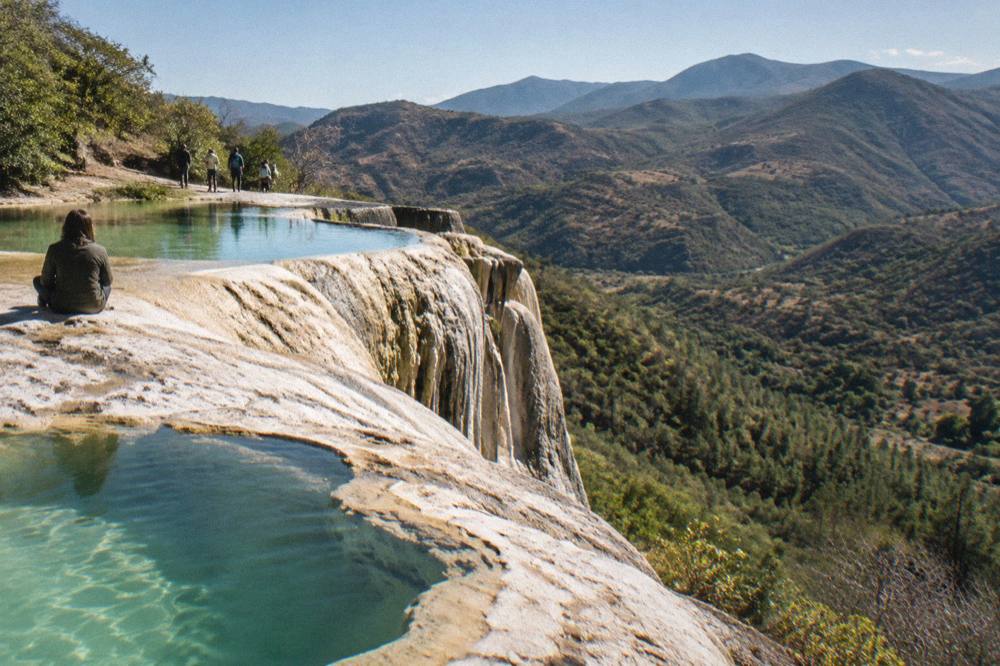
Day trips fill the non-festival days at the region's own pace. Monte Albán, a Category I INAH site open Monday to Sunday 08:00 to 17:00 with last access at 16:00, charged 105 MXN for nationals and 210 MXN for foreign visitors, and it received 416,675 visitors in 2025, the most of any site in the state's count. Mitla, about 37 minutes out, follows the same Category I pricing with last access at 16:30. Hierve el Agua, about 57 minutes out, is run by local communities rather than INAH. The valleys loop works as a single long day or as two shorter ones.
| Site | Drive from the centre | Hours | Entry MXN (nationals / foreigners) |
|---|---|---|---|
| Monte Albán | about 15 minutes | Mon to Sun 08:00 to 17:00, last access 16:00 | 105 / 210 |
| Santa María del Tule | about 11 minutes | varies by church | not stated |
| Teotitlán del Valle | about 26 minutes | workshop-dependent | varies |
| Mitla | about 37 minutes | Mon to Sun 08:00 to 17:00, last access 16:30 | 105 / 210 |
| Yagul | about 38 minutes | Mon to Sun 08:00 to 17:00, last access 16:00 | 105 / 210 |
| Hierve el Agua | about 57 minutes | community-run | not stated |
Drive times are derived from free-flow routing; real traffic and mountain roads are slower, and July adds festival traffic on top. A private day with a car and driver is one way to compress Mitla, a weavers' town, a mezcal stop and Hierve el Agua into the gap between the Mondays.
Is The Guelaguetza Worth The July Crowds?
The Guelaguetza is Oaxaca's single largest annual event, and July delivers it alongside calendas, convites and a twelve-day mezcal fair, which no other month matches. The trade is crowds: July's 20.4 average days of rain, sold-out paid sections and citywide demand contrast with the quieter November to April dry season. Whether that trade is worth it depends on whether the festival is the point of the trip.
If the festival is the point, nothing else on the calendar competes, and the free Palcos C and D put the auditorium within reach of any budget. If it is not, the dry season months carry 2.4 mm of rain in January against July's 118.6 mm, thinner crowds and the same restaurant table available without a booking war, and the standing attractions, from Monte Albán to the markets, run all year. The state's visitor count for Monte Albán alone, 416,675 in 2025, shows how much of the region's tourism is festival-independent.
Budget-wise, festival week sits at the top of the city's range, though no official nightly hotel price range is published, so figure planning belongs to the Oaxaca travel costs and budget page rather than to guesswork here. The lodging tax is a stated fact: 3 percent on hotel-type stays, 5 percent when booked through intermediaries, under the state fiscal law updated in December 2025.
What Should First-Time Visitors Know Before Going?
First-time visitors to Oaxaca City for the Guelaguetza should know four things: the city is inland at about 1,550 m with a rainy-season July, tickets come only through Superboletos with free sections by arrival, the festival month adds processions and a mezcal fair beyond the auditorium, and standing advisory levels for Oaxaca state are reported at Level 2, exercise increased caution, with no restrictions on the city itself for US government staff.
That last point deserves its plain wording, because safety questions come with every Mexico trip. The US State Department lists Oaxaca state at Level 2, Exercise Increased Caution, with restrictions applying to the Isthmus region rather than the city or Monte Albán; the UK FCDO advises against all but essential travel to parts of Mexico without naming Oaxaca on its main page; Canada advises a high degree of caution in Mexico overall. The fuller treatment, including the standing risk of road blockades, is at is Oaxaca safe.
Practicalities beyond safety: the city is walkable in the centre, cash and cards both work though the markets lean cash-first, and altitude affects visitors unevenly at 1,550 m, so the first day is better spent gently. Water, money and packing each have a dedicated guide, linked from the homepage, and the festival's pace, two long days of performance plus late-evening street events, rewards anyone who does not try to do everything.
Common Questions About The Guelaguetza In Oaxaca
When Is The Guelaguetza?
The Guelaguetza is held on the last two Mondays of July, the Lunes del Cerro and the Octava. In 2026 the dates were 20 and 27 July, with performances at 10:00 and 17:00 each day at the Auditorio Guelaguetza. The 2027 dates have not been announced; plan against the standing two-Monday pattern and check the state releases each spring.
How Much Do Guelaguetza Tickets Cost?
In 2026, Palco A cost 1,632 MXN and Palco B 1,321 MXN before service fees, sold only through Superboletos with a limit of two tickets per account. Palcos C and D were free, filled by order of arrival on the hill.
Can You Attend The Guelaguetza For Free?
Yes. Palcos C and D at the Auditorio Guelaguetza are free and are occupied in order of arrival, so an early place in line is the price. The calendas and convites through the centre are street events with no ticket at all.
Where Do You Buy Guelaguetza Tickets?
The state government names Superboletos as the exclusive sales channel. In 2026 the presale opened 15 May and regular sales 1 June, and Palco A and B sold out quickly once regular sales began.
Does It Rain During The Guelaguetza?
Often. July averages 118.6 mm of rain over about 20 days, per the SMN station normals for 1991 to 2020, with highs around 30.1 C and lows around 15.9 C. The auditorium is open-air, so a rain layer belongs in the bag.
What Else Happens In Oaxaca In July Besides The Auditorium Shows?
The July programme carried more than 140 activities in 2026, including calendas on 18 and 25 July, convites on 1, 10 and 11 July, and the Feria del Mezcal from 17 to 28 July at the Centro Cultural y de Convenciones de Oaxaca in Santa Lucía del Camino, with entry at roughly 80 MXN.
The Guelaguetza is a festival with a fixed shape: two Mondays in July, one hillside auditorium, four sections of seating from 1,632 MXN down to free, and a month of processions and fairs around it. Book early, buy only through the channel the state names, and give the city more days than the festival itself, because the calendas in the streets below the Cerro del Fortín are as much the Guelaguetza as anything on the stage.