Flights To Oaxaca: Which Airports Connect And Where The Fares Hide
Oaxaca City is served by one airport, Xoxocotlán (OAX), operated by ASUR, with nonstop routes from Mexico City and several US hubs. This guide sets out which connections exist, how the seasons move fares, and how to plan the first day after landing.
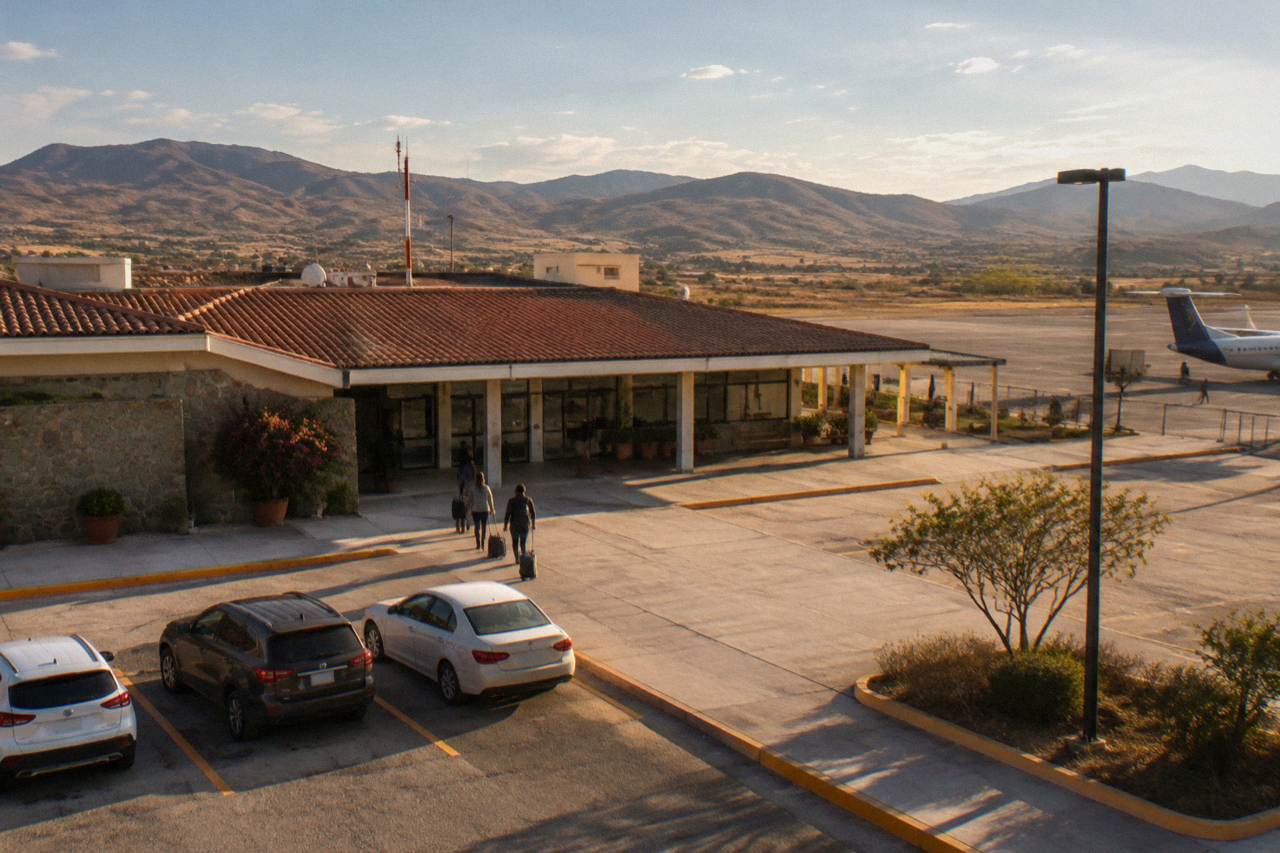
Fly into Oaxaca International Airport (OAX) at Xoxocotlán, about 10 km south of the Zócalo. Most travellers connect through Mexico City (MEX), which has multiple daily flights; nonstops also serve Dallas-Fort Worth, Los Angeles, Houston and seasonal Phoenix. Book early for July and the Día de Muertos window, when demand peaks.
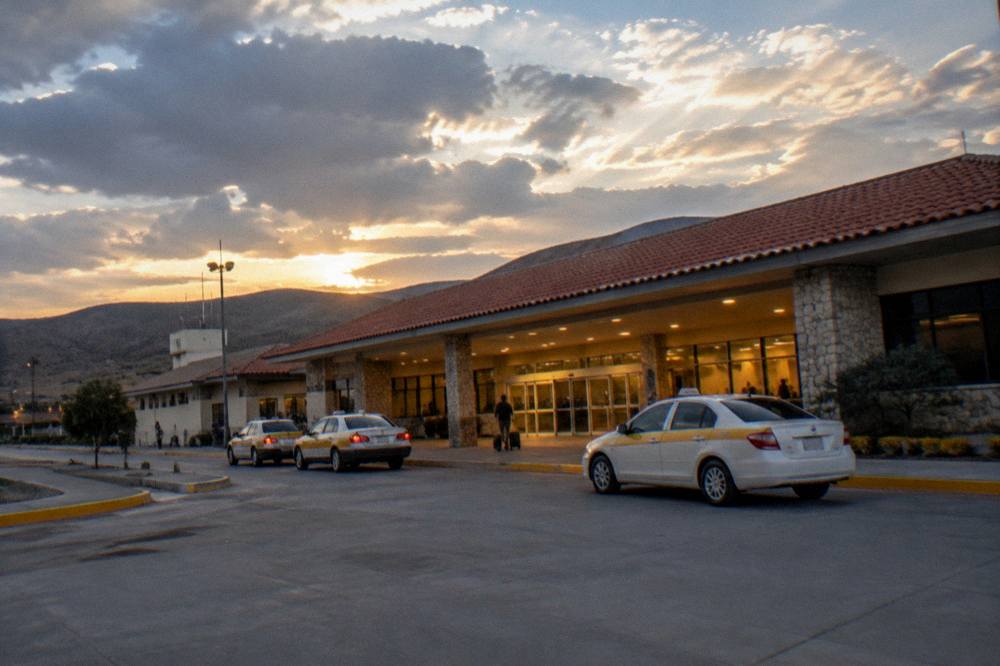
Oaxaca City, the inland highland capital of the state of Oaxaca in Mexico, is reached by air through a single gateway: Aeropuerto Internacional de Oaxaca at Xoxocotlán, coded OAX, operated by the airport group ASUR. The city sits in the Valles Centrales at about 1,550 m, far from any coast, and the airport's own operating window runs 06:00 to 20:00, which shapes every connection into the valley. In 2025 the city registered 1,324,332 tourist arrivals, of which 212,533 were foreign visitors, and nearly all of the foreign share passed through this one small terminal. This guide from the Oaxaca Travel Guide desk sets out which airports connect, how the calendar moves fares, and what to plan for the moment you step out of arrivals.
Which Airport Do You Fly Into For Oaxaca?
Every flight into the Oaxaca valley lands at Xoxocotlán International Airport, OAX, the city's only commercial airport, operated by ASUR and open for operations from 06:00 to 20:00. There is no second field, no city airport and no closer alternate; the Pacific coast airports at Puerto Escondido and Huatulco are hours away by mountain road and serve the coast, not the capital. Practical planning starts from that single-fact constraint.
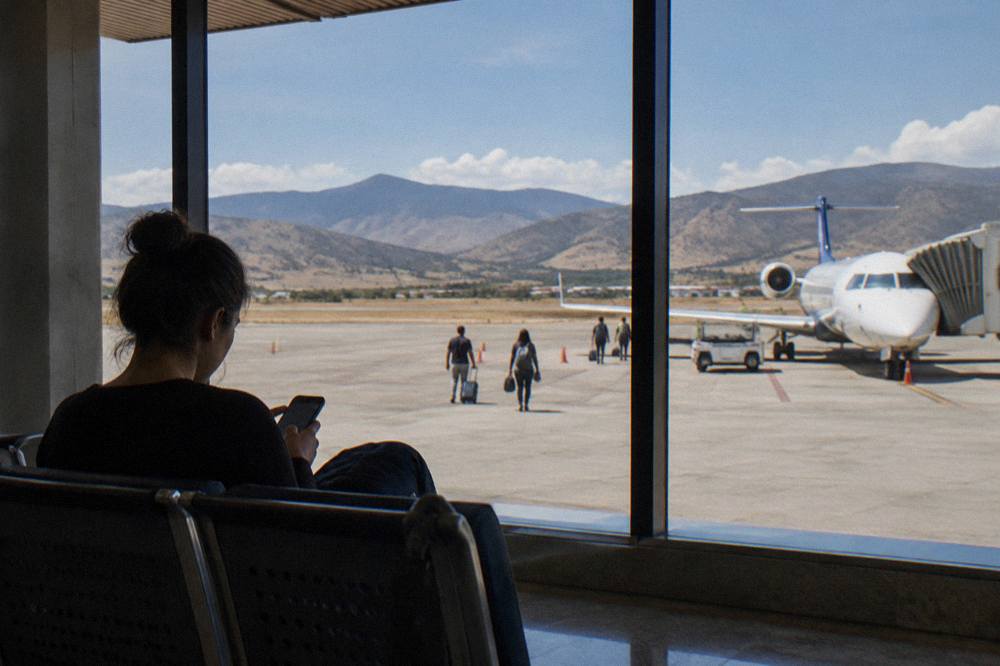
The terminal is small. That has consequences worth planning around: few gates, a compact arrivals hall, and a schedule that concentrates in the middle of the day, since the airport does not operate around the clock. Reported domestic routes for late 2026 include frequent daily service to Mexico City (MEX) on Aeroméxico, Volaris and VivaAerobus, plus flights to Tijuana, Cancún, Monterrey, Guadalajara, Mérida and Tuxtla Gutiérrez. Reported international service includes Dallas-Fort Worth on American, Los Angeles on Volaris, Houston on United, and limited Phoenix flights around the Día de Muertos window. Schedules shift with the seasons, so confirm a specific date on the airline's own listing before building the rest of a trip around it.
The airport's location is straightforward: Xoxocotlán sits south of the city, and the Centro Histórico with its Zócalo and Santo Domingo de Guzmán is a short transfer away. The Oaxaca airport guide covers the landside detail, and getting around Oaxaca picks up the story from the terminal door.
| Route | Reported airline | Frequency basis (late 2026) |
|---|---|---|
| Mexico City (MEX) to OAX | Aeroméxico, Volaris, VivaAerobus | Multiple daily |
| Tijuana (TIJ) to OAX | Volaris, VivaAerobus | Daily |
| Cancún (CUN) to OAX | Volaris | Scheduled |
| Monterrey (MTY) to OAX | VivaAerobus | Scheduled |
| Guadalajara (GDL) to OAX | Volaris | Scheduled |
| Mérida (MID) to OAX | Volaris | Scheduled |
| Dallas-Fort Worth (DFW) to OAX | American Airlines | Daily |
| Los Angeles (LAX) to OAX | Volaris | Scheduled |
| Houston (IAH) to OAX | United | Scheduled |
| Phoenix (PHX) to OAX | American Airlines | Limited dates around Día de Muertos |
Is It Better To Fly Into Oaxaca Or Connect Over Mexico City?
For almost any long-haul itinerary, connecting over Mexico City is the practical structure: the MEX to OAX hop runs multiple times daily on three carriers, while nonstops into Oaxaca from the United States are limited to a handful of reported routes and dates. Flying Mexico City to Oaxaca keeps options wide and rebooking fast; a direct OAX ticket is a convenience that usually needs to be booked the moment dates are fixed.
The Mexico City connection is the backbone of Oaxaca access. Because Aeroméxico, Volaris and VivaAerobus all fly the corridor, a missed connection or a cancellation leaves same-day alternatives, something a single-daily international route cannot offer. Allow a cushion at MEX: international arrivals clear immigration and customs there, and the domestic wing is a transfer across the terminal complex.
The trade-off is the alternative: the bus. ADO runs first-class services between Mexico City and Oaxaca on its own network and ticketing site, and the overland route is a real option for travellers already in central Mexico; the Mexico City to Oaxaca guide and the ADO bus guide compare the two door to door. For anyone flying from outside Mexico, the air connection over MEX is usually the plan that survives schedule changes. Details on fares and terminals sit on the operator's booking page.
When Are Fares To Oaxaca Highest And Lowest?
Fares into Oaxaca peak around the July Guelaguetza fortnight and the Día de Muertos window at the end of October into early November, and they soften in the rainy-season shoulder months outside those festivals. The reason is structural: one small airport, a fixed operation window, and two annual events that fill the city's rooms, with 1,324,332 arrivals recorded in 2025 against a limited seat supply.
The Guelaguetza runs on two Mondays in July at the Auditorio Guelaguetza on the Cerro del Fortín; the 2026 edition was 20 and 27 July, with paid seats at 1,632 and 1,321 MXN selling out fast through the official ticketing channel. July also carries the Feria del Mezcal. Together those weeks compress a year of demand into a fortnight. The late-October Día de Muertos period is the second squeeze: the 2025 programme ran 25 October to 4 November with more than 140 activities, and the traditional centre of the festival is 31 October to 2 November. The 2026 programme has not been announced, but the calendar pattern is stable enough that the airlines price it.
Against that, the SMN station normals show why the valleys quieten in between: June averages 188.3 mm of rain and September 163.6 mm, while December through March average under 20 mm each. Fares generally follow that curve. The best time to visit Oaxaca and Oaxaca weather by month guides carry the full breakdown.
| Month | Mean high C | Mean low C | Rain mm | Planning signal |
|---|---|---|---|---|
| Jan | 28.9 | 10.3 | 2.4 | Dry, cool nights, dry-season fares |
| Feb | 31.1 | 11.6 | 4.6 | Dry season |
| Mar | 33.3 | 13.6 | 17.6 | Warming, dry |
| Apr | 34.9 | 15.8 | 47.3 | Warm afternoons, season tail |
| May | 33.8 | 16.7 | 97.9 | Rainy season begins |
| Jun | 30.9 | 16.7 | 188.3 | Rainy-season low demand |
| Jul | 30.1 | 15.9 | 118.6 | Guelaguetza, peak fares |
| Aug | 30.0 | 15.9 | 131.8 | Rainy season |
| Sep | 29.1 | 16.1 | 163.6 | Rainy season |
| Oct | 29.3 | 14.5 | 63.1 | Día de Muertos window, peak fares |
| Nov | 29.0 | 12.3 | 9.1 | Dry season returns |
| Dec | 28.9 | 11.0 | 9.0 | Dry, holiday lift |
A festival-week ticket has a second cost beyond the fare: the valley's own day trips sell out in the same window. Travellers landing for Día de Muertos or the Guelaguetza tend to reserve their first full-day excursion before the flight is ticketed, for the same scarcity reason they reserve rooms.
How Early Should You Book A Flight To Oaxaca?
Book festival-period flights as soon as dates are firm, and treat two to three months ahead as the working deadline for July and the Día de Muertos window; outside those weeks, a shorter runway is workable because seat supply on the Mexico City corridor is spread across three airlines and multiple daily departures. The scarce commodity is not the route, it is the date.
Two evidence points anchor that advice. First, the airport's own scale: a terminal with a 06:00 to 20:00 operating day and a domestic-heavy schedule has a hard ceiling on festival-week seats. Second, the ticket behaviour of the Guelaguetza itself: in 2026, Palco A and Palco B seats at 1,632 and 1,321 MXN sold out rapidly after regular sales opened 1 June, with a two-ticket-per-account limit imposed to fight resale. When the festival's own seats behave that way, the flights carrying its audience behave the same way.
For the dry-season months of November through April, outside the late-October festival, the calculus is gentler. The how many days in Oaxaca and Oaxaca travel costs and budget guides help size the whole trip once the fare is settled. One structural note: because Oaxaca stays at UTC-6 all year and Mexico City does too, connection timing never shifts with the calendar.
What Is Landing At Xoxocotlán Like?
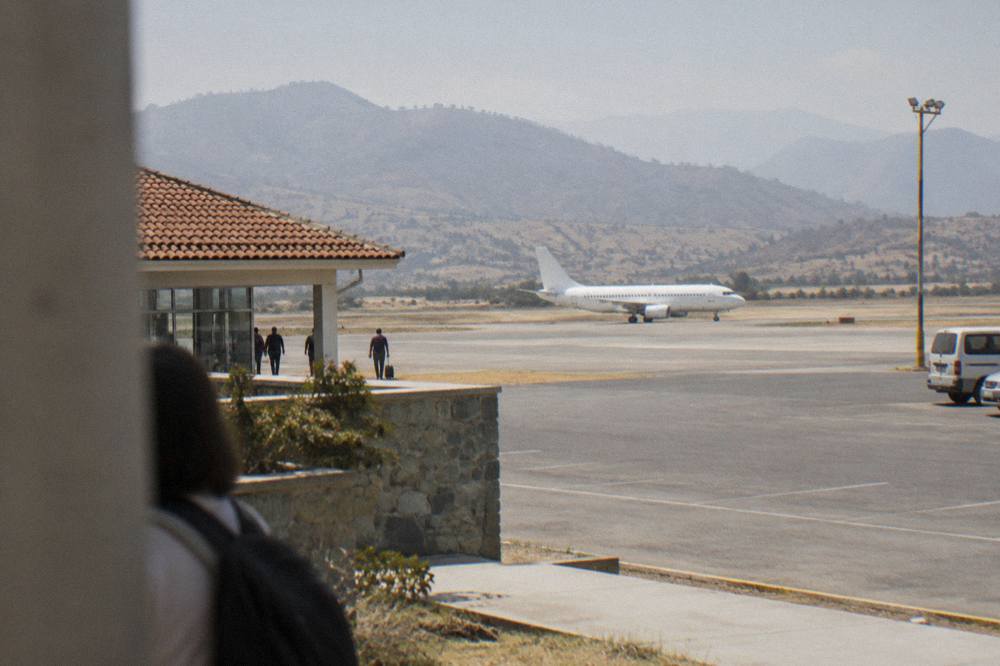
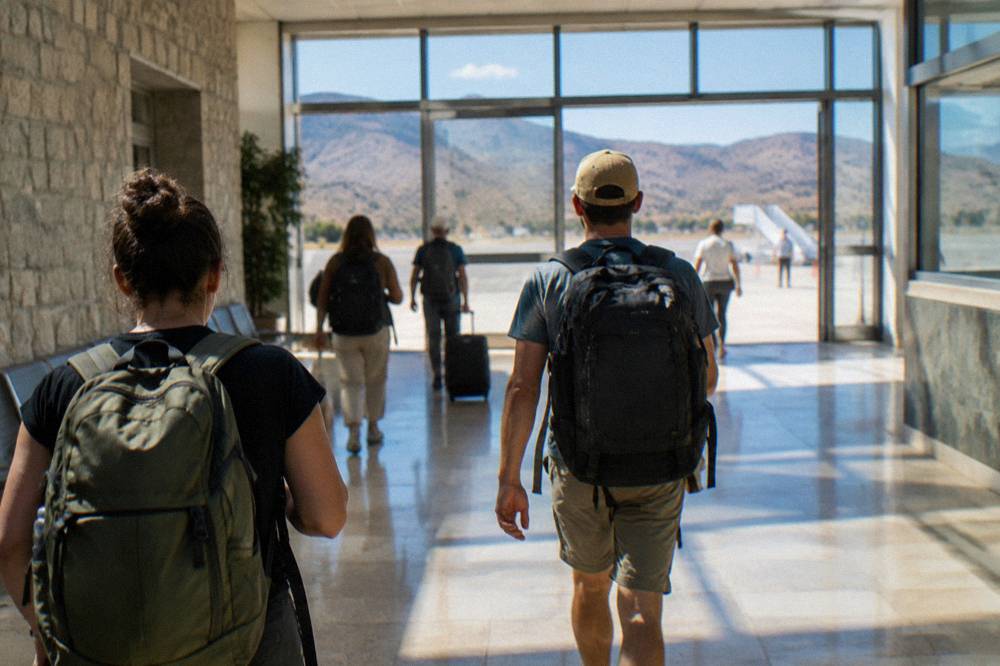
Landing at Xoxocotlán is short and simple: a compact arrivals hall, a single-baggage-belt scale of operation, and an operating day of 06:00 to 20:00 that concentrates arrivals mid-morning and mid-afternoon, with the Centro Histórico a short transfer north of the field. Arrivals clear quickly because the terminal processes a limited number of flights at a time.
The practical notes are few but useful. The airport is served by authorised ground transport arrangements at the terminal; whether app-based ride services operate from the airport is not settled by official sources, and the taxis, Uber and DiDi in Oaxaca guide covers what is established and what is not. Fares are paid as arranged at the terminal rather than metered, and the transfer is short enough that it rarely reshapes a day.
Altitude matters on landing. The city sits at about 1,550 m, and the SMN station that supplies the climate normals stands at 1,594 m. Afternoons are warm, averaging 29 to 35 C highs through the year, while nights drop to 10 to 17 C lows, so the walk out of the terminal can feel hot an hour before a cool evening. Sun intensity at altitude is the other adjustment the first day usually teaches; hydration and a hat do most of the work.
The first evening in the Centro is a short-list decision. The Zócalo, the Andador Macedonio Alcalá and the food corridors around Mercado 20 de Noviembre are all within walking distance of the central hotels, and the where to stay in Oaxaca and best hotels in Oaxaca guides map the neighbourhoods against that first-night geometry. Many travellers book a gentle arrival-day walk and hold the valley loop for day two.
Which US Cities Fly Nonstop To Oaxaca?
Reported nonstop US service into Oaxaca for late 2026 covers Dallas-Fort Worth on American Airlines, Los Angeles on Volaris, Houston on United, and limited Phoenix dates on American around the Día de Muertos period. Every other US origin connects, nearly always over Mexico City, where the OAX corridor runs multiple times daily. The nonstop list is short, so it changes season by season.
The pattern is worth reading closely. The three year-round-style routes serve the three biggest Oaxaca diaspora and leisure gateways: Texas, California and again Texas. The Phoenix addition is date-specific around the festival, which tells the story of how airlines treat Oaxaca: a steady base of connectivity, with capacity added in bursts where the calendar guarantees demand. Anyone flying from Europe, Canada, South America or Asia plans on a connection, and Mexico City is the node that makes the whole map work.
| US gateway | Reported carrier | Pattern |
|---|---|---|
| Dallas-Fort Worth (DFW) | American Airlines | Daily |
| Los Angeles (LAX) | Volaris | Scheduled |
| Houston (IAH) | United | Scheduled |
| Phoenix (PHX) | American Airlines | Limited dates around Día de Muertos |
For safety context on the drive from any of these gateways' arrival points onward, the standing advisory picture is unchanged: the UK FCDO advises against all but essential travel to parts of Mexico without naming Oaxaca on its main page; Canada advises a high degree of caution for Mexico overall with regional advisories; and the US State Department lists Oaxaca state at Level 2, Exercise Increased Caution, with restrictions only in the Isthmus region. The Oaxaca safety guide carries the detail.
Can You Fly To Oaxaca From The Pacific Coast?
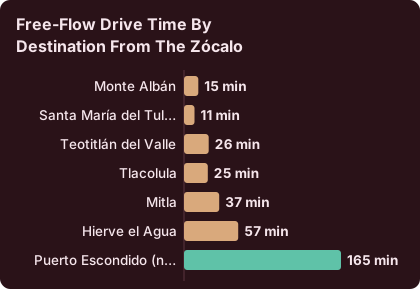
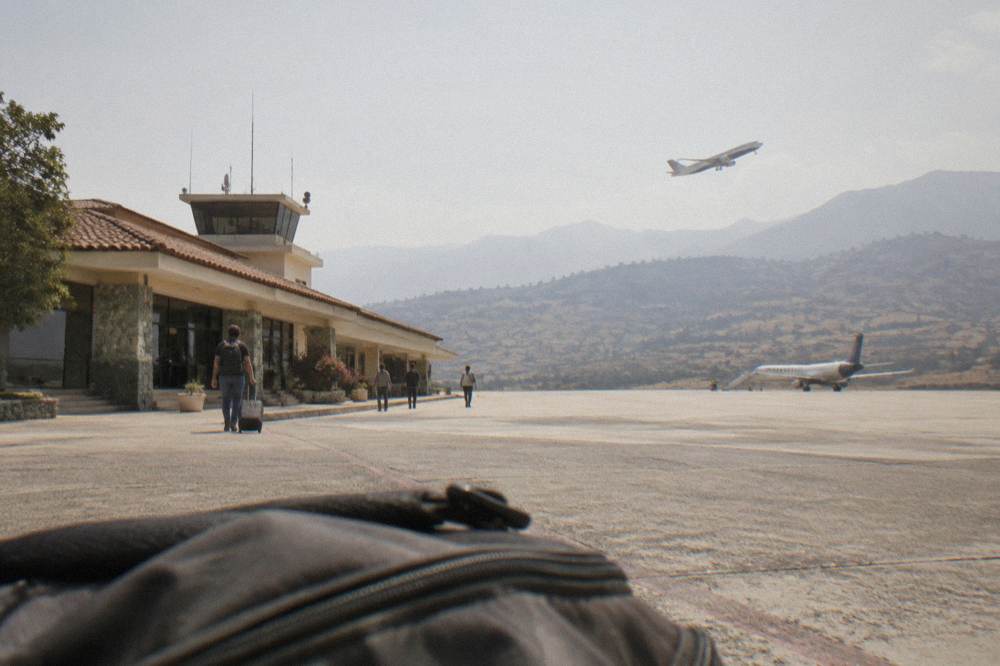
Yes, but the coast is its own chapter: Puerto Escondido and Huatulco have their own coastal airports, and reaching Oaxaca City from either means a connecting flight back through a hub or a long mountain drive, with the new-highway drive to Puerto Escondido at about 165 minutes free-flow from the Zócalo. The coast airports are not shortcuts into the city.
The geography is the whole explanation. Oaxaca City is inland, in the Valles Centrales, and the Sierra between valley and coast makes rail-style directness impossible. Reported drive times derived from routing data put Puerto Escondido about 190 km and 165 minutes from the Zócalo on the new highway, with real traffic and mountain roads slower. Huatulco and Mazunte sit further along the same coastal system. The Oaxaca to Puerto Escondido, Oaxaca to Huatulco and Oaxaca to Mazunte and Zipolite guides cover those extensions, and all valley-day products depart from the city, never from the coast.
| Destination from the Zócalo | Distance km | Free-flow drive time |
|---|---|---|
| Monte Albán | 8.7 | About 15 minutes |
| Santa María del Tule | 10.2 | About 11 minutes |
| Teotitlán del Valle | 29.2 | About 26 minutes |
| Tlacolula | 31.2 | About 25 minutes |
| Mitla | 44.6 | About 37 minutes |
| Hierve el Agua | 67.1 | About 57 minutes |
| Puerto Escondido (new highway) | 190.1 | About 165 minutes |
That table is the reason the valley day trip is the standard first excursion after a flight: the whole Tlacolula arm of the valley, from the Tule tree to Mitla to Hierve el Agua, sits within about an hour of the runway. The full loop is exactly what the valley product on this page's picks covers, and its listing shows live price, rating and schedule detail.
How Do You Plan The First Day After Landing?
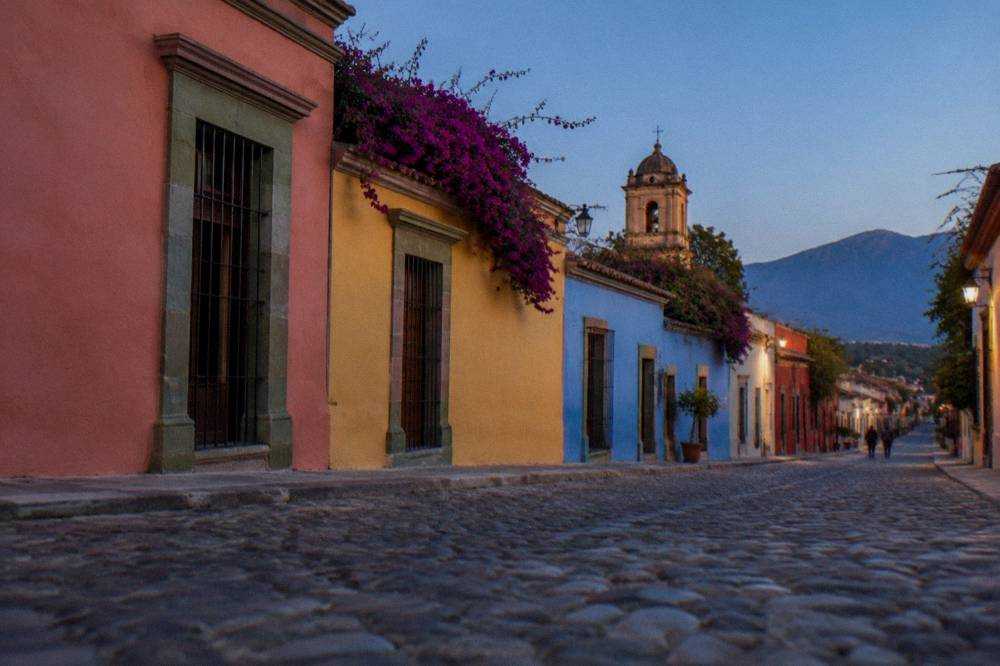
Plan a soft landing day: arrive, transfer to the Centro, walk the Zócalo and the Andador Macedonio Alcalá on foot, eat near the markets, and hold the archaeological and valley excursions for day two onward, when altitude and schedule are settled. The city's core is compact and walkable, and the first afternoon is better spent orienting than racing uphill.
Two facts support that structure. Monte Albán, the valley's Category I INAH site, is open Monday to Sunday 08:00 to 17:00 with last access at 16:00 and entry at 105 MXN for nationals and 210 MXN for foreign visitors, per the INAH page; it sits about 15 minutes' drive from the centre, so it fits comfortably on day two rather than arrival day. And the city's museum day-rhythm rewards a plan: the Museo de las Culturas de Oaxaca is open Tuesday to Saturday only, 10:00 to 16:00, so a Monday arrival pairs naturally with a Tuesday museum morning. The Jardín Etnobotánico runs free guided tours Monday to Friday at 10:30, 11:00, 11:30, 12:00 and 17:00, and Saturdays from 10:30 to 12:00, with large groups booking two weeks ahead.
| Site | Days | Hours | Entry MXN |
|---|---|---|---|
| Monte Albán | Mon to Sun | 08:00 to 17:00, last access 16:00 | 105 national / 210 foreign |
| Mitla | Mon to Sun | 08:00 to 17:00, last access 16:30 | 105 / 210 |
| Yagul | Mon to Sun | 08:00 to 17:00, last access 16:00 | 105 / 210 |
| Zaachila | Thu to Sun | 10:00 to 16:00 | 80 / 145 |
| Museo de las Culturas de Oaxaca | Tue to Sat | 10:00 to 16:00 | 105 / 210 |
Food is the other arrival-day anchor. The what to eat in Oaxaca, street food in Oaxaca and best restaurants in Oaxaca guides sequence the first meals, from tlayudas to the seven moles, and a market walk with tastings is itself a guided product in the city.
What About The Bus Instead Of A Flight?
The bus is a genuine alternative only from central Mexico: ADO runs its own ticketed services between Mexico City and Oaxaca, and the overland route suits travellers already in the country, while anyone arriving from abroad faces a connection in Mexico City either way and usually flies the last leg for schedule resilience. The two modes serve different itineraries, not different budgets alone.
The deciding factors are where a trip starts and how much schedule certainty it needs. A trip beginning in Mexico City, Puebla or elsewhere inland can reach Oaxaca by ADO first-class service booked through the operator's own site, and the ADO bus guide covers terminals and classes. A trip beginning with a transatlantic or transpacific flight has already paid for the long sector; the MEX to OAX hop is short, frequent and rebookable across three airlines, which is exactly the property a tired connection needs. The bus fare detail sits with the operator, not on this page.
One caution belongs in any Oaxaca transport plan: road blockades by teachers' unions are a standing risk that can disrupt road and airport access in the valley, reported as sporadic and short-lived. A flight day with margin, and a first excursion booked with free cancellation, absorb that risk better than a zero-slack plan.
Does The Airport Close, And What Does That Mean For Connections?
Xoxocotlán's operating day runs 06:00 to 20:00, which rules out red-eye arrivals and late-night diversions and concentrates the schedule into morning and afternoon banks, so every connection into Oaxaca should be planned inside that window with a same-day fallback if the inbound leg slips. The airport does not operate around the clock.
That single constraint explains a lot of the fare behaviour discussed above. A limited operating day caps daily seats; festival demand then competes for a fixed pie. It also explains why the Mexico City corridor matters so much: multiple daily frequencies inside the window give rebooking options that a single-daily international route cannot. Investment is programmed at the airport, with ASUR documents committing 865.6 million MXN for the regulated portion in 2026 and overall investment noted through 2028, so capacity pressure is acknowledged even as the terminal runs small today.
For departure day, the same logic applies in reverse: morning departures are the norm, and an evening flight out of Oaxaca leaves the last valley morning usable. Travellers with a Hierve el Agua loop on the final day should check the pickup time against the flight time before booking either.
What Should You Book Before The Flight Is Even Ticketed?
Book three things in the same week the flights are confirmed: a central room for festival weeks, the first full-day valley excursion, and one city experience for arrival day, because festival-period scarcity hits rooms and tours with the same force it hits seats, and free-cancellation listings make early reservations low-risk. Rooms and excursions are the hidden half of the fare.
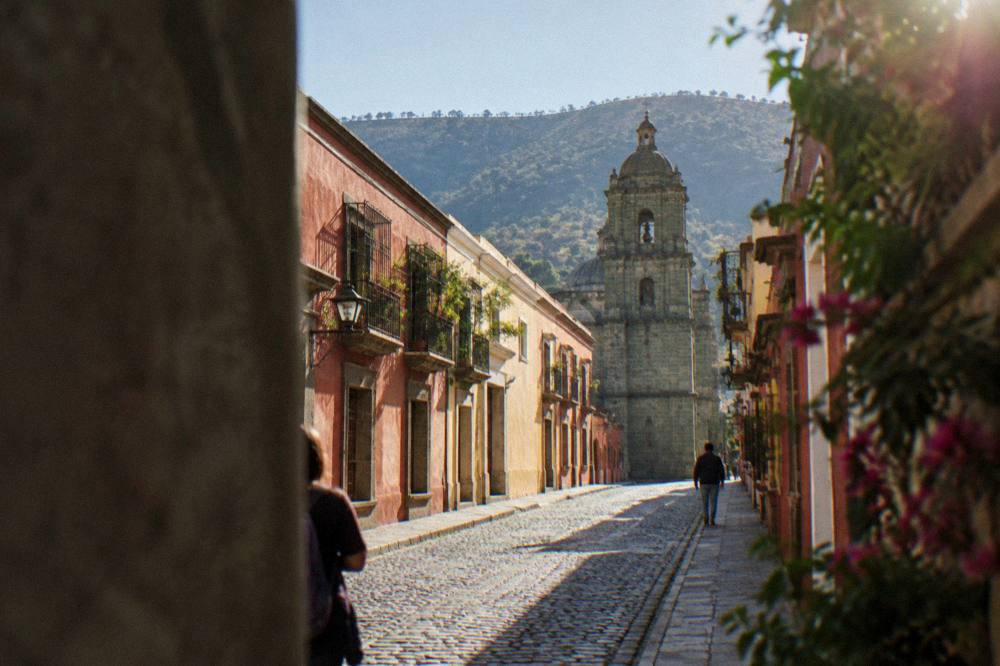
The valley loop is the standard first booking. The city pair matters too: a short guided walk on day one orients the Centro, and a chocolate and cacao session is a compact arrival-afternoon fit. The things to do in Oaxaca page holds the full catalogue once the dates are real.
Money planning rounds it out. Local costs are in pesos; the state lodging tax is 3 percent on hotel-type stays, 5 percent for intermediaries, per the state fiscal code. The money, ATMs and cash in Oaxaca and drinking water in Oaxaca guides carry the arrival-week practicalities.
Common Questions About Flights To Oaxaca
Which Airport Do You Fly Into For Oaxaca?
Every commercial flight lands at Xoxocotlán International Airport (OAX), south of the city and operated by ASUR, with an operating day of 06:00 to 20:00. There is no alternate airport for the valley.
Which US Cities Fly Nonstop To Oaxaca?
Reported late-2026 nonstops serve Dallas-Fort Worth on American, Los Angeles on Volaris, Houston on United, and limited Phoenix dates around Día de Muertos. All other US origins connect, usually over Mexico City.
Is It Better To Fly Or Connect Through Mexico City?
For most international itineraries, connecting over Mexico City is the resilient plan: the MEX to OAX corridor runs multiple daily flights on Aeroméxico, Volaris and VivaAerobus, giving same-day rebooking options a single nonstop cannot match.
When Are Flights To Oaxaca Most Expensive?
Peak fares cluster around the July Guelaguetza fortnight and the Día de Muertos window at the end of October into early November. The rainy-season months outside those festivals carry softer demand.
How Far Is The Airport From The Centre Of Oaxaca?
Xoxocotlán sits south of the city, a short transfer from the Centro Histórico and the Zócalo. Arranged ground transport operates from the terminal; fare detail is settled at the terminal or on the operator's booking page.
Can You Fly From Puerto Escondido To Oaxaca City?
The coast is a separate chapter: Puerto Escondido and Huatulco have their own coastal airports, and reaching the city means a connecting flight through a hub or a mountain drive of about 165 minutes on the new highway.
The flight is the easy part of an Oaxaca plan once the structure is clear: one airport, a Mexico City backbone, two festival windows that move fares, and a valley that begins about fifteen minutes after the baggage belt stops. Book the date early when the calendar matters, hold the first valley day with free cancellation, and the rest of the trip assembles itself around a single small terminal in the hills.