Mexico City To Oaxaca: Bus, Flight Or Shuttle
Oaxaca City sits inland in the Valles Centrales of Mexico at about 1,550 m, and the journey from Mexico City is a choice between a short flight, a long-distance bus, and road travel of your own arranging.
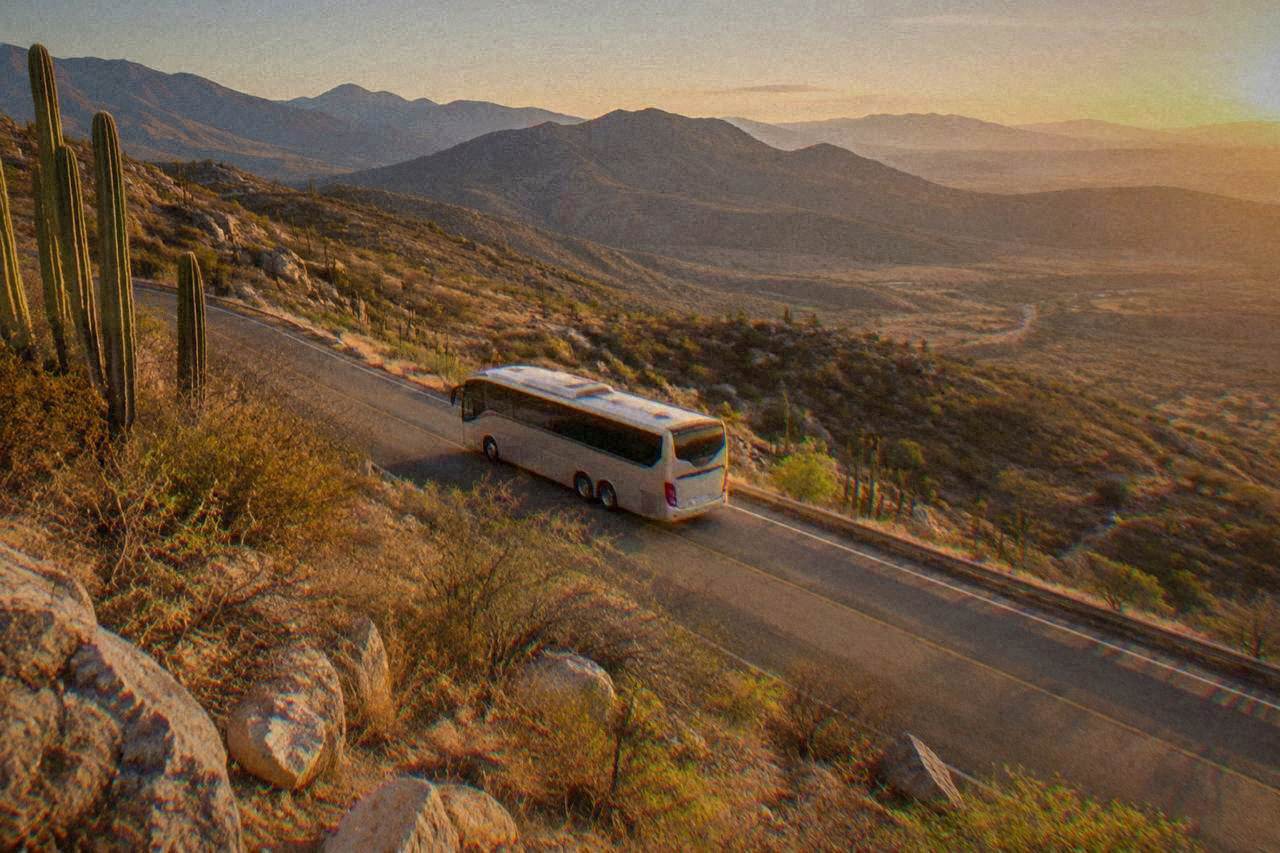
Fly into Oaxaca's Xoxocotlán airport for the shortest journey, or take an ADO bus from Mexico City if you prefer road travel; fares and schedules are set by the operator and both routes serve the city centre.
Oaxaca City, the capital of the state of Oaxaca in Mexico, is an inland highland city in the Valles Centrales at about 1,550 m, and every route from Mexico City ends on the same dry valley floor. The two cities are linked by air and by long-distance road transport, and the right choice depends on budget, tolerance for mountain highways, and how much of the trip you want to spend moving. This guide sets out what can be stated from primary sources about each option, what the bus and the flight actually involve, and how to settle into the city once you arrive.
What Are The Ways To Get From Mexico City To Oaxaca?
There are three practical routes from Mexico City to Oaxaca City: a domestic flight into Xoxocotlán International Airport (OAX), a long-distance bus operated by ADO and booked through ado.com.mx, and road travel you arrange yourself by car or private transfer. Fares and schedules for the bus and the flight are set by the operators, and no fixed taxi or shuttle price between the two cities can be stated from a primary source.
The flight is the shortest option in the air, though the last stretch from airport to centre is a separate decision, covered further down this page. The bus is the workhorse route: ADO, whose official site is ado.com.mx, runs first-class and higher service classes from Mexico City towards Oaxaca, and the comparison between the two modes has its own dedicated answer page at fly or take the bus to Oaxaca. Driving yourself or hiring a private car and driver is the third route, useful if you want to stop along the way, and Puebla sits on the road corridor between the two cities, which makes it a natural overnight break; the site covers that extension separately at Oaxaca to Puebla.
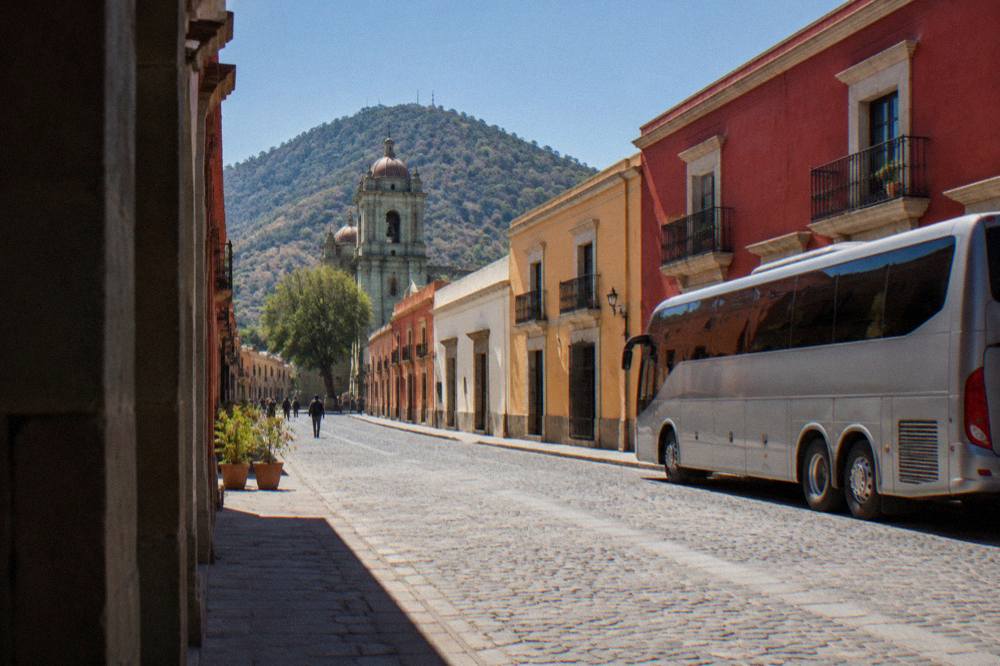
| Option | Where It Starts | Where It Ends | What Can Be Stated | What Cannot Be Stated |
|---|---|---|---|---|
| Flight | Mexico City airports | OAX, Xoxocotlán International, operated by ASUR | The airport is served by domestic airlines; tickets via the airlines | Airfare figures |
| ADO bus | ADO terminals in Mexico City | Oaxaca City, ADO first-class and higher classes | Official booking site is ado.com.mx | Fares, journey time, terminal addresses |
| Private car or driver | Anywhere in Mexico City | Door to door in Oaxaca City | Route passes the Puebla corridor | Transfer prices |
| Rental car, self-drive | Mexico City rental desks | Your Oaxaca accommodation | Highway route via Mex 135D referenced in transport contexts | Driving time, fuel cost, toll totals |
Whatever the mode, the destination is the same compact highland city. The municipality, officially Oaxaca de Juárez, counted 270,955 residents at the 2020 census, and the state of Oaxaca 4,132,148. There is no sea, no port and no beach here: the Pacific coast at Puerto Escondido is a separate long extension, covered at Oaxaca to Puerto Escondido, and Huatulco likewise at Oaxaca to Huatulco.
Is It Better To Fly Or Take The Bus From Mexico City To Oaxaca?
The flight wins on total travel time and the bus wins on simplicity, because the bus delivers you into the city while the flight requires a separate airport transfer at the Oaxaca end. ADO runs its Mexico City service in first-class and higher classes booked at ado.com.mx, while flights land at Xoxocotlán International, and both fares are set by the operator and shift with demand, so neither can be quoted as a number here.
The honest comparison is about the shape of the day. The bus is one booking, one vehicle, one arrival in Oaxaca City; the flight is a shorter time in the air but a full airport routine at both ends plus ground transport on arrival. Travellers who weigh this trade-off in detail will find the dedicated answer at how long is the bus from Mexico City to Oaxaca, and the reverse-direction planning page at Oaxaca to Mexico City for the return leg.
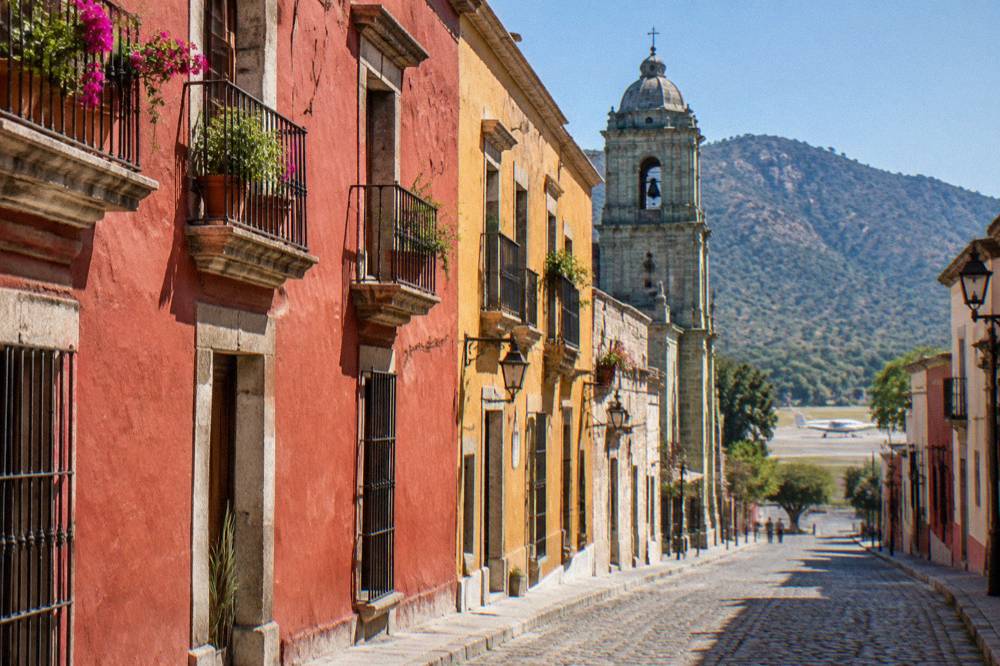
Mountain weather is a real factor in the comparison. Oaxaca's rainy season runs May to October with a peak from June to September, and September averages 163.6 mm of rain against January's 2.4 mm, per the SMN station normals for the city. Rain can affect mountain road segments and flight schedules alike, so travellers crossing during the wet months should hold margin in their plans on either mode.
Once you have decided, the practical next step is filling the days after arrival. Two city experiences and one valley day trip cover a first visit well, and the picks below are a starting shortlist.
How Does The ADO Bus From Mexico City To Oaxaca Work?
ADO operates the long-distance bus route from Mexico City to Oaxaca City in first-class and higher service classes, with tickets sold through the operator's official site, ado.com.mx, and departures running from ADO's Mexico City terminals into the city of Oaxaca. Fares, journey times, terminal addresses and departure schedules are set by the operator and change with service class, so the booking site is the only source for those figures.
Booking is straightforward: the operator's own site lists the classes available on the corridor, from first-class seating up to its premium tiers, and prints the fare and schedule for the date you choose. The site's page on ADO buses in Oaxaca covers how the operator's services fit into arriving and departing the city, including the reverse trip covered at Oaxaca to Mexico City.
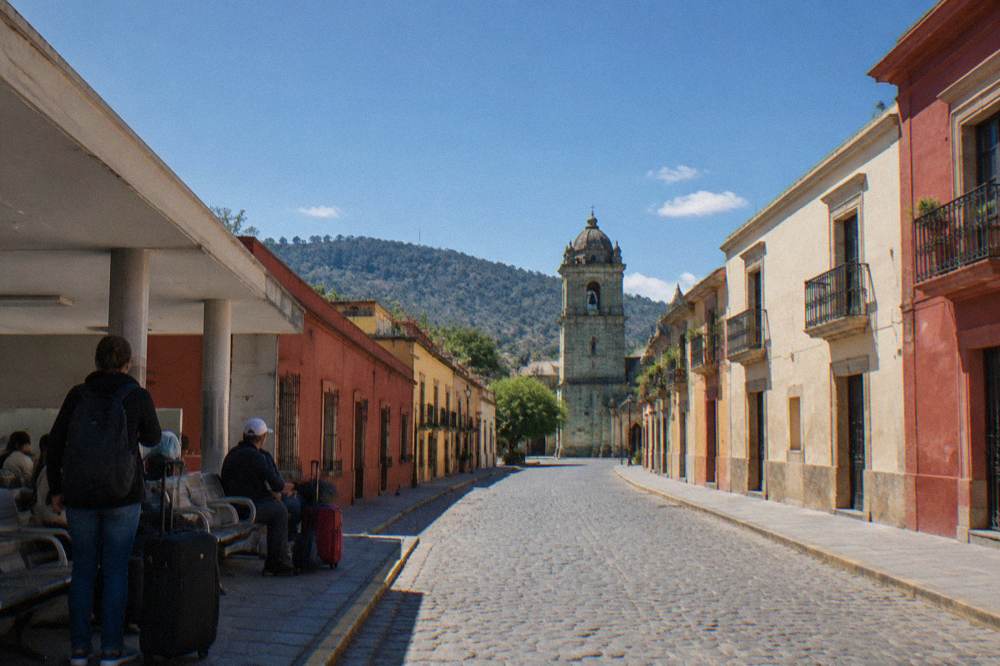
Two practical notes shape the bus day. First, the route crosses mountain terrain between the central plateau and the Valles Centrales, and real traffic and mountain roads make any planning figure an underestimate; the operator's schedule accounts for this, so trust the booked arrival time over any generalisation. Second, road blockades by teachers' unions are a standing risk in Oaxaca that can disrupt road and airport access without much notice; when one occurs it usually clears within a day, but it can add hours to a road journey, so a same-day connection or an unmissable first evening booking is worth avoiding on arrival day.
If your first full day is the day after the bus arrives, a structured valley loop is the classic way to use it.
What Is The Flight From Mexico City To Oaxaca Like?
Flights from Mexico City land at Xoxocotlán International Airport (OAX), the airport serving Oaxaca City, which is operated by ASUR and keeps normal operating hours of 06:00 to 20:00. Domestic airlines serve the route alongside direct US services, and fares, schedules and baggage rules are set by each airline, so the booking process is the only place those figures exist.
The airport is small by Mexico City standards, which is part of its appeal: arrivals clear quickly and the city is close. The operator's own material states the airport's identity and its hours; the arrivals booth inside the terminal is where the taxi fare into the centre, the colectivo prices and any ride-hailing options are set and paid. The site's Oaxaca airport guide and flights to Oaxaca pages carry the full picture, including which US cities fly direct.
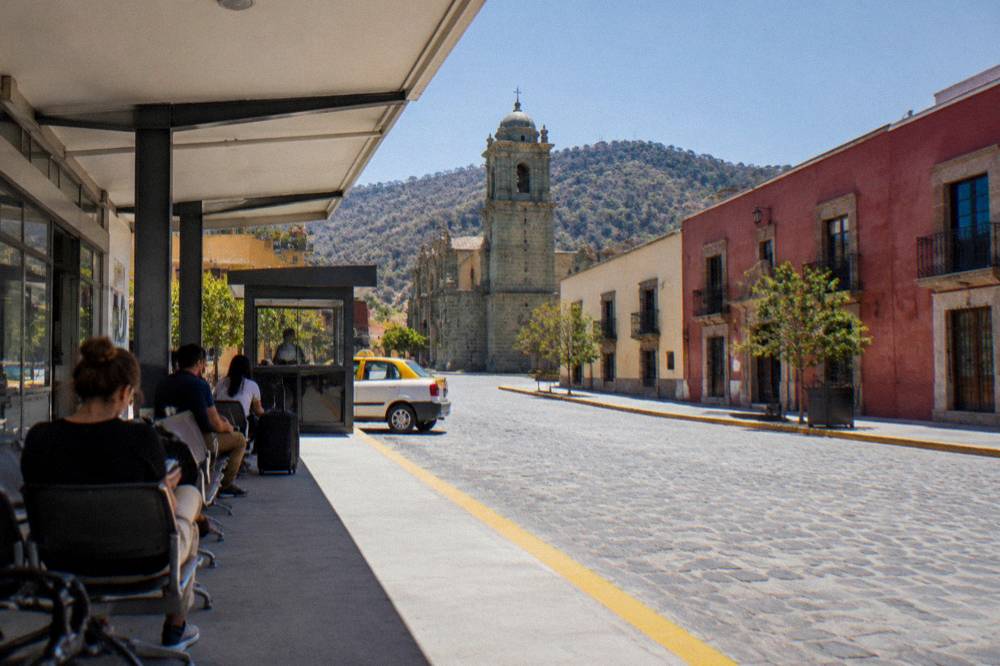
For US-based travellers, the routing question is often whether to connect through Mexico City at all. American Airlines, Volaris, United and seasonal services connect OAX to Dallas-Fort Worth, Los Angeles, Houston and Phoenix on limited schedules, per flight-schedule data cross-referenced with the operator. A same-day bus-plus-flight or two-flight itinerary via Mexico City remains the fallback when direct dates do not align.
Once landed, the first hour in Oaxaca is short. The airport sits south of the city, and ground transport options into the centre are covered in the next section.
How Do You Get From Oaxaca Airport To The City Centre?
Ground transport from Xoxocotlán International Airport into central Oaxaca City is limited to the authorised services based at the terminal, with fares paid at the booth inside arrivals, because the primary sources publish no fixed fare table and ride-hailing availability at the terminal cannot be stated from them. The city centre is compact and walkable once you arrive, so the transfer is the only vehicle you need on day one.
Inside the terminal, the arrivals booth is the point where authorised taxi and shared-van fares are quoted and paid, and the figures vary by zone. Within the city itself, taxis work on agreed fares rather than meters, and ride-hailing apps operate in the city but not at the airport, per secondary local reporting. The dedicated pages on getting around Oaxaca and taxis, Uber and DiDi in Oaxaca sort the full picture.
| Arrival Fact | Figure | Note |
|---|---|---|
| Airport code and operator | OAX, operated by ASUR | Xoxocotlán International |
| Airport normal operating hours | 06:00 to 20:00 | Per the operator's published details |
| City altitude | About 1,550 m | Open-Meteo DEM at the Zócalo gives 1,552 m |
| Time zone | UTC-6 all year | Mexico abolished daylight saving in 2022 |
| State lodging tax | 3 percent on hotel-type stays | 5 percent for intermediary platforms, decree of 10 Dec 2025 |
| Municipal population | 270,955 | INEGI Censo 2020 |
| 2025 city tourist arrivals | 1,324,332 | 212,533 of them foreign, per Sectur indicators |
The lodging tax line matters at check-in: the state's Impuesto al Hospedaje adds 3 percent to hotel-type stays, and 5 percent when an intermediary platform collects the booking, so the final bill can differ slightly from the advertised room rate.
A walking introduction suits the arrival evening better than any vehicle. The historic centre is dense and flat enough for a first stroll, and a guided version is one way to orient fast.
Can You Drive Yourself From Mexico City To Oaxaca?
Self-driving from Mexico City to Oaxaca City follows the Mexican highway network south through the Puebla corridor towards the Valles Centrales, on roads that transport sources reference without an end-to-end drive time or toll total. The route is a real option for travellers who want to stop in Puebla along the way, but no figure for the full drive can be stated from a primary source.
The site's driving in Oaxaca page covers what it is like to run a car in and around the city once you arrive, including the mountain character of valley roads. What the data does give is drive time from the Zócalo outward, useful for planning once the car is parked: those figures sit in the table further down this page. For the Mexico City end, the highway reference that appears in transport contexts is Mex 135D, the toll road corridor towards Oaxaca, but no current condition report or official drive time exists in the primary sources.
One caution applies to all Oaxaca road travel: blockades are a standing, undated risk, and mountain weather in the rainy season can slow any route. Build a slack day into a self-drive itinerary and treat the arrival evening as flexible.
Where Should You Stay When You Arrive In Oaxaca?
The standard advice for Oaxaca City is to stay in or near the historic centre, the UNESCO-listed grid around the Zócalo, Santo Domingo de Guzmán and the Andador Macedonio Alcalá, because the centre is walkable and the airport, bus arrival and valley day trips all converge on it. Neighbourhood choice within that area is covered in detail on the site's dedicated pages, and hotel rates are set by each property.
The UNESCO World Heritage property is formally the Historic Centre of Oaxaca and Archaeological Site of Monte Albán, inscribed as property 415, and the city was founded in 1529 as Antequera. That protected core is where the markets, churches and museums cluster. The where to stay in Oaxaca page maps the neighbourhoods, best hotels in Oaxaca sorts the properties, and for a lower budget the hostel and budget-stay page does the same job; the areas south of the centre around the markets have their own guide at Oaxaca south of centre and mercados.
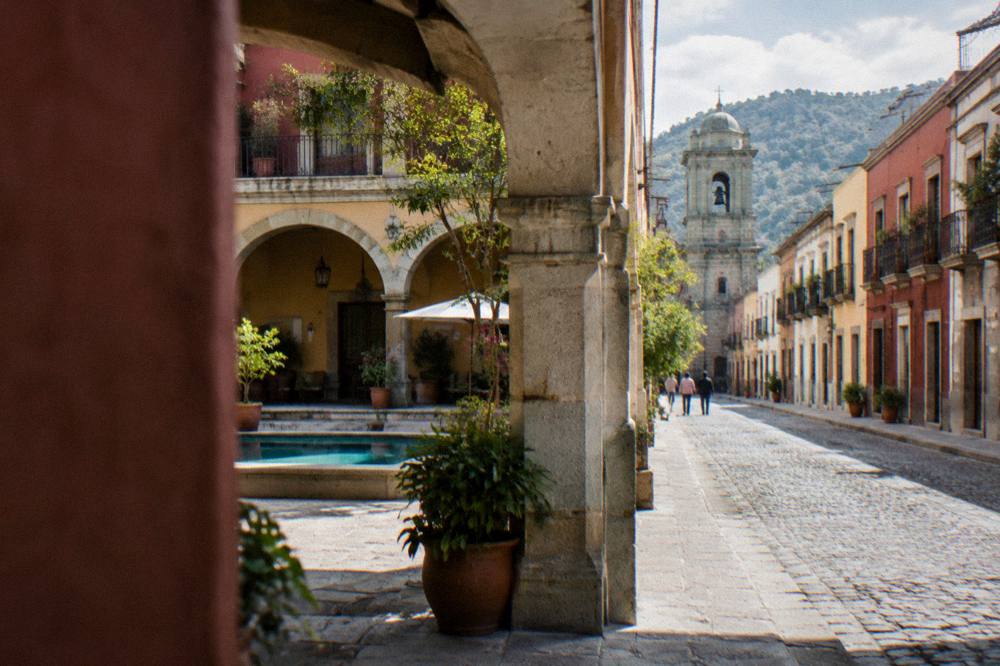
Timing interacts with where you sleep. July is Guelaguetza month: the 2026 edition held its Lunes del Cerro performances on 20 and 27 July at the Auditorio Guelaguetza on the Cerro del Fortín, with Palco A at 1,632 MXN, Palco B at 1,321 MXN and the C and D sections free, and the paid sections sold out fast through Superboletos. The 2027 dates are not announced, but the standing pattern is two July Mondays, and anyone crossing from Mexico City in that window should book rooms well ahead. The best time to visit Oaxaca and Guelaguetza pages carry the rest.
How Many Days Do You Need In Oaxaca After The Journey?
A stay of at least three to four days lets you cover the historic centre, one valley day trip and a market or cooking experience without rushing, because the centre deserves a full day, Monte Albán another, and the Tlacolula Valley loop with Hierve el Agua and Mitla is a full-day outing on its own. The site's itinerary pages break down exactly what fits into each length of stay, from one day up to a full week.
The itinerary series runs from Oaxaca in one day through Oaxaca in 3 days to Oaxaca in a week, and the direct answer to the length question sits at how many days in Oaxaca. The month you choose changes the packing list more than the plan: April's average daily high is 34.9 C while January's average overnight low is 10.3 C, per the SMN station normals, so layers matter more than the season label. The Oaxaca weather by month table is reproduced below in condensed form.
| Month | Average High C | Average Low C | Average Rain Mm |
|---|---|---|---|
| January | 28.9 | 10.3 | 2.4 |
| February | 31.1 | 11.6 | 4.6 |
| March | 33.3 | 13.6 | 17.6 |
| April | 34.9 | 15.8 | 47.3 |
| May | 33.8 | 16.7 | 97.9 |
| June | 30.9 | 16.7 | 188.3 |
| July | 30.1 | 15.9 | 118.6 |
| August | 30.0 | 15.9 | 131.8 |
| September | 29.1 | 16.1 | 163.6 |
| October | 29.3 | 14.5 | 63.1 |
| November | 29.0 | 12.3 | 9.1 |
| December | 28.9 | 11.0 | 9.0 |
The figures are SMN station 20079 climate normals for 1991 to 2020. Dry season runs November to April and the rainy season May to October, with rain concentrated from June to September; the annual total is 853.3 mm.
What Can You Do Around Oaxaca Without Another Long Drive?
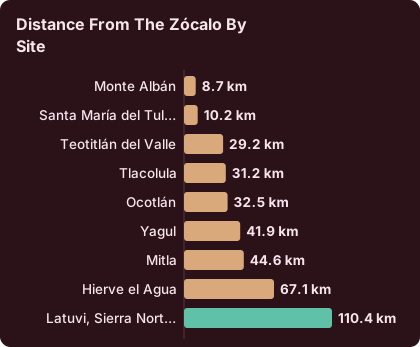
The closest major sight to central Oaxaca City is Monte Albán, about 15 minutes by road from the Zócalo, followed by the Tule tree at about 11 minutes and Teotitlán del Valle at about 26, all inside a ring that keeps travel short; the bigger valley outings to Mitla at about 37 minutes and Hierve el Agua at about 57 minutes are the only ones that feel like a second journey. All drive times below are derived from route data and real traffic is slower.
Monte Albán, Mitla and Yagul are INAH Category I sites at 105 MXN for Mexican nationals and 210 MXN for foreign visitors; Dainzú, Lambityeco and Zaachila are Category III at 80 and 145 MXN. Zaachila opens Thursday to Sunday 10:00 to 16:00 only, and Atzompa closes earlier than the rest, at 16:00 with last access at 15:00. Monte Albán drew 416,675 visitors in 2025 against Mitla's 104,428, per Sectur indicators, which tells you where the crowds concentrate.
| Site | Distance From The Zócalo | Drive Time (Derived) | Entry, Nationals / Foreigners (MXN) |
|---|---|---|---|
| Monte Albán | 8.7 km | About 15 minutes | 105 / 210 |
| Santa María del Tule | 10.2 km | About 11 minutes | Not published in primary sources |
| Teotitlán del Valle | 29.2 km | About 26 minutes | Village, no INAH fee stated |
| Tlacolula | 31.2 km | About 25 minutes | Town, no INAH fee stated |
| Ocotlán | 32.5 km | About 37 minutes | Town, no INAH fee stated |
| Yagul | 41.9 km | About 38 minutes | 105 / 210 |
| Mitla | 44.6 km | About 37 minutes | 105 / 210 |
| Hierve el Agua | 67.1 km | About 57 minutes | Run locally, no INAH fee stated |
| Latuvi, Sierra Norte | 110.4 km | About 142 minutes | Pueblos Mancomunados, community-managed |
| INAH Site | Days | Hours | Last Access |
|---|---|---|---|
| Monte Albán | Monday to Sunday | 08:00 to 17:00 | 16:00 |
| Mitla | Monday to Sunday | 08:00 to 17:00 | 16:30 |
| Yagul | Monday to Sunday | 08:00 to 17:00 | 16:00 |
| Dainzú | Monday to Sunday | 08:00 to 17:00 | 16:30 |
| Lambityeco | Monday to Sunday | 08:00 to 17:00 | 16:30 |
| Zaachila | Thursday to Sunday only | 10:00 to 16:00 | Not listed |
| Atzompa | Monday to Sunday | 08:00 to 16:00 | 15:00 |
In the city itself, the hours are just as specific. The Museo de las Culturas de Oaxaca at Santo Domingo is open Tuesday to Saturday only, 10:00 to 16:00, at 105 MXN for nationals and 210 MXN for foreigners. The Jardín Etnobotánico runs free guided tours Monday to Friday at 10:30, 11:00, 11:30, 12:00 and 17:00, and Saturday from 10:30 to 12:00, with large groups booking two weeks ahead. Visits outside normal INAH hours at several zones cost 730 MXN, a figure listed on the Yagul, Lambityeco, Atzompa and Museo de las Culturas pages.
The single most efficient way to see the far end of that table is a combined valley loop, and the site's featured pick for this route does exactly the Tlacolula Valley circuit.
The valley loop pairs naturally with the site's day-trip pages: Hierve el Agua, Mitla and Tlacolula and Teotitlán del Valle each go deeper on a single stop. The featured loop can be checked through the operator's booking page: Check availability.
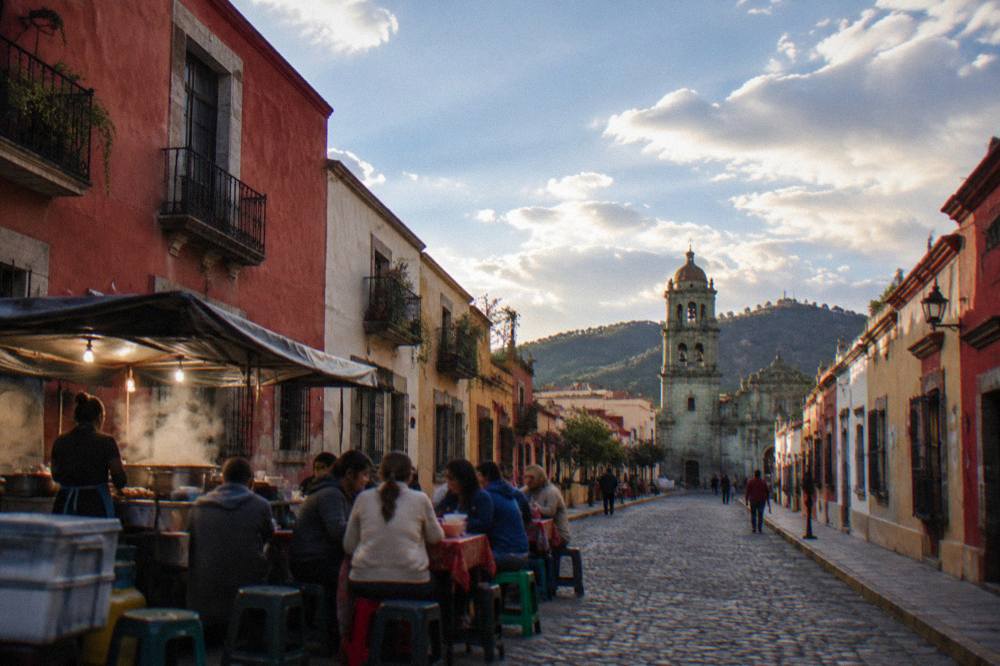
Evenings in the city reward a guided table as much as the valleys reward a guided van, and a street-food walk is the natural complement to a daytime loop.
Safety questions around the trip have their own answer. The UK FCDO advises against all but essential travel to parts of Mexico and does not name Oaxaca on its main page; Canada advises a high degree of caution for Mexico overall with regional advisories that do not single out Oaxaca; the US State Department lists Oaxaca state at Level 2, Exercise Increased Caution, with restrictions for its staff only in the Isthmus region. The full breakdown is at is Oaxaca safe.
Common Questions About Getting From Mexico City To Oaxaca
How Long Is The Bus From Mexico City To Oaxaca?
Bus journey times on the corridor are set by the operator and printed on the booking site, ado.com.mx, at the moment you search; this site does not restate them because no primary source publishes a fixed figure. The dedicated answer page compares the bus and flight trade-offs in detail.
Is It Better To Fly Or Take The Bus To Oaxaca?
The flight is faster door to door for most itineraries, while the bus is a single booking that delivers you into Oaxaca City without a separate airport transfer. Both fares are set by the operators, so the choice usually comes down to price on your dates and how you value the transfer time at each end.
What Airport Do You Fly Into For Oaxaca?
Xoxocotlán International Airport (OAX), operated by ASUR, with normal operating hours of 06:00 to 20:00. It sits south of the city, and authorised ground transport into the centre is arranged at the arrivals booth inside the terminal.
Can You Take A Shuttle From Mexico City To Oaxaca?
Private transfers and shared shuttles exist as commercial services, but no primary source publishes a fixed price or schedule for the corridor, so nothing can be quoted here. ADO's first-class and premium buses are the scheduled shared option, booked at ado.com.mx.
Do You Need A Car In Oaxaca City Once You Arrive?
No. The historic centre is compact and walkable, taxis work on agreed fares, and the major sights and valley towns are reachable by tour, taxi or colectivo. A car earns its cost mainly for independent valley touring on your own schedule; the driving guide covers the trade-offs.
Is The Drive From Oaxaca To The Coast A Day Trip?
Puerto Escondido is about 165 minutes of free-flow driving from the Zócalo on the new highway per derived route data, with real conditions slower, and prior guides cite 2.5 to 3.5 hours. It is an extension with an overnight, not a day trip; the coast pages cover it fully.
For everything that fills the days after the road or the runway, the site's root page at Oaxaca Travel Guide and the full things to do in Oaxaca index pick up where this transport guide ends.