How Long Is The Bus From Mexico City To Oaxaca?
How long the Mexico City to Oaxaca bus takes, what the operator sets, and what to plan for the ride to Oaxaca City in the Valles Centrales of Mexico.
The bus from Mexico City to Oaxaca City is one of the classic overland routes in southern Mexico, run by ADO, the operator whose official site is ado.com.mx. The practical answer, and everything worth knowing around it, is below. Start with the Mexico City to Oaxaca route guide if you want the full picture.
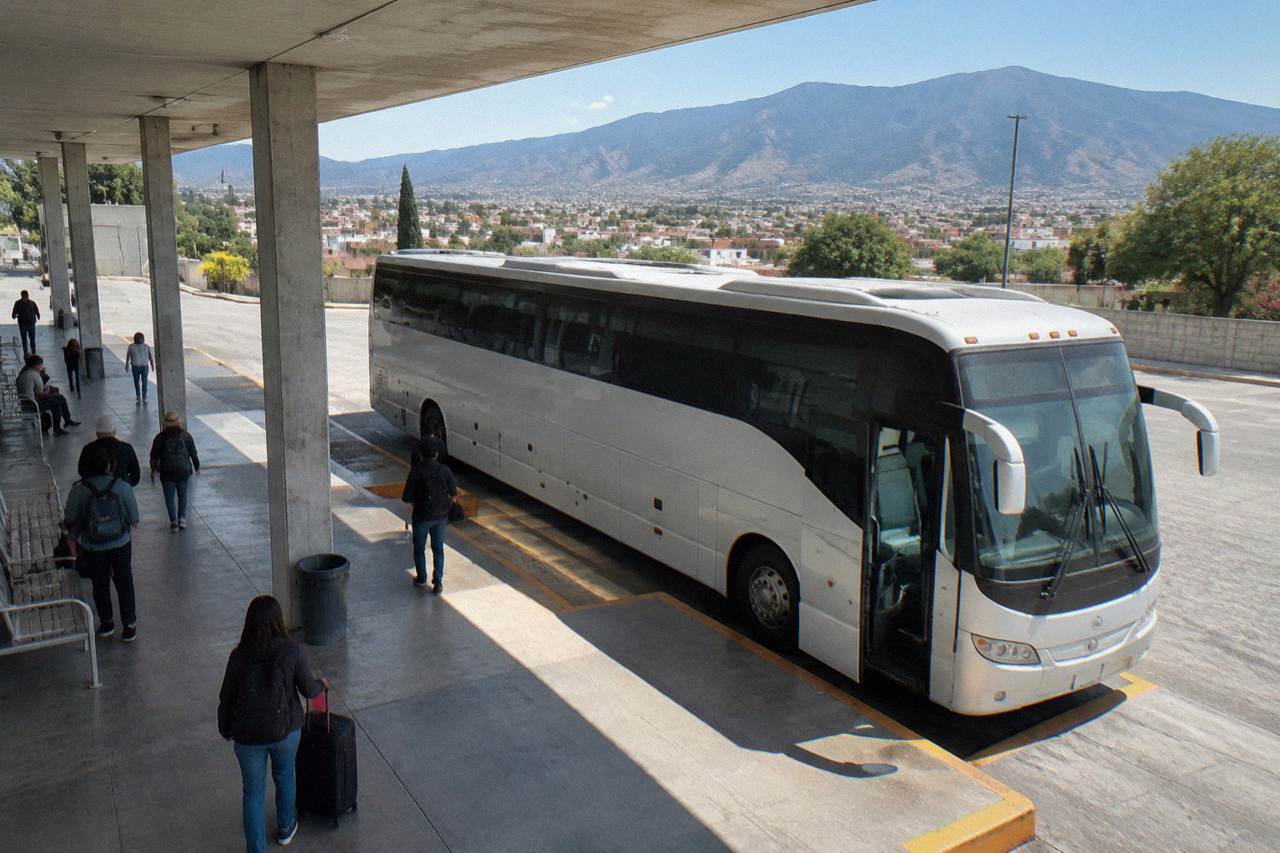
The ride from Mexico City to Oaxaca City is an overnight-or-daylong long-distance coach journey operated by ADO, with several departures a day across different service classes, and neither a fixed duration nor a fixed fare is published as a standing figure. The operator sets both, per departure, on its own booking site, so the honest answer is to check the timetable there for your travel date rather than trust a rounded number quoted secondhand.
That may sound like an evasion, but it is the difference between a guide that survives contact with reality and one that quietly rots. Bus times on this route depend on the service class you pick, the terminal you leave from in Mexico City, traffic leaving the capital, and road conditions on the mountain approach into the Valles Centrales. A quoted figure that floats around travel forums is a snapshot of one person's ride on one date in one service class. The ADO bus guide for Oaxaca collects what is verifiable about the operator and its terminals without inventing the rest.
What this guide can say about the experience of the ride is structural. ADO runs first-class and premium classes on Mexican long-distance routes, with reclining seats, toilets on board and, in the higher classes, more generous seat pitch. The route crosses from the high plateau of central Mexico down and back up into the southern highlands, and the final stretch into Oaxaca state runs through mountain terrain where the road climbs toward the Valles Centrales. Time zone does not change en route: Oaxaca sits on UTC-6 all year, as Mexico abolished daylight saving in 2022, so no clock arithmetic is needed when you arrive.
If the length of the ride is what is putting you off, the comparison page on flying versus busing to Oaxaca works through the trade-offs, including the flight alternative into Xoxocotlán International Airport, which ASUR operates.
What The Mexico City To Oaxaca Bus Route Covers
The route links Mexico City with Oaxaca de Juárez, the state capital, a city of 270,955 residents in the municipality at the 2020 census, sitting inland in the Valles Centrales at about 1,550 m. The bus arrives into the city's bus station, from where the historic centre and its cluster of sights are a short taxi or colectivo ride away, and no part of the route touches the sea, because Oaxaca City has no coast.
Oaxaca City, officially Oaxaca de Juárez, is the capital of a state of 4,132,148 people, and the historic centre together with the Monte Albán archaeological site forms a UNESCO World Heritage property, inscribed as "Historic Centre of Oaxaca and Archaeological Site of Monte Albán". The bus deposits you within reach of all of it. The Zócalo, Santo Domingo de Guzmán, the Andador Macedonio Alcalá and the markets of the centre are compact enough that the city is genuinely walkable, a question this site answers in detail on its is Oaxaca a walkable city page.
From the bus station or the centre, the valleys open up. Derived drive times from the Zócalo, computed on OpenStreetMap roads at free-flow conditions, give a sense of how tight the region is. Real traffic and mountain roads are slower than these figures, so treat them as floors, not promises:
| Destination | Distance from the Zócalo | Free-flow drive time |
|---|---|---|
| Monte Albán | 8.7 km | about 15 minutes |
| Santa María del Tule | 10.2 km | about 11 minutes |
| Teotitlán del Valle | 29.2 km | about 26 minutes |
| Tlacolula | 31.2 km | about 25 minutes |
| Mitla | 44.6 km | about 37 minutes |
| Hierve el Agua | 67.1 km | about 57 minutes |
The point of the table is simple: once the bus has done the long leg from Mexico City, everything else in the Valles Centrales is short. Even Hierve el Agua, the farthest of the classic stops, is under an hour of driving in ideal conditions, and the drive from Oaxaca to Hierve el Agua has its own page with the caveats.
Once you have slept off the ride, a city orientation walk is the fastest way to anchor yourself, and a short guided option covers that well.
Is The Bus Or The Flight Better For Reaching Oaxaca?
The flight from Mexico City into Xoxocotlán International Airport in Oaxaca takes a small fraction of the bus journey's length, but the bus reaches the city centre directly and the trade-off between the two is about cost, comfort and how you value a mountain road at night, and both options are real, daily and bookable through the operator's own channels.
Xoxocotlán International Airport, code OAX, is operated by ASUR and sits a short drive from the centre. The bus, by contrast, runs from terminals in Mexico City into Oaxaca's own bus station, with no airport transfer needed at the Oaxaca end.
The flight wins on raw time. If your whole question is which to choose, the fly or bus to Oaxaca page carries the full comparison, and the question of how many days in Oaxaca is enough matters too, because a long bus ride makes sense differently on a ten-day trip than on a weekend.
One planning note that is verifiable and often missed: road blockades by teachers' unions are a standing risk in Oaxaca that can disrupt road and airport access from time to time. They are sporadic and usually resolved within hours or days, but a long overland arrival is more exposed to them than a flight, and it is worth checking conditions on your travel day.
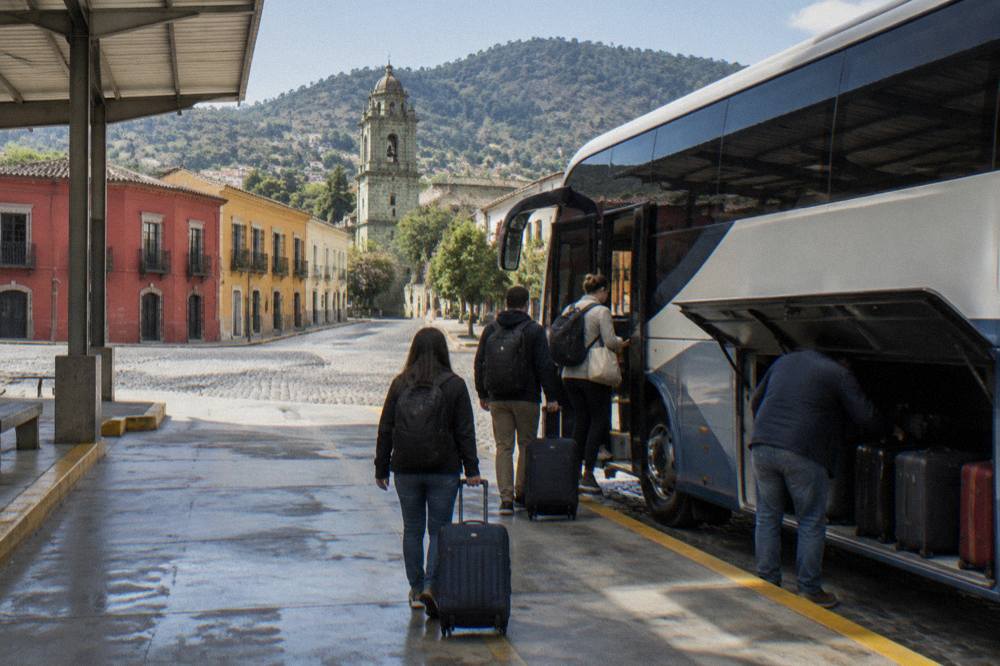
For either mode, once you have landed or rolled in, the practical question becomes what to book first, and the valley loop is the standard answer.
Which Terminal Does The Bus Reach In Oaxaca?
ADO's Oaxaca services arrive into the city's bus terminal, which sits outside the historic core. The centre is where almost everything first-time visitors come for is concentrated, including the Zócalo and the market quarter south of the centre, and it is reached from the terminal by taxi or colectivo, with taxi fares agreed rather than metered.
What can be said is directional and structural. The bus station sits outside the historic core, and the centre is where almost everything first-time visitors come for is concentrated: the Zócalo, the Cathedral, Santo Domingo de Guzmán, the Basílica de la Soledad, the Andador Macedonio Alcalá, and the market quarter south of the centre, which has its own south of centre and mercados guide. Taxi fares within the city are agreed rather than metered, so settle the price before the car moves.
For orientation once you have dropped your bags, the things to do in Oaxaca page is the site's full index, and the Oaxaca Travel Guide homepage carries the current tour picks across every category. This guide's own advice for a first afternoon is deliberately modest: walk the Andador, sit in the Zócalo, and eat. What that eating should consist of has its own answer on the what food is Oaxaca famous for page.
| Site | Hours | Nationals | Foreigners |
|---|---|---|---|
| Monte Albán | Mon to Sun 08:00 to 17:00, last access 16:00 | 105 MXN | 210 MXN |
| Mitla | Mon to Sun 08:00 to 17:00, last access 16:30 | 105 MXN | 210 MXN |
| Yagul | Mon to Sun 08:00 to 17:00, last access 16:00 | 105 MXN | 210 MXN |
| Zaachila | Thu to Sun 10:00 to 16:00 only | 80 MXN | 145 MXN |
Note the Zaachila line carefully: that site opens Thursday to Sunday only, which is the kind of detail that quietly ruins a carefully built itinerary if it is missed.
What To Do With Your First Full Day After The Bus?
The standard first full day in Oaxaca City is a valley loop taking in Santa María del Tule, Mitla and Hierve el Agua with a mezcal distillery stop, because all three sit within an hour's drive of the centre and a single organized trip covers them, and the site's featured pick for this route is the full-day Tule, Mitla, Hierve el Agua and mezcal tour.
Two timing notes that are verifiable and affect planning. Hierve el Agua's entry fee and hours are set by the local communities that run the site, not by INAH. And the Jardín Etnobotánico in the centre runs free guided tours Monday to Friday at 10:30, 11:00, 11:30, 12:00 and 17:00, and Saturday from 10:30 to 12:00, with large groups booking two weeks ahead, a schedule that pairs neatly with any first-day plan.
Weather barely constrains the choice. Dry season runs November to April and rainy season May to October, with June averaging 188.3 mm of rain against January's 2.4 mm at the Oaxaca station, so an afternoon downpour is a real possibility in the wet months but rarely a whole-day washout. The site's page on Oaxaca in the rain handles the wet-season case in full.
Common Questions About The Mexico City To Oaxaca Bus
How Long Is The Bus From Mexico City To Oaxaca?
Check the timetable on the operator's booking site for your travel date, and treat any single number quoted in a forum as one rider's snapshot.
Is The Bus From Mexico City To Oaxaca Overnight?
ADO runs multiple departures a day on the route across different service classes, and which departures run through the night is a timetable question the operator answers per season.
Does The Bus From Mexico City Arrive In Central Oaxaca?
The bus arrives into Oaxaca City's bus terminal, from which the historic centre is a short taxi or colectivo ride with the fare agreed before the ride. The centre itself, including the Zócalo, Santo Domingo de Guzmán and the Andador Macedonio Alcalá, is compact and walkable once you have reached it.
Is The Bus Cheaper Than Flying To Oaxaca?
In general terms the bus competes at the budget end and the flight wins on time, and the comparison page on flying versus busing to Oaxaca works through the trade-offs.
Can Blockades Affect The Mexico City To Oaxaca Bus?
Yes. Road blockades by teachers' unions are a standing risk in Oaxaca and can disrupt road and airport access sporadically, usually resolving within hours or days. Check conditions on your travel day rather than assuming the route is clear.
What Time Zone Is Oaxaca In When The Bus Arrives?
Oaxaca sits on UTC-6 all year, because Mexico abolished daylight saving in 2022, and the time zone does not change between Mexico City and Oaxaca. No clock adjustment is needed on arrival.
The bus ride from Mexico City is the slow door into a city that rewards every hour saved afterwards with short drives, walkable streets and a valley of sites within an hour of the centre, and once the timetable question is settled with the operator, the rest of the planning is easy.