Is It Better To Fly Or Take The Bus To Oaxaca?
Flight or ADO bus to Oaxaca City? A sourced comparison of routes, airport facts, drive times, climate and cost logic for reaching the Valles Centrales.
Oaxaca City, the capital of the state of Oaxaca in Mexico, is an inland highland city in the Valles Centrales at about 1,550 m, and there are exactly two practical ways in: a flight into Aeropuerto Internacional de Oaxaca at Xoxocotlán, or a long road journey by bus across the sierra. The city recorded 1,324,332 tourist arrivals in 2025, and a large share of those trips began with exactly this choice. The honest answer is that both work, and the right one depends on where you start, how much time you have and how you feel about mountain roads.
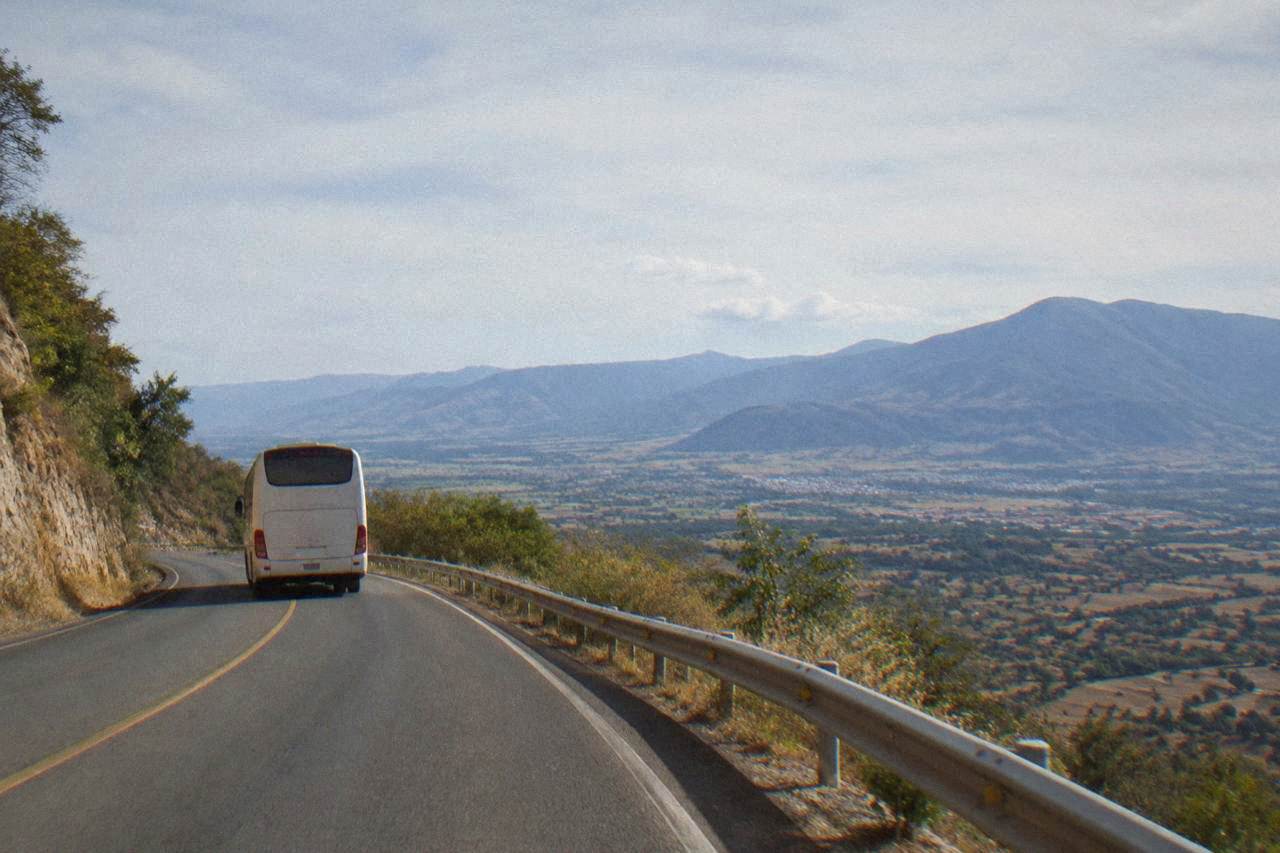
Flying into Oaxaca is the faster option from anywhere with a direct route, while the bus from Mexico City is the cheaper and more atmospheric choice, and neither is clearly better for everyone. The airport is small and operated by ASUR, and ADO runs the main bus services with fares and times set by the operator. The deciding factors are your starting city, your tolerance for a six-plus-hour road journey and how much of your trip budget belongs to transport.
That is the short version. The longer version depends on facts, and this page sticks to the ones that are published. The airport question has its own write-up in what airport you fly into for Oaxaca, and the capital-to-city comparison is covered in Mexico City or Oaxaca, which is better to visit.
What the published record does support: OAX, the Xoxocotlán international airport, is operated by ASUR, Grupo Aeroportuario del Sureste. On the ground side, the operator's official site is ado.com.mx, and ADO's fares and schedules are set by the operator and checked there rather than quoted second-hand. No published figure licenses a taxi fare, a colectivo fare or a bus duration from this page, so none is printed.
What Does Flying Into Oaxaca Actually Involve?
Flying means arriving at Xoxocotlán airport, a single-terminal ASUR-operated field that sits close to the city, roughly a short drive south of the Zócalo. The terminal is small by Mexican standards, which shortens the landside experience. Direct routes exist from Mexico City and from several cities in the United States, and the flight versus bus decision usually starts with whether your home airport has one of them.
The list of US cities with direct service has its own page: which US cities fly direct to Oaxaca. If your route needs a connection through Mexico City, the calculus changes, because the connection adds time and the bus becomes a genuine rival rather than a fallback.
Two planning notes before you go. First, Mexico abolished daylight saving time in 2022, so Oaxaca stays at UTC-6 all year: flight and bus times line up with central Mexico time in every season. Second, road blockades by teachers' unions are a standing, sporadic risk that has at times affected airport access and Federal Highway 190, and they can disrupt either mode without warning; monitoring local news on travel days is simply part of visiting this state.
Once you are down and through the terminal, the valley is close. The derived drive times from the Zócalo, computed on OSM roads at free-flow speeds, put the airport side of the city within easy reach of everything the centre offers.
What Is The Bus Journey To Oaxaca Like?
The bus to Oaxaca City means an ADO service, most often from Mexico City's TAPO terminal or from the Pacific coast, over mountain highways that are the trade-off for the fare. ADO is the operator, its site is the source for fares and departures, and no fixed duration or price belongs on a page like this one. What the journey reliably delivers is arrival in the Centro Histórico area without an airport transfer at the far end.
The Mexico City corridor is the classic route and has a dedicated page on how long the bus from Mexico City to Oaxaca takes, plus a full route guide on getting from Mexico City to Oaxaca. The reverse direction is covered in Oaxaca to Mexico City. Coast arrivals, from Puerto Escondido or Huatulco, are a different animal: the new highway has cut the car drive to Puerto Escondido to about 165 minutes under free-flow conditions per the derived figures, but buses on mountain routes run slower than a car pace, and ADO sets those times.
For the bus itself, background reading lives at the ADO bus guide for Oaxaca and the bus from Puerto Escondido to Oaxaca City. The general rule the figures support: the further your starting point, the more the bus is a day of travel rather than a transfer.
How Do The Two Options Compare On The Facts?
On the published facts, flying wins on distance covered per hour and wins again on the direct US routes, while the bus wins on arrival location, since the terminal side of the journey ends in the city rather than at an airport needing a transfer. Neither option has a licensed fare figure for this page, so the money comparison has to be made on the operator's own sites at the moment you book.
What can be compared from the record is routing, timing structure and what sits at each end of the journey.
The table below compares the two on the points that matter:
| Factor | Flying Into OAX | ADO Bus |
|---|---|---|
| Operator | ASUR (airport operator) | ADO (coach operator, ado.com.mx) |
| Direct routes | From Mexico City and several US cities | From Mexico City, the coast and regional hubs |
| Arrival point | Xoxocotlán airport, short drive from the centre | City terminal, transfer to the Centro Histórico |
| Fares | Set by airlines, check at booking | Set by ADO, check at ado.com.mx |
| Schedule source | Airline booking systems | ado.com.mx |
| Known disruption risk | Sporadic road blockades affecting airport access | Sporadic road blockades on Federal Highway 190 |
One structural point in the bus's favour: Oaxaca City is compact. Once a bus deposits you near the centre, the walkable core means the question of whether Oaxaca is a walkable city answers itself on the first day, and the airport-bound traveller still has a short landside leg to account for.
Whichever way you arrive, the first full day tends to go outward from the centre. The Monte Albán and Cuilapan loop is a natural opener, and you can Check availability on the operator's booking page, or read the Monte Albán and Cuilapan day tour page first.
How Does The Season Affect The Choice?
The dry season, November to April, is the window when both modes run at their simplest, while the rainy season, May to October with its June-to-September peak, is when mountain roads and afternoon storms argue more strongly for the flight. The SMN station normals put June at 188.3 mm of rain against January's 2.4 mm, and that difference lands directly on road travel. Weather does not decide the question, but it tilts it.
The monthly picture from the station normals:
| Month | Mean high C | Mean low C | Rain mm |
|---|---|---|---|
| Jan | 28.9 | 10.3 | 2.4 |
| Apr | 34.9 | 15.8 | 47.3 |
| Jun | 30.9 | 16.7 | 188.3 |
| Sep | 29.1 | 16.1 | 163.6 |
| Nov | 29.0 | 12.3 | 9.1 |
April's normal high of 34.9 C and December-to-January nights around 10.3 to 11.0 C frame the year. Rain days tell the same story: the station averages 19.9 days with rain in June against 1.4 in January. If you are travelling in the wettest stretch, the flight's advantage is not comfort but schedule reliability. Month-by-month detail, including the best-month question, sits at the best month to go to Oaxaca.
What About Coming From The Coast Instead Of Mexico City?
Coast-origin travellers, from Puerto Escondido, Mazunte or Huatulco, face a sharper version of the same choice, because the mountain crossing is shorter on the new highway but still a serious drive. The derived free-flow figure puts Puerto Escondido about 165 minutes from the city by car, and the dedicated guides to Oaxaca to Puerto Escondido and Oaxaca to Huatulco cover the road logic in full.
There is no meaningful flight option from the coast to the capital for most dates, so the real coast question is bus versus private car, not bus versus plane. From Puebla, the other common intermediate origin, the picture is covered at how close Puebla is to Oaxaca and the Oaxaca to Puebla route guide.
Once the arrival mode is settled, the amount of time you need in the city is the next planning input, and how many days in Oaxaca is enough answers that with the same restraint.
What Should Tip The Decision For You?
Choose the flight if your time is short, your route has a direct service, or you are travelling in the June-to-September rain peak; choose the bus if you are starting in Mexico City, watching the budget, or want to arrive inside the city with the sierra behind you. The airport is close and ASUR-run, the bus is ADO-run with everything booked at the operator's site, and neither carries a published fare this page is licensed to print.
A few secondary facts worth holding. The state lodging tax is 3 percent on hotel-type stays, 5 percent for platform intermediaries, so the accommodation bill carries a small fixed adder regardless of how you arrive. Safety questions have their own pages, including is Oaxaca safe for Americans right now and whether Oaxaca is affected by cartels, and the US advisory summary stops at Level 2, exercise increased caution, for the state.
And if the whole question is really a proxy for whether the city merits the journey at all, is Oaxaca worth visiting and what Oaxaca is famous for close that loop.
What Comes After The Plane Or The Bus?
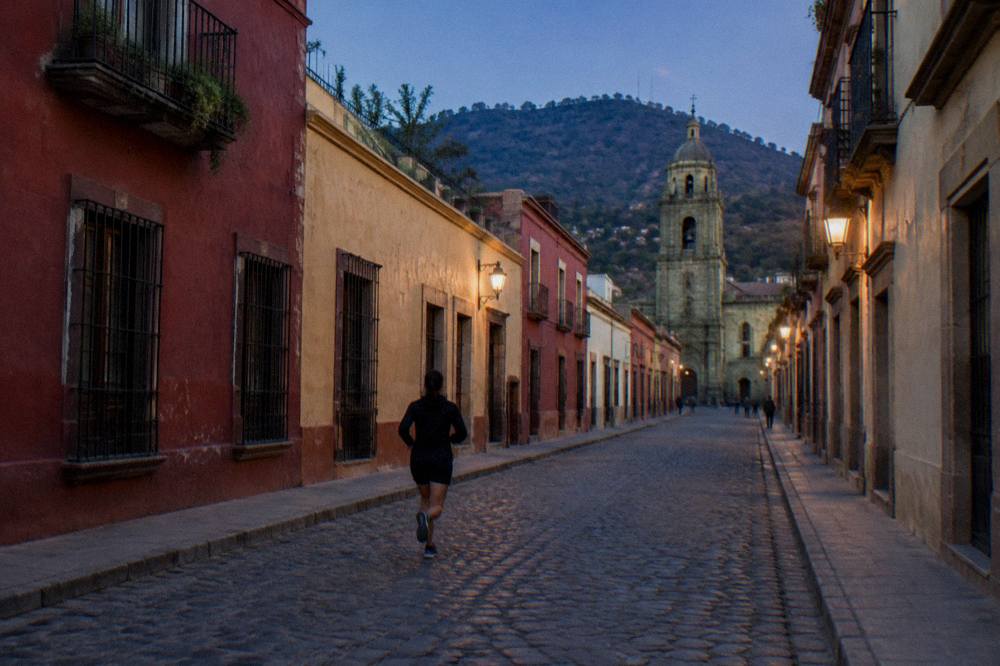
Every arrival route ends in the same place, the walkable core of an inland highland city at about 1,550 m, and the travel mode stops mattering the moment you set your bag down. What the record suggests next is a first-day loop outward: Monte Albán, the preeminent archaeological site, drew 416,675 visitors in 2025 against Mitla's 104,428, and both are reachable on organised days from the centre. The planning pages carry the rest.
For depth after arrival, Oaxaca Travel Guide covers the city, the valley and the coast extensions, and what not to miss in Oaxaca sequences the highlights.
Common Questions About Flying Or Taking The Bus To Oaxaca
Is It Better To Fly Or Take The Bus To Oaxaca?
Flying is better for short trips and direct routes; the bus is better from Mexico City and for budgets. Neither has a published fare this page can quote, so compare live prices on the airline and on ado.com.mx before deciding.
Does Oaxaca Have Its Own Airport?
Yes. Aeropuerto Internacional de Oaxaca at Xoxocotlán, coded OAX, is operated by ASUR and sits a short drive from the centre.
Is The Bus From Mexico City To Oaxaca Overnight?
ADO runs multiple daily departures on the corridor, including overnight options; times and fares are set by the operator and published at ado.com.mx.
Can You Take A Bus From The Coast To Oaxaca City?
Yes, ADO connects the coast to the capital. The car drive to Puerto Escondido is about 165 minutes on the new highway under free-flow conditions, and buses on mountain routes take longer.
Does The Season Change The Fly-Or-Bus Answer?
It tilts it. The rainy season runs May to October with a June-to-September peak, June averaging 188.3 mm of rain, and mountain roads argue more strongly for flying in those months.
Are Road Blockades A Problem For Either Option?
Sporadic blockades by teachers' unions are a standing risk that has at times affected airport access and Federal Highway 190. They are not continuous, but checking local news on a travel day is sensible whichever mode you pick.