Which US Cities Fly Direct To Oaxaca?
The US cities with reported nonstop flights to Oaxaca City's Xoxocotlán airport, plus connecting options, airport basics and what to do after landing.
Oaxaca City, the inland highland capital of the state of Oaxaca in Mexico, is served by one small airport: Xoxocotlán International, airport code OAX, operated by ASUR. Direct flights from the United States do exist, but the list is short and parts of it are seasonal, so many travellers from North America still connect through Mexico City. This page sets out the reported nonstop US routes, what the airport itself is like, and how to plan the rest of the arrival.
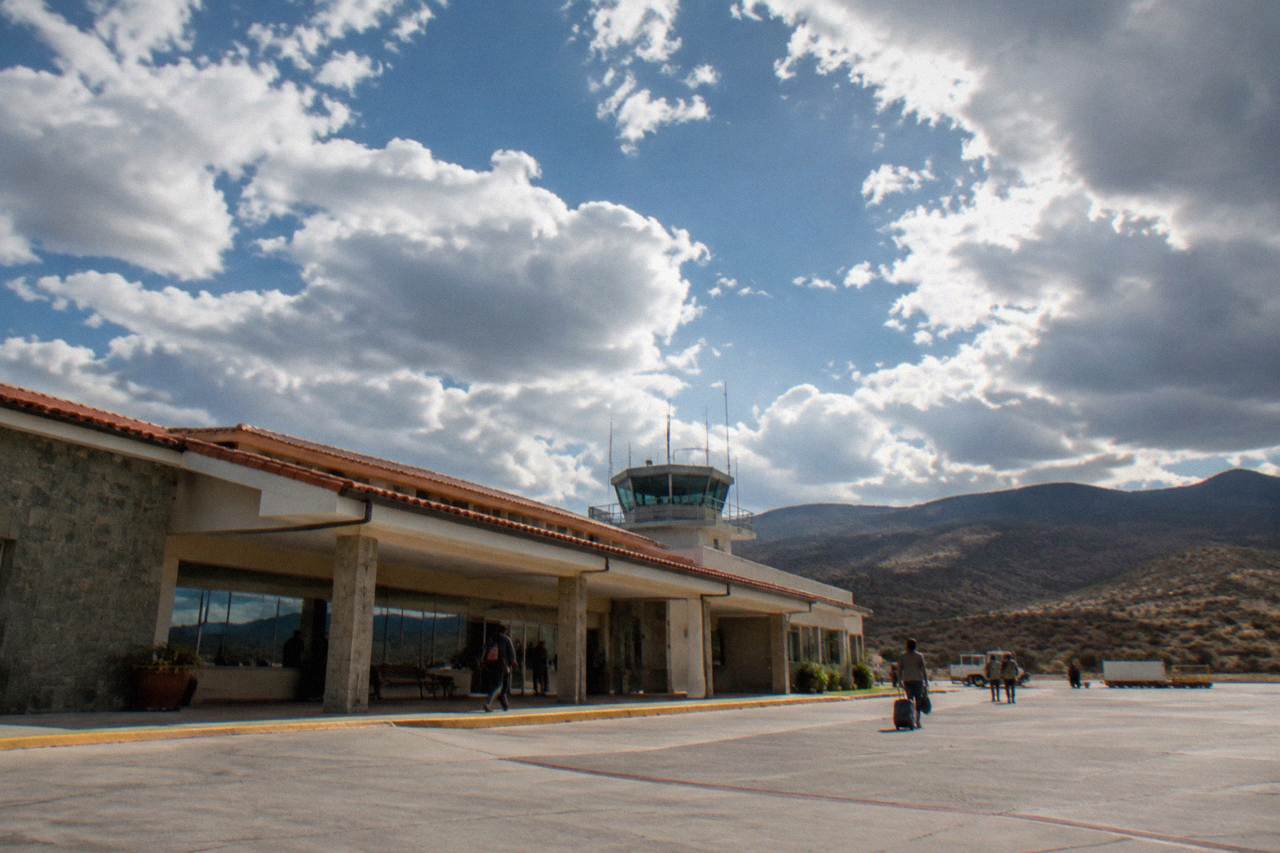
Reported nonstop service to Oaxaca City's Xoxocotlán airport comes from three US cities year-round, Dallas-Fort Worth, Los Angeles and Houston, plus a seasonal Phoenix route tied to the Día de Muertos period. Dallas-Fort Worth is reported as a daily American Airlines flight, Los Angeles is served by Volaris, and Houston by United from Intercontinental. All four routes are reported by flight-schedule sources rather than confirmed on a single official airline table, so check live schedules before booking.
That is the whole picture. Oaxaca's airport is small, and the US service has never approached what larger Mexican destinations receive. The Phoenix service, reported for specific dates in late October and early November 2026, exists because of the Día de Muertos surge, which is also the period when hotels in the city fill fastest and when the airport's single terminal is at its busiest. Outside that window, the three year-round routes carry the nonstop traffic alone.
A practical consequence: if your home airport is not Dallas, Los Angeles or Houston, your cheapest and fastest option is almost always a connection through Mexico City, which has frequent daily service to Oaxaca on Aeroméxico, Volaris and VivaAerobus, plus flights into the newer Felipe Ángeles airport. The Mexico City route also gives you the fallback of the ADO bus, a long but reliable overland option covered on how to get from Mexico City to Oaxaca.
| US City | Airport | Reported Airline | Reported Frequency |
|---|---|---|---|
| Dallas-Fort Worth | DFW | American Airlines | Daily |
| Los Angeles | LAX | Volaris | Scheduled service |
| Houston | IAH | United | Scheduled service |
| Phoenix | PHX | American Airlines | Seasonal, late Oct to early Nov |
The table above is the reported state of the routes in the October 2026 schedule data. Airline capacity to Oaxaca shifts with the seasons, and the Guelaguetza fortnight in July is another period when extra sections appear. Treat any specific departure time as something to confirm on the airline's own booking page rather than relying on any general summary.
What Airport Do You Fly Into For Oaxaca?
Every flight into Oaxaca City lands at Xoxocotlán International Airport, code OAX, the single commercial airport serving the capital. It sits south of the city in the Xoxocotlán area and is operated by the ASUR airport group. Normal operating hours are 06:00 to 20:00, which is why almost all arrivals cluster in daylight, and the terminal is compact enough that connections and arrivals move quickly.
The airport's size is its main feature. There is one terminal, a short walk from curb to baggage claim, and ground transport is limited to authorised taxis and colectivo shuttles purchased at a booth inside arrivals. Ride-hailing apps are not part of the airport's authorised setup, so the booth is the decision point, not the curb. The basics of choosing between the airport and the long bus ride are covered in full on what airport you fly into for Oaxaca.
For timing, note that Oaxaca sits at about 1,550 m in the Valles Centrales, and the city is inland: there is no sea and no port, and the Pacific coast resorts of Puerto Escondido and Huatulco are hours away by road, roughly a three-hour drive to Puerto Escondido on the newer highway. Arriving at OAX puts you in the highland valley, not on a beach, and the coastline is a separate extension trip. The full index of guides sits on Oaxaca Travel Guide.
Is It Better To Connect Through Mexico City?
For most US travellers, connecting through Mexico City Benito Juárez International is the practical answer, because the Mexico City to Oaxaca corridor has multiple daily flights on three carriers and fares that regularly undercut the thin nonstop competition. The trade is time: a connection adds hours against a nonstop from Dallas, Los Angeles or Houston, and the Mexico City airport is large where OAX is small.
The math depends on your origin. From the three nonstop gateway cities, the direct flight wins on total journey time almost every time. From anywhere else in the United States, you are connecting somewhere regardless, and Mexico City offers the densest schedule, the ADO bus alternative, and the option of a stopover in one of the largest cities in the Americas. The bus comparison, roughly six to eight hours on first-class services, is laid out on Mexico City to Oaxaca by bus.
One caution that has nothing to do with airlines: road blockades by teachers' unions are a standing, sporadic risk in Oaxaca that can temporarily cut road and airport access, usually for hours rather than days. It is a reason to keep a buffer day before any tight onward commitment, not a reason to avoid the trip. The broader safety picture, including the US State Department's Level 2 advisory for Oaxaca state, is summarised on is Oaxaca safe for Americans right now.
What Should You Do First After Landing In Oaxaca?
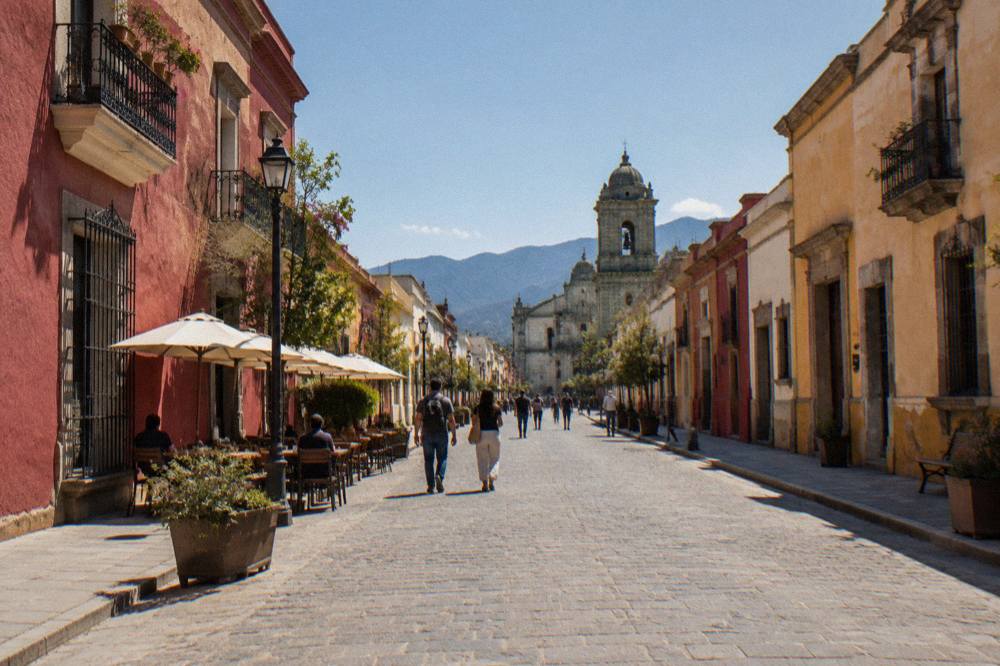
The sensible first move is a low-effort orientation of the historic centre: the walk from the Zócalo up the Andador Macedonio Alcalá to Santo Domingo de Guzmán is the spine of the city, flat, shaded in parts, and doable on the arrival afternoon. The city centre is compact and walkable, so a first day on foot beats a first day in a vehicle, and jet lag and the 1,550 m altitude argue for an easy pace anyway.
A guided walk is the efficient version of that first afternoon. The Street Art Tour With An Artist, a walking tour of Oaxaca City led by a working artist, doubles as an orientation because it moves through the centre's neighbourhoods while explaining what is on the walls. It pairs with the free options too: the city's tip-based walking tours cover the historic core, and the paid artist-led walk goes deeper into the mural scene.
If the flight lands early and energy is high, Monte Albán is close enough for an afternoon: the INAH site page lists daily hours of 08:00 to 17:00 with last access at 16:00, entry at 105 MXN for Mexican nationals and 210 MXN for foreign visitors, and the drive from the centre is about 15 minutes on a clear road. Arriving by air into a valley of ruins, markets and mezcal towns, the distances are short once you are on the ground.
How Many Days Do You Need Once You Have Flown In?
With flight access this thin, most itineraries earn at least four days on the ground: one for the historic centre, one for Monte Albán and a craft town, one for the Tlacolula valley loop taking in Mitla and Hierve el Agua, and one for markets and food. The average stay recorded in 2025 was 2.00 nights, but that figure mixes weekend domestic visitors with international arrivals, and the standard advice for US visitors is to build around whole days, not landing days.
The valley's main sites sit within easy reach of the centre, all drive times below are free-flow estimates and real traffic on mountain roads runs slower. Hierve el Agua is the far one at about 57 minutes, and the Sierra Norte villages are a half-day commitment at about 142 minutes to Latuvi, so those belong on dedicated days.
| Destination | Drive From The Zócalo | Type Of Day |
|---|---|---|
| Monte Albán | About 15 minutes | Half day |
| Santa María del Tule | About 11 minutes | Short stop |
| Teotitlán del Valle | About 26 minutes | Half day |
| Mitla | About 37 minutes | Day trip |
| Hierve el Agua | About 57 minutes | Day trip |
| Sierra Norte (Latuvi) | About 142 minutes | Full day |
Planning the day count before booking flights matters because the nonstop routes do not run many times a day: a Dallas departure that does not connect to your plans can cost a full day either side. The fuller argument on trip length, including how the valley day trips stack up, is on how many days in Oaxaca is enough, and the month-by-month weather picture, dry season November to April and rains peaking June to September, is on the best month to go to Oaxaca.
Common Questions About US Flights To Oaxaca
Which US Cities Fly Direct To Oaxaca?
Reported nonstop routes serve Oaxaca City from Dallas-Fort Worth, Los Angeles and Houston, plus a seasonal Phoenix route around the Día de Muertos period. All four are reported by flight-schedule sources, so confirm on the airline's booking page before planning around a specific departure.
Does Oaxaca Have An International Airport?
Yes. Xoxocotlán International Airport, code OAX, serves Oaxaca City and is operated by the ASUR airport group. Normal operating hours are 06:00 to 20:00, and the terminal is small, with authorised taxis and colectivo shuttles sold at a booth inside arrivals.
Is It Cheaper To Fly Through Mexico City?
Often, yes. The Mexico City to Oaxaca corridor has multiple daily flights on Aeroméxico, Volaris and VivaAerobus, and competition on that route regularly undercuts the thin nonstop fares from the US. Fares fluctuate, so compare the total journey, connection time included, before booking.
Can You Take A Bus From Mexico City Instead Of Flying?
Yes. First-class ADO services run the Mexico City to Oaxaca route, and the overland option is covered in detail on the bus guide. It trades hours for price and a mountain-road view, and it removes the connection-risk of a tight domestic flight.
When Should You Book For Día De Muertos?
Early. The festival's core dates are 31 October to 2 November, the 2026 programme had not been announced, and the period is when the seasonal Phoenix flights and the heaviest hotel demand appear. Book flights and rooms well ahead for that window.
Flying into Oaxaca City from the United States is a matter of picking the right gateway, Dallas-Fort Worth, Los Angeles or Houston for a nonstop, or Mexico City for the widest schedule, and then letting the short valley drives do the rest.