How Many Days In Oaxaca Is Enough?
How many days you need in Oaxaca City, from a two-day centre visit to a week with the Valles Centrales, Monte Albán and Hierve el Agua.
Oaxaca City rewards four days more than two, and the honest minimum for a first trip is three. Oaxaca de Juárez sits inland in the Valles Centrales of Mexico at about 1,550 m, and its weight of sights is split between the historic centre, Monte Albán above it, and a ring of valley towns that each eat half a day of travel. The Sectur indicator report counted 1,324,332 tourist arrivals in the city across 2025 with an average stay of 2.00 nights, which tells you the typical visit is shorter than the destination can fill.
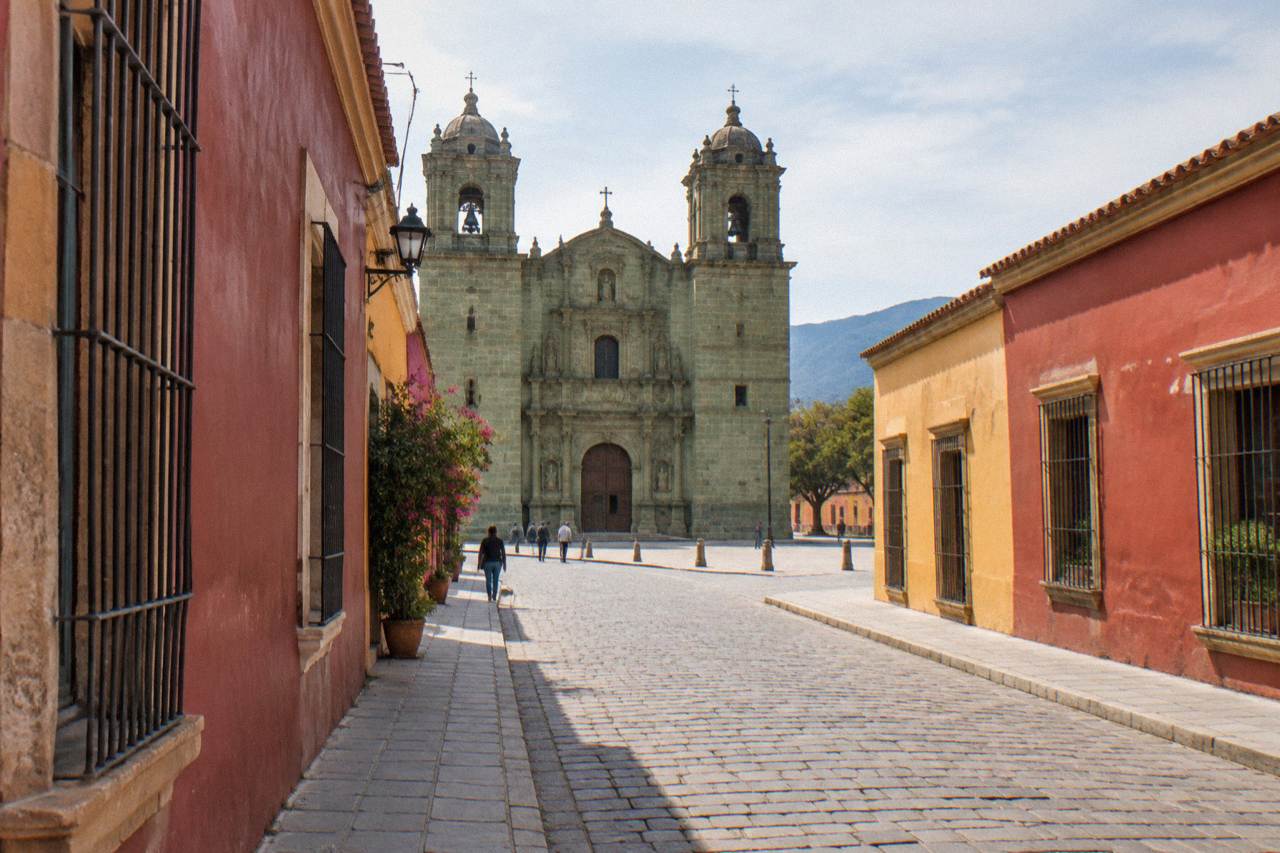
Three days is enough for Oaxaca City plus Monte Albán, which sits about 15 minutes from the Zócalo and takes only a half-day. Four days is the comfortable standard for a first visit, adding one full valley day trip to Mitla or Hierve el Agua, about 57 minutes each way. A week is what the wider Valles Centrales ask for. Two days work only if the plan stays inside the historic centre. A week is what the wider Valles Centrales ask for, because Teotitlán del Valle, Tlacolula, Mitla, Hierve el Agua, Ocotlán, Zaachila and the Sierra Norte sit on separate roads out of the city, and each loop costs most of a day.
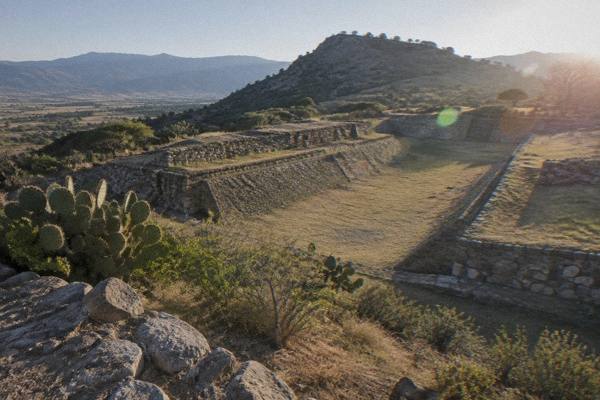
The count depends on what a day holds. Monte Albán is about 15 minutes from the Zócalo by road, so it is a half-day, while Hierve el Agua is about 57 minutes each way and pairs naturally with Mitla and Santa María del Tule in a full loop. The Centro Histórico itself, part of the UNESCO property "Historic Centre of Oaxaca and Archaeological Site of Monte Albán", can absorb two slow days without repeating a street.
The itineraries on this site already split the question by length: two days, three days, four days and five days each carry a day-by-day build. The guide to how many days in Oaxaca goes deeper on the trade-offs.
What Does Two Days In Oaxaca Cover?
Two days cover the historic centre well: the Zócalo, Santo Domingo de Guzmán, the Andador Macedonio Alcalá, the markets, one museum and one evening of food, with Monte Albán squeezed into a half-day only if day two stays tight. The centre is compact and walkable, and the Jardín Etnobotánico runs free guided tours Monday to Friday at 10:30, 11:00, 11:30, 12:00 and 17:00, plus Saturday between 10:30 and 12:00, so one of those slots has to be planned around.
The fixed clock to respect is the Museo de las Culturas de Oaxaca at Santo Domingo: it opens Tuesday to Saturday only, 10:00 to 16:00, and costs 105 MXN for nationals and 210 MXN for foreign visitors. A two-day trip that lands on a Sunday and Monday misses it entirely. Monte Albán, by contrast, opens every day 08:00 to 17:00 with last access at 16:00, at the same 105/210 fee, so it can anchor either day.
| Day | Realistic shape | Hard clock |
|---|---|---|
| Day 1 | Zócalo, cathedral, Andador Macedonio Alcalá, Santo Domingo, a market meal | Museo de las Culturas Tue to Sat only |
| Day 2 | Monte Albán morning, Jalatlaco or Xochimilco afternoon | Monte Albán last access 16:00 |
Two days also mean choosing between the city's food side and its craft side. A cooking class or a market tour takes a half-day on its own, and the street art of Jalatlaco and Xochimilco pulls in a different direction again. That is the honest argument for the third day.
What Does The Third And Fourth Day Add In Oaxaca?
Day three adds one full valley loop, usually Mitla with Hierve el Agua or Teotitlán del Valle with a mezcal stop, and day four adds the second loop or the craft towns south of the city such as Ocotlán and San Martín Tilcajete. This is where Oaxaca stops being a city break and becomes the Valles Centrales. Drive times from the Zócalo are the planning currency: Mitla about 37 minutes, Hierve el Agua about 57, Teotitlán del Valle about 26, Ocotlán about 37.
| Destination | Drive from the Zócalo | Entry (INAH) |
|---|---|---|
| Monte Albán | about 15 min | 105 MXN national / 210 foreign |
| Santa María del Tule | about 11 min | not an INAH site |
| Teotitlán del Valle | about 26 min | not an INAH site |
| Tlacolula | about 25 min | not an INAH site |
| Mitla | about 37 min | 105 MXN national / 210 foreign |
| Yagul | about 38 min | 105 MXN national / 210 foreign |
| Hierve el Agua | about 57 min | run locally, not by INAH |
Those are free-flow road times; real traffic and mountain roads run slower. The Mitla loop stacks well because Mitla, Yagul and Lambityeco sit along the same corridor, and Mitla's INAH page lists daily hours of 08:00 to 17:00 with last access at 16:30. Yagul closes at 17:00 with last access at 16:00, and Lambityeco charges the Category III rate of 80 MXN for nationals and 145 MXN for foreign visitors, so a three-site corridor day mixes two fee categories in one outing. A private loop is the most time-efficient way to do it, and the private Mitla, weavers town, mezcal and Hierve el Agua tour covers the whole corridor in one booked day: Check availability.
Day four can instead go south and west. Zaachila's archaeological zone opens Thursday to Sunday only, 10:00 to 16:00, at 80 MXN for nationals and 145 MXN for foreign visitors, so it demands a specific day of the week in the plan. Atzompa, on the Monte Albán side of the valley, opens daily 08:00 to 16:00 with last access at 15:00, an earlier cutoff than the big sites. This is also the day to give the city's food side its due: a cooking class with a market visit, or a longer mezcal tasting, fills a half-day each and rounds out a four-day count without a fourth ruin.
When Is A Week In Oaxaca The Right Answer?
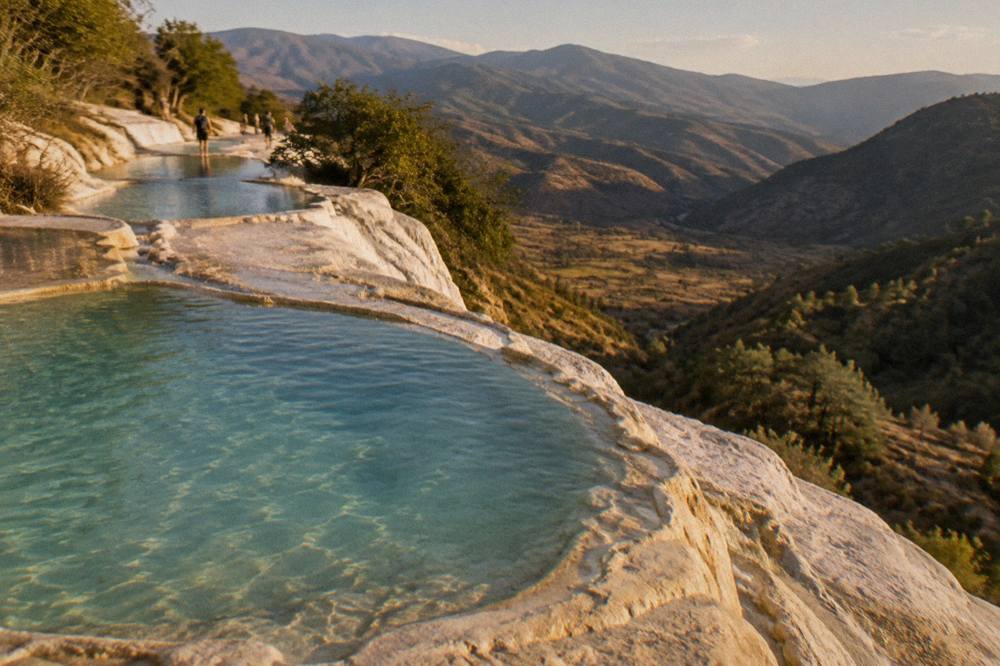
A week is the right count when the trip includes the Sierra Norte, a coast extension, or arrival around Guelaguetza in July or Día de Muertos at the end of October, when the city's own programme compresses sightseeing days. The Pueblos Mancomunados sit about 142 driving minutes from the Zócalo at Latuvi, a mountain road each way, so a Sierra hike is its own day or two. Puerto Escondido is about 165 minutes on the new highway and belongs to the coast pages, not to a city count.
The festival calendar changes the arithmetic. Guelaguetza 2026 ran its two Lunes del Cerro on 20 and 27 July at the Auditorio Guelaguetza, with Palco A at 1,632 MXN and Palco B at 1,321 MXN and the C and D sections free, inside a July programme of more than 140 activities; a trip built around it wants the whole week. Día de Muertos centres on the traditional dates of 31 October to 2 November, and rooms tighten around them, so extra days buy flexibility rather than more ruins.
How Do Season And Weather Change The Day Count?
The dry season from November to April puts four reliable sightseeing days in a row, while the rainy season from May to October, peaking June to September, argues for a buffer day in any plan of four days or more, because afternoon rain rewrites valley day trips. The SMN station normals for Oaxaca show June averaging 188.3 mm of rain and September 163.6 mm, against 2.4 mm in January and 9.0 mm in December, with 19.9 and 21.4 days of rain in June and September respectively.
| Month | Mean high C | Mean low C | Rain mm |
|---|---|---|---|
| January | 28.9 | 10.3 | 2.4 |
| April | 34.9 | 15.8 | 47.3 |
| June | 30.9 | 16.7 | 188.3 |
| September | 29.1 | 16.1 | 163.6 |
| December | 28.9 | 11.0 | 9.0 |
April's normal high of 34.9 C makes midday walking slower than January's 28.9 C, and December to January nights average near 10 to 11 C, which matters little for planning but shapes what evenings feel like. None of this is a ranking of months to visit; it is the arithmetic of how many usable outdoor half-days a week holds. The best month question carries the month-by-month detail.
A practical rule: in the rainy season, put Monte Albán or Hierve el Agua in mornings and keep markets and museums for afternoons. In the dry season the order matters less, and a four-day plan can run back to back without a slack day. A rainy-season week that plans five sightseeing days should still expect the calendar to bend once or twice, and that slack is exactly what the fifth and sixth days of a week-long trip are for.
Common Questions About Days In Oaxaca
Is Two Days Enough For Oaxaca?
Two days cover the historic centre and Monte Albán, but the Museo de las Culturas opens Tuesday to Saturday only, so check which weekdays the trip lands on. The average stay recorded in 2025 was 2.00 nights.
Can You Do Monte Albán And Hierve El Agua On The Same Day?
Yes, as a booked valley loop. Monte Albán is about 15 minutes from the Zócalo and Hierve el Agua about 57, with Mitla about 37, so one long day strings all three together.
How Many Days Do You Need For The Valles Centrales Craft Villages?
Plan one village cluster per day: Teotitlán del Valle, Tlacolula and Mitla on the eastern loop in about 25 to 37 minutes of driving each, and Ocotlán, San Martín Tilcajete and Zaachila, Thursday to Sunday only, on the southern loop.
Does A Week In Oaxaca Leave Time For The Coast?
Puerto Escondido is about 165 minutes from the city on the new highway, so a coast night fits into a week but eats one valley day. The Sierra Norte, about 142 minutes to Latuvi, competes for the same slot.
Do Festival Dates Change How Many Days You Need?
They do. Guelaguetza fills two Mondays in July inside a month-long programme, and Día de Muertos concentrates on 31 October to 2 November, so festival trips want the extra days the calendar crowds absorb.
Settle on three days as the floor, four as the standard first trip, and a week when the valleys, the Sierra or a festival are on the list. Whatever the count, the Oaxaca Travel Guide itineraries break each length into walkable days.