Is Oaxaca Safe? What Visitors Should Know
Oaxaca City draws well over a million visitors a year, and the governments that publish travel advisories treat it very differently from the parts of Mexico they warn about. This page sets out what those advisories actually say, what risks recur locally, and what visitors can do about each one.
Oaxaca City is an inland highland city the major Western advisories do not single out: the UK FCDO does not name Oaxaca on its main Mexico page, Canada applies its general Mexico caution, and the US State Department lists Oaxaca state at Level 2, Exercise Increased Caution. The recurring local risk is protest road blockades that can cut road and airport access for roughly a day, not violence aimed at visitors.
Oaxaca City (Oaxaca de Juárez), the capital of the state of Oaxaca in Mexico, sits inland in the Valles Centrales at about 1,550 m, and its 2025 tourism indicator sheet records 1,324,332 arrivals in the city between January and December of that year, 212,533 of them foreign. That is a city that receives visitors at scale, and the question of how safe it is deserves a sourced answer rather than a vibe. This page reports what the UK, Canadian and United States government advisories say about Oaxaca, what the recurring local risks are, and what practical steps address each one, from blockades to altitude to drinking water.
What Do The Official Travel Advisories Say About Oaxaca?
The three governments that publish the most-read advisories do not name Oaxaca City as a place to avoid. The UK FCDO's Mexico page advises against all but essential travel to parts of Mexico and does not name Oaxaca on that main page. Canada tells its citizens to exercise a high degree of caution in Mexico overall, with regional advisories, and does not list Oaxaca among its avoid-travel areas. The US State Department lists Oaxaca state at Level 2, Exercise Increased Caution.
The useful detail is in what each advisory does not say. The FCDO page names specific parts of other Mexican states under its "all but essential" warning, and Oaxaca does not appear among them on the page text. Canada's regional advisories for Mexico name several states and areas where non-essential travel should be avoided, and Oaxaca is not one of them. The US Level 2 category for Oaxaca state is the same "exercise increased caution" tier applied to large parts of the country, and the accompanying text places no restrictions on US government employees travelling to Oaxaca City, Monte Albán, Puerto Escondido or Huatulco, while restrictions do apply in the Isthmus region to the east.
Advisories are refreshed on their own schedule, so the practical habit is to read the three pages shortly before travel rather than rely on a summary, including this one. One more note on how to read them: a state-level caution tier is a broad brush that covers the whole of Oaxaca state, from the Valles Centrales to the coast to the Isthmus, and the differences within the state matter. The Isthmus restrictions in the US text attach to a region hundreds of kilometres from the city, on the route toward Chiapas, which visitors to Oaxaca City are unlikely to approach. Readers planning a trip around United States entry questions can also see the page on safety for Americans in Oaxaca right now.
| Government | Advice for Mexico overall | What the page says about Oaxaca |
|---|---|---|
| UK FCDO | Advises against all but essential travel to parts of Mexico | Oaxaca not named on the main page |
| Canada | Exercise a high degree of caution, with regional advisories | Oaxaca not listed as an avoid-travel area |
| US State Department | State-by-state levels | Oaxaca state Level 2, Exercise Increased Caution |
Is Oaxaca Safe At Night For Visitors?
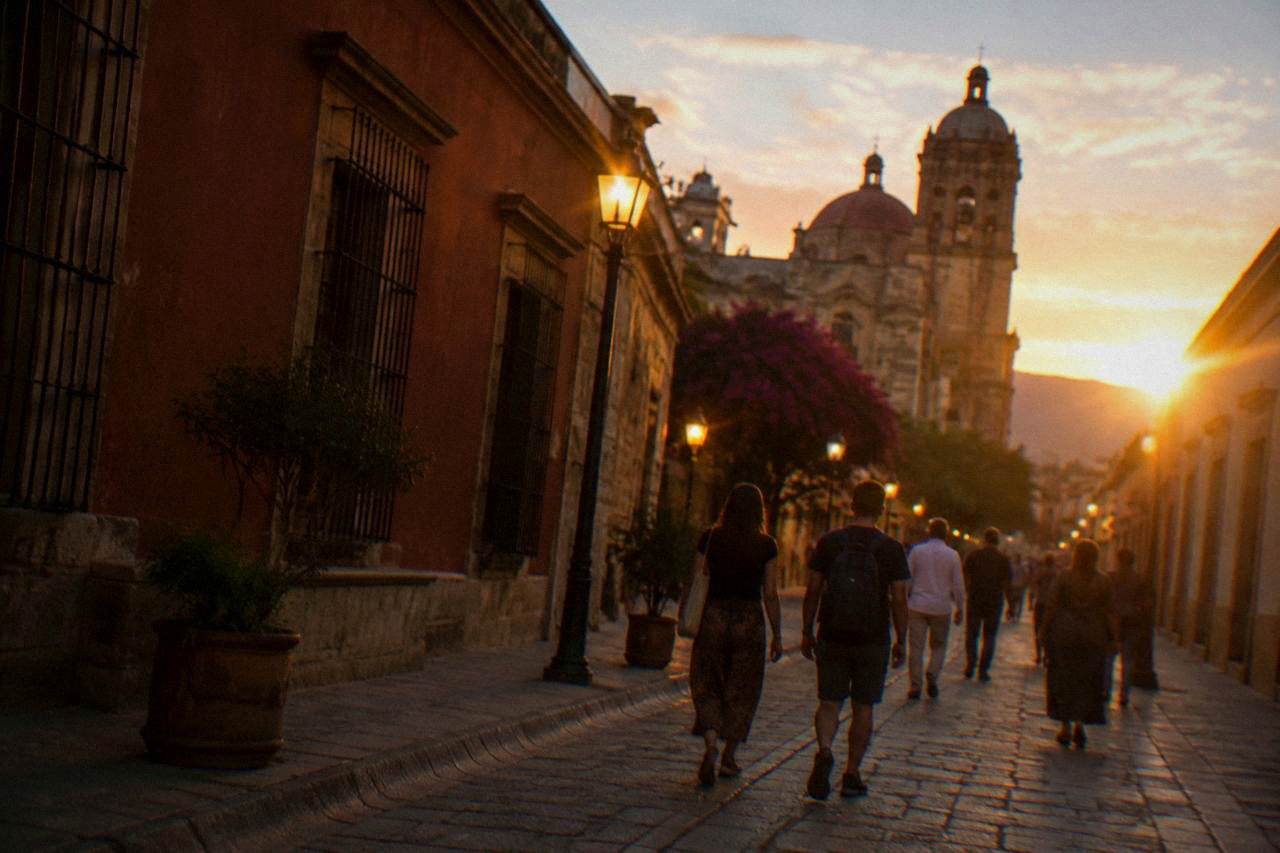
The centre of Oaxaca City is an evening city: the Zócalo, the Andador Macedonio Alcalá and the streets around them stay busy after dark, and the advisory picture above does not change when the sun goes down. No published crime statistic for Oaxaca City appears in the sources this site reports, so none is quoted. The honest answer is that the advisories treat the city as ordinary caution territory, and standard city habits at night are the appropriate response.
What that means concretely: keep to lit, walked streets in the Centro Histórico, Jalatlaco and Xochimilco after dark; take a taxi rather than a long walk at the end of a late evening, agreeing the fare before getting in since the city's taxis do not run on meters; and carry only what the evening needs. The rooftop bars and mezcal tasting rooms that keep Oaxaca's nights going are clustered in walkable central blocks, which keeps late routes short.
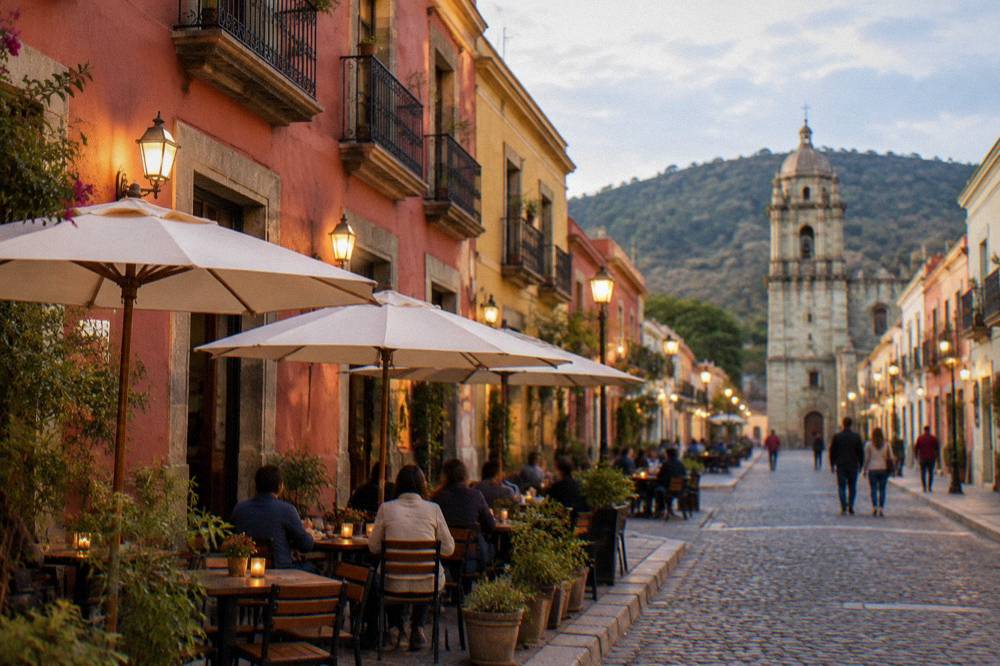
A night out in Oaxaca also tends to end early by big-city standards, which works in a visitor's favour. Festival evenings during Guelaguetza in July and Día de Muertos at the end of October fill the centre with parades and crowds late into the night, and those are exactly the nights when a pre-planned ride home beats improvising. Solo visitors and night-specific questions get their own treatment on the page about walking around Oaxaca at night. For getting home, the options and their trade-offs are laid out in the guides to taxis, Uber and DiDi in Oaxaca and getting around Oaxaca.
What Is The Recurring Local Risk Visitors Should Know About?
The risk that actually recurs in Oaxaca is protest activity, not violence against visitors. Teachers' union strikes in the state periodically produce road blockades, including on Federal Highway 190 and on access roads to Xoxocotlán airport, that can disrupt road and airport access for roughly 24 hours at a time. These are sporadic and usually resolved within a day, but they can break a travel day in both directions.
The practical response costs nothing. Build a buffer into any tight connection: a flight out of OAX on the same day as an international departure from Mexico City is the fragile pattern, and a night's buffer absorbs a 24-hour blockade. On the ground, local news and the airport's own channels report blockades as they happen, and hotels deal with them as a routine event. The blockades are a standing risk of travelling in Oaxaca state, not a signal that the city itself is dangerous.
It helps to understand what these actions are: they are labour protests aimed at the state government, and the airport access road and the highway to the Isthmus are simply the points where a blockade is felt. Arriving and departing flights themselves operate normally outside the blockade windows, and the airport, Xoxocotlán International, is operated by ASUR, the same group that runs airports across southern Mexico. Getting to and from the city has its own logistics, covered in depth on the pages for Oaxaca airport, flights to Oaxaca and the ADO bus from Mexico City. For everything from arrival days onward, the general Oaxaca travel tips page collects the practical basics.
Is Oaxaca City Safe To Walk Around?
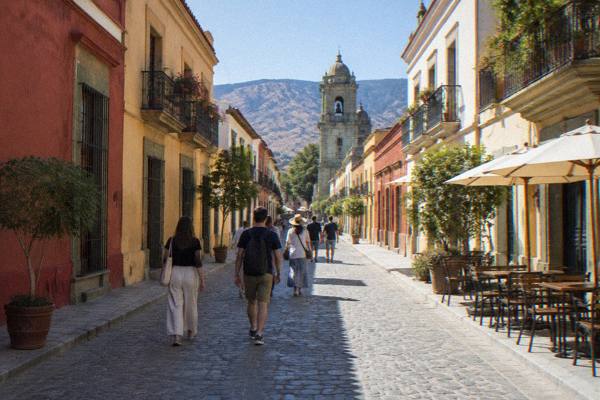
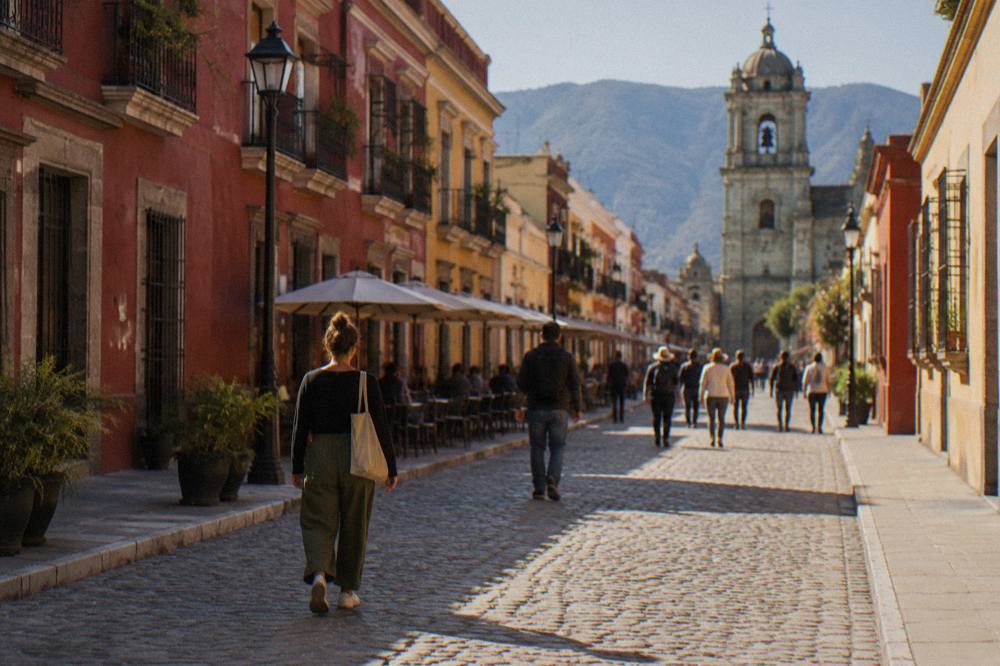
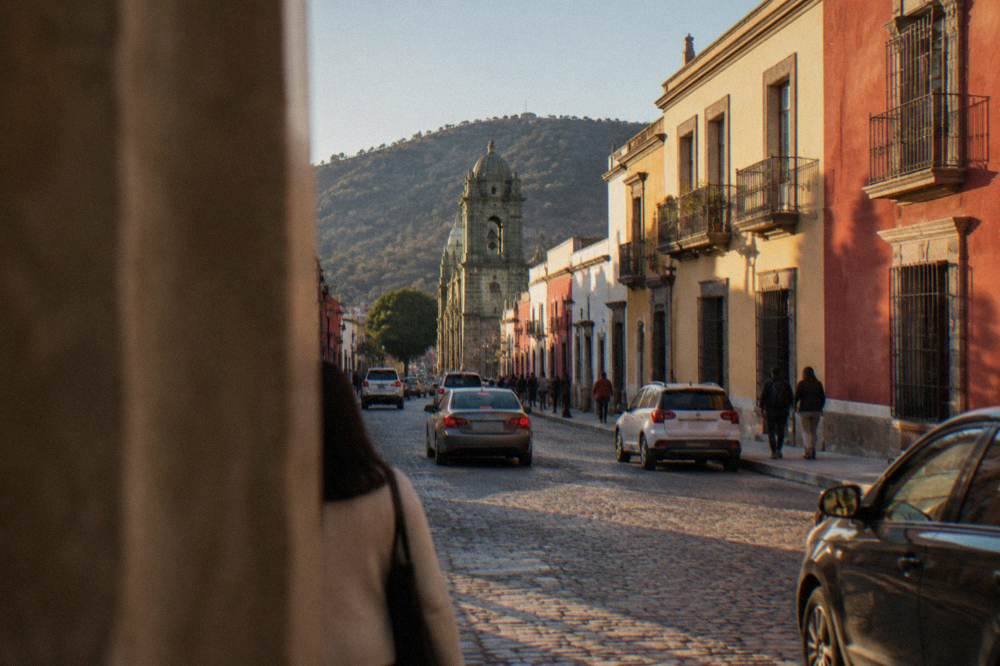
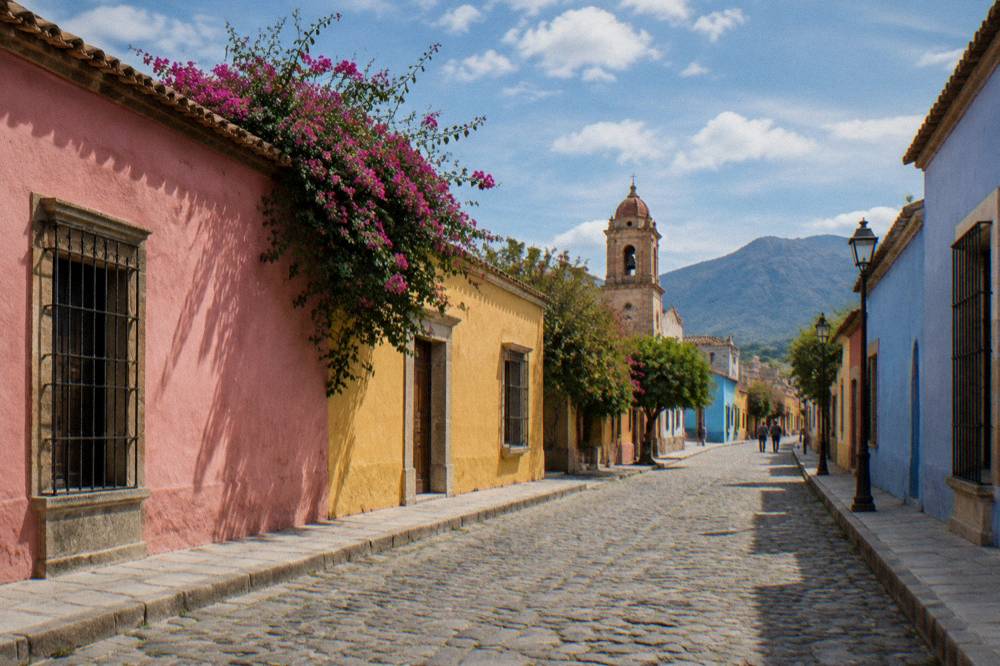
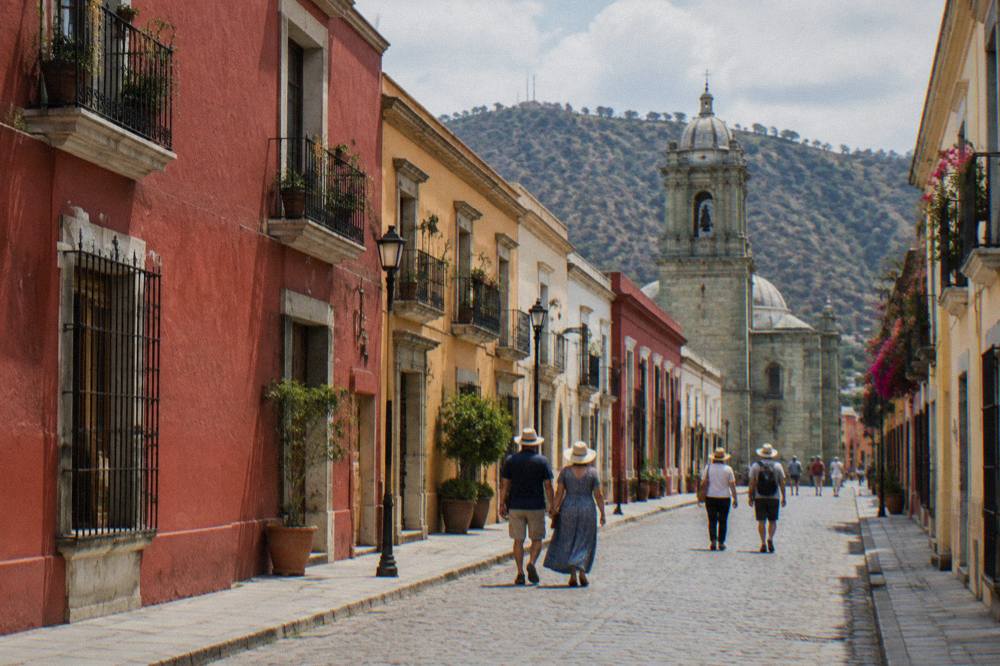
Yes, in the ordinary city sense: Oaxaca City is compact and walkable, its historic centre is laid out on a colonial grid that is easy to read, and the areas visitors spend time in, Centro Histórico, Jalatlaco, Xochimilco and Reforma, are neighbourhoods where walking is the normal way to move. No advisory names these neighbourhoods under any warning. The caution list is short: traffic, uneven pavements, and the usual attention to belongings in crowds.
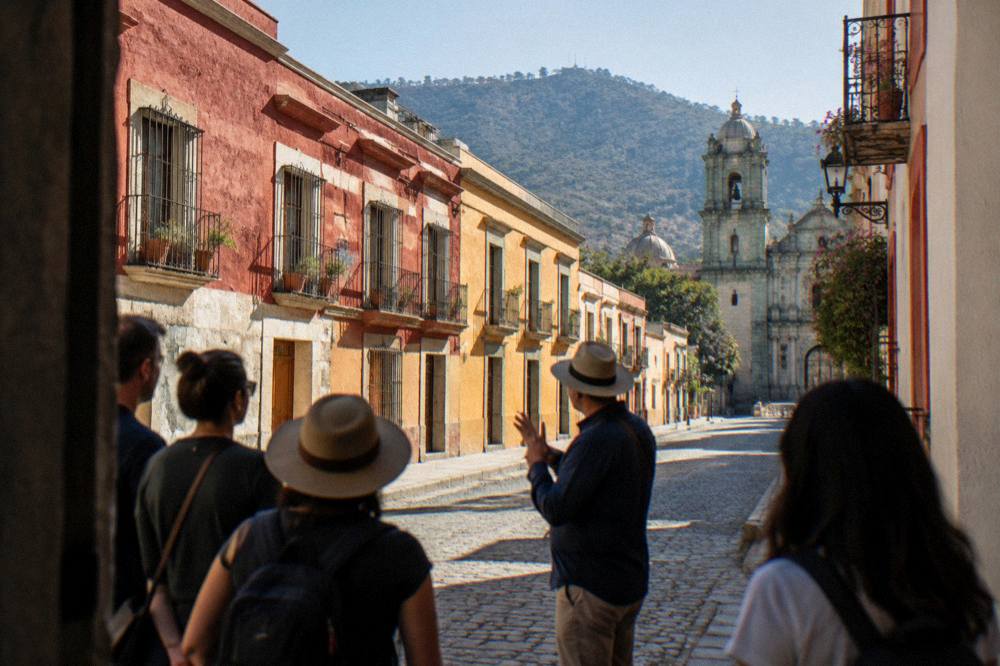
The walking geography rewards planning only slightly. The Zócalo to Santo Domingo de Guzmán stretch along the Andador Macedonio Alcalá is the spine, and from it the neighbourhoods fan out within a half hour on foot. Sidewalks in the older streets are narrow and steps are uneven, which matters more than crime for most ankles, and afternoon rain in the rainy season makes surfaces slick. A guided walk on a first day turns the same streets into an orientation; the Oaxaca Walking Tour covers culture and food with a local guide, with live availability on the operator's booking page.
Crossing streets is the one skill worth practising early. Traffic in the centre is dense, one-way systems shift from block to block, and the pedestrian priority a visitor might assume does not always hold. Look both ways, cross with locals, and treat the busier avenidas around the perimeter of the centre with more care than the pedestrianised andador. The question of walkability gets a full answer on is Oaxaca a walkable city, and where to base yourself is covered in where to stay in Oaxaca.
Are The Day Trips Out Of The City Safe?
The day-trip destinations around Oaxaca City, Monte Albán, Santa María del Tule, Teotitlán del Valle, Tlacolula, Mitla and Hierve el Agua, are visited at scale and carry the same advisory picture as the city itself: none is named under any warning. Monte Albán alone recorded 416,675 visitors in 2025, of whom 73,713 were foreign. The safety questions on these trips are road and logistics questions, not security questions.
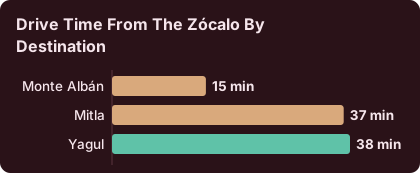
The roads are mountain roads. Drive times from the Zócalo, computed on free-flow conditions, come out at about 15 minutes to Monte Albán, about 11 to Tule, about 26 to Teotitlán del Valle, about 37 to Mitla and about 57 to Hierve el Agua, and real traffic and mountain driving are slower than those figures. Whether to drive, take a tour or use colectivos is a comfort decision; the trade-offs sit on the driving in Oaxaca and colectivos and mototaxis pages. A structured option pairs the ruins with the ex-convent at Cuilapan de Guerrero on the 8-hour tour to Monte Albán and Cuilapan de Guerrero.
| Destination | Drive time from the Zócalo | 2025 visitors |
|---|---|---|
| Monte Albán | About 15 minutes | 416,675 |
| Mitla | About 37 minutes | 104,428 |
| Yagul | About 38 minutes | 10,185 |
Two smaller sites round out the 2025 visitor table without sourced drive times of their own: Lambityeco recorded 5,545 visitors and Zaachila 4,229. Zaachila in particular rewards checking the calendar before setting out, since its archaeological zone opens Thursday to Sunday 10:00 to 16:00 only.
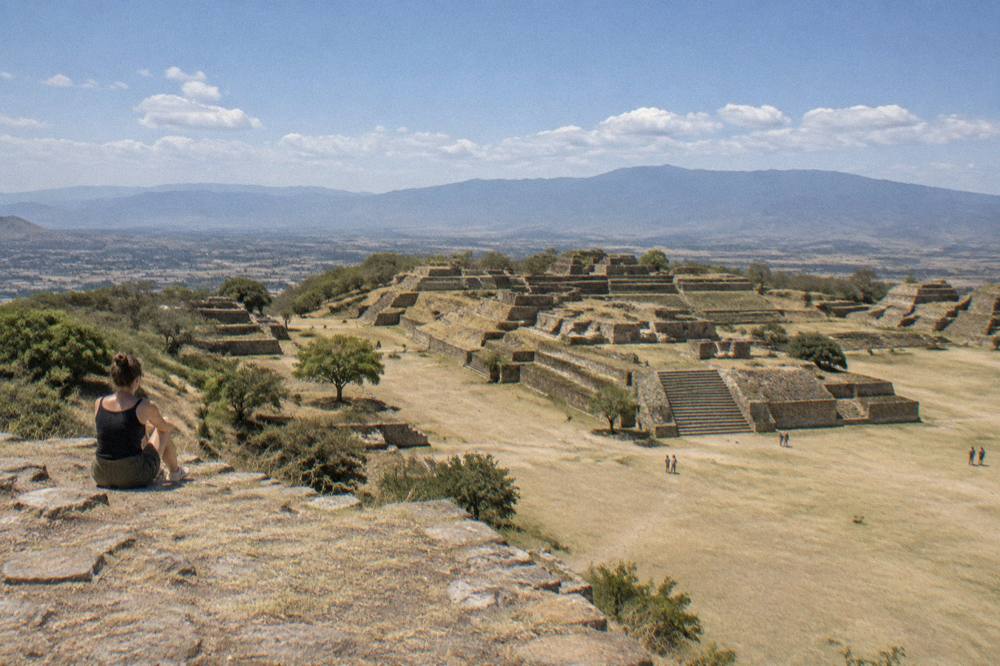
The sites themselves are administered by INAH with posted hours and ticketed entry, which adds a layer of order to a day in the valley. Monte Albán, Mitla and Yagul charge Category I entry, 105 MXN for Mexican nationals and 210 MXN for foreign visitors; Dainzú, Lambityeco and Zaachila charge Category III, 80 and 145 MXN. Zaachila's schedule, not its safety, is the planning constraint. Site-by-site detail is on the Monte Albán, Mitla and Hierve el Agua pages.
Is The Food And Water Safe In Oaxaca?
Oaxaca's food is one of the main reasons people come, and the city's markets, street stalls and restaurants fed over 1.3 million arrivals in 2025 without any advisory flagging them. On water, the straight answer is different: this site reports no official primary-source advisory on tap water in Oaxaca, so the standard Mexico traveller's rule applies, drink bottled or filtered water and skip ice where the source is unknown to you.
Food safety in practice follows the usual market logic: stalls with fast turnover and cooked-to-order food, hot food served hot, and stalls the locals queue at. A market walk with tastings built in solves the "which stall" question on the first visit; the immersion tour of Oaxaca's markets with all gastronomy included is exactly that product. The water question has its own page at drinking water in Oaxaca, and the food itself is mapped across what to eat in Oaxaca, mole, tlayudas and mezcal in Oaxaca.
| Food situation | Practical approach |
|---|---|
| Market cooked food | Stalls with fast turnover, food cooked to order in front of you |
| Street snacks | Hot food served hot; busy stalls |
| Water | Bottled or filtered; no official Oaxaca-specific advisory exists |
| Ice and juices | Same rule as water where the source is unknown |
| Restaurant dining | No advisory flag; ordinary caution |
Does The Altitude Or Sun Affect Safety In Oaxaca?
Oaxaca City sits at about 1,550 m, an altitude low enough that acute mountain sickness is rare but high enough that the sun and the dry air do the work: visitors commonly underestimate dehydration and UV exposure rather than the thin air itself. April's average daily high is 34.9 C and January's average overnight low is 10.3 C, so a single day can swing more than 20 degrees and both sunscreen and a layer for the evening belong in the daypack.
The climate record behind that is the SMN station 20079 normals for 1991 to 2020. Rain falls overwhelmingly in the May-to-October rainy season, with June averaging 188.3 mm and the November-to-April dry season staying under 50 mm a month, bottoming at 2.4 mm in January. Rain in the valley tends to arrive in afternoon bursts rather than all-day, which matters for footing on stone streets more than for safety.
| Month | Average high C | Average low C | Average rain mm |
|---|---|---|---|
| Jan | 28.9 | 10.3 | 2.4 |
| Feb | 31.1 | 11.6 | 4.6 |
| Mar | 33.3 | 13.6 | 17.6 |
| Apr | 34.9 | 15.8 | 47.3 |
| May | 33.8 | 16.7 | 97.9 |
| Jun | 30.9 | 16.7 | 188.3 |
| Jul | 30.1 | 15.9 | 118.6 |
| Aug | 30.0 | 15.9 | 131.8 |
| Sep | 29.1 | 16.1 | 163.6 |
| Oct | 29.3 | 14.5 | 63.1 |
| Nov | 29.0 | 12.3 | 9.1 |
| Dec | 28.9 | 11.0 | 9.0 |
The full seasonal picture is on Oaxaca weather by month and the best time to visit Oaxaca.
Two altitude habits earn their keep. Drink more water than feels necessary, especially in the dry months when the air pulls moisture out without the sensation of heat, and pace the first day: the centre looks flat but the walk up to Monte Albán's plateau or around Hierve el Agua's paths lands harder at 1,550 m than at sea level. Sunscreen belongs on every day of the year here, not just the spring ones.
Is Oaxaca Safe For Solo Travellers, Families And LGBTQ Visitors?
The advisory and visitor data say nothing that singles out any of these groups for extra risk in Oaxaca City, and the city's tourism base, 212,533 foreign arrivals in 2025 with an average stay of 2.00 nights, runs heavily through exactly these travellers. What the sources support is ordinary city caution plus Oaxaca-specific logistics; what they do not support is any claim that a group faces elevated danger here.
For solo travellers, the practical notes are the same as for any visitor with one difference that helps: the centre's density of group tours and cooking classes makes it easy to join structured activity, and the free things to do in Oaxaca and solo in Oaxaca pages lay out the social side. For families, the questions are strollers on cobblestones and afternoon heat rather than security, covered on Oaxaca with kids. The budget and money side of travelling alone or with family is on Oaxaca travel costs and budget and money, ATMs and cash in Oaxaca.
What Should A Safety-Conscious Oaxaca Itinerary Look Like?
A safety-conscious plan is mostly a logistics plan: arrive with a buffer day if connecting onward, spend the first day on a guided walk that doubles as orientation, keep valley day trips to daylight hours on the mountain roads, and hold the evening in the central neighbourhoods where the streets stay busy. Two to three days covers the city and one valley day trip well, and the site's itinerary pages scale from there.
The sequence that works: day one in the Centro Histórico is covered on Oaxaca in one day; the scaling pages run from Oaxaca in 2 days through Oaxaca in 3 days, Oaxaca in 4 days and Oaxaca in 5 days to Oaxaca in a week; and the question of trip length itself is answered on how many days in Oaxaca. First-timers get a dedicated run-through at first time in Oaxaca, and the full activity list lives at things to do in Oaxaca.
Common Questions About Safety In Oaxaca
Is Oaxaca Safe For Tourists?
The UK FCDO does not name Oaxaca on its main Mexico page, Canada lists Oaxaca under its general Mexico caution rather than any avoid-travel advisory, and the US State Department lists Oaxaca state at Level 2, Exercise Increased Caution. The city recorded 1,324,332 arrivals in 2025. Standard city caution is the appropriate posture.
Is There A Travel Warning For Oaxaca?
No government advisory names Oaxaca City under a do-not-travel or avoid-all-but-essential warning. The US Level 2 tier for Oaxaca state is a caution tier, not a prohibition, and the restrictions it places on US government employees do not cover Oaxaca City or Monte Albán.
Can Protests Affect Travel Plans In Oaxaca?
Yes. Teachers' union strikes in the state periodically produce road blockades, including on highway access to the airport, that can disrupt travel for roughly 24 hours at a time. A buffer night before a tight onward connection absorbs the risk.
Is It Safe To Walk In Oaxaca At Night?
The central neighbourhoods stay busy in the evening and no advisory names them under any warning. Keep to lit, walked streets, and take a taxi for late returns, agreeing the fare before getting in.
Is The Water Safe To Drink In Oaxaca?
No official Oaxaca-specific advisory on tap water exists in the sources this site reports, so the standard Mexico traveller's rule applies: bottled or filtered water, and caution with ice where the source is unknown.
Are Oaxaca's Archaeological Sites Safe To Visit?
Monte Albán, Mitla, Yagul, Dainzú, Lambityeco and Zaachila are INAH-administered sites with posted hours and ticketed entry, and Monte Albán received 416,675 visitors in 2025. The safety considerations are sun, uneven ground and mountain roads, not security.
Read the advisories yourself before booking, plan a buffer around the blockades that occasionally close roads and airport access, and the rest of an Oaxaca trip is ordinary travel planning. The Oaxaca Travel Guide covers every piece of it, from the airport to the valley to the plate.