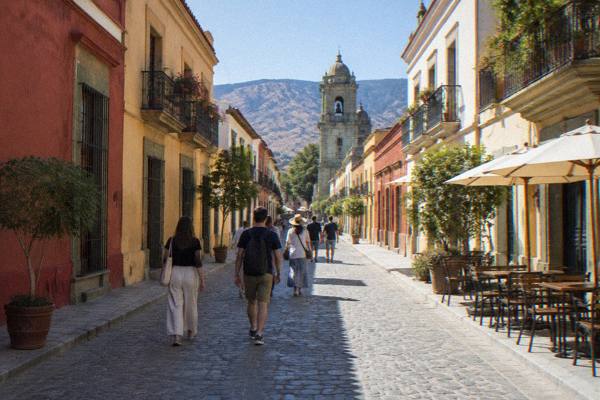
Oaxaca Travel Tips: 25 Things To Know Before You Go
Oaxaca City is an inland highland capital in the Valles Centrales of Mexico, sitting at about 1,550 m, and the difference between a smooth trip and a frustrating one usually comes down to a handful of practical details: which days museums close, what the INAH sites charge, how the rain falls, and how little a car helps in the historic centre.
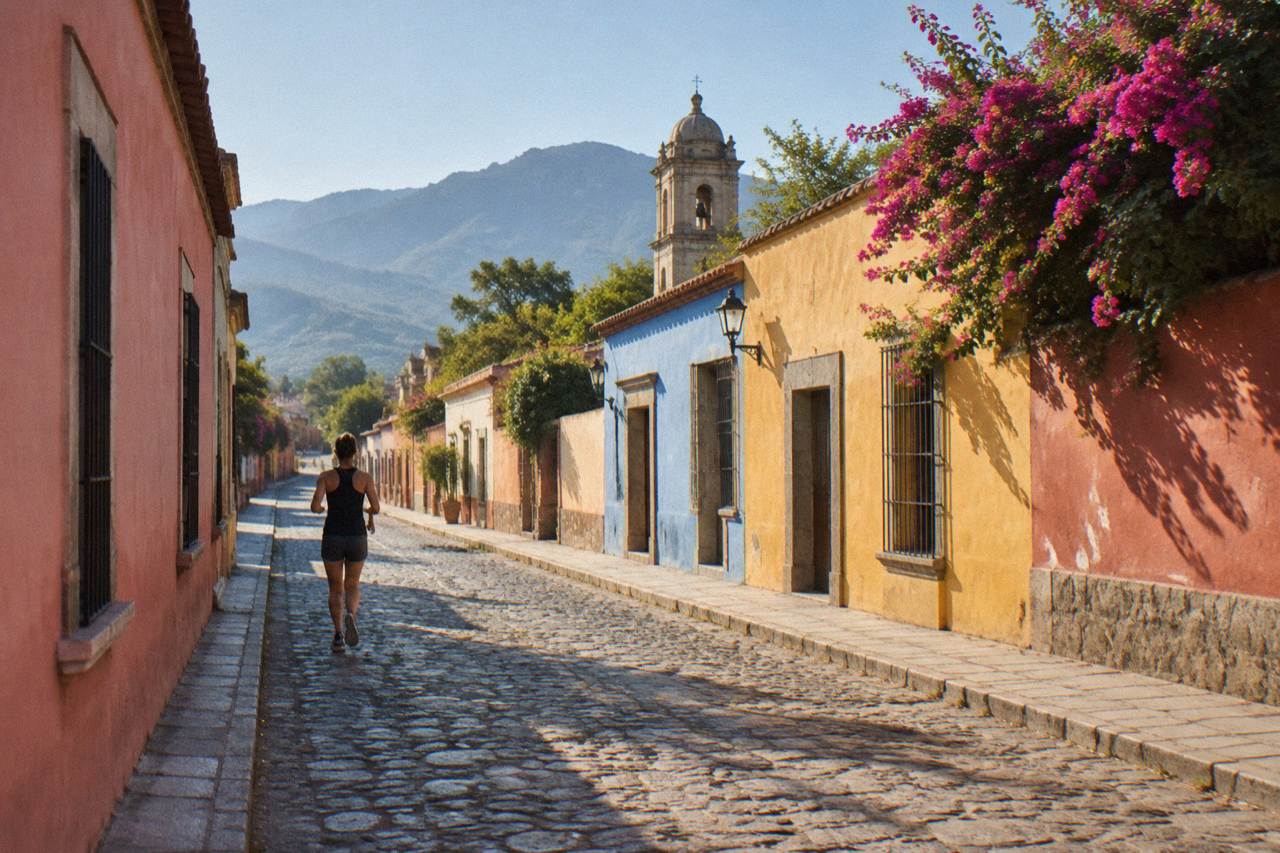
Oaxaca City works best as a walking base: the centre is compact, INAH sites such as Monte Albán charge 105 MXN for nationals and 210 MXN for foreigners, the dry season runs November to April, and the valley's main sights sit between about 11 and 57 minutes away by road.
Oaxaca City, the capital of the state of Oaxaca in Mexico, is an inland highland city in the Valles Centrales at about 1,550 m, with no sea, no beach and no navigable river anywhere near the historic centre. That single geographic fact shapes almost every planning decision: the climate is a dry-season and rainy-season pattern rather than a beach-destination one, the Pacific coast at Puerto Escondido is a long extension rather than a day trip, and the centre of the city is compact enough that walking, not driving, is the natural way to move around. This page collects twenty-five practical tips for the city and its valley, each one drawn from primary sources: INAH site pages for fees and hours, the SMN climate normals for the weather table, and the state tourism indicators for visitor figures. The Oaxaca Travel Guide covers the whole destination, so each tip links onward to the page that treats its subject in depth.
What Should You Sort Out Before You Arrive In Oaxaca?
Plan around four fixed facts before anything else: Oaxaca City sits at about 1,550 m, keeps UTC-6 all year with no daylight saving since 2022, levies a 3 percent state lodging tax on hotel-type stays, and hosted 1,324,332 tourist arrivals across 2025 with an average stay of 2.00 nights. Those four numbers do more practical work than any packing list. The altitude means cool nights even after warm afternoons, the fixed timezone means no clock changes to track, the lodging tax appears on hotel bills rather than in advertised rates, and the short average stay explains why the valley's main sights get busy by mid-morning.
The municipality of Oaxaca de Juárez counted 270,955 inhabitants at the 2020 census, and the state 4,132,148, so the city is mid-sized by Mexican standards. The historic centre and the archaeological site of Monte Albán together form the UNESCO World Heritage property listed as "Historic Centre of Oaxaca and Archaeological Site of Monte Albán", property 415, which is the formal name to look for rather than any shortened version. Getting there is covered in depth on flights to Oaxaca and the Oaxaca airport guide, and the overland routes from the capital are laid out in Mexico City to Oaxaca and the ADO bus guide.
How Many Days Do You Need In Oaxaca?
Two full days cover the historic centre plus one valley excursion; four days add the craft villages, a second archaeological site and a cooking class or mezcal tasting without rushing; anything beyond a week is time to consider the Sierra Norte or a coast extension. The official 2025 figure of an average 2.00 nights per visitor shows that short stays are the norm, but the norm is tight: Monte Albán alone takes half a day, and the popular Hierve el Agua loops run most of a day. Three nights is a workable floor; five lets the valley breathe.
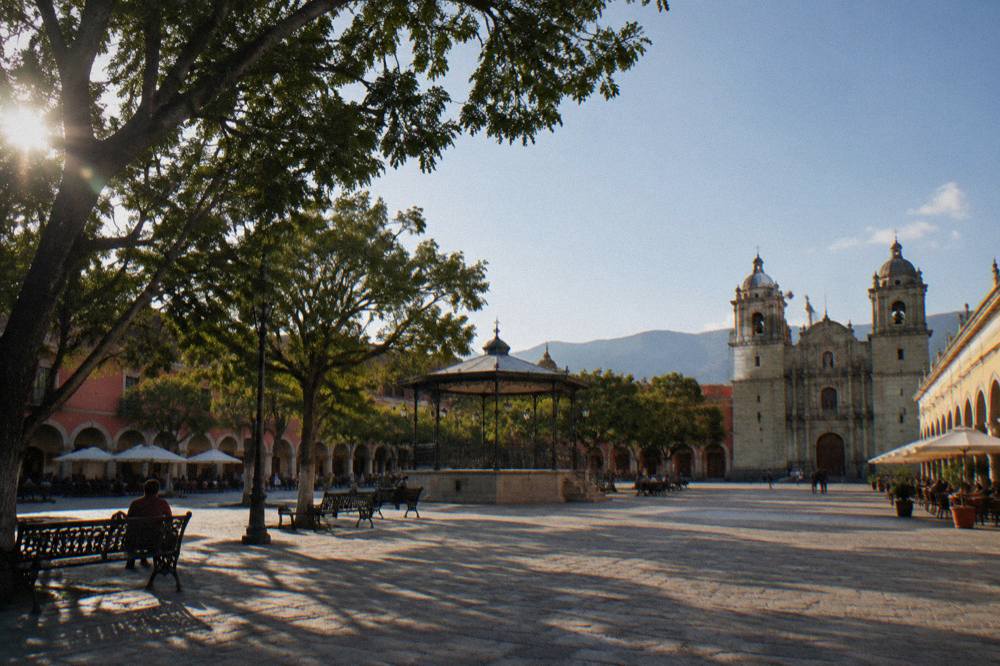
The sequencing matters as much as the count. Spend day one on foot in the centre, because the historic centre guide and the one day in Oaxaca itinerary both assume you can walk between the Zócalo, Santo Domingo de Guzmán and the Andador Macedonio Alcalá. Give day two to Monte Albán in the morning, when the site opens at 08:00, and an afternoon back in the city. Days three and four then absorb a valley loop, a market town or a workshop. The full breakdowns live in how many days in Oaxaca and the three day and five day itineraries.
A guided walk on the first morning pays for itself in saved wandering, and the tour list's short city walk is the one most first visits start with. For the first full day the centre's shorter format works well; see the Oaxaca Walking Tour options for what a two-hour version covers, or Check availability for a day-one slot. The longer Hierve el Agua hike and the evening street-food formats are day-two and day-three candidates.
What Does It Cost To Visit Oaxaca?
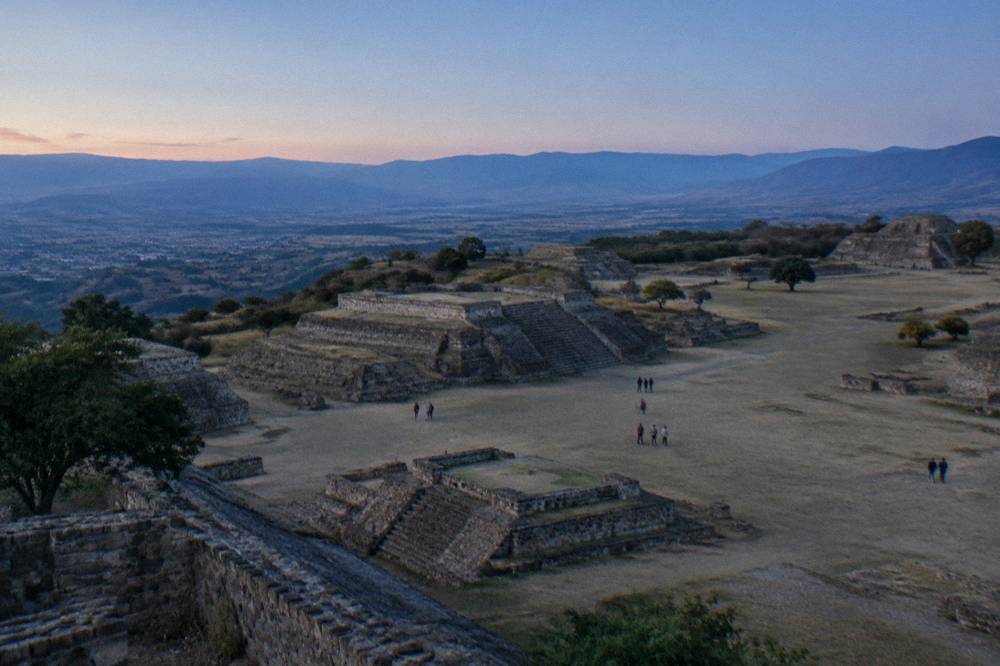
The fixed local costs are modest and state-published: INAH archaeological sites charge either 105 MXN for nationals and 210 MXN for foreigners at Category I, or 80 and 145 MXN at Category III, the Museo de las Culturas de Oaxaca charges 105 and 210 MXN, and visits to INAH sites outside normal hours cost a flat 730 MXN.
Beyond the entry fees, the state-level costs that touch every traveller are the 3 percent lodging tax and whatever a valley day trip costs. For the budget architecture, nightly ranges by travel style and where the money actually goes, the deep dive is Oaxaca travel costs and budget, and the accommodation side is covered in where to stay in Oaxaca plus the hotel guide.
One cost rule saves arguments at ticket windows: carry pesos. INAH fees are quoted in MXN, the lodging tax is calculated in MXN, and converting any of these to dollars at an assumed rate does nobody any good because the peso rate moves daily. Small bills help at the smaller sites, where change for large notes is not guaranteed.
What Is The Weather Like In Oaxaca Through The Year?
Oaxaca has a dry season from November to April and a rainy season from May to October with its rain concentrated from June to September: June averages 188.3 mm of rain, September 163.6 mm, while January averages just 2.4 mm and December 9.0 mm, all per the SMN station normals for 1991 to 2020. April carries the highest average daily maximum at 34.9 C, and January the lowest average nightly minimum at 10.3 C, which is the pairing that surprises visitors: warm afternoons and genuinely cool nights in the same 24 hours.
The practical reading of the table is that rain in the rainy season falls heavily but not constantly: June logs an average of 19.9 days with rain against January's 1.4. Afternoon storms are the pattern to plan around, with mornings generally usable for Monte Albán or valley trips. The month-by-month detail, including what each month means for specific plans, is in Oaxaca weather by month, and the timing trade-offs are weighed in the best time to visit Oaxaca. There is no winter snow at this altitude and no sea to moderate temperatures; the valley heats and cools on its own cycle.
| Month | Average High C | Average Low C | Average Rain Mm |
|---|---|---|---|
| January | 28.9 | 10.3 | 2.4 |
| February | 31.1 | 11.6 | 4.6 |
| March | 33.3 | 13.6 | 17.6 |
| April | 34.9 | 15.8 | 47.3 |
| May | 33.8 | 16.7 | 97.9 |
| June | 30.9 | 16.7 | 188.3 |
| July | 30.1 | 15.9 | 118.6 |
| August | 30.0 | 15.9 | 131.8 |
| September | 29.1 | 16.1 | 163.6 |
| October | 29.3 | 14.5 | 63.1 |
| November | 29.0 | 12.3 | 9.1 |
| December | 28.9 | 11.0 | 9.0 |
How Do You Get Around Oaxaca Without A Car?
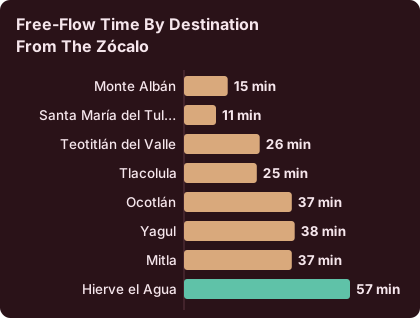
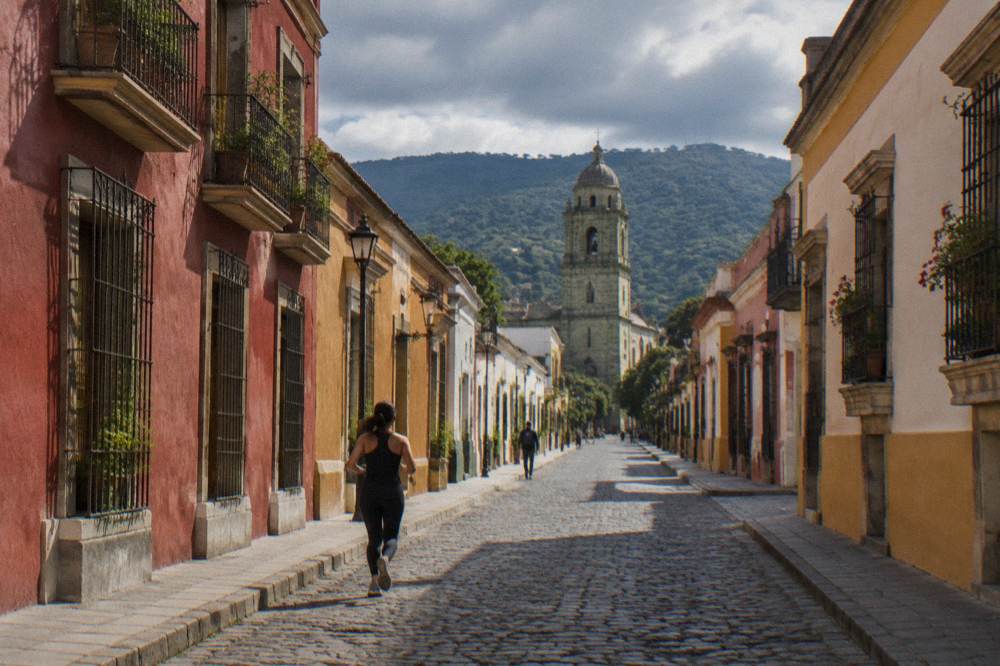
You walk in the centre, you take tours or colectivos into the valley, and you do not need a car for a first visit: Monte Albán is about 15 minutes from the Zócalo by road, Tule about 11, Teotitlán del Valle about 26, Mitla about 37 and Hierve el Agua about 57, all free-flow estimates that real traffic and mountain roads make slower. There is no bike-share scheme in Oaxaca, and the historic centre's grid rewards walking far more than driving.
Those drive times are computed from the Zócalo on free-flow conditions and rounded up, so treat them as floors, not promises. The road to Hierve el Agua is a mountain road for its final stretch, and valley traffic on market days adds time. The full transport picture, including colectivos, taxis and ride-hailing, is in getting around Oaxaca, and the taxi and app question specifically, including the rule that only authorised taxis serve the airport, is settled in taxis, Uber and DiDi in Oaxaca.
| Destination From The Zócalo | Road Distance Km | Free-Flow Time |
|---|---|---|
| Monte Albán | 8.7 | about 15 minutes |
| Santa María del Tule | 10.2 | about 11 minutes |
| Teotitlán del Valle | 29.2 | about 26 minutes |
| Tlacolula | 31.2 | about 25 minutes |
| Ocotlán | 32.5 | about 37 minutes |
| Yagul | 41.9 | about 38 minutes |
| Mitla | 44.6 | about 37 minutes |
| Hierve el Agua | 67.1 | about 57 minutes |
Which Days And Hours Matter At The Main Sites?
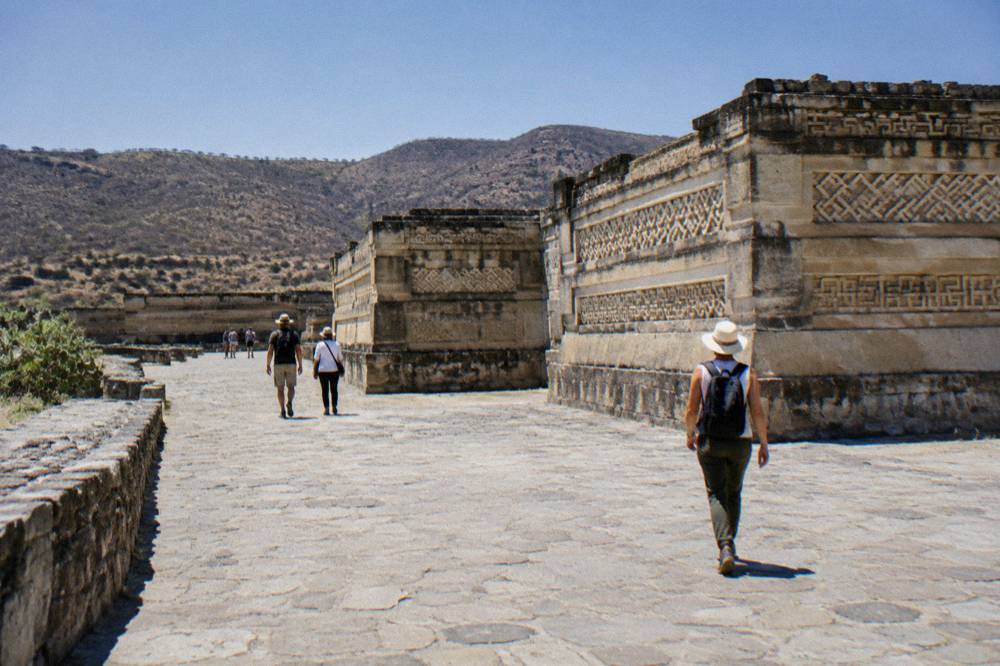
Three opening rules catch visitors out: the Museo de las Culturas de Oaxaca opens Tuesday to Saturday only, Zaachila opens Thursday to Sunday 10:00 to 16:00 only, and Atzompa closes at 16:00 with last access at 15:00, an hour earlier than Monte Albán's 17:00 close and 16:00 last access. The big three valley sites, Monte Albán, Mitla and Yagul, all open Monday to Sunday 08:00 to 17:00, but their last-access times differ: 16:00 at Monte Albán and Yagul, 16:30 at Mitla.
The fee categories are fixed across the INAH system: Monte Albán, Mitla and Yagul are Category I at 105 MXN for nationals and 210 MXN for foreigners, while Dainzú, Lambityeco and Zaachila are Category III at 80 and 145 MXN. The Jardín Etnobotánico runs free guided tours Monday to Friday at 10:30, 11:00, 11:30, 12:00 and 17:00, and Saturday from 10:30 to 12:00, with large groups booking two weeks ahead. Site-by-site detail lives on the Monte Albán, Mitla and Hierve el Agua pages.
| Site | Days | Hours | Last Access | Nationals MXN | Foreigners MXN |
|---|---|---|---|---|---|
| Monte Albán | Monday to Sunday | 08:00 to 17:00 | 16:00 | 105 | 210 |
| Mitla | Monday to Sunday | 08:00 to 17:00 | 16:30 | 105 | 210 |
| Yagul | Monday to Sunday | 08:00 to 17:00 | 16:00 | 105 | 210 |
| Dainzú | Monday to Sunday | 08:00 to 17:00 | 16:30 | 80 | 145 |
| Lambityeco | Monday to Sunday | 08:00 to 17:00 | 16:30 | 80 | 145 |
| Zaachila | Thursday to Sunday | 10:00 to 16:00 | 16:00 | 80 | 145 |
| Museo de las Culturas de Oaxaca | Tuesday to Saturday | 10:00 to 16:00 | 16:00 | 105 | 210 |
How Do The Big Festivals Change Your Trip?
Guelaguetza takes place on two Mondays in July at the Auditorio Guelaguetza on the Cerro del Fortín, and the 2026 edition ran 20 and 27 July with Palco A seats at 1,632 MXN, Palco B at 1,321 MXN and Palcos C and D free; Día de Muertos centres on the traditional 31 October to 2 November dates, and Noche de Rábanos falls on 23 December, though the 2026 programmes for both are not yet announced. The Guelaguetza prices are a reference from the 2026 edition, not a standing rate.
July and late October are the two periods when the city's rhythm changes most: Guelaguetza month carried more than 140 activities in 2026, and Día de Muertos brought a comparable programme in its 2025 edition, which ran 25 October to 4 November. Neither crowd pattern is a reason to avoid the city, but both are reasons to book rooms and valley transport well ahead. The dedicated pages, Guelaguetza, Día de Muertos in Oaxaca and Noche de Rábanos, track what is and is not announced for each edition.
| Festival | Standing Pattern | Most Recent Published Edition | 2026 Or 2027 Status |
|---|---|---|---|
| Guelaguetza | Two Mondays in July, Auditorio Guelaguetza, 10:00 and 17:00 | 20 and 27 July 2026 | 2027 not announced |
| Feria del Mezcal | July, during Guelaguetza month, CCCO Santa Lucía del Camino | 17 to 28 July 2026, about 80 MXN entry | 2027 not announced |
| Día de Muertos | Centres on 31 October to 2 November | 2025 programme ran 25 October to 4 Nov | 2026 programme not announced |
| Noche de Rábanos | 23 December, Zócalo | 128th edition, December 2025 | 2026 edition not announced |
What Should You Eat And Drink In Oaxaca?
The seven names to know are mole, tlayuda, mezcal, tejate, chapulines, quesillo and Oaxacan chocolate, and the most efficient introduction is a market or street-food walk followed by a cooking class, because the city's food culture is organised around its markets rather than single restaurants. The tour list's market and street-food tours, including a 14-tasting evening format, exist precisely because the centre's food is scattered across stalls, comedores and evening stands rather than concentrated anywhere.
Each of those foods has its own page: what to eat in Oaxaca, Oaxacan mole, tlayudas, quesillo, street food and mezcal in Oaxaca. The restaurant shortlists are on the best restaurants page, and the hands-on route through the city's kitchens is covered in Oaxaca cooking classes. Santiago Matatlán, the valley town most associated with mezcal, is covered in the mezcal route guide.
Is Oaxaca Safe, And What Do The Advisories Actually Say?
The UK FCDO advises against all but essential travel to parts of Mexico but does not name Oaxaca on its main page; Canada advises a high degree of caution in Mexico overall with regional advisories; and the US State Department lists Oaxaca state at Level 2, exercise increased caution, with restrictions for its staff only in the Isthmus region, not the city or valley. None of the three advisories tells visitors to avoid Oaxaca City, Monte Albán or the Valles Centrales.
One standing local risk deserves a line of its own: road blockades by teachers' unions have repeatedly disrupted highways and airport access for hours at a time, and they can occur without much notice, so a buffer between a valley day trip and a flight out is simple insurance. The full breakdown, including the advisory wording and the neighbourhood picture, is on is Oaxaca safe. For health questions the practical pages are drinking water in Oaxaca and money, ATMs and cash in Oaxaca, and the altitude and sun exposure angle, relevant at about 1,550 m, is folded into Oaxaca altitude and sun.
Which Neighbourhood Should You Stay In?
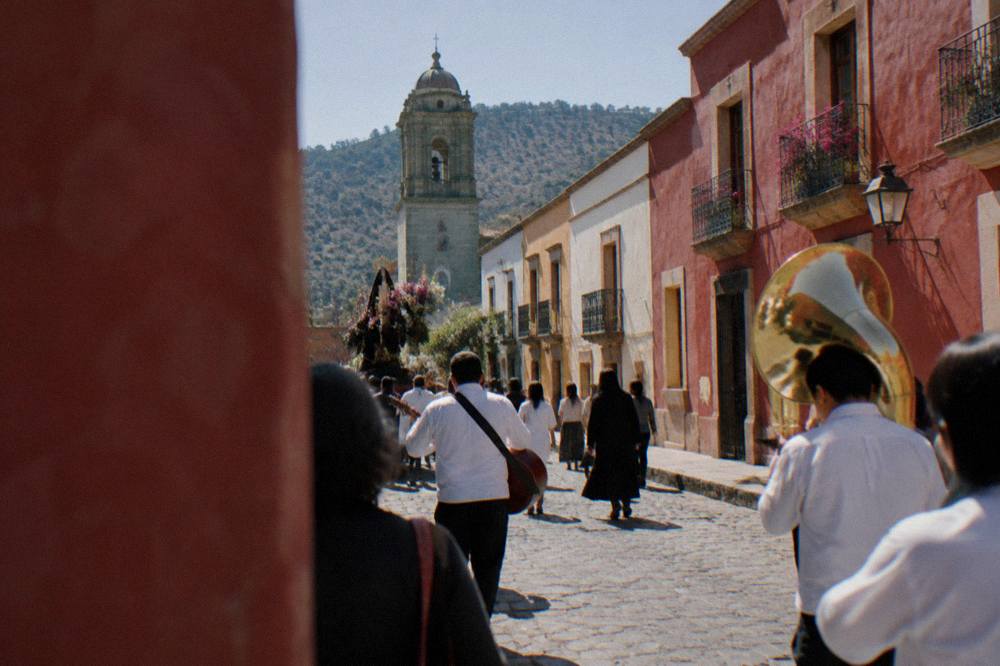
The historic centre puts everything walkable at your door and suits a first visit of three nights or fewer; Jalatlaco and Xochimilco sit just outside it with a more residential feel; and the Reforma corridor trades a short walk to the centre for quieter nights. The average 2025 stay of 2.00 nights points many visitors toward the centre, and for that length of stay the premium for centrality is usually worth it.
The trade-off logic and the character of each district are laid out in where to stay in Oaxaca, with the property shortlists in the hotel guide and the neighbourhood anatomy in Oaxaca neighbourhoods. During Guelaguetza and Día de Muertos the centre fills first, so the outer neighbourhoods become the practical fallback rather than a compromise.
What Are The Twenty-Five Tips, In One List?
The full set reduces to this: arrive with pesos, respect the closed days at the Museo de las Culturas and Zaachila, time Monte Albán for opening hour, carry a layer for nights near 10 C, expect afternoon rain from June to September, book rooms early for July and late October, and let the valley's distances, 11 to about 57 minutes each way, set your daily ambition. Everything above already explains the reasoning; the table compresses the site-visit numbers that matter most.
The 2025 visitor counts show where the pressure concentrates: Monte Albán's 416,675 visitors dwarf Mitla's 104,428, while Yagul logged 10,185, Lambityeco 5,545 and Zaachila 4,229. The smaller Category III sites are the valley's pressure valves on paper, and the last-access times in the table above are the deadlines that actually decide whether a day works.
| INAH Site Or Museum | 2025 Visitors | Fee Category | Foreigner Ticket MXN |
|---|---|---|---|
| Monte Albán | 416,675 | I | 210 |
| Mitla | 104,428 | I | 210 |
| Yagul | 10,185 | I | 210 |
| Lambityeco | 5,545 | III | 145 |
| Zaachila | 4,229 | III | 145 |
Common Questions About Oaxaca Travel Tips
Do I Need A Car In Oaxaca City?
No. The historic centre is compact and walkable, there is no bike-share scheme, and the valley destinations are served by tours and colectivos. Driving is an option for multi-stop valley days, but a first visit of up to five days does not require it.
What Is The Best Month To Visit Oaxaca?
No official source ranks the months. The climate facts are these: the dry season runs November to April, with January averaging 2.4 mm of rain, and the rainy season runs May to October, with June averaging 188.3 mm. Choose on rain tolerance and festival timing rather than a ranking.
How Much Does Monte Albán Cost?
The INAH page lists 105 MXN for Mexican nationals and 210 MXN for foreign visitors, Category I. The site is open Monday to Sunday 08:00 to 17:00, with last access at 16:00. A visit outside normal hours costs 730 MXN.
Is The Water Safe To Drink In Oaxaca?
The practical guidance, common containers and the bottled-water habit are covered on the drinking water page. No official primary advisory supplies a figure, so the site does not print one.
When Is Día De Muertos In Oaxaca?
The traditional dates are 31 October to 2 November. The 2025 edition's programme ran 25 October to 4 November with more than 140 activities, but the 2026 programme has not been announced, so confirm before booking around it.
How Far Is Hierve El Agua From Oaxaca City?
About 57 minutes of free-flow driving, 67.1 km from the Zócalo, and the final stretch is a mountain road, so real travel takes longer. Organised valley tours handle the driving and fold in Mitla, Tule or a mezcal stop on the way.
Oaxaca City rewards preparation more than most mid-sized cities because its pleasures are spread across a valley rather than one district: get the closed days, the last-access hours and the festival calendar right, and the rest of the trip arranges itself on foot.