Money In Oaxaca: Atms, Cards And How Much Cash To Carry
Oaxaca City runs on pesos. This guide sets out what the published figures actually are, what only cash will cover, and how to plan a daily cash float without guessing.
Carry Mexican pesos in Oaxaca City: INAH archaeology tickets cost 105 or 210 MXN depending on nationality, market and colectivo spending is cash, and the state adds a 3 percent lodging tax on hotel stays. Plan a cash float for each day and use cards only where they are accepted.
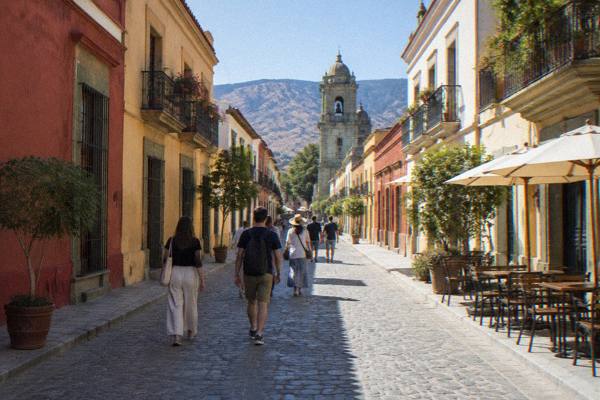
Oaxaca City, the inland highland capital of the state of Oaxaca in Mexico, is a destination where physical pesos still do a large share of the daily work. The city sits in the Valles Centrales at about 1,550 m, its economy runs street to street through the markets, colectivos and small family workshops of the centre, and its headline attractions publish their prices in Mexican pesos rather than in dollars.
The short version: come with pesos or plan to withdraw them in the city, keep small notes for the markets and transport, and treat cards as a backup rather than the default. The pages on Oaxaca travel costs and budget and what to eat in Oaxaca carry the wider spending picture; this one stays on cash, cards, published fees and tax.
How Much Cash Should You Carry In Oaxaca?
Plan a daily cash float in Mexican pesos that covers market meals, colectivo rides and one paid attraction, since most of what makes a day in Oaxaca City, markets, street food, handicrafts and local transport, runs on notes and coins. Admission to Monte Albán is a single 210 MXN payment for a foreign visitor, so a day built around one archaeology site is spent almost entirely in cash, and you withdraw again when it runs low. A concrete anchor makes the size obvious: the INAH sites charge 105 MXN for Mexican nationals and 210 MXN for foreign visitors at Category I, and 80 or 145 MXN at Category III, so a day built around one archaeology site plus market meals and colectivo rides is a day spent almost entirely in cash. Oaxaca City is compact and walkable, and most of what makes a day here, markets, street food, handicrafts, local transport, operates on notes and coins.
The reason the float approach works is that Oaxaca's published costs are low and lumpy rather than high and steady. Admission to Monte Albán is a single 210 MXN payment for a foreign visitor, per the INAH listing, and after that the rest of a day in the valleys costs whatever you choose to spend on food and crafts. A visitor walking the Centro Histórico can pass an entire afternoon through the Zócalo, the Andador Macedonio Alcalá and the markets without a single card transaction. The overview at things to do in Oaxaca shows how many of the headline stops are public squares and churches rather than ticketed venues, which keeps the daily cash requirement modest.
Two habits keep the float manageable. First, break large notes early: the biggest denomination is hard to spend at a small stall, and a market morning goes more smoothly with small notes plus coins. Second, keep a reserve note separate from the day's spending money so a final taxi or an unplanned tasting never leaves you short. Neither habit needs a figure attached; both are simply how cash economies work, and Oaxaca is one.
Do Cards Work Everywhere In Oaxaca City?
Treat cards as a partial tool in Oaxaca, not a default: hotels, larger restaurants and the tour booking platforms handle cards, while markets, street food, colectivos, taxis and many small family workshops are cash businesses, so the safe assumption for any single transaction in the city is that pesos will be needed. No map of which terminals accept which cards has been published, and no page here will invent one. What the record does show is the shape of the economy: an official count of 1,324,332 tourist arrivals in the city across 2025, the bulk of it flowing through small premises in the historic centre.
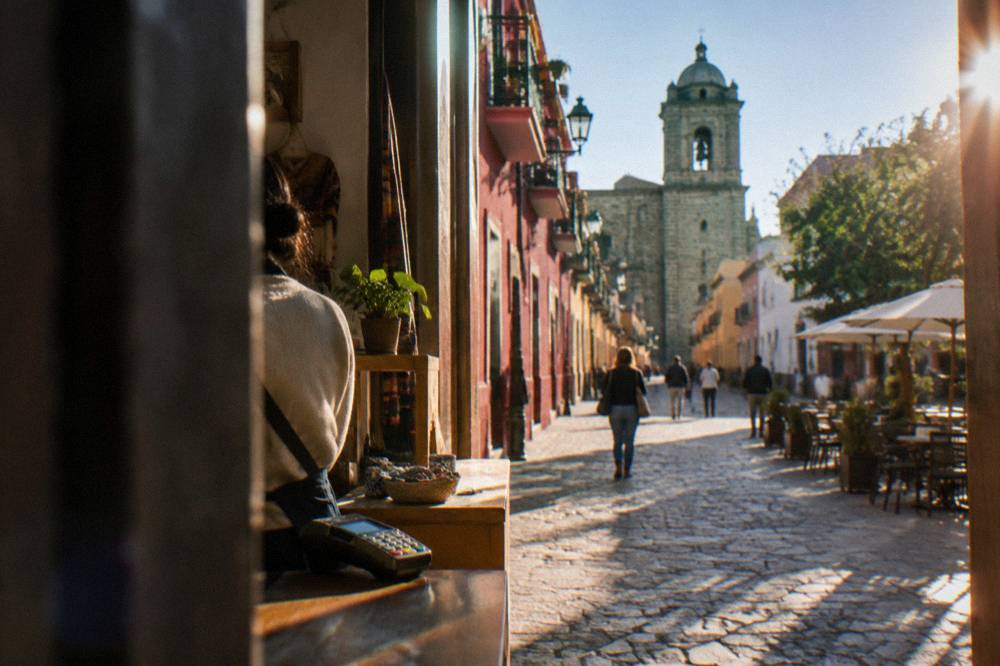
The practical split follows the kind of place. Anything you book in advance online, such as guided walks, cooking classes and valley day trips, is paid through the operator's booking page before you ever handle cash, and that is exactly why pre-booking suits a cash-first destination: it moves the big payments out of your pocket and onto a card in advance. The walking segment is a good example. The historic centre walking tour with a professional local guide is paid for through its listing, so the day it covers costs you nothing at the door, and Check availability confirms current terms before you commit.
At street level the rule reverses. Mercado 20 de Noviembre, the tlayuda grills, the tejate and nieve stalls, the colectivo stands and the artisan workshops of the valley villages all trade in pesos hand to hand. The markets guide tradition is covered on this site elsewhere, but the money point is universal: anyone planning to eat through the markets of the centre should read the street food in Oaxaca overview with cash in mind, since that entire food world is a cash economy. Where a card terminal exists at all, acceptance varies by premises, and the only reliable strategy is to assume cash and be pleasantly surprised.
Which Banknotes And Coins Will You Handle In Oaxaca?
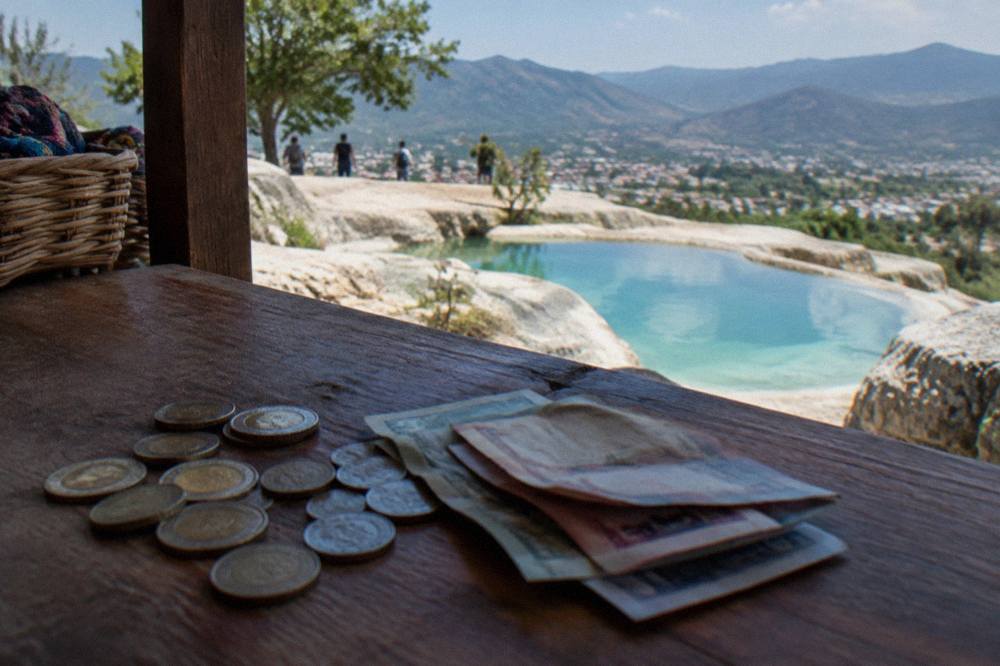
The Mexican peso (MXN) is the only local currency, and daily life in Oaxaca runs on a small set of notes, mainly 20, 50, 100 and 200 pesos, with coins from 1 peso upward doing the work at stalls, buses and colectivos. Published prices in the city are quoted in pesos with no conversion attached: INAH admission signs, Guelaguetza seat prices and the state lodging tax are all stated in MXN. The peso-dollar rate moves daily, and no honest guide prints it as a fixed figure, so treat any rate you saw before departure as approximate by the time you arrive.
The number to internalise is not an exchange rate but a peso figure. A foreign visitor's day pass to the archaeology of the valleys is 210 MXN at Category I sites, and 145 MXN at Category III sites. A meal-scale purchase in a market is a matter of tens of pesos, not hundreds. Once those two anchors are in your head, every other cash decision in the city scales from them.
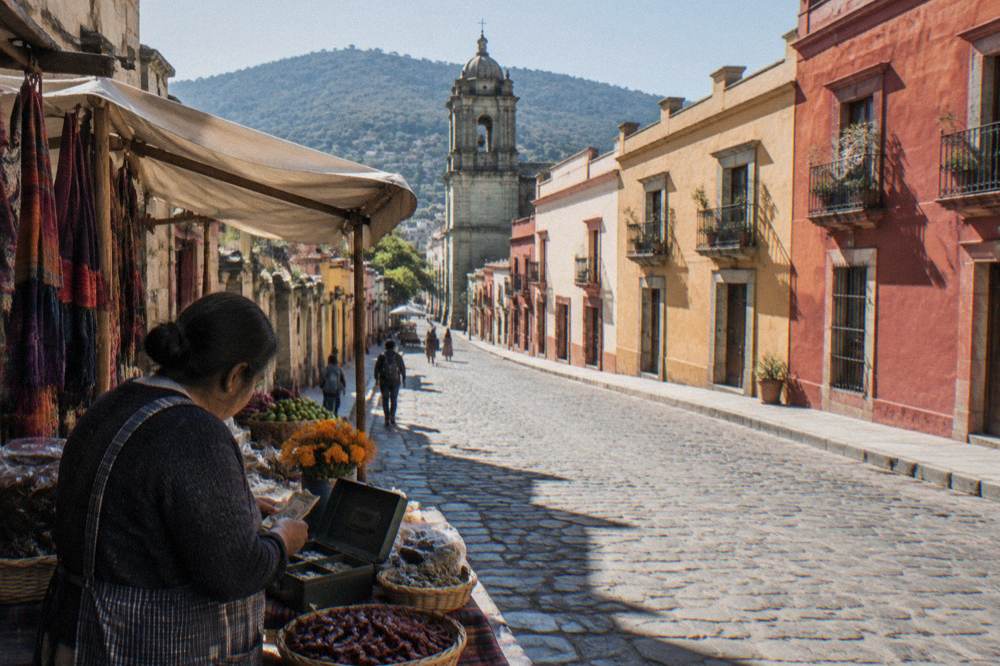
Two peso facts matter at the edges of a trip. First, the state of Oaxaca levies its own lodging tax, covered in full below, which appears on hotel bills in pesos. Second, tour prices quoted on booking listings are in US dollars and are paid through the listing, never in cash on the street, so keep the two ledgers separate. For the parts of the trip priced in pesos, the best time to visit Oaxaca matters less than you would think: peso costs at INAH sites do not move with the season, only hotel demand does.
What Do The Main Attractions Actually Cost In Oaxaca?
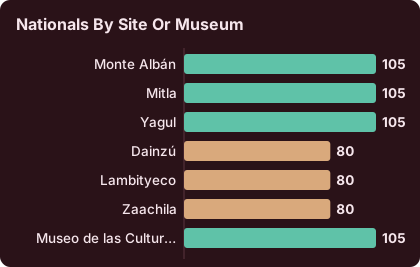
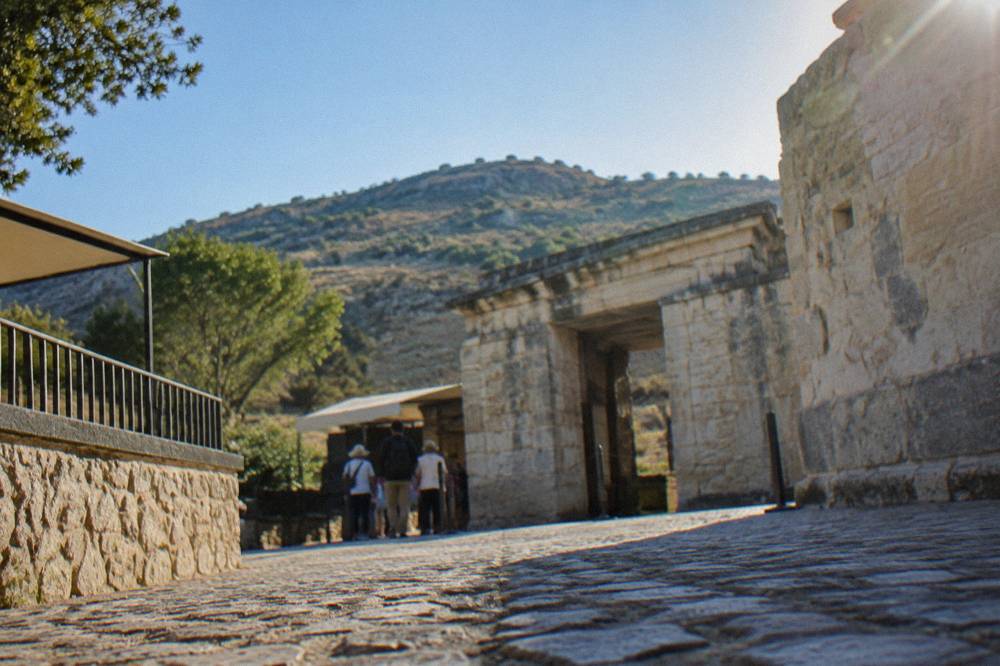
The published attraction costs in Oaxaca are INAH archaeology admissions of 105 MXN for nationals and 210 MXN for foreigners at Category I sites (Monte Albán, Mitla, Yagul) and 80 or 145 MXN at Category III sites (Dainzú, Lambityeco, Zaachila), plus the Museo de las Culturas at the same Category I rate and free entry to the Jardín Etnobotánico's guided tours. Those are the only fixed, printed admission figures available for the city and its valley. Everything else, Hierve el Agua's community fee, museum donation boxes, workshop prices, varies or is set on site, so the honest budget treats INAH tickets as the fixed floor and everything else as flexible.
| Site or museum | Hours (published) | Nationals (MXN) | Foreigners (MXN) |
|---|---|---|---|
| Monte Albán | Mon to Sun 08:00 to 17:00, last access 16:00 | 105 | 210 |
| Mitla | Mon to Sun 08:00 to 17:00, last access 16:30 | 105 | 210 |
| Yagul | Mon to Sun 08:00 to 17:00, last access 16:00 | 105 | 210 |
| Dainzú | Mon to Sun 08:00 to 17:00, last access 16:30 | 80 | 145 |
| Lambityeco | Mon to Sun 08:00 to 17:00, last access 16:30 | 80 | 145 |
| Zaachila | Thu to Sun 10:00 to 16:00 | 80 | 145 |
| Atzompa | Mon to Sun 08:00 to 16:00, last access 15:00 | fee not published on the INAH page | fee not published on the INAH page |
| Museo de las Culturas de Oaxaca | Tue to Sat 10:00 to 16:00 | 105 | 210 |
Note the closed days hiding in that table, because they affect money planning as much as the prices do. Zaachila opens Thursday to Sunday only, and the Museo de las Culturas is open Tuesday to Saturday only; a visitor who budgeted a Monday for either has to spend the money elsewhere. The Jardín Etnobotánico runs free guided tours Monday to Friday at 10:30, 11:00, 11:30, 12:00 and 17:00 and Saturday from 10:30 to 12:00, with large and school groups booking two weeks ahead, which makes it the single best zero-peso line in a Centro day.
Beyond INAH, the two other printed peso figures in the record are event prices. Guelaguetza seats at the Auditorio Guelaguetza were sold at 1,632 MXN for Palco A and 1,321 MXN for Palco B for the 2026 edition, with Palcos C and D free, and that price structure is the standing pattern to expect in July. Visits to INAH sites outside normal hours carry a published 730 MXN rate on several INAH pages, a figure aimed at special access rather than ordinary tourism.
| Fixed peso cost | Amount (MXN) | Who pays it |
|---|---|---|
| INAH Category I admission | 105 / 210 | nationals / foreign visitors |
| INAH Category III admission | 80 / 145 | nationals / foreign visitors |
| Museo de las Culturas admission | 105 / 210 | nationals / foreign visitors |
| Out-of-hours INAH visit rate | 730 | any applicant |
| Guelaguetza Palco A (2026 edition) | 1,632 plus fees | ticket buyers |
| Guelaguetza Palco B (2026 edition) | 1,321 plus fees | ticket buyers |
| Guelaguetza Palcos C and D | free | by arrival |
Where Does Cash Matter More Than A Card In Oaxaca?
Cash matters most in the four spending zones that define Oaxaca: the markets of the Centro Histórico, the colectivo and taxi network, the craft villages of the valleys, and the small food businesses of neighbourhoods like Jalatlaco and Xochimilco. In each zone the seller is a family or an individual, the transaction is face to face, and the price is agreed in pesos on the spot. No printed fare list exists for taxis, colectivos or buses in Oaxaca, but the method is always the same: agree the fare in pesos before the ride, and pay cash at the end.
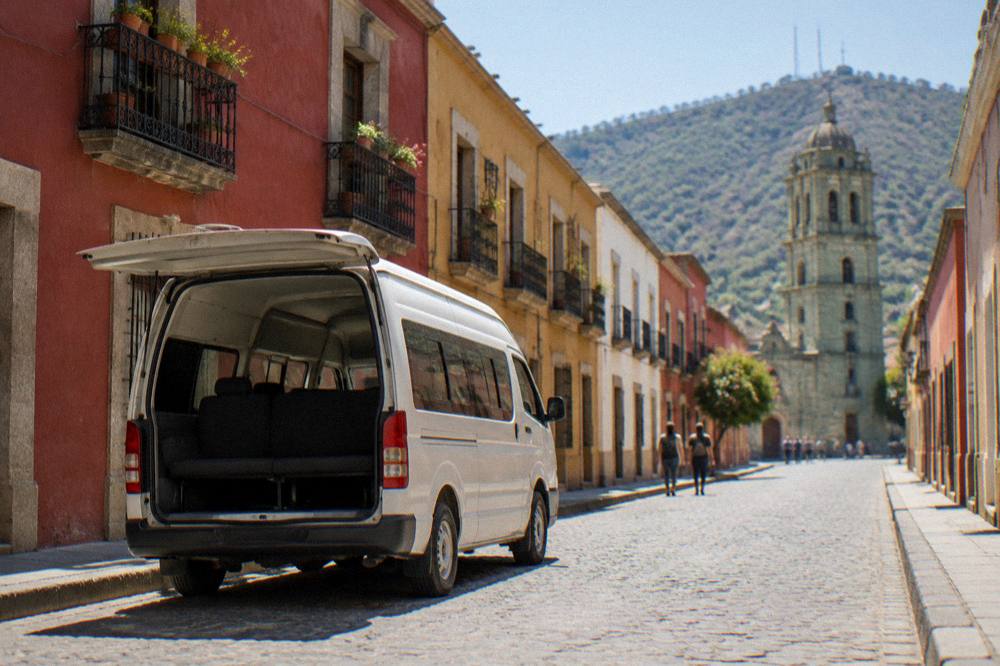
The craft villages deserve a special line in any cash plan, because that is where a budget bends. Teotitlán del Valle, San Bartolo Coyotepec and San Martín Tilcajete sell directly from the workshops that make the work, and buying at the source is the whole point of the trip for many visitors. A rug, a piece of barro negro pottery or an alebrije is a cash conversation with the maker, and the spending is discretionary in a way a museum ticket is not. The getting around Oaxaca page covers how those villages connect to the city; the money rule is simply that a valley craft day needs the largest float of any day type in this destination.
Distance shapes the cash need too, since a longer day costs more even when fares are unknown. The derived drive times from the Zócalo are about 15 minutes to Monte Albán, about 11 to Santa María del Tule, about 26 to Teotitlán del Valle, about 25 to Tlacolula, about 37 to Mitla and about 57 to Hierve el Agua, with real traffic and mountain roads slower than the free-flow figure. A day that reaches Mitla and Hierve el Agua touches paid transport, an INAH ticket and community access in one stretch, which is exactly why many visitors convert that day into a pre-booked valley tour and pay it by card in advance. The full index of guides sits on Oaxaca Travel Guide.
| Cash-first spending zone | Typical purchases | Cash planning note |
|---|---|---|
| Markets (20 de Noviembre, Benito Juárez, Abastos) | meals, ingredients, small goods | small notes and coins |
| Colectivos and taxis | rides within the city and valleys | agree the fare first, pay cash |
| Craft villages (Teotitlán, Coyotepec, Tilcajete) | rugs, barro negro, alebrijes | largest float of any day type |
| Street food and neighbourhood eateries | tlayudas, tejate, nieve, snacks | tens of pesos per stop |
| INAH sites | admission tickets | exact figures published, carry 210 per Category I site |
What Is The Lodging Tax On Your Oaxaca Hotel Bill?
Oaxaca state charges a lodging tax (Impuesto al Hospedaje) of 3 percent on hotel-type stays, and 5 percent where an intermediary or platform is involved, under decree 884 published on 10 December 2025, with the provider collecting it and the line appearing on your final bill rather than being paid separately. Knowing the rate means you can read your hotel invoice correctly instead of puzzling over a percentage line. It is the one tax in Oaxaca that touches nearly every visitor directly.
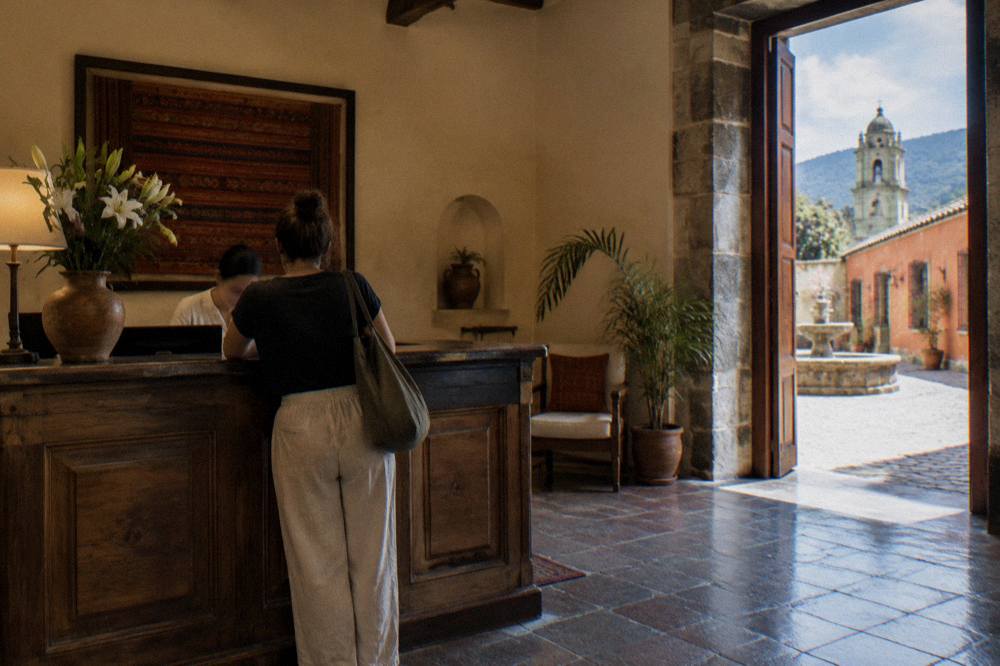
The rest of the money picture around lodging is demand, not tax. The where to stay in Oaxaca and Oaxaca airport pages cover the geography and arrival side; the money takeaway is that a room rate you confirm at booking, plus the 3 or 5 percent tax, is the fixed half of your budget, and the cash float is the flexible half.
| Lodging tax element | Rate | Applies to |
|---|---|---|
| Impuesto al Hospedaje, base rate | 3 percent | hotel-type stays booked directly |
| Intermediary rate | 5 percent | stays booked through platforms |
| Legal basis | decree 884, published 10 December 2025 | Oaxaca state lodging services |
| Who collects it | the provider | shown on your bill |
Is Carrying Cash In Oaxaca Safe?
Carrying a modest daily float in Oaxaca is ordinary practice, and the published advisories do not single the city out: the UK FCDO advises against all but essential travel only to parts of Mexico and does not name Oaxaca on its main page, Canada advises a high degree of caution for Mexico overall with regional advisories, and the US State Department lists Oaxaca state at Level 2, exercise increased caution. None of that is a money-specific assessment, but it frames the baseline: standard city caution applies, and cash discipline is part of it.
The habits that work in any cash city work here. Carry the day's float, not the trip's budget. Keep the reserve separate. Prefer daylight walks in the centre, which the compact grid makes easy, and read the fuller assessment on is Oaxaca safe before setting expectations. One standing local risk has a direct money angle: road blockades by teachers' unions are a recurring feature in Oaxaca and can disrupt road and airport access for hours at a time, so a cash buffer that could cover an extra night or an unplanned meal is a reasonable hedge against a travel day that goes sideways. No date belongs on that risk; it is a pattern, not a schedule.
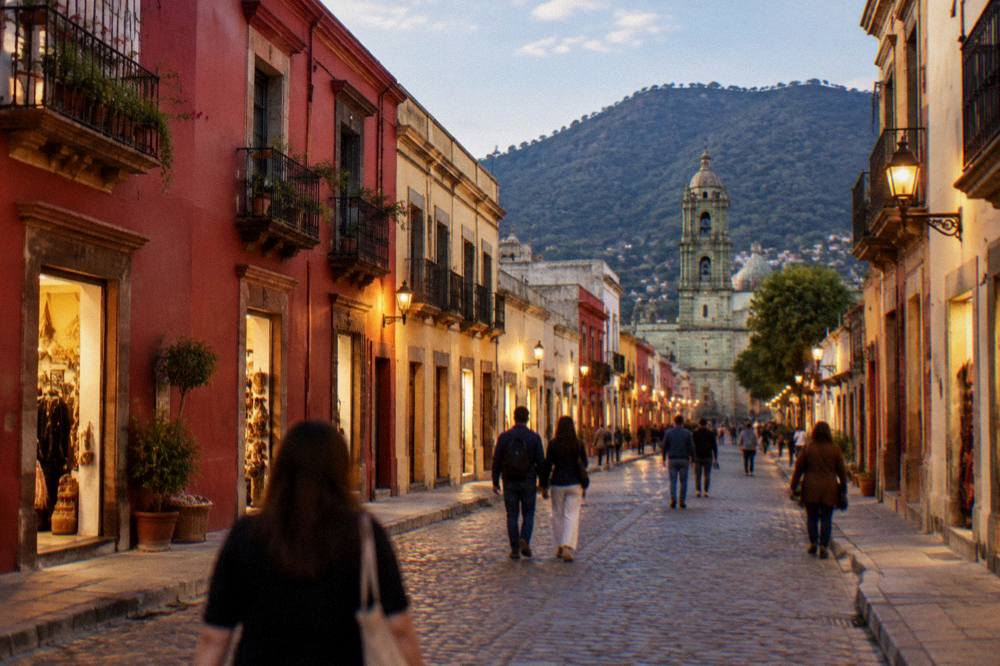
How Do You Budget A Whole Oaxaca Trip Around Cash?
Build the budget in two halves: pay the big fixed items by card in advance, the hotel, the tours, the festival tickets, and then size a daily peso float from the published anchors, roughly 210 MXN per Category I site, a market-food day in tens of pesos, and a larger reserve for any craft-village day. That structure survives every gap in the published record, because it never depends on an unprinted fare or price band. It converts the unknowns into small daily decisions instead of one large guess.
A sample frame for a first visit, using only published figures and the drive-time record: day one in the Centro with a pre-booked walking tour and a free Jardín Etnobotánico guided visit at a listed hour, spending only market cash; day two at Monte Albán, about 15 minutes from the centre, with a 210 MXN ticket and a modest food float; day three into the valleys toward Tlacolula, Mitla and Hierve el Agua, either as a pre-booked day trip paid by card or as a self-planned day with the largest float of the week. The how many days in Oaxaca page expands the itinerary logic; the money logic is that each day type has a known cash profile before you leave the hotel.
Two final planning notes. The peso-dollar rate moves, so a float sized in pesos, not converted daily from dollars, keeps your mental accounting stable. And Oaxaca runs on UTC-6 all year, with no daylight saving since 2022, so the practical constraint on your cash day is site closing times, not clock changes: last access at Monte Albán is 16:00, at Mitla 16:30, and at Atzompa 15:00, and an afternoon ticket bought in cash is only useful before those hours.
Common Questions About Money And Cash In Oaxaca
Should I Bring Pesos To Oaxaca Or Withdraw Them There?
Either works, but arrive with at least a small float of Mexican pesos so the first market meal or taxi ride does not depend on finding a machine. Oaxaca City is a cash-first destination for markets, street food, colectivos and craft workshops, and the published attraction prices, such as INAH admissions of 105 or 210 MXN, are all quoted in pesos.
Do I Need To Tip In Oaxaca, And How Much?
Tip in pesos as you would at home for good service, and treat it as part of the daily float rather than a separate budget line.
How Much Is Entrance To Monte Albán?
The INAH listing gives 105 MXN for Mexican nationals and 210 MXN for foreign visitors, Category I, with the site open Monday to Sunday 08:00 to 17:00 and last access at 16:00.
What Is The Lodging Tax In Oaxaca?
The state lodging tax (Impuesto al Hospedaje) is 3 percent on hotel-type stays and 5 percent where an intermediary or platform is involved, under decree 884 published 10 December 2025. Your hotel or platform collects it and it appears on the bill.
Can I Pay For Tours With Cash In Oaxaca?
Tours booked through an operator's booking page are paid in advance by card at booking, which is the easiest way to keep big payments out of your cash float.
Is The Peso-Dollar Exchange Rate Fixed?
No. The rate moves daily, so no honest guide prints it as a standing figure. Size your cash needs in pesos using published local prices and avoid converting every purchase back to dollars in your head.
The whole system rewards the same simple discipline: pay the big things by card before you arrive, carry pesos in a daily float sized from the published anchors, and keep the reserve note for the ride home. That is money in Oaxaca, and it is enough to plan on.