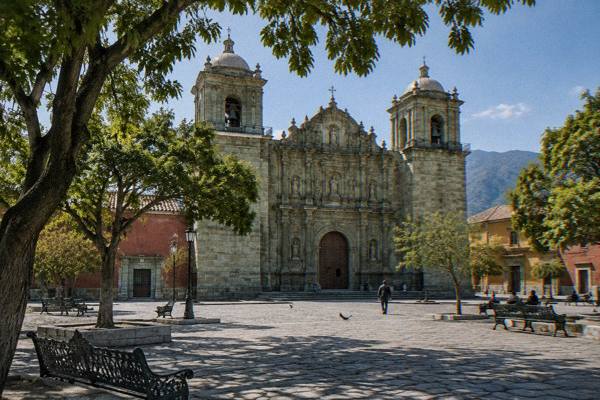
Best Time To Visit Oaxaca: Dry Season, Rainy Season And Festival Weeks
Oaxaca City sits inland in the Valles Centrales at about 1,550 m, with a dry season from November to April, a rainy season from May to October, and two festival peaks in July and late October that reshape hotel demand every year.
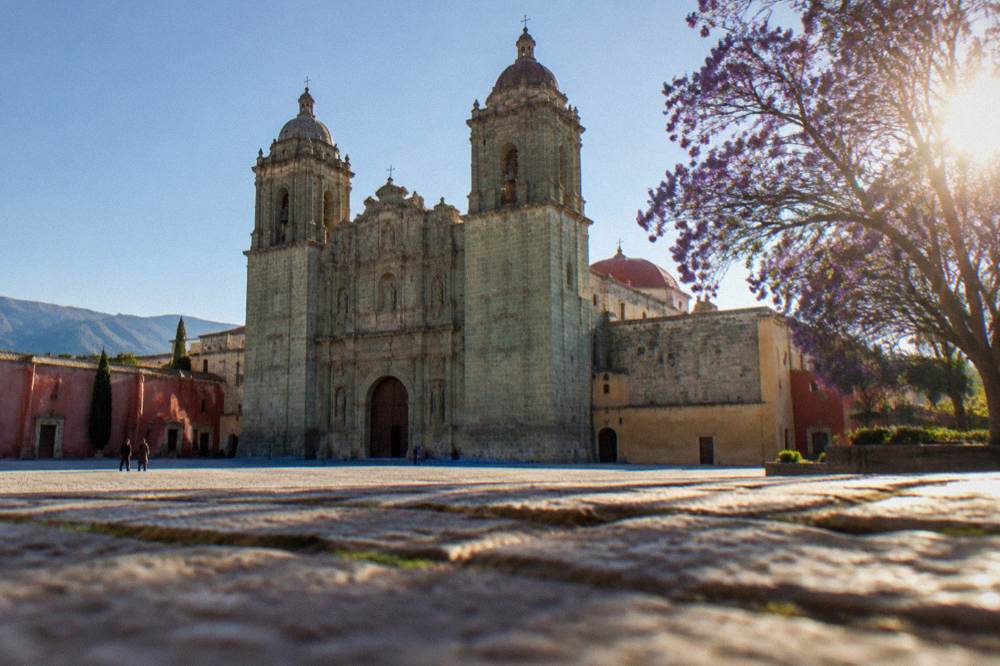
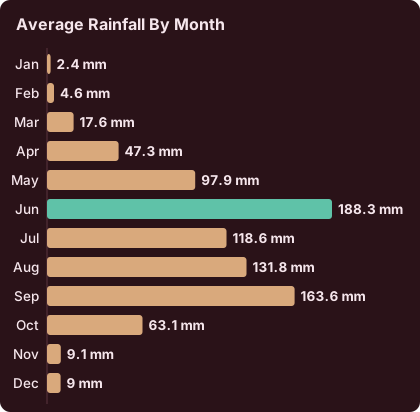
The dry season in Oaxaca City runs November to April, with January averaging just 2.4 mm of rain. The rainy season runs May to October and peaks June to September, when June averages 188.3 mm. Guelaguetza fills late July and Día de Muertos fills late October to early November, and both bring the year's tightest accommodation demand.
Oaxaca City, the capital of the state of Oaxaca in Mexico, is an inland highland city in the Valles Centrales at about 1,550 m, and its year divides cleanly in two: a dry season from November to April and a rainy season from May to October. Around that split sit two festival peaks, Guelaguetza in July and Día de Muertos in late October and early November, which change the feel and the room rates of the city more than any weather front does. The climate figures below are SMN station normals for Oaxaca, 1991 to 2020, and they give a firmer answer to the timing question than any general label of high or low season.
This page works through the two seasons, the month by month numbers, the festival calendar and what each period means for day trips and packing. The short version: November to April gives the least rain, July and late October give the biggest events, and June through September gives afternoon rain on roughly two days in three. For a wider view of the city across the whole year, the things to do in Oaxaca overview covers the sights that are in season every month.
When Is The Dry Season In Oaxaca?
The dry season in Oaxaca City runs from November to April, and it is the period with the least rain in the station normals: January averages 2.4 mm across 1.4 days of rain, February 4.6 mm across 1.1 days, and November and December each average about 9 mm. March rises to 17.6 mm and April to 47.3 mm, so the season tapers rather than stops.
Those numbers come from the SMN station normals for Oaxaca, 1991 to 2020. Within the dry season there is a real temperature gradient. December and January have the coolest nights of the year, averaging 11.0 and 10.3 degrees C, while April has the highest mean daily maximum, 34.9 C. February and March sit between those extremes, with mean highs of 31.1 and 33.3 C and mean lows of 11.6 and 13.6 C.
What that means for planning is straightforward. A December morning can start near 10 C and climb to a mean high of 28.9 C by afternoon, so layers do more work than a single warm or cold wardrobe. An April afternoon, by contrast, averages close to 35 C before the rains arrive the following month. Rain days in the core dry months are rare in the record, 1.4 in January and 1.1 in February, so a dry-season trip can be planned around outdoor days with little contingency.
The dry months are also the ones that suit the city's open-air rhythm: the Zócalo, the Andador Macedonio Alcalá and the terrace of the Jardín Etnobotánico guided visits are all outdoor or mostly outdoor experiences. The trade-off is that pleasant weather is no secret, and rooms in the December to March window book further ahead than rooms in June.
| Month | Mean high C | Mean low C | Rain mm | Rain days |
|---|---|---|---|---|
| Nov | 29.0 | 12.3 | 9.1 | 3.5 |
| Dec | 28.9 | 11.0 | 9.0 | 2.4 |
| Jan | 28.9 | 10.3 | 2.4 | 1.4 |
| Feb | 31.1 | 11.6 | 4.6 | 1.1 |
| Mar | 33.3 | 13.6 | 17.6 | 4.1 |
| Apr | 34.9 | 15.8 | 47.3 | 7.6 |
What Is The Rainy Season Like In Oaxaca?
The rainy season in Oaxaca City runs from May to October and peaks June to September: June averages 188.3 mm of rain over 19.9 days, July 118.6 mm, August 131.8 mm and September 163.6 mm over 21.4 days. May opens the season at 97.9 mm and October closes it at 63.1 mm, so the shoulders are much drier than the middle.
The station normals show the shape clearly. Rain days climb from 7.6 in April to 13.7 in May, 19.9 in June and above 20 in July, August and September, then fall back to 12.0 in October and 3.5 in November. Temperatures stay mild through the season: mean highs run 33.8 C in May, 30.9 C in June, 30.1 C in July, 30.0 C in August and 29.1 C in September, with mean lows between 15.9 and 16.7 C.
The practical pattern in the Valles Centrales is that rain concentrates in the afternoon and evening, leaving mornings usable, and the rainy season guide covers how to use that split. Two mornings out of three stay workable even in September by the rain-day count, and indoor options fill the wet hours: the museums of Oaxaca include the Museo de las Culturas de Oaxaca, open Tuesday to Saturday, and the Museo de Arte Prehipánico Rufino Tamayo.
The rainy season also has a compensating feature: the valleys green over, and the SMN normals show the whole season carries 853.3 mm of the annual total alongside the growth it drives. For travellers who can accept an afternoon indoors, the months of June through September trade weather certainty for softer demand elsewhere in the calendar.
Which Weeks Bring The Biggest Festivals To Oaxaca?
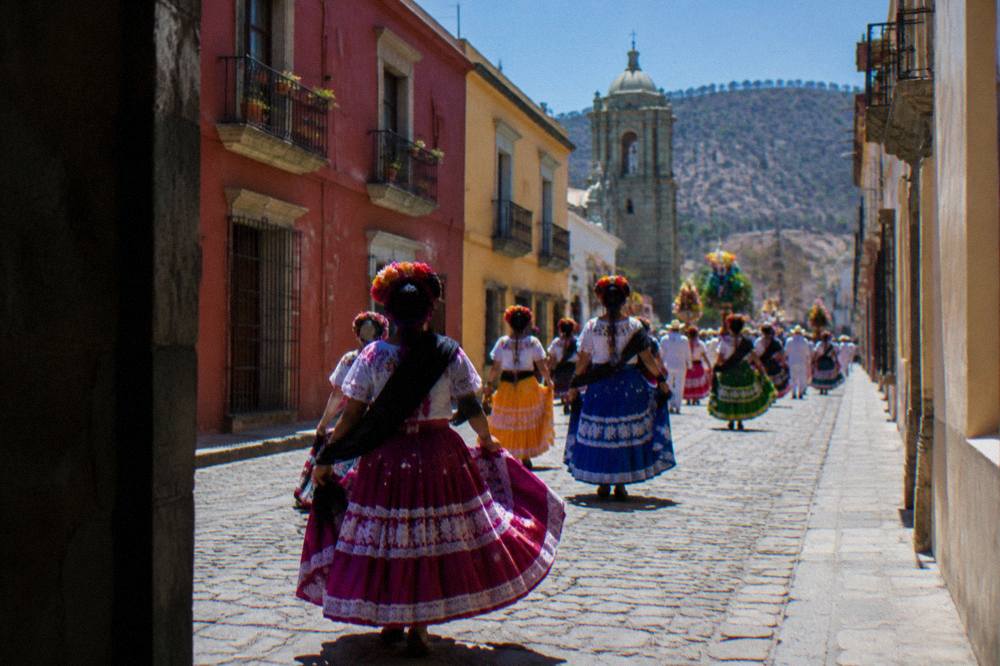
Two festival blocks dominate the Oaxaca City year: Guelaguetza, held on two Mondays in July at the Auditorio Guelaguetza on the Cerro del Fortín, and Día de Muertos, centred on the traditional dates of 31 October to 2 November with cemetery nights and neighbourhood events. Noche de Rábanos keeps its traditional date of 23 December.
The 2026 Guelaguetza edition ran on 20 and 27 July, with performances at 10:00 and 17:00, Palco A at 1,632 MXN and Palco B at 1,321 MXN plus fees, and Palcos C and D free, all sold through Superboletos with a limit of two tickets per account. That edition is past and the 2027 dates are not announced, but the format is standing: two Lunes del Cerro, a supporting programme of calendas and convites through July, and ticket demand that sold the paid sections quickly in 2026. The Guelaguetza guide covers the format in detail.
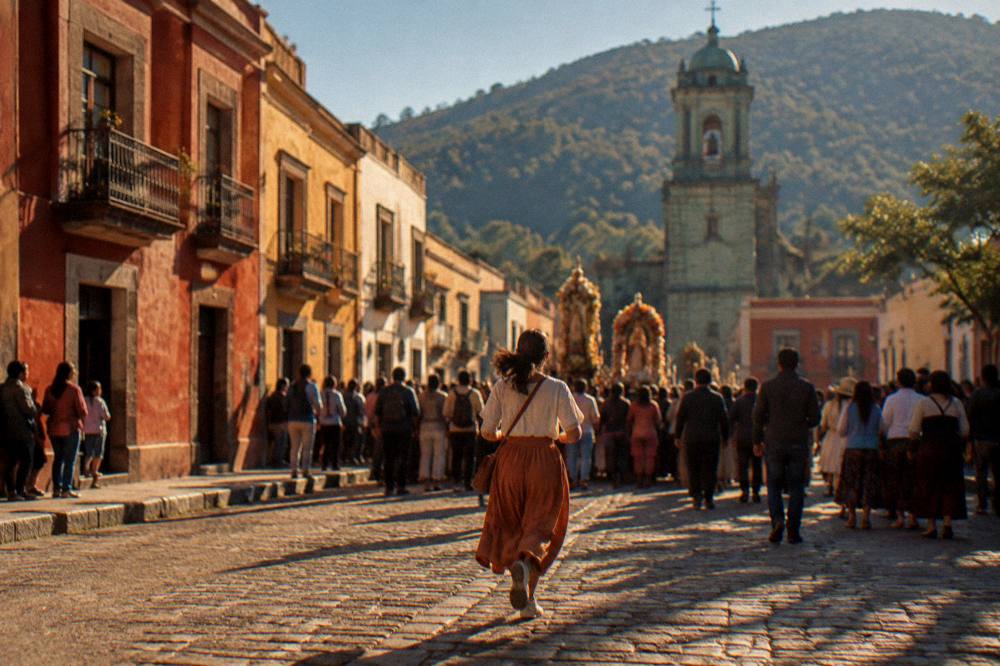
Día de Muertos follows the same annual logic. The traditional centre is 31 October to 2 November, with cemetery nights around 1 and 2 November, comparsas in the last days of October and events in neighbourhoods such as Jalatlaco and Xoxocotlán. The 2026 programme has not been announced, so only the standing pattern can be stated. The 2025 programme, for comparison, ran 25 October to 4 November with more than 140 activities. The question of timing within the festival has its own answer on the best time to see Día de Muertos page.
Noche de Rábanos keeps 23 December as its traditional date, when the radish-figure tradition fills the Zócalo area; the 128th edition was held in December 2025, and the 2026 edition has not been announced. A December trip built around it should confirm the details closer to the date.
| Festival | Traditional timing | 2026 status |
|---|---|---|
| Guelaguetza | Two Mondays in July (Lunes del Cerro) | 20 and 27 July 2026, past edition; 2027 not announced |
| Feria del Mezcal | Held within Guelaguetza month | Reported 17 to 28 July 2026; confirm before relying on it |
| Día de Muertos | 31 October to 2 November centre | 2026 programme not announced; standing pattern applies |
| Noche de Rábanos | 23 December | 2026 edition not announced |
A rainy afternoon or a festival-day gap in the schedule does not have to be dead time. The Check availability link covers an art printing workshop with a local artist, an indoor session that fits the wet-season rhythm of mornings outside and afternoons under a roof.
What Is The Weather Like In Oaxaca Month By Month?
The full station normals for Oaxaca show mean highs between 29.1 and 34.9 C and mean lows between 10.3 and 16.7 C across the year, with monthly rain running from 2.4 mm in January to 188.3 mm in June. Every month of the year averages a mean high of at least 29 C, and no month averages a low below 10 C.
The table below is the complete SMN station record for Oaxaca, 1991 to 2020. Reading it month by month is the most reliable way to time a trip, because the differences between months are large and consistent: six dry months under 50 mm, two shoulder months, and four peak rainy months between 118.6 and 188.3 mm.
| Month | Mean high C | Mean low C | Rain mm | Rain days |
|---|---|---|---|---|
| Jan | 28.9 | 10.3 | 2.4 | 1.4 |
| Feb | 31.1 | 11.6 | 4.6 | 1.1 |
| Mar | 33.3 | 13.6 | 17.6 | 4.1 |
| Apr | 34.9 | 15.8 | 47.3 | 7.6 |
| May | 33.8 | 16.7 | 97.9 | 13.7 |
| Jun | 30.9 | 16.7 | 188.3 | 19.9 |
| Jul | 30.1 | 15.9 | 118.6 | 20.4 |
| Aug | 30.0 | 15.9 | 131.8 | 20.5 |
| Sep | 29.1 | 16.1 | 163.6 | 21.4 |
| Oct | 29.3 | 14.5 | 63.1 | 12.0 |
| Nov | 29.0 | 12.3 | 9.1 | 3.5 |
| Dec | 28.9 | 11.0 | 9.0 | 2.4 |
Two readings of the table matter for planning. First, April has the highest mean daily high at 34.9 C while still sitting in the dry season's tail, so a spring trip trades heat for rain-free days. Second, December and January have the lowest mean lows, 11.0 and 10.3 C, so the core winter months ask for a warm layer in the evening even though afternoons average near 29 C. The weather by month guide expands each month in detail.
How Does The Season Change Day Trips From Oaxaca?
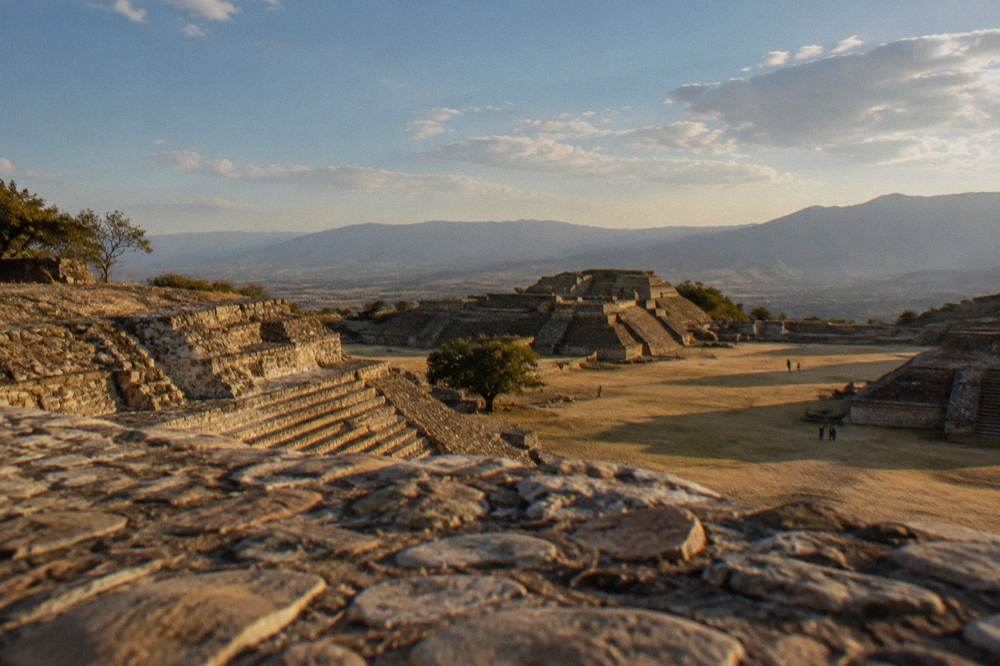
Day trips from Oaxaca City run year round, but the season changes the risk profile: Monte Albán is about 15 minutes away by road, Mitla about 37, Hierve el Agua about 57, and the mountain roads to the last of those lose more time to rain than the valley routes do. All the main INAH archaeological zones keep the same published hours in every month.
The INAH pages list Monte Albán, Mitla and Yagul as open Monday to Sunday 08:00 to 17:00, with last access at 16:00 for Monte Albán and Yagul and 16:30 for Mitla, and all three charge Category I entry of 105 MXN for nationals and 210 MXN for foreign visitors. Zaachila opens Thursday to Sunday 10:00 to 16:00 only, at 80 and 145 MXN. Those hours do not shift between dry and rainy season, so the constraint on a day trip is weather, not opening times. The full index of guides sits on Oaxaca Travel Guide.
The drive-time figures, computed from the Zócalo on free-flow roads, stack up as follows, and real traffic plus mountain road conditions make them longer in practice.
| Destination | Distance from Zócalo | Drive time (about) |
|---|---|---|
| Monte Albán | 8.7 km | 15 minutes |
| Santa María del Tule | 10.2 km | 11 minutes |
| Teotitlán del Valle | 29.2 km | 26 minutes |
| Tlacolula | 31.2 km | 25 minutes |
| Ocotlán | 32.5 km | 37 minutes |
| Mitla | 44.6 km | 37 minutes |
| Hierve el Agua | 67.1 km | 57 minutes |
In the rainy season the ordering of a valley day matters: the long run to Hierve el Agua, about 57 minutes each way in free-flow conditions, is better taken in the morning, with the afternoon reserved for closer stops or the city. In the dry season the whole loop can sit later in the day, though the last-access times at the INAH zones still set the hard limits. The Hierve el Agua day trip guide and the Mitla and Tlacolula day trip guide break down both routes.
One timing trap is independent of weather: Zaachila's Thursday to Sunday window. A traveller building a midweek itinerary around the Thursday-market association needs the archaeology and the market day to coincide, which they do on Thursdays only. The Zaachila guide covers the pattern.
When Should First-Time Visitors Go To Oaxaca?
A first visit to Oaxaca City is usually built around the dry season, November to April, when rain days average between 1.1 and 7.6 per month, or around one of the two festival peaks if the events are the reason for the trip. The station normals give every month a mean high near or above 29 C, so cold weather is never the constraint.
The first time in Oaxaca itinerary assumes outdoor days: Monte Albán, the Andador Macedonio Alcalá, the markets and the craft villages. Those are all dry-season-friendly, and the rain-day count of the core dry months, 1.4 in January, 1.1 in February, 3.5 in November, means an itinerary rarely needs a wet-weather swap. The same itinerary in June or September needs a fallback list for afternoons, which the city supplies in the form of museums, cooking classes and mezcal tastings.
Length of stay interacts with season too. The average stay recorded for Oaxaca City in 2025 was 2.00 nights, a short figure that festival travellers routinely exceed, and the how many days in Oaxaca guide maps itineraries from a single day to a full week. In the rainy season, extra days do useful insurance work: a three-day plan loses less to a washed-out afternoon than a two-day plan does.
First-timers with a car-free plan should also read getting around Oaxaca before choosing dates, since colectivo and taxi logistics sit outside the seasonal question but shape every day trip on the list.
How Do Guelaguetza And Festival Weeks Change A July Trip?
Guelaguetza turns late July into the busiest stretch of the Oaxaca summer: the 2026 edition held its two Lunes del Cerro on 20 and 27 July with shows at 10:00 and 17:00, the paid sections cost 1,632 and 1,321 MXN plus fees, and the free sections filled by arrival order. Ticket sales opened on Superboletos with a two-ticket limit per account.
The state framed July 2026 as a full month under the Guelaguetza banner, with calendas on 18 and 25 July and convites on 1, 10 and 11 July alongside the auditorium performances. The paid sections sold out quickly in 2026, which is the standing lesson: a July trip built around the auditorium needs tickets at the opening of sales, not on arrival in the city. The free Palcos C and D work on arrival order, which means early positioning on the hill.
Weather-wise, July sits inside the rainy season, averaging 118.6 mm of rain over 20.4 rain days, with a mean high of 30.1 C and a mean low of 15.9 C. Festival days therefore run on the same morning-to-afternoon logic as the rest of the season: processions and daytime events in the drier hours, auditorium shows at 10:00 and 17:00 regardless, and wet evenings absorbed by the indoor programme.
July also carries the Feria del Mezcal within the same festival month, held in 2026 at the Centro Cultural y de Convenciones in Santa Lucía del Camino with an entry cost of about 80 MXN; check the figure before planning around it.
What Should You Pack For Oaxaca In Each Season?
Pack for warm afternoons and cool evenings in every month, with rain gear added from May to October: mean highs range from 29.1 to 34.9 C year round while mean lows range from 10.3 to 16.7 C, and the rainy-season months average 12.0 to 21.4 rain days each. The dry season needs a warm layer for December and January evenings, not winter clothing.
The altitude of about 1,550 m drives the swing. A January day runs from a mean low of 10.3 C to a mean high of 28.9 C; a June day runs from 16.7 to 30.9 C. Neither month asks for a heavy coat, and no month asks for cold-weather gear, since there is no winter snow in the city. The what to pack for Oaxaca guide turns the same figures into a full packing list.
| Season | Months | Daytime basis | Evening basis | Rain basis |
|---|---|---|---|---|
| Dry core | Nov to Feb | Mean highs 28.9 to 31.1 C | Mean lows 10.3 to 12.3 C | 1.1 to 3.5 rain days per month |
| Dry shoulders | Mar and Apr | Mean highs 33.3 and 34.9 C | Mean lows 13.6 and 15.8 C | 4.1 and 7.6 rain days |
| Rainy shoulders | May and Oct | Mean highs 33.8 and 29.3 C | Mean lows 16.7 and 14.5 C | 13.7 and 12.0 rain days |
| Rainy peak | Jun to Sep | Mean highs 29.1 to 30.9 C | Mean lows 15.9 to 16.7 C | 19.9 to 21.4 rain days |
Sun exposure deserves the same weight as rain. The city sits at altitude in the Valles Centrales, and April afternoons averaging 34.9 C ask for the same sun discipline as a beach destination, without any sea to cool off in. The altitude and sun guide covers the exposure side of a highland trip.
Does The Season Change What Oaxaca Costs?
The season and the festival calendar both move demand in Oaxaca City, and the recorded figures show the scale: the city logged 1,324,332 tourist arrivals in 2025, of which 212,533 were foreign visitors, and hotel occupancy across the year averaged 51.73 percent, so the peaks sit well above that average and the troughs well below it.
The state lodging tax is 3 percent on hotel-type stays, 5 percent when booked through intermediaries, and it applies in every season. What changes by date is availability and rate at the properties themselves, and the where to stay in Oaxaca guide with the hotels guide cover the neighbourhoods and properties to compare. The general pattern the festivals set is simple: late July around Guelaguetza and the Día de Muertos window are the two periods when the paid auditorium sections sold out quickly and rooms follow the same curve.
The budget side of a trip is otherwise season-flat. INAH entry fees are fixed all year, 105 MXN for nationals and 210 MXN for foreign visitors at Category I sites and 80 and 145 MXN at Category III sites, and the travel costs and budget guide builds the full picture. Food costs do not move by month either, and the what to eat in Oaxaca guide covers the dishes worth building meals around in any season.
A festival week trip should also budget time, not just money. The 2025 Día de Muertos programme ran 25 October to 4 November with more than 140 activities, and a visitor aiming at the traditional 31 October to 2 November centre catches only part of a programme that long.
How Do You Reach Oaxaca In Each Season?
Oaxaca City is reached by air through Xoxocotlán International Airport, operated by ASUR, or by road from Mexico City, and the timing question is mainly a weather one: the rainy season adds risk to the long mountain road routes while flights run on the same schedule year round. The airport's normal operating hours are 06:00 to 20:00.
The flights to Oaxaca guide and the airport guide cover the air side, including the domestic network from Mexico City and the US routes that serve the city. The Mexico City to Oaxaca guide and the ADO bus guide cover the overland alternative, which runs through the mountains on routes that rainy-season conditions slow further.
One standing risk applies in every season and deserves a line in any timing decision: road blockades associated with teachers' union protests have recurred in the state and can disrupt highway and airport access for hours at a time. Treat them as a planning contingency rather than a dated event, and check conditions on the travel day. Advisory-wise, the UK FCDO advises against all but essential travel to parts of Mexico without naming Oaxaca on its main page, Canada advises a high degree of caution for Mexico overall, and the US State Department lists Oaxaca state at Level 2, exercise increased caution, with restrictions only in the Isthmus region. The Oaxaca safety guide covers the detail.
Common Questions About The Best Time To Visit Oaxaca
What Is The Best Time To Visit Oaxaca?
The dry season from November to April gives the most rain-free days, with January averaging 2.4 mm of rain over 1.4 days. Travellers whose trip is built around Guelaguetza or Día de Muertos should time around those events instead: two Mondays in July, and the traditional 31 October to 2 November dates.
What Is The Rainiest Month In Oaxaca?
June, at 188.3 mm in the station normals, with 19.9 rain days. September follows at 163.6 mm over 21.4 rain days, and August at 131.8 mm.
Does It Rain All Day In Oaxaca In The Rainy Season?
The rainy season runs May to October, but the rain concentrates in afternoon and evening hours, leaving mornings usable. The rain-day counts, 19.9 to 21.4 per month at the June to September peak, describe days with rain, not continuous rainfall.
Is Oaxaca Cold In Winter?
No. December and January have the coolest nights, averaging 11.0 and 10.3 C, but every month of the year averages a mean daily high of at least 29 C, and there is no winter snow in the city.
When Is Guelaguetza Held?
On two Mondays in July, the Lunes del Cerro, at the Auditorio Guelaguetza on the Cerro del Fortín, with shows at 10:00 and 17:00. The 2026 edition ran 20 and 27 July; 2027 dates are not announced.
When Is Día De Muertos In Oaxaca?
The traditional centre is 31 October to 2 November, with cemetery nights around 1 and 2 November. The wider programme in recent editions has stretched from late October into the first days of November; the 2026 programme was not announced.
Timing a trip to Oaxaca City comes down to which of three goods matters most: dry certainty, festival intensity, or soft demand. The station normals price the first, the July and late-October calendars price the second, and the June-to-September window prices the third, and no month of the year takes the city off the table.