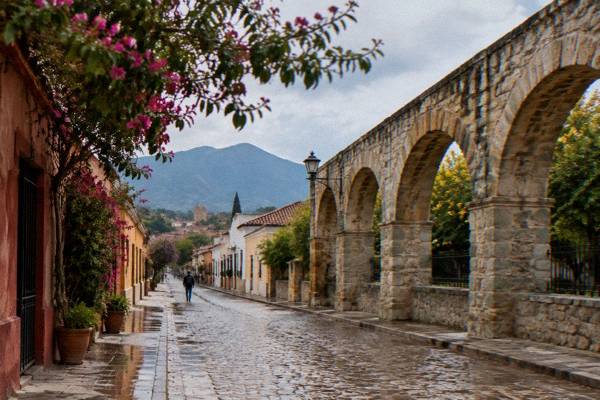
What Is The Best Time To See Day Of The Dead In Oaxaca?
The best window for Día de Muertos in Oaxaca City is the evening of 31 October through 2 November, when the cemeteries fill with candlelight and altars. Here is how the nights differ and how to plan around them.
Oaxaca City, the inland highland capital of the state of Oaxaca in Mexico, holds its Día de Muertos celebrations across the nights of 31 October, 1 November and 2 November. The festival's core dates never move: the state's own releases frame the celebration around those traditional nights, when families build altars, decorate graves with marigolds and keep vigil in the cemeteries of the Valles Centrales. The full municipal programme of parades, contests and concerts, 140 or more activities in the 2025 edition, has historically run from about 25 October to 4 November, wrapping around the three central nights. The 2026 programme has not been announced, so the nights themselves, not a published schedule, are what to plan around.
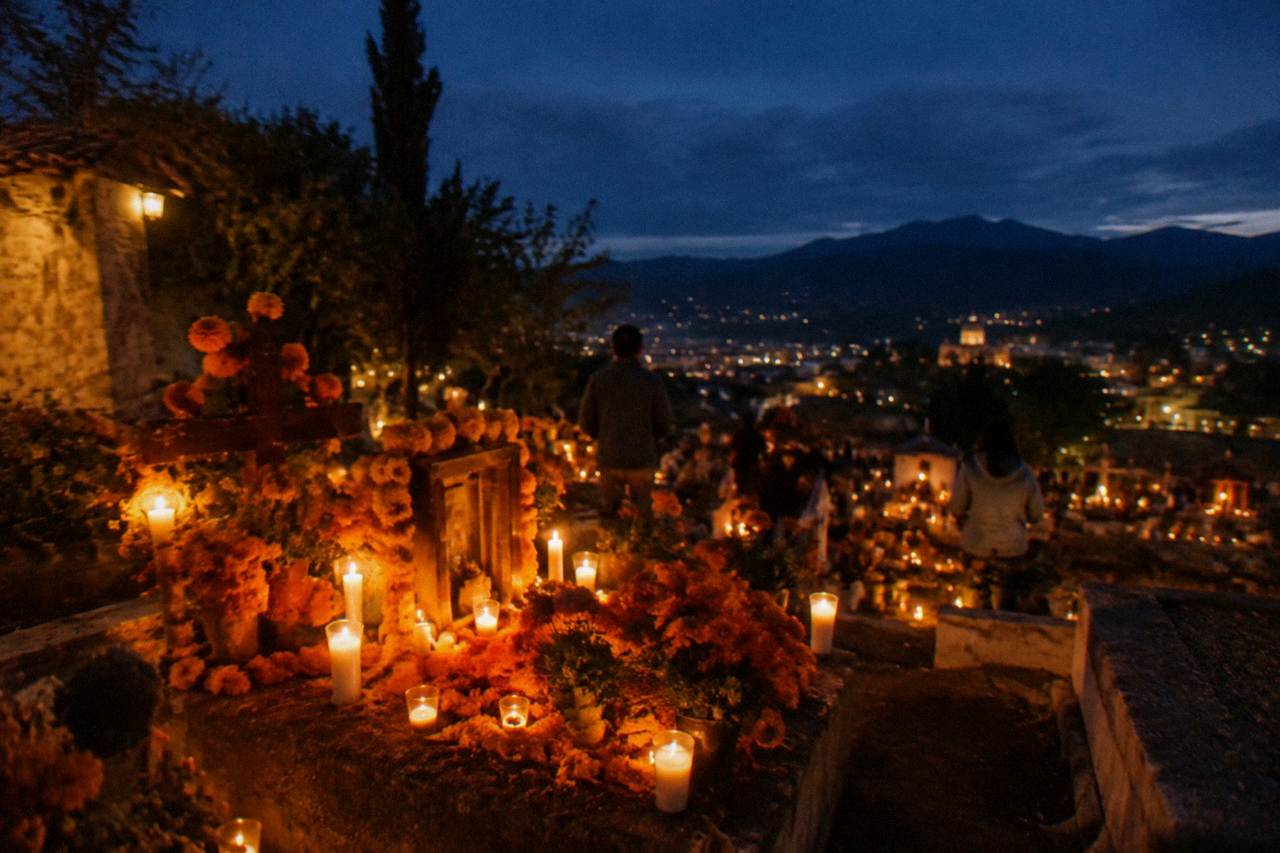
The best time to see Day of the Dead in Oaxaca City is the evening of 31 October through the night of 2 November. Those are the festival's fixed traditional dates: altars go up across the city in the days before, cemetery vigils peak on the nights of 1 and 2 November, and the surrounding week, roughly 25 October to 4 November in recent editions, carries the parades and public events.
The distinction matters because the festival has two rhythms. The first is domestic and quiet: families in Oaxaca clean and decorate family graves, and the cemeteries of Xoxocotlán and the surrounding villages fill with candles after dark on the central nights. The second is civic and loud: the state and city programme of comparsas, calendas, altar contests and concerts, which in the 2025 edition ran 25 October to 4 November with more than 140 activities. A visitor who arrives on 29 October and leaves on 3 November covers both rhythms.
Do not build a plan around a published 2026 schedule, because none has been announced. What is confirmed for 2026 so far is the fifth state artisan contest, with entries accepted 24 September to 9 October. The Zócalo decorations are reported to be mounted 25 to 28 October and taken down after 6 November, which mirrors the shape of previous years. For a fuller picture of the city across the year, see the best time to visit Oaxaca.
Which Night Of Día De Muertos In Oaxaca Should You Not Miss?
If one night must carry the trip, make it the night of 1 November in Oaxaca City. That is the traditional night of the cemetery vigils, when graves across the Valles Centrales burn candles deep into the evening and the villages around the city, Xoxocotlán among them, hold their most intense observances. The night of 31 October belongs to the angels, the children, and 2 November closes the festival with family visits to the graves.
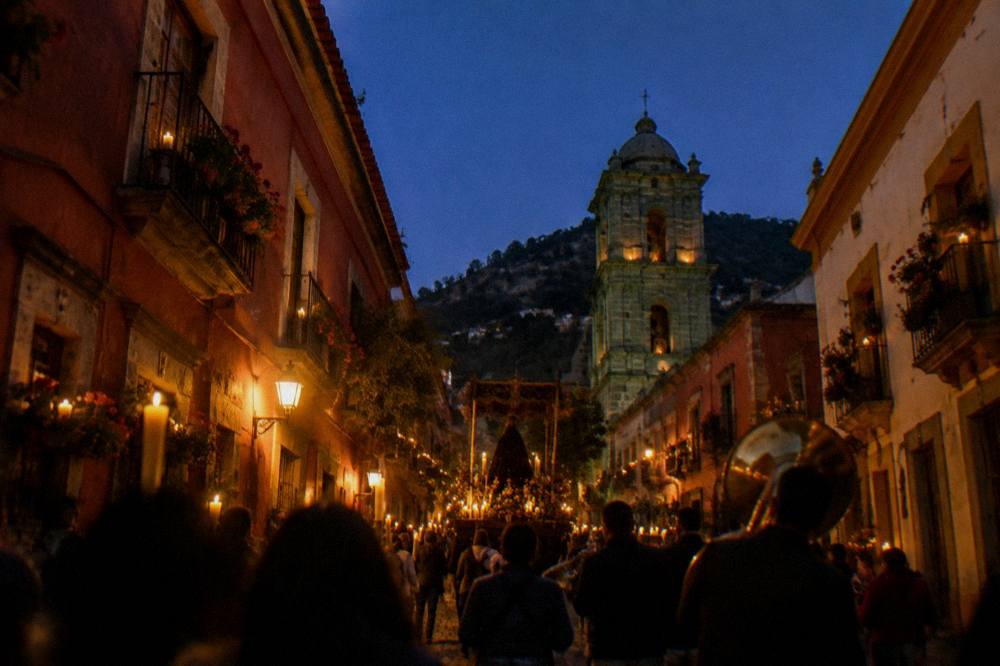
The three nights are not interchangeable. The evening of 31 October traditionally centres on children who have died, with earlier, quieter vigils. The night of 1 November into the early hours of 2 November is the largest, when the pantheons stay open late and the processions move between neighbourhoods such as Jalatlaco and the city centre. The evening of 2 November is more domestic again, with families at the graves in daylight and the city beginning to dismantle its decorations.
| Night | Traditional focus | Where it concentrates |
|---|---|---|
| 31 October | Children who have died, early vigils | Cemeteries and family homes, quieter streets |
| 1 November | The main vigil night, candlelit graves | Xoxocotlán and Valles Centrales pantheons, city processions |
| 2 November | Family visits, closing of the festival | Graves in daylight, city altars coming down |
The city's own programme adds a layer on top of these nights. In the 2025 edition the state ran altar contests, comparsas and verbena events around 30 and 31 October, alongside cemetery openings at night on 1 and 2 November, and events in Jalatlaco with tapetes and decorated facades. Whether the 2026 programme repeats that exact shape will only be known when it is published, so hold accommodation and travel loosely around the three fixed nights and let the events fill the edges. Readers planning the wider trip can pair the festival with what not to miss in Oaxaca.
How Many Days Do You Need For Día De Muertos In Oaxaca?
Plan on four to six days in Oaxaca City for Día de Muertos, arriving by 30 October and leaving no earlier than 3 November. That window covers the decorated Zócalo, the altar contests and processions of late October, all three vigil nights, and leaves room for Monte Albán or a valley day trip. Shorter trips of two nights can catch the core of 1 and 2 November but miss the build-up that fills the week.
The build-up is a real part of the experience, and it is also practical. Recent editions mounted Zócalo decorations in the last days of October and removed them in the days after 6 November, and the state contest calendar placed registrations and judging in late September and October. Arriving on 29 or 30 October puts you in the city while the altars are still being finished and the neighbourhood competitions are underway.
Daylight hours during the festival week are well spent outside the cemetery circuit. Monte Albán, about a 15 minute drive from the Zócalo, is open 08:00 to 17:00 with last access at 16:00, so a ruins morning slots naturally before an evening in the pantheons. A loop through the Tlacolula Valley to Mitla or Hierve el Agua, about 37 and 57 minutes by car respectively, fills a spare day. Two itineraries that frame this well are Oaxaca in 3 days and, for the compressed version, Oaxaca in one day.
What Is The Weather Like In Oaxaca In Late October And Early November?
Late October and early November sit at the tail of the rainy season in Oaxaca City, and the numbers are mild: October averages a high of 29.3 C, a low of 14.5 C and 63.1 mm of rain, while November averages 29.0 C, 12.3 C and only 9.1 mm. Nights in the cemeteries feel cool at about 1,550 m of altitude, so layers matter more than rain gear by the first days of November.
The rain falls off sharply across the festival window. October still carries rainy-season showers, with 12.0 days of rain in an average month at the SMN station, while November drops to 3.5 days and 9.1 mm. Rainfall in June averages 188.3 mm by comparison. The wider set of guides lives on Oaxaca Travel Guide.
| Month | Mean high C | Mean low C | Rain mm | Days with rain |
|---|---|---|---|---|
| October | 29.3 | 14.5 | 63.1 | 12.0 |
| November | 29.0 | 12.3 | 9.1 | 3.5 |
| December | 28.9 | 11.0 | 9.0 | 2.4 |
The figures are 1991-2020 climate normals from the SMN station in the city. Daytime is warm enough for shirts and shade, and the evenings drop toward the mid-teens, which is what a visitor standing in an open cemetery at midnight actually feels. A light jacket or shawl is the standard call, and closed shoes serve the unpaved paths between graves. There is no winter cold at this latitude and altitude, and no snow ever falls in the city.
Should You Book A Tour For Día De Muertos In Oaxaca?
A guided evening walk is a reasonable way to see Día de Muertos in Oaxaca City if you want the cemetery and procession nights explained rather than navigated alone, since the vigils happen after dark in villages outside the centre and the customs vary by community. Independent visitors cover the Zócalo altars and downtown calendas easily on foot, but the pantheons at night are where a guide, transport and context earn their keep.
The evening walking tour with dinner included is the product built for exactly these nights, and the operator's booking page carries the current price and dates. Its focus is the city's festival after dark, which aligns with the vigils of 31 October through 2 November rather than daytime sightseeing. If you would rather move independently, the standing pattern is simple: altars and decorations in the centre, processions through Jalatlaco and the streets off the Andador Macedonio Alcalá, and cemetery visits arranged by taxi or colectivo to the villages. First-time visitors weighing the whole question can start with first time in Oaxaca, and anyone unsure about the city overall can read is Oaxaca worth visiting.
For the daylight half of the trip, Monte Albán tours pair naturally with the festival week, and the site's hours, 08:00 to 17:00 with last entry at 16:00, make a morning visit easy to combine with an evening in the cemeteries. Admission is 105 MXN for Mexican nationals and 210 MXN for foreign visitors, per the INAH site page.
What Else Is Happening In Oaxaca Around Día De Muertos?
Beyond the vigil nights, Oaxaca City in late October and early November carries altar contests, neighbourhood decorations and street processions, with the Zócalo as the anchor: the 2026 decorations are reported to be mounted 25 to 28 October and removed after 6 November. Noche de Rábanos belongs to 23 December, not this festival, and its 2026 edition has not been announced.
The festival week is dense but decentralised. The state's 2025 programme ran altar contests, comparsas and verbena events in the final days of October, with cemetery openings at night concentrated on 1 and 2 November, and community celebrations in Jalatlaco, Xoxocotlán and Atzompa following their own regional customs. The fifth state artisan contest ran in September and October 2026, which signals the same machinery turning again even before a full programme appears.
Visitors extending past the festival can slide straight into the dry season. November averages just 9.1 mm of rain, and the whole month stack of November to March sits under 20 mm, which makes valley day trips and Sierra Norte hikes dependable. The drive to Hierve el Agua runs about 57 minutes, and the route through Tlacolula and Mitla, about 25 and 37 minutes respectively, is the classic single-day loop; see the Hierve el Agua day trip guide for the full picture.
Common Questions About Day Of The Dead In Oaxaca
What Is The Best Time To See Day Of The Dead In Oaxaca?
The evenings and nights of 31 October through 2 November, with the night of 1 November the traditional peak for the candlelit cemetery vigils. Arriving by 30 October lets you see the altars and processions of the build-up week too.
Is Day Of The Dead In Oaxaca Worth The Trip On Its Own?
Yes, if the cemetery nights are what draws you, because the vigils in the pantheons around the city are the heart of the festival and happen nowhere else in this form. Give the city four to six days so the festival does not have to compete with Monte Albán and the valleys.
Does It Rain During Día De Muertos In Oaxaca?
Some, early in the window. October averages 63.1 mm of rain over 12.0 days, but by November the average falls to 9.1 mm over 3.5 days, so the vigil nights themselves usually fall in a dry, cool stretch.
When Is The 2026 Day Of The Dead Programme In Oaxaca Announced?
There is no 2026 programme yet. What is published for 2026 is the fifth state artisan contest, with entries from 24 September to 9 October, and the Zócalo decorations are reported for 25 to 28 October. The traditional dates of 31 October to 2 November hold regardless.
Can You See The Cemeteries Without A Tour In Oaxaca?
The Zócalo altars and downtown processions are easy on foot, but the night vigils happen in cemeteries outside the centre, in villages such as Xoxocotlán, so you need to arrange transport after dark. An evening tour with a guide, such as the Day of the Dead walking tour with dinner, covers that logistics; Check availability for the festival dates.
Plan the flights and the room around the three fixed nights, hold the rest loosely, and Oaxaca City in the first days of November does the rest.