Día De Muertos In Oaxaca: Cemeteries, Comparsas And Altars
Día de Muertos in Oaxaca City runs on cemeteries, comparsas and altars: a late-October-to-early-November festival whose shape repeats each year even when the full programme is not yet published.
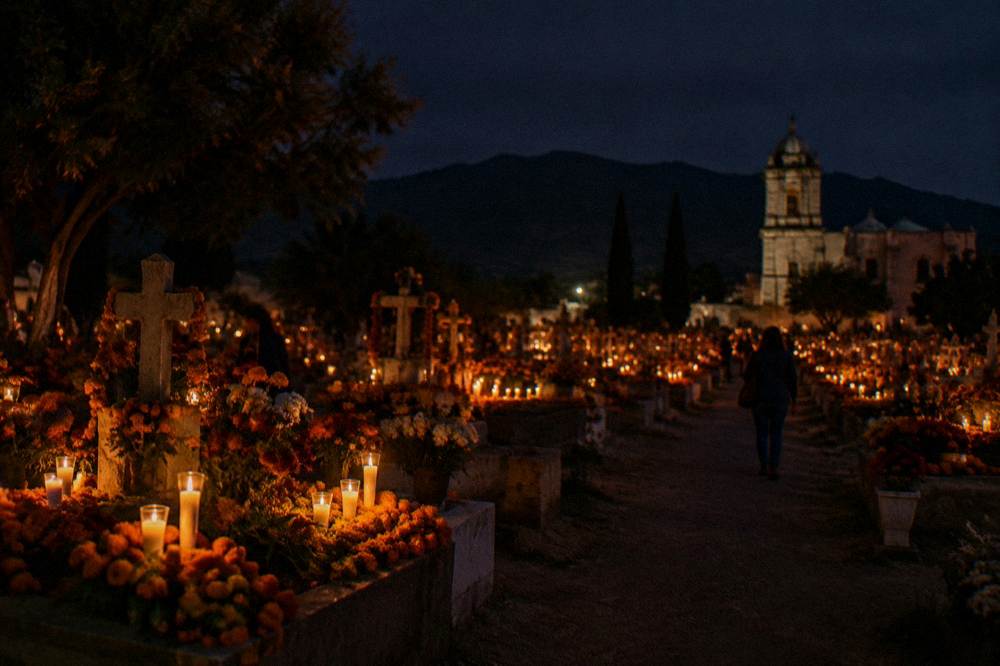
Día de Muertos in Oaxaca City centres on the traditional dates of 31 October to 2 November, with weeks of altar contests, calendas and comparsas around them. The last full published programme, the 2025 edition, ran 25 October to 4 November with more than 140 activities.
Día de Muertos in Oaxaca City, the inland highland capital of the state of Oaxaca in Mexico, is a festival of cemeteries, comparsas and altars spread across the last days of October and the first days of November. The traditional core is fixed, 31 October to 2 November, when families keep vigil at graves and the city's neighbourhoods fill with processions. Around that core the state builds a wider programme of contests, concerts and decorated public spaces. The last full programme published by the state, the 2025 edition, ran from 25 October to 4 November and listed more than 140 cultural and artistic activities.
For 2026 the state had, announced one piece of its own: the fifth edition of its state Día de Muertos artisan contest, with entries open from 24 September to 9 October 2026. The rest of the 2026 programme has not been published. That gap matters less than it sounds, because the festival's structure repeats: the cemeteries, the comparsas and the altars follow the calendar of the traditional dates, and the full programme, when it appears, fills in around them.
What Are The Traditional Dates Of Día De Muertos In Oaxaca?
The traditional dates are 31 October, 1 November and 2 November, and those three nights are the fixed heart of the festival in Oaxaca City. Families keep vigil at graves, neighbourhoods hold processions, and altars go up in homes, markets and public buildings in the days before. The state programme wraps around these dates rather than replacing them, so a visit anchored on 31 October to 2 November lands on the core of the celebration.
The 1 November and 2 November nights carry different weight in different cemeteries. The state releases and the festival programme describe the panteones opening at night, with cemetery visits concentrated on 1 and 2 November, and community celebrations in neighbourhoods such as Jalatlaco, with its decorated facades and tapetes, and in Xoxocotlán, whose cemetery is a focal point for visitors and families alike. Atzompa and other communities in the valleys follow their own regional customs.
The wider programme has historically started before the traditional dates and run past them. The 2025 edition ran 25 October to 4 November. Comparsas and verbena events fell around 30 and 31 October in that edition, and the altar and contest activities spread across the whole window. Anyone booking flights and rooms around the festival should plan for the days on either side of 1 and 2 November to carry events too, because the edges of the window hold their own calendar of concerts, contests and neighbourhood gatherings that never appear under the three headline dates.
Which Cemeteries Should You Visit In Oaxaca During Día De Muertos?
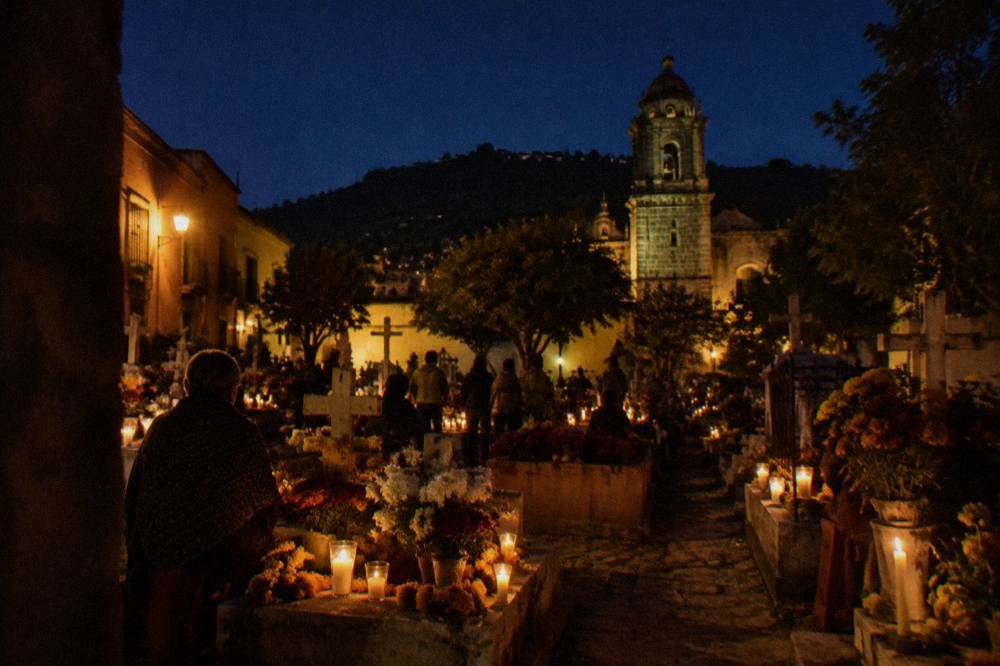
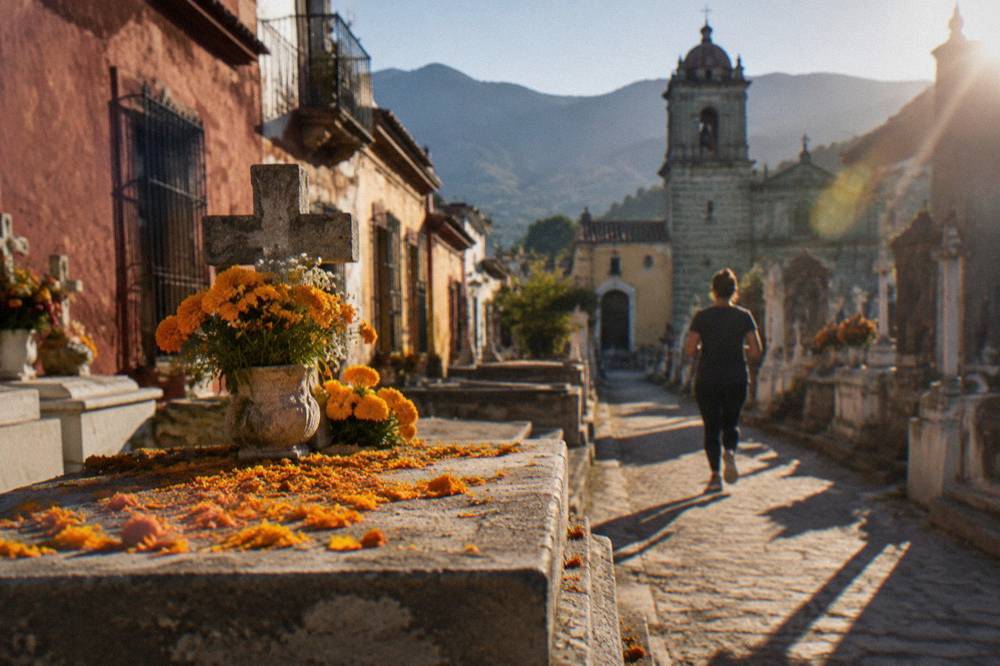
Xoxocotlán's cemetery is the region's most closely associated with the festival night of 1 November, and it sits next to the airport road about twenty minutes from the centre of Oaxaca City. Within the city itself, families keep vigils in the historic panteones, while communities such as Atzompa hold their own cemetery nights in the same window. There is no single official circuit: each cemetery keeps its own hours and customs, and the festival programme lists the community events it supports.
Xoxocotlán deserves the emphasis the programme gives it. The community's cemetery visits and harvest traditions are named in the state's own festival descriptions, and the nights of 1 and 2 November are when the vigils concentrate. The town also gives its name to the airport, Xoxocotlán International, so the route from the terminal into the city passes close by; see the Oaxaca airport guide for how that arrival works.
Inside the city, the historic cemeteries fill with candles, marigolds and families across the same nights, and neighbourhood celebrations radiate out from them. Jalatlaco decorates facades and lays tapetes; Atzompa and other valley communities run their own observances. A respectful visit is a quiet one: the vigils are family events first. Go early in the evening, dress plainly, ask before photographing anyone, and step back from graves that are being tended.
| Cemetery or community | What the festival there centres on | When it concentrates |
|---|---|---|
| Xoxocotlán | Cemetery visits and harvest traditions, named in the state programme | Nights of 1 and 2 November |
| Jalatlaco (Oaxaca City) | Decorated facades, tapetes, neighbourhood events | Late October into early November |
| Atzompa | Regional community customs | The traditional dates |
| City-centre panteones | Family vigils with candles and marigolds | Nights of 1 and 2 November |
For visitors who want a guide's framing on the night, an evening walking tour of the Día de Muertos celebrations covers the city's festival with dinner included, and the operator's booking page shows current dates and availability.
What Is A Comparsa And Where Do You See One In Oaxaca?
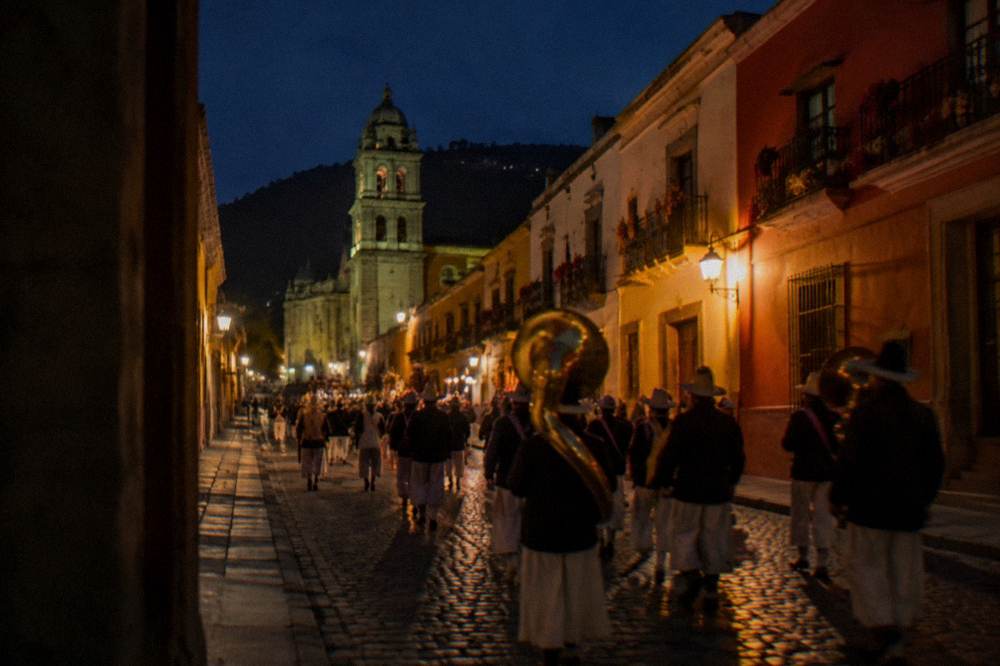
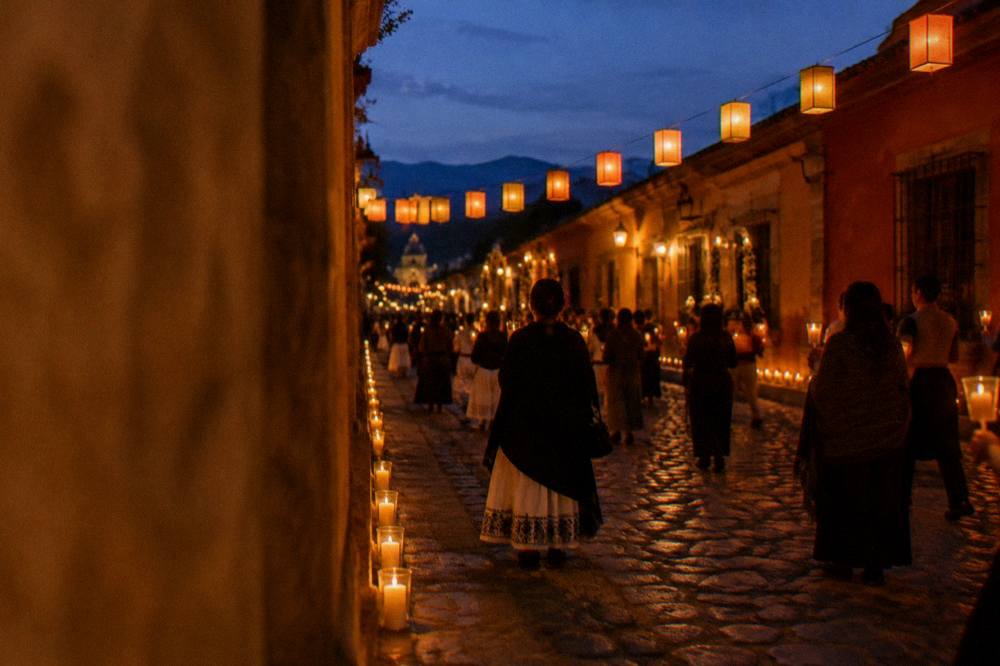
A comparsa is a costumed, musical street procession, and in Oaxaca City during Día de Muertos it is the festival's loudest and most public form: bands, dancers and figures in costume moving through the streets at night, often ending in a verbena, a street party. In the 2025 programme the comparsas and verbena events fell around 30 and 31 October, in the nights that lead into the cemetery vigils.
The state's festival descriptions list comparsas and verbena as core traditional elements of the celebration. They are free to watch from the street, they move, and they run late: an evening planned around one should not be an evening with an early start the next morning. Routes and start times belong to each neighbourhood and each comparsa, and the festival programme, once published, is the place to find the calendar for them.
The same late-October window carries other public forms of the festival. Calendas, the organised processions with music and giant figures, belong to the Guelaguetza month in July as well, but the Día de Muertos programme builds its own procession calendar around the traditional dates. The streets between the Zócalo and the Basílica de la Soledad, and the neighbourhoods of Jalatlaco and Xochimilco, are the spaces these processions use; the Zócalo guide covers the square itself.
What Are The Altars Of Día De Muertos In Oaxaca?
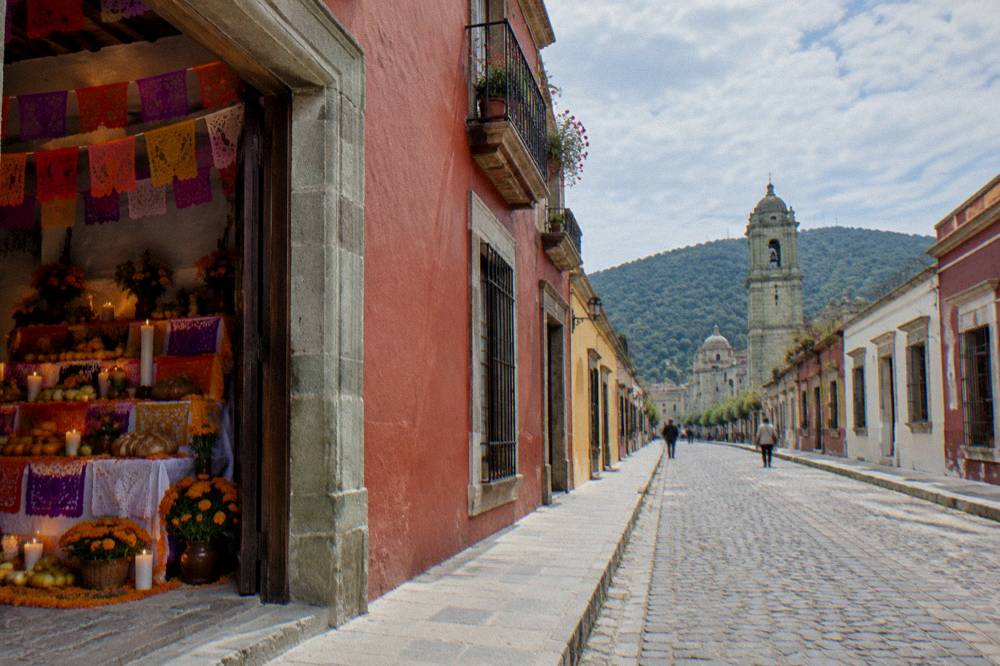
Altars, or ofrendas, are the home of the festival: tiered displays built with marigolds, candles, food, drink and photographs to receive the dead, and in Oaxaca City during the festival they appear in homes, markets, churches, hotels and public buildings, with the state running a contest that draws entries from across Oaxaca. The 2026 contest, the fifth state edition, took entries from 24 September to 9 October 2026, which is how the altars move from private devotion into public competition.
The contest is the state's own structured layer over a household tradition. Entries in 2026 closed on 9 October, and the contest's award activities fell in late October in the state's announcements. That means the prize-winning altars are judged and displayed inside the festival window itself, and the programme, when published, is the place to find where.
Outside the contest, the altars are everywhere. The markets build them: Mercado 20 de Noviembre, the historic food market near the Zócalo, is one of the central spaces where festival altars and food overlap, and the Mercado 20 de Noviembre guide covers the market itself. Churches and museums build them too. The museums inside the former convent of Santo Domingo de Guzmán, whose church is covered in the Santo Domingo guide, and the city's other cultural institutions take part each year in their own ways.
What Did The Full Programme Look Like In The 2025 Edition?
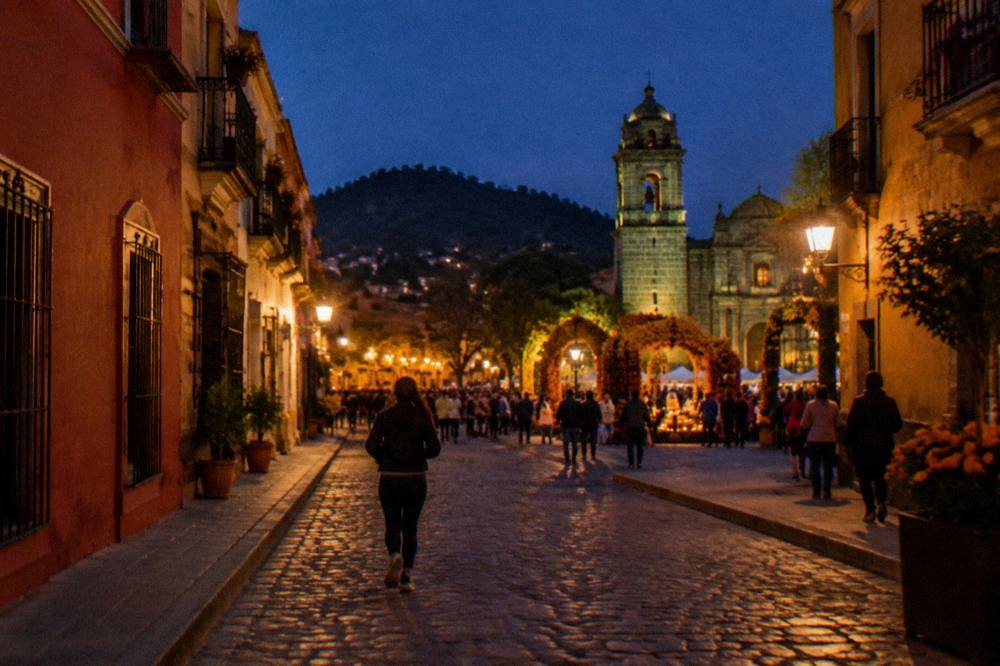
The 2025 edition of Día de Muertos in Oaxaca ran from 25 October to 4 November and listed more than 140 cultural and artistic activities, making it the fullest published template for how the festival is staged: a ten-day window of altar contests, comparsas, cemetery nights, concerts and decorated public spaces centred on the Zócalo and the traditional dates of 31 October to 2 November.
That programme is the reference point because it shows the shape. The state release that announced it described the festival as spanning community celebrations, the artisan contest, and the core cemetery and procession nights. The 2026 programme has not been published, so the 2025 shape is the honest planning basis: expect a window of roughly ten days, expect the heaviest concentration on the nights around 1 and 2 November, and expect the Zócalo to be decorated for the whole of it. The wider set of guides lives on Oaxaca Travel Guide.
| Element of the festival | What it is | Where it sat in the 2025 programme |
|---|---|---|
| Opening window | State programme of cultural and artistic activities | 25 October to 4 November, 140+ activities |
| Comparsas and verbena | Costumed processions and street parties | Around 30 and 31 October |
| Cemetery vigils | Family nights at the panteones | 1 and 2 November |
| Artisan contest | State competition of altars and festival craft | Judged in late October |
| Zócalo decorations | Public festival dressing of the main square | Mounted in late October, removed after the festival |
The programme's size also explains the crowds. Oaxaca City recorded 1,324,332 tourist arrivals across the whole of 2025, and the festival window is one of the peaks that pushes hotel occupancy up. The city's average stay that year was 2.00 nights, but festival visitors stay longer, and rooms around the traditional dates fill early. The where to stay in Oaxaca guide covers the neighbourhoods, and the best time to visit Oaxaca guide places the festival in the year's wider rhythm.
What Weather Should You Expect In Oaxaca For Día De Muertos?
Late October and early November sit at the start of Oaxaca's dry season, with the SMN station normals showing average highs near 29 or 30 degrees Celsius, average lows near 12 to 14 degrees, and modest rainfall: October averages 63.1 mm and November 9.1 mm. The festival days are warm in the afternoon and cool at night, and the cemetery vigils, which run into the small hours, happen at the coolest part of the day.
The climate normals for the city's station put October at a mean maximum of 29.3 degrees Celsius and a mean minimum of 14.5, with 63.1 mm of rain across about 12 days with rain. November drops sharply: 29.0 and 12.3 degrees, and 9.1 mm across about 3.5 days with rain. The dry season runs November to April, so the festival straddles the transition. Layers answer both: warm days, cold graveyard nights.
| Month | Mean high C | Mean low C | Rain mm | Days with rain |
|---|---|---|---|---|
| October | 29.3 | 14.5 | 63.1 | 12.0 |
| November | 29.0 | 12.3 | 9.1 | 3.5 |
Altitude shapes the nights. The city sits at about 1,550 m, and the temperature gap between afternoon and the hours after midnight is wide enough that a jacket is standard equipment for the processions and vigils. The full month-by-month picture is in the site's climate coverage, and the best time to visit Oaxaca guide places the festival against the rest of the year.
How Do You Get Around Oaxaca During The Festival?
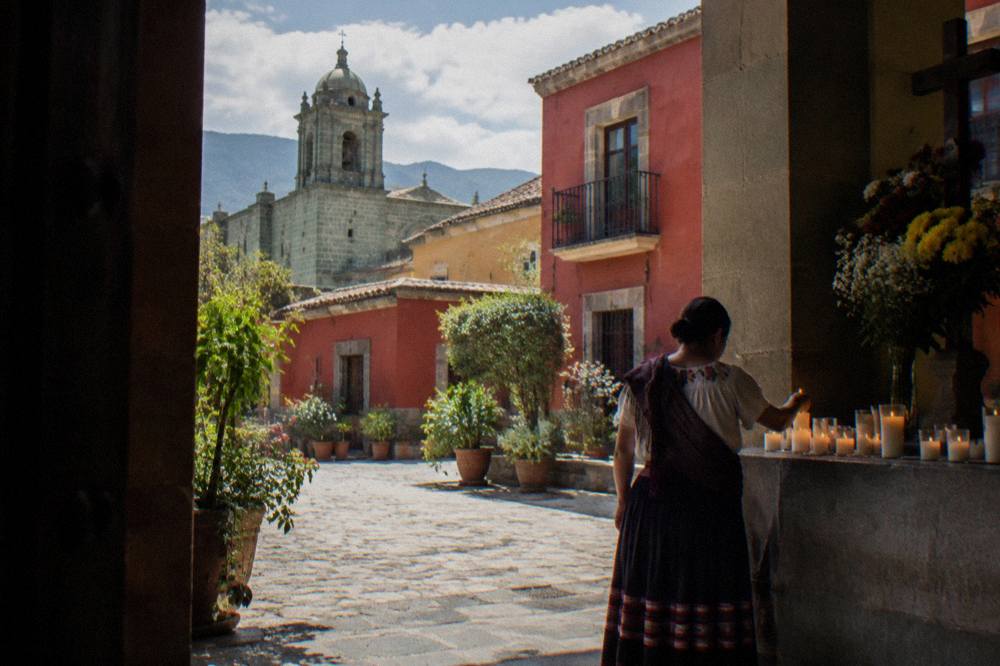
The historic centre of Oaxaca City is walkable, and during Día de Muertos walking is the only reliable way through it: the processions, the street decorations and the crowds all occupy the same compact grid between the Zócalo, Santo Domingo and Jalatlaco, and the festival nights close or fill streets that are quiet the rest of the year. Taxis and ride-hailing cover the city outside the festival core, and colectivos and tours reach the valley cemeteries such as Xoxocotlán and Atzompa.
For the cemetery nights outside the centre, the choices are a taxi, a colectivo route or an organised evening tour. Xoxocotlán sits beside the airport road, and Atzompa is a short drive up the valley wall; both are covered in their own guides on this site. During the festival nights, return transport from cemeteries is the part that needs planning, because the vigils run late and demand peaks when they end. Agree any taxi fare before getting in.
The getting around Oaxaca guide and the taxis, Uber and DiDi in Oaxaca guide cover the year-round picture. For travellers arriving for the festival, the flights to Oaxaca guide notes that airlines add seasonal capacity around the date, and the Mexico City to Oaxaca guide covers the overland alternative.
What Else Is Happening In Oaxaca Around Día De Muertos?
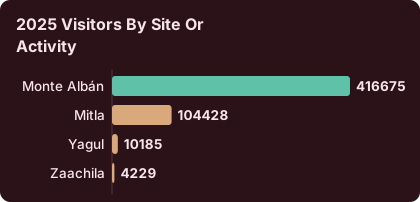
The festival window sits at the start of the dry season and before the December holidays, and around it Oaxaca City offers the full year-round list of things to do: Monte Albán and the valley archaeological sites, the markets, the mezcal tradition and the craft villages, all within an hour of the centre. Monte Albán alone recorded 416,675 visitors in 2025, and its Category I INAH entry fee is 105 MXN for nationals and 210 MXN for foreign visitors, open daily 08:00 to 17:00.
Daytime during the festival is its own opportunity. The state's visitor numbers show Monte Albán as the most visited site in the region by a wide margin, with Mitla second at 104,428 visitors in 2025. A festival-morning trip to Monte Albán, about 15 minutes by road from the centre, or a day in the Tlacolula valley, pairs well with nights given over to processions and vigils.
| Site or activity | 2025 visitors | Entry (MXN) | Hours |
|---|---|---|---|
| Monte Albán | 416,675 | 105 national / 210 foreign | Mon to Sun 08:00 to 17:00 |
| Mitla | 104,428 | 105 national / 210 foreign | Mon to Sun 08:00 to 17:00 |
| Yagul | 10,185 | 105 national / 210 foreign | Mon to Sun 08:00 to 17:00 |
| Zaachila | 4,229 | 80 national / 145 foreign | Thu to Sun 10:00 to 16:00 |
The festival also stretches toward December's own tradition. Noche de Rábanos, the radish-carving festival held in the Zócalo each 23 December, is the next major date on the city's calendar; the 128th edition was held in December 2025, and the Noche de Rábanos guide covers it. Mezcal runs through the whole season: an evening mezcal tasting such as the Check availability link above shows, or a mixology session with organic mezcal, is a natural end to a processions night.
Common Questions About Día De Muertos In Oaxaca
When Is Día De Muertos In Oaxaca?
The traditional dates are 31 October to 2 November. The wider state programme in 2025 ran 25 October to 4 November, and the 2026 programme has not been published.
Which Cemetery Should I Visit In Oaxaca For Día De Muertos?
Xoxocotlán's cemetery is the one most closely tied to the festival night of 1 November, and the city's own historic panteones hold family vigils on the same nights. Atzompa and other valley communities follow their own customs.
What Is A Comparsa?
A comparsa is a costumed, musical street procession, often followed by a verbena, a street party. In the 2025 programme these fell around 30 and 31 October.
What Is On A Día De Muertos Altar?
Altars, or ofrendas, are built with marigolds, candles, food, drink and photographs to receive the dead. In Oaxaca they appear in homes, markets, churches and public buildings, and the state runs an annual contest for them.
Is Día De Muertos In Oaxaca Crowded?
The festival window is one of the city's peaks. Oaxaca City recorded 1,324,332 tourist arrivals in 2025, and rooms around 31 October to 2 November fill early, so book well ahead.
What Is The Weather Like In Oaxaca For Día De Muertos?
Late October and early November are warm by day and cool by night: October averages a high of 29.3 and a low of 14.5 degrees Celsius, November 29.0 and 12.3, with rainfall falling from 63.1 mm to 9.1 mm between the two months. Bring layers for the cemetery nights.
The festival's fixed core, the cemeteries, the comparsas and the altars of 31 October to 2 November, repeats every year regardless of what the full programme adds, and that is what makes Oaxaca City plannable even before the state publishes its calendar.