Taxis, Uber And DiDi In Oaxaca
Oaxaca City is compact, walkable and short on parking, so most visits run on foot plus a mix of taxis, ride-hailing apps and colectivos. This guide sets out what is settled fact, what changes, and where a booked tour saves the whole question of driving.
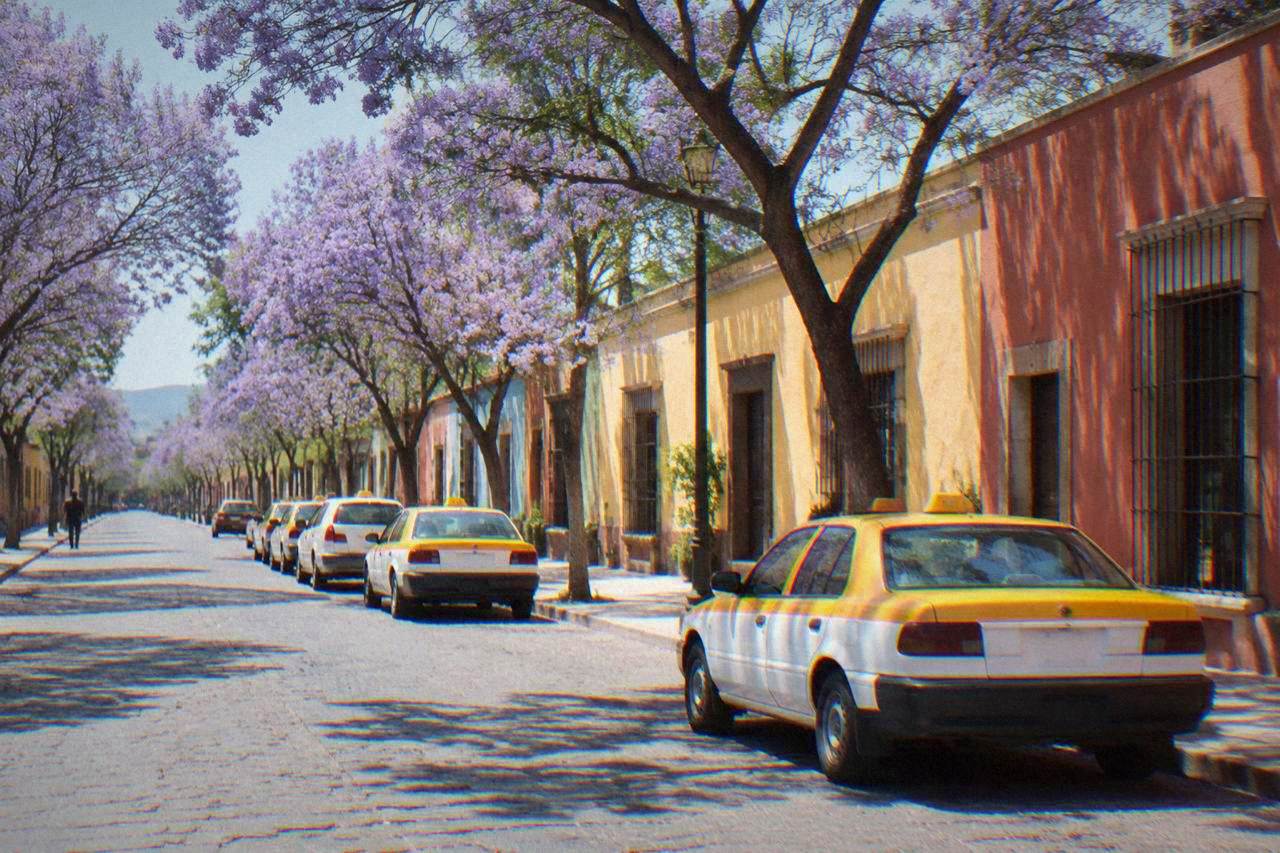
Taxis and ride-hailing apps both operate in Oaxaca City, the centre is walkable, and colectivos cover the valley towns. The airport is served by authorised taxis bought at a booth, drive times to Monte Albán are about 15 minutes and to Hierve el Agua about 57, and INAH admission prices are fixed in pesos.
Oaxaca City, the inland highland capital of the state of Oaxaca in Mexico, sits at about 1,550 m in the Valles Centrales, and its historic centre is small enough that most of a visit happens on foot. The transport questions that actually matter are the edges: the run in from Xoxocotlán airport, the climb to Monte Albán, the long loop out to Hierve el Agua and Mitla, and whether an app or a street taxi is the right tool on a given evening. This page works through each of them using what primary sources publish, and flags what genuinely changes month to month.
Do Uber And DiDi Work In Oaxaca?
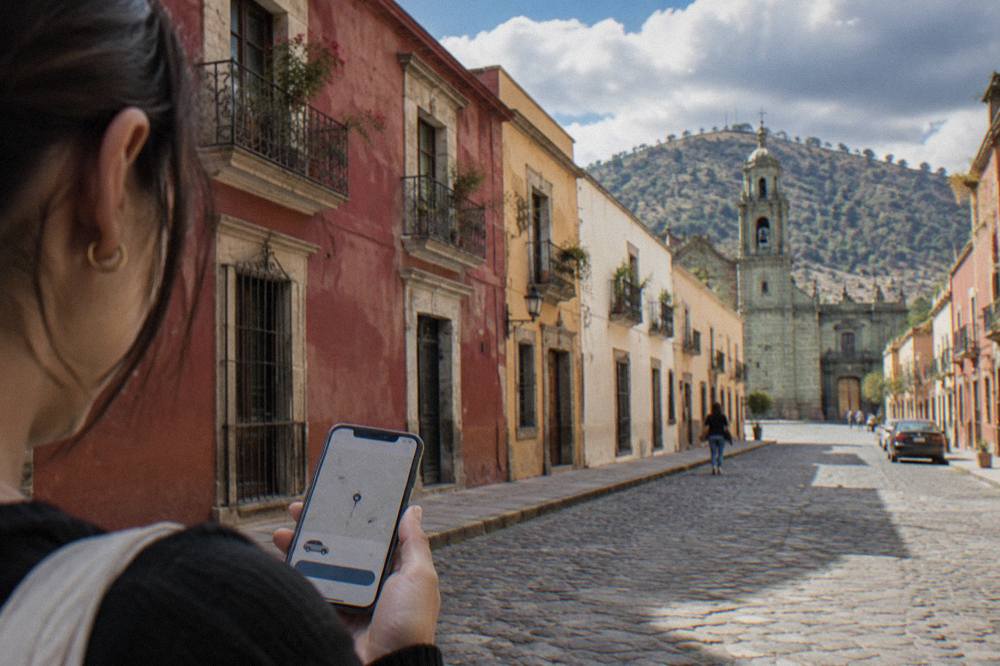
Yes, ride-hailing apps operate in Oaxaca City, and they are one of three practical ways to move around the city alongside street taxis and colectivos. What the apps do not settle is the airport: pickup rules there are a moving detail, so check inside the app before you land rather than planning on it. During big events, such as the Guelaguetza fortnight in July, demand surges and prices follow.
The apps behave in Oaxaca much as they do in other Mexican cities: the fare is set and paid in the app, the driver and plate are visible before pickup, and there is no negotiating. That last point is the practical difference from street taxis. Oaxaca City taxis do not run on meters, so a fare agreed before the door closes is the whole transaction. A reasonable habit is to confirm the destination and the price through the open window first.
Two cautions are worth carrying. First, surge pricing during festivals is real, and July in Oaxaca is the peak of it: the Guelaguetza 2026 edition ran two Mondays, 20 and 27 July, with two performances each day at the Auditorio Guelaguetza, and the state releases describe heavy demand across the city that fortnight. Second, app coverage thins outside the city: for the valley towns and the Sierra Norte, colectivos, booked tours or a rental car are the real options. For the broader picture, the companion page on getting around Oaxaca covers every mode together.
How Do Street Taxis Work In Oaxaca City?
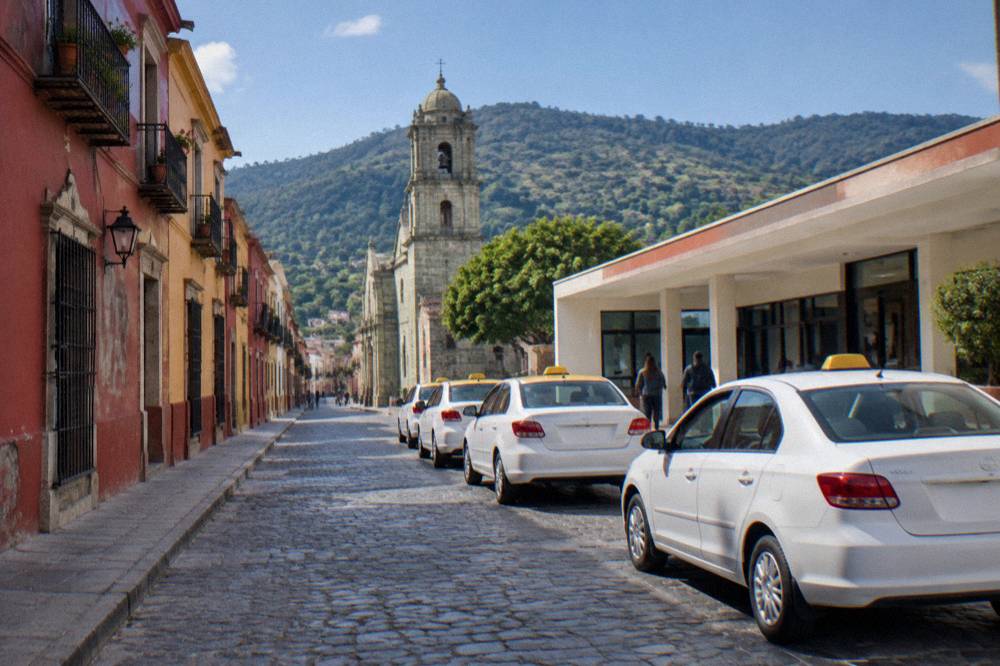
Street taxis in Oaxaca City work on agreed fares, not meters: you state the destination, agree the price before getting in, and pay in cash at the end. Taxis are plentiful around the Zócalo, the Andador Macedonio Alcalá and the markets, and radio taxis can be called to a door. The published record does not carry an official city fare table, so no figure is quoted here.
The negotiating rhythm is simpler than it sounds. Name the place, listen to the price, and either accept it or take the next cab, of which there is usually one within sight in the centro. Drivers generally do not expect conversation beyond the destination. Small peso notes make the whole exchange faster, and the guide to money, ATMs and cash in Oaxaca goes into what to carry.
A few practical notes hold year-round. Radio and sitio taxis, called by phone or through a hotel, are the standard choice late at night; the question of walking the centre after dark is covered separately in is Oaxaca safe. Taxis to the airport are best arranged ahead of time rather than flagged, because departure morning has its own rhythm. And during the Día de Muertos period, roughly 31 October to 2 November on the traditional dates, the centro's streets fill with comparsas and pedestrians, and a taxi is often slower than walking the last few blocks.
What About The Airport Transfer In Oaxaca?
Xoxocotlán International Airport (OAX), operated by ASUR, is served by authorised taxis purchased at a booth inside arrivals, and only those authorised taxis plus colectivo shuttles serve the terminal; whether a ride-hailing app may pick up there is a rule that changes and belongs in the app, not in a guide. The airport's published operating hours are 06:00 to 20:00.
The booth system is the part that surprises people: you buy the ride inside the terminal at a fixed desk, in pesos, and the desk assigns the car. The fare itself is not a published official figure in the sources behind this site, so it is left unstated here; the booth quotes it before you pay. The drive from the airport into the centro is short, on the order of fifteen to twenty minutes in normal traffic, though festival weeks stretch it.
For the outbound leg, hotels and guesthouses routinely arrange an authorised taxi to the terminal, and the timing matters more than the mode: with the terminal closing to flights at 20:00, morning departures are the norm and the pre-dawn taxi run is a standard feature of an Oaxaca stay. The full airport picture, airlines and all, is in the Oaxaca airport guide, and arrival planning by air starts at flights to Oaxaca.
Do You Need A Car In Oaxaca?
Most visits to Oaxaca do not need a car: the centro is walkable, taxis and apps cover the city, and colectivos plus booked tours cover the valleys. A car earns its keep only for independent loops at your own pace, for the Sierra Norte, or for a coast run to Puerto Escondido, which is about 165 minutes on the new highway in free-flow conditions, longer in reality.
The honest accounting is about where your days go. If the plan is the centro, Monte Albán and one big valley day, a car sits parked most of the time, and parking in the historic centre is scarce. If the plan is three or four valleys days, Yagul one morning, Zaachila on a Thursday, Ocotlán on a Friday, then driving yourself makes sense, with the caveat that mountain roads and real traffic run slower than any free-flow figure.
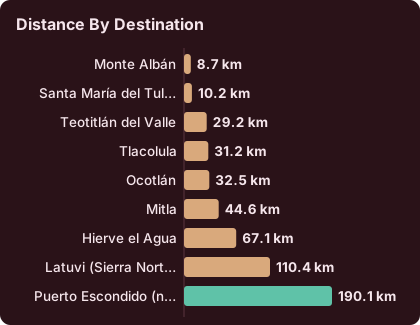
Distances from the Zócalo, computed on mapped roads in free-flow conditions, give a sense of scale. Real traffic and mountain roads add time, so treat these as floors, not plans:
| Destination | Distance | Free-Flow Drive Time |
|---|---|---|
| Monte Albán | 8.7 km | about 15 min |
| Santa María del Tule | 10.2 km | about 11 min |
| Teotitlán del Valle | 29.2 km | about 26 min |
| Tlacolula | 31.2 km | about 25 min |
| Ocotlán | 32.5 km | about 37 min |
| Mitla | 44.6 km | about 37 min |
| Hierve el Agua | 67.1 km | about 57 min |
| Latuvi (Sierra Norte) | 110.4 km | about 142 min |
| Puerto Escondido (new highway) | 190.1 km | about 165 min |
One further wrinkle: road blockades by teachers' unions are a standing, sporadic risk in Oaxaca and have at times cut road and airport access for hours at a stretch. They cannot be scheduled around, only absorbed; a buffer day before a flight is the standard defence. The driving-specific detail, licences, fuel, road types, sits in driving in Oaxaca coverage on this site.
What Are Colectivos And When Do You Use Them In Oaxaca?
Colectivos are shared cars and vans that leave from fixed city departure points when full, run set routes into the Valles Centrales, and cost a handful of pesos per seat, which makes them the cheapest link to Teotitlán del Valle, Tlacolula, Mitla and Ocotlán. Published official fares do not exist in the record behind this site, so pay what the driver asks and keep small notes.
The system is simple once seen. You go to the departure point for your valley, wait with everyone else, and the vehicle leaves when every seat is taken, which in practice is not long on market days. You tell the driver your village, and you get dropped at the roadside junction or the centre as the route allows. Coming back, you stand where you were dropped and wave.
Colectivos suit travellers with time and light luggage. They suit less well the big loop visitors most want: Hierve el Agua sits beyond Mitla, up a mountain road, and stitching Tule, Mitla, Hierve el Agua and a mezcal stop by shared vehicles consumes a whole day and then some. That specific loop is where a booked day trip with transport included does the work, and the tour list on this site carries several; the combination of Hierve el Agua, Mitla, the Tule tree, rug workshops and a mezcal distillery in one loop is covered by Check availability on the operator's booking page. The market-day rhythm of the valleys, Tlacolula on Sundays, Ocotlán on Fridays, Zaachila on Thursdays, is laid out in the Tlacolula Sunday market and related pages.
How Do You Get To Monte Albán Without A Car?
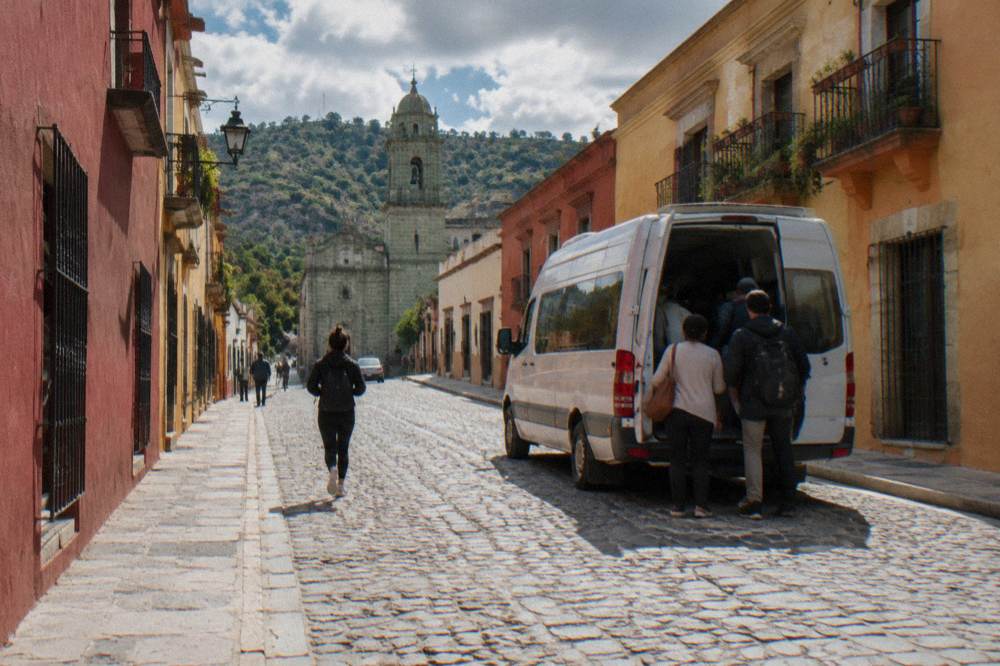
Monte Albán lies about 15 minutes' drive, 8.7 km, above the city, and the practical car-free options are a taxi agreed by the trip, a tour with transport included, or a bus service from the city; the INAH site is open Monday to Sunday 08:00 to 17:00 with last access at 16:00, so morning timing decides the day. Admission is 105 MXN for nationals and 210 MXN for foreign visitors.
The taxi-plus-wait pattern is the common one: agree a round trip with waiting time included, or take a one-way up and find a returning taxi in the car park. The site's 2025 visitor count, 416,675 people, from the state tourism indicators, marks it as by far the most visited INAH zone in the region, so the 16:00 last access is a real cutoff, not a formality. Other pages covering the same trip are gathered on Oaxaca Travel Guide.
A tour handles the hill, the timing and the guiding at once, and the tour list carries several Monte Albán options. The alternative craft-and-ruins days, which add alebrijes in San Martín Tilcajete or black pottery in San Bartolo Coyotepec, turn a half-day into a full loop without any driving on your side. The archaeological detail of the site itself is in the Monte Albán guide, and the tour-led choices are compared in Monte Albán tours.
When Does A Tour Beat Driving Yourself Around Oaxaca?
A booked tour beats driving on three Oaxaca patterns: the long Hierve el Agua and Mitla loop, any day that ends in mezcal tasting, and festival weeks such as the Guelaguetza fortnight in July when city traffic and parking tighten. Transport, timing and the last steep road to Hierve el Agua are all handled, and nobody in the party has to stay off the mezcal.
That last point does real work in Oaxaca. The valley loops almost all end at a palenque, and a self-driven version means the driver tastes nothing. Beyond that, Hierve el Agua is 67.1 km out with a mountain final stretch; a tour absorbs it. The Tlacolula Valley days pair naturally with food and craft stops that have their own logistics, and the tour list's Mitla and Tlacolula day trip and Hierve el Agua day trip pages lay out what each covers.
The festival calendar decides some of this for you. The Guelaguetza fills two July Mondays at the Auditorio Guelaguetza on the Cerro del Fortín, and the 2026 edition's Palco A seats sold at 1,632 MXN and Palco B at 1,321 MXN, with Palcos C and D free, all through the official ticket seller. On those days, a tour with its own vehicle spares you both parking and the hill. The Guelaguetza guide carries the full standing pattern.
Can You Walk Or Cycle Around Oaxaca Instead?
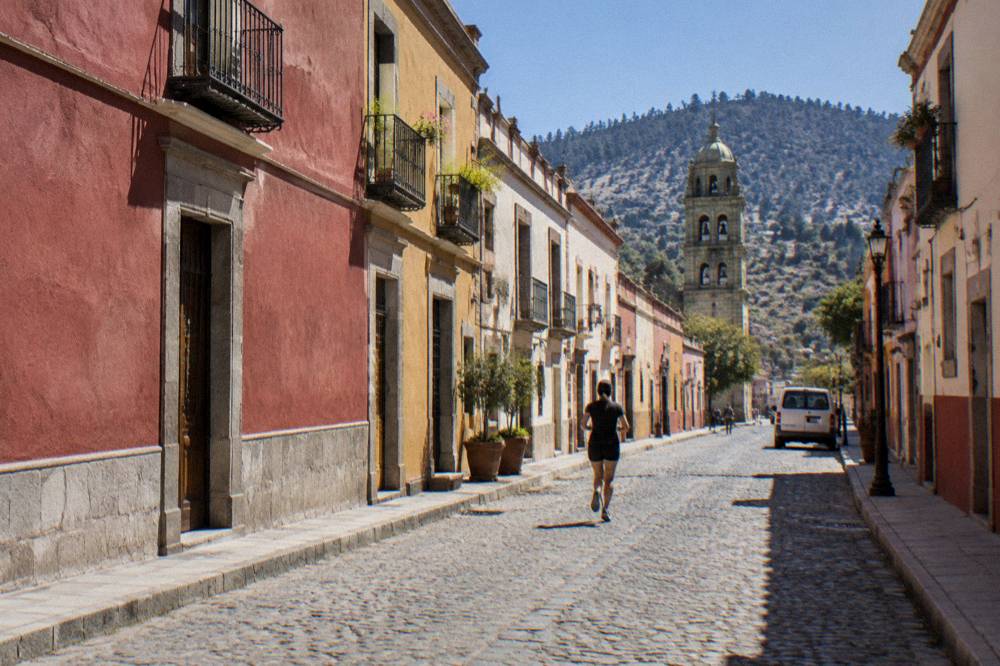
Yes, and walking is the default: Oaxaca's centro histórico is compact and pedestrian-scaled, the Zócalo, Santo Domingo de Guzmán, the Andador Macedonio Alcalá and the markets all sit within a short walk of each other, and the neighbouring barrios of Jalatlaco and Xochimilco add themselves on foot. There is no bike-share scheme in the city, so cycling means a booked bike tour or a rental.
The walkability question has its own full treatment at is Oaxaca walkable, and the answer shapes everything on this page: the less the centro demands wheels, the more taxis and apps are only edge-of-town tools. One physical fact matters for pacing: the city sits at about 1,550 m, and visitors coming from sea level feel the altitude on the first uphill blocks, more on that in Oaxaca altitude and sun.
Cycling in Oaxaca is a touring activity, not a commuting one. The tour list carries bike products for the city and the valleys, and they come with bikes, helmets and a guide, which is just as well given that the city has no bike-share infrastructure. On foot, the practical minimum for the centro alone is a matter of debate covered in how many days in Oaxaca, but two full days is the common floor, and the state's own 2025 indicator of an average stay of 2.00 nights backs that up.
What Do Openings And Seasons Mean For Getting Around Oaxaca?
Opening days shape valley driving more than weather does: Zaachila's INAH zone opens Thursday to Sunday 10:00 to 16:00 only, the Museo de las Culturas de Oaxaca opens Tuesday to Saturday only, and Atzompa closes at 16:00 with last access at 15:00, so a route planned around a Monday can arrive at shut doors. Rain falls mainly June to September, which affects mountain roads more than city streets.
The site-by-site detail is worth carrying in the car. What the INAH pages publish:
| Site | Days And Hours | Admission (MXN) |
|---|---|---|
| Monte Albán | Mon to Sun 08:00 to 17:00, last access 16:00 | 105 national / 210 foreign |
| Mitla | Mon to Sun 08:00 to 17:00, last access 16:30 | 105 / 210 |
| Yagul | Mon to Sun 08:00 to 17:00, last access 16:00 | 105 / 210 |
| Dainzú | Mon to Sun 08:00 to 17:00, last access 16:30 | 80 / 145 |
| Lambityeco | Mon to Sun 08:00 to 17:00, last access 16:30 | 80 / 145 |
| Zaachila | Thu to Sun 10:00 to 16:00 | 80 / 145 |
| Atzompa | Mon to Sun 08:00 to 16:00, last access 15:00 | not published on the INAH page |
| Museo de las Culturas de Oaxaca | Tue to Sat 10:00 to 16:00 | 105 / 210 |
Rain is the other planning input, and it is strongly seasonal. The SMN station normals for Oaxaca give the monthly picture:
| Month | Mean High C | Mean Low C | Rain mm |
|---|---|---|---|
| Jan | 28.9 | 10.3 | 2.4 |
| Feb | 31.1 | 11.6 | 4.6 |
| Mar | 33.3 | 13.6 | 17.6 |
| Apr | 34.9 | 15.8 | 47.3 |
| May | 33.8 | 16.7 | 97.9 |
| Jun | 30.9 | 16.7 | 188.3 |
| Jul | 30.1 | 15.9 | 118.6 |
| Aug | 30.0 | 15.9 | 131.8 |
| Sep | 29.1 | 16.1 | 163.6 |
| Oct | 29.3 | 14.5 | 63.1 |
| Nov | 29.0 | 12.3 | 9.1 |
| Dec | 28.9 | 11.0 | 9.0 |
What the table means for transport: June averaged 188.3 mm and September 163.6 mm over the 1991 to 2020 normals, and rain in the Valles Centrales mostly arrives as afternoon downpours that soften mountain roads and puddle the cobbles. The dry months, November to April, are the season when the long loops are at their easiest, and the month-by-month detail sits in Oaxaca weather by month and the best time to visit Oaxaca.
Is Getting Around Oaxaca Safe?
Getting around Oaxaca is, on the published advisory record, a routine matter: the US State Department lists Oaxaca state at Level 2, exercise increased caution, with no travel restrictions for its own staff to Oaxaca City, Monte Albán, Puerto Escondido or Huatulco; the UK FCDO does not name Oaxaca among the parts of Mexico it advises against; Canada advises a high degree of caution for Mexico overall.
The caveats are regional and structural. The US restrictions that do exist apply to the Isthmus region, well east of the city and off every route on this page. The standing wildcard is the teachers' union blockade pattern: sporadic, sometimes cutting highway and airport access for a day, always unscheduled. Nothing about it argues against visiting; it argues for a buffer before a flight home and for checking road conditions on festival weeks.
The ordinary rules of a mid-sized Mexican city apply the rest of the time. Agree taxi fares before entering, use app fares where you prefer them, keep phones off café tables, and take a called taxi late at night rather than a flagged one. The full treatment, including the night-walking question, is at is Oaxaca safe, and the budget side of moving around is tallied in Oaxaca travel costs and budget.
How Do Taxis And Apps Fit Into A Whole Oaxaca Itinerary?
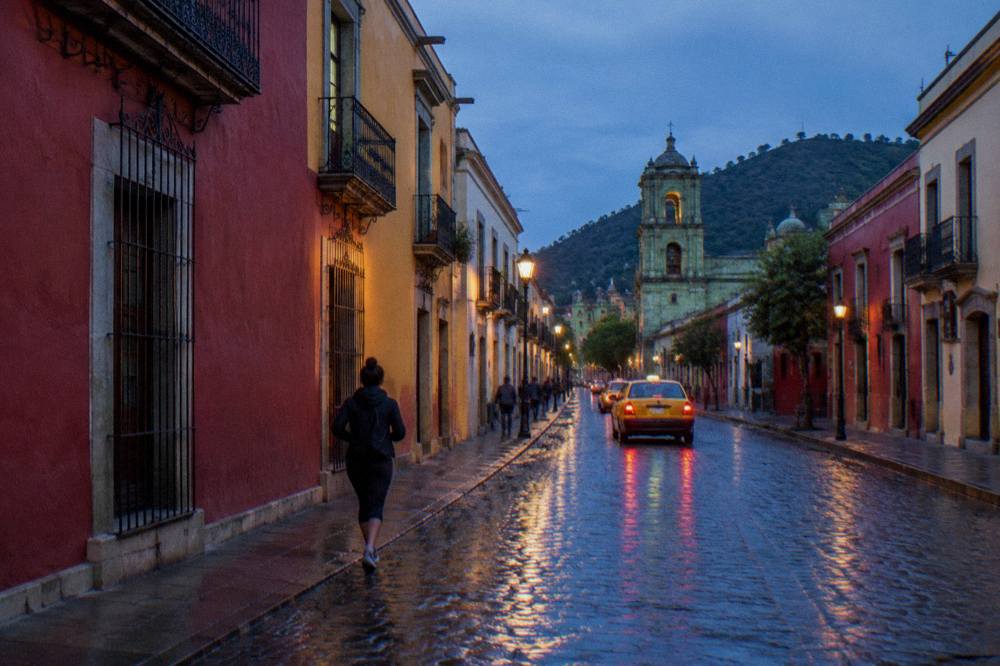
Taxis and apps are the connective tissue of an Oaxaca itinerary, not its backbone: the centro runs on foot, one taxi or app ride a day covers the odd hill or late return, colectivos or a tour cover the valley day, and the airport transfer bookends it all. A first visit of two to four days can run entirely without a car, and the itineraries on this site are built that way.
The pattern, day by day, looks like this in practice:
| Day | Base | Wheels Needed | Best Mode |
|---|---|---|---|
| Centro and markets | On foot | None | Walking |
| Monte Albán morning | Taxi or tour | Round trip | Tour or agreed taxi |
| Valley loop (Tule, Mitla, Hierve el Agua) | Tour or rental | Full day | Booked tour |
| Craft villages (Teotitlán, Coyotepec, Tilcajete) | Tour or colectivo | Full day | Tour or colectivo |
| Cooking class or food tour | Centro | None | Walking |
| Festival evenings (Guelaguetza, Día de Muertos) | Centro and Cerro del Fortín | Occasional | App or radio taxi |
The itineraries behind that table are written out in full: Oaxaca in one day, Oaxaca in 2 days, and on up through a week, each with the transport choices attached. Where to sleep, which changes how much of any of this you need, is covered at where to stay in Oaxaca, and the overall menu of the city is at things to do in Oaxaca.
One closing time-zone note that trips up flight-day planning: Oaxaca runs at UTC-6 all year. Mexico abolished seasonal clock changes with a law published in October 2022, so there is no daylight saving shift to account for when you book that pre-dawn airport taxi.
Common Questions About Taxis, Uber And DiDi In Oaxaca
Do Uber And DiDi Work In Oaxaca City?
Yes, ride-hailing apps operate in Oaxaca City with app-set fares. Airport pickup rules are a separate, changing detail, so check inside the app before you land rather than planning on it.
Do Taxis In Oaxaca Use Meters?
No. Street taxis work on fares agreed before the ride begins, paid in cash. State the destination through the window, agree the price, then get in.
How Do You Get From Oaxaca Airport To The City Centre?
Authorised taxis are purchased at a booth inside arrivals at Xoxocotlán (OAX), the ASUR-operated terminal, along with colectivo shuttle options. The published sources behind this site carry no official fare figure, so the booth quote governs.
Can You Visit Monte Albán Without A Car?
Yes. Monte Albán is about 15 minutes' drive from the Zócalo, and a taxi agreed for the round trip with waiting time, or a tour with transport included, covers it. The INAH site opens daily 08:00 to 17:00 with last access at 16:00, and admission is 105 MXN for nationals and 210 MXN for foreign visitors.
Is There Uber At Oaxaca Airport?
That rule changes and is not settled in the official record, so treat the app as a city tool and the airport as authorised-taxi territory: buy the ride at the arrivals booth.
Do You Need A Car For Hierve El Agua And Mitla?
No. A booked valley day trip covers the whole loop with transport included, which is the simpler option given the roughly 57-minute free-flow drive to Hierve el Agua and the mountain final stretch.
Getting around Oaxaca comes down to matching the tool to the day: feet for the centro, an agreed taxi or an app for the edges of town, a booth-bought authorised taxi at each end of the flight, and a booked tour or a colectivo for the valleys, with the bus question for Mexico City covered in the ADO bus guide and the overland route in Mexico City to Oaxaca.