What Not To Miss In Oaxaca?
The sights, sites, markets and day trips not to miss in Oaxaca City, from Monte Albán and the Zócalo to Hierve el Agua and the craft villages of the Valles Centrales.
Oaxaca City (Oaxaca de Juárez) is the capital of the state of Oaxaca in Mexico, an inland highland city in the Valles Centrales at about 1,550 m, and the whole point of a first visit is concentration: the Monte Albán archaeological zone sits about 15 minutes from the Zócalo by road, the historic centre is a walkable UNESCO property, and the craft villages and Hierve el Agua radiate out across the valley within an hour's drive. The city recorded 1,324,332 tourist arrivals in 2025 according to the state tourism indicators, and Monte Albán alone received 416,675 visitors that year, more than Mitla, Yagul, Lambityeco and Zaachila combined. That imbalance says a good deal about what a short trip can realistically cover.
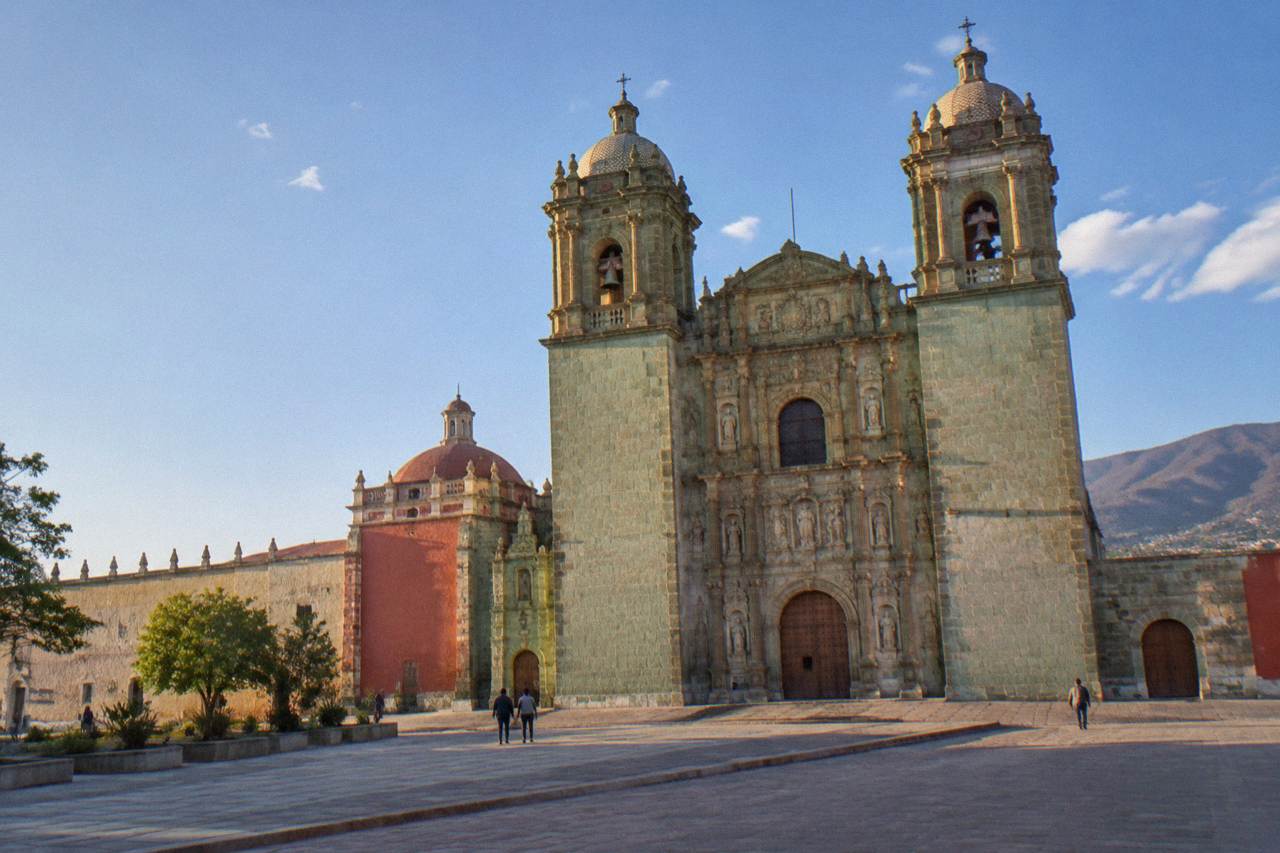
The short list for a first trip to Oaxaca City is Monte Albán, the historic centre around the Zócalo and Santo Domingo de Guzmán, the central markets including Mercado 20 de Noviembre, one craft village such as Teotitlán del Valle or San Martín Tilcajete, and a Hierve el Agua day trip that usually pairs with Mitla and the Tule tree. Everything on that list is reachable from the city without an overnight move, and the INAH entry fees are modest, 105 MXN for Mexican nationals and 210 MXN for foreign visitors at the Category I sites. The order you do them in matters less than booking the valley day trip and the archaeological zone on separate days.
That list is built from what the primary sources actually say about each place, not from a ranking. Monte Albán appears in the UNESCO inscription itself: the property is listed as "Historic Centre of Oaxaca and Archaeological Site of Monte Albán", property 415, so the site and the city centre travel together on the same inscription. Oaxaca de Juárez was founded in 1529 as Antequera, which is why the centre carries the layout it does.
Depth beats breadth here. A visit that adds the Jardín Etnobotánico's free guided tour, or the Museo de las Culturas de Oaxaca inside Santo Domingo, tells you more about the valley than a fifth village would. The museum is open Tuesday to Saturday, 10:00 to 16:00, and charges the Category I rates, 105 MXN nationals and 210 MXN foreigners. The Jardín Etnobotánico runs free guided visits Monday to Friday at 10:30, 11:00, 11:30, 12:00 and 17:00, and Saturday from 10:30 to 12:00, with large and school groups asked to book two weeks ahead.
Is Monte Albán The One Unmissable Site Near Oaxaca?
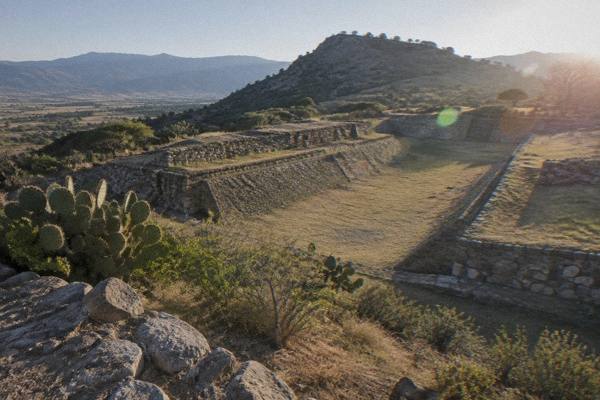
Monte Albán is the one site near Oaxaca City that combines top-tier status, easy access and a fixed published schedule: it is open Monday to Sunday from 08:00 to 17:00 with last access at 16:00, entry is 105 MXN for nationals and 210 MXN for foreign visitors, and it sits about 15 minutes by road from the Zócalo. No other INAH zone in the valley matches that combination of proximity and inscription weight. The site's 416,675 visitors in 2025, per the Sectur indicators, make it by far the most visited archaeological zone in the state's central valleys.
The alternatives are real but secondary. Mitla, about 37 minutes from the centre, is open 08:00 to 17:00 with last access at 16:30 and charges the same Category I fee; it drew 104,428 visitors in 2025. Yagul, about 38 minutes out, shares the Monte Albán hours and fee tier. The smaller Category III sites, Dainzú, Lambityeco and Zaachila, charge 80 MXN for nationals and 145 MXN for foreigners, and Zaachila opens only Thursday to Sunday, 10:00 to 16:00, so it cannot anchor a weekday plan.
| INAH site | Hours | Last access | Fee nationals (MXN) | Fee foreigners (MXN) |
|---|---|---|---|---|
| Monte Albán | Mon to Sun 08:00 to 17:00 | 16:00 | 105 | 210 |
| Mitla | Mon to Sun 08:00 to 17:00 | 16:30 | 105 | 210 |
| Yagul | Mon to Sun 08:00 to 17:00 | 16:00 | 105 | 210 |
| Dainzú | Mon to Sun 08:00 to 17:00 | 16:30 | 80 | 145 |
| Lambityeco | Mon to Sun 08:00 to 17:00 | 16:30 | 80 | 145 |
| Zaachila | Thu to Sun 10:00 to 16:00 | not listed | 80 | 145 |
| Atzompa | Mon to Sun 08:00 to 16:00 | 15:00 | not listed on page | not listed on page |
A guided half day at the ruins is the standard way first-time visitors handle Monte Albán, since transport up the hill and a guide are bundled together. The Oaxaca Walking Tour covers the city side of the equation instead, and the two slot neatly into one morning and one afternoon, or two consecutive mornings. Check availability
Which Markets And Food Experiences Should You Not Miss In Oaxaca?
Oaxaca City's unmissable food ground is the cluster of central markets around Mercado 20 de Noviembre and Mercado Benito Juárez, both a few blocks south of the Zócalo, and the answer to what to eat runs through mole, tlayudas, quesillo, chocolate and mezcal, the foods the city is famous for. The markets are working food halls rather than museums, and Mercado 20 de Noviembre dates to 1893 while Mercado Benito Juárez was inaugurated in 1894, per state government notes on the city's historic markets. No published hours exist on official pages, so plan visits for full daytime hours rather than early morning or late evening.
A food or market walk turns the stalls from a maze into a menu. The tastings-based food and market walks on this site explain what each dish is before you order it, and a guided version does the same in person. For cooking rather than eating, the city's cooking classes, several of them with market visits built in, are among the most reviewed products in the whole tour list.
Beyond the centre, the valley's tianguis days are the food event of the region: Tlacolula on Sunday, Ocotlán on Friday, Etla on Wednesday and Zaachila on Thursday are the standing market days, and a valley day trip timed to one of them doubles the payoff. The Tlacolula Sunday market in particular pairs naturally with Mitla and Hierve el Agua, which sit further down the same valley road, about 25 and 57 minutes from the Zócalo respectively.
Which Craft Villages Around Oaxaca Are Worth The Drive?
The craft villages worth driving to from Oaxaca City are Teotitlán del Valle for woven textiles, about 26 minutes away; San Martín Tilcajete for alebrijes; San Bartolo Coyotepec for barro negro pottery; and Santa María del Tule for the Tule tree, about 11 minutes out on the same eastern corridor. Weaving workshops in Teotitlán generally operate Tuesday to Sunday, with many closed Monday, and mornings are recommended for natural-light demonstrations, per current visitor guidance for the village. Each village sells directly from family workshops, and the etiquette is simple: ask before photographing and expect cash to be preferred.
The drive times below are derived free-flow estimates from the Zócalo; real traffic and mountain roads make them slower.
| Destination from the Zócalo | Distance (km) | Free-flow drive time |
|---|---|---|
| Santa María del Tule | 10.2 | about 11 minutes |
| Monte Albán | 8.7 | about 15 minutes |
| Teotitlán del Valle | 29.2 | about 26 minutes |
| Tlacolula | 31.2 | about 25 minutes |
| Ocotlán de Morelos | 32.5 | about 37 minutes |
| Yagul | 41.9 | about 38 minutes |
| Mitla | 44.6 | about 37 minutes |
| Hierve el Agua | 67.1 | about 57 minutes |
Craft villages can be strung together. A single day can take in Tule, Teotitlán del Valle and either Tilcajete or Coyotepec on the southern arm, or Tule, Mitla and Hierve el Agua on the eastern arm. Trying to do both arms in one day means more road than village.
Is Hierve El Agua Worth Adding To An Oaxaca Trip?
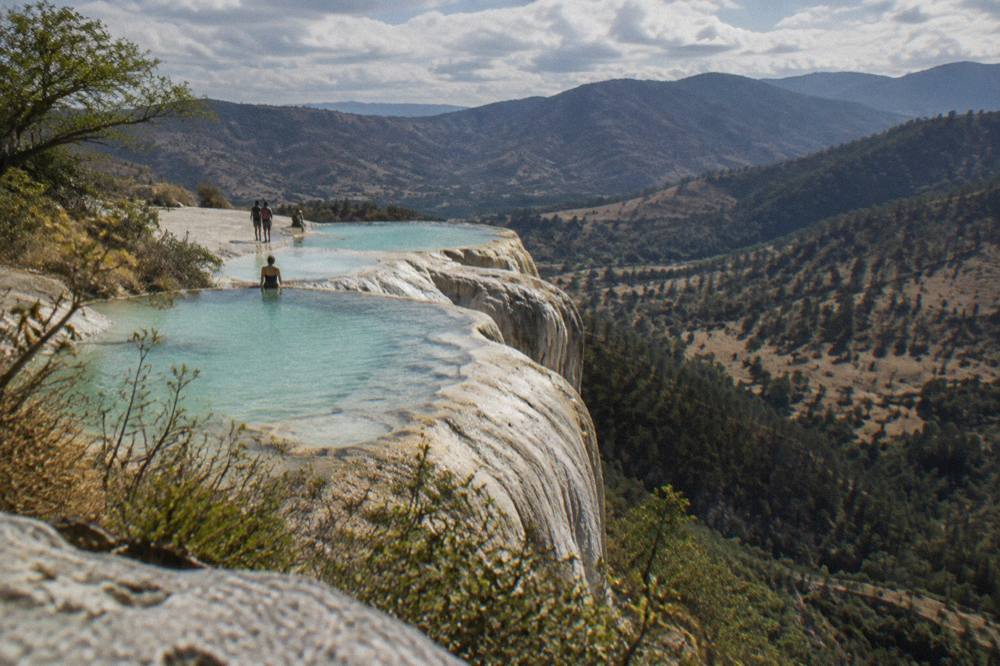
Hierve el Agua is worth adding to an Oaxaca trip if you have a full day free, because it sits about 57 minutes beyond Mitla at the end of the eastern valley road, about 67.1 km from the Zócalo, and nearly every visitor reaches it as part of a combined loop with Mitla, the Tule tree, a weaving stop and a mezcal distillery rather than as a standalone trip. Entry fees and hours for Hierve el Agua itself are set by the local communities that run it, and no official published figure exists, so the practical planning unit is the day tour, which prints its own price and details on its listing.
The combined loop is the single most reviewed product shape in the valley tour list, which reflects how the geography works: the Tule tree is 11 minutes out, Tlacolula 25, Mitla 37 and Hierve el Agua 57, all on one corridor. A visitor who drives that road independently passes every major stop anyway.
The mezcal leg of that loop usually lands in Santiago Matatlán, which state communications describe as the world capital of mezcal. Mezcal tasting in the city itself is a separate evening-scale option, and the pairing sessions with mole run short enough to fit before dinner.
What Else Should You Not Miss In Oaxaca Beyond The Big Names?
Beyond the big names, the additions that earn their place in Oaxaca City are the neighbourhoods of Jalatlaco and Xochimilco beside the historic core, the free guided tours of the Jardín Etnobotánico, the Museo de las Culturas de Oaxaca on its Tuesday to Saturday schedule, and the Guelaguetza in July if your dates align. Jalatlaco and Xochimilco sit within walking distance of the Zócalo, so they cost nothing but an hour or two. The botanical garden's tours are free, Monday to Friday at 10:30, 11:00, 11:30, 12:00 and 17:00 and Saturday 10:30 to 12:00.
Timing matters for the festival calendar. The Guelaguetza runs on two Mondays in July, the Lunes del Cerro, at the Auditorio Guelaguetza on the Cerro del Fortín; in the 2026 edition the paid sections were Palco A at 1,632 MXN and Palco B at 1,321 MXN plus fees, with Palcos C and D free, and 2027 dates have not been announced. Día de Muertos centres on the traditional dates of 31 October to 2 November, with cemetery visits concentrated on 1 and 2 November; the detailed 2026 city programme had not been announced. Noche de Rábanos holds to 23 December as its standing date.
The climate table helps with the timing question more than any ranking could. Rainfall in the SMN station normals runs from 2.4 mm in January to 188.3 mm in June, with the rainy season May to October and the dry season November to April. April carries a normal daily high of 34.9 C and December to January bring the lower overnight figures, about 10.3 to 11.0 C on average.
| Month | Average high (C) | Average low (C) | Average rain (mm) |
|---|---|---|---|
| January | 28.9 | 10.3 | 2.4 |
| April | 34.9 | 15.8 | 47.3 |
| June | 30.9 | 16.7 | 188.3 |
| September | 29.1 | 16.1 | 163.6 |
| December | 28.9 | 11.0 | 9.0 |
For readers weighing the city against other stops, the Oaxaca Travel Guide pages on how many days are enough and what Oaxaca is famous for break the itinerary question down further, and is Oaxaca worth visiting covers the case for the trip as a whole. Anyone curious about safety can read the advisory picture on is Oaxaca safe for Americans right now.
Common Questions About What Not To Miss In Oaxaca
What Not To Miss In Oaxaca?
Monte Albán, the historic centre around the Zócalo and Santo Domingo de Guzmán, the central markets led by Mercado 20 de Noviembre, at least one craft village such as Teotitlán del Valle, and a Hierve el Agua loop with Mitla and the Tule tree. Add the Jardín Etnobotánico's free guided tour if the schedule fits.
How Many Days Do You Need For The Unmissable Oaxaca List?
The 2025 state indicators put the average stay at 2.00 nights, which covers the historic centre, Monte Albán and one valley day trip. A fourth day adds the craft villages or the Sierra Norte.
Can You Visit Monte Albán And Mitla On The Same Day?
Yes, in driving terms: Monte Albán is about 15 minutes west of the Zócalo and Mitla about 37 minutes east, so both fit in one long day. Doing so leaves no time for Hierve el Agua, which is further east still, beyond Mitla.
What Does Monte Albán Entry Cost?
Monte Albán is a Category I INAH site: 105 MXN for Mexican nationals and 210 MXN for foreign visitors, per the INAH site page. It is open Monday to Sunday, 08:00 to 17:00, last access 16:00.
When Is The Best Time To See Día De Muertos In Oaxaca?
The traditional dates are 31 October to 2 November, with cemetery visits concentrated on 1 and 2 November. The detailed city programme is published closer to the date each year, so confirm events before booking around them.
Is The Jardín Etnobotánico Free?
Yes, the guided visits are free, Monday to Friday at 10:30, 11:00, 11:30, 12:00 and 17:00, and Saturday from 10:30 to 12:00. Large and school groups are asked to reserve two weeks ahead.