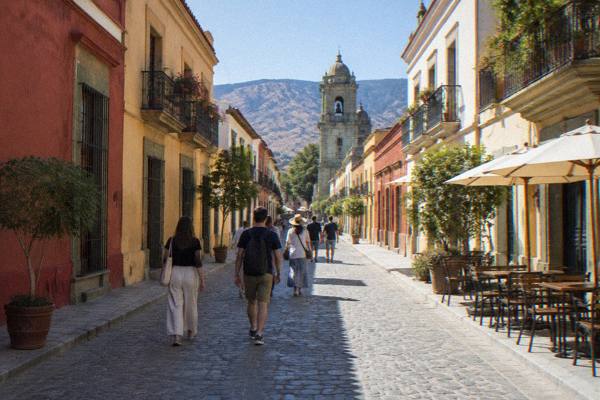
Cerro Del Fortín: The Hilltop Viewpoint Above Oaxaca
Cerro del Fortín is the hill at the edge of Oaxaca City's historic centre, home to the Auditorio Guelaguetza and a protected natural area. This guide covers the Guelaguetza schedule and ticket prices, the weather on the hill, and how the hill fits into a visit to the city.
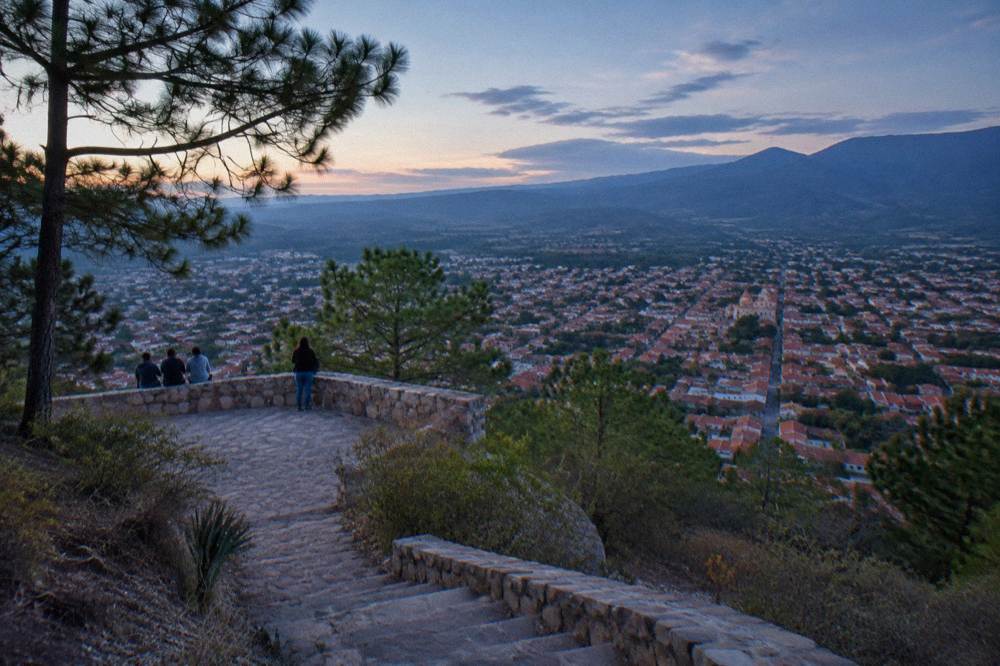
Cerro del Fortín is the hill west of Oaxaca City's historic centre. Its Auditorio Guelaguetza hosts the Guelaguetza on two Mondays each July; the 2026 edition ran 20 and 27 July with Palco A tickets at 1,632 MXN and Palcos C and D free. The hill is also a protected natural area that was reforested with native species in 2025.
Cerro del Fortín is the hill that stands above Oaxaca City (Oaxaca de Juárez), the inland highland capital of the state of Oaxaca at about 1,550 m in the Valles Centrales. The hill carries the Auditorio Guelaguetza, the venue of the city's July festival, and a protected natural area administered as part of the city's green space. This page gathers what official state and INAH sources say about the hill: the Guelaguetza schedule and seating prices for the 2026 edition, the climate normals for the city below it, the reforestation the state carried out on its slopes, and how the hill fits alongside the Zócalo, Santo Domingo and the rest of the historic centre.
What Is Cerro Del Fortín In Oaxaca?
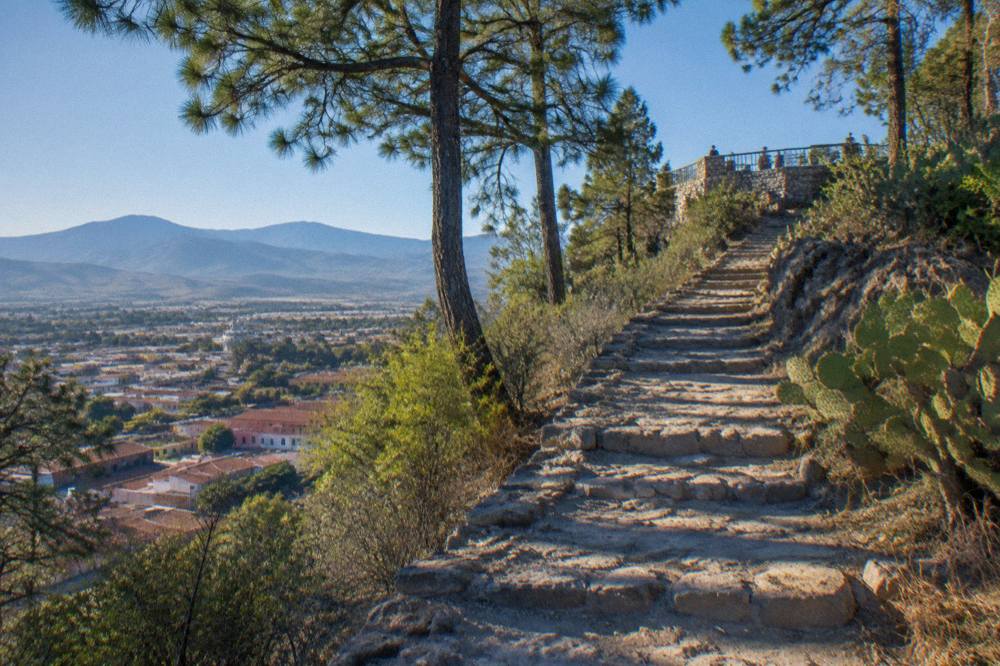
Cerro del Fortín is a hill at the edge of Oaxaca City's historic centre that combines two things: the Auditorio Guelaguetza, the purpose-built venue where the Guelaguetza festival is staged every July, and a protected natural area covering the hill itself. The state government lists both on its official pages, and in 2025 it reforested 1.5 hectares of the hill with native species as part of the area's management.
The Auditorio Guelaguetza sits on the Cerro del Fortín at Carretera Internacional s/n, Oaxaca de Juárez, an address given on the state's own ticket announcements for the festival. The venue is also called the Rotonda de las Azucenas on some official releases. The rest of the hill is treated as an área natural protegida, a protected natural area, in the state's communications, which describe reforestation campaigns there, most recently 1.5 hectares replanted with native species in 2025.
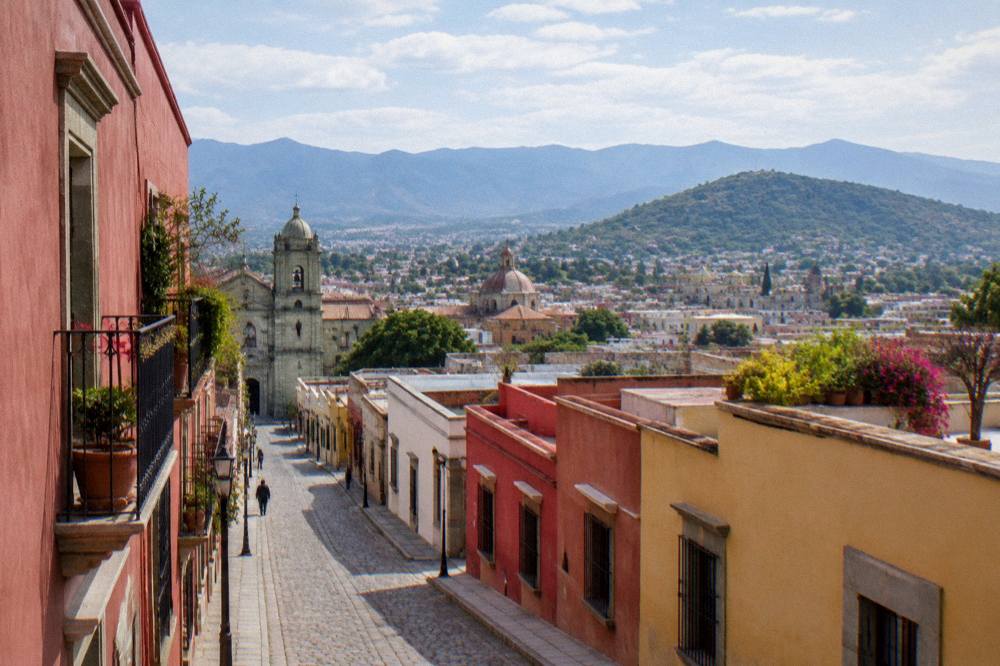
The hill sits within walking reach of the grid of the historic centre, whose core holds the Zócalo, the Andador Macedonio Alcalá and Santo Domingo de Guzmán. The UNESCO World Heritage property "Historic Centre of Oaxaca and Archaeological Site of Monte Albán", property 415, covers the centre below it; the hill itself is a municipal green space and festival ground rather than part of the inscribed property.
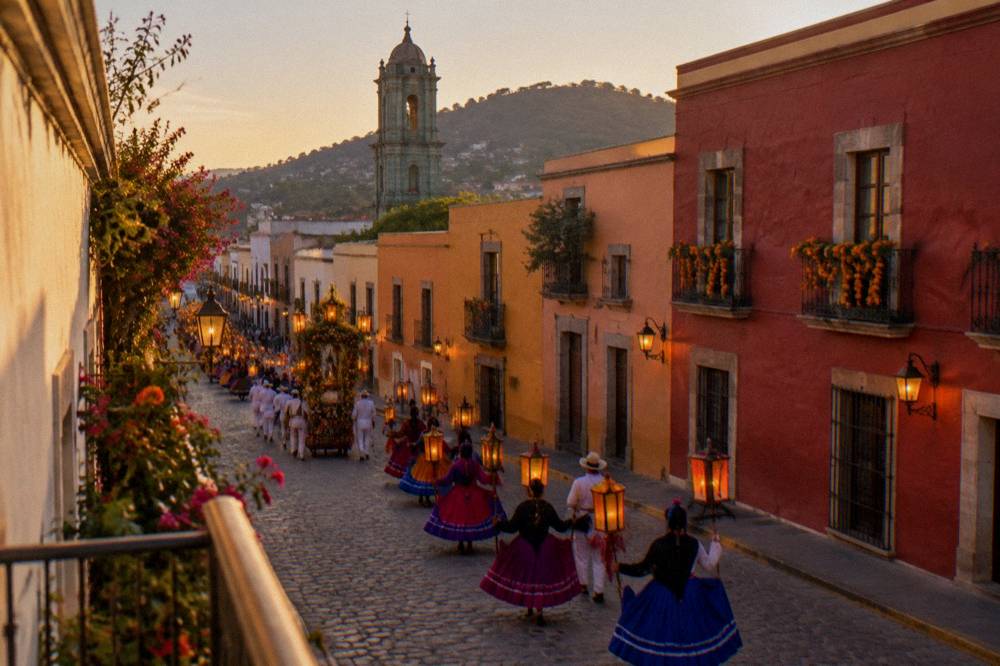
The hill's name appears across the Guelaguetza programme: the festival's Calendas de las Culturas set off in 2026 on 18 and 25 July at about 18:00 from the Fuente de las Ocho Regiones, and the Convites ran on 1, 10 and 11 July at about 18:00 from Cruz de Piedra, all under the "Julio, mes de la Guelaguetza" banner with more than 140 activities. Those street events happen in the city below rather than on the hill itself, but they frame the two Mondays when the auditorium fills.
Why Is Cerro Del Fortín Famous In Oaxaca?
Cerro del Fortín is famous in Oaxaca because it is the permanent home of the Guelaguetza, the state festival held there on the two Mondays of late July known as the Lunes del Cerro. Every edition since the auditorium was built has been staged on this hill, and the state's ticketing, programme and economic-impact announcements for the festival all carry the hill's name and the auditorium's address on Carretera Internacional.
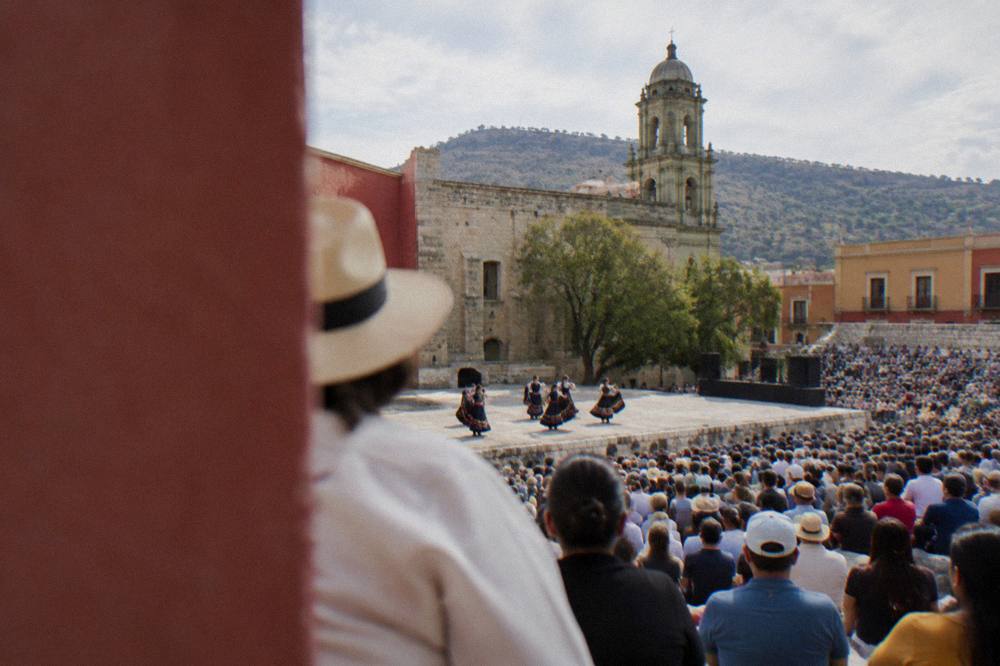
The Guelaguetza is an annual July event. The standing pattern, as the state presents it, is two Mondays of performances at the Auditorio Guelaguetza, each day with shows at 10:00 and 17:00, surrounded by a month of supporting events: the Calendas, the Convites, the Feria del Mezcal and a billboard of more than 140 activities. The 2026 edition ran on Monday 20 and Monday 27 July, and the state estimated the festival would bring 668 million pesos of economic activity to the capital.
The hill also anchors the city's festival calendar in a second way: it is the green backdrop at the western edge of the centro histórico, next to the Paseo Juárez El Llano park and the streets that climb from the Basílica de la Soledad toward the auditorium access road. Visitors who come for the festival often pair the hill with the museums and churches of the centre, from the Museo de las Culturas de Oaxaca inside Santo Domingo to the Museo Textil de Oaxaca a few blocks south.
For travellers who want the hill's story placed in the wider context of the city, a guided walk is the practical route: the Culture, History and Traditions of Oaxaca City tour covers the centre's history and traditions with a local guide, and it can be checked on the operator's booking page.
When Is The Guelaguetza Held On Cerro Del Fortín In Oaxaca?
The Guelaguetza is held on two Mondays in late July, the Lunes del Cerro, with two performances each day at 10:00 and 17:00 at the Auditorio Guelaguetza on Cerro del Fortín. The 2026 edition ran on Monday 20 and Monday 27 July. The 2027 dates have not been announced, so plan against the standing pattern, not a printed calendar.
Preventa for the 2026 tickets opened on 15 May and regular sales ran from 1 June, both exclusively through the Superboletos platform, with a two-ticket limit per account aimed at stopping resale. The paid sections sold out quickly, as the state's own release on the sell-out of Palcos A and B records. Anyone targeting a future edition should watch the state tourism channels in late spring, since that was the pattern in 2026.
The festival month around the two Mondays is dense. In 2026 the Calendas de las Culturas ran on 18 and 25 July at about 18:00 from the Fuente de las Ocho Regiones, and the Convites on 1, 10 and 11 July at about 18:00 from Cruz de Piedra. The Feria del Mezcal ran 17 to 28 July at the Centro Cultural y de Convenciones de Oaxaca in Santa Lucía del Camino, with entry reported at about 80 MXN and more than 400 stands.
| 2026 Guelaguetza event | Date | Time | Starting point or venue |
|---|---|---|---|
| Convite | 1 July | about 18:00 | Cruz de Piedra |
| Convite | 10 July | about 18:00 | Cruz de Piedra |
| Convite | 11 July | about 18:00 | Cruz de Piedra |
| Feria del Mezcal | 17 to 28 July | 11:00 to 22:00 | CCCO, Santa Lucía del Camino |
| Calenda de las Culturas | 18 July | about 18:00 | Fuente de las Ocho Regiones |
| Lunes del Cerro (first) | 20 July | 10:00 and 17:00 | Auditorio Guelaguetza |
| Calenda de las Culturas | 25 July | about 18:00 | Fuente de las Ocho Regiones |
| Lunes del Cerro (second) | 27 July | 10:00 and 17:00 | Auditorio Guelaguetza |
The dates above belong to the 2026 edition and are given as a reference for how the month is structured. The 2027 programme has not been announced, and no 2027 dates should be assumed from this table.
How Much Do Guelaguetza Tickets Cost In Oaxaca?
Guelaguetza tickets in 2026 were priced by section: Palco A at 1,632 MXN and Palco B at 1,321 MXN, plus service fees, with Palcos C and D free by order of arrival. All paid tickets were sold exclusively through Superboletos, with a two-ticket limit per account, and the A and B sections sold out fast once regular sales opened on 1 June.
The section structure matters for planning. Palco A and Palco B are the paid seated sections; Palcos C and D are free and fill by arrival order on the day, which is why the state's releases emphasise early arrival for the free sections. The two-per-account limit was introduced specifically to prevent resale, and the state announced anti-resale checks for the 2026 edition.
| Guelaguetza section | 2026 price (MXN) | Notes |
|---|---|---|
| Palco A | 1,632 plus fees | Paid seated section, sold out fast |
| Palco B | 1,321 plus fees | Paid seated section, sold out fast |
| Palco C | Free | By order of arrival |
| Palco D | Free | By order of arrival |
These prices are those of the 2026 edition and are given as a reference only. Future editions will carry their own pricing on the official sales channel when announced. Visitors in Oaxaca outside July will find the auditorium quiet for the rest of the year, while the hill's paths and green space remain part of city life; the Paseo Juárez El Llano at its foot is one of the centre's traditional parks.
How Do You Get To Cerro Del Fortín In Oaxaca?
Cerro del Fortín sits at the western edge of Oaxaca City's historic centre, with the Auditorio Guelaguetza addressed at Carretera Internacional s/n, Oaxaca de Juárez, on the state's ticket announcements. No walking time, bus fare or taxi fare for the route from the Zócalo to the hill is published, so treat any figure a seller quotes as unconfirmed and check with the operator or driver directly.
What the sources do give is the hill's position relative to the rest of the centre. The streets that climb toward the auditorium begin within the UNESCO-inscribed grid, close to the Basílica de la Soledad and the Paseo Juárez El Llano. During the Guelaguetza the state coordinates transport around the festival, and in 2026 it even arranged free bus service to the Feria del Mezcal in Santiago Matatlán, a separate event in the valleys.
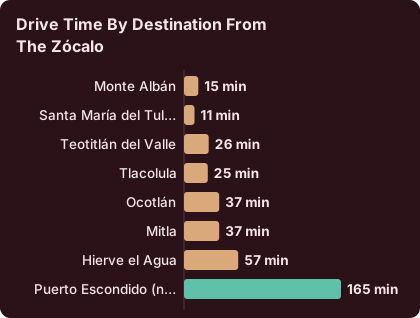
For trips beyond the city, derived drive times from the Zócalo, computed on mapped roads at free-flow speeds, give a sense of the valley's scale. Real traffic and mountain roads are slower than these figures, and they should be read as lower bounds:
| Destination from the Zócalo | Distance (km) | Drive time, about |
|---|---|---|
| Monte Albán | 8.7 | 15 minutes |
| Santa María del Tule | 10.2 | 11 minutes |
| Teotitlán del Valle | 29.2 | 26 minutes |
| Tlacolula | 31.2 | 25 minutes |
| Ocotlán | 32.5 | 37 minutes |
| Mitla | 44.6 | 37 minutes |
| Hierve el Agua | 67.1 | 57 minutes |
| Puerto Escondido (new highway) | 190.1 | 165 minutes |
Those valley destinations are day trips, not city sights, and several organized products cover them in one loop from the city. The Hierve el Agua, Tule Tree, Mitla and Mezcal Distillery Tour is one such loop, pairing the hill country east of the city with the Tule tree on the way; availability is on the operator's booking page. The basics of the city's transport network, including the colectivo system that reaches the valleys, are covered in the guide to getting around Oaxaca.
What Is The Weather Like On Cerro Del Fortín In Oaxaca?
Oaxaca City's climate normals show a dry season from November to April and a rainy season from May to October, and the hill shares the city's figures: July averages 118.6 mm of rain across 20.4 rain days, while March averages 17.6 mm. July's mean daily high is 30.1 C and its mean nightly low 15.9 C, per the SMN station 20079 normals for 1991 to 2020.
The Guelaguetza sits inside the rainy season, and that is deliberate rather than a problem: the July rains in the Valles Centrales typically fall in the afternoon and evening, while the festival's morning show starts at 10:00. June carries the highest monthly total in the normals at 188.3 mm, and September follows at 163.6 mm, so the two festival Mondays fall in a comparatively moderate rain month for the city.
| Month | Mean daily high (C) | Mean nightly low (C) | Rain (mm) | Days with rain |
|---|---|---|---|---|
| January | 28.9 | 10.3 | 2.4 | 1.4 |
| February | 31.1 | 11.6 | 4.6 | 1.1 |
| March | 33.3 | 13.6 | 17.6 | 4.1 |
| April | 34.9 | 15.8 | 47.3 | 7.6 |
| May | 33.8 | 16.7 | 97.9 | 13.7 |
| June | 30.9 | 16.7 | 188.3 | 19.9 |
| July | 30.1 | 15.9 | 118.6 | 20.4 |
| August | 30.0 | 15.9 | 131.8 | 20.5 |
| September | 29.1 | 16.1 | 163.6 | 21.4 |
| October | 29.3 | 14.5 | 63.1 | 12.0 |
| November | 29.0 | 12.3 | 9.1 | 3.5 |
| December | 28.9 | 11.0 | 9.0 | 2.4 |
April's mean daily high of 34.9 C is the year's peak figure in the table, and the December to January nights carry the lowest mean minimums at 11.0 and 10.3 C. The annual rain total is 853.3 mm. The city sits at about 1,550 m, so evenings feel cool even after warm afternoons, and the guide to Oaxaca weather by month unpacks the same normals month by month.
What Else Sits Near Cerro Del Fortín In Oaxaca?
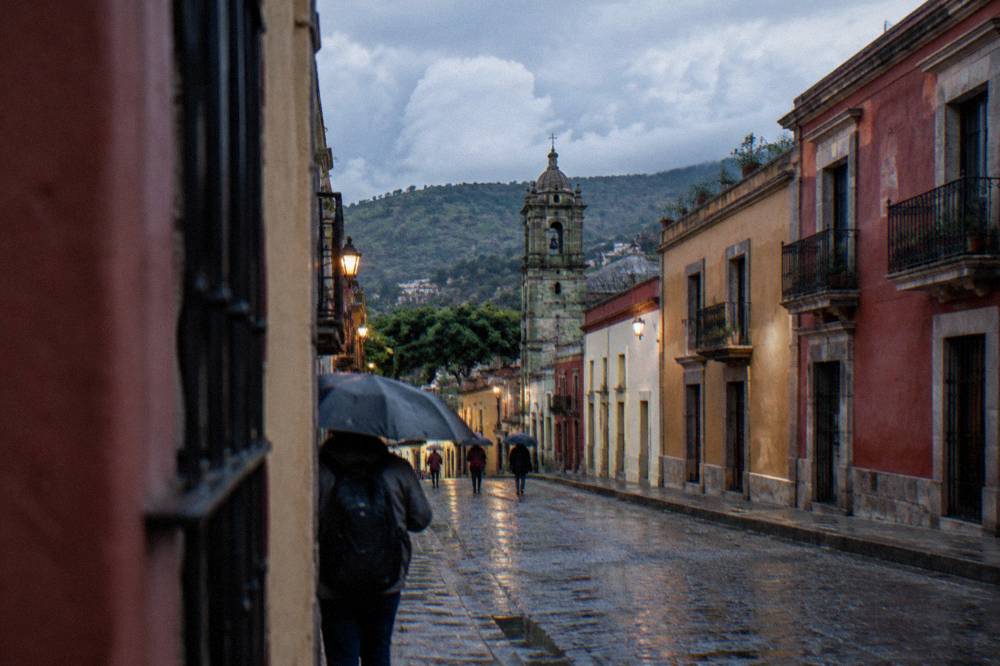
The hill stands beside the Paseo Juárez El Llano park and the streets climbing from the Basílica de la Soledad, with the whole historic centre below it: the Zócalo, the Andador Macedonio Alcalá, Santo Domingo de Guzmán and its Jardín Etnobotánico, and the markets of the centre. The Museo de las Culturas de Oaxaca inside Santo Domingo opens Tuesday to Saturday, 10:00 to 16:00, at 105 MXN for nationals and 210 MXN for foreign visitors.
A walk down from the hill into the centre passes several of the city's core sights in sequence. The Jardín Etnobotánico offers free guided tours Monday to Friday at 10:30, 11:00, 11:30, 12:00 and 17:00, and Saturday from 10:30 to 12:00, with large and school groups booking two weeks ahead. The Mercado 20 de Noviembre and Mercado Benito Juárez sit a few blocks south of the Zócalo.
| Sight near the hill | Hours stated by official sources | Entry (MXN) |
|---|---|---|
| Museo de las Culturas de Oaxaca (Santo Domingo) | Tuesday to Saturday, 10:00 to 16:00 | 105 nationals / 210 foreigners |
| Jardín Etnobotánico (guided tours) | Mon to Fri 10:30, 11:00, 11:30, 12:00, 17:00; Sat 10:30 to 12:00 | Free |
| Monte Albán (INAH) | Monday to Sunday, 08:00 to 17:00, last access 16:00 | 105 nationals / 210 foreigners |
| Mitla (INAH) | Monday to Sunday, 08:00 to 17:00, last access 16:30 | 105 nationals / 210 foreigners |
| Atzompa (INAH) | Monday to Sunday, 08:00 to 16:00, last access 15:00 | fee not listed on the page |
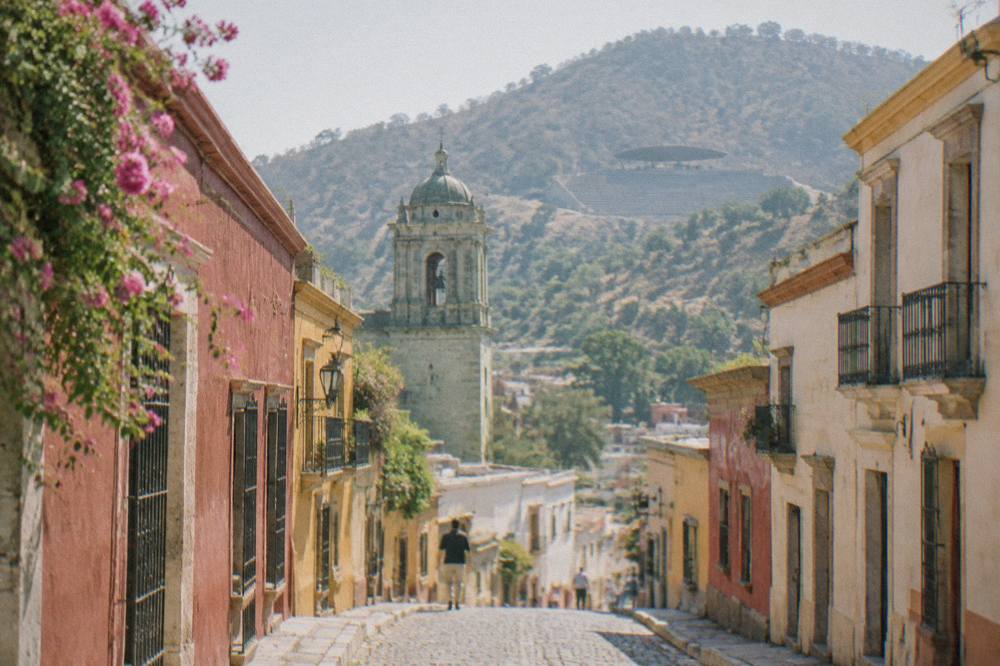
Monte Albán, the archaeological zone across the valley, is a separate hill entirely and about a 15 minute drive from the Zócalo; its full guide covers the site's hours and fees in detail. The auditorium hill and the archaeological zone are often confused by first-time visitors because both are high ground above the city, but they are different places with different administrations: the INAH runs Monte Albán, while the state runs the Cerro del Fortín's auditorium and protected area.
How Does Cerro Del Fortín Fit Into A Day In Oaxaca?
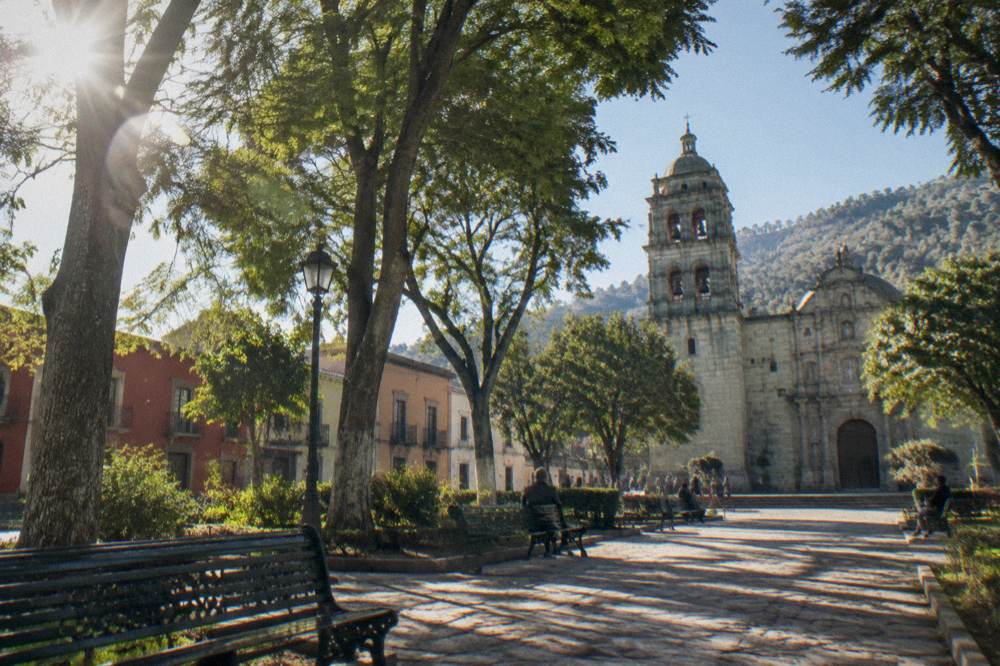
Cerro del Fortín works best as either a morning or late-afternoon addition to a centre-based day, since the hill itself needs no ticket outside the Guelaguetza weeks and the sights around it, the Paseo Juárez El Llano, the Basílica de la Soledad and the historic grid, sit within a compact walk. In July the hill becomes the day's centerpiece instead, with the 10:00 Guelaguetza performance fitting before an afternoon in the centre.
One practical pattern for a festival day: the morning show at the auditorium, then the descent into the centre for lunch around the markets, then the evening Calenda when the calendar carries one. Outside July, the hill is a quieter proposition, and the day's weight shifts to the museums, the churches and the food: the Oaxaca food tour pages collect the city's tasting walks and market visits.
The hill also connects to the city's evening life. The guide to Oaxaca at night covers the centre after dark, and in late October the Día de Muertos period brings its own evening programme: the traditional dates centre on 31 October to 2 November, with cemeteries open at night and comparsas in the neighbourhoods. The 2026 programme has not been announced, so plan against the traditional dates rather than a published schedule. An evening walking tour with dinner is one organized way into that season, and its details are on the operator's booking page: Check availability.
Is Cerro Del Fortín In Oaxaca Safe To Visit?
Official advisories do not single out Oaxaca City or Cerro del Fortín: the UK FCDO advises against all but essential travel to parts of Mexico without naming Oaxaca on its main page, Canada advises a high degree of caution in Mexico overall with regional advisories, and the US State Department lists Oaxaca state at Level 2, exercise increased caution, with no restrictions on staff visits to Oaxaca City or Monte Albán.
The one standing local risk worth knowing about is road blockades. Teachers' union protests have repeatedly closed roads and airport access in the region for hours or a day at a time, most recently reported in October 2026, and they are resolved after hours or days. They are a standing risk rather than a dated event, so a traveller with a tight flight connection around a festival week should keep buffer time. The guide to safety in Oaxaca covers the advisory wording in full.
On the hill itself, the same ordinary city precautions apply as anywhere in the centro: the auditorium area fills on festival days, and the free Palcos C and D fill by arrival order, so the practical advice from the state's own releases is early arrival. No advisory names the hill or the auditorium as a specific concern.
What Should You Know Before Visiting Cerro Del Fortín In Oaxaca?
Bring what the climate normals suggest: July days run to a mean high of 30.1 C with rain on roughly 20 days of the month, so sun protection and a rain layer both earn their place, and evenings drop to a mean low near 16 C. Oaxaca City sits at about 1,550 m, in the UTC-6 timezone all year, since Mexico abolished daylight saving time in 2022, so clock-time planning needs no seasonal adjustment.
A few practical points follow from the official record. Tickets for the Guelaguetza come only from the official sales channel named in the state's releases, never from street resellers, and the two-per-account limit exists precisely to keep the paid sections out of resale markets. The free sections cost nothing but reward early arrival. Outside festival weeks, the hill is a green space at the edge of the centre, and the city's core sights, markets and tours sit within an easy walk downhill.
For a fuller plan around the hill, the one day in Oaxaca itinerary and the first-time visitor guide sequence the centre's sights, while the round-up of things to do in Oaxaca collects the city's tours and activities in one place. The state guide to Oaxaca extends the picture beyond the Valles Centrales for longer trips, and this Oaxaca Travel Guide page is part of that wider coverage.
Common Questions About Cerro Del Fortín In Oaxaca
What Is Cerro Del Fortín In Oaxaca?
It is the hill at the western edge of Oaxaca City's historic centre, holding the Auditorio Guelaguetza and a protected natural area that the state reforested with 1.5 hectares of native species in 2025.
When Is The Guelaguetza Held On Cerro Del Fortín?
On two Mondays in late July, the Lunes del Cerro, with performances at 10:00 and 17:00. The 2026 edition ran on 20 and 27 July; the 2027 dates have not been announced.
How Much Do Guelaguetza Tickets Cost?
For the 2026 edition, Palco A was 1,632 MXN and Palco B 1,321 MXN plus fees, with Palcos C and D free by order of arrival. Sales ran exclusively through Superboletos with a two-ticket limit per account.
Is Cerro Del Fortín Free To Visit Outside The Guelaguetza?
The hill is a protected natural area and public green space at the edge of the centre; no official source states an entry fee for the hill itself. Only the Guelaguetza performances in the auditorium are ticketed.
What Is The Weather Like On The Hill In July?
The city's normals show a July mean daily high of 30.1 C, a mean nightly low of 15.9 C and 118.6 mm of rain across 20.4 rain days, placing the festival inside the May to October rainy season.
Is It Safe To Walk To Cerro Del Fortín In Oaxaca?
No official advisory names the hill or the city as a specific concern; the US State Department lists Oaxaca state at Level 2, exercise increased caution, and standard city precautions apply, especially in festival crowds.