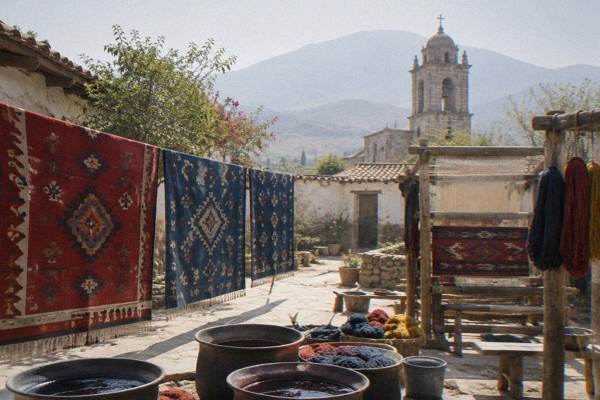
Museo Textil De Oaxaca: Weaving And Dyes In A Colonial Building
The Museo Textil de Oaxaca sits in the historic centre of Oaxaca City, the inland highland capital of the state of Oaxaca, and it belongs to a dense cluster of museums, markets and churches that can be covered on foot in a day.
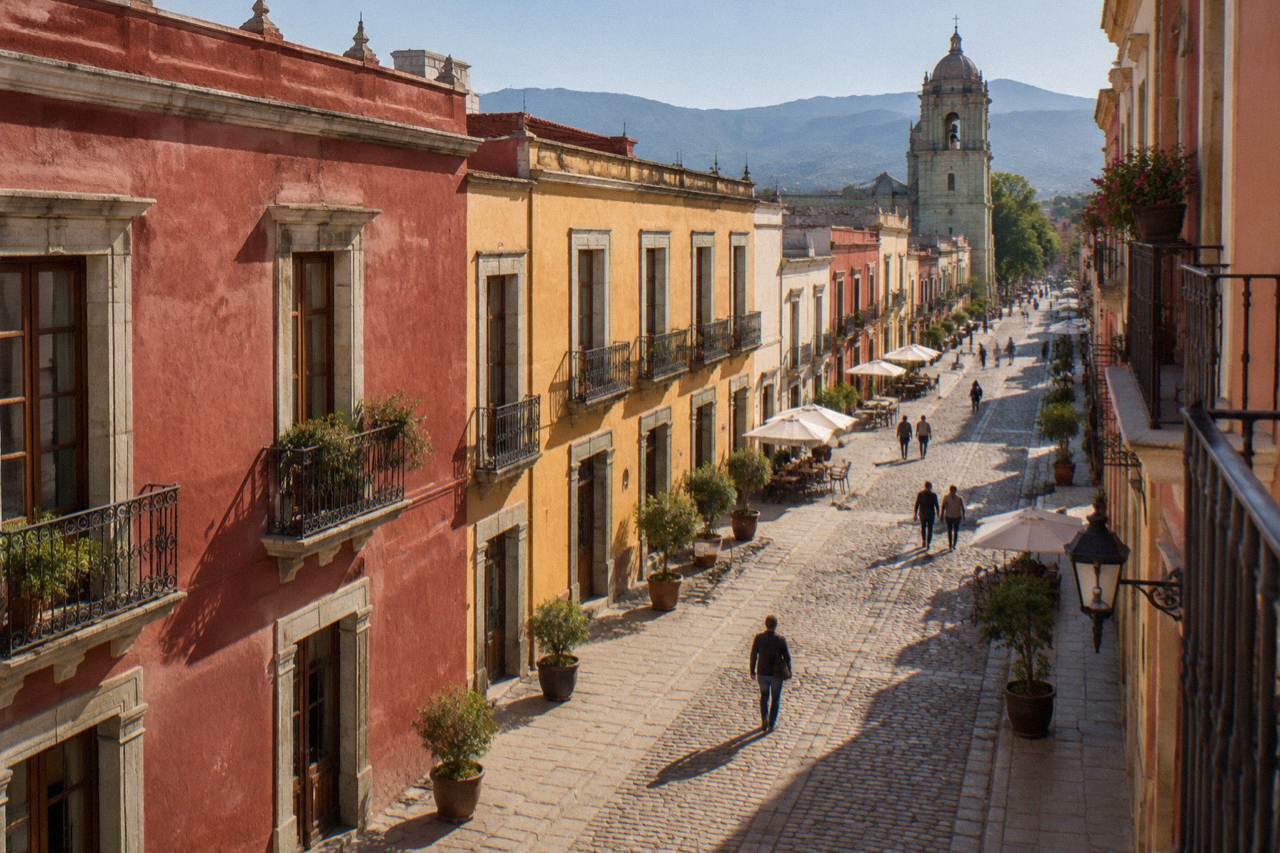
The Museo Textil de Oaxaca is a museum in the historic centre of Oaxaca City dedicated to Oaxacan textiles. Its neighbours within a short walk include Santo Domingo de Guzmán, the Museo de las Culturas de Oaxaca and the Jardín Etnobotánico, and the weaving villages of the Valles Centrales, led by Teotitlán del Valle, sit about half an hour away by road.
Oaxaca City, the capital of the state of Oaxaca in Mexico, is an inland highland city in the Valles Centrales at about 1,550 m, and its historic centre packs museums, churches and markets into a walkable grid. The Museo Textil de Oaxaca belongs to that grid, and this page covers how to plan a visit: where the museum sits, which neighbouring museums list hours and fees, and how the weaving villages of the surrounding valleys fit into the same trip.
What Is The Museo Textil De Oaxaca?
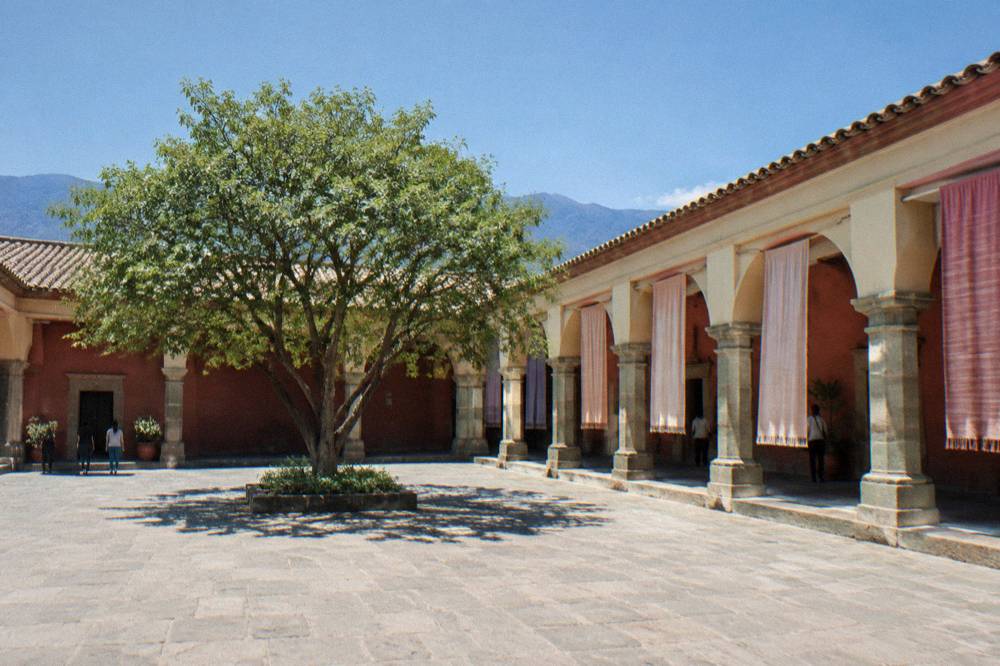
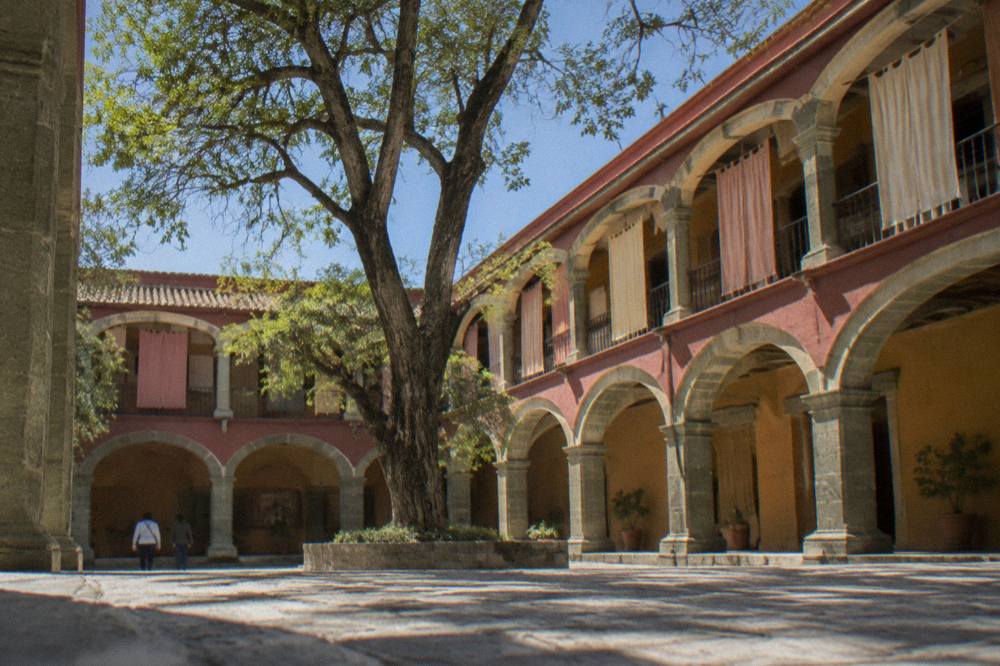
The Museo Textil de Oaxaca is a museum in the historic centre of Oaxaca City dedicated to textiles, a subject the state is strongly associated with through the weaving villages of the Valles Centrales. The museum holds a position inside the UNESCO inscribed area, the Historic Centre of Oaxaca and Archaeological Site of Monte Albán, listed as property 415, and it sits in the same compact quarter as Santo Domingo de Guzmán and the Andador Macedonio Alcalá.
Textiles are one of the threads that connect the city to the villages around it. Teotitlán del Valle lies about 26 minutes by road from the Zócalo, and it is one of several communities in the valleys whose weaving gives the museum its subject matter. A visit to the museum and a visit to the villages are two halves of the same interest, and this page treats them together. For the wider history of the city, founded in 1529 as Antequera, see the companion history of Oaxaca guide.
For the Museo Textil, operational detail is thin. What the surrounding facts do carry, in full, are the hours and fees of the INAH administered museums nearby, the drive times to the craft villages, and the climate normals for the city. Those are the planning facts this page delivers.
Where Is The Museo Textil In Oaxaca City?
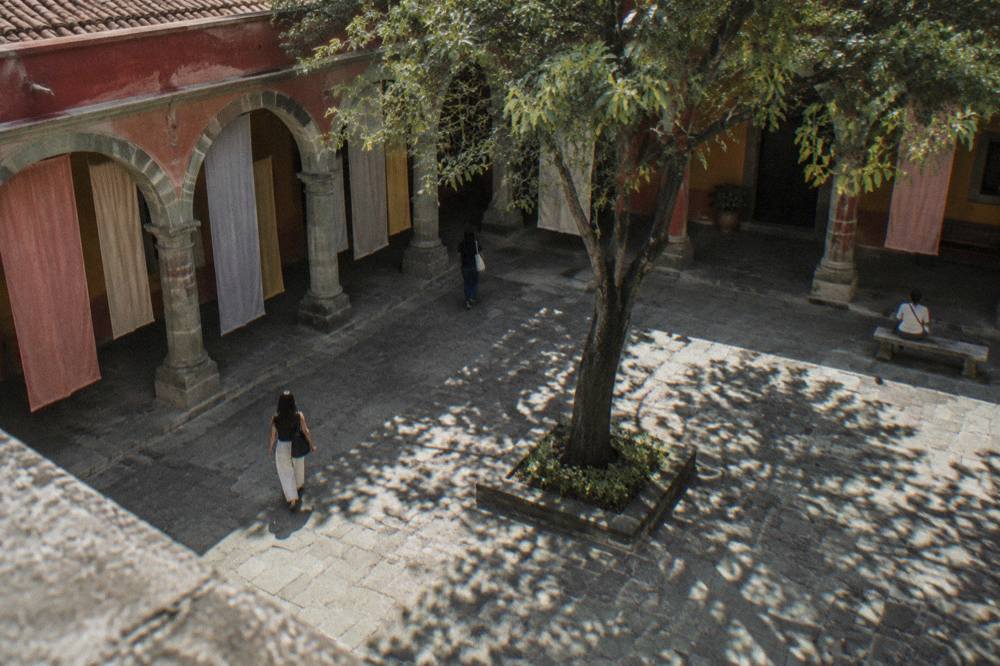
The Museo Textil de Oaxaca stands in the historic centre of Oaxaca City, the state capital, within walking distance of the Zócalo, the Plaza de la Constitución, and of Santo Domingo de Guzmán on the Andador Macedonio Alcalá. The whole central quarter is flat and pedestrian friendly, and the museum belongs to a cluster of cultural sights that can be reached on foot from almost any central hotel.
The centre of Oaxaca City is compact. The Zócalo sits at coordinates 17.0605953, -96.7253435, and the distances that matter to a visitor are the short ones between the Zócalo, the cathedral, the Basílica de la Soledad, the Andador Macedonio Alcalá and the Santo Domingo complex. The Zócalo guide covers the main square itself, and the Santo Domingo church page covers the building complex at the top of the andador.
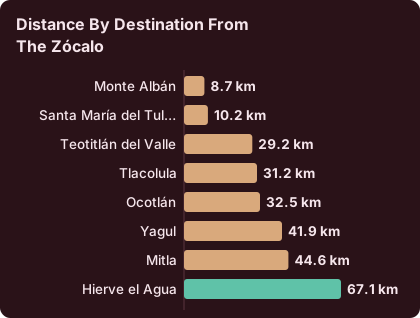
Distances beyond the centre are derived from route calculations on OpenStreetMap roads, free flow, and real traffic in the valleys is slower, so treat each figure as "about" and round up.
| Destination from the Zócalo | Distance | Drive time, free flow |
|---|---|---|
| Monte Albán | 8.7 km | about 15 minutes |
| Santa María del Tule | 10.2 km | about 11 minutes |
| Teotitlán del Valle | 29.2 km | about 26 minutes |
| Tlacolula | 31.2 km | about 25 minutes |
| Ocotlán | 32.5 km | about 37 minutes |
| Yagul | 41.9 km | about 38 minutes |
| Mitla | 44.6 km | about 37 minutes |
| Hierve el Agua | 67.1 km | about 57 minutes |
A reader basing a whole day on the museum quarter does not need any of those roads. Everything in the next two sections is on foot.
Which Museums Sit Near The Museo Textil In Oaxaca City?
The museums near the Museo Textil in Oaxaca City include the Museo de las Culturas de Oaxaca inside the Santo Domingo complex, open Tuesday to Saturday 10:00 to 16:00 at 105 MXN for Mexican nationals and 210 MXN for foreign visitors, and the Jardín Etnobotánico beside it, whose free guided tours run Monday to Friday at 10:30, 11:00, 11:30, 12:00 and 17:00 and Saturday from 10:30 to 12:00.
The Museo de las Culturas is the one museum in the quarter whose hours and fees are published by INAH. It is closed on Sundays and Mondays, which matters for itinerary planning: a visitor who arrives on a Monday and plans the museum quarter around a single building will find that door shut. The Museo de las Culturas guide carries the details, and the Jardín Etnobotánico page covers the garden's tour schedule, which is free and guided only, with large and school groups asked to book two weeks ahead.
The Rufino Tamayo museum of pre-Hispanic art also sits in the centre and reopened in August 2025 after a closure of more than three years for state supervised restoration, a project reported at roughly 6.1 million MXN. Its reopening is confirmed by the state culture secretariat.
| Museum or sight in central Oaxaca City | Days open | Hours | Fee |
|---|---|---|---|
| Museo de las Culturas de Oaxaca (INAH) | Tuesday to Saturday | 10:00 to 16:00 | 105 MXN nationals, 210 MXN foreigners |
| Jardín Etnobotánico, guided tours | Monday to Friday, Saturday | 10:30, 11:00, 11:30, 12:00, 17:00; Sat 10:30 to 12:00 | free |
| Rufino Tamayo, Museo de Arte Prehispánico | reported reopened August 2025 | confirm on the door | confirm on the door |
For visits outside normal INAH hours at INAH administered properties, the listed rate is 730 MXN, a figure printed on several INAH zone pages including Yagul, Lambityeco, Atzompa and the Museo de las Culturas itself.
How Do The INAH Sites Around Oaxaca Compare?
The INAH archaeological zones around Oaxaca City charge by category: Category I sites, Monte Albán, Mitla and Yagul, cost 105 MXN for nationals and 210 MXN for foreign visitors, while Category III sites, Dainzú, Lambityeco and Zaachila, cost 80 MXN and 145 MXN. Most open Monday to Sunday from 08:00, but Zaachila opens Thursday to Sunday 10:00 to 16:00 only, and Atzompa closes at 16:00 with last access at 15:00.
These sites are the other half of a culture focused trip: museums in the morning, ruins and villages in the day. The hours differences bite. Zaachila's Thursday to Sunday window means a Monday or Tuesday visitor misses it entirely, and Atzompa's early closure means it belongs to the morning, not the afternoon. The Monte Albán guide and the Mitla page carry each site in depth.
| INAH site | Days | Hours | Last access | Fee MXN, nationals / foreigners |
|---|---|---|---|---|
| Monte Albán | Monday to Sunday | 08:00 to 17:00 | 16:00 | 105 / 210 |
| Mitla | Monday to Sunday | 08:00 to 17:00 | 16:30 | 105 / 210 |
| Yagul | Monday to Sunday | 08:00 to 17:00 | 16:00 | 105 / 210 |
| Dainzú | Monday to Sunday | 08:00 to 17:00 | 16:30 | 80 / 145 |
| Lambityeco | Monday to Sunday | 08:00 to 17:00 | 16:30 | 80 / 145 |
| Zaachila | Thursday to Sunday | 10:00 to 16:00 | listed 16:00 | 80 / 145 |
| Atzompa | Monday to Sunday | 08:00 to 16:00 | 15:00 | not stated on the page |
Monte Albán recorded 416,675 visitors in 2025, of whom 342,962 were national and 73,713 foreign, per the state tourism indicators. Mitla recorded 104,428, Yagul 10,185, Lambityeco 5,545 and Zaachila 4,229 in the same year. Those figures give a sense of how the load is distributed across the valleys.
Which Weaving Villages Sit Near Oaxaca City?
The weaving villages of the Valles Centrales sit within an hour of the Zócalo in Oaxaca City: Teotitlán del Valle about 26 minutes by road, Tlacolula about 25, Ocotlán about 37 and Mitla about 37. Teotitlán del Valle is the community most identified with woven rugs, and it lies on the same eastern corridor as the Tule tree and the road onward to Hierve el Agua, about 57 minutes out.
The eastern valley corridor strings together several stops that pair naturally with a textile interest. Santa María del Tule, about 11 minutes from the Zócalo, is the first; Teotitlán del Valle is the second; Tlacolula, Mitla and the turnoff to Hierve el Agua follow. A single day can cover the Tule tree, Teotitlán and Mitla without rushing, and the Teotitlán del Valle day trip page plans that loop in detail.
Reported guidance for visiting weaving workshops in Teotitlán, from a 2026 travel listing, is that workshops and cooperatives generally operate Tuesday to Sunday with many closed on Mondays, that mornings are recommended for natural light demonstrations, and that visitors should ask before taking photographs and expect cash to be preferred. Those points are reported by the listing, not by an official source, so confirm on arrival. The full index of guides sits on Oaxaca Travel Guide.
South of the city, Ocotlán de Morelos hosts its Friday market, and the Ocotlán and Friday market guide covers the route. Craft routes that connect several towns in one loop are bookable from the city, which saves the work of arranging transport between villages.
Where Do Dyes And Crafts Fit Into An Oaxaca City Trip?
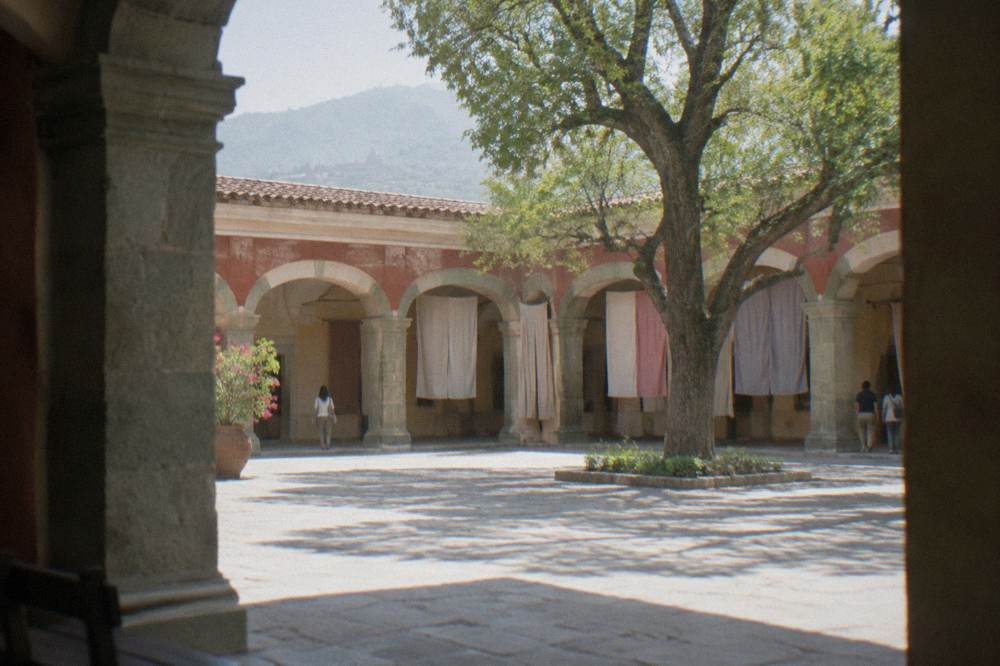
Dyes, weaving and craft workshops in and around Oaxaca City are reachable both independently and through guided products: a printmaking workshop with a local artist runs in the city itself, street art walks cover the murals of Jalatlaco and the centre, and crafts routes reach San Martín Tilcajete, Jalieza and Ocotlán in a single day from the capital. The museum gives the subject its display context, and the workshops and villages give it the working one.
For a visitor whose interest in the Museo Textil extends to making something, the city carries hands on options. The printmaking workshop with a local artist covers a working studio process in the centro, and the operator's booking page carries the current price, rating and schedule: Check availability. Craft routes out of the city reach several villages in one loop, including alebrije painting workshops in San Martín Tilcajete.
The state's craft identity is not limited to textiles. San Bartolo Coyotepec is associated with black pottery, San Martín Tilcajete with alebrijes, and Teotitlán del Valle with woven rugs, and each lies in the Valles Centrales within easy reach of the capital. The full things to do overview places each of these against the city's other options.
When Should You Visit Oaxaca City For A Museum Trip?
Oaxaca City's dry season runs November to April and the rainy season May to October, with June averaging 188.3 mm of rain and January 2.4 mm per the SMN station normals for 1991 to 2020. April averages a mean daily high of 34.9 C and December to January bring the lower overnight figures, about 10.3 C in January, so museum mornings pair well with cool season walking and rainy season afternoons.
Museums are an all season activity in a city where afternoon rain is concentrated from June to September. The monthly picture from the station normals:
| Month | Mean high C | Mean low C | Rain mm |
|---|---|---|---|
| January | 28.9 | 10.3 | 2.4 |
| February | 31.1 | 11.6 | 4.6 |
| March | 33.3 | 13.6 | 17.6 |
| April | 34.9 | 15.8 | 47.3 |
| May | 33.8 | 16.7 | 97.9 |
| June | 30.9 | 16.7 | 188.3 |
| July | 30.1 | 15.9 | 118.6 |
| August | 30.0 | 15.9 | 131.8 |
| September | 29.1 | 16.1 | 163.6 |
| October | 29.3 | 14.5 | 63.1 |
| November | 29.0 | 12.3 | 9.1 |
| December | 28.9 | 11.0 | 9.0 |
Two festival periods reshape the calendar. The Guelaguetza takes place on two Mondays in July at the Auditorio Guelaguetza on the Cerro del Fortín; the 2026 edition ran 20 and 27 July with Palco A at 1,632 MXN and Palco B at 1,321 MXN through Superboletos, and Palcos C and D free. The 2027 dates are not announced. Día de Muertos centres on 31 October to 2 November as its traditional dates; no 2026 programme has been announced, so the standing pattern, not dates, is what a planner should hold. The Día de Muertos guide covers the festival in full.
How Does A Museo Textil Visit Fit Into One Day In Oaxaca City?
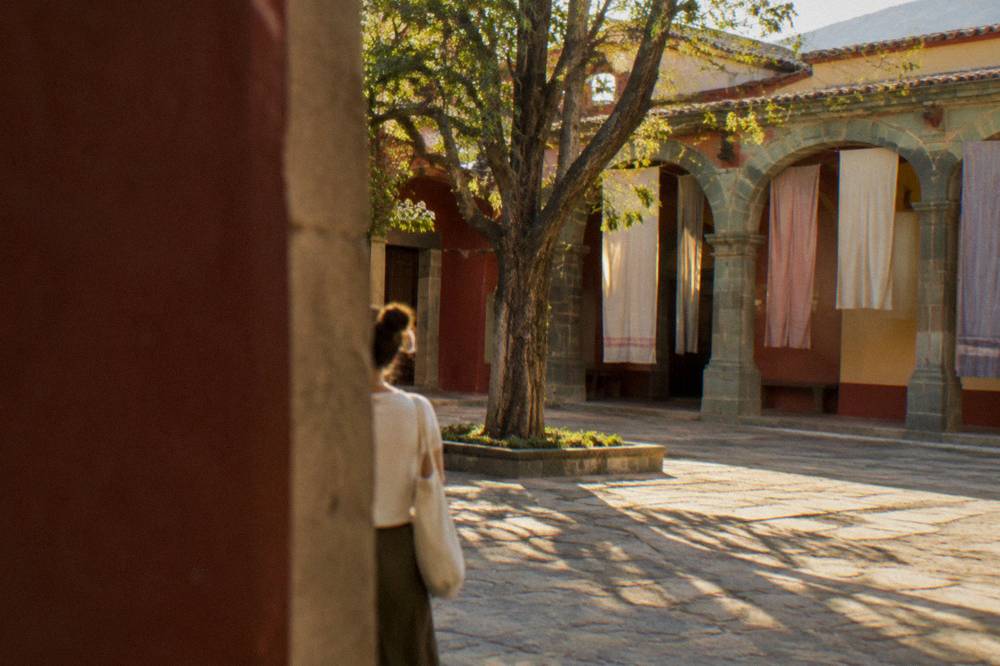
A day built around the Museo Textil in Oaxaca City works as a walking day: the museum quarter in the morning, the INAH Museo de las Culturas in its Tuesday to Saturday window from 10:00, the Jardín Etnobotánico on one of its scheduled free tours, then the markets and churches of the centre, with the Zócalo, the Basílica de la Soledad and the cathedral all inside the same flat grid.
A sample shape, built only from published opening hours. Start at the Basílica de la Soledad, walk to the cathedral on the Zócalo, then up the Andador Macedonio Alcalá to Santo Domingo. Enter the Museo de las Culturas in its 10:00 to 16:00 window, Tuesday to Saturday, then take a Jardín Etnobotánico tour at one of the listed times, remembering the 17:00 slot exists on weekdays only. Finish at the Mercado 20 de Noviembre or the Mercado Benito Juárez for food. This guide does not publish market hours, so confirm those on arrival.
Visitors with a second day should add Monte Albán, about 15 minutes by road, in the morning before the 16:00 last access, and the eastern valley corridor in the afternoon. Visitors with three or more days can add the Sierra Norte, with Latuvi about 142 minutes by road, or the craft towns south of the city.
| Day plan | Morning | Afternoon | Anchor hours |
|---|---|---|---|
| Museum day | Museo de las Culturas, Santo Domingo | Jardín Etnobotánico tour, centre walk | Museum Tue to Sat 10:00 to 16:00; garden tours Mon to Fri 10:30 to 12:00 and 17:00, Sat 10:30 to 12:00 |
| Ruins day | Monte Albán | Atzompa or Cuilapan corridor | Monte Albán 08:00 to 17:00, last access 16:00; Atzompa 08:00 to 16:00, last access 15:00 |
| Valley weaving day | Tule tree, Teotitlán del Valle | Tlacolula or Mitla | Mitla 08:00 to 17:00, last access 16:30 |
What Practical Facts Should A Museo Textil Visitor Know About Oaxaca City?
A visitor to the Museo Textil in Oaxaca City should know the city sits at about 1,550 m, runs on UTC-6 all year with no daylight saving since 2022, charges a 3 percent state lodging tax on hotel stays under decree 884 published 10 December 2025, and recorded 1,324,332 tourist arrivals in 2025, of whom 83.95 percent were national and 16.05 percent foreign. The municipality counted 270,955 residents at the 2020 census.
Practical planning around the museum quarter is simple because the centre is walkable and flat. On safety wording, this guide reports the advisories as published: the UK FCDO advises against all but essential travel to parts of Mexico and does not name Oaxaca on its main page; Canada advises a high degree of caution in Mexico with regional advisories; and the US State Department lists Oaxaca state at Level 2, exercise increased caution, with restrictions in the Isthmus region. Road blockades by teachers' unions are a standing risk that can disrupt road and airport access, so build slack into travel days.
Money is pesos. The state lodging tax of 3 percent applies to hotel type stays, with 5 percent for intermediaries and platforms.
Common Questions About The Museo Textil De Oaxaca
Is The Museo Textil De Oaxaca In The Historic Centre?
Yes. The Museo Textil stands in the historic centre of Oaxaca City, inside the UNESCO inscribed property "Historic Centre of Oaxaca and Archaeological Site of Monte Albán", close to Santo Domingo de Guzmán and the Andador Macedonio Alcalá, all reachable on foot from the Zócalo.
How Far Is The Museo Textil From The Zócalo In Oaxaca City?
The museum sits in the central grid a short walk from the Zócalo, the Plaza de la Constitución, at the heart of a compact, flat and pedestrian friendly quarter. No transport is needed for the museums, churches and markets of the centre.
Which Museums Near The Museo Textil Have Published Hours And Fees?
The Museo de las Culturas de Oaxaca, administered by INAH inside the Santo Domingo complex, is open Tuesday to Saturday 10:00 to 16:00 and charges 105 MXN for nationals and 210 MXN for foreign visitors. The Jardín Etnobotánico runs free guided tours Monday to Friday at 10:30, 11:00, 11:30, 12:00 and 17:00, and Saturday 10:30 to 12:00. Operational details for the Museo Textil itself should be confirmed on the door.
Can You Visit Weaving Villages On A Day Trip From Oaxaca City?
Yes. Teotitlán del Valle lies about 26 minutes by road from the Zócalo, Tlacolula about 25, Ocotlán about 37 and Mitla about 37, all in the Valles Centrales. Reported guidance is that Teotitlán workshops generally operate Tuesday to Sunday with many closed Mondays.
What Is The Best Time Of Year To Visit Oaxaca City For Museums?
Museums run year round. The dry season is November to April and the rainy season May to October; June averages 188.3 mm of rain and January 2.4 mm per the SMN station normals for 1991 to 2020. Rainy season afternoons suit indoor visiting, and July brings the Guelaguetza, held on two Mondays at the Auditorio Guelaguetza on the Cerro del Fortín.
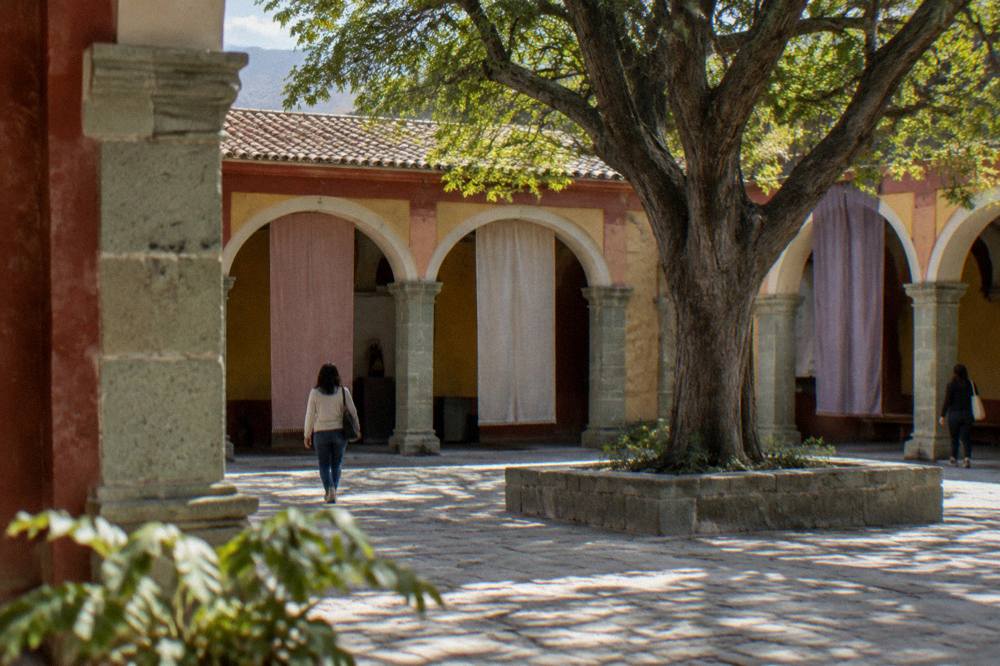
The Museo Textil is one piece of a quarter that rewards a full day on foot, and the villages that give it its subject sit within an hour's drive. Plan the INAH museum for its Tuesday to Saturday window, the garden tour for a listed slot, and the weaving corridor for a day with the Tule tree and Mitla on the same road, and the textile story of Oaxaca reads from museum case to working loom without ever leaving the Valles Centrales.