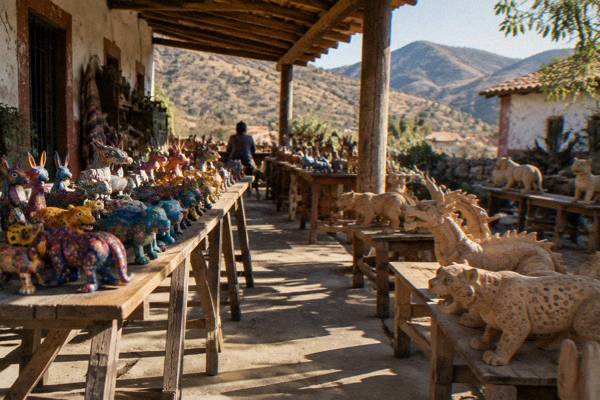
San Martín Tilcajete And Arrazola: The Alebrije Carvers
San Martín Tilcajete is one of the craft villages of the Valles Centrales around Oaxaca City, and its workshops are where visitors paint their own carved alebrijes. This page covers what the workshops involve, how the village fits into a day trip loop, and what the surrounding valley offers.
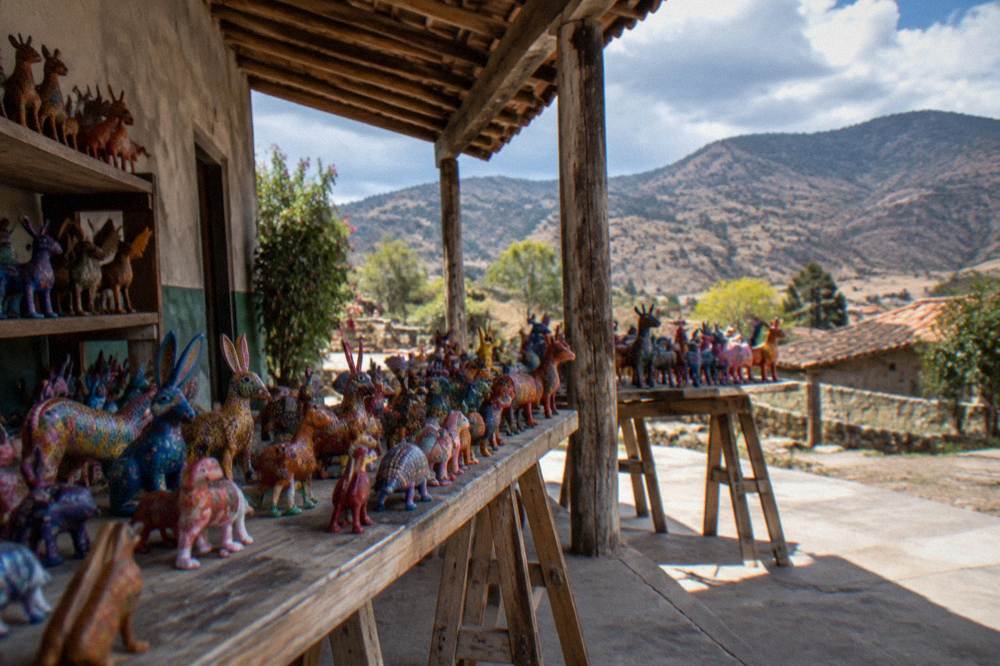
San Martín Tilcajete sits in the Valles Centrales south of Oaxaca City and is reached as a craft-village day trip. Its workshops run hands-on alebrije painting sessions, and the village combines easily with the Ocotlán road's other stops and with Monte Albán circuits.
San Martín Tilcajete is one of the craft villages of the Valles Centrales, the highland valley system that holds Oaxaca City, and it gives its name to a day trip built around painting alebrijes: the carved, painted figures that Oaxacan workshops produce and that visitors can decorate themselves. Oaxaca City sits inland at about 1,550 m, and every village on this route is a road trip into the surrounding valley, not a city stroll. The city has no beach and no port; the Pacific coast is a separate, longer extension covered by its own pages on this site.
What Is San Martín Tilcajete In Oaxaca?
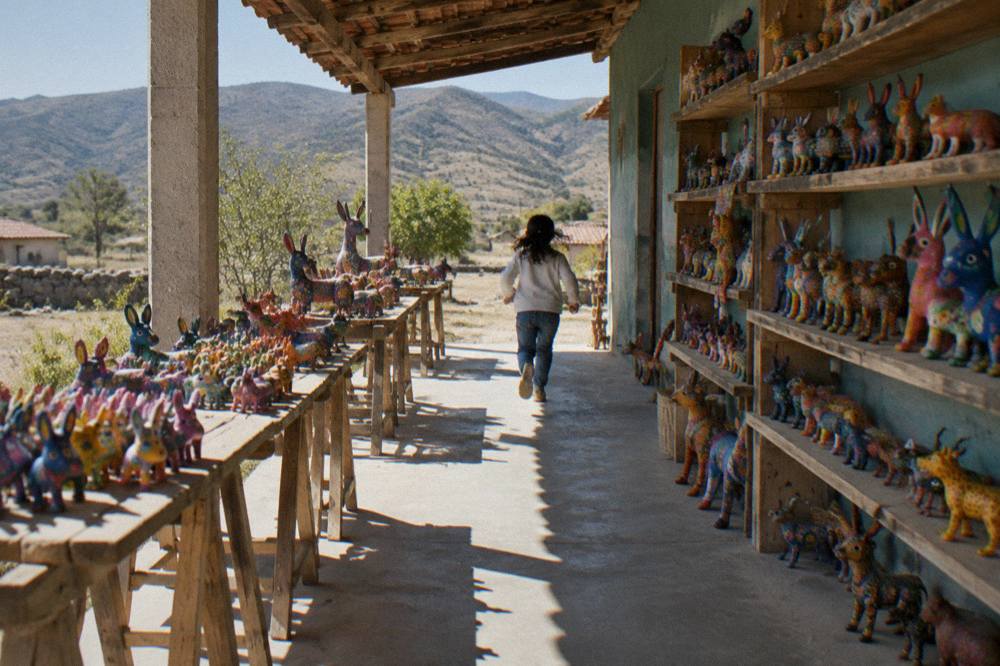
San Martín Tilcajete is a craft village in the Valles Centrales, the inland highland valley region around Oaxaca City, and its workshops are the reason tour routes stop here: visitors paint their own carved alebrijes alongside the families who make them. The village is reached by road from the city, and it is one stop on a string of craft villages that also includes Teotitlán del Valle, San Bartolo Coyotepec and the towns of the Ocotlán road.
The title of this guide pairs Tilcajete with Arrazola, another woodcarving village of the valley, because the two names appear together in almost every craft-village itinerary for the region. The site's tour list reflects the same pattern: craft-workshop products in the area list San Martín Tilcajete by name, and several Monte Albán circuits bundle an alebrije stop with the ruins. What the workshops have in common is participation. The products in the tour list are described as painting workshops, not gallery visits, so the visit is built around decorating a carved piece rather than watching from the side.
This guide reports what the tour list and the destination facts state: Tilcajete is a Central Valleys craft stop, its product is the alebrije painting workshop, and its neighbours trade in woven textiles, black pottery and mezcal. For the wider frame, the things to do in Oaxaca overview lists the full spread of city and valley options.
Which Oaxaca Craft Villages Sit Near San Martín Tilcajete?
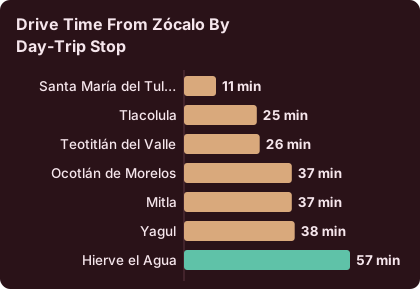
The craft villages around Oaxaca City divide by product and by road: Teotitlán del Valle for woven textiles on the Tlacolula side, San Bartolo Coyotepec for black pottery on the way to Arrazola, San Martín Tilcajete and Arrazola for carved and painted figures, and the Ocotlán road towns for market days and family workshops. Each has its own dedicated day-trip page on this site, and drive times from the Zócalo run from about 11 minutes to about 57 minutes.
This guide's derived drive times, computed from the Zócalo and rounded up, give the frame. Santa María del Tule sits about 11 minutes out, Teotitlán del Valle about 26, Tlacolula about 25, Ocotlán about 37, Mitla about 37, Yagul about 38 and Hierve el Agua about 57. Real traffic and mountain roads are slower than the free-flow figures. Tilcajete itself sits off the Ocotlán road, which is why craft itineraries so often chain it with Ocotlán, Coyotepec or the Monte Albán side. The grouping matters for trip design: a traveller who books one village workshop and then discovers a neighbouring town sits twenty minutes away can usually add the stop without rebuilding the day, whereas the eastern valley cluster and the southern craft cluster pair poorly in a single outing because the drive between them eats the afternoon.
| Day-trip stop | Craft or sight | Drive time from Zócalo (about) |
|---|---|---|
| Santa María del Tule | The Tule tree | 11 minutes |
| Tlacolula | Sunday market town, valley base | 25 minutes |
| Teotitlán del Valle | Woven textiles | 26 minutes |
| Ocotlán de Morelos | Friday market, workshops | 37 minutes |
| Mitla | INAH archaeological zone | 37 minutes |
| Yagul | INAH archaeological zone | 38 minutes |
| Hierve el Agua | Petrified waterfalls and pools | 57 minutes |
Each of those stops has a full page: Teotitlán del Valle, San Bartolo Coyotepec black pottery and Ocotlán and the Friday market cover the craft neighbours, while Hierve el Agua and Mitla and Tlacolula cover the eastern valley.
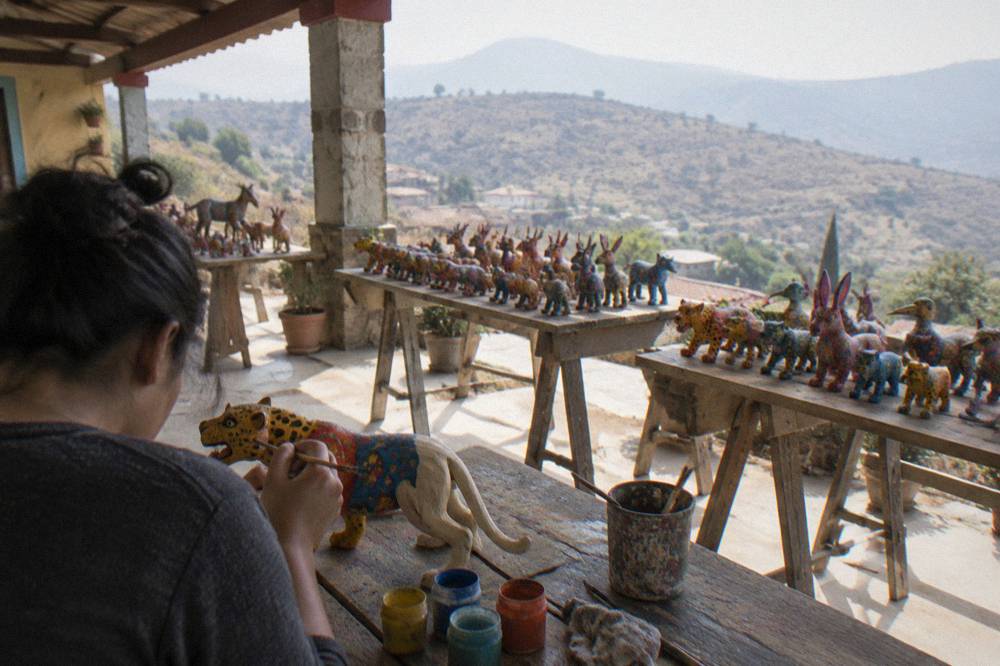
What Does An Alebrije Workshop In Oaxaca Include?
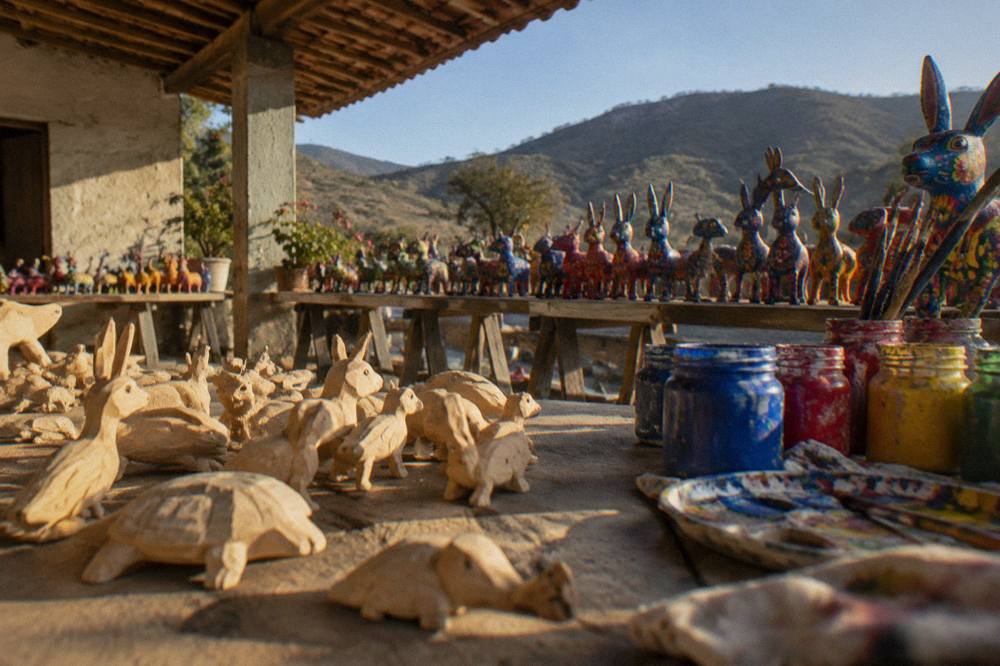
The alebrije products on this site's tour list are participation sessions: the listing for the Tilcajete workshop describes painting your own carved figure in a workshop in San Martín Tilcajete with transport from Oaxaca City included, and a second city-based product describes painting an alebrije with the family workshop that produces them.
That division matters for planning. The Tilcajete workshop carries pickup, which removes the transport question on the Ocotlán road, and it puts the session inside the village where the carving happens. The city-based Jiménez family product keeps the whole session in Oaxaca City, which suits itineraries that stay in the centre. The tour list also carries a crafts route that strings three towns together, San Martín Tilcajete among them, for travellers who want the village loop rather than a single stop. If the plan is one focused craft day, the related workshop on this page is the direct route: Check availability and read what the operator's booking page covers before committing.
A note on what this guide can and cannot say about the craft itself. How the figures are carved, painted and finished, and the history of the form, sit outside this site's sourced facts, so they stay out of the copy. What the sourced material does give is operational: the 2026 guidance for the Teotitlán weaving cooperatives, for comparison, is that workshops there generally run Tuesday to Sunday with many closed Mondays, and that mornings are recommended for natural-light demonstrations. Etiquette points carry across the valley: ask before photographs, and carry cash for workshops and stalls. Beyond that, the listing is the authority on what a given session includes, from materials to the finished piece you take home.
| Product | Kind | Area | Where it fits |
|---|---|---|---|
| Alebrije Painting Workshop in San Martín Tilcajete with Pickup | craft-workshops | Central Valleys | The village session, transport included |
| Paint Your Alebrije with the Jiménez Family | craft-workshops | Oaxaca City | A craft day without leaving the centre |
| San Martín Tilcajete, Jalieza and Ocotlán Crafts Route | craft-workshops | Central Valleys | Three towns in one loop |
| Monte Albán, Alebrijes and Black Clay Day Trip | monte-alban-and-archaeology | Monte Albán | Ruins plus alebrije and clay stops |
| Private Car and Driver with Master Artisans | craft-workshops | Oaxaca City | A private craft day at group pricing |
How Do You Get To San Martín Tilcajete From Oaxaca City?
Tilcajete is reached by road south of Oaxaca City along the Ocotlán corridor, and this guide's sourced drive times for that corridor run about 37 minutes to Ocotlán itself, with Tilcajete a further stop beyond the city's edge; a workshop product with pickup removes the driving entirely, and the colectivo and bus fares for the valley routes are figures this site does not print because no primary source carries them.
What it does state plainly: every village on this route is a road trip, mountain roads run slower than the free-flow figures, and a booking with transport bundled answers the question before it is asked. For travellers assembling their own loop, the practical comparison is between the pickup-included workshop products and the multi-stop crafts route, which also moves between towns as a single booking. Road blockades by teachers' unions are a standing risk in the state that can disrupt road and airport access, so a fixed pickup booked for a set hour carries a schedule that a self-driven day does not.
For the wider frame, the Monte Albán tour options page covers the ruin circuits that so often carry an alebrije stop, and the craft-village pages linked above cover each town's own base.
Can You Combine Alebrijes With Monte Albán And Black Pottery In One Oaxaca Day?
Yes, and the tour list is built for it: two Monte Albán circuits bundle alebrije stops into their routes, one adding black clay and alebrijes to a full day at the ruins and another pairing Monte Albán with Cuilapan de Guerrero, while the crafts route chains Tilcajete with Jalieza and Ocotlán in a single valley loop. Monte Albán is about 15 minutes from the Zócalo, which is what makes these combinations work.
The fee side of a combined day is fully sourced, so it can be stated with numbers. INAH sites charge by category. Monte Albán, Mitla and Yagul are Category I at 105 MXN for Mexican nationals and 210 MXN for foreign visitors. Dainzú, Lambityeco and Zaachila are Category III at 80 MXN and 145 MXN. Monte Albán opens Monday to Sunday 08:00 to 17:00 with last access at 16:00, per the INAH page for the site. Visits outside normal INAH hours cost 730 MXN, a figure listed on several of the zone pages, which is the main reason craft-plus-ruins tours keep standard opening hours. The rest of the planning pages sit on Oaxaca Travel Guide.
| INAH site | Category | MXN, nationals | MXN, foreigners | Hours | Last access |
|---|---|---|---|---|---|
| Monte Albán | I | 105 | 210 | Mon to Sun 08:00 to 17:00 | 16:00 |
| Mitla | I | 105 | 210 | Mon to Sun 08:00 to 17:00 | 16:30 |
| Yagul | I | 105 | 210 | Mon to Sun 08:00 to 17:00 | 16:00 |
| Dainzú | III | 80 | 145 | Mon to Sun 08:00 to 17:00 | 16:30 |
| Lambityeco | III | 80 | 145 | Mon to Sun 08:00 to 17:00 | 16:30 |
| Zaachila | III | 80 | 145 | Thu to Sun 10:00 to 16:00 | closing time |
| Museo de las Culturas de Oaxaca | museum | 105 | 210 | Tue to Sat 10:00 to 16:00 | closing time |
Two traps this guide flags on every archaeology-plus-craft page. Zaachila opens Thursday to Sunday only, and the Museo de las Culturas de Oaxaca opens Tuesday to Saturday only, so neither fits every day of a valley loop. The Cuilapan de Guerrero and Yagul and Dainzú pages carry the detail for those stops.
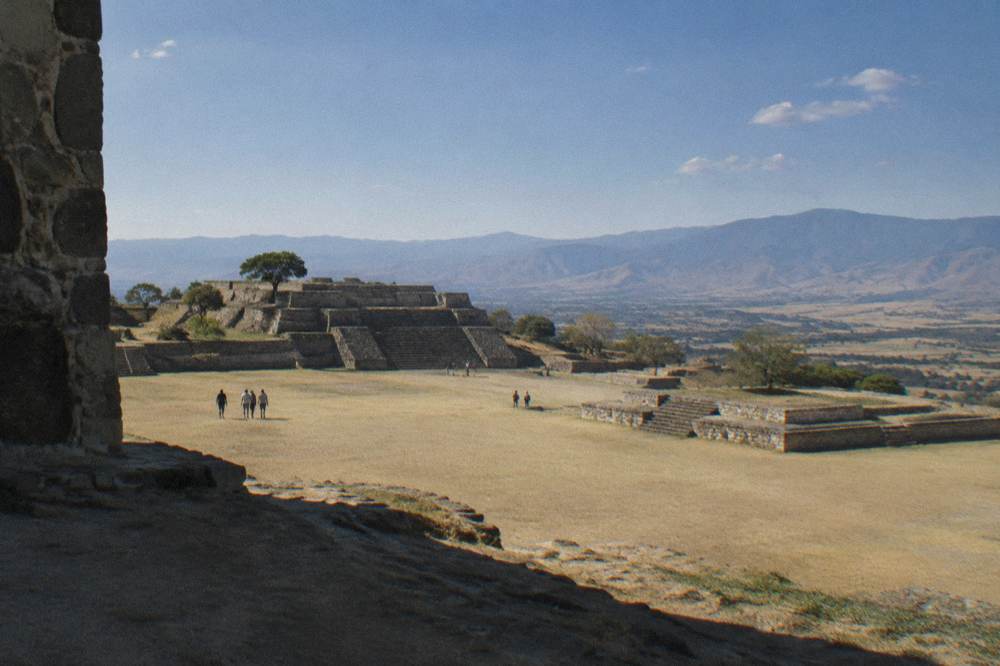
What Do Oaxaca Craft Tours Actually Compare On?
Craft products in the tour list compare on four axes: where the session sits (Oaxaca City or a valley village), whether transport is included, how many towns a route covers, and whether the day also carries non-craft stops such as Monte Albán or mezcal.
The city-based group spans painting sessions with local artists, printmaking workshops and street art walks, all reachable without a vehicle. The valley group spans the Tilcajete workshop with pickup, the three-town crafts route and the private car-and-driver day with master artisans, all of which move through the Valles Centrales. The hybrid group is the Monte Albán-plus-crafts set, and the eastern valley day trips, Hierve el Agua, Mitla and the mezcal town of Santiago Matatlán, sit alongside for travellers weighting scenery over workshops. The mezcal route page covers that last option.
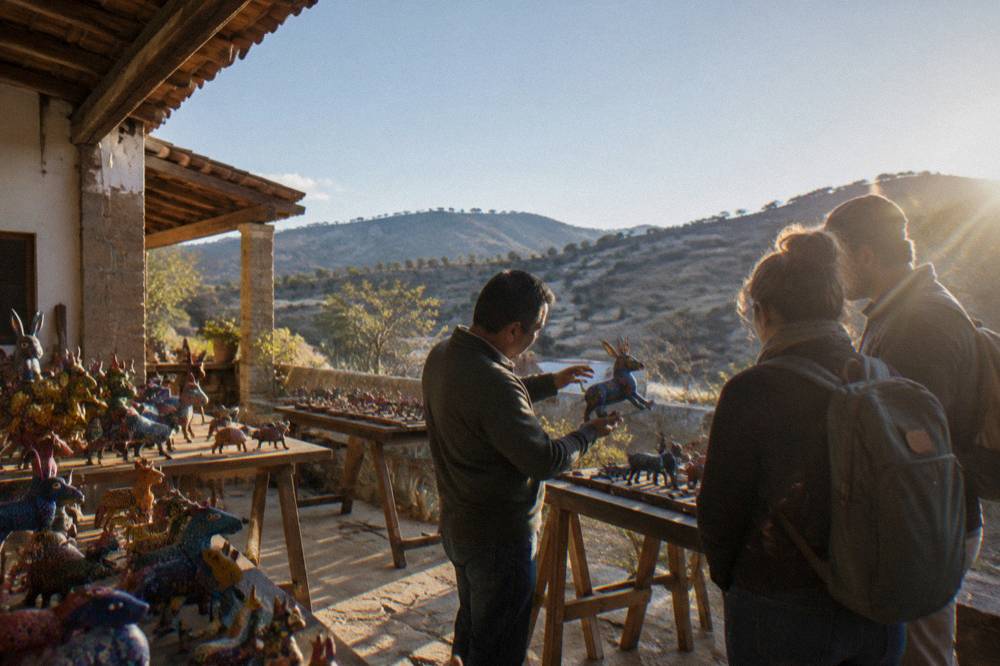
A second structural point: the state's 2025 Sectur indicators count 1,324,332 tourist arrivals in Oaxaca City across the year, and 416,675 visitors at Monte Albán, against 104,428 at Mitla and 10,185 at Yagul.
When Is The Weather Good For Oaxaca Valley Craft Day Trips?
The SMN station normals for Oaxaca show a dry season from November to April with monthly rain totals under 20 mm from November to March, and a rainy season from May to October peaking between June and September; January averages 2.4 mm of rain against June's 188.3 mm, and April carries the highest mean daily maximum at 34.9 C. Craft workshops sit indoors, which softens the rainy-season maths for this route specifically.
The full monthly table, from the station normals, is below. The figures are averages for the Oaxaca station, not a forecast, and this guide states the numbers without ranking the months. Rain in this valley also concentrates into a fraction of the month rather than spreading across it: the normals count 21.4 days with rain in September against 1.4 in January, so a wet-season day trip is a question of timing within the day as much as within the month.
| Month | Mean high C | Mean low C | Rain mm |
|---|---|---|---|
| Jan | 28.9 | 10.3 | 2.4 |
| Feb | 31.1 | 11.6 | 4.6 |
| Mar | 33.3 | 13.6 | 17.6 |
| Apr | 34.9 | 15.8 | 47.3 |
| May | 33.8 | 16.7 | 97.9 |
| Jun | 30.9 | 16.7 | 188.3 |
| Jul | 30.1 | 15.9 | 118.6 |
| Aug | 30.0 | 15.9 | 131.8 |
| Sep | 29.1 | 16.1 | 163.6 |
| Oct | 29.3 | 14.5 | 63.1 |
| Nov | 29.0 | 12.3 | 9.1 |
| Dec | 28.9 | 11.0 | 9.0 |
September averages 163.6 mm of rain and June 188.3 mm, while November through March all sit under 20 mm. What can be said structurally: a painting workshop is under cover, a Monte Albán terrace is not, and that difference is the traveller's to weigh. The month-by-month detail lives on the site's Oaxaca versus San Miguel de Allende comparison for travellers splitting a trip between highland cities.
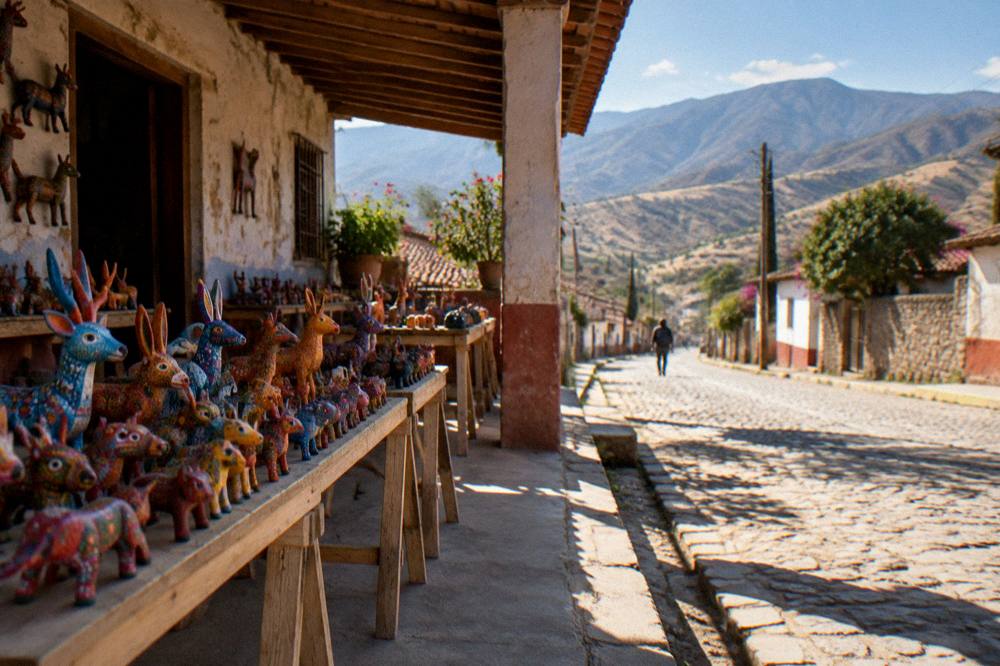
How Does A Tilcajete Day Fit A Longer Oaxaca Trip?
A Tilcajete craft day slots into the middle of a four or five day Oaxaca itinerary cleanly: the first days for the Centro Histórico and Monte Albán, the craft-village day for the southern valley, and an eastern day for Mitla and Hierve el Agua at about 37 and 57 minutes of driving respectively; the Sierra Norte and the Pacific coast are separate, longer extensions, with Puerto Escondido about 165 minutes on the new highway.
The pairing logic comes from the drive-time table: Tule, Teotitlán and Tlacolula cluster within about half an hour of the city, so they share an eastern day, while Tilcajete and the Ocotlán road form a southern day that a single workshop booking can anchor. The Tlacolula Sunday market page covers the market-day version of the eastern loop, and the coast extensions, Puerto Escondido and Mazunte and Zipolite, are long trips that never double as valley day tours. The Sierra Norte, at about 142 minutes of driving to Latuvi, is its own category again and has its own page.
| Trip length | Where a Tilcajete craft day fits |
|---|---|
| 2 days | City centre plus Monte Albán; craft session in the city instead |
| 3 days | Day 3 as the southern craft-village loop |
| 4 to 5 days | Craft day plus separate eastern valley day for Mitla and Hierve el Agua |
| A week or more | Add the Sierra Norte and a coast extension as separate blocks |
Common Questions About Alebrije Workshops In Oaxaca
Where Is San Martín Tilcajete?
San Martín Tilcajete is a craft village in the Valles Centrales, the highland valley region around Oaxaca City, reached by road along the Ocotlán corridor south of the city.
Do I Need To Book An Alebrije Workshop In Advance?
The workshop products on this page carry live availability on the operator's booking pages, and the Tilcajete session includes pickup from Oaxaca City, which in practice means a scheduled start time. Check availability for the dates you want.
Can You Visit San Martín Tilcajete And Monte Albán On The Same Day?
Yes. Two products in the tour list bundle Monte Albán with alebrije stops, and Monte Albán sits about 15 minutes from the Zócalo, which keeps the combined day workable.
How Much Does Monte Albán Cost?
Monte Albán is an INAH Category I site at 105 MXN for Mexican nationals and 210 MXN for foreign visitors, open Monday to Sunday 08:00 to 17:00 with last access at 16:00, per the INAH page.
Is An Alebrije Workshop Good In The Rainy Season?
Workshops sit indoors, and the rainy season runs May to October with June averaging 188.3 mm of rain. This guide states the figures and leaves the judgement to the traveller.
What Other Craft Villages Can You Combine With Tilcajete?
The tour list's crafts route chains San Martín Tilcajete with Jalieza and Ocotlán, and independent loops can add Teotitlán del Valle for textiles and San Bartolo Coyotepec for black pottery.
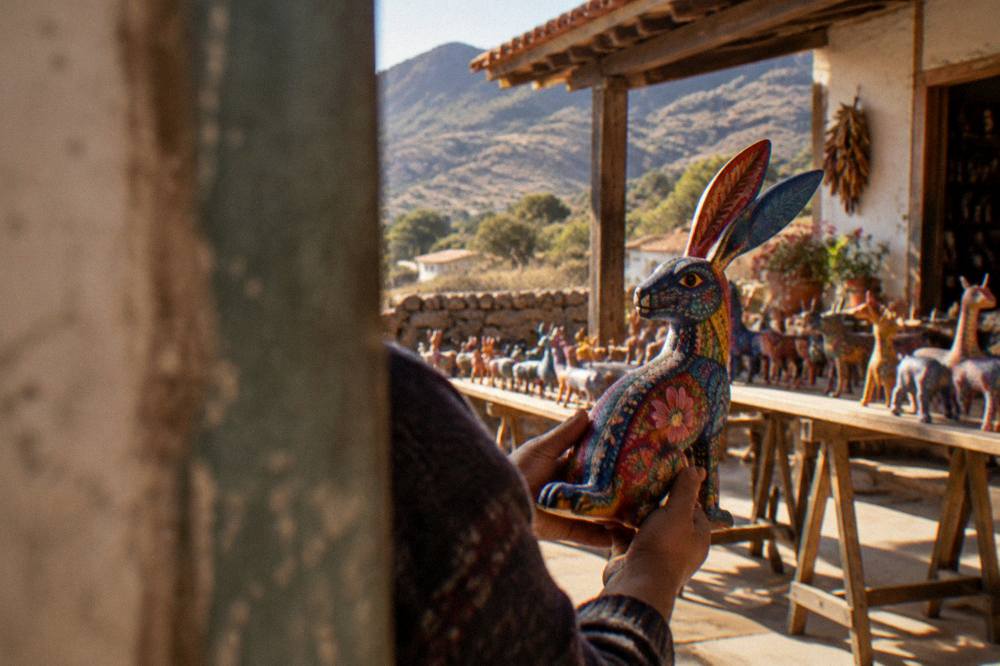
The craft villages reward a plan rather than a drive: pick the workshop that matches whether you want the village itself or a city base, anchor the day with a pickup-included booking, and spend the rest of the loop on the Ocotlán road's markets and the INAH sites whose fees and hours are printed above.