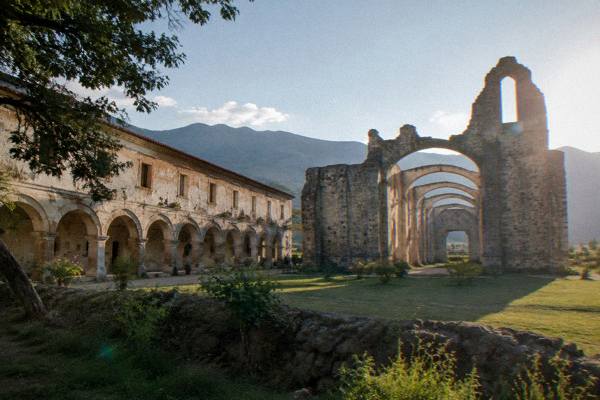
Cuilapan De Guerrero: The Unfinished Dominican Convent
Cuilapan de Guerrero sits on an open esplanade southwest of central Oaxaca City, and its monastery ruins pair naturally with a morning at Monte Albán.
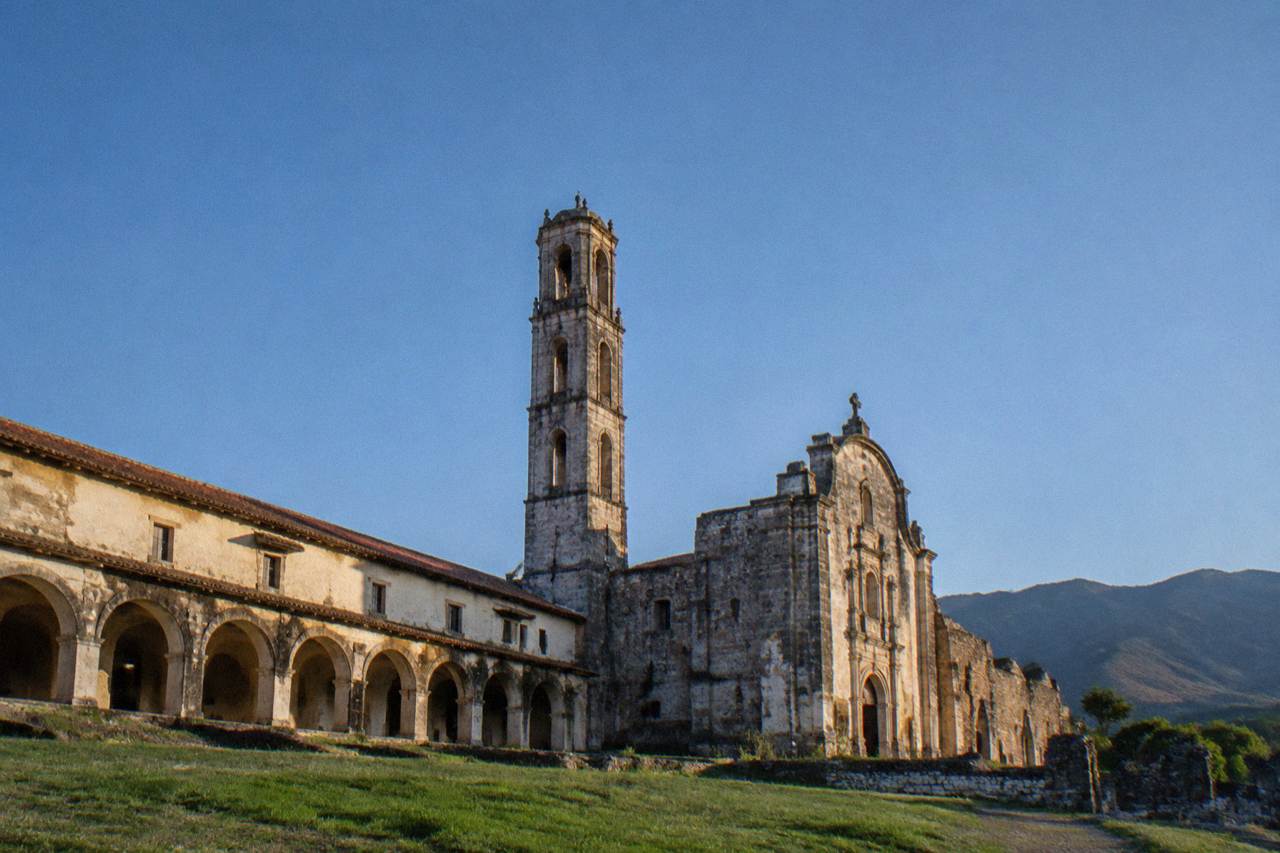
The Cuilapan de Guerrero ex-convent stands southwest of the Zócalo in Oaxaca City. The monastery ruins stand on an open esplanade beside a functioning chapel, and the trip combines easily with Monte Albán.
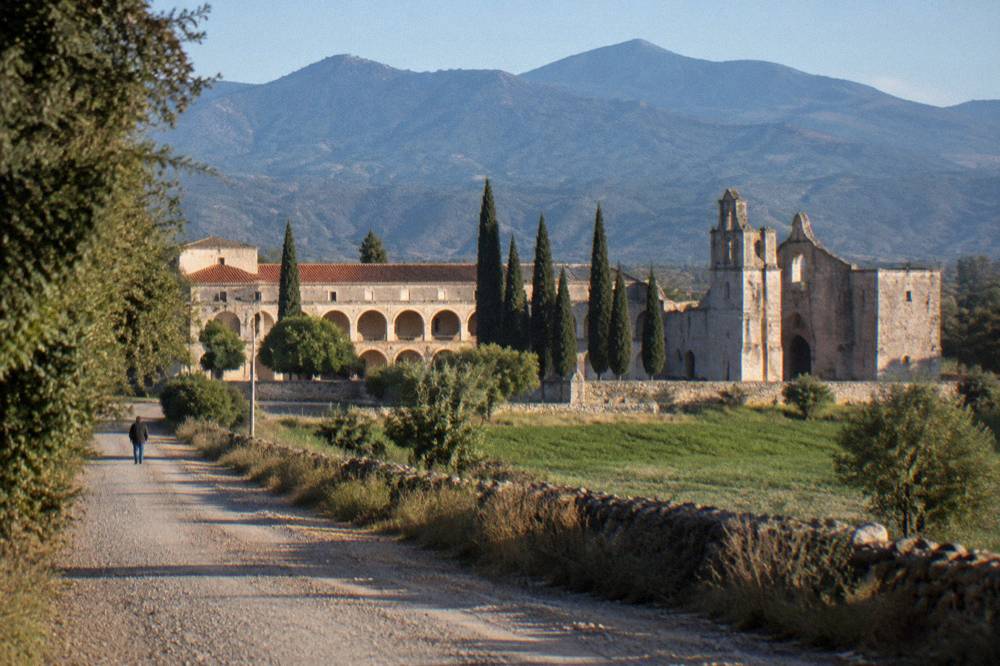
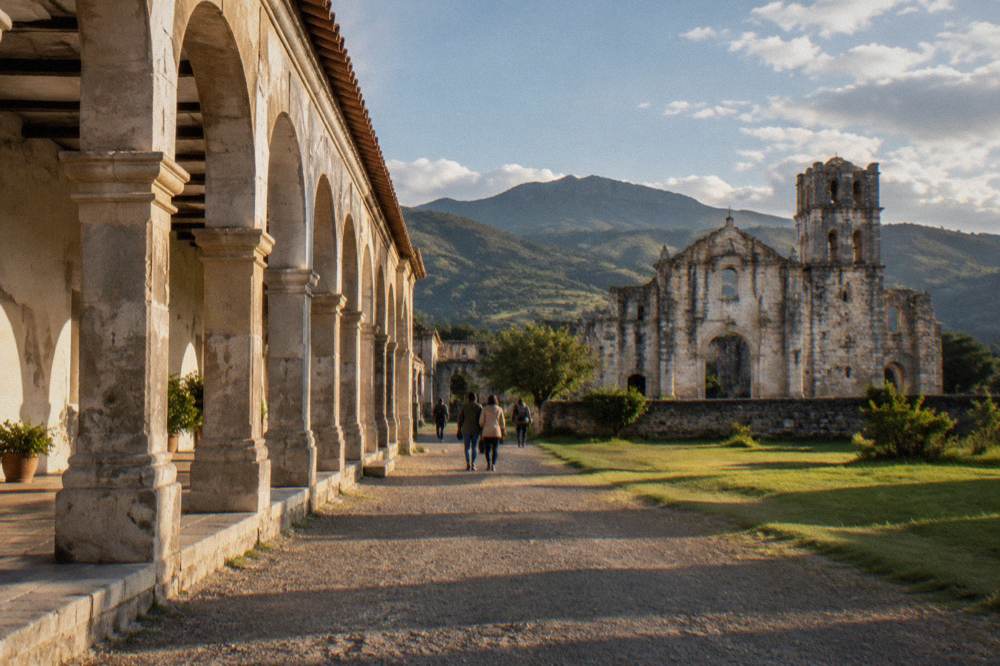
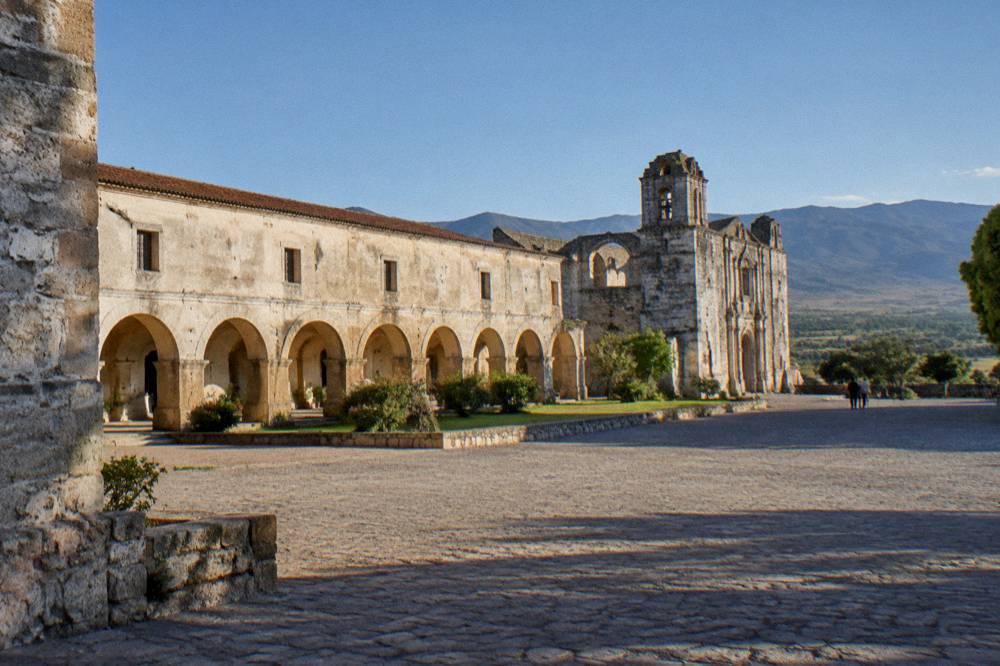
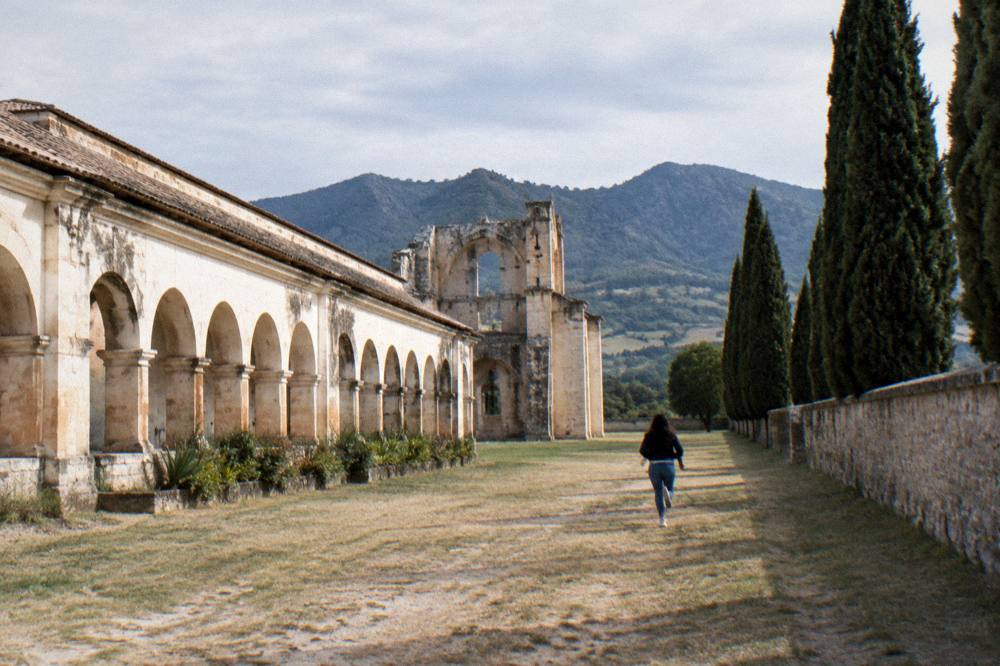
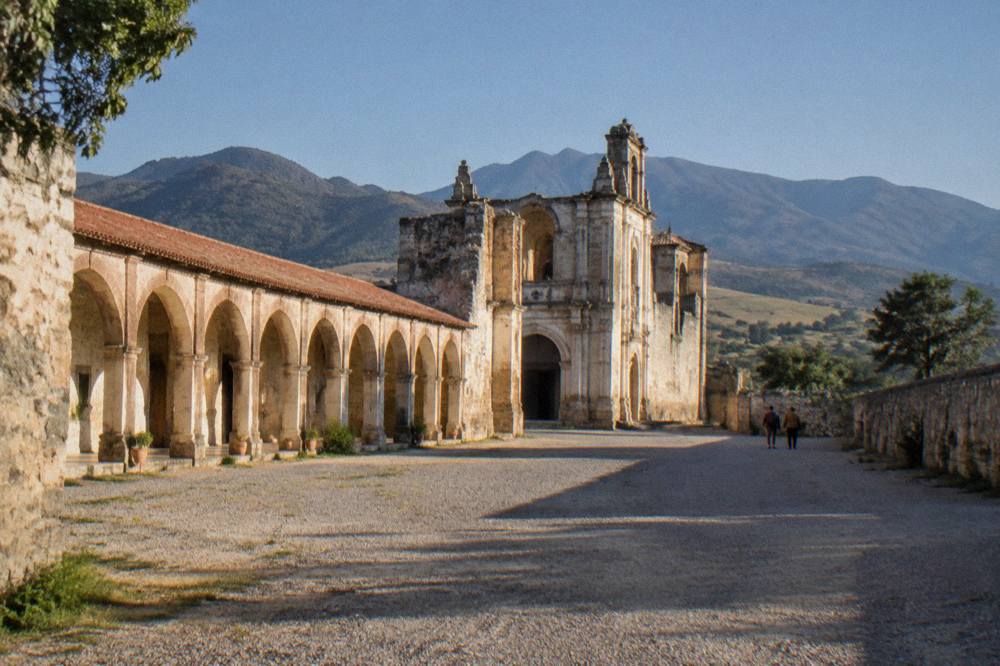
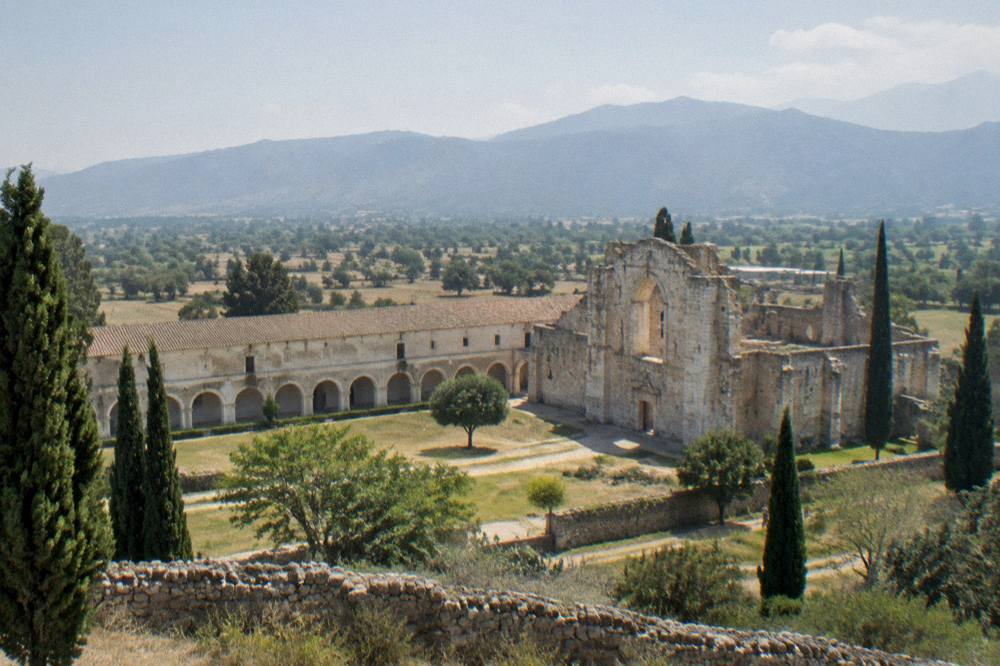
Cuilapan de Guerrero lies in the Valles Centrales, an easy day trip from the highland capital of Oaxaca City, and the site is a set of monastery ruins on an open esplanade with a bell tower and a functioning chapel beside it. The approved page title calls it the unfinished Dominican convent, and that incompleteness is what visitors come to see, vaulting open to the sky where a roof was never placed.
The Oaxaca Travel Guide desk covers Cuilapan as a day trip, not as a headline attraction, and the honest frame is this: it is a quiet stop that rewards a traveller already heading west or south of the city, and a thin one for a traveller making it the sole destination of a day. The pairing with Monte Albán on the same road direction is the obvious use, and the tour list carries a product built exactly for that.
Where Is Cuilapan De Guerrero From Oaxaca City?
Cuilapan de Guerrero sits southwest of Oaxaca City on the road that continues on toward Monte Albán. The site is one of the nearest major stops to the city after Monte Albán itself, which is about 15 minutes out. Both figures are derived from route mapping, and real traffic on the valley roads is slower.
The town sits in the Valles Centrales, the string of highland valleys that holds Oaxaca de Juárez at about 1,550 m. There is no rail line and no airport link, so access is by road. A car or a tour vehicle is the practical option, and the drive times that follow in the table below all run from the Zócalo as the reference point. On a single morning a driver can reach Monte Albán, spend time there, and drop down to Cuilapan without backtracking through the city centre.
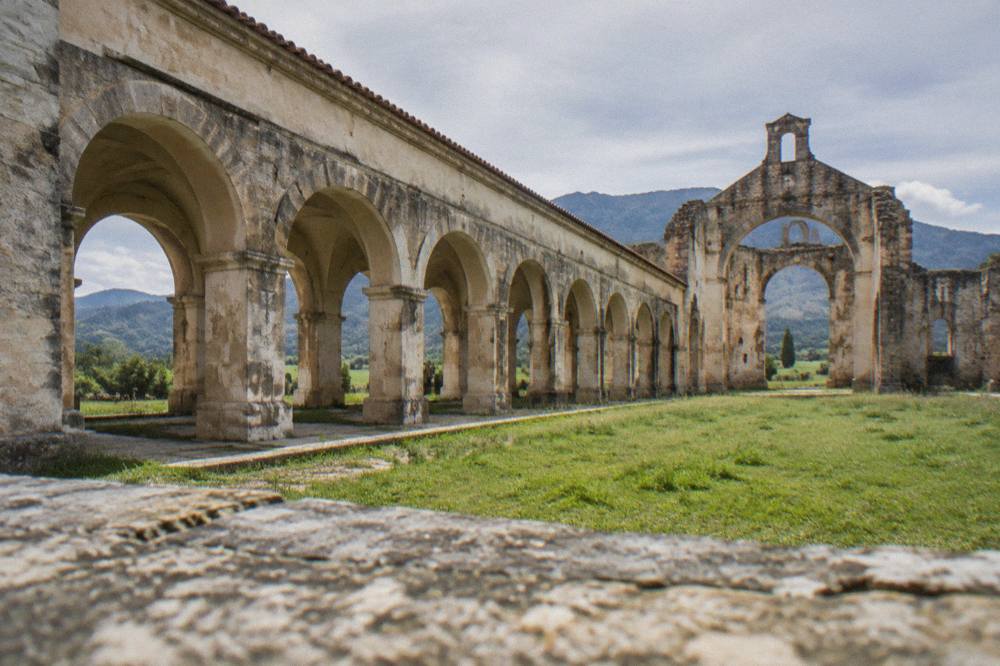
The unfinished quality is the site's signature. Where a completed convent church would be enclosed, the nave at Cuilapan stands open, which is why the approved title for this page reads as it does. The chapel beside it still functions, and visitors should dress with the same respect for an active religious space they would bring to the Basilílica de la Soledad or Santo Domingo de Guzmán in the centre.
What Can You See At The Cuilapan Convent?
The Cuilapan site consists of monastery ruins on an open esplanade, an open unfinished nave, a bell tower and a functioning chapel, and it is visited as an architectural stop rather than as a museum with collections. The ex-convent of Santo Domingo in the city centre is the completed sibling worth comparing against, and its museum is open Tuesday to Saturday only, unlike the archaeological zones that open daily.
A traveller should treat any entry figure heard locally as something to confirm on arrival.
The comparison with the city centre is worth making explicitly. The Centro Histórico holds the completed Dominican complex at Santo Domingo, whose ex-convent building is now the Museo de las Culturas de Oaxaca, open Tuesday to Saturday, 10:00 to 16:00, with INAH Category I admission at 105 MXN for nationals and 210 MXN for foreign visitors. Cuilapan is the same monastic idea left unfinished, and seeing both on one trip tells the story more clearly than either alone. The bus circuit from Oaxaca City that includes Monte Albán, Cuilapan and craft villages is exactly what several tour list products sell.
What Does A Monte Albán And Cuilapan Tour Cost?
A ticketed day tour combining Monte Albán with Cuilapan de Guerrero runs from the city centre and covers both stops plus craft villages on some itineraries, and the tour list's featured product for this page pairs the ruins with the convent in one outing. The independent alternative is a taxi or hire car using the derived drive times above.
The featured product on this page is the 8-hour tour to Monte Albán and Cuilapan de Guerrero, which this site links below with a live availability check. Two other tour list products cover the same western circuit with added craft stops: one adds alebrijes and black clay workshops, the other adds barro negro, alebrijes and a mezcal tasting as a full-day loop. All three are bookable from Oaxaca City, and none requires the traveller to arrange the valley roads alone.
Oaxaca City logged 1,324,332 tourist arrivals across 2025, and the Monte Albán circuit absorbs a large share of that traffic, which is the practical argument for reaching the ruins either early or on an organized outing.
For a traveller weighing that loop against self-drive, the deciding factors are parking at Monte Albán and the morning sequencing, both of which the tour absorbs. The box below runs a live check on the featured pairing.
What Other Day Trips Pair With Cuilapan De Guerrero?
The strongest pairings from Oaxaca City are Monte Albán on the same western loop, the craft villages of San Martín Tilcajete and San Bartolo Coyotepec to the south, and the Tlacolula Valley stops of Mitla, Hierve el Agua and Teotitlán del Valle to the east, each reachable in under an hour of free-flow driving per the derived route times. Ocotlán, at about 37 minutes, anchors the southern craft route.
The geography splits cleanly. Cuilapan and Monte Albán sit west of the city; the alebrije workshops of San Martín Tilcajete, the barro negro potters of San Bartolo Coyotepec and the Ocotlán Friday market sit south; and the big eastern league, Mitla, Hierve el Agua and Teotitlán del Valle, fills a separate day on its own. Trying to combine west and east in one outing is the classic planning error in this valley.
| Day trip stop | Direction | Drive time from the Zócalo | Best combined with |
|---|---|---|---|
| Monte Albán | West | About 15 minutes | Cuilapan de Guerrero |
| Cuilapan de Guerrero | West | not measured | Monte Albán |
| San Martín Tilcajete | South | not measured | Coyotepec, Ocotlán |
| Ocotlán de Morelos | South | About 37 minutes | Tilcajete, Jalieza |
| Mitla | East | About 37 minutes | Hierve el Agua, Tule |
| Hierve el Agua | East | About 57 minutes | Mitla |
All drive times are derived from free-flow route mapping and should be read as floors, not promises; market-day traffic and mountain bends add time. The Sierra Norte village of Latuvi, for contrast, is about 142 minutes out, and Puerto Escondido on the coast about 165 minutes on the new highway, both far extensions rather than same-day companions for Cuilapan.
How Much Time Should You Spend In Cuilapan?
A stop of well under an hour covers the Cuilapan esplanade, the open nave and the chapel forecourt at a walking pace, which is why tour itineraries fold it into a half-day or full-day loop rather than selling it alone. The site rewards a short, unhurried visit bracketed by longer stops at Monte Albán or a craft village.
The practical rhythm of the western loop runs Monte Albán first, while the light is low and the temperature mild, then Cuilapan on the descent back toward the city. The SMN station normals for Oaxaca put the April mean daily high at 34.9°C, with mean daily lows around 10.3°C in January, so the walkable outdoor stops are better in the morning across the dry season. November through April is the dry season, with November averaging just 9.1 mm of rain. More of these guides are collected on Oaxaca Travel Guide.
| Month | Mean high °C | Mean low °C | Rain mm |
|---|---|---|---|
| January | 28.9 | 10.3 | 2.4 |
| February | 31.1 | 11.6 | 4.6 |
| March | 33.3 | 13.6 | 17.6 |
| April | 34.9 | 15.8 | 47.3 |
| May | 33.8 | 16.7 | 97.9 |
| June | 30.9 | 16.7 | 188.3 |
| July | 30.1 | 15.9 | 118.6 |
| August | 30.0 | 15.9 | 131.8 |
| September | 29.1 | 16.1 | 163.6 |
| October | 29.3 | 14.5 | 63.1 |
| November | 29.0 | 12.3 | 9.1 |
| December | 28.9 | 11.0 | 9.0 |
These are SMN station 20079 climate normals for 1991-2020, the same table that underpins this site's month-by-month weather pages. June averages 188.3 mm of rain and January 2.4 mm, and the annual total is 853.3 mm. An open-air ruin with no roof is a different proposition in each half of that year.
Do You Need A Tour Or Can You Visit Independently?
An independent visit to Cuilapan is straightforward by hire car or taxi given the about-25-minute drive, but a ticketed tour solves three real problems at once: the Monte Albán access road, the parking question at both sites, and the sequencing that keeps the day inside daylight hours. The tour list carries a dedicated Monte Albán and Cuilapan product, and the tour earns its fee on this particular loop.
For a traveller who prefers independence, the western loop is the easiest self-drive in the valley: one road out, two stops, one road back, with the city's Mercado 20 de Noviembre waiting at the end for lunch. The eastern valley, by contrast, stacks four or five stops across about 57 minutes of driving each way to Hierve el Agua, and that is where an organized outing pays off more sharply.
For the tour route, the featured product can be checked live here: Check availability. The listing carries the current price, rating and duration, and free cancellation is offered, so a change of plans costs nothing.
| Approach | What it solves | What you handle yourself |
|---|---|---|
| Ticketed tour | Transport, sequencing, both site stops | Lunch, personal spending |
| Hire car | Full schedule freedom | Parking, navigation, timing |
| Taxi out and back | No navigation | Cost of waiting or a return pickup |
When Is The Best Time Of Year For The Cuilapan Loop?
The dry season from November to April is the recommended window for the Cuilapan and Monte Albán loop, with January rain averaging just 2.4 mm and December 9.0 mm against June's 188.3 mm, and November through March each averaging under 20 mm of rain. July brings the Guelaguetza, which fills the city and its roads on two Mondays. December adds Noche de Rábanos on the 23rd.
Festival timing cuts both ways. The Guelaguetza, the state's July festival, held its 2026 Lunes del Cerro performances on 20 and 27 July at the Auditorio Guelaguetza on the Cerro del Fortín, with Palco A seats at 1,632 MXN and Palco B at 1,321 MXN, and the free C and D sections by arrival; 2027 dates had not been announced. Noche de Rábanos keeps its traditional 23 December date in the city. Neither event takes place at Cuilapan itself, but both reshape accommodation and transport across the valley, and this site keeps full pages on Día de Muertos and Noche de Rábanos for the detail.
The rules on this point are strict because the announcements are not: no 2026 programme dates exist yet for Día de Muertos or Noche de Rábanos, so the festival facts above are standing patterns plus the published 2026 Guelaguetza figures. A traveller planning around those windows should watch the state announcements rather than any calendar printed in a guidebook.
| Season | Months | Rain pattern | Loop conditions |
|---|---|---|---|
| Dry | November to April | Under 20 mm per month Nov to Mar | Firm roads, clear skies |
| Rainy | May to October | Peak June to September | Afternoon showers, softer ground |
How Does Cuilapan Compare With Oaxaca's Other Big Stops?
Cuilapan is a short architectural stop in a valley of heavyweight neighbours: Monte Albán drew 416,675 visitors in 2025 against Mitla's 104,428, Yagul's 10,185, Lambityeco's 5,545 and Zaachila's 4,229, per the Sectur indicators, and Cuilapan's draw is the open nave rather than any collection or archaeological scale. It earns its place on a loop, not as a destination.
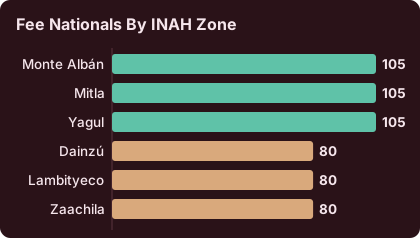
The comparison matters for planning because every hour spent at Cuilapan is an hour not spent somewhere with a ticket line. The INAH archaeological zones run two fee categories: Category I at 105 MXN for nationals and 210 MXN for foreign visitors covers Monte Albán, Mitla and Yagul, all open Monday to Sunday 08:00 to 17:00, while Category III at 80 and 145 MXN covers Dainzú, Lambityeco and Zaachila, with Zaachila open Thursday to Sunday 10:00 to 16:00 only. Atzompa closes earlier, at 16:00 with last access at 15:00.
| INAH zone | Category | Fee nationals MXN | Fee foreigners MXN | Hours |
|---|---|---|---|---|
| Monte Albán | I | 105 | 210 | Mon-Sun 08:00-17:00, last access 16:00 |
| Mitla | I | 105 | 210 | Mon-Sun 08:00-17:00, last access 16:30 |
| Yagul | I | 105 | 210 | Mon-Sun 08:00-17:00, last access 16:00 |
| Dainzú | III | 80 | 145 | Mon-Sun 08:00-17:00, last access 16:30 |
| Lambityeco | III | 80 | 145 | Mon-Sun 08:00-17:00, last access 16:30 |
| Zaachila | III | 80 | 145 | Thu-Sun 10:00-16:00 |
Against that table, Cuilapan's role is clear: it is the free-form architectural pause between ticketed sites, and the tour list's craft-route products treat it exactly that way. A traveller with one day should ride the Monte Albán loop; a traveller with two should add the Tlacolula Valley; a traveller with three can afford the slow version that Cuilapan belongs to.
What Should You Know Before You Go?
Bring sun protection and water, because the site is open ground at about 1,550 m with no shade structure, dress modestly for a functioning chapel, plan the loop for the morning in the dry season, and hold any entry figure you hear locally as unconfirmed. The timezone is UTC-6 all year, with no daylight saving since 2022.
Altitude is the quiet variable. Oaxaca City sits at about 1,550 m, and the April mean high of 34.9°C combines with thin air to burn unprotected skin faster than a coastal visitor expects. The January mean low of 10.3°C means the same morning at Monte Albán can start near single-digit comfort in Celsius terms, so layers serve both halves of the loop. Rain, when it comes in the May-to-October season, falls mostly in the afternoons per the station normals, which is one more argument for the early start.
Money is the other practical point. The state lodging tax is 3 percent on hotel-type stays, a figure worth knowing when a hotel bill looks slightly higher than the quoted room rate.
Common Questions About Cuilapan De Guerrero
How Far Is Cuilapan De Guerrero From Oaxaca City?
Real traffic on the valley roads is slower.
What Is The Unfinished Dominican Convent?
It is the monastery complex at Cuilapan de Guerrero, whose nave was never roofed and stands open to the sky, with a bell tower and a functioning chapel beside it.
Can You Combine Cuilapan With Monte Albán?
Yes, and that is the standard use. Monte Albán is about 15 minutes from the Zócalo, and the tour list carries a ticketed tour built around exactly that pairing.
Is There An Entry Fee For Cuilapan?
Confirm locally on arrival.
When Is The Best Time To Visit?
The dry season, November to April, when monthly rain averages under 20 mm from November to March and the open site is at its most comfortable.