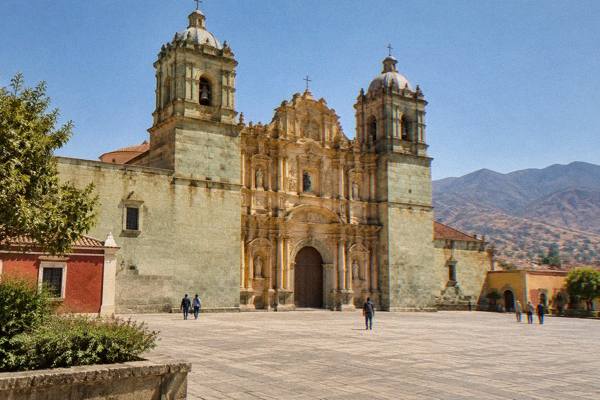
Oaxaca Vs San Miguel De Allende: Which Colonial City Fits
Oaxaca City is an inland highland capital in the Valles Centrales of Mexico at about 1,550 m, and every honest comparison with San Miguel de Allende starts from what the sources actually say: Oaxaca's climate normals, its INAH archaeological zones, its 2025 visitor count and its festival calendar.
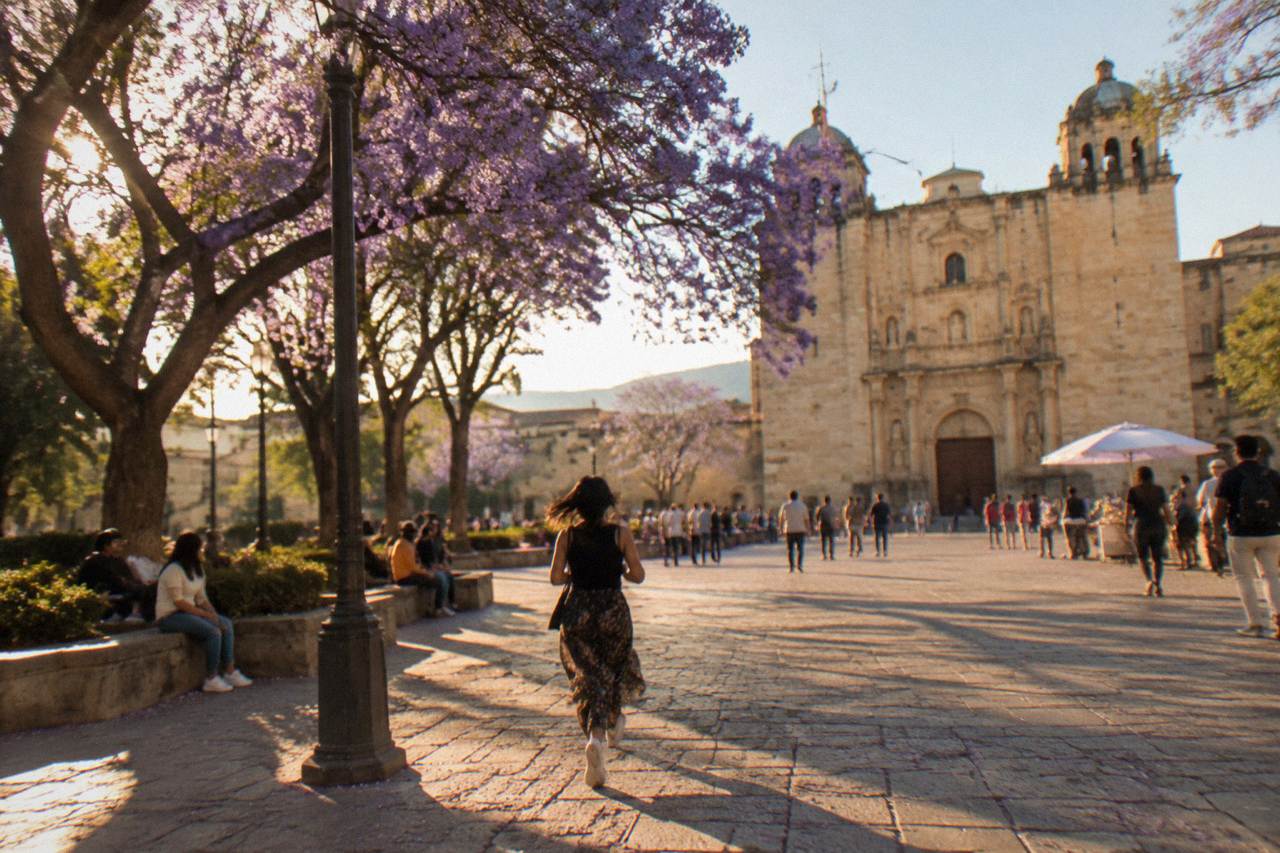
Oaxaca City offers Zapotec archaeology at Monte Albán, a valley of day trips, seven moles and a rainy season from May to October; this guide compares it with San Miguel de Allende on climate, sights, festivals, food and trip length using Oaxaca figures.
Oaxaca de Juárez, the capital of the state of Oaxaca in Mexico, is an inland highland city in the Valles Centrales at about 1,550 m, founded in 1529 as Antequera and listed by UNESCO together with Monte Albán as property 415, "Historic Centre of Oaxaca and Archaeological Site of Monte Albán". That single sentence already frames the comparison with San Miguel de Allende better than any mood board can. One city pairs a colonial core with a Zapotec archaeological zone on a mountain above it, a valley of craft villages around it and a food tradition that runs from market stalls to cooking classes. The comparison below sticks to what primary sources state about Oaxaca: INAH site pages, the SMN climate station, Sectur arrival figures and state government releases. Where a fact about San Miguel de Allende is not in those sources, this page says nothing rather than guess.
What Kind Of City Is Oaxaca Compared With San Miguel De Allende?
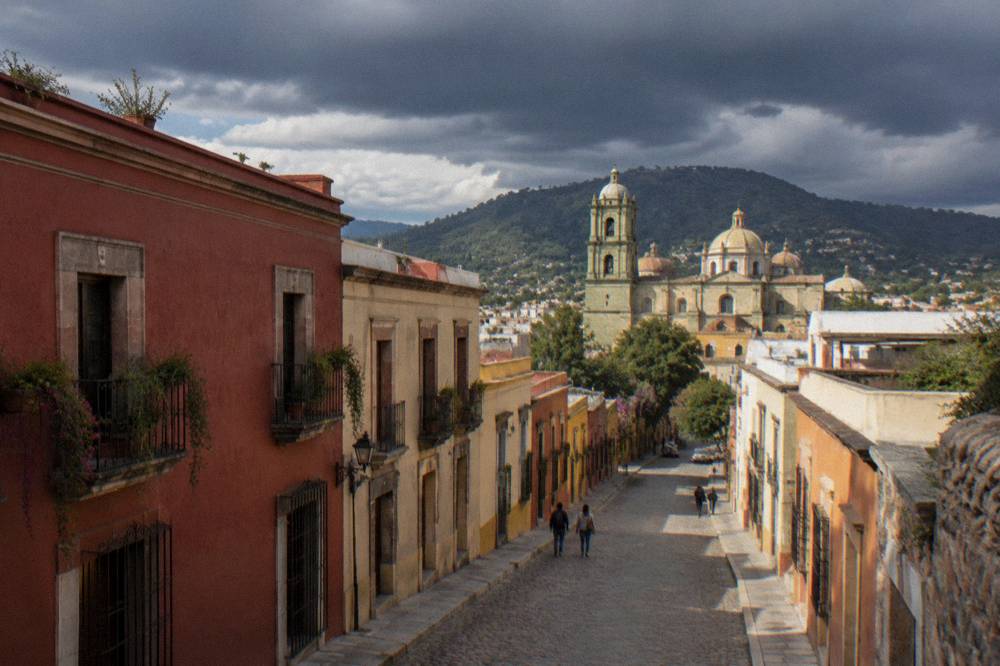
Oaxaca City is the capital of a large state, a working administrative and market city of 270,955 residents in the municipality (Censo 2020), set in the highland Valles Centrales at about 1,550 m, with no sea and no beach anywhere near the centre. San Miguel de Allende is a smaller highland city in a different state, and the comparison that matters is between a state capital with a full resident economy and a city whose life is organised more directly around its historic core.
The municipality figure comes from the 2020 census, and the state it capitalises holds 4,132,148 people. Those numbers shape the texture of the place. Oaxaca has a Zócalo, a cathedral, the Basílica de la Soledad and the Andador Macedonio Alcalá, but it also has wholesale markets, government offices, a university presence and the ordinary commerce of a capital. Its historic core earned UNESCO listing together with Monte Albán, the archaeological zone about 15 minutes' drive up on the mountain flank.
San Miguel de Allende sits in the Bajío of Guanajuato, also inland, also highland, also colonial in its core. San Miguel visitor numbers, prices and climate figures sit outside the scope of the sources behind this site, which cover Oaxaca. What can be said plainly is structural: Oaxaca pairs its colonial centre with a Category I INAH archaeological zone and a surrounding valley of villages, which is a combination San Miguel does not offer. For an orientation to the neighbourhoods of the Oaxacan core, see the Oaxaca neighbourhoods overview, and the Oaxaca history guide covers the 1529 founding as Antequera in full.
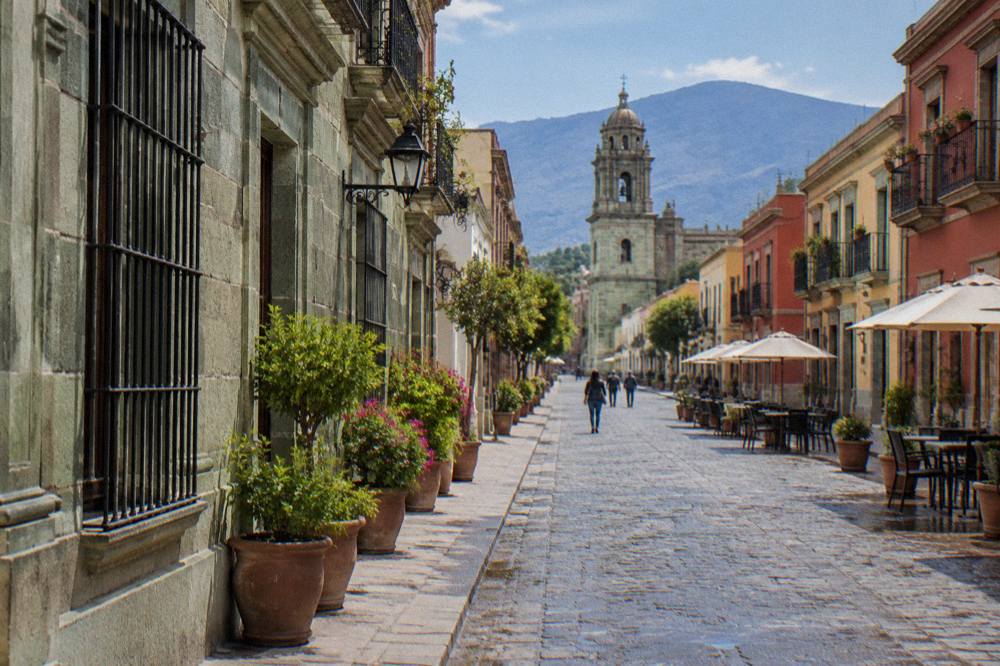
Which City Has The Bigger Sight List In Reach?
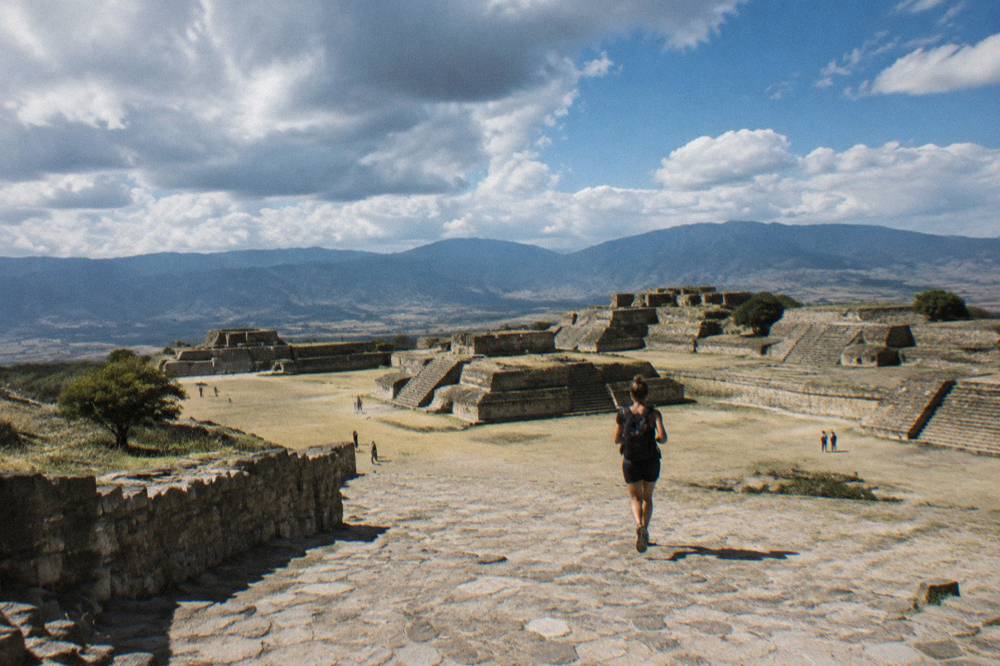
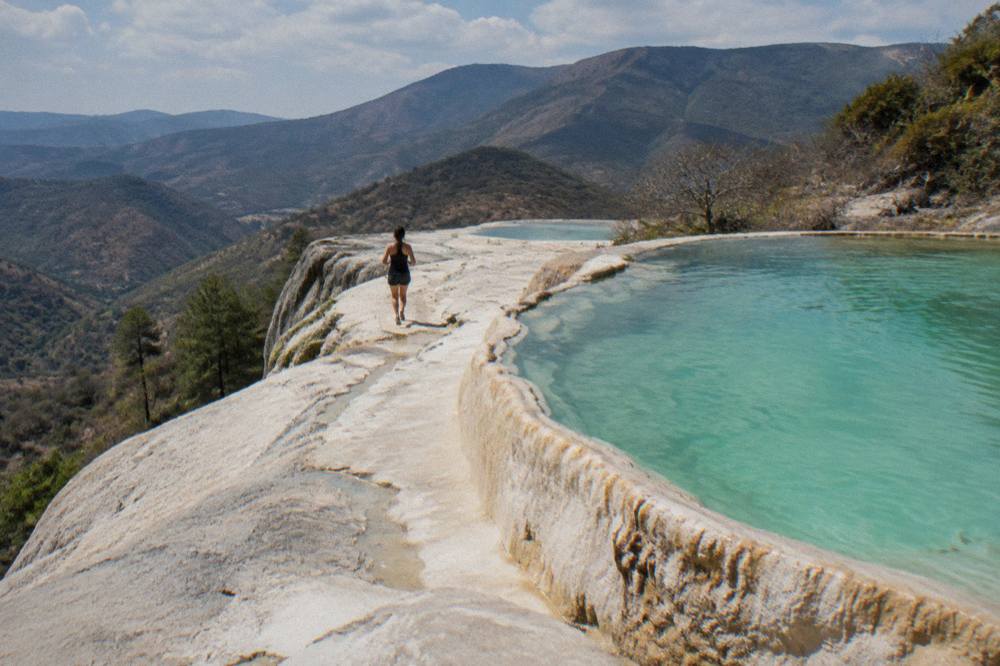
Oaxaca City puts a Category I archaeological zone, Monte Albán, about 15 minutes' drive from the Zócalo, with Mitla and Yagul in the same INAH fee category about 37 and 38 minutes out, plus Hierve el Agua about 57 minutes away and a ring of craft villages between them; that density of pre-Hispanic and craft destinations within an hour is the clearest structural difference from San Miguel de Allende.
The INAH site pages state the terms precisely. Monte Albán is open Monday to Sunday 08:00 to 17:00 with last access at 16:00, and charges 105 MXN for Mexican nationals and 210 MXN for foreign visitors. Mitla keeps the same hours with last access at 16:30 and the same Category I fee. Yagul closes access at 16:00 and charges the Category I rate too. The Category III sites, Dainzú, Lambityeco and Zaachila, charge 80 MXN for nationals and 145 MXN for foreigners, and Zaachila opens Thursday to Sunday 10:00 to 16:00 only, a detail that trips up many itineraries. Atzompa runs 08:00 to 16:00 with last access at 15:00.
| INAH site | Hours | Last access | Nationals (MXN) | Foreigners (MXN) | Drive from the Zócalo |
|---|---|---|---|---|---|
| Monte Albán | Mon to Sun 08:00 to 17:00 | 16:00 | 105 | 210 | about 15 min |
| Mitla | Mon to Sun 08:00 to 17:00 | 16:30 | 105 | 210 | about 37 min |
| Yagul | Mon to Sun 08:00 to 17:00 | 16:00 | 105 | 210 | about 38 min |
| Dainzú | Mon to Sun 08:00 to 17:00 | 16:30 | 80 | 145 | not stated |
| Lambityeco | Mon to Sun 08:00 to 17:00 | 16:30 | 80 | 145 | not stated |
| Zaachila | Thu to Sun 10:00 to 16:00 | none listed | 80 | 145 | not stated |
In the city itself, the sight list runs from the Santo Domingo church and the Museo de las Culturas de Oaxaca, open Tuesday to Saturday 10:00 to 16:00 at 105/210 MXN, to the Museo Textil de Oaxaca and the Jardín Etnobotánico, whose free guided tours run Monday to Friday at 10:30, 11:00, 11:30, 12:00 and 17:00 and Saturday from 10:30 to 12:00, with large groups booking two weeks ahead. A guided walk is the efficient way to absorb this in one morning: the historic centre walking tour with a professional local guide covers the core, and Check availability shows the operator's booking page.
Which City Has The Stronger Festival Calendar?
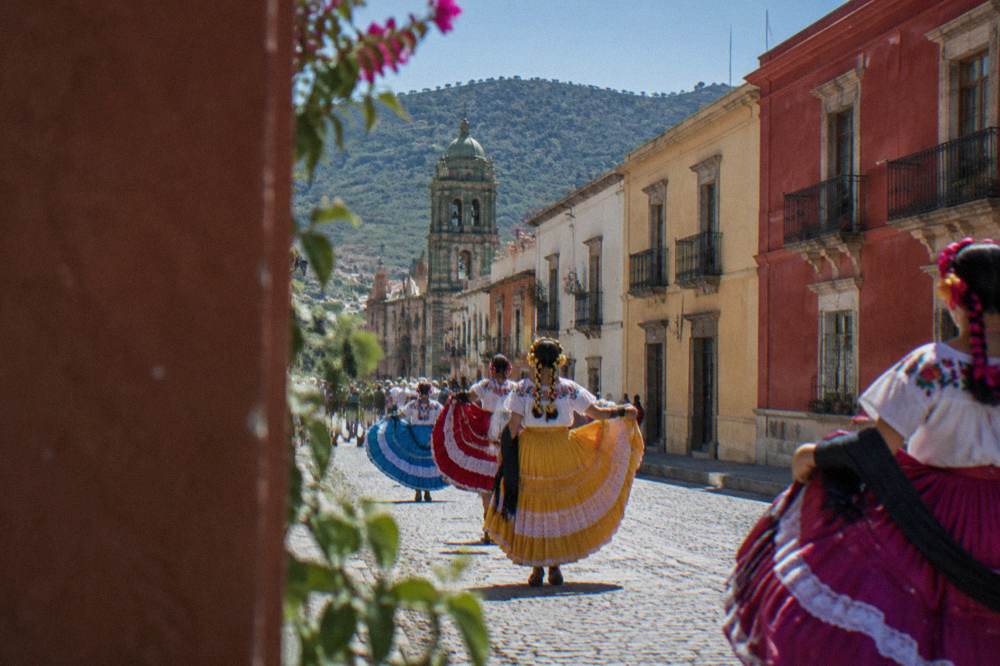
Oaxaca City anchors its year with the Guelaguetza, held on two Mondays in July at the Auditorio Guelaguetza on the Cerro del Fortín, Día de Muertos centred on the traditional dates of 31 October to 2 November, and Noche de Rábanos on its standing date of 23 December; the 2026 Guelaguetza charged 1,632 MXN for Palco A and 1,321 MXN for Palco B, with sections C and D free, and that scale of state festival is the difference in kind.
The Guelaguetza dates for 2026 were 20 and 27 July, with performances at 10:00 and 17:00, tickets sold through the official ticketing channel with a two-ticket limit per account, and the paid sections reported sold out quickly. That edition is past, and 2027 dates are not announced, so treat the prices only as a reference for what the event costs. Around the two Mondays, the July programme carried more than 140 activities, including calendas on 18 and 25 July and convites earlier in the month.
Día de Muertos follows its traditional shape: the festival centres on 31 October to 2 November, with comparsas, night openings of the panteones, and the cemetery traditions of Xoxocotlán. The widely quoted programme of 25 October to 4 November with more than 140 activities belongs to the 2025 edition, and the 2026 programme has not been announced, so plan on the traditional dates rather than a published schedule. The Día de Muertos in Oaxaca guide covers the standing pattern in detail. Noche de Rábanos keeps its traditional date of 23 December; the 128th edition was held in 2025, and 2026 details were not announced, as the Noche de Rábanos guide and the date answer page explain.
| Oaxaca festival | Standing pattern | Most recent confirmed edition | 2026 or 2027 status |
|---|---|---|---|
| Guelaguetza | Two Mondays in July, Auditorio Guelaguetza | 20 and 27 July 2026, Palco A 1,632 MXN | past event, 2027 not announced |
| Feria del Mezcal | July, during Guelaguetza month | 17 to 28 July 2026 at the CCCO | dates to confirm |
| Día de Muertos | Centres on 31 Oct to 2 Nov | 2025 programme ran 25 Oct to 4 Nov | 2026 programme not announced |
| Noche de Rábanos | 23 December | 128th edition in December 2025 | 2026 not announced |
A comparison note, stated carefully: this page's sources say nothing about San Miguel de Allende's festival calendar, so no claim is made against it. What the Oaxaca sources do show is a capital hosting a state-scale festival with ticketed stadium performances, a mezcal fair inside the same month, and two further city-defining festivals later in the year. Whether that calendar suits a given traveller is a separate question from whether it exists, and on the evidence it exists at a scale a smaller city does not match.
Which City Has Better Weather For A Trip?
Oaxaca City has a dry season from November to April and a rainy season from May to October, with average monthly rain running from 2.4 mm in January to 188.3 mm in June, an average daily high of 34.9 C in April and average December and January nights near 11.0 and 10.3 C, all from the SMN station normals for 1991 to 2020, figures this page cannot match against San Miguel de Allende because no equivalent table is in hand.
The dry months are genuinely dry: January averages 2.4 mm of rain, February 4.6 mm and December 9.0 mm, with rain on roughly one to two days a month in that window. April has the highest average daily high at 34.9 C, and the June to September stretch carries the rain, with June at 188.3 mm and September at 163.6 mm. Rainy-season rain in the Valles Centrales typically arrives in afternoon storms rather than all-day drizzle. The full index of guides sits on Oaxaca Travel Guide.
| Month | Average high (C) | Average low (C) | Average rain (mm) | Days with rain |
|---|---|---|---|---|
| Jan | 28.9 | 10.3 | 2.4 | 1.4 |
| Feb | 31.1 | 11.6 | 4.6 | 1.1 |
| Mar | 33.3 | 13.6 | 17.6 | 4.1 |
| Apr | 34.9 | 15.8 | 47.3 | 7.6 |
| May | 33.8 | 16.7 | 97.9 | 13.7 |
| Jun | 30.9 | 16.7 | 188.3 | 19.9 |
| Jul | 30.1 | 15.9 | 118.6 | 20.4 |
| Aug | 30.0 | 15.9 | 131.8 | 20.5 |
| Sep | 29.1 | 16.1 | 163.6 | 21.4 |
| Oct | 29.3 | 14.5 | 63.1 | 12.0 |
| Nov | 29.0 | 12.3 | 9.1 | 3.5 |
| Dec | 28.9 | 11.0 | 9.0 | 2.4 |
Altitude moderates the heat and sharpens the nights. At about 1,550 m, a 29 C afternoon can follow a 10 C January night, so packing layers matters more in both highland cities than in coastal Mexico. The timezone is UTC-6 all year, since Mexico abolished seasonal clock changes in 2022. For anyone weighing the rainy season specifically, the month-by-month figures above are the whole story: the November to April window is the dry one, and June through September averages more than 100 mm per month.
Which City Is Better For Food?
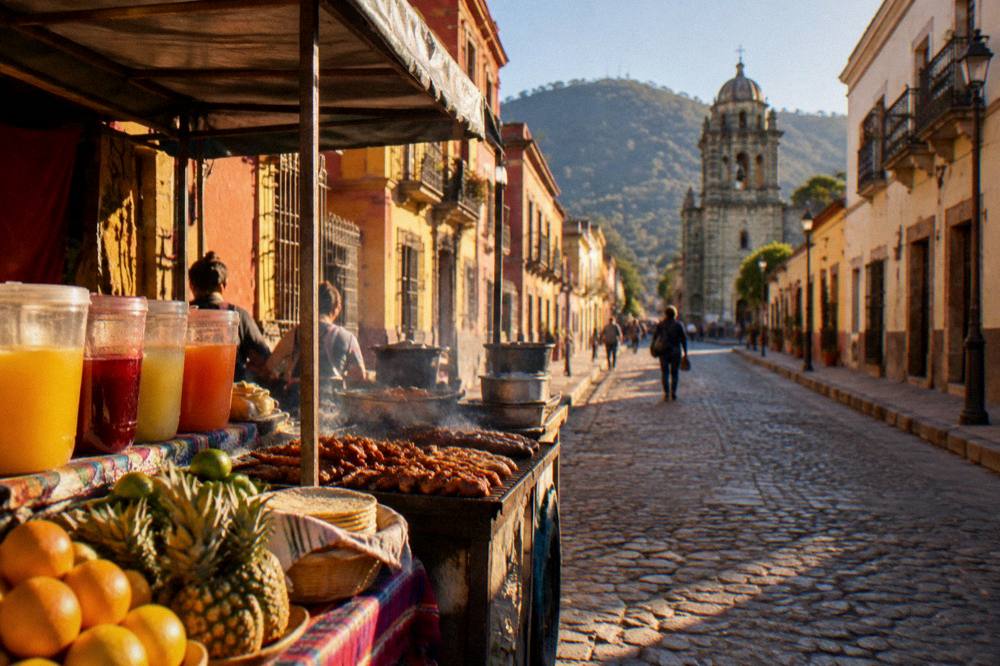
Oaxaca City is one of Mexico's defining food cities, with seven moles, tlayudas, quesillo, chocolate, mezcal and market cooking anchored by the Mercado 20 de Noviembre and a dense field of market tours and cooking classes, a food identity documented across this site's guides; San Miguel de Allende also eats well, but the honest comparison is what Oaxaca's own food landscape holds.
The practical difference for a visitor is access. The Mercado 20 de Noviembre sits a few blocks from the Zócalo, and the food tradition around it is participatory: travellers do not only taste the food, they can learn to cook it. The tour list on this site includes a traditional Oaxacan cooking class, a vegetarian cooking class with a market visit, and market immersion tours with tastings included. Mezcal tastings, sommelier-led mezcal and mole pairings and cacao and chocolate experiences round out a food-and-drink offering that runs from an hour and a half to a full day.
The what to eat in Oaxaca question is answered at length elsewhere on this site, but the comparison point stands on its own: a city whose state festival month includes a dedicated mezcal fair at the convention centre, reported at roughly 400 stands in the 2026 edition with entry around 80 MXN, is a city where drink and food carry institutional weight. Pair that with cooking classes taught in home kitchens and a valley route to Santiago Matatlán, and the food case is structural rather than anecdotal.
| Oaxaca food experience | Where it sits | What the sources support |
|---|---|---|
| Market cooking and tasting | Mercado 20 de Noviembre and centre | market's role documented on state pages; hours not published |
| Cooking classes | Oaxaca City | several bookable classes on this site |
| Mezcal tastings and pairings | Oaxaca City and Santiago Matatlán | Santiago Matatlán described as a mezcal centre on state pages |
| Feria del Mezcal | CCCO, Santa Lucía del Camino, July | 2026 edition ran 17 to 28 July, about 80 MXN entry |
| Chocolate and cacao | City centre | bookable small-group experiences on the tour list |
Which City Wins On Day Trips?
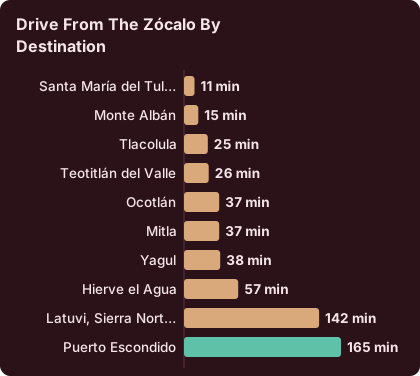
Oaxaca City's day-trip field within about an hour of the Zócalo includes Monte Albán at about 15 minutes, Santa María del Tule at about 11, Teotitlán del Valle at about 26, Tlacolula at about 25, Ocotlán at about 37, Mitla at about 37 and Hierve el Agua at about 57, with the Sierra Norte village of Latuvi at about 142 minutes, a spread of archaeology, craft villages, markets and mountain hiking that few cities anywhere match.
The drive times are computed from the Zócalo on free-flow road conditions, so real traffic and mountain roads make them longer, and the figure for Hierve el Agua in particular climbs on the final stretch. The craft villages are the distinctive layer: Teotitlán del Valle for weaving, San Bartolo Coyotepec for black pottery, San Martín Tilcajete for alebrijes and Ocotlán with its Friday market, each reachable without a tour if you accept local transport, each also covered by guided craft routes. Further out, Cuilapan de Guerrero and the Sierra Norte villages around Capulalpam de Méndez extend the range into hiking country.
| Destination | Drive from the Zócalo | What draws visitors |
|---|---|---|
| Santa María del Tule | about 11 min | the Tule tree |
| Monte Albán | about 15 min | INAH Category I archaeological zone |
| Tlacolula | about 25 min | valley town, Sunday market tradition |
| Teotitlán del Valle | about 26 min | weaving village |
| Ocotlán | about 37 min | Friday market, crafts |
| Mitla | about 37 min | INAH Category I archaeological zone |
| Yagul | about 38 min | INAH Category I archaeological zone |
| Hierve el Agua | about 57 min | petrified waterfalls and pools |
| Latuvi, Sierra Norte | about 142 min | Pueblos Mancomunados hiking |
| Puerto Escondido | about 165 min | Pacific coast, via the new highway |
San Miguel de Allende has its own excursion logic, but none of it is documented in this page's sources, so the comparison stops at Oaxaca's side of the table. What the table shows is range: pre-Hispanic sites, three working craft traditions, two scheduled weekly markets in reach and a hot-springs-and-cliffs natural site, all inside an hour, plus a mountain region beyond. A craft route such as the San Martín Tilcajete, Jalieza and Ocotlán loop is the efficient way to sample three of those towns in one day.
How Many Days Does Each City Need?
Oaxaca City logged an average stay of 2.00 nights per visitor in 2025 across 1,324,332 city arrivals, but the sight list argues for more: the Centro Histórico alone fills two days, Monte Albán half a day, one valley loop a full day, and the festival calendar can double any of those, so four to five days is the realistic working figure this site's itineraries are built around.
The arrivals figure is worth reading closely. Of the 1,324,332 visitors to the city in 2025, 1,111,799 were national and 212,533 foreign, and hotel occupancy averaged 51.73 percent. The short average stay is partly a function of domestic weekend traffic, but it also reflects how many people treat the city as a two-night stop. Monte Albán alone received 416,675 visitors in 2025, Mitla 104,428 and Yagul 10,185, which shows where the day-trip weight sits.
| 2025 measure | Figure |
|---|---|
| City tourist arrivals | 1,324,332 |
| National arrivals | 1,111,799 |
| Foreign arrivals | 212,533 |
| Hotel occupancy | 51.73 percent |
| Average stay | 2.00 nights |
| Monte Albán visitors | 416,675 |
| Mitla visitors | 104,428 |
| Yagul visitors | 10,185 |
This site publishes full itineraries from one day to a week, and the honest advice for anyone splitting a trip between two cities is to resist the two-night version of Oaxaca. A first-time visitor balancing both cities on a ten-day trip does better with three or four nights in each and a clear purpose for each: Oaxaca for the valley, the ruins and the food, the second city for its own register. If you have only ever seen Oaxaca through a weekend lens, the first-time visitor guide and its longer siblings show how much the extra days unlock.
How Do You Get To Oaxaca Versus San Miguel De Allende?
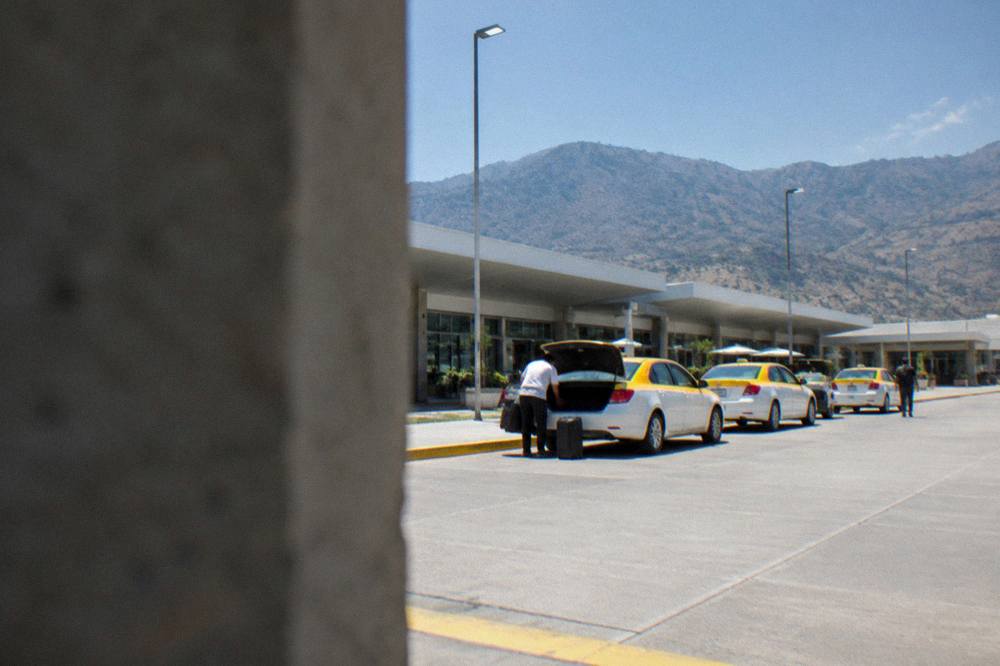
Oaxaca City is served by Xoxocotlán International Airport (OAX), operated by ASUR with normal operating hours of 06:00 to 20:00, plus ADO bus services including routes to and from Mexico City, and it sits about 165 minutes' drive from Puerto Escondido on the new highway.
The airport connection matters for the comparison because Oaxaca is a destination in its own right rather than a satellite of a larger hub, though many travellers still route through Mexico City. The Oaxaca airport guide and the flights to Oaxaca guide cover the air side, the Mexico City to Oaxaca guide covers the land approach, and the ADO bus guide covers the coach option. ADO's official site is the place for live schedules and fares, and no fare figure is given here.
One operational note with real planning weight: road blockades by teachers' unions are a standing risk in Oaxaca and can disrupt road and airport access for hours at a time. Sporadic closures were reported in October 2026 and resolved within a day. On advisories, the UK FCDO advises against all but essential travel to parts of Mexico and does not name Oaxaca on its main page; Canada advises a high degree of caution for Mexico overall with regional advisories; the US State Department lists Oaxaca state at Level 2, exercise increased caution, with restrictions in the Isthmus region. Check the advisory pages before travel, since they change.
Which City Should You Choose?
Choose Oaxaca City if archaeology, market food, mezcal, craft villages and a state-scale festival calendar are the point of the trip, and choose it knowing the rainy season runs May to October with June averaging 188.3 mm of rain; the sources on this page cover Oaxaca only, so the San Miguel side of the verdict rests on what a traveller wants rather than on any comparative figure this site can honestly print.
The decision usually resolves on appetite. A traveller who wants ruins above the city, a cooking class in a home kitchen, a weaving village in the valley and, in July, a stadium festival of dance from every region of the state, is choosing Oaxaca, and the longer the stay the more the valley rewards it. A traveller who wants a compact, walkable colonial core with a gentler excursion radius has a case for the alternative, and nothing in this page argues against it. The comparison fails when it is fought over beauty or ranking, territory where no verdict on either city can claim authority.
Budgeting note for whichever you pick: Oaxaca's INAH admission prices are fixed and printed in MXN above, the state adds a 3 percent lodging tax on hotel-type stays, and bookable tours price in USD on their live listings. Mexico's currency floats, so no exchange rate applies to these figures; check a current source at booking time. This Oaxaca Travel Guide site reports what the primary sources state and offers no first-hand verdict.
Common Questions About Oaxaca Vs San Miguel De Allende
Is Oaxaca Cheaper Than San Miguel De Allende?
No price comparison between the two cities appears in this site's sources, so no claim is made. What is fixed and printable for Oaxaca: INAH Category I sites charge 105 MXN for nationals and 210 MXN for foreigners, Category III sites 80 and 145 MXN, and the state lodging tax is 3 percent on hotel-type stays.
Is Oaxaca Bigger Than San Miguel De Allende?
Oaxaca de Juárez municipality counted 270,955 residents at the 2020 census and is the capital of a state of 4,132,148 people. This page's sources carry no equivalent census figure for San Miguel de Allende, so the comparison stops at Oaxaca's number.
Which City Has Better Weather?
Oaxaca City's SMN station normals for 1991 to 2020 show a dry season from November to April, averaging 2.4 mm of rain in January, and a rainy season from May to October peaking at 188.3 mm in June. April averages the highest daily high at 34.9 C. No equivalent table for San Miguel de Allende is in this page's sources.
Can You Visit Monte Albán From Oaxaca City Easily?
Yes. Monte Albán is about 15 minutes' drive from the Zócalo, open Monday to Sunday 08:00 to 17:00 with last access at 16:00, and admitted 416,675 visitors in 2025. Admission is 105 MXN for Mexican nationals and 210 MXN for foreign visitors.
How Many Days Do You Need In Oaxaca City?
The 2025 average stay was 2.00 nights, but the sight list argues for four to five days: two for the Centro Histórico and museums, half a day for Monte Albán and a full day for a valley loop such as Mitla, Hierve el Agua and Teotitlán del Valle.
When Is The Guelaguetza Held?
The Guelaguetza runs on two Mondays in July at the Auditorio Guelaguetza on the Cerro del Fortín. The 2026 edition was held on 20 and 27 July with shows at 10:00 and 17:00; 2027 dates are not announced.