When Is Noche De Rábanos?
Noche de Rábanos in Oaxaca City falls on 23 December each year by tradition. Here is what the festival involves, what the sources say about the latest edition, and how to plan a December visit around it.
Noche de Rábanos, the Night of the Radishes, is an annual festival in Oaxaca City, the capital of the state of Oaxaca in Mexico, an inland highland city in the Valles Centrales at about 1,550 m. The festival's traditional date is 23 December, and the most recent edition on record is the 128th, held in December 2025. This page answers the date question directly, explains what the festival involves, and helps you plan a visit around it, with December weather figures, standing event patterns and hands-on activities in the city.
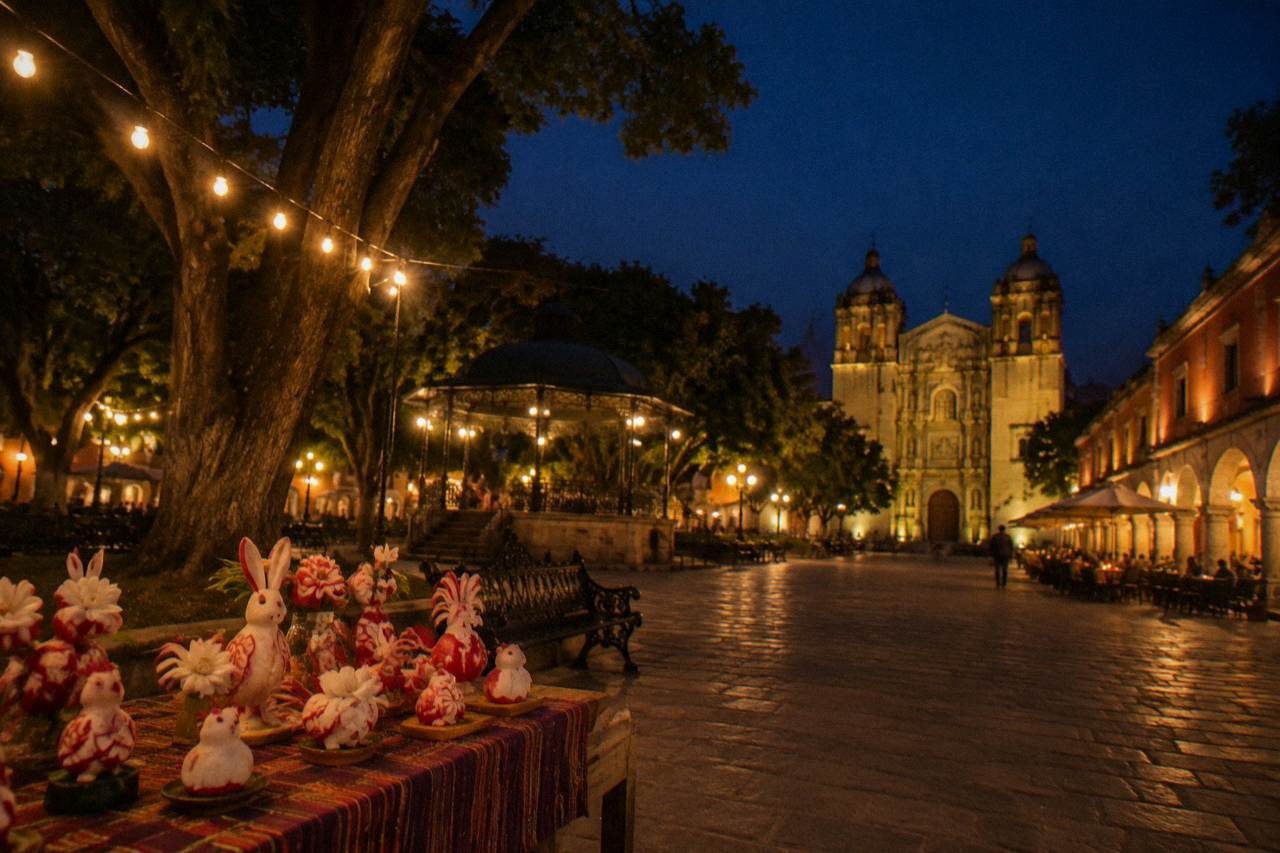
Noche de Rábanos is held on 23 December each year by tradition in Oaxaca City. The most recent edition on record is the 128th, held in December 2025, with the radish harvest and related activities dated 20 and 22 December of that year. Anyone planning around the festival for a later year should confirm the programme with the state tourism secretariat before locking in travel dates.
That is the whole of what the primary sources establish. The state government's release describes the 128th edition and its December 2025 dates, and the tradition itself is fixed on 23 December. Nothing further about a following edition has been published, so a traveller building an itinerary should treat 23 December as the standing date and verify the details of the specific year closer to the time. The festival sits within a dense December stretch in the city: traditional posadas run approximately 16 to 24 December, and the radish night falls right at the end of that window.
For most of the year the question is academic, but in December it shapes hotel demand and plaza schedules across the historic centre. The Zócalo, the city's main square, anchors the season's public life, and a full guide to the square and its surroundings is at Zócalo orientation for visitors. The festival's wider context, from Día de Muertos to Guelaguetza, is covered in the site's festival calendar for Oaxaca.
| Question | Answer | Source basis |
|---|---|---|
| Traditional date | 23 December | State release on the 128th edition |
| Latest recorded edition | 128th, December 2025 | State government communication |
| Harvest and related dates, 2025 | 20 and 22 December 2025 | State government communication |
| Standing December window for posadas | Approximately 16 to 24 December | Traditional dates in the state festival notes |
What Happens At Noche De Rábanos In Oaxaca?
The festival centres on carved radishes: artisans cut and assemble radish figures and scenes, which go on display for the public on the evening of 23 December in Oaxaca City. The 128th edition in December 2025 followed this pattern, with the harvest staged on 20 and 22 December ahead of the display night. The event is a competition, and it draws crowds into the city centre on one of the shortest evenings of the year.
The name translates directly: Noche de Rábanos means Night of the Radishes. The state's own framing for the 128th edition presents it as a celebrated local tradition, and the harvest dates show how the event is staged over several days rather than a single afternoon. Visitors should expect the historic centre to be busy on the night itself, since the display, the judging and the viewing all happen in the space of one evening. A practical approach is to arrive early, treat the night as a walking event, and build the rest of the stay around the city's other December fixtures, from the markets to the churches that anchor the season.
December is also a strong month for the city's craft traditions in general, and the festival's artisan focus pairs naturally with making something rather than only watching. A printmaking session with a local artist, where participants produce their own printed work under an artist's guidance, is one such option: Check availability. It sits in the same register as the radish competition, hands, materials and local skill, and it runs from the city centre, so it fits easily into a December itinerary.
How Does Noche De Rábanos Fit The Oaxaca Festival Year?
Noche de Rábanos closes the festival year in Oaxaca City on 23 December, standing at the end of a cycle that runs from Guelaguetza in July, through Día de Muertos around 31 October to 2 November, to the December posadas of roughly 16 to 24 December. Each of these follows a fixed traditional pattern, with the 2025 radish edition and the 2025 Día de Muertos programme both on record from state sources.
The July fixture is Guelaguetza, formally Lunes del Cerro, two Mondays in July at the Auditorio Guelaguetza on the Cerro del Fortín. The 2026 edition ran on 20 and 27 July with performances at 10:00 and 17:00, and its paid seats were priced at 1,632 MXN for Palco A and 1,321 MXN for Palco B, with two sections free; those figures describe the 2026 edition only and a following year's dates come later. Día de Muertos centres on the traditional dates of 31 October to 2 November; the state's published programme of 25 October to 4 November with more than 140 activities belongs to the 2025 edition, and no later programme is on record. The site's dedicated pages go deeper on Día de Muertos in Oaxaca and on what else the city is known for in Oaxaca's claim to fame.
| Period | Event | Standing pattern | On record |
|---|---|---|---|
| Two Mondays in July | Guelaguetza (Lunes del Cerro) | Auditorio Guelaguetza, Cerro del Fortín | 20 and 27 July 2026, 10:00 and 17:00 |
| Late October to early November | Día de Muertos | Traditional dates 31 October to 2 November | 2025 programme, 25 October to 4 November, 140+ activities |
| Approximately 16 to 24 December | Posadas | Traditional December window | Traditional dates |
| 23 December | Noche de Rábanos | Radish display and competition | 128th edition, December 2025 |
What Is The Weather Like In Oaxaca In Late December?
Late December in Oaxaca City averages a high of 28.9 °C and a low of 11.0 °C, with about 9.0 mm of rain across the month, according to the SMN station normals for 1991 to 2020. That puts the city in its dry season, which runs from November to April, so the radish night is typically dry, warm by day and cool enough after dark that a layer is needed.
The same normals place the annual rain total at 853.3 mm, with the rainy season from May to October and its peak from June to September; by December the numbers have collapsed, from 188.3 mm in June to 9.0 mm in December. November and December sit at 9.1 and 9.0 mm in the table. For a festival that runs outdoors in the evening, that matters: the plan can assume dry pavement rather than rain contingencies. The altitude does the rest. At about 1,550 m, the city sheds heat quickly after sunset, and an 11.0 °C average low means the radish queues feel wintry even when the afternoons do not. Packing for the night means a jacket over daytime clothes, flat shoes for standing, and nothing heavier. The full index of guides sits on Oaxaca Travel Guide.
How Many Days Should You Build Around A December Visit?
A stay of two to four days covers the Noche de Rábanos night plus the city's core sights and one valley excursion, based on the site's itinerary guidance for Oaxaca City. The city's own 2025 tourism figures show an average stay of 2.00 nights, which suggests many visitors compress the visit, though December's festival calendar rewards an extra night on either side of the 23rd.
The reason to stretch beyond the average is arithmetic. Monte Albán sits about 15 minutes' drive from the Zócalo, Tule about 11, Teotitlán del Valle about 26, Mitla about 37 and Hierve el Agua about 57, with real traffic and mountain roads slower than those free-flow figures. A single valley day trip absorbs a full day; the churches, markets and museums of the centre absorb another; the radish night itself absorbs an evening that nothing else should overlap. Entry to Monte Albán is 105 MXN for Mexican nationals and 210 MXN for foreign visitors, per the INAH page, open 08:00 to 17:00 with last access at 16:00, so an early start leaves the afternoon free. The site's planning pages cover this in detail, starting with how many days are enough in Oaxaca.
What Else Should A December Visitor Do In Oaxaca?
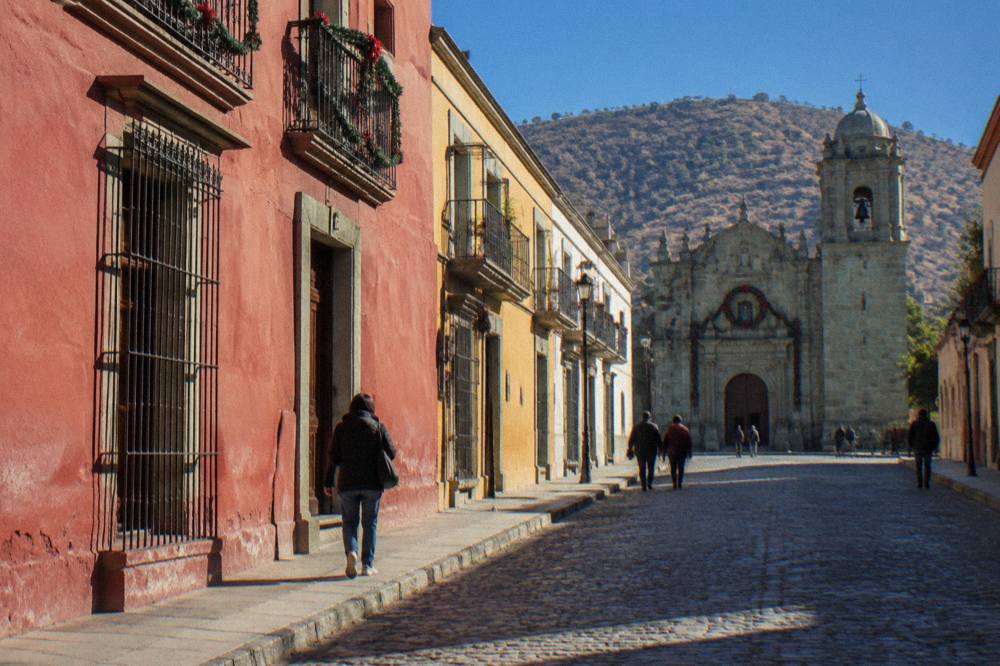
A December visitor in Oaxaca City can fill the days around the radish night with the historic centre's churches and markets, a Monte Albán half-day, a craft workshop, and food: the city recorded 1,324,332 tourist arrivals across 2025, and its December draw goes well beyond one festival night. The practical base is the Centro Histórico, a UNESCO World Heritage property together with Monte Albán.
The UNESCO listing is formally the "Historic Centre of Oaxaca and Archaeological Site of Monte Albán", property 415, and the city was founded in 1529 as Antequera. Within that centre, the staples are Santo Domingo de Guzmán, the Andador Macedonio Alcalá, the food stalls of Mercado 20 de Noviembre and the plazas that host the season's public life. The Museo de las Culturas de Oaxaca inside the Santo Domingo complex is open Tuesday to Saturday only, 10:00 to 16:00, with entry at 105 MXN for nationals and 210 MXN for foreigners, so it cannot fill a Monday or Sunday plan. Food is the other pillar: mole, tlayudas, quesillo and hot chocolate are the city's signatures, and December's cooler evenings suit long market lunches.
For travellers weighing the city against other Mexican destinations in the festive season, the site's comparison Oaxaca versus San Miguel de Allende works through the trade-offs, and what Oaxaca is famous for lists the claims in one place. The Oaxaca Travel Guide homepage is the site's coverage hub, linking every guide, day trip and tour page on the site.
Common Questions About Noche De Rábanos In Oaxaca
When Is Noche De Rábanos?
By tradition it falls on 23 December each year in Oaxaca City. The most recent edition on record is the 128th, held in December 2025, with the harvest on 20 and 22 December of that year. Confirm the programme for the year of your visit before booking travel around it.
Where Does Noche De Rábanos Take Place?
The festival takes place in the historic centre of Oaxaca City, an inland highland city at about 1,550 m and the capital of the state of Oaxaca. The evening display draws crowds into the central plazas, so plan to arrive on foot and early.
Is Noche De Rábanos The Same As Día De Muertos?
No. Día de Muertos centres on the traditional dates of 31 October to 2 November, with the state's published 25 October to 4 November programme of more than 140 activities belonging to the 2025 edition. Noche de Rábanos is a separate, radish-carving festival on 23 December.
What Is The Weather Like On The Night?
December averages a high of 28.9 °C, a low of 11.0 °C and about 9.0 mm of rain for the month, per the SMN station normals for 1991 to 2020. Expect a dry evening that cools sharply after sunset, so bring a layer.
How Far In Advance Should I Plan A Trip Around It?
Book lodging well ahead for the nights around 23 December, since the festival falls inside the traditional posada window of roughly 16 to 24 December and demand concentrates in the historic centre. Build at least a full day either side of the night for the centre and a valley excursion.
Can I Combine The Festival With Other Oaxaca Activities?
Yes, easily. The centre's churches and markets, a Monte Albán half-day and a hands-on craft workshop all fit around the single festival evening, and a two- to four-night stay covers them without rushing.