What Is Oaxaca Famous For?
Oaxaca City is famous for Monte Albán, seven kinds of mole, mezcal, craft villages and Guelaguetza. An editorial guide to what the sources actually say the city is known for.
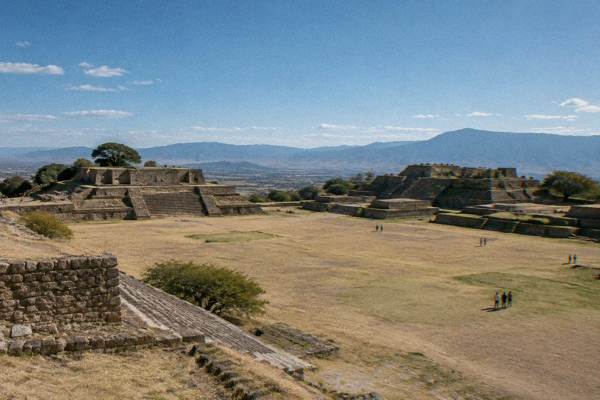
Oaxaca City, officially Oaxaca de Juárez, is the capital of the state of Oaxaca in Mexico, an inland highland city in the Valles Centrales at about 1,550 m, and it is famous for a short list of things the whole world recognises: the Monte Albán archaeological site, a UNESCO World Heritage historic centre, one of Mexico's most celebrated regional kitchens, mezcal, and the craft villages of the surrounding valleys. The municipality counted 270,955 residents at the 2020 census, and the state 4,132,148, yet the city draws far beyond its size: Sectur recorded 1,324,332 tourist arrivals in the city in 2025 alone.
This page works through each strand of that fame in order, using INAH site data, state tourism releases and climate normals rather than personal impressions. Oaxaca Travel Guide reports what the primary sources say, and sends readers to the live listings for anything that changes. For the practical side of a visit, the what not to miss in Oaxaca answer covers the shortlist, and is Oaxaca worth visiting tackles the honest version of the should-you-go question.
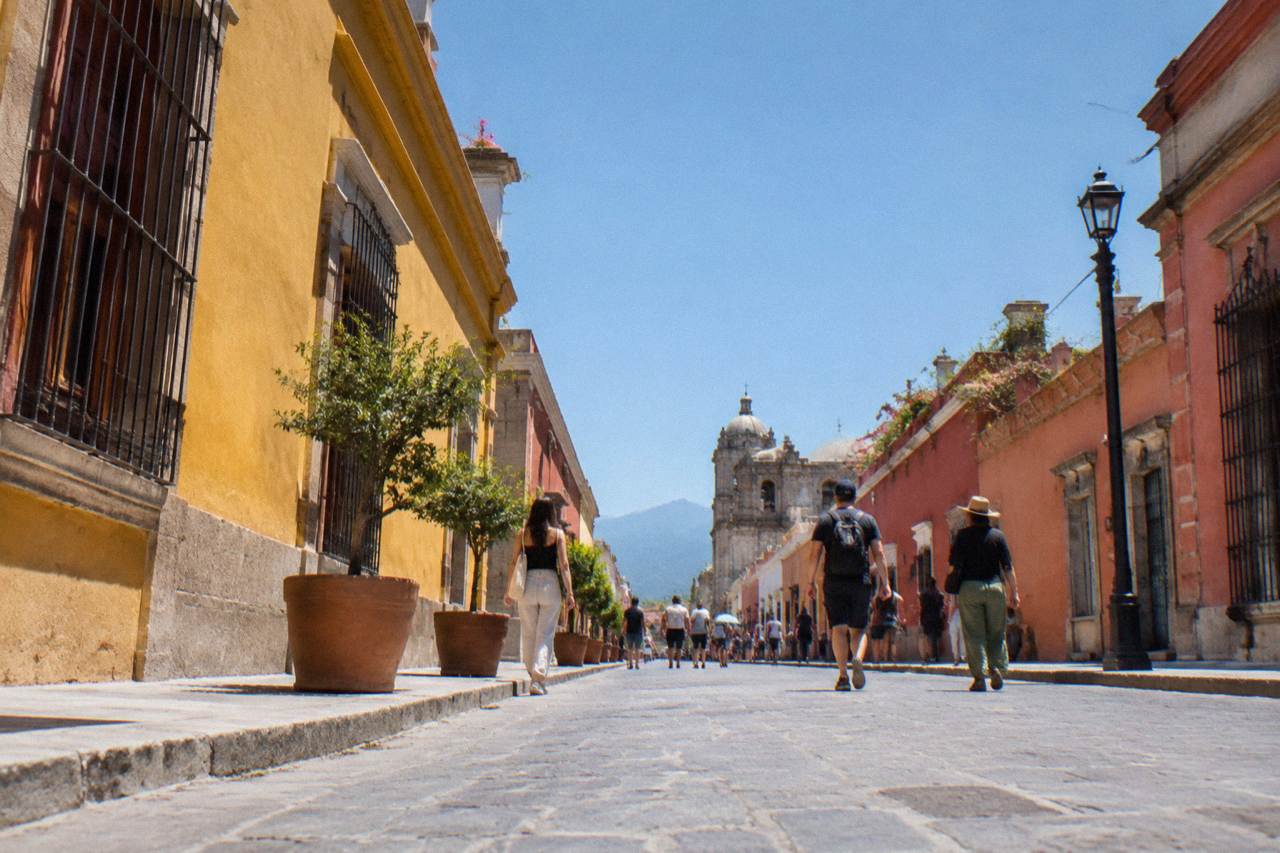
Oaxaca City is famous for five things above all: the Monte Albán archaeological zone, a UNESCO-listed historic centre centred on the Santo Domingo de Guzmán church, a regional kitchen built on mole, tlayudas and quesillo, mezcal from the valleys, and the craft villages of the Valles Centrales that produce textiles, alebrijes and barro negro pottery. Guelaguetza in July and Día de Muertos at the start of November add a festival layer on top.
The UNESCO listing is the clearest single marker. The property, inscribed as "Historic Centre of Oaxaca and Archaeological Site of Monte Albán" (property 415), pairs the colonial grid of the city with the ruins on the hill above it, and Oaxaca de Juárez was founded in 1529 as Antequera. That pairing, a walkable historic centre a short drive from a major archaeological zone, is the structural fact behind almost every visit.
The fame is measurable. Sectur's 2025 indicators count 416,675 visitors to Monte Albán in that year, against 104,428 at Mitla and 10,185 at Yagul, and 1,324,332 tourist arrivals in the city overall, of which 83.95 percent were national travellers and 16.05 percent foreign. In other words, the city's reputation in Mexico itself is at least as strong as its reputation abroad, which is unusual for a destination of this size.
What Food Is Oaxaca Famous For?
Oaxaca's kitchen is famous for mole (with seven traditional varieties named after the region), tlayudas, quesillo, chapulines, tejate and Oaxacan chocolate, plus mezcal as the signature drink. The food answer runs deeper than any single dish: markets such as Mercado 20 de Noviembre, cooking classes and mezcal tastings are core visitor activities in their own right, and the city is widely treated as one of Mexico's defining food destinations.
The detail lives in the what food is Oaxaca famous for answer, but the shape is simple. Mole is the flagship: a sauce family rather than one recipe, served over meat and rice, and the reason cooking classes here have the reputation they do. Chapulines (toasted grasshoppers), tejate (a pre-Hispanic maize and cacao drink) and Oaxacan chocolate round out the list of names a visitor meets in every market.
Mezcal belongs in the same paragraph even though it is a drink. The distillates of the Valles Centrales, and Santiago Matatlán in particular, which state pages call the world capital of mezcal, are the reason tasting rooms and distillery visits are now standard city activities. The Denominación de Origen protects the name, and the state's Feria del Mezcal runs each July as part of the Guelaguetza month programme, reported at about 80 MXN entry for the 2026 edition.
| Food or drink | What it is | Where you meet it |
|---|---|---|
| Mole | Sauce family served with meat and rice | Restaurants, cooking classes |
| Tlayuda | Large crisp tortilla with beans, quesillo, meat | Markets, street stalls |
| Quesillo | String cheese, the region's signature cheese | Markets, tlayudas |
| Chapulines | Toasted grasshoppers, seasoned | Market stalls |
| Tejate | Maize and cacao drink | Markets, street vendors |
| Mezcal | Agave spirit from the valleys | Tasting rooms, distillery tours |
A cooking class is the most direct way into this fame, and the tour list's traditional classes, including one built on family recipes, put you in a kitchen rather than a restaurant. That class, the full-day Monte Albán and crafts tour and an artist-led street art walk are the three experiences this site highlights most often for first visits.
Why Is Monte Albán So Central To Oaxaca's Fame?
Monte Albán is the INAH archaeological zone on the hill about 15 minutes' drive above the city, open Monday to Sunday 08:00 to 17:00 with last access at 16:00, charging 105 MXN for Mexican nationals and 210 MXN for foreign visitors under INAH Category I. Its 416,675 visitors in 2025 make it by far the most visited site in the state, and it shares its UNESCO inscription with the historic centre itself.
The INAH site page lists those hours and fees directly, and the same Category I pricing applies at Mitla and Yagul, the two other major zones in the valleys. Mitla runs 08:00 to 17:00 with last access at 16:30; Yagul matches Monte Albán's 16:00 last access. The smaller Category III sites, Dainzú and Lambityeco at 80 MXN for nationals and 145 MXN for foreigners, and Zaachila at the same price but open only Thursday to Sunday 10:00 to 16:00, sit further down the visiting order.
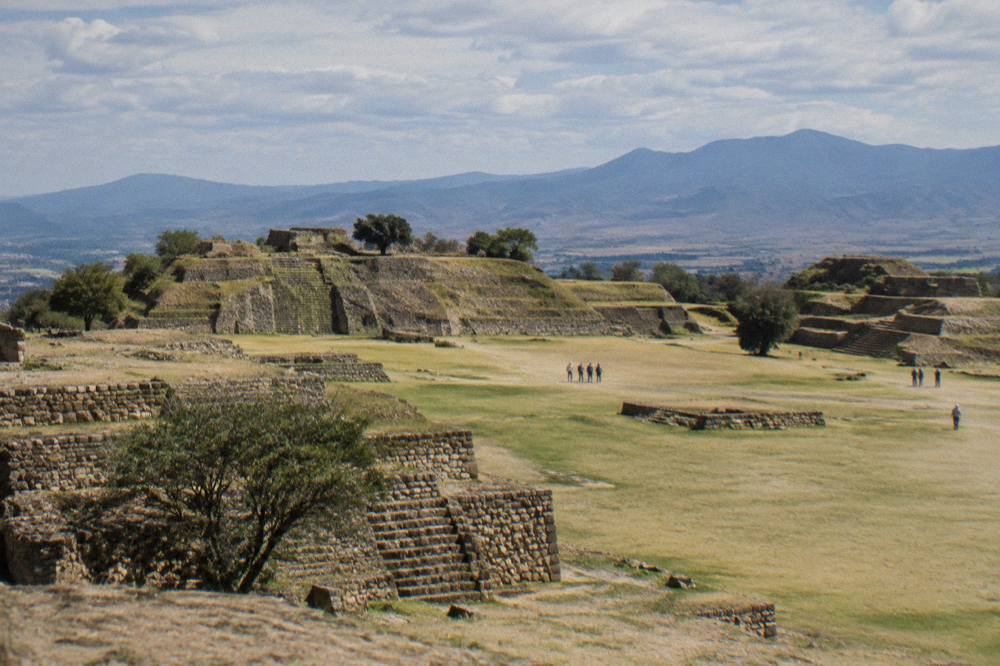
The drive times, computed on OSM roads from the Zócalo, frame the day: Monte Albán is about 15 minutes away, Santa María del Tule about 11, Teotitlán del Valle about 26, Mitla about 37 and Hierve el Agua about 57. Real traffic and mountain roads are slower than the free-flow figures, so a valley loop is a full day in practice. The is Monte Albán worth it answer weighs the decision, and the answer on how long the drive to Hierve el Agua is covers the far end of the loop.
| INAH site | Hours | Last access | Fee (MXN, national / foreign) |
|---|---|---|---|
| Monte Albán | Mon to Sun 08:00-17:00 | 16:00 | 105 / 210 |
| Mitla | Mon to Sun 08:00-17:00 | 16:30 | 105 / 210 |
| Yagul | Mon to Sun 08:00-17:00 | 16:00 | 105 / 210 |
| Dainzú | Mon to Sun 08:00-17:00 | 16:30 | 80 / 145 |
| Zaachila | Thu to Sun 10:00-16:00 | 16:00 | 80 / 145 |
The city-side half of the UNESCO pairing matters just as much. The Zócalo, the Santo Domingo de Guzmán church and the Andador Macedonio Alcalá are the fixed points of the historic centre, and the Museo de las Culturas de Oaxaca inside the Santo Domingo complex is open Tuesday to Saturday, 10:00 to 16:00, at 105 / 210 MXN. If your visit is short, the how many days in Oaxaca is enough answer sets out the arithmetic.
What Crafts And Street Art Is Oaxaca Famous For?
Oaxaca is famous for the craft villages of the Valles Centrales: Teotitlán del Valle for woven textiles, San Martín Tilcajete for alebrijes, San Bartolo Coyotepec for barro negro black pottery, and the surrounding valley towns for mezcal production. Inside the city itself, the contemporary counterpart is a dense street art and printmaking scene concentrated in neighbourhoods such as Jalatlaco and Xochimilco.
The villages are working places, not museums. Teotitlán del Valle sits about 26 minutes from the centre by road, and its weaving workshops are the reason so many valley tours stop there; state guidance notes many workshops operate Tuesday to Sunday and close Mondays, with mornings recommended for demonstrations in natural light. San Martín Tilcajete and San Bartolo Coyotepec anchor the alebrije and black-pottery legs of the same loop, and several day tours bundle two or three of them with Monte Albán in a single circuit. More of these guides are collected on Oaxaca Travel Guide.
The street art strand is newer but real. Jalatlaco's murals are now among the most photographed surfaces in the city, and printmaking workshops run by working artists are a listed product category of their own. The tour list's artist-led street art walk is the pick that maps onto this directly: it is a walking format led by a practising artist, and you can check dates through Check availability at the operator's booking page.
Between the ruins and the crafts, the question of how to split a week is mostly a question of drive times, and the answers on is Oaxaca a walkable city and the best way to get around Oaxaca cover the centre-versus-valleys split in detail. The short version: the historic centre is walkable end to end, and everything on this craft list needs a vehicle or a tour.
What Festivals Make Oaxaca Famous?
Oaxaca is famous for Guelaguetza in July and Día de Muertos at the end of October and start of November, plus Noche de Rábanos on 23 December. Guelaguetza 2026 ran on two Mondays, 20 and 27 July, at the Auditorio Guelaguetza on the Cerro del Fortín, with paid seats at 1,632 and 1,321 MXN and two free sections; Día de Muertos centres on the traditional dates of 31 October to 2 November, when cemeteries in Xoxocotlán and other communities open at night.
The Guelaguetza pattern is stable: two Lunes del Cerro dates each July, performances at 10:00 and 17:00, tickets through the official seller, and free sections allocated by arrival. The 2026 edition's Palco A and B seats sold out quickly after general sales opened on 1 June, and the wider programme wrapped more than 140 activities into the July month, including the calendas of 18 and 25 July and the Feria del Mezcal from 17 to 28 July at the CCCO in Santa Lucía del Camino. The 2027 dates are not announced; treat those figures as the 2026 reference and check the state pages before planning.
Día de Muertos follows the same caution. The published programme of 25 October to 4 November with 140+ activities belongs to the 2025 edition, and the 2026 programme had not been announced. The standing pattern is the safe thing to plan around: comparsas and evening processions in the last days of October, decorated pantheons, and the night of 1 to 2 November as the centre of gravity, with the tapetes and fachadas of Jalatlaco and the cemetery visits of Xoxocotlán as the anchors. The answer on the best time to see Day of the Dead in Oaxaca goes deeper.
Noche de Rábanos keeps its fixed date, 23 December, when radish figures fill the Zócalo; the 128th edition ran in December 2025, and the 2026 edition's details are not announced.
| Festival | Standing dates | 2026 status |
|---|---|---|
| Guelaguetza | Two Mondays in July | 20 and 27 July 2026, completed; 2027 not announced |
| Feria del Mezcal | July, alongside Guelaguetza | 17 to 28 July 2026, reported |
| Día de Muertos | 31 October to 2 November | 2026 programme not announced |
| Noche de Rábanos | 23 December | 2026 details not announced |
When Do People Come To Oaxaca, And Why Does It Matter?
Oaxaca's dry season runs November to April and the rainy season May to October, with the heaviest rain from June to September, so festival dates and climate together shape the year: Guelaguetza fills July despite the rain figures, Día de Muertos fills late October and early November, and December to February brings the coolest nights, with January averaging lows of 10.3 C and highs of 28.9 C.
The climate normals from the SMN station in the city put June at 188.3 mm of rain on average and January at 2.4 mm, with April's average daily high at 34.9 C the highest of the year in the table. None of that makes a month "best"; no official source ranks months, and this site does not either. What the table does support is packing logic: rain is a real factor from June to September, and evenings are cool enough in December and January that layers matter at about 1,550 m of altitude.
The best month to go to Oaxaca answer works through the same table month by month, and the safety side of the planning question, including the US advisory's Level 2 wording for the state, is covered at is Oaxaca safe for Americans right now and is Oaxaca affected by cartels. One standing operational risk belongs in any festival plan: road blockades by teachers' unions are a recurring, sporadic feature in the state and can affect road and airport access for hours at a time.
Common Questions About What Oaxaca Is Famous For
What Is Oaxaca Famous For?
Oaxaca City is famous for the Monte Albán archaeological zone, its UNESCO-listed historic centre, mole, tlayudas and quesillo, mezcal, the craft villages of the Valles Centrales, and the festivals of Guelaguetza and Día de Muertos. Together those strands explain why a city of 270,955 residents recorded 1,324,332 tourist arrivals in 2025.
What Food Is Oaxaca Famous For?
Mole in its regional varieties, tlayudas, quesillo, chapulines, tejate and Oaxacan chocolate, with mezcal as the signature drink. Markets such as Mercado 20 de Noviembre, cooking classes and mezcal tastings are the main ways visitors meet the kitchen.
Is Oaxaca Famous For Monte Albán?
Yes. Monte Albán is the state's most visited INAH site at 416,675 visitors in 2025, it shares its UNESCO World Heritage inscription with the historic centre, and it sits about 15 minutes' drive from the Zócalo. Entry is 105 MXN for nationals and 210 MXN for foreign visitors.
Is Oaxaca Famous For Mezcal?
Yes. The Valles Centrales, and Santiago Matatlán in particular, which state pages call the world capital of mezcal, sit behind the city's tasting rooms and distillery visits, and the Feria del Mezcal runs each July as part of the Guelaguetza programme.
What Is The Most Famous Festival In Oaxaca?
Guelaguetza in July, with performances on two Mondays at the Auditorio Guelaguetza on the Cerro del Fortín, is the state's flagship festival, followed by Día de Muertos centred on 31 October to 2 November and Noche de Rábanos on 23 December.
Is Oaxaca A Beach Destination?
No. Oaxaca City is an inland highland city in the Valles Centrales at about 1,550 m, with no sea or beach. The Pacific coast at Puerto Escondido, Mazunte and Huatulco is a separate, far extension of a trip, about 165 minutes' drive on the new highway to Puerto Escondido.
Fame, in Oaxaca's case, is unusually well documented: the archaeology is priced and timed on INAH pages, the festivals on state releases, and the visitor counts in Sectur's indicators, and every one of those strands sits within an hour of the Zócalo.