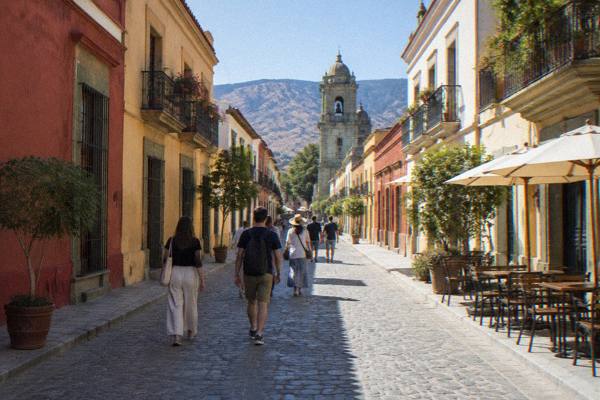
Is Oaxaca Affected By Cartels?
What government advisories actually say about cartels and crime in Oaxaca City and the wider state, and how the official wording compares with Mexico City and other destinations.
Oaxaca City, the inland highland capital of the state of Oaxaca in Mexico, sits at about 1,550 m in the Valles Centrales, and it is the state capital that most advisory language about "Oaxaca" refers to. The question of cartel presence is really a question about how governments word their travel advice, because no advisory singles out the city as a no-go area. The US State Department, lists Oaxaca state at Level 2, Exercise Increased Caution, its second-lowest tier, and places no travel restrictions on US government employees for Oaxaca City, Monte Albán, Puerto Escondido or Huatulco. The UK and Canadian pages take a country-wide view and do not name Oaxaca among the areas they warn against.
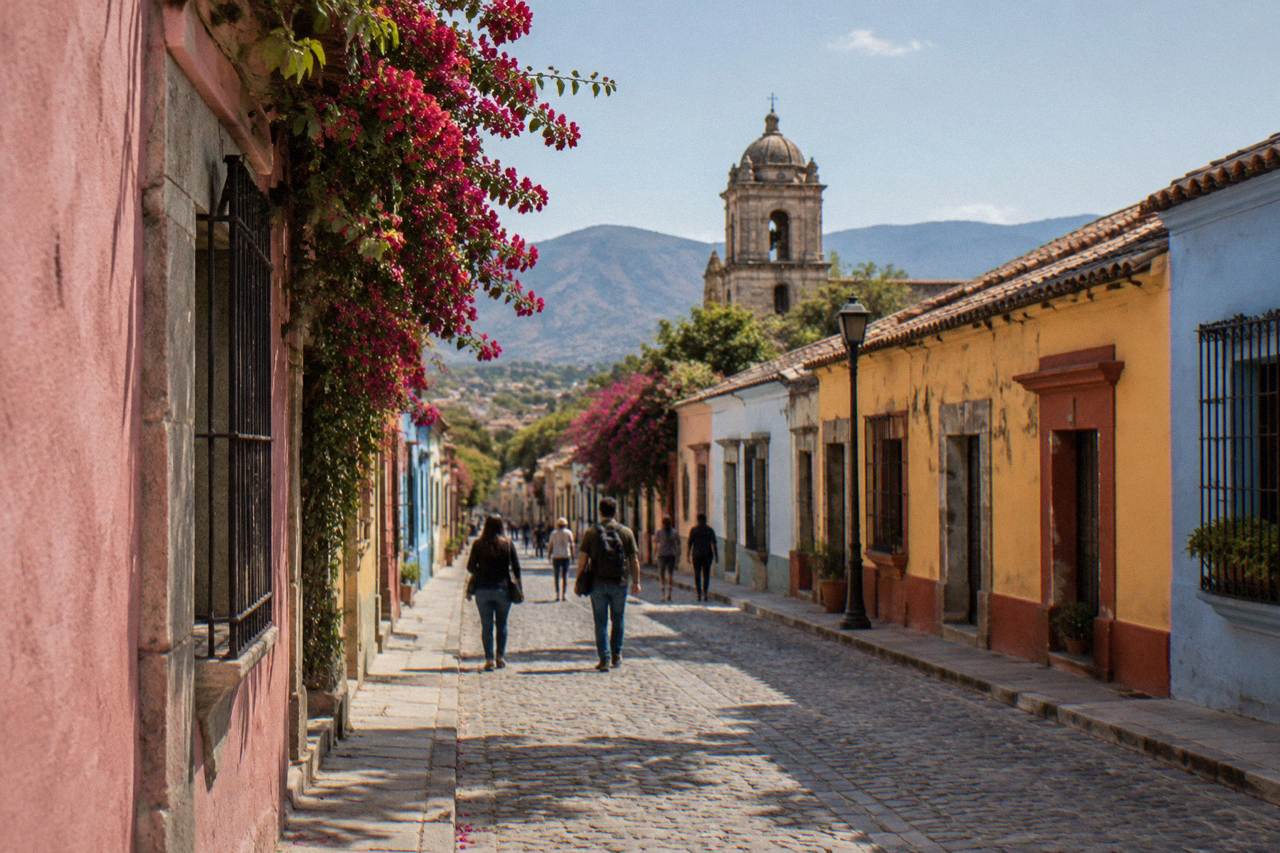
No government advisory names Oaxaca City as cartel territory, and the strongest formal wording applied to the state is Level 2, Exercise Increased Caution, the second-lowest of the four US tiers. Mexico-wide advisories from the UK and Canada treat the country as a whole and do not list Oaxaca among the specific areas where they advise against all but essential travel.
The US restrictions that do exist for Oaxaca state apply to government employees only, and they cover the Isthmus region, not the city or the valleys around it.
That is the whole of the formal picture, and it is worth reading carefully because the gap between "Level 2 for a state" and "cartel-affected destination" is wide. The US system runs from Level 1, Exercise Normal Precautions, to Level 4, Do Not Travel. Oaxaca sits one step above the lowest tier. The advisory wording for the state, attributes the level to crime and terrorism categories used across the Mexico page, and the employee restrictions name the Isthmus: the area from the western boundary of Federal Highway 185D, the northern Federal Highway 190, and the eastern Oaxaca-Chiapas border, including Juchitán de Zaragoza, Salina Cruz and San Blas Atempa. US government employees are also reported as barred from Federal Highway 200 between Pinotepa and the Oaxaca-Guerrero border, on the coast far from the capital.
None of that geography touches a typical city itinerary. Monte Albán is about 15 minutes by road from the Zócalo, Mitla about 37 minutes, Hierve el Agua about 57 minutes, and all of those sit in the Valles Centrales where the advisory imposes no employee restrictions at all. The Pacific coast destinations of Puerto Escondido and Huatulco are also explicitly unrestricted for US government staff, though they are far extensions from the city, roughly 165 minutes to Puerto Escondido on the new highway.
What Do The Official Travel Advisories Say About Oaxaca?
The UK FCDO advises against all but essential travel to parts of Mexico, and Oaxaca does not appear on its list of named areas. Canada advises a high degree of caution for Mexico overall, with regional advisories, and again does not name Oaxaca among its avoid-travel areas. The US State Department, places Oaxaca state at Level 2, Exercise Increased Caution, with employee restrictions confined to the Isthmus region. Each government publishes its full country page online.
The three advisories differ in structure, which is why summaries of them so often disagree. The UK page organises its warnings by state and by specific area within states; the Oaxaca section carries no "against all but essential travel" listing, which is the tier reserved for the areas the FCDO names elsewhere in Mexico. The Canadian page is built as one national rating, exercise a high degree of caution, with a separate list of regional advisories for areas to avoid; Oaxaca is not on that list. The US page rates each state individually, and Oaxaca's Level 2 is shared with a large group of Mexican states.
| Government | Level For Mexico Overall | Specific Wording For Oaxaca | Named Restrictions In Oaxaca State |
|---|---|---|---|
| United States | State-by-state ratings | Oaxaca state: Level 2, Exercise Increased Caution | US government employees restricted in the Isthmus region; none for Oaxaca City, Monte Albán, Puerto Escondido, Huatulco |
| United Kingdom | Advises against all but essential travel to parts of Mexico | Oaxaca not named on the main page | None listed for Oaxaca |
| Canada | Exercise a high degree of caution, with regional advisories | Oaxaca not named as an avoid-travel area | None listed for Oaxaca |
Advisories are political documents as much as safety documents, and they describe whole states with one number. A state rating of Level 2 covers both the Isthmus towns named in the employee restrictions and the central valleys where visitors spend their time, so the number alone understates how specific the underlying guidance actually is. Anyone wanting the primary text can read the country pages directly: the US page rates every Mexican state, the UK page lists the exact areas under its essential-trail wording, and the Canadian page lists its regional advisories. For a related angle on the same question, see Is Oaxaca Safe For Americans Right Now? and Which Is Safer, Mexico City Or Oaxaca?.
Is Oaxaca City Itself Restricted Or Warned Against?
No. The US State Department's employee restrictions, which are the strictest test available, explicitly allow travel to Oaxaca City, Monte Albán, Puerto Escondido and Huatulco without limitation, and restrict only the Isthmus region and one stretch of Federal Highway 200 on the coast. The city is not under any UK or Canadian regional advisory. In advisory terms, Oaxaca City is one of the unrestricted destinations in Mexico.
In practice, the city visit that brings a million-plus arrivals functions normally: the state tourism indicators recorded 1,324,332 visitor arrivals in Oaxaca City across 2025, of which 212,533 were foreign visitors, and the archaeological zone at Monte Albán alone counted 416,675 visitors that year. Those are government-collected figures, not marketing numbers, and they describe a destination with heavy, steady visitor traffic. None of this says crime is absent anywhere in Mexico; it says the formal warning apparatus draws its lines well away from the places a Oaxaca City trip actually covers.
The city is also compact and walkable, which shapes how people experience it. The historic centre is a UNESCO World Heritage property, "Historic Centre of Oaxaca and Archaeological Site of Monte Albán", and the main sights cluster within walking distance of the Zócalo. A guided walk is a common first activity, and the two-hour walking tour that covers culture and food is a way to learn the centre's layout on day one: Check availability. The question of evening safety on those same streets is covered in detail at Is Oaxaca Safe To Walk Around At Night?.
What About Road Blockades And Protests?
Road blockades by teachers' unions are a standing, recurring risk in Oaxaca and have at times cut road and airport access for hours at a stretch, but they are protest actions, not cartel activity, and they clear rather than persist. No advisory treats them as a reason to avoid the state. The practical defence is scheduling slack: allow buffer time on departure day and check road conditions before a long drive.
This distinction matters because "is Oaxaca affected by cartels" and "can travel in Oaxaca be disrupted" are different questions with different answers. The disruption risk in Oaxaca is documented and real: protest blockades have closed highway exits, city intersections and airport access roads in sporadic actions, typically resolved within a day. The cartel question is answered above by the advisory tiers. Mixing the two produces a distorted picture, treating a political-protest pattern as organised-crime activity, and no government source makes that link for Oaxaca. The rest of the planning pages sit on Oaxaca Travel Guide.
For travellers, the pattern translates into simple planning rules. Keep the last night in the city before an early flight, since the airport at Xoxocotlán has been one of the blocked points in past actions. Treat drive times as floors, not promises: the derived figures of about 37 minutes to Mitla or about 57 minutes to Hierve el Agua assume free-flowing mountain roads, and real traffic is slower. And treat any single news report of a blockade as an event, not a condition: the same roads have been open again the following day in every reported case.
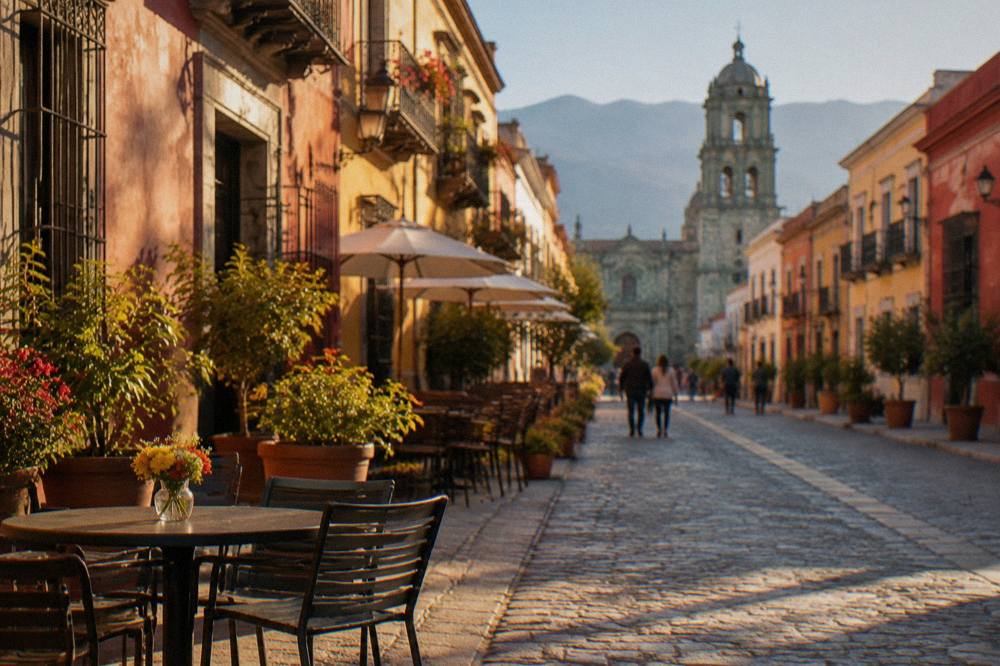
How Does Oaxaca Compare With Other Mexican Destinations On Advisory Level?
Oaxaca state's Level 2 rating, is the same tier that covers large parts of Mexico, including destinations with heavy international tourism, and it sits two tiers below the Do Not Travel level reserved for the worst-affected states. The UK and Canadian systems, which name specific problem areas rather than rating each state, leave Oaxaca off their lists entirely. On every one of the three systems, Oaxaca compares favourably with the destinations that carry the strongest warnings.
The comparison is easiest to see in table form, because the three governments use different vocabularies for the same underlying judgment. What they share is that none of them places Oaxaca in the top warning tiers, and the areas they do warn about in Mexico are elsewhere.
| Advisory System | How It Rates Destinations | Where Oaxaca Sits | What The Top Tier Contains |
|---|---|---|---|
| US State Department | Four levels per state, Level 1 to Level 4 | Level 2, Exercise Increased Caution, with no employee restrictions on the city or valleys | Level 4, Do Not Travel, applied to other states on the Mexico page |
| UK FCDO | One national rating plus named areas to avoid | Not named among the areas where travel is advised against | Specific parts of other states, such as Baja California, Chihuahua and Sinaloa |
| Canada | One national rating plus regional avoid lists | Not named on the regional lists | Other regions of Mexico listed on the Canadian page |
None of this is a promise of safety anywhere, and no advisory is a forecast. It is a reading of the documents themselves, which is the honest way to answer the question. For the wider picture of the city as a destination, Is Oaxaca Worth Visiting? covers what the trip itself offers, and What Not To Miss In Oaxaca lists the sights the advisory wording does not touch.
So Should You Still Go To Oaxaca?
The advisory record gives no basis for cancelling a Oaxaca City trip on cartel grounds: the state sits at Level 2 with no restrictions on the city, the two other governments do not name it at all, and the disruption risk that does exist, union road blockades, is political and temporary. Standard urban caution applies as it would in any city. The decision then rests on the trip itself, and the city's visitor numbers show a destination functioning normally.
The city that a visitor actually encounters is small, high, inland and busy with ordinary life: markets, the Zócalo, Santo Domingo de Guzmán, the Andador Macedonio Alcalá, and day trips out to Monte Albán and the Tlacolula Valley. The advisory question resolves before the itinerary question begins. Anyone weighing the trip against alternatives can read the full advisory pages themselves, then spend the planning effort where it pays: on how many days to give the city, what to eat, and which valley towns to visit.
Common Questions About Cartels And Safety In Oaxaca
Is Oaxaca Affected By Cartels?
No advisory names Oaxaca City as cartel territory. The US State Department, rates Oaxaca state at Level 2, Exercise Increased Caution, with employee restrictions only in the Isthmus region, and the UK and Canadian pages do not name Oaxaca among the areas they warn against at all.
Is Oaxaca Under A Do Not Travel Warning?
No. The strongest US wording for Oaxaca state is Level 2, Exercise Increased Caution, two tiers below Do Not Travel. The UK and Canadian systems do not list Oaxaca among their named avoid-travel areas.
Which Parts Of Oaxaca State Have US Government Employee Restrictions?
The Isthmus region: from the western boundary of Federal Highway 185D, the northern Federal Highway 190, and the eastern Oaxaca-Chiapas border, including Juchitán de Zaragoza, Salina Cruz and San Blas Atempa, plus Federal Highway 200 between Pinotepa and the Oaxaca-Guerrero border. Oaxaca City, Monte Albán, Puerto Escondido and Huatulco carry no restrictions.
Are The Road Blockades In Oaxaca Related To Cartels?
No. The blockades are protest actions by teachers' unions and similar groups, a standing risk that has briefly cut road and airport access before clearing. They are political disruptions, not organised-crime activity, and no advisory links them to cartel presence.
Do The Advisories Stop People From Visiting Oaxaca City?
No. Government tourism indicators recorded 1,324,332 visitor arrivals in Oaxaca City in 2025, including 212,533 foreign visitors, and Monte Albán alone counted 416,675 visitors that year. The destination operates with steady, heavy visitor traffic.
Where Can The Full Advisory Text Be Read?
Each government publishes its own country page: the US State Department's Mexico advisory rates every state individually, the UK FCDO's Mexico page lists the specific areas under its essential-travel wording, and Canada's page carries its regional advisory lists. Read the primary pages before any trip, since wording changes.