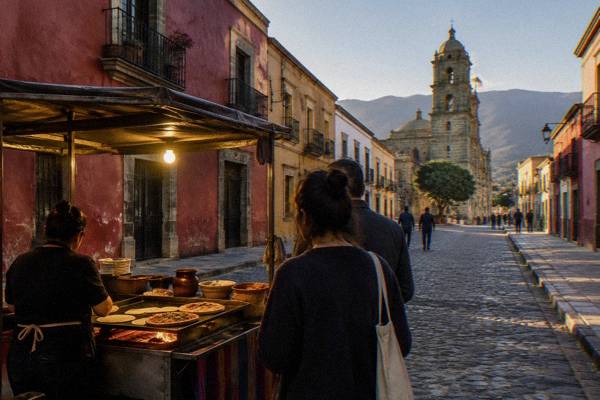
Is Oaxaca Safe To Walk Around At Night?
Is Oaxaca safe to walk around at night? What the official advisories say, which streets stay busy after dark, and how to plan an evening in Oaxaca City.
Oaxaca City, the inland highland capital of the state of Oaxaca in Mexico, sits about 1,550 m up in the Valles Centrales, and its historic centre does not shut down when the sun sets. Restaurants run late, the streets around the Zócalo and the Andador Macedonio Alcalá stay lit, and the city's evening economy is a real part of why people come. The question of whether it is safe to walk around at night deserves a straight answer built on what official advisories and published sources say, not on second-hand nerves, and this page from Oaxaca Travel Guide gathers exactly that.
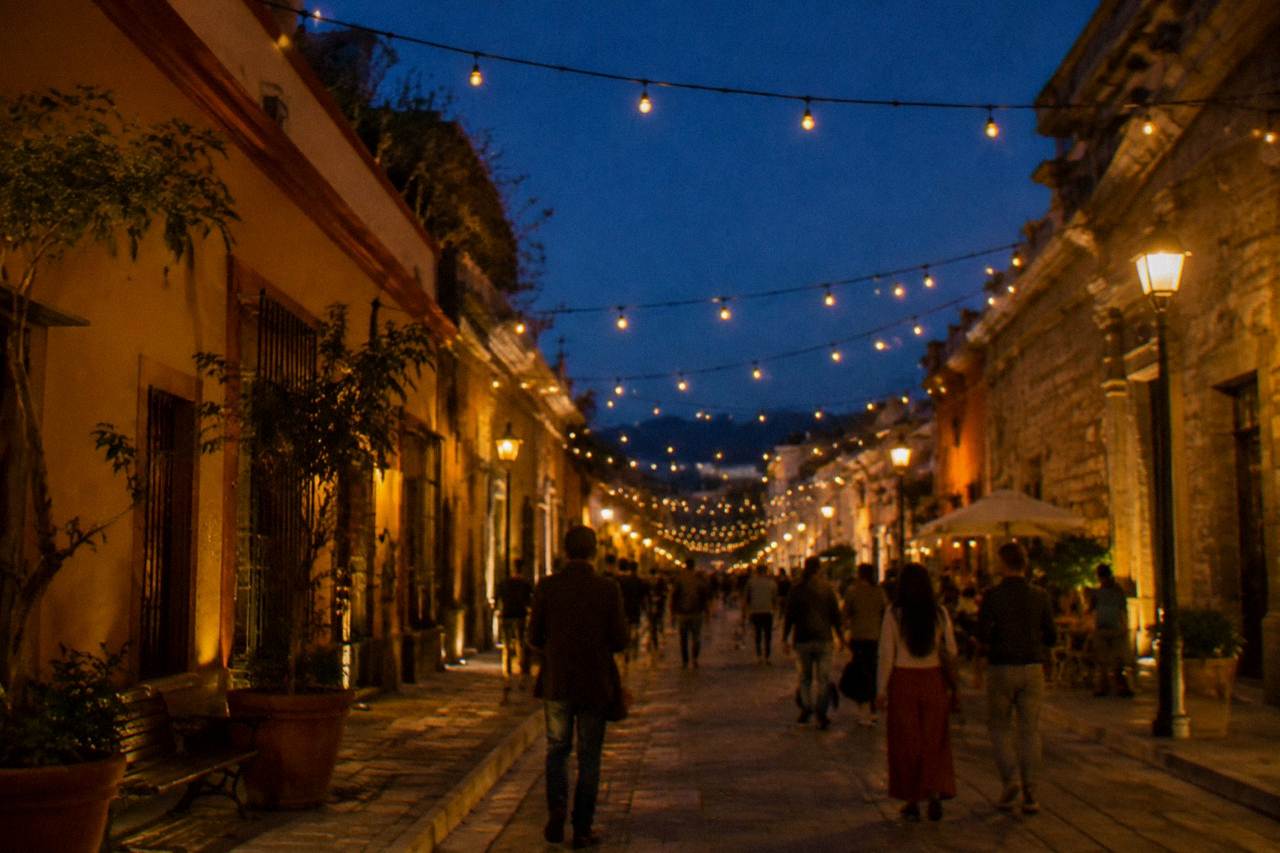
For the large majority of visitors, walking in central Oaxaca City after dark is a normal part of the visit, and no official travel advisory tells travellers to avoid the city's streets at night. The published advisories for Oaxaca stop at general caution levels, the historic centre stays lit and busy into the evening, and the standard precautions are the same ones that apply in any unfamiliar city after dark.
The three advisory lines that matter are these. The UK FCDO's Mexico page advises against all but essential travel to parts of Mexico, and Oaxaca is not named on that main page. Canada's travel advice for Mexico says to exercise a high degree of caution, with regional advisories, and Oaxaca is not listed among the avoid-travel areas on the page. The US State Department, places Oaxaca state at Level 2, Exercise Increased Caution, with no restrictions on US government personnel for Oaxaca City itself, Monte Albán, Puerto Escondido or Huatulco; the restrictions that do exist apply to the Isthmus region, far from the capital. For a deeper look at those layers, read the site's full guide to safety in Oaxaca, and for the US-specific angle see is Oaxaca safe for Americans right now.
None of that is a guarantee, and no honest account can pretend otherwise. Petty theft and opportunistic crime exist in every city that draws tourists, and an evening in Oaxaca deserves the same habits as an evening in Mexico City or Puebla: carry less, stay on lit streets, and know how you are getting home. What the sources do not support is any claim that Oaxaca City's nights are unusually dangerous, because no advisory says that.
Which Streets In Oaxaca City Stay Lit And Busy After Dark?
The busiest evening streets in Oaxaca City are the ones that carry the daytime crowds: the Zócalo, the Andador Macedonio Alcalá, and the restaurant corridors of the historic centre, along with the bar and food areas around Jalatlaco and the roads south of the centre toward the mercados. These are the areas where lighting, foot traffic and late-opening businesses continue well past sunset, and they are where evenings tend to be spent.
The historic centre of Oaxaca is a UNESCO World Heritage property, inscribed as "Historic Centre of Oaxaca and Archaeological Site of Monte Albán", and its street plan concentrates evening life in a compact, walkable area. A practical way to learn that geography before your first night is to take the walking tour of the historic centre on your first day, so the landmarks you pass at dinner are already familiar on the walk back. The site's Oaxaca at night itinerary maps the same evening geography in detail.
What closes early matters as much as what stays open. Several major sights shut their gates well before dark, which pushes evening life toward the restaurants, the Zócalo and the bars rather than the monuments. The INAH site pages give exact hours:
| Sight | Hours | Last Access | Notes |
|---|---|---|---|
| Monte Albán | Mon to Sun 08:00 to 17:00 | 16:00 | Category I fee, 105 MXN nationals / 210 MXN foreigners |
| Mitla | Mon to Sun 08:00 to 17:00 | 16:30 | Category I fee |
| Atzompa | Mon to Sun 08:00 to 16:00 | 15:00 | Closes earliest of the INAH valley sites |
| Zaachila | Thu to Sun 10:00 to 16:00 | none published | Category III fee, 80 MXN nationals / 145 MXN foreigners |
| Museo de las Culturas de Oaxaca | Tue to Sat 10:00 to 16:00 | none published | Closed Sunday and Monday |
| Jardín Etnobotánico | Free guided tours Mon to Fri 10:30 to 12:00 and 17:00; Sat 10:30 to 12:00 | n/a | Visit is by guided tour only |
The Jardín Etnobotánico's 17:00 weekday slot is the one sight visit that brushes against evening, and it finishes before full dark. Everything else on that table is a daytime activity, which is worth knowing when you plan where you will physically be at 21:00: in almost every case, in the centre, eating.
What Do Official Advisories Actually Say About Oaxaca?
Oaxaca state carries a Level 2 advisory from the US State Department, Exercise Increased Caution; Canada advises a high degree of caution for Mexico overall with regional advisories; and the UK FCDO advises against all but essential travel to parts of Mexico without naming Oaxaca on its main page. No advisory singles out Oaxaca City, its nightlife or its streets after dark.
Those three lines are the whole official picture, and it is worth reading them precisely rather than through a filter of headlines. A Level 2 designation is a caution level, not a do-not-travel level, and the reported US restrictions for government personnel concern the Isthmus region, hours from the capital, not the Valles Centrales. Canada's regional advisories for Mexico name areas to avoid, and Oaxaca is not among the ones on the page this guide checked. The FCDO's "parts of Mexico" clause applies to named areas elsewhere.
One standing risk the advisories do not capture is local and periodic rather than criminal: road blockades during teachers' union protests can disrupt road and airport access for roughly a day at a time. These are a known, recurring pattern in Oaxaca and are resolved after hours or days; they affect travel logistics far more than pedestrian safety on a city street at night.
How Should You Get Home In Oaxaca After Dark?
Walking short distances inside the historic centre is the default after dark in Oaxaca City, and for longer or late trips the practical answer is a taxi or ride-hailing car arranged before you leave the restaurant or bar rather than flagged on a quiet street, exactly as you would in any city at night. Taxis in Oaxaca do not use meters, so the fare is agreed before you get in.
The transport details are covered in depth on the site's guide to getting around Oaxaca and the answer on the best way to get around Oaxaca, and the night-specific advice follows from those facts. Ride-hailing apps operate in the city, with surge pricing during big events such as Guelaguetza and Día de Muertos, and regular taxis work on an agreed fare rather than a meter, settled upfront. The universal rule holds: a car ordered from inside a lit, occupied place beats a car hunted for on an empty corner.
Distance shapes the decision more than fear should. The centre is compact, and the walks that matter on a typical evening, dinner to hotel, plaza to bar, are a few minutes each. The drive-time figures from the Zócalo put the valley's attractions in perspective:
| Destination From The Zócalo | Distance | Drive Time (Free-Flow) |
|---|---|---|
| Monte Albán | 8.7 km | about 15 minutes |
| Santa María del Tule | 10.2 km | about 11 minutes |
| Teotitlán del Valle | 29.2 km | about 26 minutes |
| Tlacolula | 31.2 km | about 25 minutes |
| Mitla | 44.6 km | about 37 minutes |
| Hierve el Agua | 67.1 km | about 57 minutes |
Those are derived free-flow figures, and real traffic and mountain roads are slower. Their relevance to a night article is simple: nobody walks home from any of them. A day trip to Hierve el Agua or Mitla ends with a return to the centre in daylight or early evening, and the night walk that follows is a short one inside the city.
What Precautions Make Sense On An Oaxaca Evening?
The precautions that make sense in Oaxaca City at night are the ordinary ones: carry only what you need, keep phones off café tables and out of back pockets, prefer lit and busy streets to shortcuts, use an agreed-fare taxi or a ride-hailing car for late or long trips, and travel in pairs after midnight rather than alone. None of this is Oaxaca-specific; all of it is standard city practice that the advisory levels support.
Two Oaxaca-specific layers are worth adding. First, altitude and evening temperature: the city sits at about 1,550 m, and the SMN station normals show average overnight lows of 11.0 C in December and 10.3 C in January, so the walk home in the dry season can be genuinely cool, which changes what you carry even if it changes nothing about safety. Second, festival crowds: during Guelaguetza in July and Día de Muertos around the end of October and start of November, the centre is far busier than usual late into the night, which cuts both ways, more people around, and more pickpocket opportunity in the crush. The state's Guelaguetza 2026 edition ran its two Lunes del Cerro on 20 and 27 July with performances at 10:00 and 17:00, and evening calendas through the centre followed on the surrounding dates; 2027 dates have not been announced, and no 2026 Día de Muertos programme has been published either, so plan against the standing pattern rather than an announced calendar.
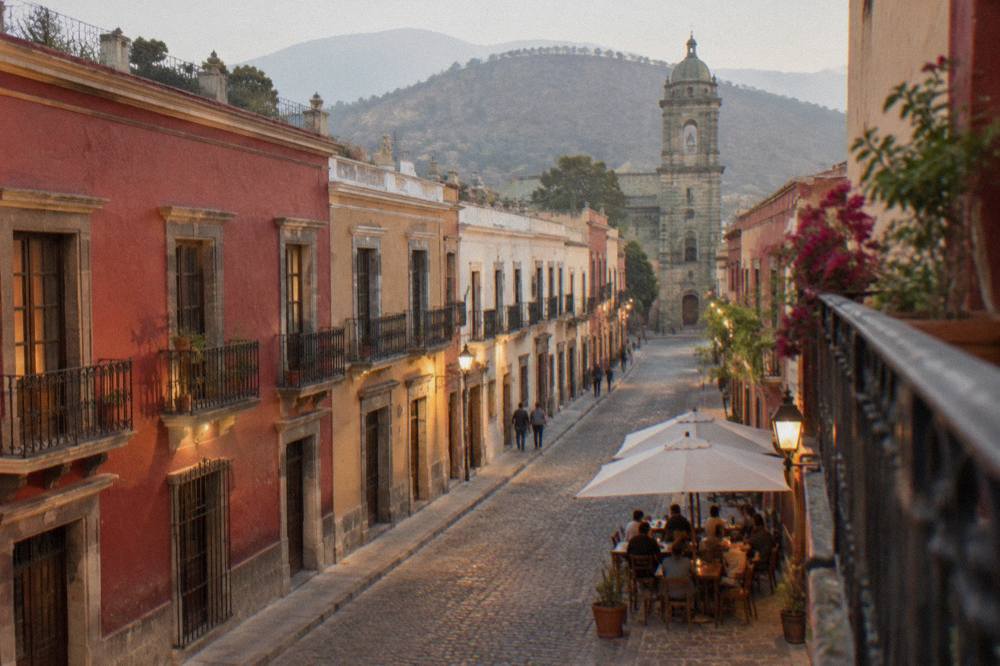
Alcohol deserves its own line, because mezcal is a reason people come and the evening is when it gets served. Pace it, eat with it, and treat the walk home as a decision made while sober rather than after the last pour. A guided introduction to the city's food and its historic streets on your first day, like the Check availability link for the historic centre walking tour shows, gives you the landmarks that make every later walk, day or night, feel routine.
How Does The Season Change A Night In Oaxaca?
The season changes what an Oaxaca evening feels like more than it changes the safety picture: the dry season from November to April brings average rainfall of 2.4 mm in January against 188.3 mm in June, so rainy-season nights mean afternoon and evening downpours, wet pavement and ponchos, while dry-season nights are cool, clear and busy. The advisories do not change by season.
The SMN station 20079 normals, 1991 to 2020, give the month-by-month picture:
| Month | Avg High C | Avg Low C | Rain mm | Rain Days |
|---|---|---|---|---|
| Jan | 28.9 | 10.3 | 2.4 | 1.4 |
| Feb | 31.1 | 11.6 | 4.6 | 1.1 |
| Mar | 33.3 | 13.6 | 17.6 | 4.1 |
| Apr | 34.9 | 15.8 | 47.3 | 7.6 |
| May | 33.8 | 16.7 | 97.9 | 13.7 |
| Jun | 30.9 | 16.7 | 188.3 | 19.9 |
| Jul | 30.1 | 15.9 | 118.6 | 20.4 |
| Aug | 30.0 | 15.9 | 131.8 | 20.5 |
| Sep | 29.1 | 16.1 | 163.6 | 21.4 |
| Oct | 29.3 | 14.5 | 63.1 | 12.0 |
| Nov | 29.0 | 12.3 | 9.1 | 3.5 |
| Dec | 28.9 | 11.0 | 9.0 | 2.4 |
June through September averages over 100 mm of rain each month, with roughly 20 rain days, which in practice means evening showers that empty a street for an hour and refill it after. The dry season, November to April, is when outdoor evening life is at its most reliable. For timing a whole trip rather than an evening, the site's answer on the best month to go to Oaxaca works through the same table.
The question people actually ask, stripped to its core, is whether they can have dinner at 21:00 and walk back to their hotel without anxiety. The advisory record, the city's compact lit centre and the plain fact that its evenings are a principal attraction all point the same way: yes, with the ordinary habits of any city at night.
Common Questions About Walking In Oaxaca At Night
Is Oaxaca Safe To Walk Around At Night?
Central Oaxaca City stays lit and busy well into the evening, and no official travel advisory tells travellers to avoid the city's streets after dark. The US State Department, places Oaxaca state at Level 2, Exercise Increased Caution, and the UK and Canadian advisories do not name Oaxaca among areas of concern. Ordinary city precautions still apply.
Is Downtown Oaxaca Safe At Night?
The historic centre, around the Zócalo and the Andador Macedonio Alcalá, is where evening foot traffic, lighting and late businesses concentrate, and it is where evenings out tend to unfold. Keep to the busy streets, carry only what you need, and use an agreed-fare taxi or ride-hailing car for late or long trips.
Is It Safe To Take A Taxi At Night In Oaxaca?
Taxis in Oaxaca City do not use meters, so agree the fare before getting in, and ordering a car from inside the restaurant or bar is better than flagging one on an empty street. Ride-hailing apps operate in the city, with surge pricing during major events such as Guelaguetza and Día de Muertos.
What Should I Avoid In Oaxaca At Night?
Avoid unlit shortcuts, empty side streets far from the centre, carrying valuables you do not need, and walking long distances alone after midnight. Also expect occasional road blockades during teachers' union protests, which can disrupt roads and airport access for roughly a day at a time.
Is Oaxaca Safe For Solo Travellers After Dark?
Oaxaca is a well-established solo destination, and the advisory record does not change for solo travellers. The sensible pattern is the same one solo travellers use in any city: stay on lit streets, keep the evening walk short, and arrange transport back before leaving wherever you are.
Does Rainy Season Make Oaxaca Nights Worse?
The rainy season, May to October, brings frequent evening rain, with June averaging 188.3 mm across about 20 rain days, so nights can mean downpours and wet pavement. The dry season, November to April, averages under 20 mm per month and is when outdoor evening life is most reliable.