What Food Is Oaxaca Famous For?
The dishes, drinks and markets that Oaxaca City is famous for, from tlayudas and mole to mezcal, tejate and chocolate, with where to taste each one.
Oaxaca City, the capital of the state of Oaxaca in Mexico and an inland highland city in the Valles Centrales at about 1,550 m, is one of the country's defining food destinations. The municipality of 270,955 people recorded 1,324,332 tourist arrivals in 2025, and the kitchen is a large part of the draw: mole, tlayudas, quesillo, chapulines, tejate, chocolate and mezcal all carry the city's name. This page sets out what the food actually is, where each dish sits in the city, and how to plan a visit around eating it well.
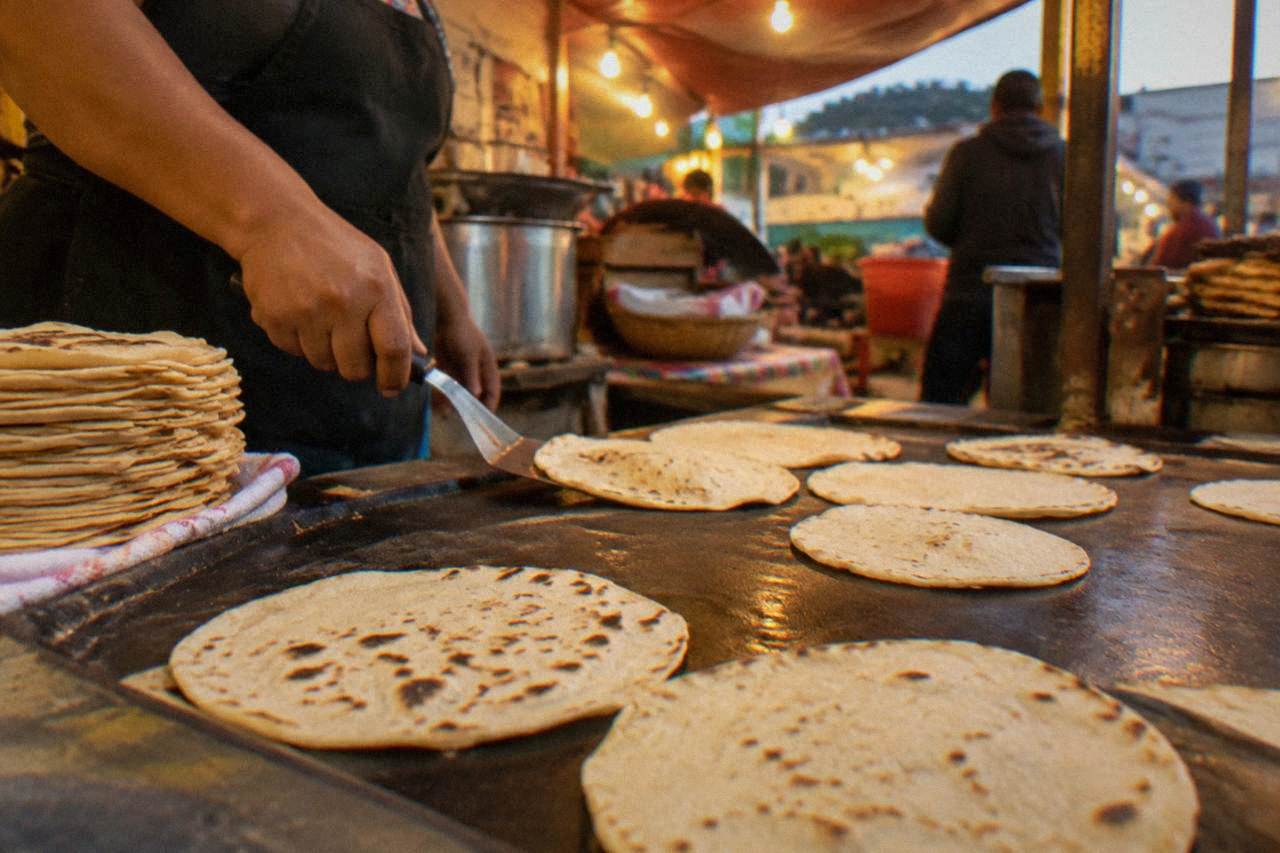
Oaxaca City is famous above all for its mole sauces, the tlayuda, a large crisp tortilla loaded and folded, quesillo, the local string cheese, chapulines, toasted grasshoppers eaten as a snack or topping, and the drink pairing of tejate and mezcal, with Oaxacan chocolate running through all of it. Together these dishes, plus the markets that sell them, are what the city's name brings to mind outside Mexico.
That list is not a ranking. It is the set of names that recur across the city's markets, street grills and restaurant menus, and each one has its own page of detail on this site. Mole appears in several regional forms and anchors celebratory cooking. The tlayuda is the city's best known street food, a tortilla of a size that earns it a plate of its own. Quesillo melts into it and into almost everything else. Chapulines divide first-time visitors and win most of them over. Tejate is a cold, pre-Hispanic corn-and-cacao drink still made in the valleys, and mezcal is the spirit the state is known for, with Santiago Matatlán described in state communications as the "Capital Mundial del Mezcal". For the wider picture of the city beyond the table, see what Oaxaca is famous for.
The Dishes That Define Oaxaca Cooking
The core Oaxacan dishes are mole in its regional varieties, the tlayuda with quesillo, memelas and other street griddle foods, chapulines as a seasoning and a snack, and mole's companion dishes of rice and tortillas, with tlayudas the single item most closely tied to Oaxaca City itself. Quesillo and Oaxacan chocolate sit inside many of these dishes rather than beside them.
Mole is the region's signature sauce family, served over meat and rice, and it is the dish the state's cooks are judged by. Different valleys produce different moles, and arguing about which is the true one is a local sport the visitor does not need to referee. The guide to Oaxacan mole on this site covers the sauce in depth, alongside the other staples.
The tlayuda is the city's street-food emblem: a very large tortilla, crisped, spread, topped and folded, sold from grills that work into the night. Quesillo is the string cheese that pulls in strands when the tlayuda is opened, and it also stars in quesadillas, where the cheese itself is the point. Chapulines, toasted grasshoppers, arrive as a bar snack, a taco filling and a sour-salty crunch on top of other dishes. None of these carry printed prices or fixed hours on this page: the markets and grills change both, and the honest answer is the one you get standing at the stall. The wider set of guides lives on Oaxaca Travel Guide.
Memelas and the other griddle foods round out the street repertoire: small masa bases topped as you like, quick, cheap by any standard and eaten standing or perched on a stool. Alongside them sit the empanadas de mole amarillo, the toasted chilli salsas and the fresh tortillas that make the whole cuisine work. The tortilla is not a side dish here, it is the delivery mechanism for everything else on the table, and the difference between a fresh one and a stale one is the difference between a good meal and a great one.
The dishes sort cleanly into three eating situations: the market meal, the street grill and the restaurant. The table below maps each famous item to where it belongs.
| Dish or food | What it is | Where it sits in Oaxaca City |
|---|---|---|
| Mole | Regional sauce family served over meat and rice | Restaurant menus and celebratory cooking |
| Tlayuda | Large crisp tortilla, spread and folded, with quesillo | Street grills and evening stalls |
| Quesillo | Local string cheese | Inside tlayudas, quesadillas and more |
| Chapulines | Toasted grasshoppers, sour and salty | Market snack bowls and as a topping |
| Tejate | Cold corn-and-cacao valley drink, non-alcoholic | Market drink stands |
| Oaxacan chocolate | Chocolate ground with sugar and often cinnamon, for drinking | Chocolate mills near the markets |
| Mezcal | The state's agave spirit | Tasting rooms and valley distilleries |
Oaxaca Drinks: Mezcal, Tejate And Chocolate
Oaxaca's famous drinks are mezcal, the agave spirit the state produces and Santiago Matatlán is known for, tejate, the cold non-alcoholic corn-and-cacao drink of the valleys, and Oaxacan drinking chocolate, ground with sugar and often cinnamon, plus the coffee grown in the state's mountains. Mezcal is the export name, tejate is the one visitors rarely meet before arriving, and chocolate is the one they take home.
Mezcal deserves its own day. The distilleries, called palenques, cluster in the Tlacolula valley, and tastings in the city range from shop-counter pours to distillery visits. The state's Feria del Mezcal ran 17 to 28 July 2026 at the Centro Cultural y de Convenciones in Santa Lucía del Camino with about 80 MXN entry, per the state tourism page, and it is part of the Guelaguetza month programme each July. The site's mezcal guide and the mezcal route pages carry the detail.
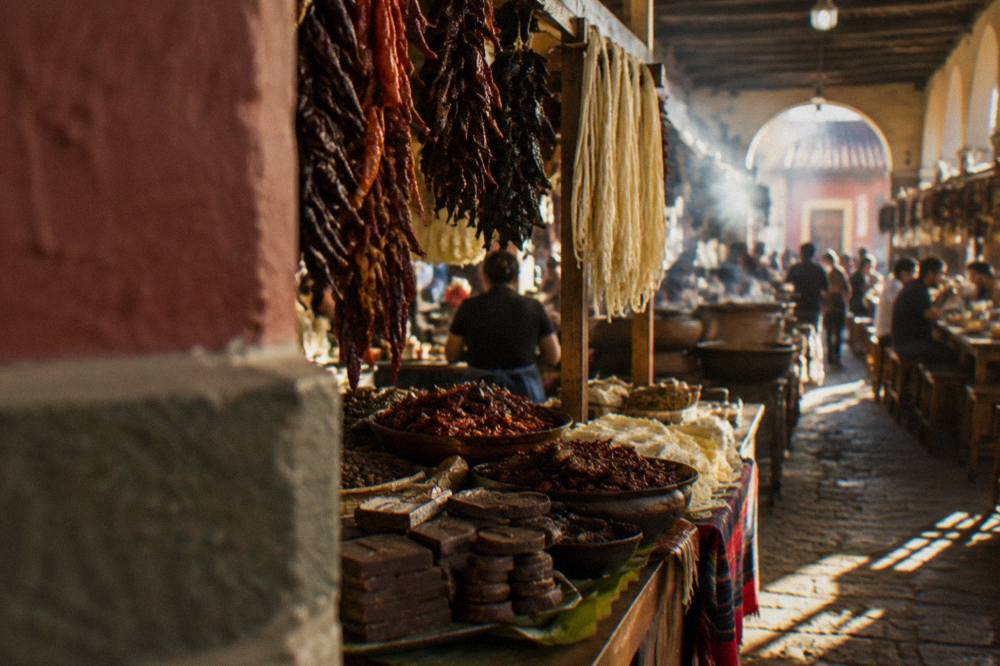
Tejate is harder to describe than to drink: a cold, faintly gritty, maize-and-cacao preparation worked by hand, poured from market vessels and sold by the cup. Chocolate in Oaxaca is a drink first, ground to order in the small mills that cluster near the central markets, and it anchors the city's café life alongside state-grown coffee. The street food guide covers where these drinks meet the grills and stalls.
| Drink | What it is | Where it fits a visit |
|---|---|---|
| Mezcal | Agave spirit, the state's signature export | City tastings or a valley distillery day trip |
| Tejate | Cold maize-and-cacao drink, non-alcoholic | Market drink stands in the city |
| Oaxacan chocolate | Drinking chocolate ground with sugar and spice | Chocolate mills and cafés near the markets |
| Oaxacan coffee | Coffee grown in the state's mountain regions | City cafés and roasters |
Where To Taste Oaxaca Food: Markets, Streets And Classes
The practical answer is the city's markets for daytime eating and shopping, the street grills for tlayudas at night, and a cooking class or guided food walk for the first day, because a guided tasting walk through the markets introduces mole, quesillo, tejate and chapulines in one morning and calibrates everything after it. Cooking classes then hand the recipes back to you.
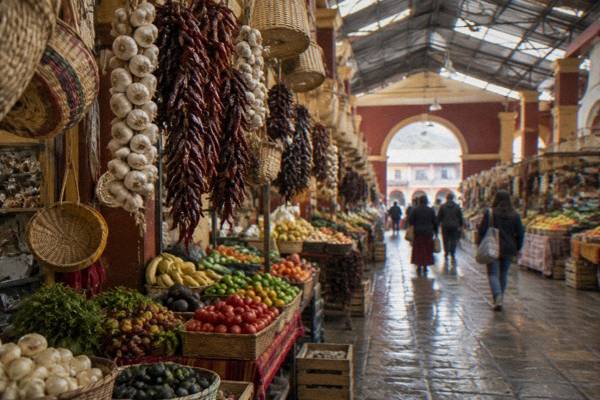
The markets are the engine room. Mercado 20 de Noviembre and Mercado Benito Juárez sit south of the Zócalo, and their stalls carry the full list from the tables above. This site carries full pages on both markets, on the markets-and-shopping picture citywide, and on eating vegetarian in a cuisine whose cheese and maize base makes that easy. No printed hours appear on this page for any market: they shift, and the stall you want may not be the market's. Go in the first half of the day, carry cash, and buy the chocolate and quesillo to take home.
A guided walk solves the first-morning problem. The food and markets tour with traditional tastings, this page's featured pick, moves through the city's food markets with tastings built in, and its price, rating and duration print on its own card and its Check availability link. A cooking class goes one step further and ends with you cooking mole or a full Oaxacan menu yourself, which is the souvenir that lasts longest. The site's cooking class page compares the options.
How Many Food Days Do You Need In Oaxaca?
Two full days cover the core: one for the city's markets, street food and a tasting walk, and one for a valley day trip that pairs mezcal with the craft and archaeology stops, with a third day adding a cooking class and the restaurants the first two days taught you to recognise. The city's own 2025 average stay of 2.00 nights matches that shape almost exactly.
Day one belongs to the centre. Walk the markets, eat a tlayuda from an evening grill, drink tejate and chocolate, and let a guided tasting walk set the vocabulary. Day two goes east into the Tlacolula valley, where the mezcal route, the craft villages and the archaeological sites sit within an hour's drive of the Zócalo: Mitla is about 37 minutes away and Teotitlán del Valle about 26, both derived drive times that real traffic extends. The valley also holds the Tlacolula Sunday market, one of the region's great weekly events, which has its own page on this site.
A third day, if the calendar allows, is the cooking-class day and the restaurant day. It is also the day to eat the vegetarian side of the cuisine properly, from the quesillo-forward dishes to the vegetable memelas, and to revisit the one thing the first day got wrong. Visitors with a week can add the coast or the Sierra Norte, but the food itself does not need more than three days to be understood. Plan the trip around the dry season, November to April, if outdoor market wandering matters to you: the rainy months of June to September still feed the city well, only wetter.
Common Questions About Oaxaca Food
What Food Is Oaxaca Famous For?
Oaxaca City is famous for mole, tlayudas, quesillo, chapulines, tejate, Oaxacan chocolate and mezcal, plus the markets that sell all of them within a short walk of the Zócalo.
What Is A Tlayuda?
A tlayuda is a very large tortilla, crisped on a grill, spread with bean paste and topped with quesillo and other fillings, then folded and eaten hot. It is the city's best known street food.
Can You Eat Vegetarian In Oaxaca?
Yes. Quesillo, maize dishes, vegetables and the city's market cooking make vegetarian eating straightforward, and this site carries a full guide to vegetarian and vegan food in Oaxaca, plus a vegetarian cooking class option on the tour list.
Is Mezcal The Same As Tequila?
No. Both are Mexican agave spirits, but mezcal is the spirit associated with Oaxaca and its valley distilleries, while tequila is tied to a different region and agave. The site's mezcal pages cover tastings and distillery visits.
Where Should You Eat On A First Trip To Oaxaca?
Start in the markets south of the Zócalo, eat from the evening street grills, and take a guided food and markets walk on day one so the rest of the trip has a map. This site's what-to-eat guide and street food guide carry the detail.
The short version: Oaxaca City's famous food is a short list, deeply made, sold close together, and best approached through its markets first.