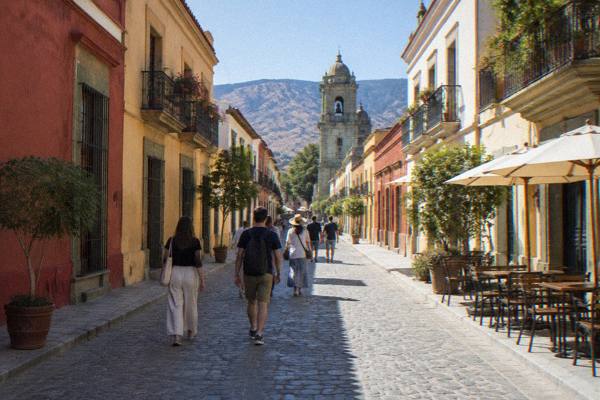
Noche De Rábanos: The Radish Carving Night On 23 December
Noche de Rábanos is the radish carving night held on 23 December in the Zócalo of Oaxaca City, an inland highland city in the Valles Centrales of Mexico. This guide sets out what the tradition involves, what the published 2025 edition tells visitors, and how to plan a trip around the last week of December.
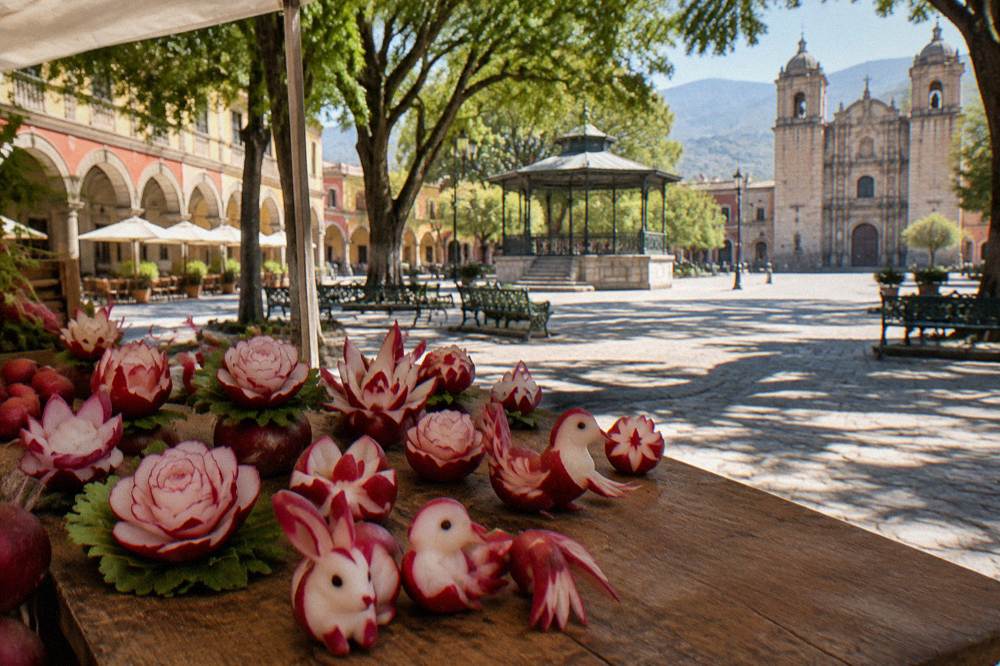
Noche de Rábanos is held on 23 December in the Zócalo of Oaxaca City. The 128th edition took place in December 2025; no 2026 date has been announced, so plan around the standing 23 December tradition.
Noche de Rábanos is the radish carving night of Oaxaca City, the inland capital of the state of Oaxaca in Mexico, held in the Zócalo on the evening of 23 December each year. Artisans display carved radishes, and the display fills the main square for a single night before Christmas. The state tourism authority, Sectur Oaxaca, publishes an edition release each year, and the most recent published edition is the 128th, held in December 2025. The 2026 edition has not been announced, so everything on this page is built on the standing tradition and on what the 2025 edition release establishes. For the quick version of the date question, see when Noche de Rábanos is held; this page covers the festival itself, the square it occupies, the December weather, and how to plan a visit around it.
What Is Noche De Rábanos In Oaxaca?
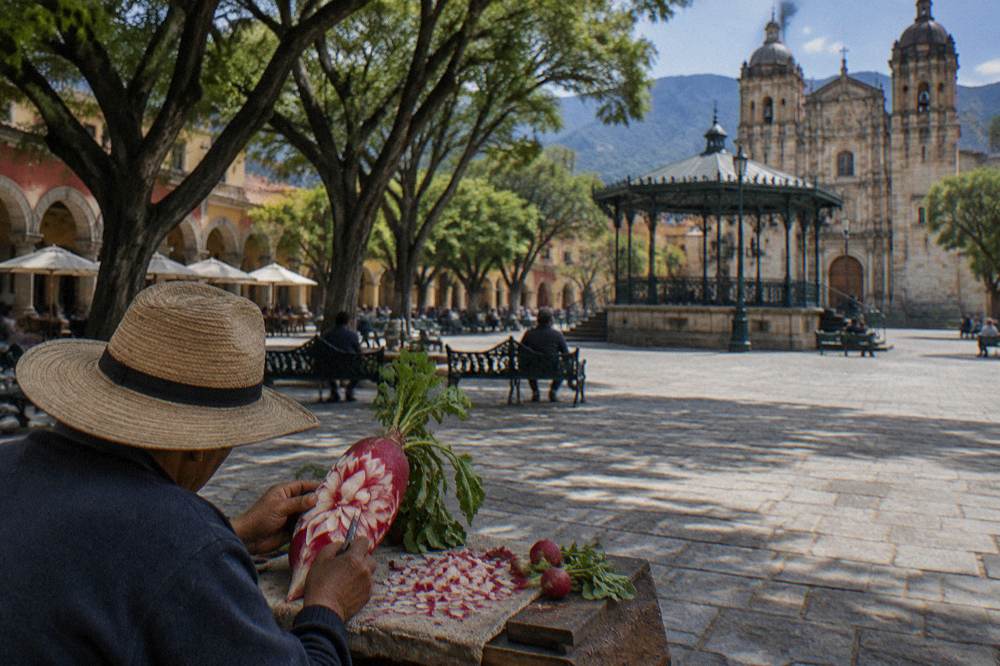
Noche de Rábanos is a one-night exhibition of carved radishes held on 23 December in the Zócalo of Oaxaca City, the capital of the state of Oaxaca in Mexico. Artisans carve radishes into figures and scenes and display them in the main square for the evening. The event is organised around the municipal celebrations of the Christmas season, and the 128th edition was held in December 2025.
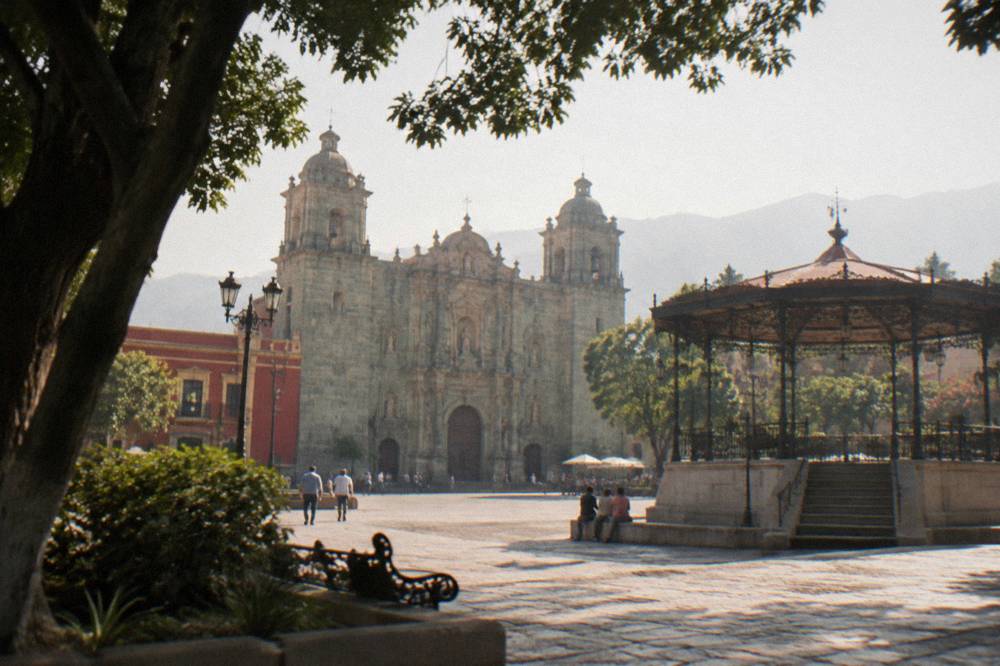
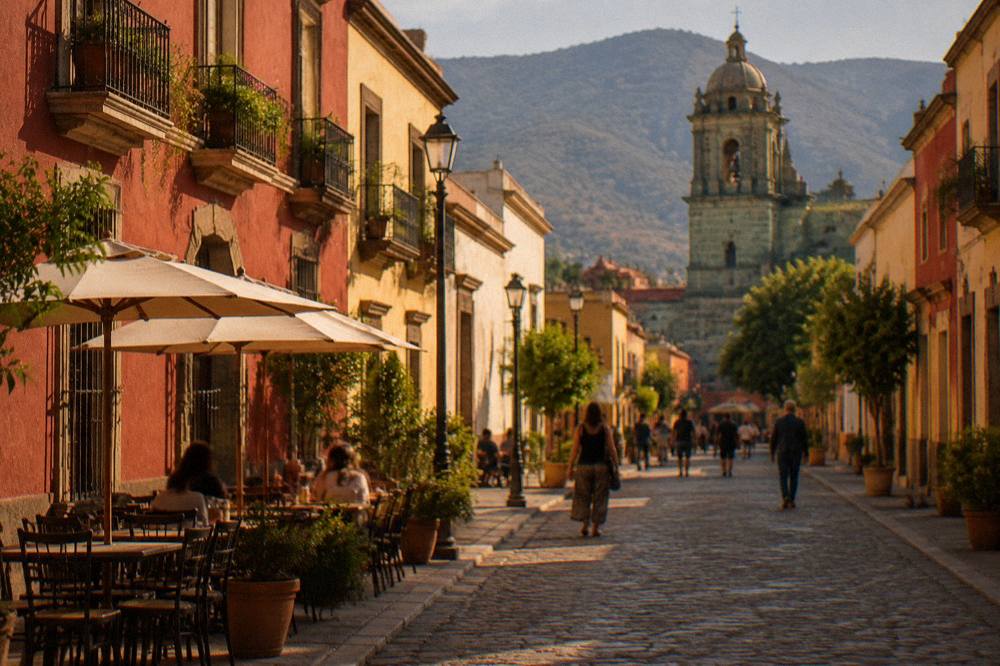
The name translates literally as Night of the Radishes. The venue is the Zócalo, the Plaza de la Constitución, the main square of the historic centre at the heart of the city. That centre, together with the archaeological site of Monte Albán, forms the UNESCO World Heritage property listed as "Historic Centre of Oaxaca and Archaeological Site of Monte Albán". The square is the same space that hosts the Guelaguetza-season events in July and the Día de Muertos decorations in late October, so a visitor who knows the centre already knows exactly where the radish night sits: the space around the kiosco and the Palacio de Gobierno.
Sectur Oaxaca, the state tourism secretariat, issues a release ahead of each edition inviting residents and visitors to the activities. The release for the 128th edition, published for December 2025, is the most recent official word on the event. It confirms the tradition continues and frames the night as part of the capital's December festivities. No 2026 programme, date or ticketing detail has been announced, so a visitor planning a 2026 trip works from the standing pattern: 23 December, evening, Zócalo.
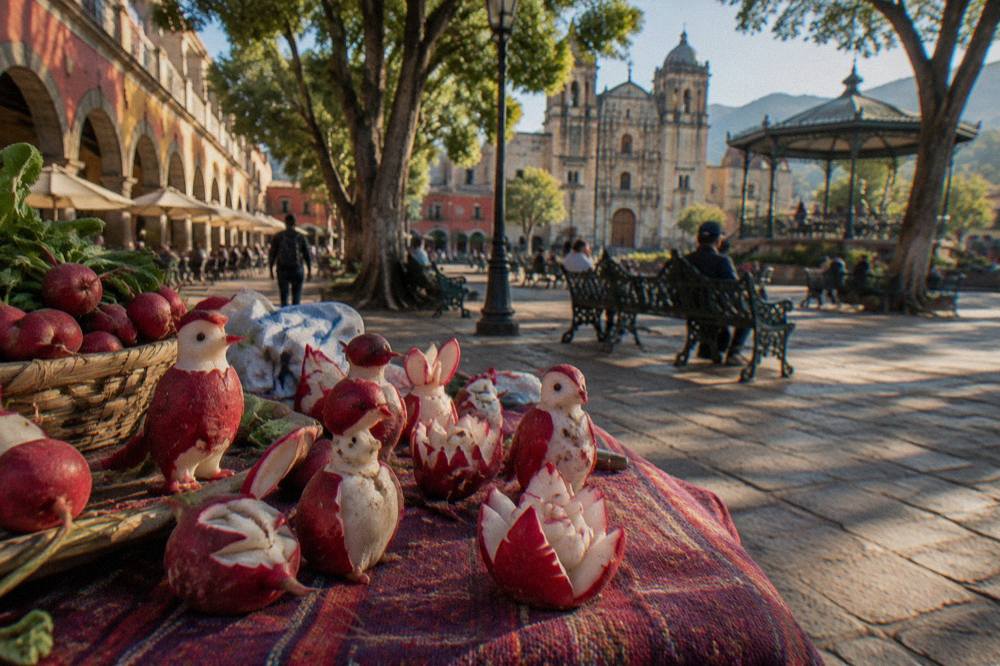
When Is Noche De Rábanos Held In Oaxaca?
Noche de Rábanos is held on 23 December each year, in the evening, in the Zócalo of Oaxaca City. The 128th edition took place in December 2025 as an official state event. No date or programme for a 2026 edition has been announced, so visitors planning a future trip should plan around the standing 23 December tradition and confirm details closer to the time.
The date is fixed by tradition: 23 December, two days before Christmas. That timing makes it the opening act of the capital's Christmas week rather than a Christmas Day event itself. The 128th edition release from Sectur Oaxaca dates from December 2025 and describes the activities around that year's celebration, including the radish harvest dates of 20 and 22 December 2025 that supplied the displays. Those harvest dates belong to the 2025 edition and should not be read as a permanent schedule.
For trip planning, the honest position is this: the date to build a trip around is 23 December, the traditional evening of the event. Anything beyond that, such as contest categories, judging times, side events or ticketing, is edition-specific and is published by the state each year. A visitor arriving for the last week of December gets the standing tradition; the details of any given edition are confirmed in the weeks before.
| Fact | Standing tradition | Published detail |
|---|---|---|
| Date | 23 December, evening | 128th edition held December 2025 |
| Venue | Zócalo, Plaza de la Constitución | Same square as Guelaguetza events |
| Organiser | State and city authorities | Sectur Oaxaca issued the 128th edition release |
| Supply harvest | Radishes grown for the event | 20 and 22 December 2025 (2025 edition) |
| 2026 edition | Not announced | No date, programme or ticketing published |
Where Does The Radish Night Take Place In Oaxaca City?
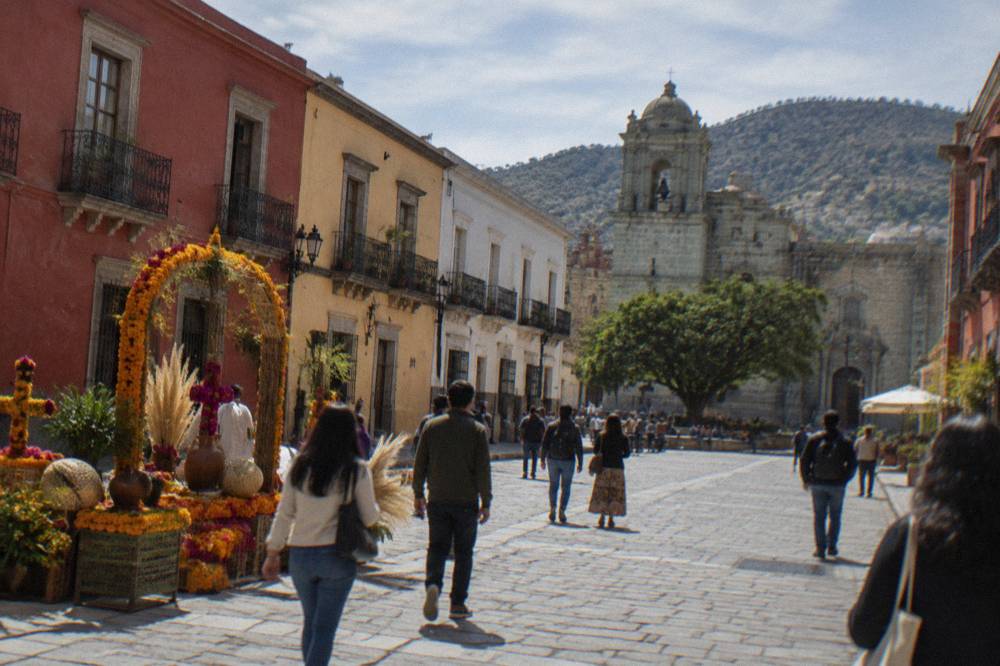
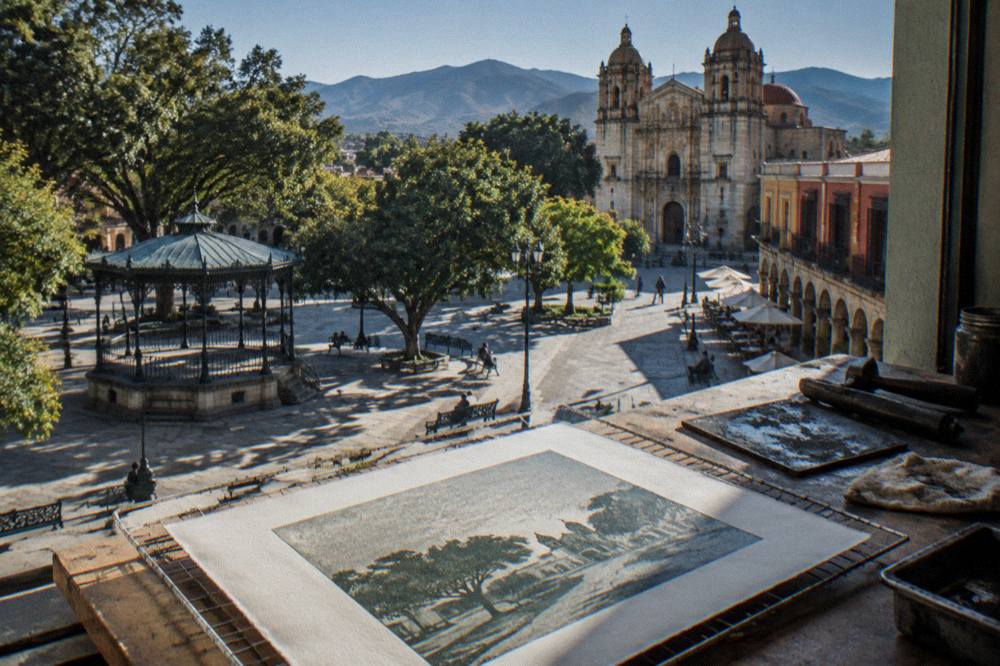
The radish night takes place in the Zócalo of Oaxaca City, the Plaza de la Constitución in the historic centre, an easy walk from the Andador Macedonio Alcalá, the cathedral and the market streets. Everything the evening involves sits within the walkable core of the city, and the square is the same venue used for the city's other major public festivals.
The Zócalo is the reference point of the whole historic centre. Santo Domingo de Guzmán sits a short walk up the Andador Macedonio Alcalá, the pedestrian street that links the two. The cathedral stands on one side of the square itself. The Mercado 20 de Noviembre and the Mercado Benito Juárez sit a few blocks south, and the Basílica de la Soledad is also within the central core. A first-time visitor can base a whole evening around the square without transport of any kind.
The surrounding neighbourhoods matter for the evening too. Jalatlaco and Xochimilco, the historic barrios on the edges of the centre, are part of the same walkable landscape, and the city is genuinely walkable in this core. The evening of 23 December, the centre is given over to the display, so picking a hotel inside the historic centre puts the whole night on foot. The where to stay in Oaxaca guide breaks down the centre and the surrounding barrios by base.
A good way to spend the hours before the radish displays is a walk of the centre itself. The historic centre walking tour covers the square, the andador and the churches with a professional local guide, and the walking the Zócalo and the historic centre guide gives the full picture of the square and what surrounds it.
What Do Artisans Carve For The Radish Night?
Artisans carve radishes into figures and scenes for display on the night of 23 December in the Zócalo of Oaxaca City. The 128th edition in December 2025 was organised around these displays, with the radishes harvested on 20 and 22 December that year for the event. The carvings are exhibited for the evening, and the event is a competition organised by the city and state authorities.
The radishes are grown specifically for the event. The 2025 edition release records harvest dates of 20 and 22 December, days before the display, which tells a visitor something practical: the material is fresh, cut close to the night, and the carvings are by nature short-lived works made for a single evening. That is the character of the event. Unlike a museum display, the radish night is a one-evening exhibition, and the work exists for that night.
What the carvings depict is edition-specific, so this page gives no detailed description of motifs, categories or judging. What the sources do establish is the structure: artisans carve, the work is displayed in the Zócalo, and the state promotes the night as part of the capital's December traditions. Visitors who want to see Oaxacan craft traditions with more permanence can look at the city's workshops, from alebrije painting to printmaking, several of which are bookable as classes. The printmaking workshop with a local artist is a hands-on option that pairs naturally with a craft-focused December trip.
How Does Noche De Rábanos Compare With Oaxaca's Other Big Festivals?
Noche de Rábanos on 23 December is the smallest of Oaxaca City's three signature public festivals, a single evening in the Zócalo, compared with the two-Monday Guelaguetza in July at the Auditorio Guelaguetza and the multi-day Día de Muertos programme in late October and early November. Each fills the same historic centre, but only the radish night is a one-night display.
The Guelaguetza is the state's largest event. The 2026 edition held its Lunes del Cerro performances on 20 and 27 July at the Auditorio Guelaguetza on the Cerro del Fortín, with paid seats at 1,632 and 1,321 pesos alongside free sections, all sold through Superboletos. Those dates and prices belong to the 2026 edition, now past, and the 2027 edition has not been announced. The Día de Muertos programme runs across the last days of October and the first of November; the published programme of 25 October to 4 November with more than 140 activities is the 2025 edition, and for 2026 the state has so far announced only its fifth artisan contest, with entries from 24 September to 9 October 2026. The Día de Muertos in Oaxaca guide covers that festival in full.
The radish night sits apart in scale and timing. It is an evening event on a fixed traditional date, in the dead centre of the city, in the week before Christmas. It draws on the same craft culture that the July and November festivals celebrate, but its material is perishable and its run is one night. A visitor choosing between festivals should weigh that: July brings the auditorium shows and the Feria del Mezcal, late October brings the cemetery nights, and December brings the radishes plus the city's Christmas week.
| Festival | Traditional or published date | Venue | Scope |
|---|---|---|---|
| Noche de Rábanos | 23 December each year | Zócalo | One evening, single display night |
| Día de Muertos | 31 October to 2 November core dates | City-wide, cemeteries and centre | Multi-day programme |
| Guelaguetza | Two Mondays in July | Auditorio Guelaguetza, Cerro del Fortín | Two performance days plus month of events |
| Feria del Mezcal | July, during Guelaguetza month | CCCO, Santa Lucía del Camino | 17 to 28 July 2026 |
What Is The Weather Like In Oaxaca City In Late December?
Late December in Oaxaca City averages a high of about 28.9 C and a low of about 11.0 C, with about 9.0 mm of rain across the month, according to the SMN station normals for 1991 to 2020. December sits in the dry season, which runs from November to April, so the radish night is an outdoor evening event under generally dry conditions, cool after sunset.
The city sits at about 1,550 m in the Valles Centrales, an inland highland valley, and December is part of the dry stretch of the year. The station normals show December rainfall of 9.0 mm across the whole month, against 188.3 mm in June, and the rainy season ends in October. Evenings are the point to plan for: a low of about 11.0 C means the radish night, which runs into the evening, calls for a layer, not summer clothing. The weather by month in Oaxaca guide and the packing advice on the site carry this further.
Daytime around the festival is a different matter, with the normal high near 28.9 C, so a December visit swings between warm afternoons and cool nights. That swing is the single most useful weather fact for this trip: pack for both halves of the day, and plan the evening around the square with the cool hours in mind.
| Month | Average high C | Average low C | Average rain mm |
|---|---|---|---|
| October | 29.3 | 14.5 | 63.1 |
| November | 29.0 | 12.3 | 9.1 |
| December | 28.9 | 11.0 | 9.0 |
| January | 28.9 | 10.3 | 2.4 |
| February | 31.1 | 11.6 | 4.6 |
How Many Days Should You Spend In Oaxaca For The Radish Night?
A visit built around Noche de Rábanos works well with four or five days in Oaxaca City: one for the historic centre and the radish night itself on 23 December, one for Monte Albán, one for the Tlacolula Valley sites such as Mitla and Hierve el Agua, and one or two spare days for markets, museums and craft villages. The city rewards slow planning more than a rushed overnight.
The centre alone fills a day and an evening. Santo Domingo de Guzmán and the Museo de las Culturas de Oaxaca sit together at one end of the andador, with the museum open Tuesday to Saturday, 10:00 to 16:00, so a December visitor should check the days against the festival week. The Santo Domingo church guide and the museum guide cover both. The markets, including the Mercado 20 de Noviembre, sit a few blocks from the Zócalo and are a natural daytime pairing with the evening in the square.
Beyond the city, Monte Albán is about 15 minutes away by road, and the valley circuit to Mitla runs about 37 minutes, with Hierve el Agua about 57 minutes on from there. Those are free-flow drive times, and real traffic and mountain roads are slower. A day tour that pairs Monte Albán with Cuilapan de Guerrero, such as the eight-hour Monte Albán and Cuilapan tour, covers the archaeological side without a rental car, and the Cuilapan de Guerrero day trip guide explains what the stop involves.
| Sight | Relation to the Zócalo | Notes for a December visit |
|---|---|---|
| Monte Albán | About 15 minutes by road | Open daily 08:00 to 17:00, last access 16:00 |
| Mitla | About 37 minutes by road | Open daily 08:00 to 17:00, last access 16:30 |
| Hierve el Agua | About 57 minutes by road | Usually visited with Mitla on a day trip |
| Museo de las Culturas | Short walk up the andador | Tuesday to Saturday only, 10:00 to 16:00 |
| Mercado 20 de Noviembre | A few blocks south of the square | Food market, central location |
What Else Is There To Do In Oaxaca City On A December Trip?
A December trip around Noche de Rábanos can fill the surrounding days with printmaking and craft workshops, market and food tours, mezcal tastings, museum visits and evening walks through the decorated centre, all inside a walkable highland city. The week before Christmas also gives the centre its seasonal decorations, which the state mounts in the Zócalo and around the historic core.
The craft angle is the natural complement to the radish night. The event is a display of handwork, and the city offers ways to do that handwork rather than only watch it. The printmaking workshop with a local artist runs as a small session where participants produce a print of their own, and the alebrije painting workshops in the craft villages take the same idea into carved and painted figures. Between the two, a visitor can move from spectator to maker across a single trip. If the print session appeals for the days around 23 December, Check availability before locking the rest of the week, since small-group sessions fill over festival dates.
Food fills the rest. The market tours and evening street food walks of the centre, described in the oaxaca at night itinerary, suit the December evenings, and the question of walking the centre after dark is addressed directly in the is it safe to walk around Oaxaca at night answer. Mezcal tastings and pairing sessions run in the city itself, and the cooking classes give a full afternoon to mole and the market ingredients behind it. None of these depend on the festival, which is the point: the radish night is one evening, and the city carries the rest of the week on its own.
How Should You Plan Getting To And Around Oaxaca City For The Festival?
Visitors reach Oaxaca City for the radish night by flying into Xoxocotlán International Airport, operated by ASUR, or by ADO bus, and then stay inside the walkable historic centre, where the Zócalo and everything the festival involves sits on foot. A car is unnecessary for the festival itself and is only useful for independent valley day trips.
The airport sits at Xoxocotlán, on the south side of the city, and the Oaxaca airport guide with the flights to Oaxaca guide cover routes and arrival. Visitors coming overland from the capital can read the Mexico City to Oaxaca guide and the ADO bus guide, with the official operator site at ado.com.mx carrying current schedules. Once in the city, the getting around Oaxaca guide and the taxis, Uber and DiDi guide cover local movement.
For the festival evening itself, the practical plan is simple: stay in or near the historic centre, walk to the Zócalo, and walk home. The square, the andador, the cathedral and the market streets form one connected pedestrian landscape, and festival evening or not, that core is the city's whole stage. Book accommodation early for the last week of December, the same advice that applies to the July and November festivals, because the centre's stock is finite and the festivals concentrate demand on it. Compared with festival cities elsewhere in Mexico, the question of Oaxaca versus San Miguel de Allende often comes down to exactly this: one compact, walkable core that hosts its own festivals in place.
Common Questions About Noche De Rábanos In Oaxaca
When Is Noche De Rábanos Held?
On 23 December each year, in the evening, in the Zócalo of Oaxaca City. The 128th edition was held in December 2025. No 2026 date has been announced.
Where Does Noche De Rábanos Take Place?
In the Zócalo, the Plaza de la Constitución, the main square of Oaxaca City's historic centre, within walking distance of the Andador Macedonio Alcalá, the cathedral and the central markets.
Is Noche De Rábanos Free To Attend?
No ticketing detail has been published for any future edition. The event is staged as a public display in the city's main square; confirm any edition-specific details in the state release closer to the date.
What Is The Weather Like In Oaxaca City In Late December?
December averages a high of about 28.9 C and a low of about 11.0 C, with about 9.0 mm of rain for the month, per the SMN station normals for 1991 to 2020. It is dry season, so plan for a cool evening outdoors.
How Does Noche De Rábanos Compare With Día De Muertos?
The radish night is a single evening on 23 December in the Zócalo, while Día de Muertos runs across late October and early November with core dates of 31 October to 2 November. Both fill the historic centre, but the radish night is a one-night display of carved work.
How Many Days Should You Spend In Oaxaca City For The Radish Night?
Four or five days is a comfortable frame: the centre and the radish night, Monte Albán, a Tlacolula Valley day trip to Mitla and Hierve el Agua, and spare days for markets, museums and craft workshops.
For more ways to fill the days around the festival, the things to do in Oaxaca overview collects the city and valley options in one place, and Oaxaca Travel Guide carries the full set of festival, sight and day trip pages. Built around 23 December, with a room in the centre and a layer for the evening, the radish night is one of the most compact festival experiences the city offers.